Author Archives: matthew DG

Unknown's avatar

About matthew DG

What I'm making & seeing & saying

Surfacing

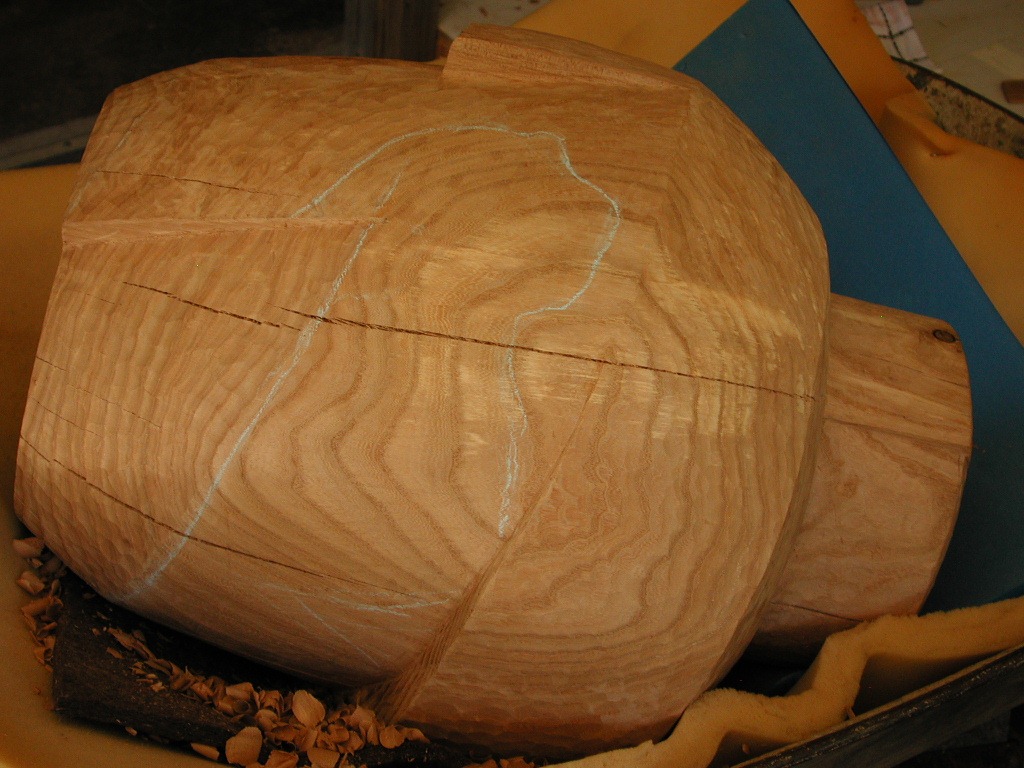
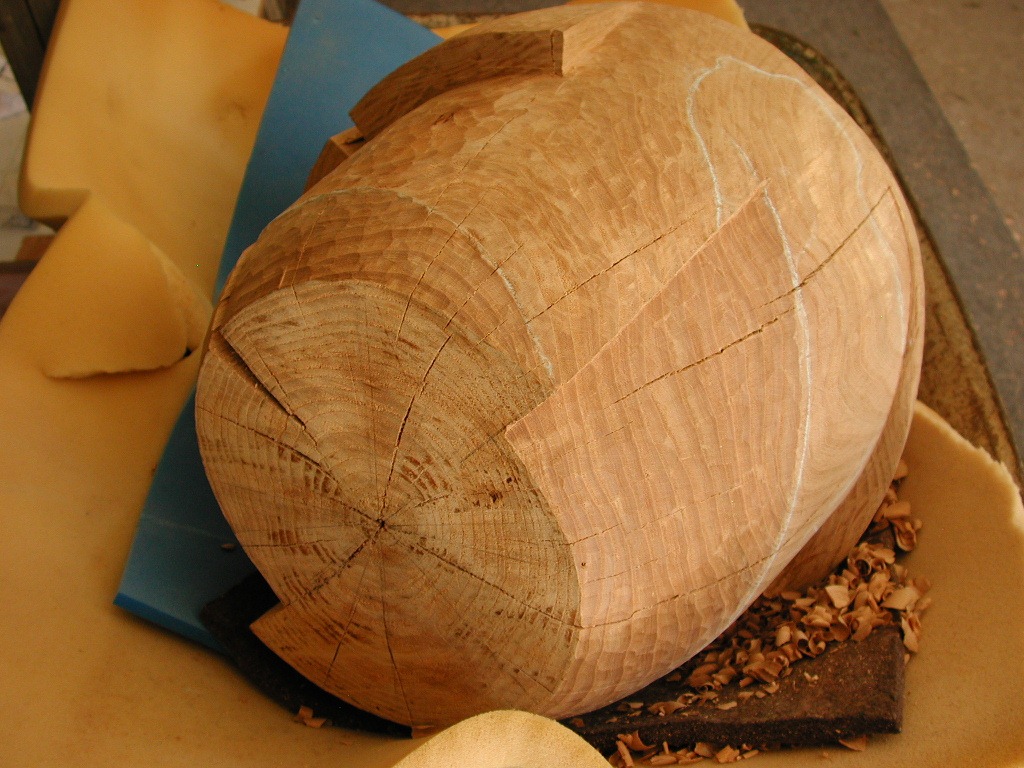
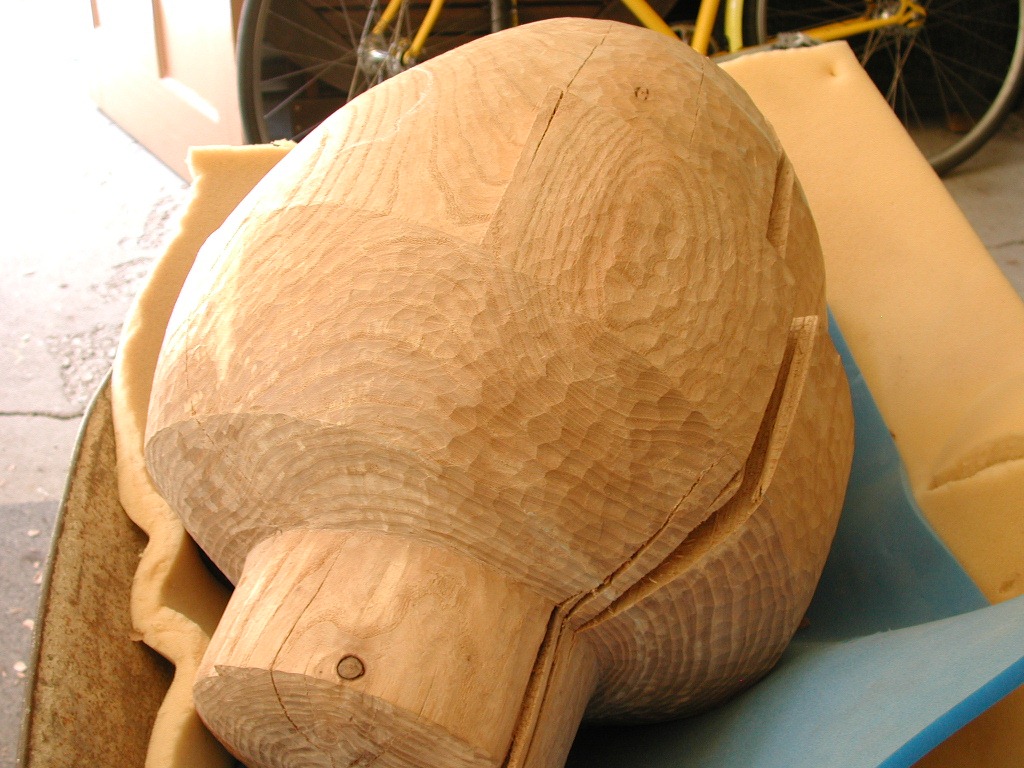
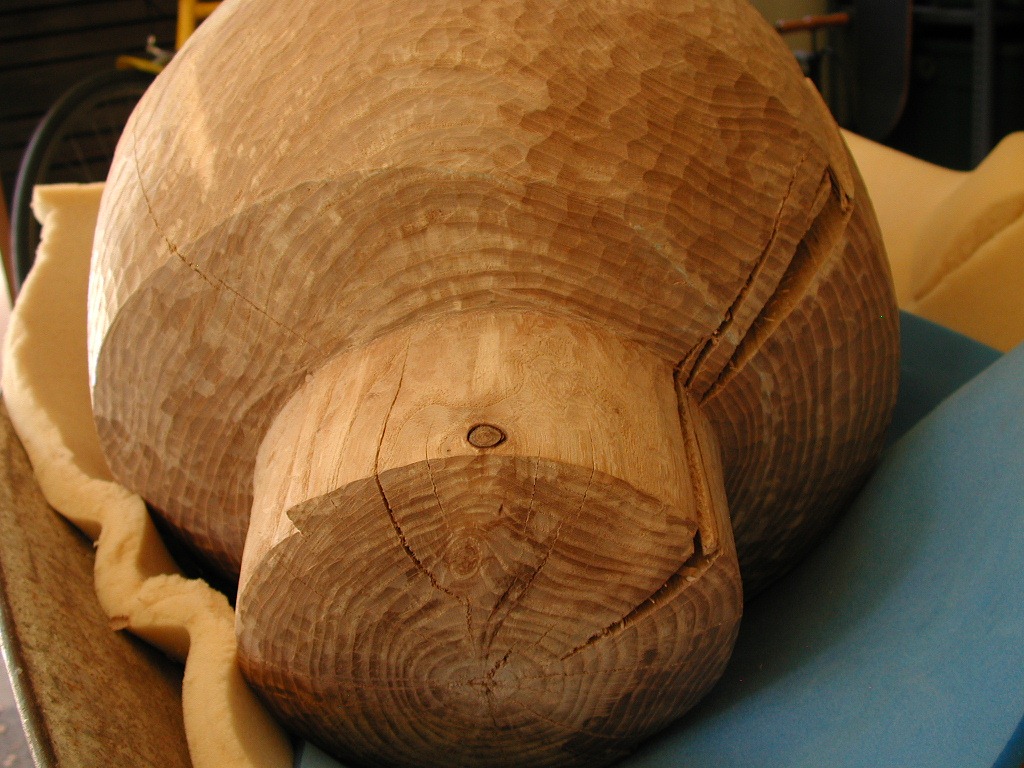
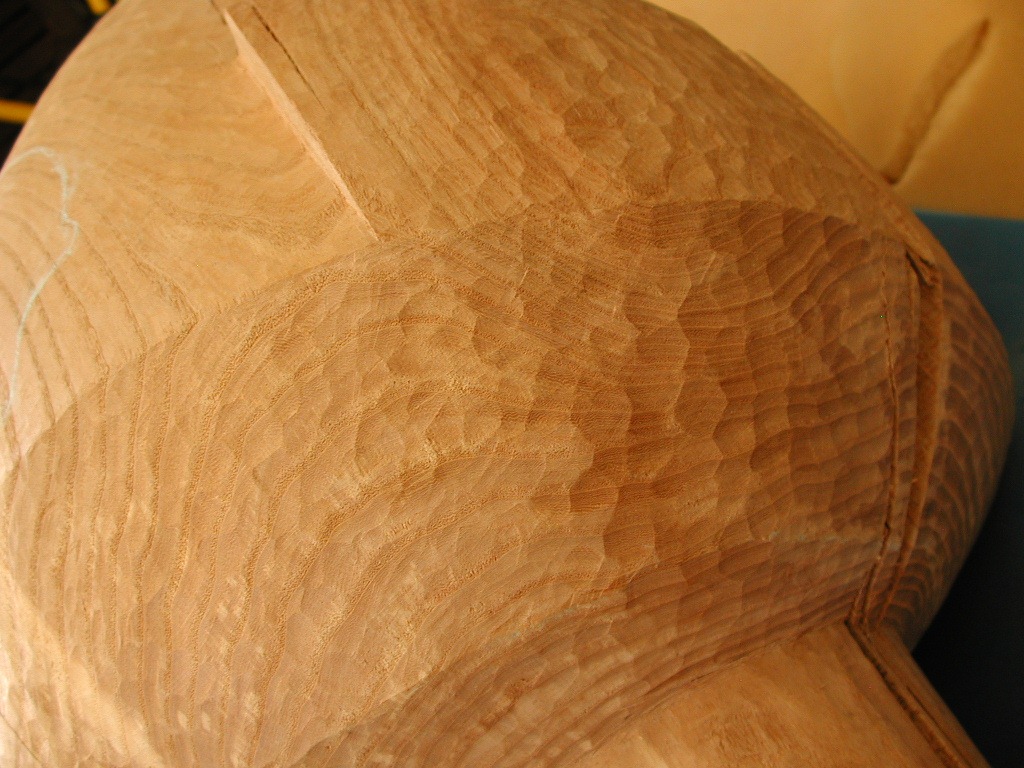
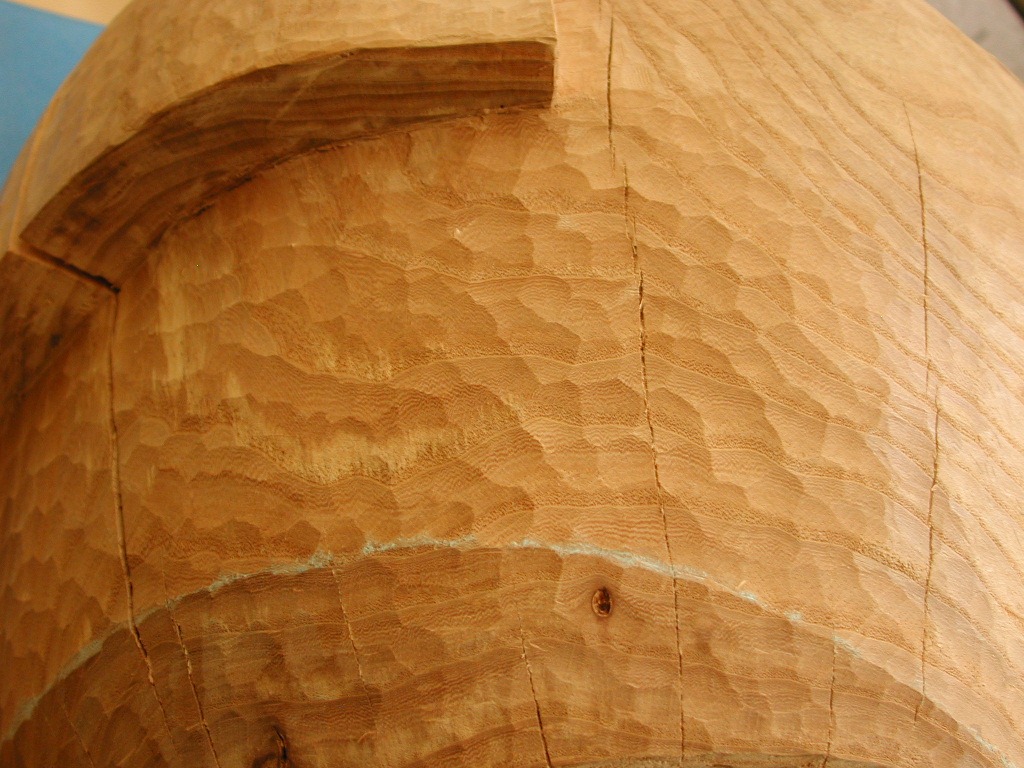
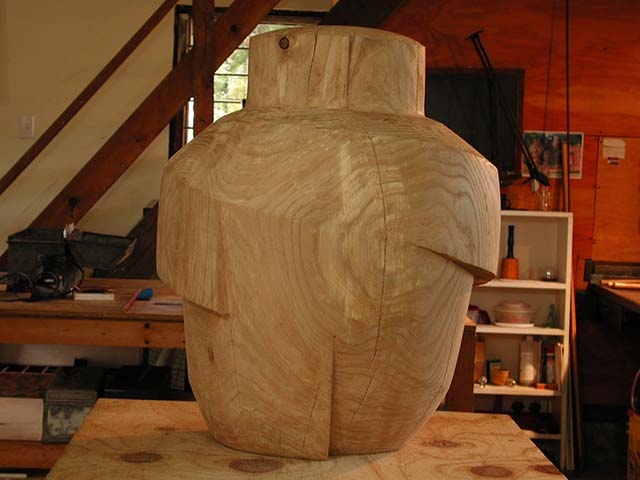
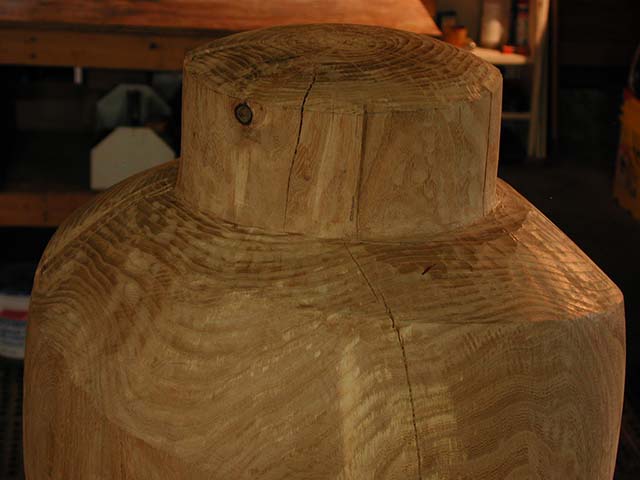
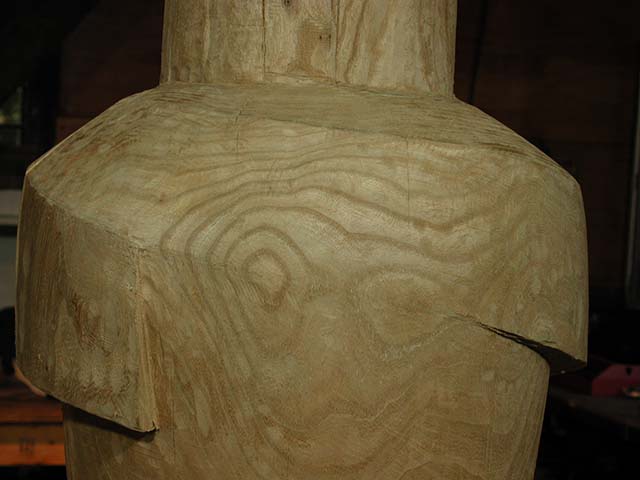
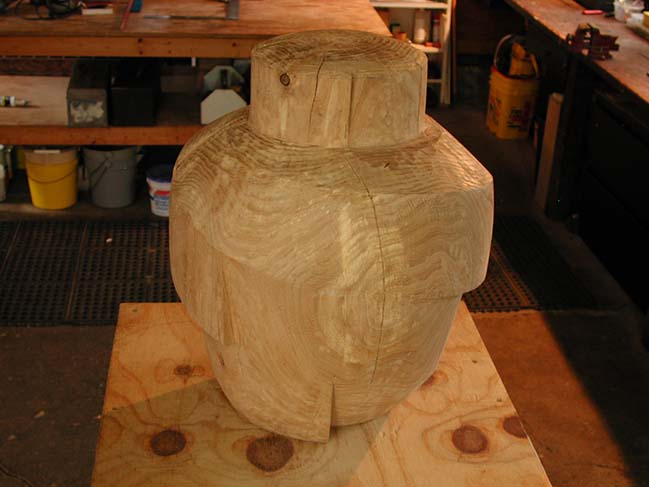
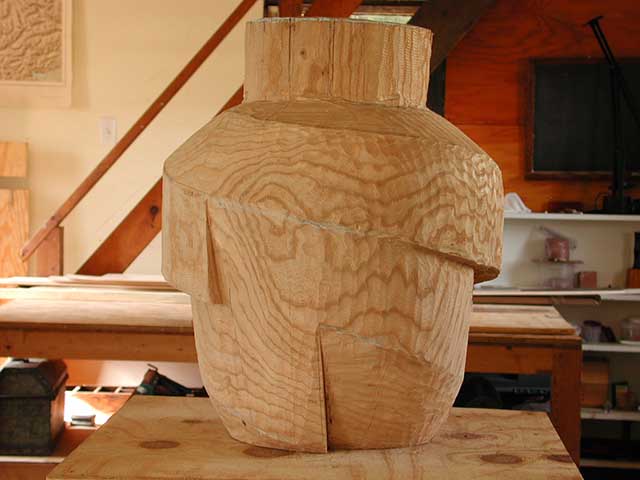
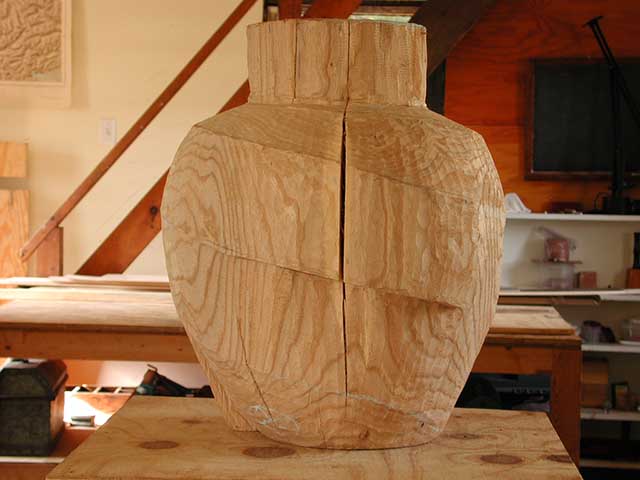
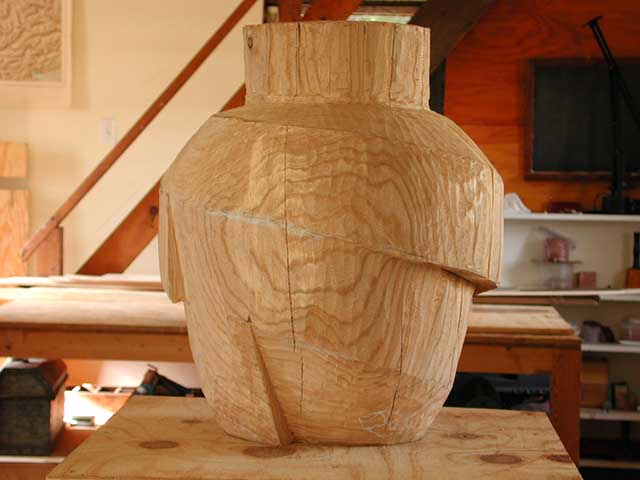
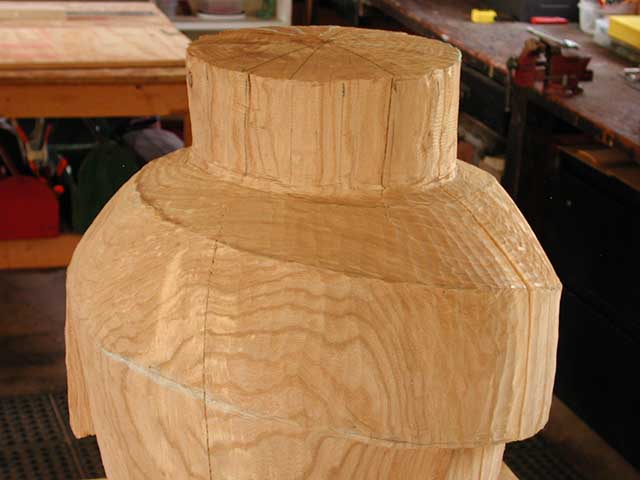
I’ve decided to go over the whole surface with a hand chisel, giving it an even scalloped effect, like small waves on water. This is the handmade look that I want, otherwise, it could look too much like furniture, with a typical smooth sanded surface.

a_surfacing

b_surfacing

I use chalk to mark the areas where I still need to carve in and remove the smoother surfaces that were left from the surform tool.

c_surfacing

d_surfacing

I can also even or flatten out a few planes, and sharpen up some edges.

e_surfacing

f_surfacing

This is an enjoyable stage where I feel the most like a real sculptor, working with a hammer and chisel, shirt off, summertime in the studio.

I still need to ding off some high spots here and there, and start to consider a finish to preserve the wood.

Modern Art

I don’t disagree with French Theory, but it does not help me to make artworks based on it’s principals. In sum, it says: Because of the subjectivity of persons, all meaning is ambiguous. This includes Art.

I want to now clearly state my preference as Modernist, I’m a Modern Artist, making work in the tradition. You know what I mean, Twentieth-Century Modern Art.

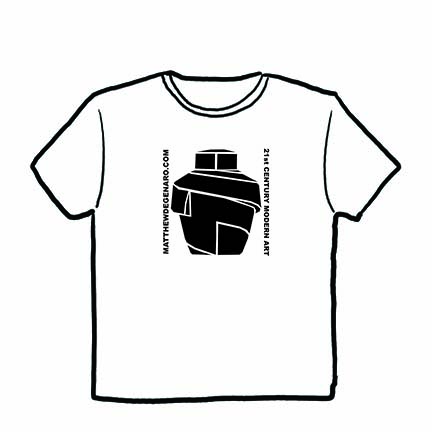
I’m thinking of a t-shirt:

Contemporaryism Art

Writing about two art shows which took place in 2007, one by a graphic artist, the other by a group of young band members. Chris Kraus says:

“Looking at images from Yates’ Burnout exhibition alongside the Get Hurt documentation, I’m struck by the intangible quality that differentiates art from ephemera. Both shows featured works composed from the same materials, in similar styles. Both bodies of work orchestrate collisions of signifiers drawn from the same bank of cultural references. Yet Yates’ magnificent posters… are decidedly works of visual art“. Kraus, Chris Where Art Belongs Semiotext(e) 2011

What I’m remarking here is the notion that contemporary art is easily identified by its use of signifiers and references – so much that it represents a de facto style in itself. An “ism” of art consisting of signifiers and cultural references.

Wait for my next post to see where I’m really going with this…

1961

I want to take a minute to explain what I’ve been looking at and thinking about lately, that is, the works of the French Nouveau Realists – which is to say the group of Tinguely, St Phalle, Arman, Sporreri, Ceasar, Christo, &c. in and around the late 50’s and early 60’s. One of the methods of Nouveau Realism was the use of real objects in and of the world in the making of art. While Duchamp proposed the idea of the ordinary object elevated to the level of Art by the choice of the artist, he only produced a few banal examples. It was in the works of the Nouveau Realists that this idea was brought to fruition with beauty. It is, after all, pointless to propose revolution in art if it does not result in beauty.

I say “1961” because it seems to me a pivotal year for Western culture. It marks the change from abstraction in art to the sequential popular art movements of the 60’s which continue to this day, the rise of Rock and Roll culture which has supplanted the (revolutionary) role of the artist with that of the star, and television’s spectator culture which created the audience for it.

The inversion of “61” gives 1919, roughly the year Duchamp quit readymades, and, 1961 is fifty years ago from today.

At this time also, was the “concrete” movement in music and film. I think  of Xenakis, Robert Breer, and especially of Stan Brakhage. Concrete elements in art are acquired from the real world, and are not related to abstract elements which are Platonic distillations of real elements, or expressionistic elements, which are emotional subjective representations.

I think some creative people of that time were trying very hard to be in and of the real world, fully engaged in the experience of it, and making in artworks which themselves were real-world things, objective, and not responsive or interpretative.

The reader may be helped in his understanding by exploring these links:

Arman - Untitled

Arman:     http://www.armanstudio.com/fernandez-arman-untitled-234-3-17-eng.html

Touches

By now I’ve cut in that notched part which is the “face” of the figure. Now I’ve every last design element in place. A surform tool to let me find the curve of the sprial planes and even them up, flatten the high spots  – I thought I’d be using a chisel for this, but it’s cut is too local, not evenly spread on a curving surface. Its changeing the texture of the wood, shiny-er, harder, and smoother. I’m advised by Q. not to remove all marks of the chisel or saw and to have a mix of marks. A. says that finishing is a step of its own. I’m inviting all advice on this matter, I am undecided.

Design elements finally

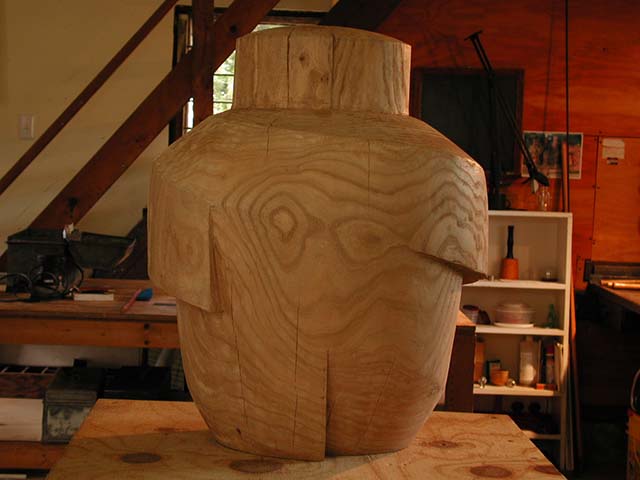
Here the outcome of several short sessions spent adding the design elements which mostly complete the figure. Feet and legs separation better described, also arms wrapping around more.

Head, now rounded over.

 Next, the notch of the face can be done, and then it’s time to think about the hand-working of the surface, sprial effect, and more about the degree of finish and refinement for the overall effect. It was Gary who said that this thing would start to come together more and more quickly as the work progressed. I am surprised to see it nearing the design ideal so soon. Soon. It’s been like a year and a half so far, but maybe only two weeks of actual working days.

Back working

The sun shines for more hours of the day, the earth warms, and I am able to sculpt again. I’m making the details of the arms, hands and feet, subtle things to be using the chain grinder on. Working at the wheelbarrow again, out in the yard. Maybe soon I am close to using hand tools. It is a relief to think that this sculpture will work out, that this long break won’t wreck it.