Author Archives: matthew DG

Unknown's avatar

About matthew DG

What I'm making & seeing & saying

Updates Two Through Five

Sometimes you need to turn your brain off, and just sculpt. And so must you quit the narration and simply post photos. I’m so far behind on updates that I’m going to speed-post the rest, which is too bad, because I’m working with a new materials and techniques that are worth documenting. Oh well.

2

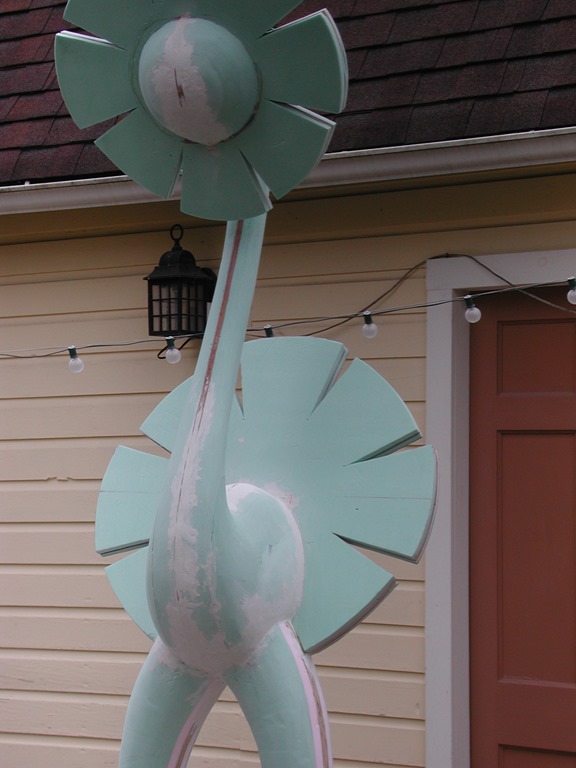
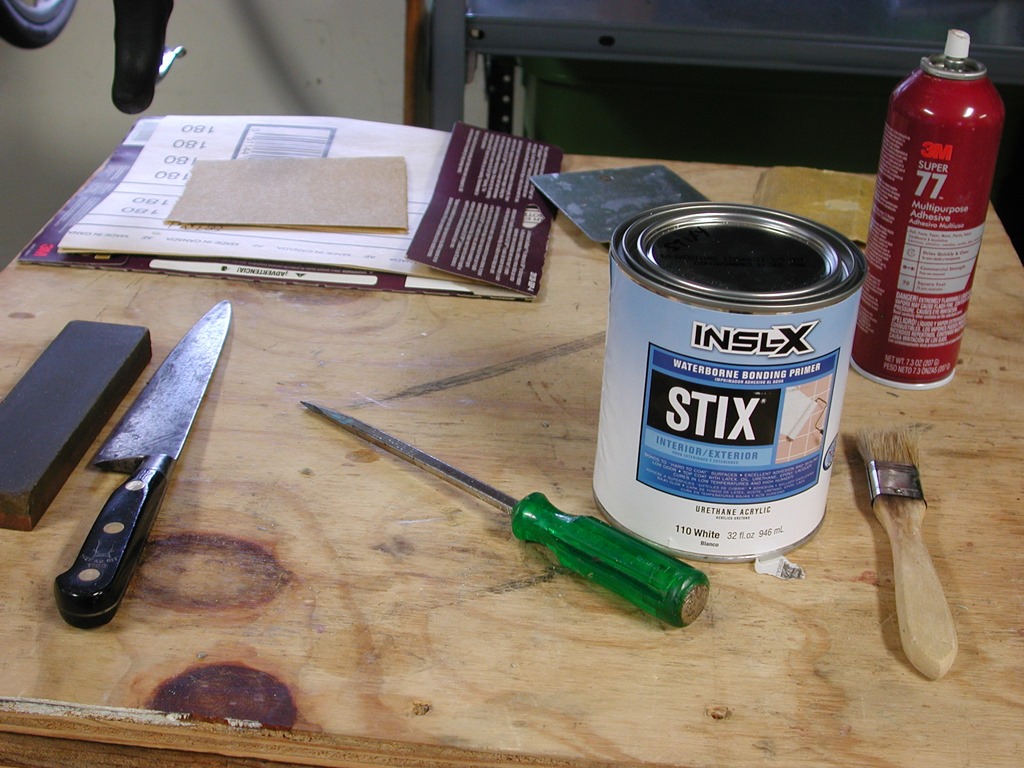
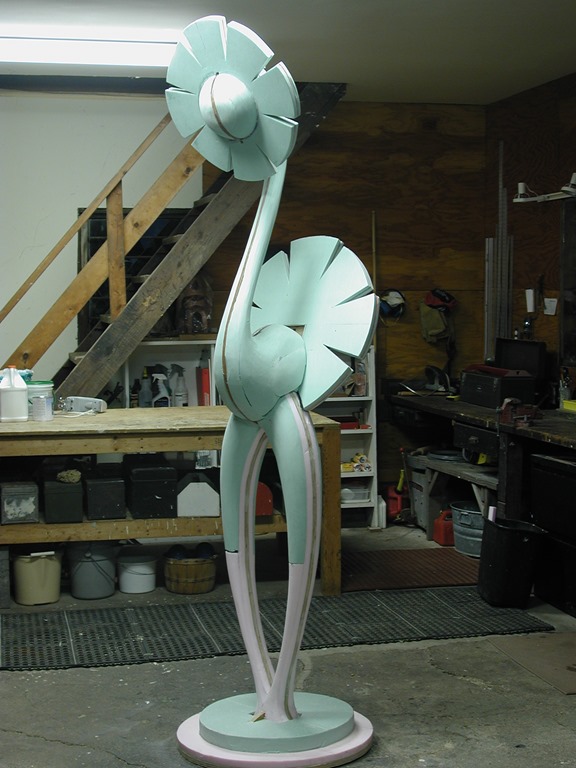
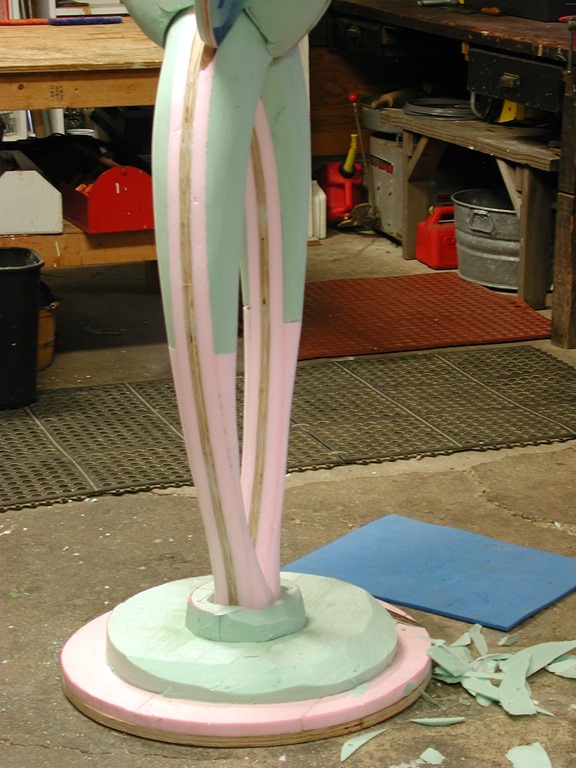
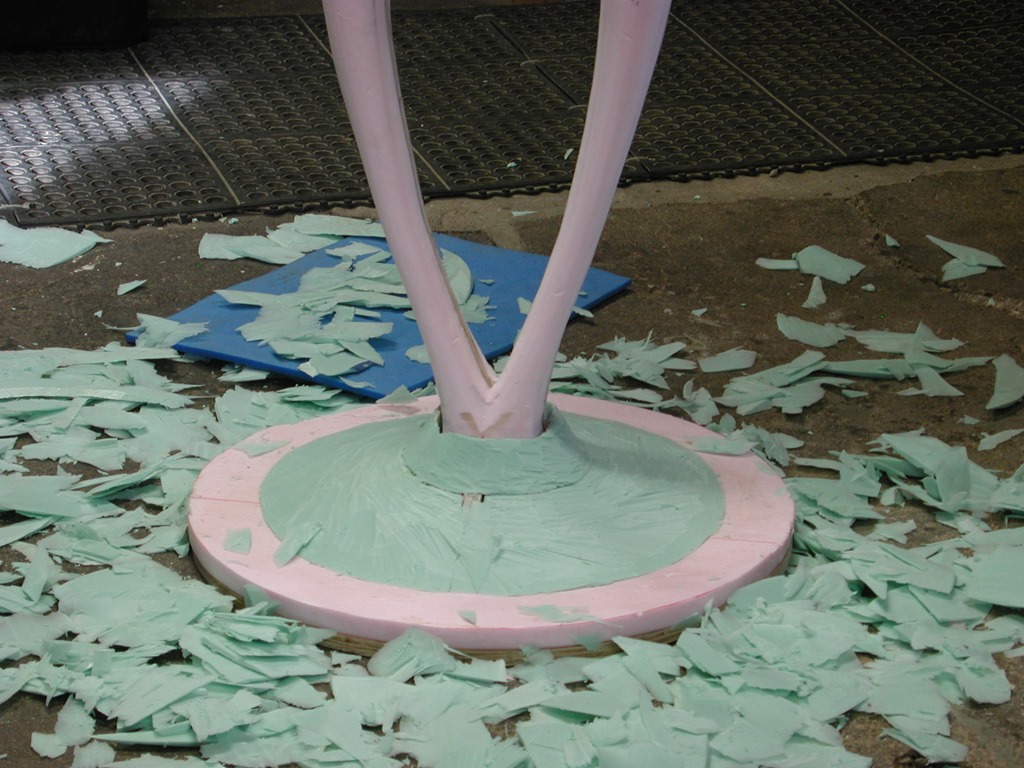
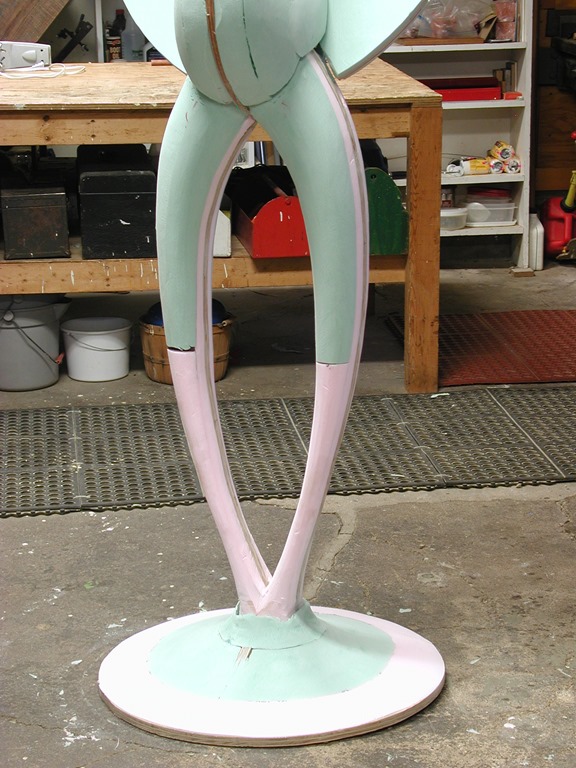
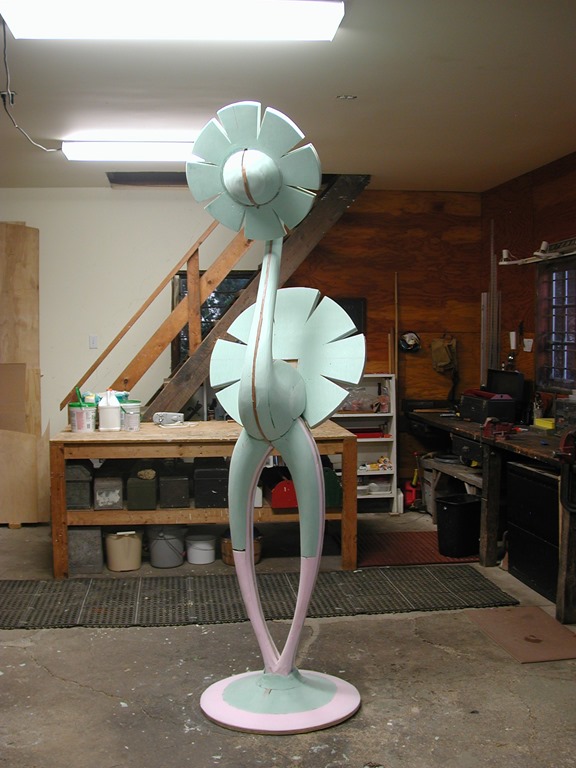
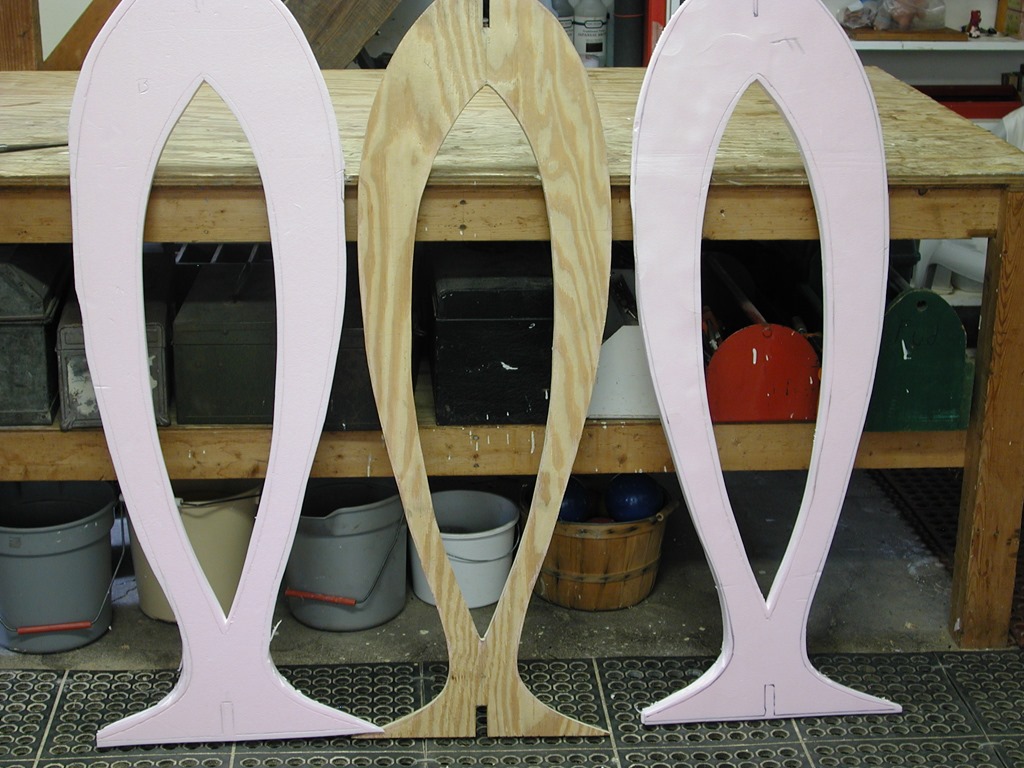
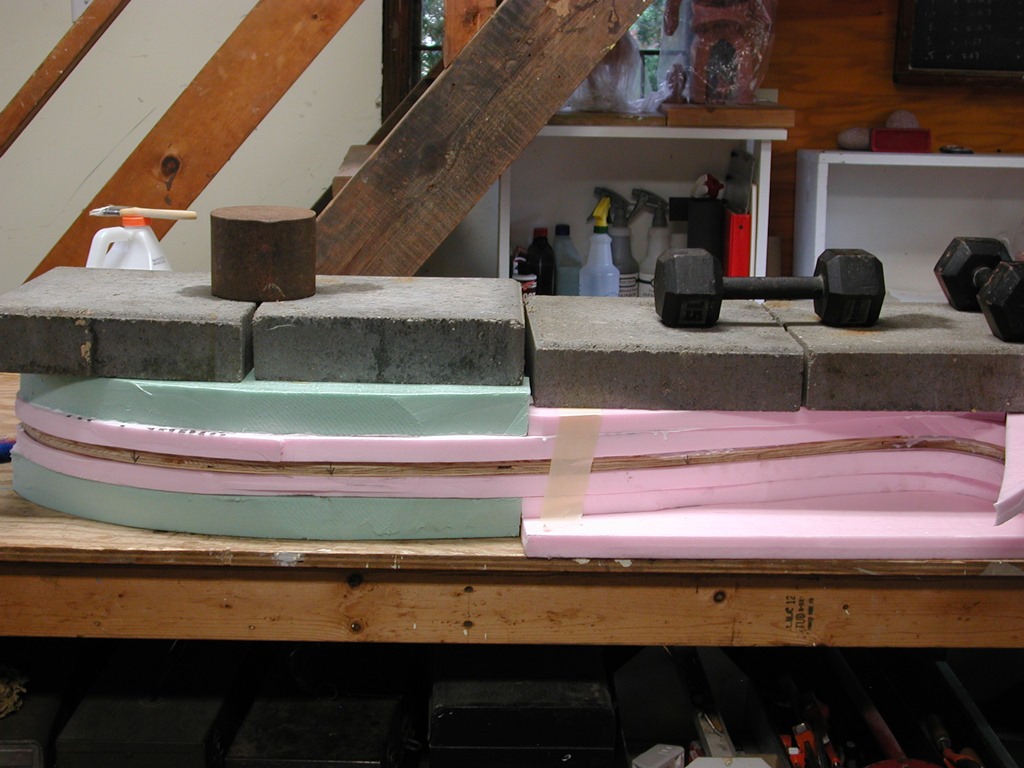
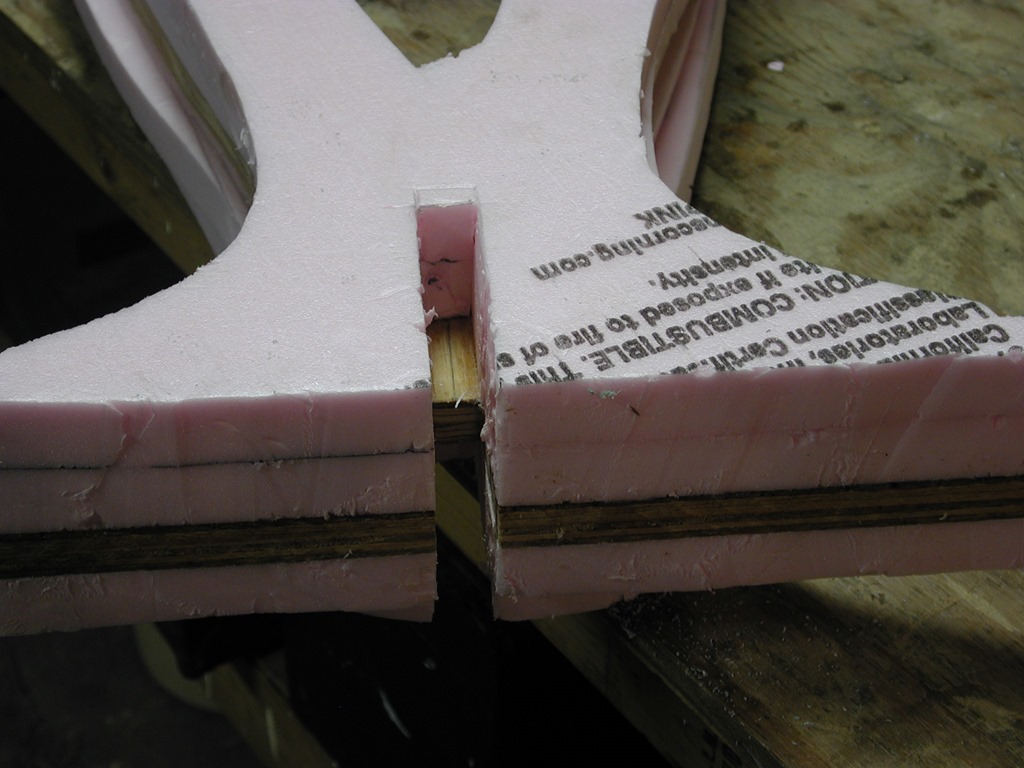
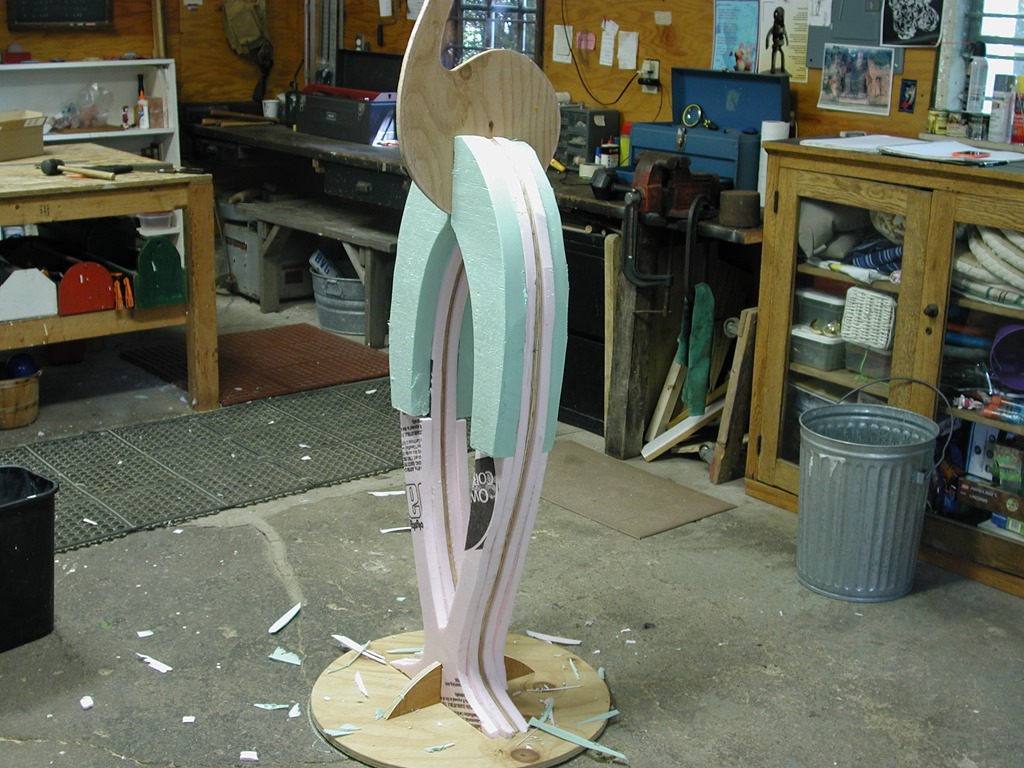
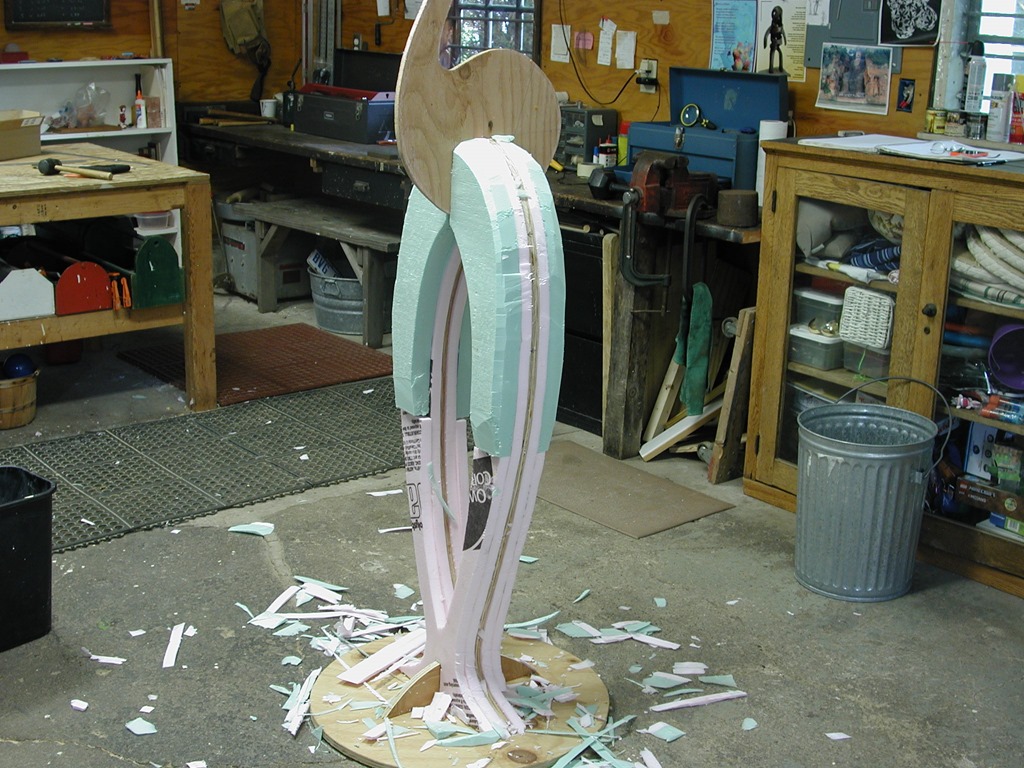
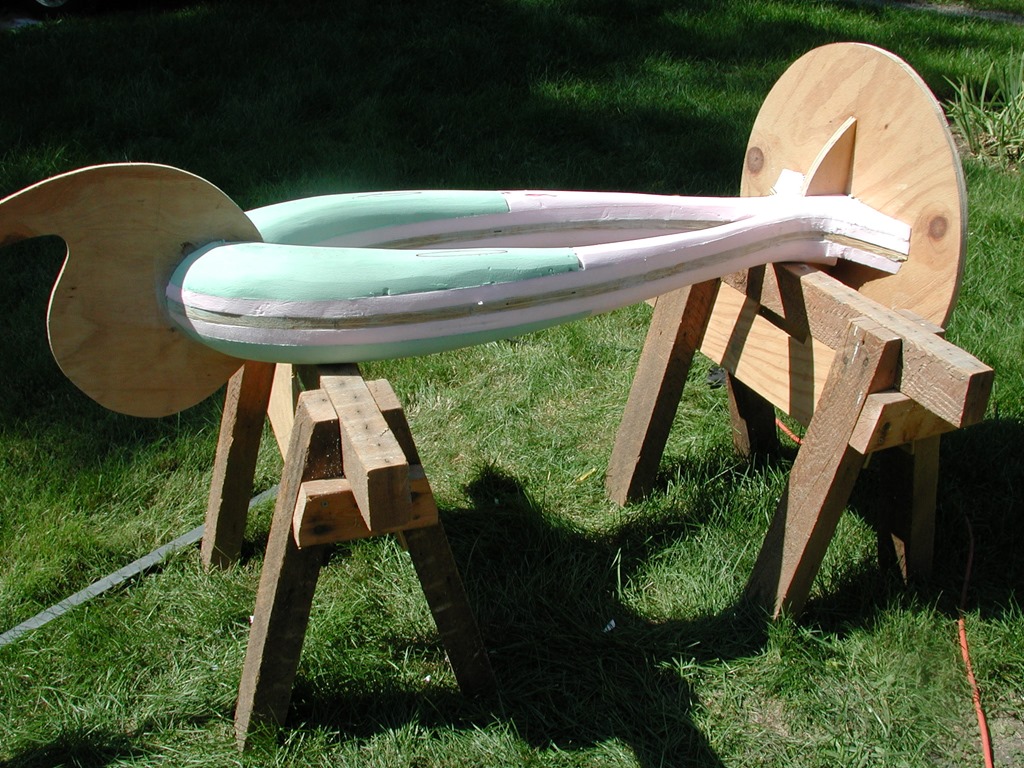
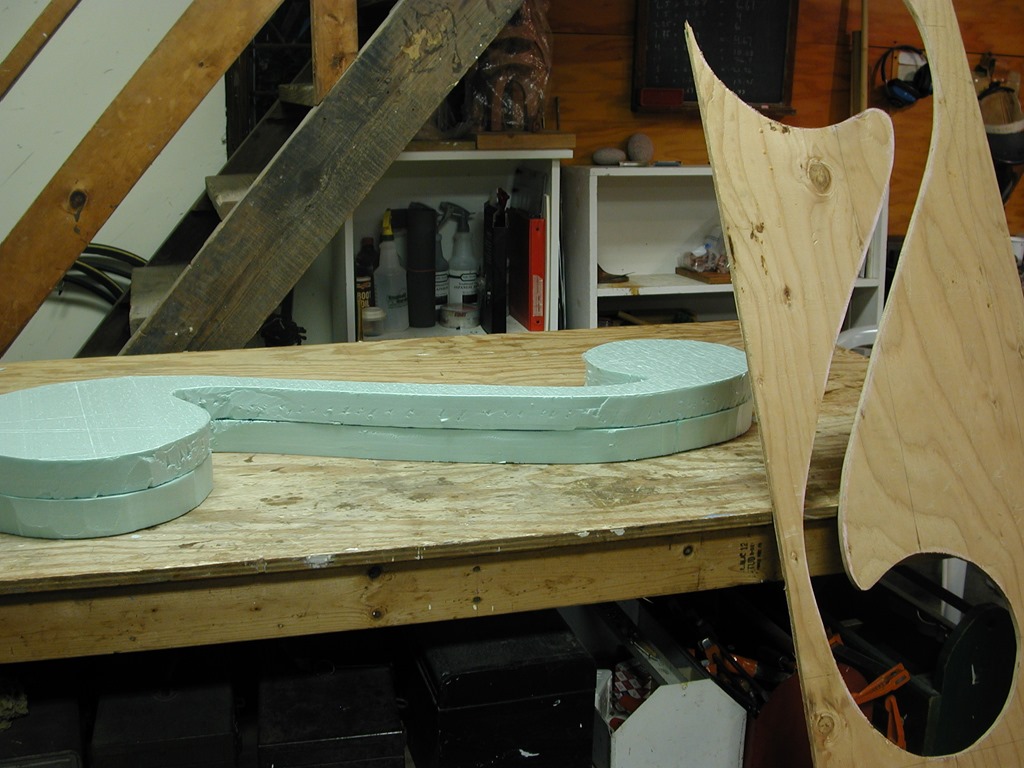
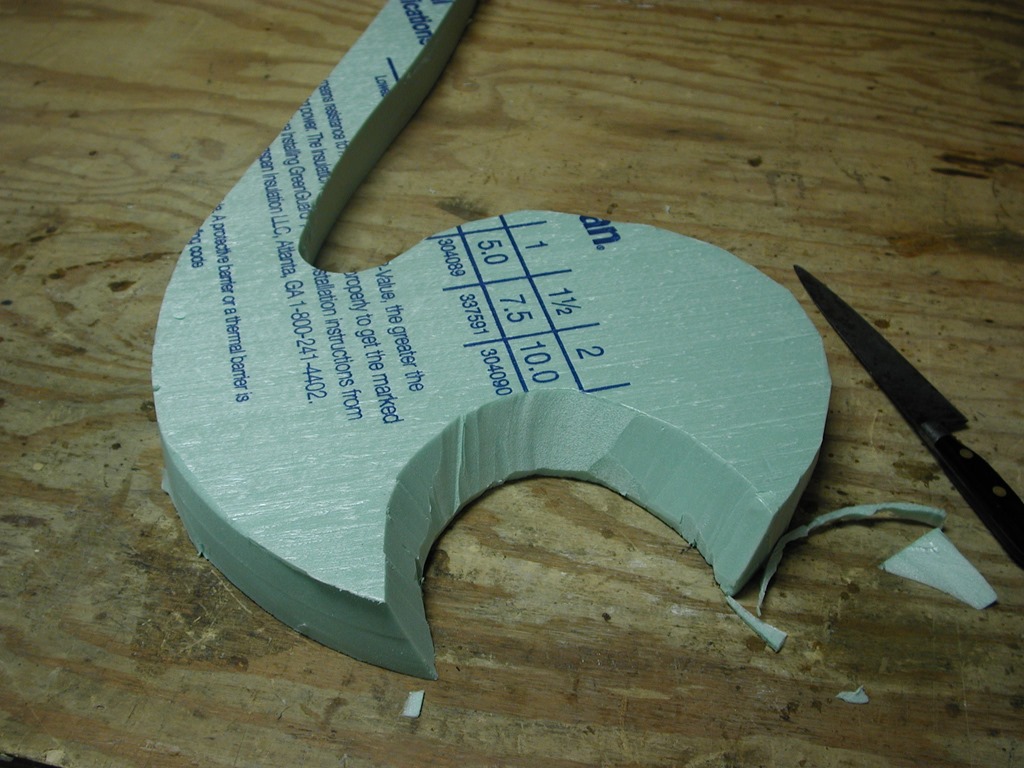
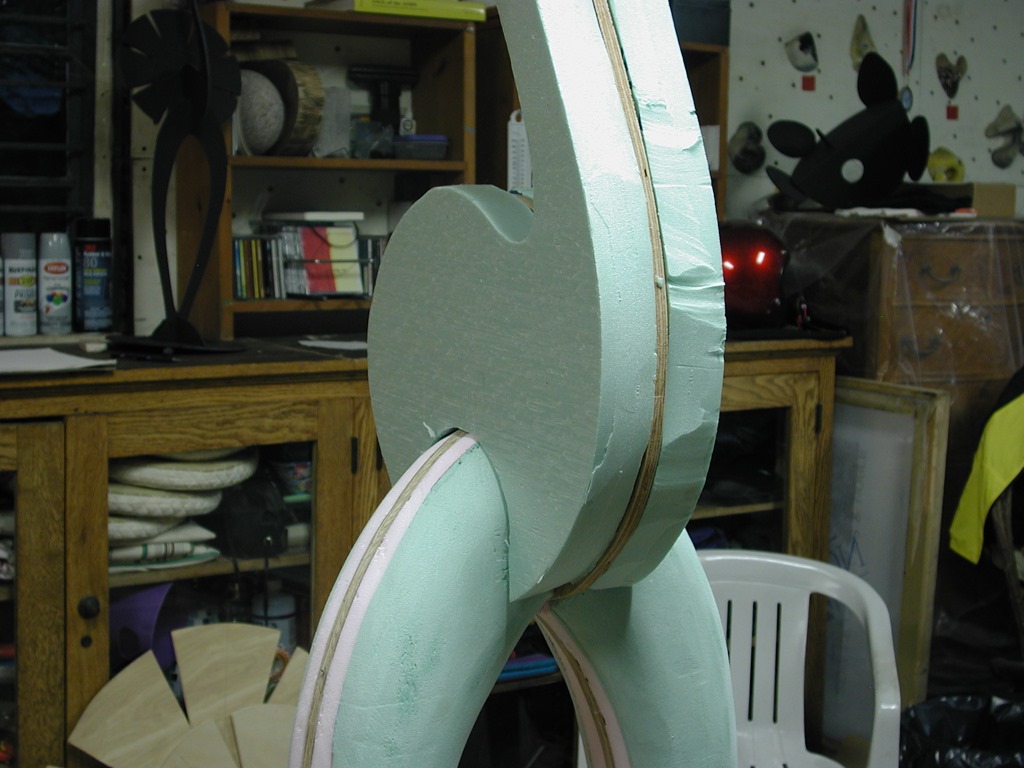
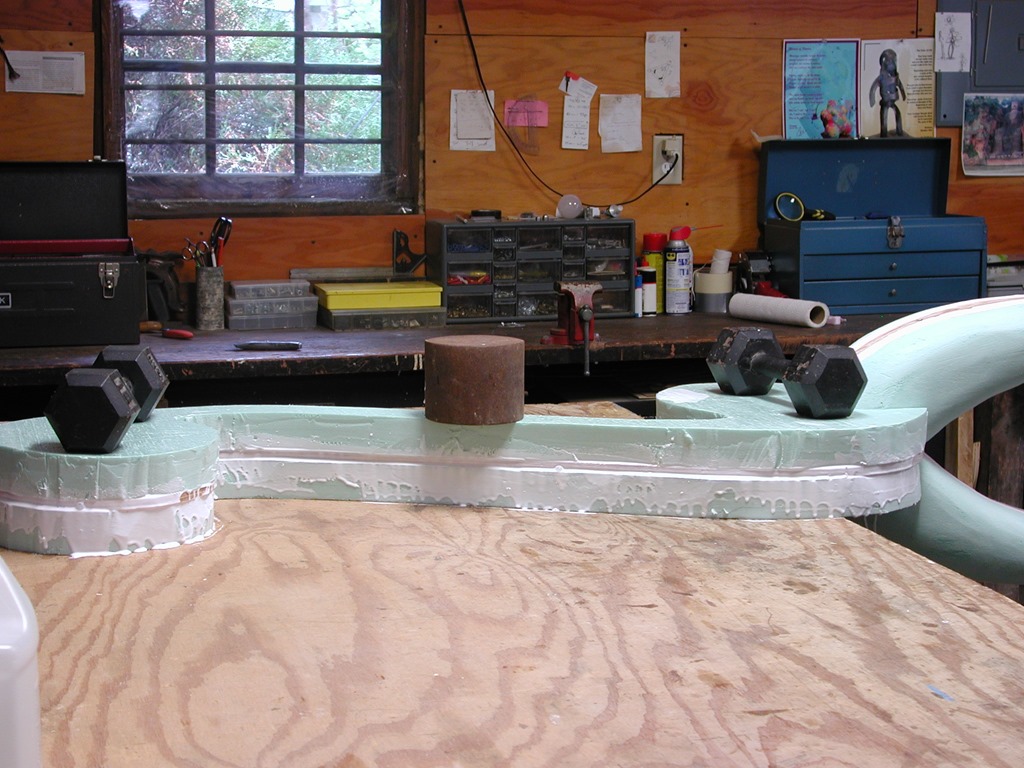
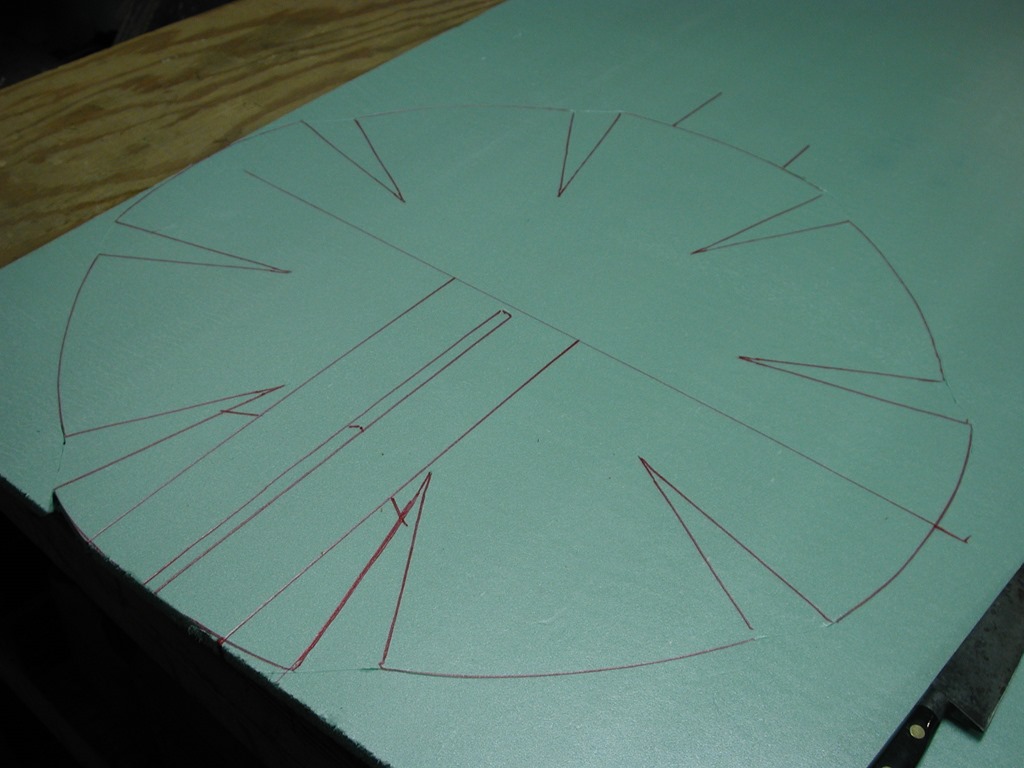
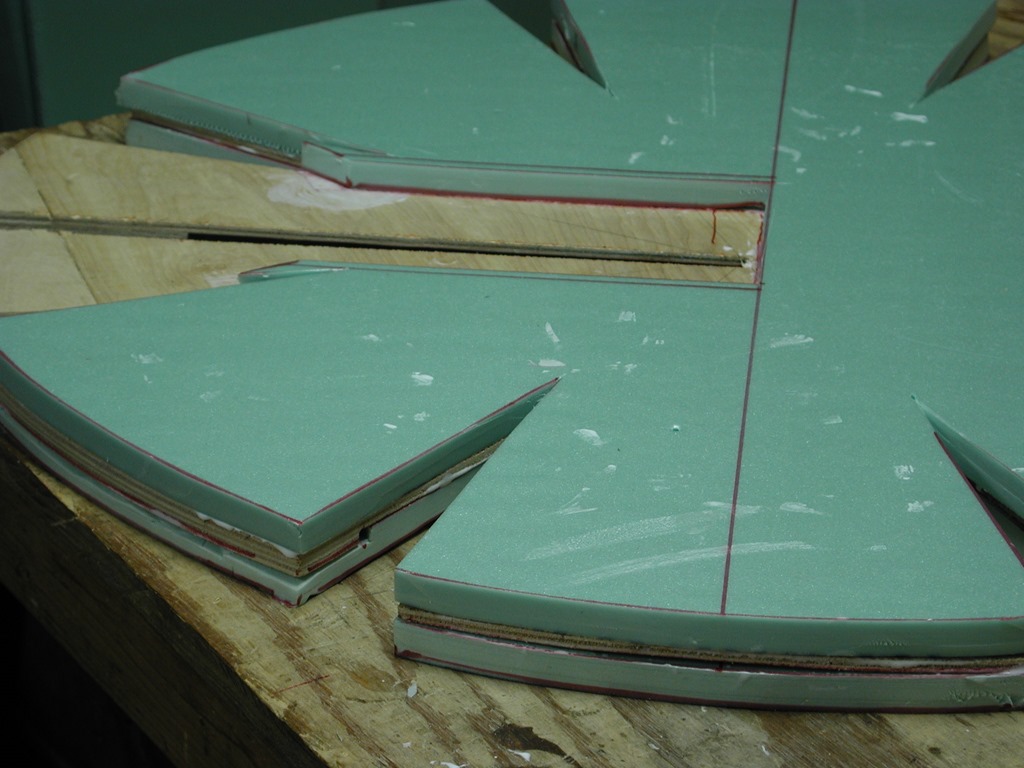
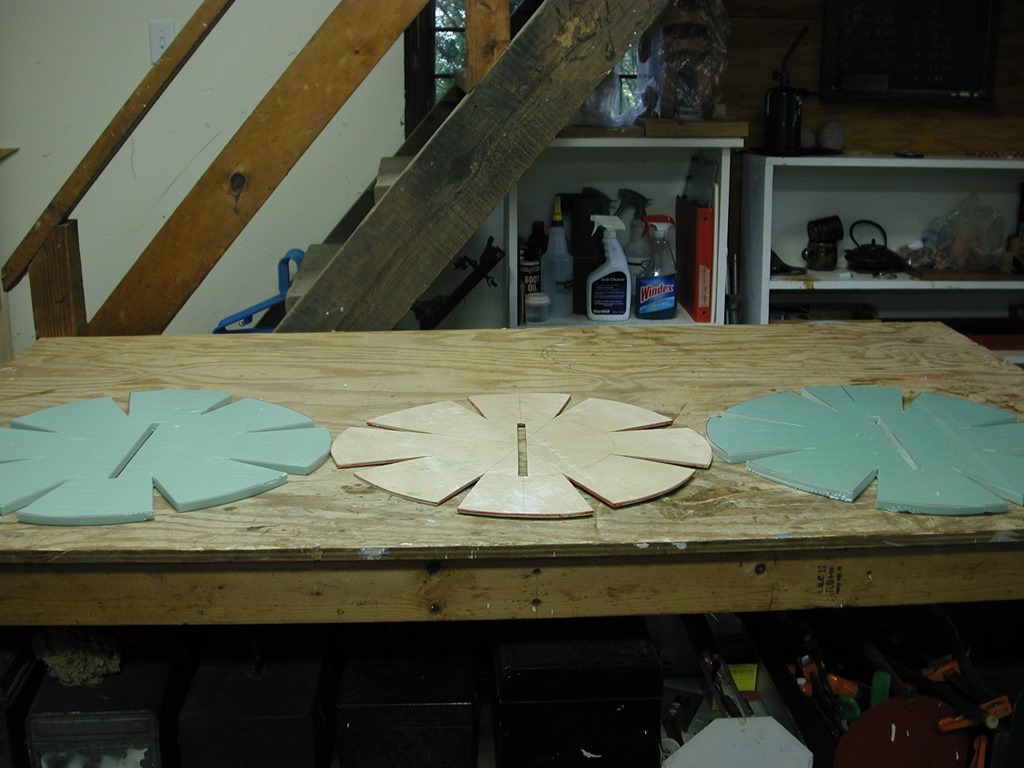
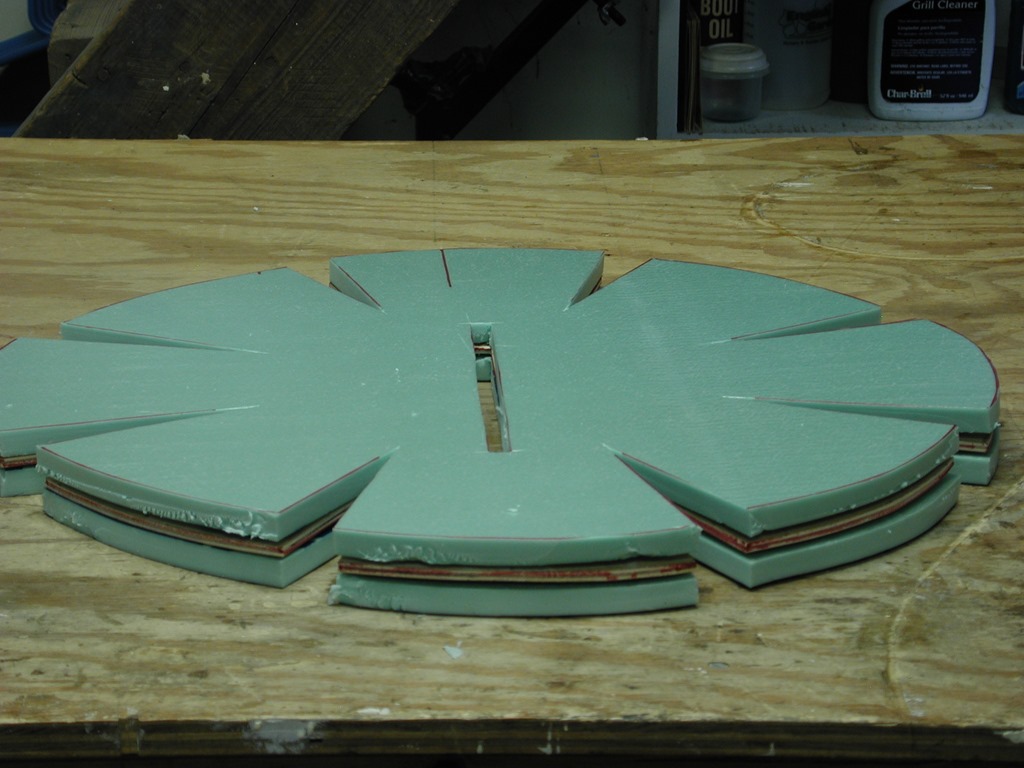
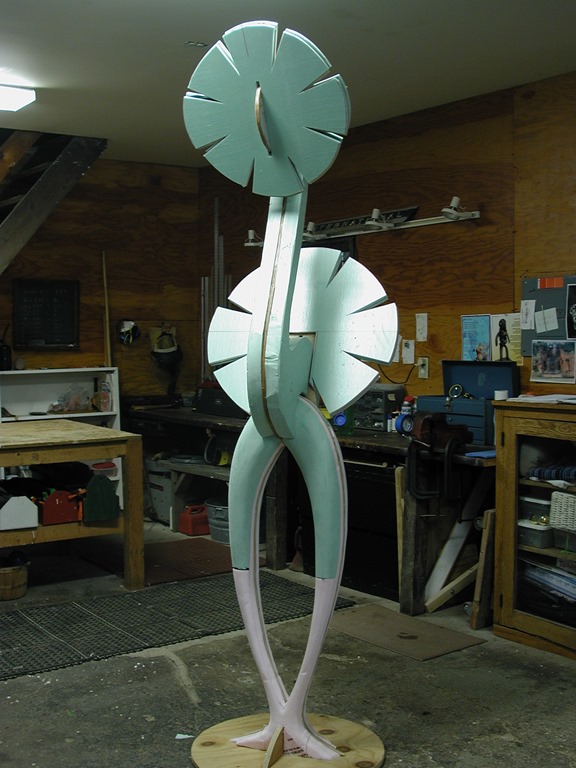
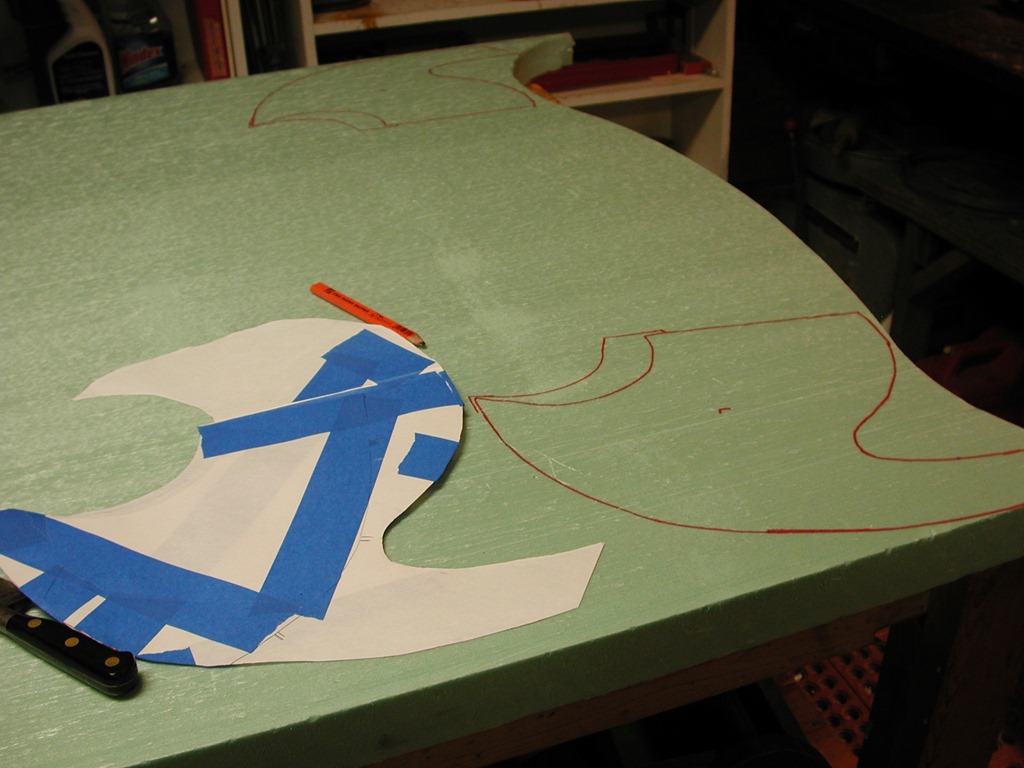
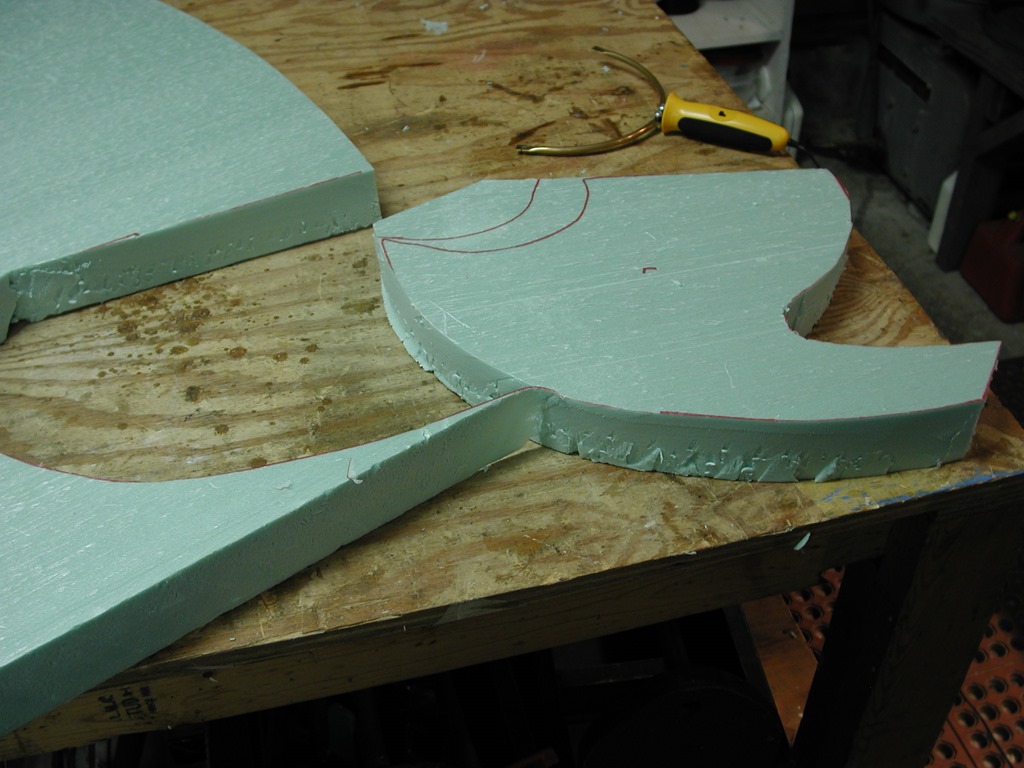
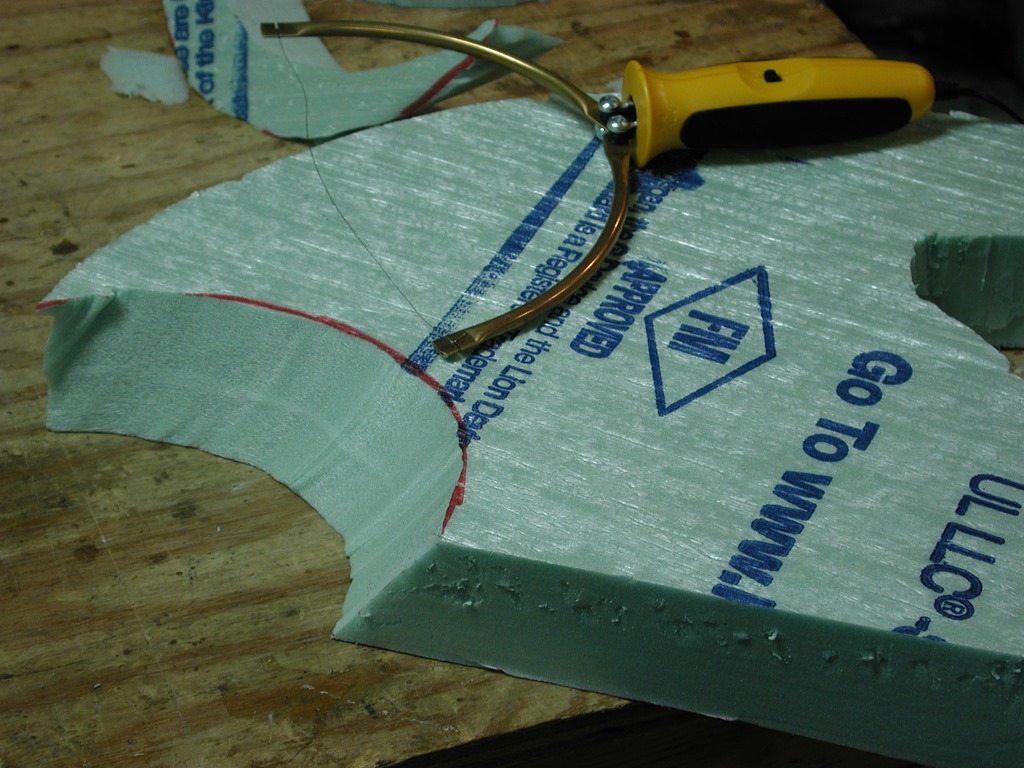
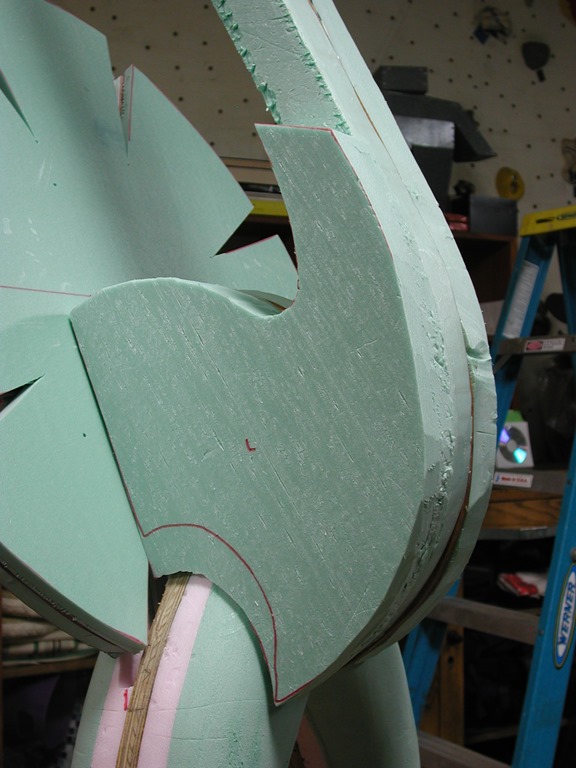
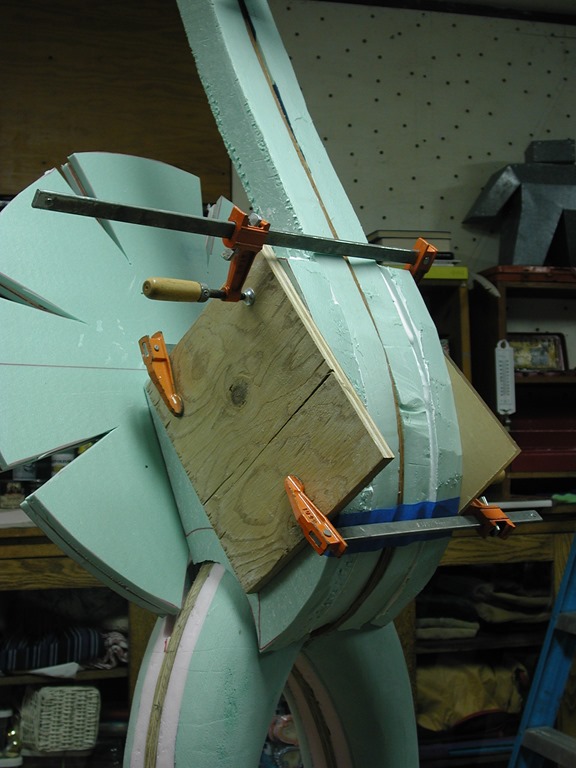
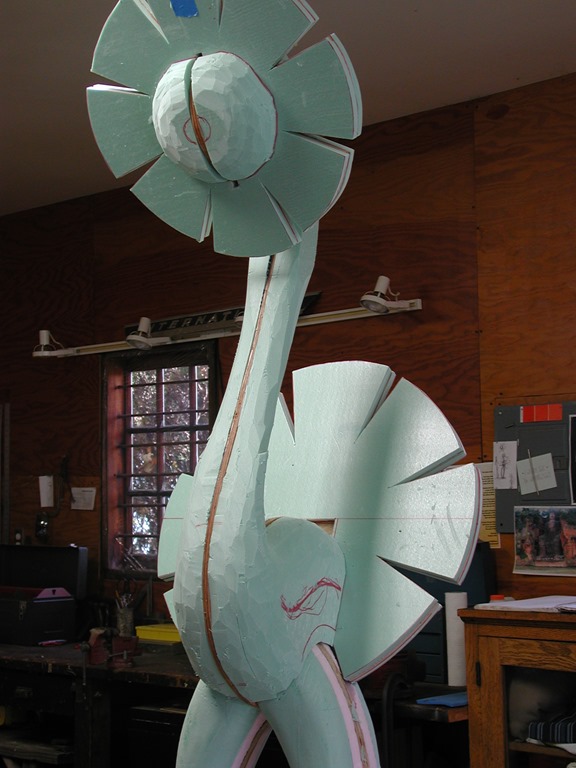
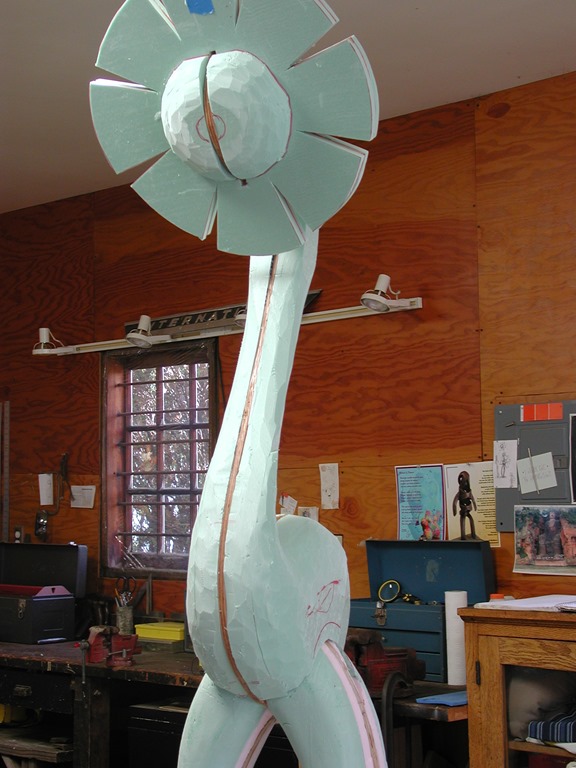
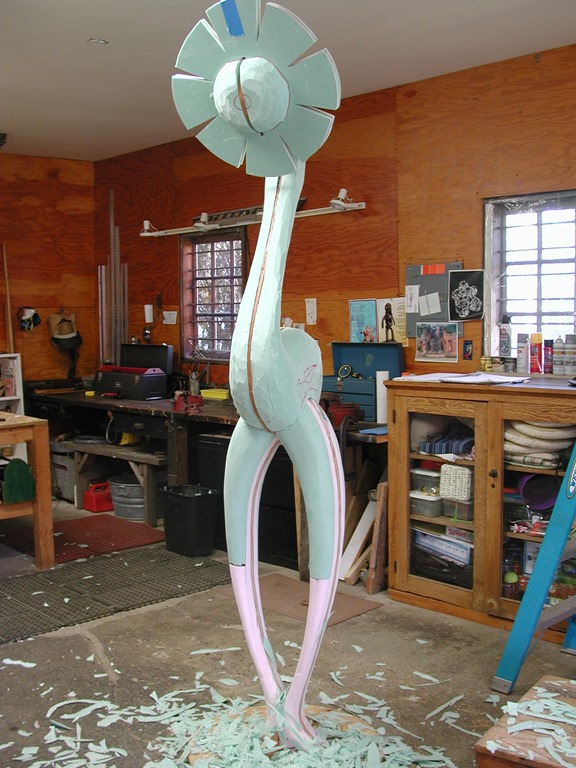
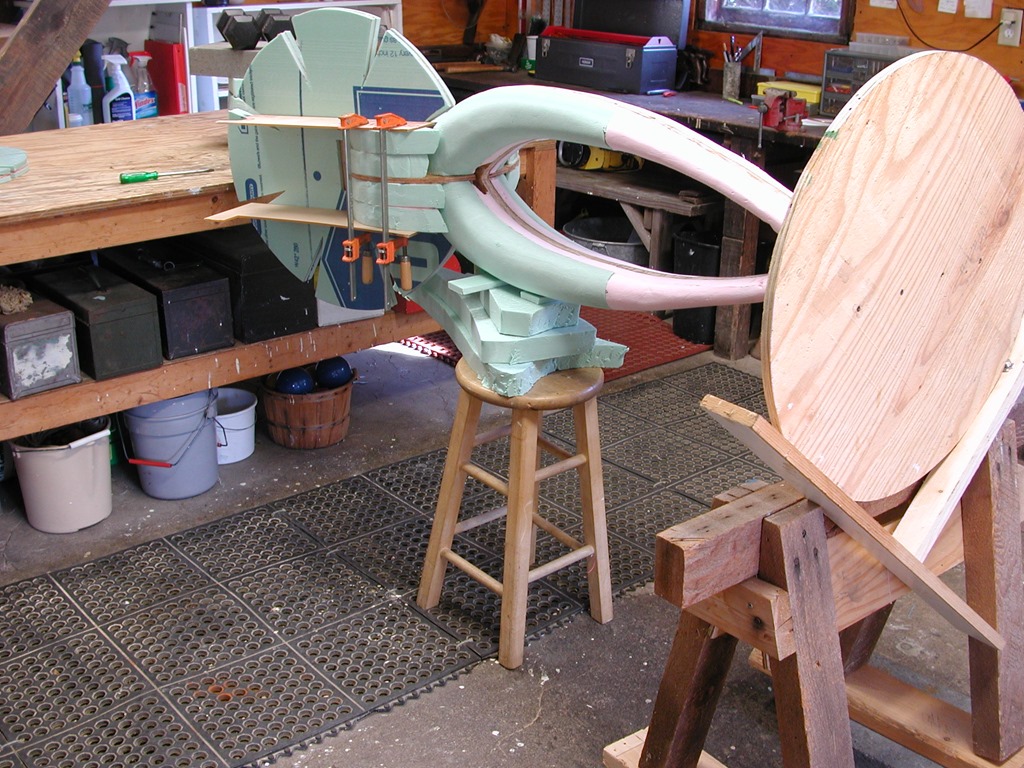
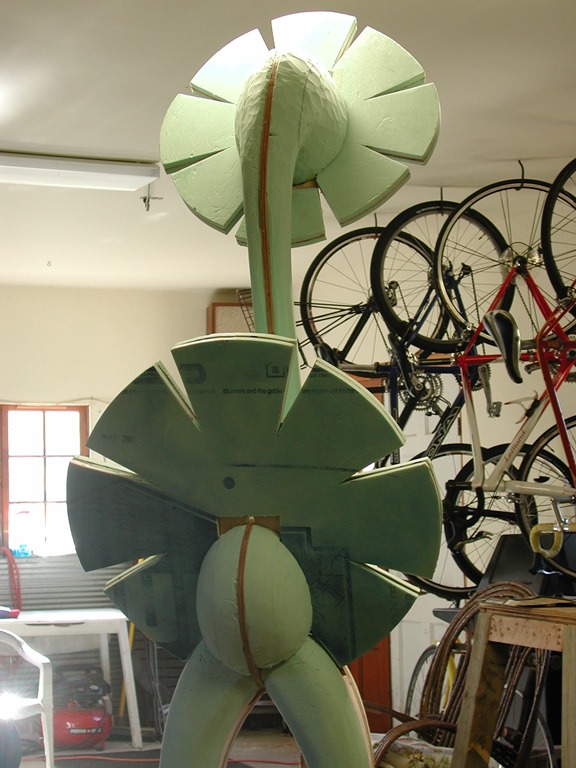
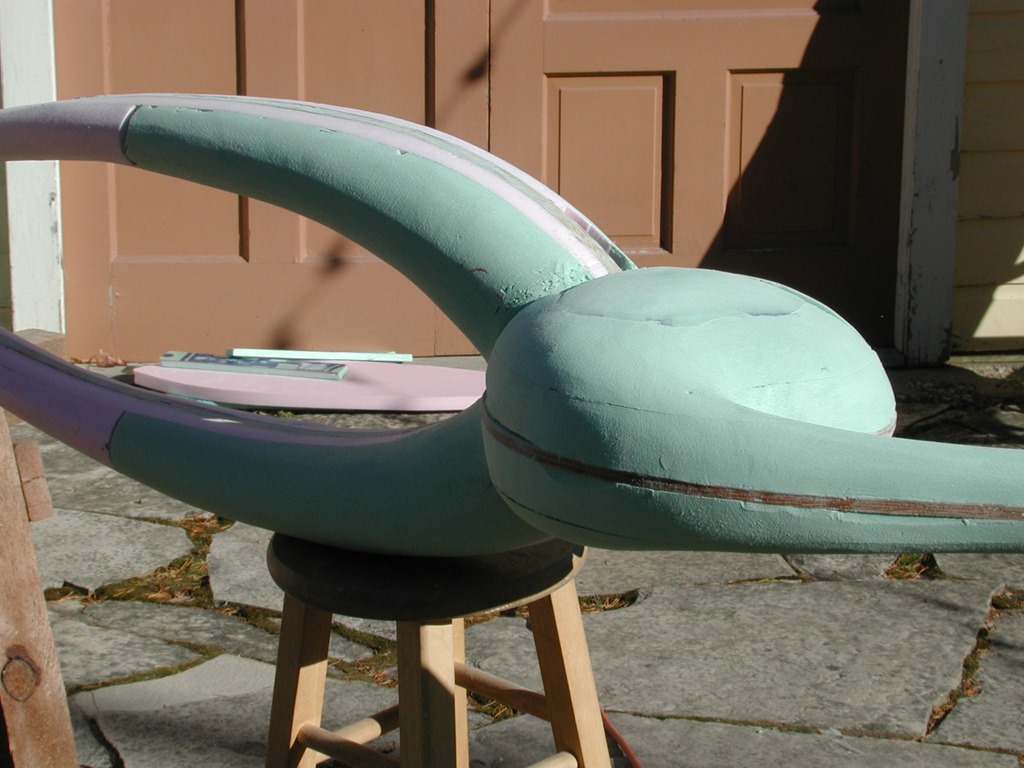
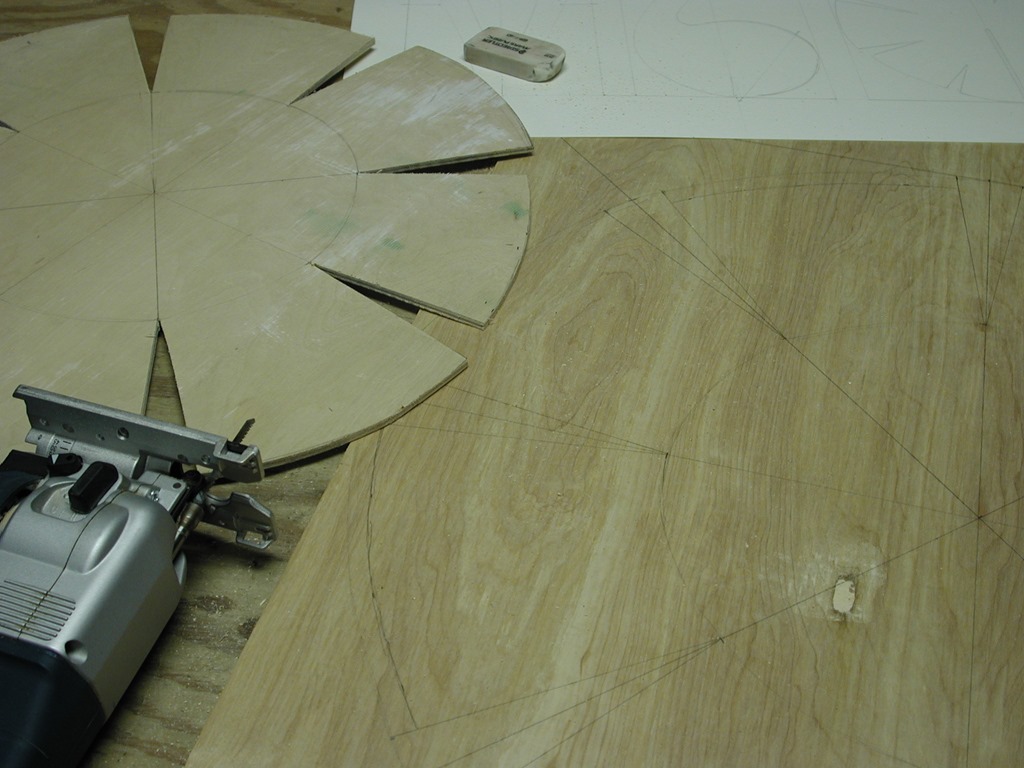
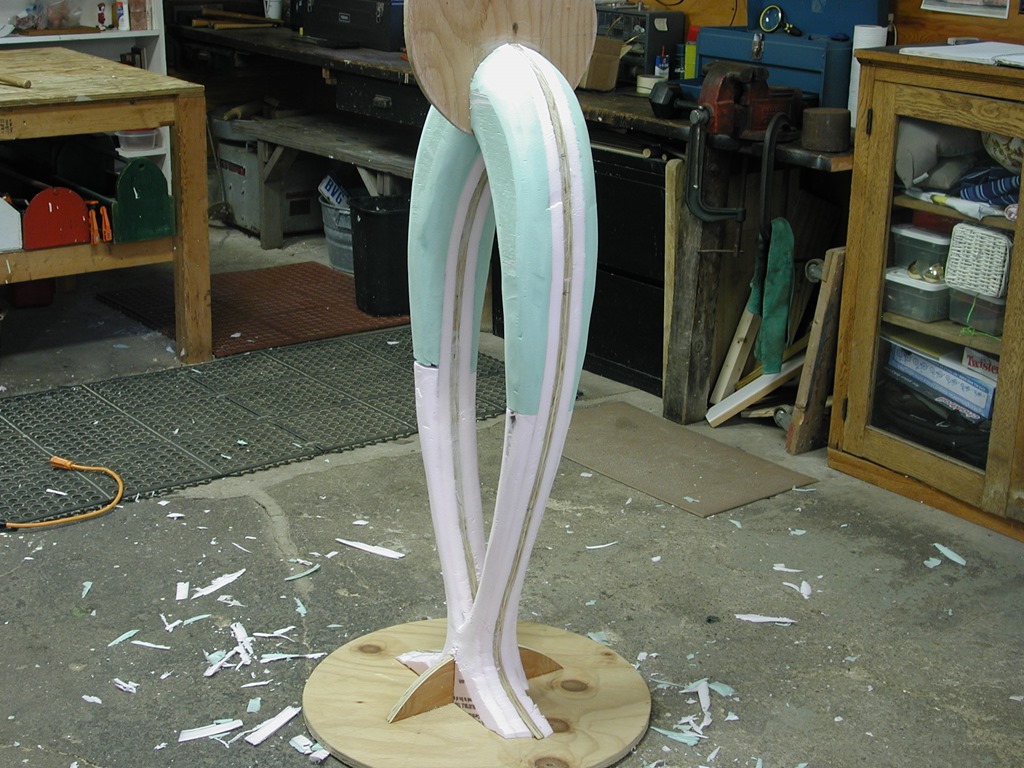
Applying extruded polystyrene foam to the dis-assembled plywood armature-core, Cut patterns for legs, glue up, notch interlocking, re-assemble, start carving away with a very sharp 12” kitchen knife, take outside and lightly sand – September.

a_2SunBirdWomanb_2SunBirdWomanc_2SunBirdWomand_2SunBirdWomane_2SunBirdWomanf_2SunBirdWomang_2SunBirdWomanh_2SunBirdWomani_2SunBirdWomanj_2SunBirdWomank_2SunBirdWomanl_2SunBirdWomanm_2SunBirdWomann_2SunBirdWomano_2SunBirdWoman

2part2

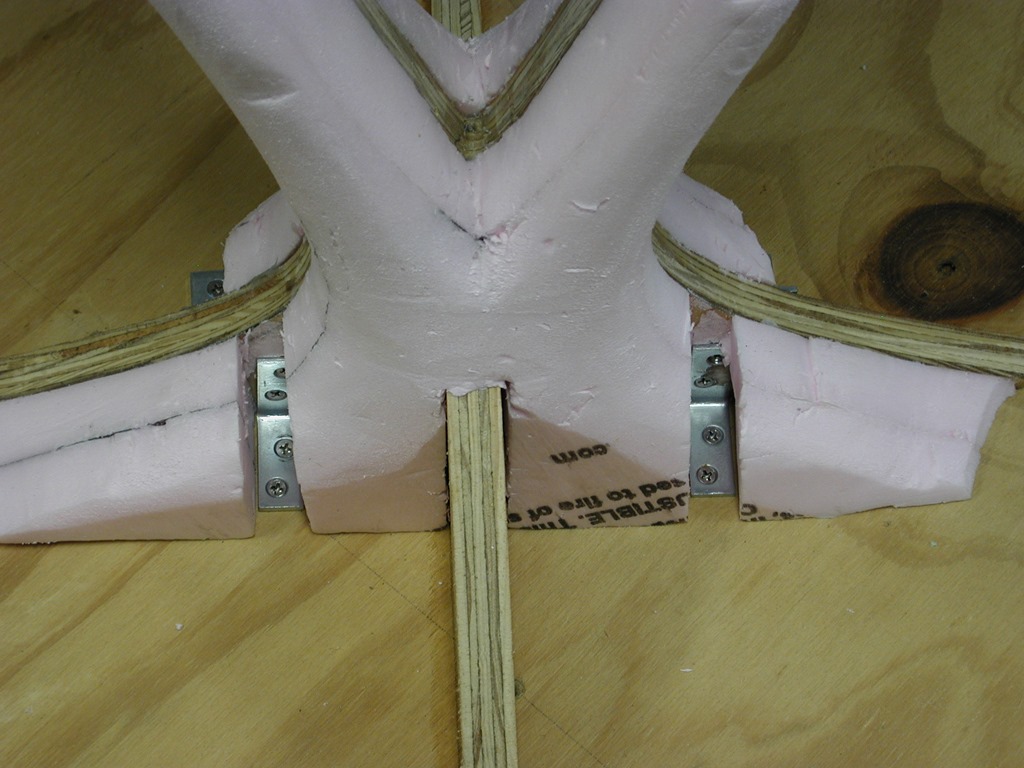
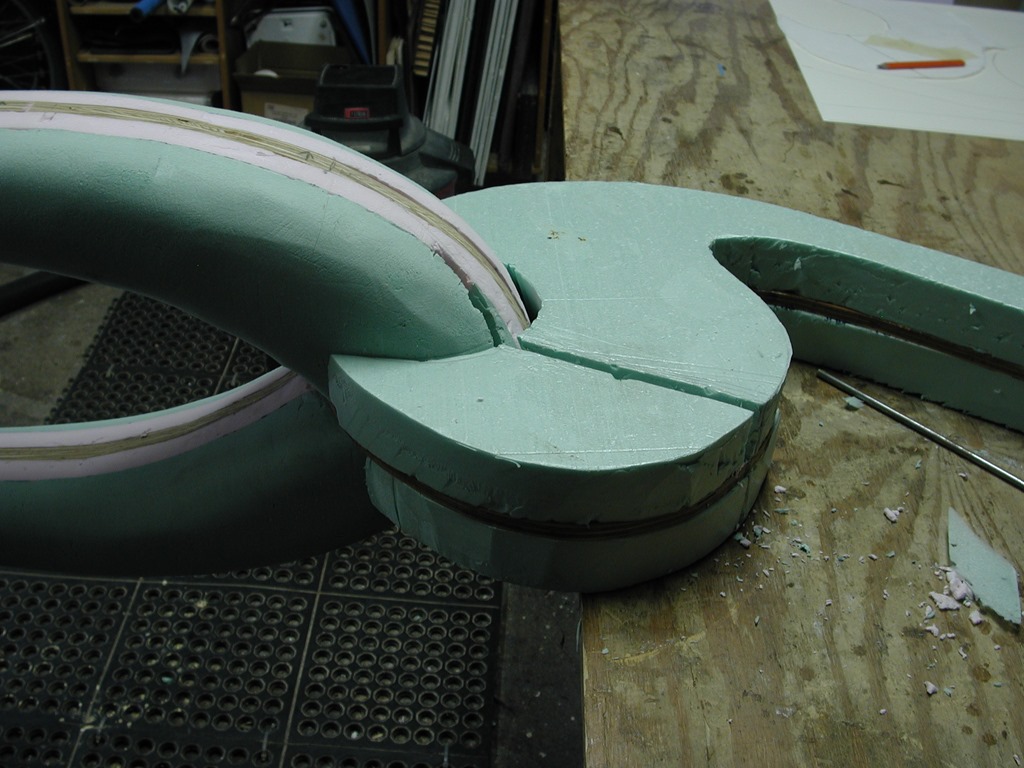
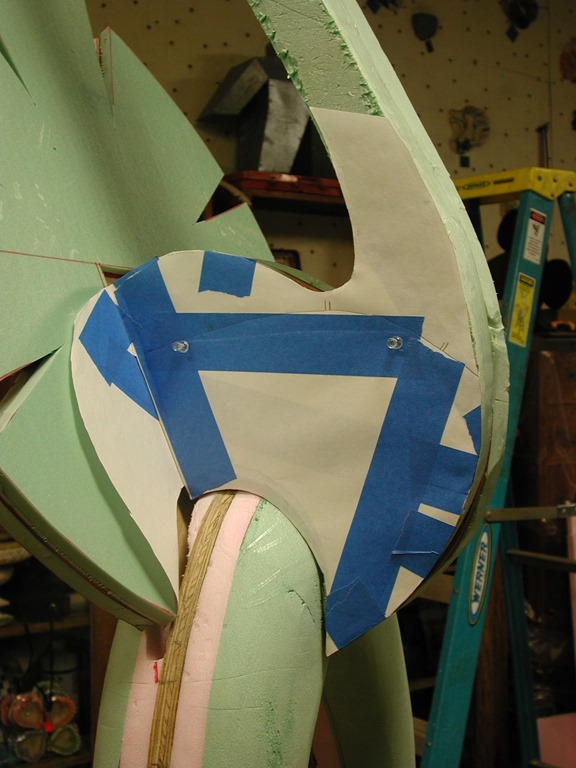
Cut sides for body n’ head, make a clever template to help fit the sides and legs joining, glue-up, reinforce legs to base by-the-way.

p_2SunBirdWomanq_2SunBirdWomanr_2SunBirdWomans_2SunBirdWomant_2SunBirdWomanu_2SunBirdWomanv_2SunBirdWomanw_2SunBirdWomanx_2SunBirdWomany_2SunBirdWomanz_2SunBirdWoman

3

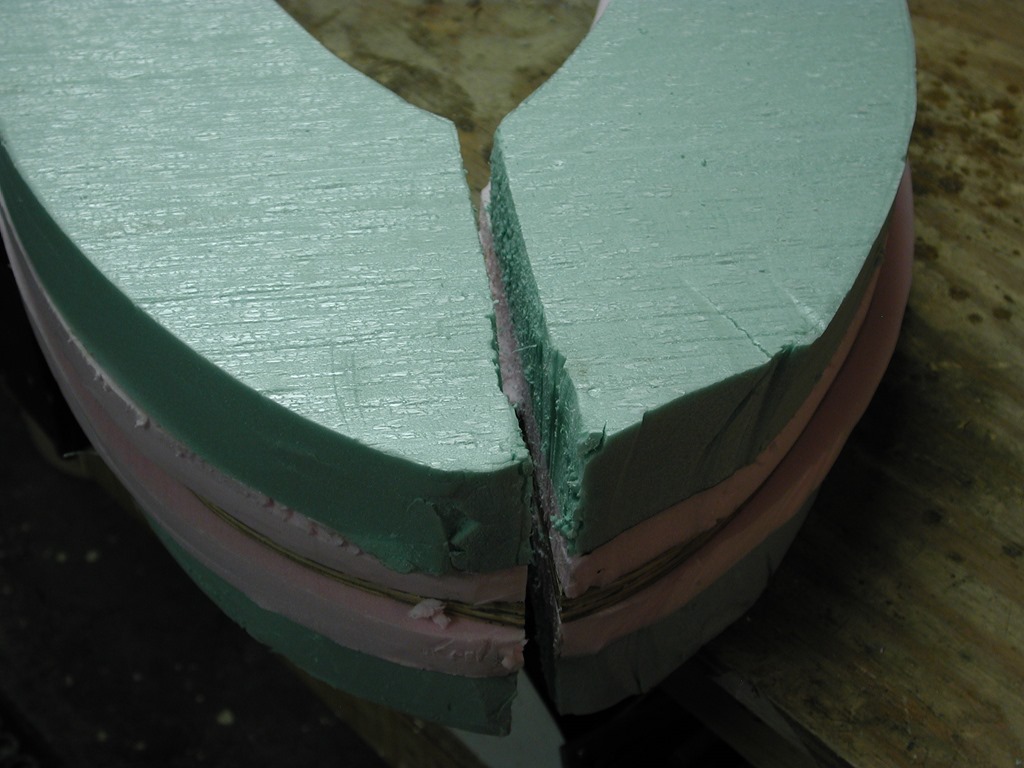
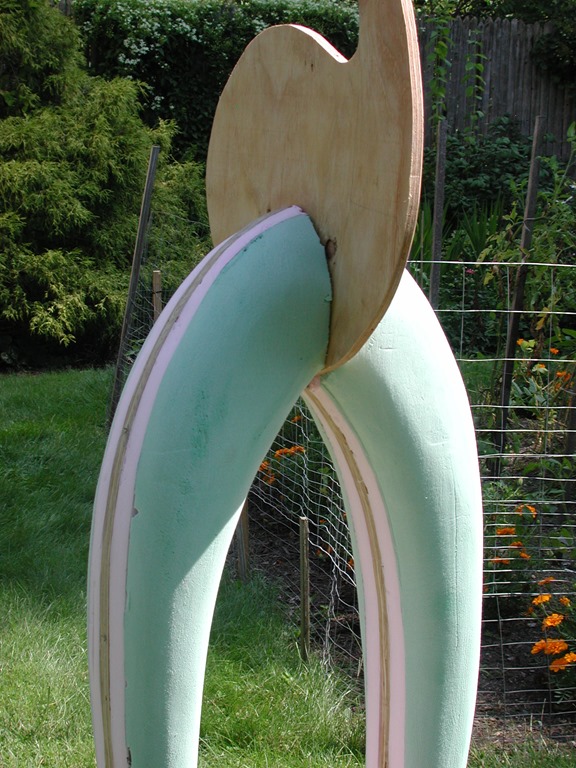
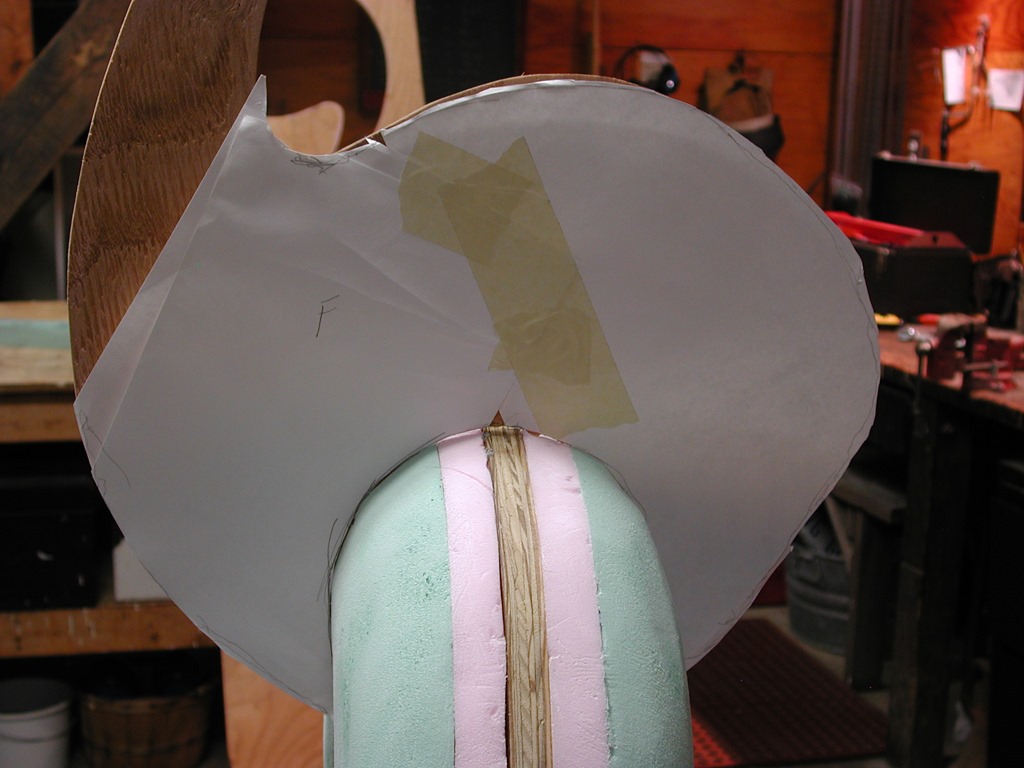
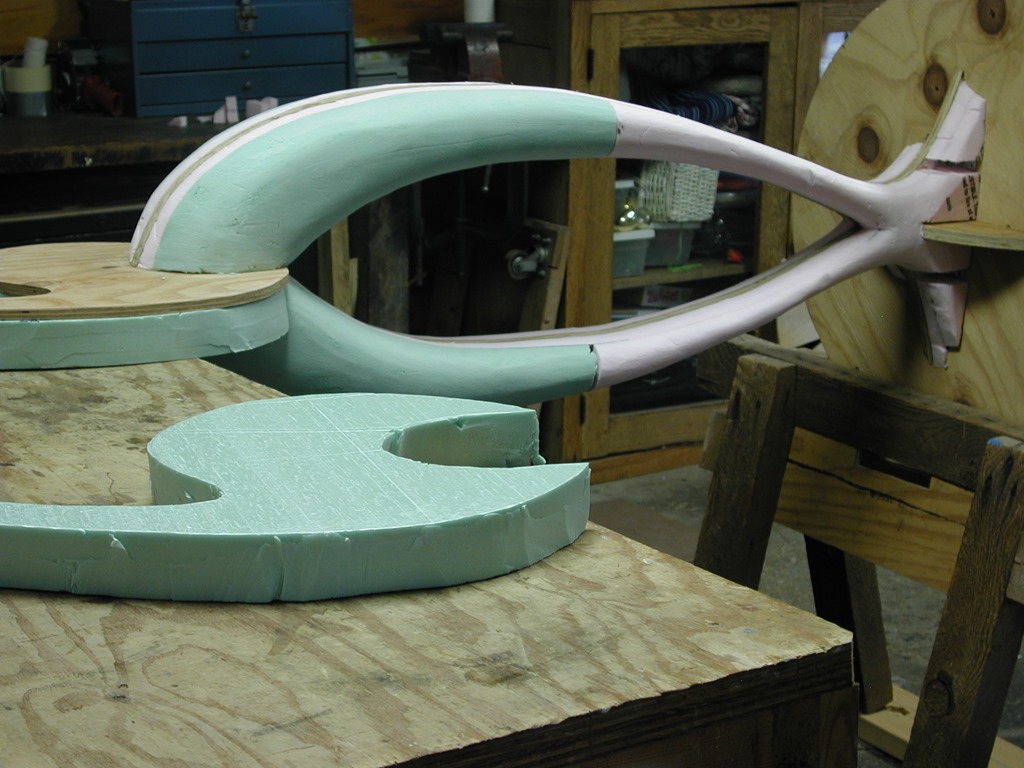
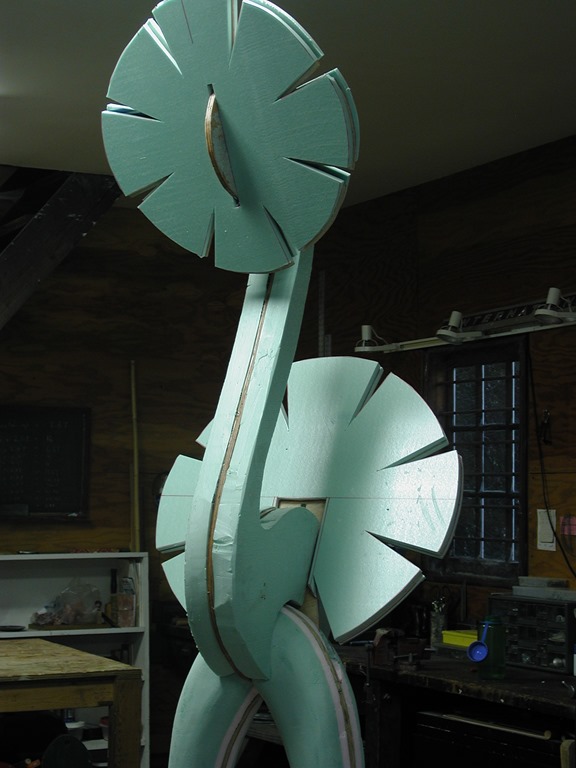
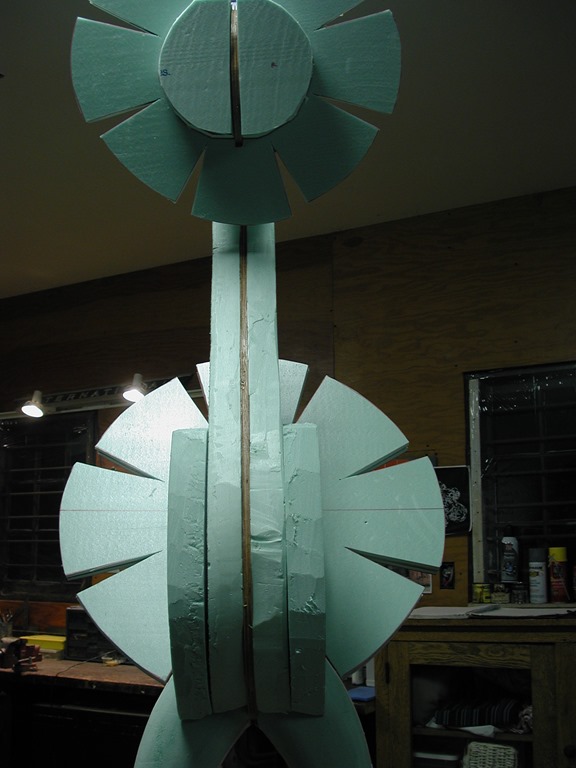
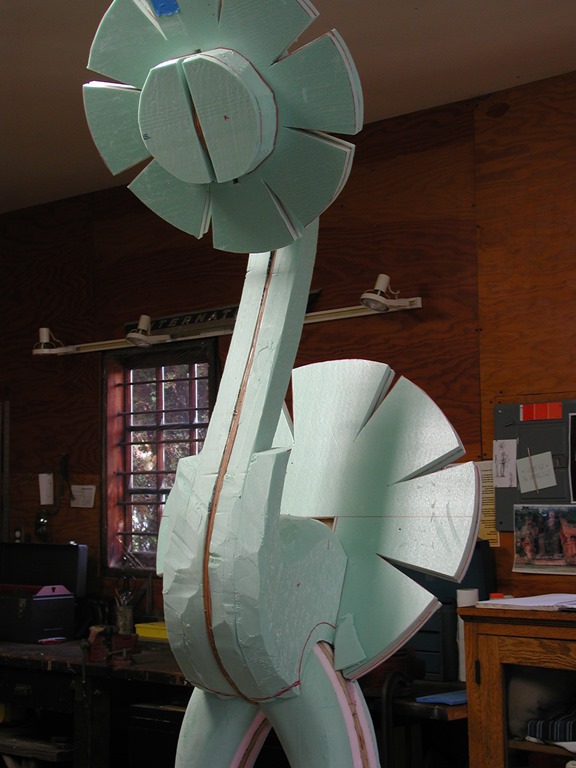
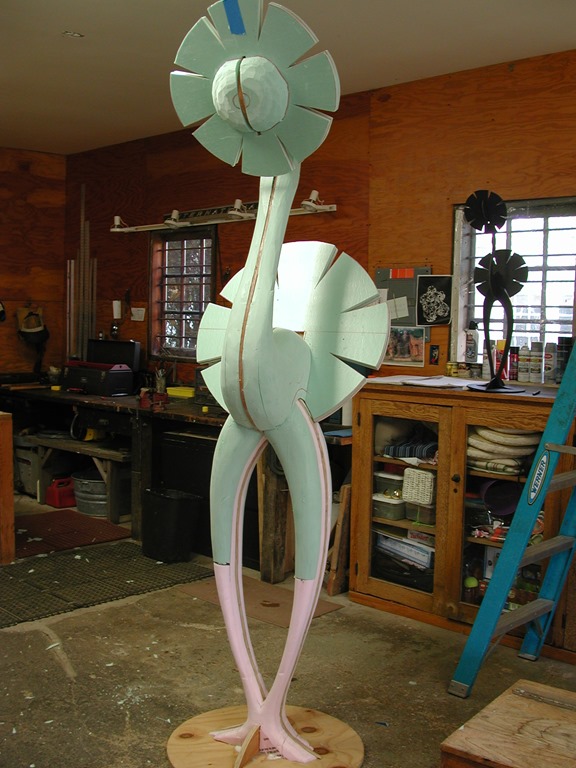
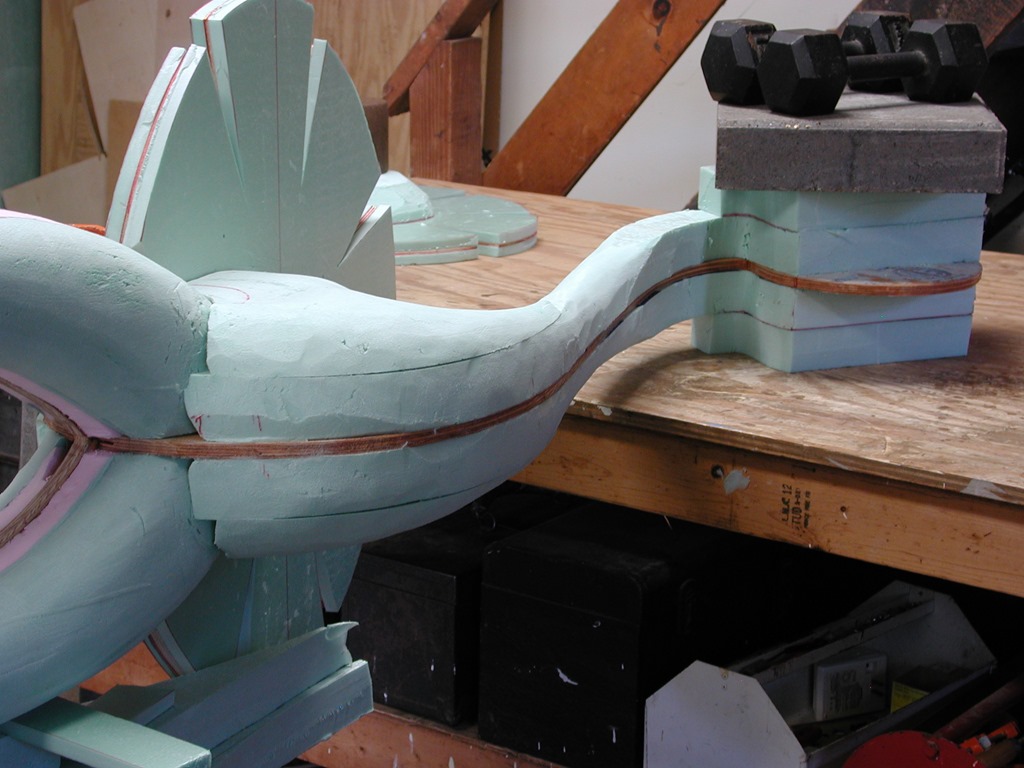
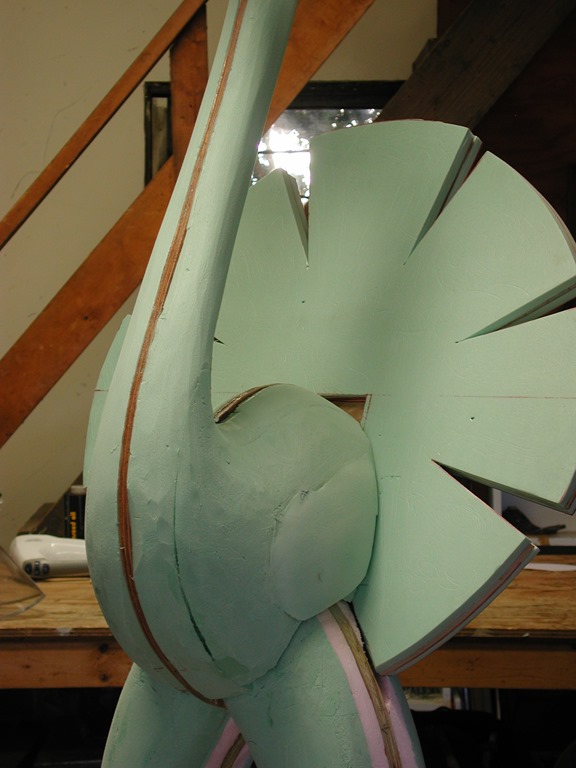
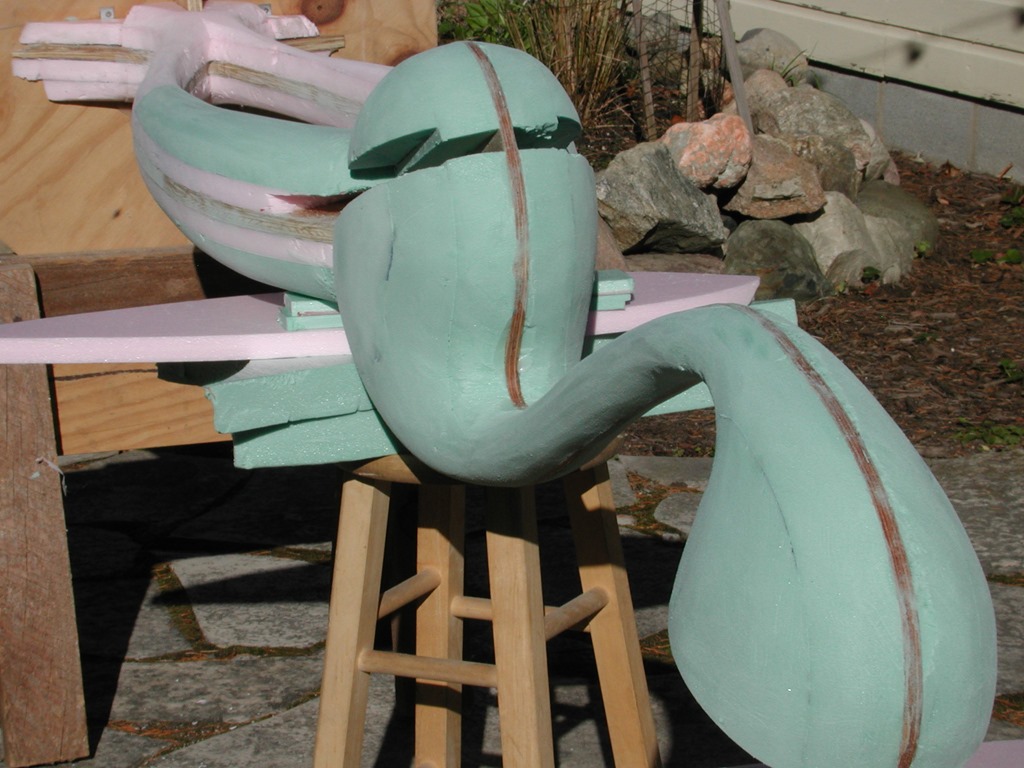
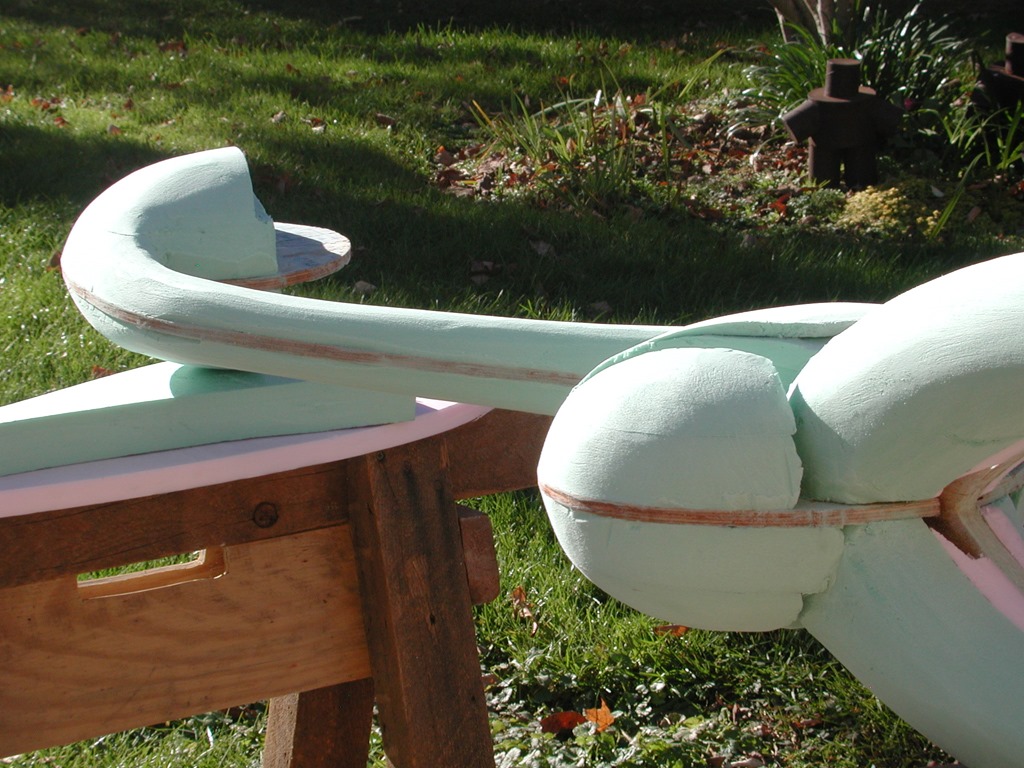
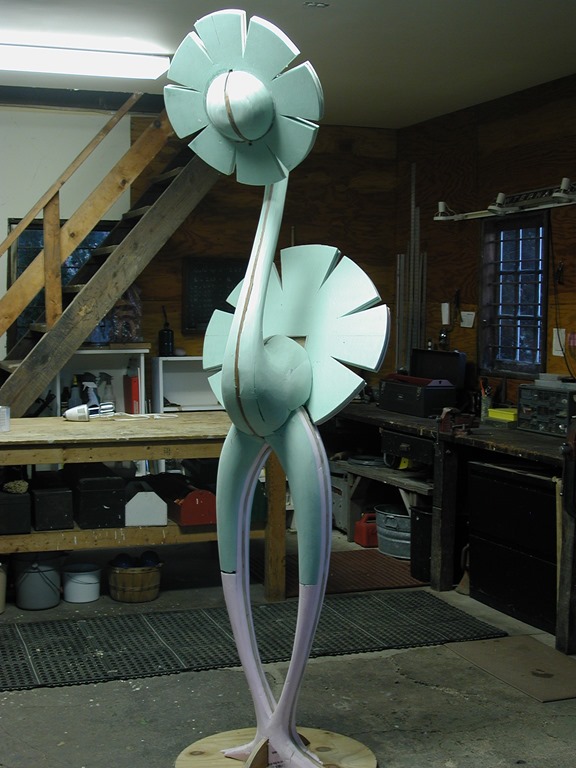
Heads and Tails, more foam-on-ply, dis-assemble/re-assemble, clever templates used to measure foam for more filled-out the body shape, claps and glue.

a_3SunBirdWomanb_3SunBirdWomanc_3SunBirdWomand_3SunBirdWomane_3SunBirdWomanf_3SunBirdWomang_3SunBirdWomanh_3SunBirdWomani_3SunBirdWomanj_3SunBirdWomank_3SunBirdWomanl_3SunBirdWomanm_3SunBirdWomann_3SunBirdWomano_3SunBirdWoman 

4

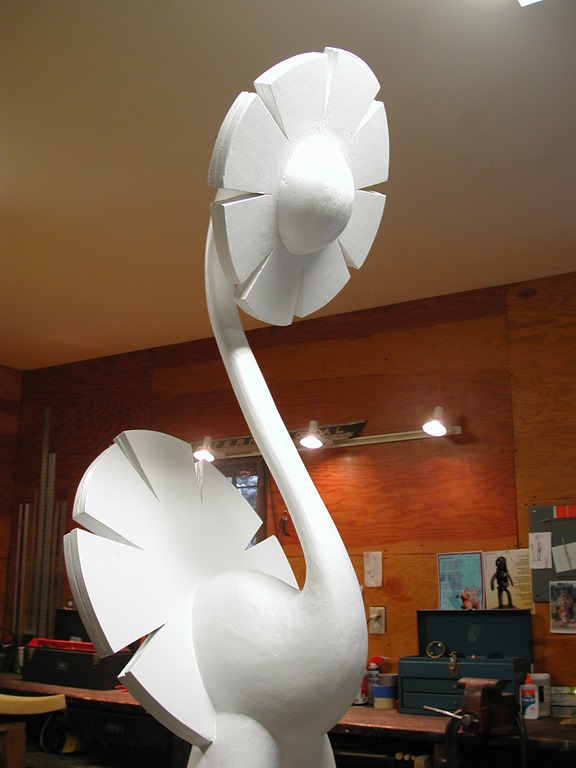
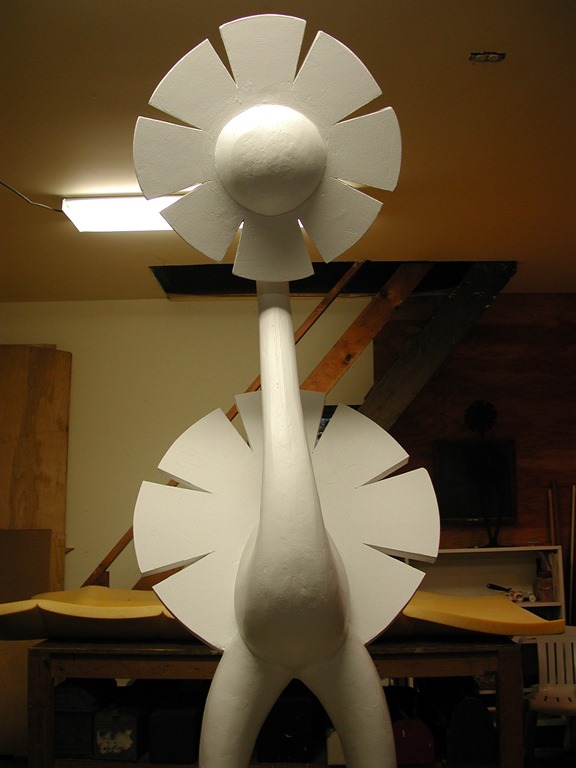
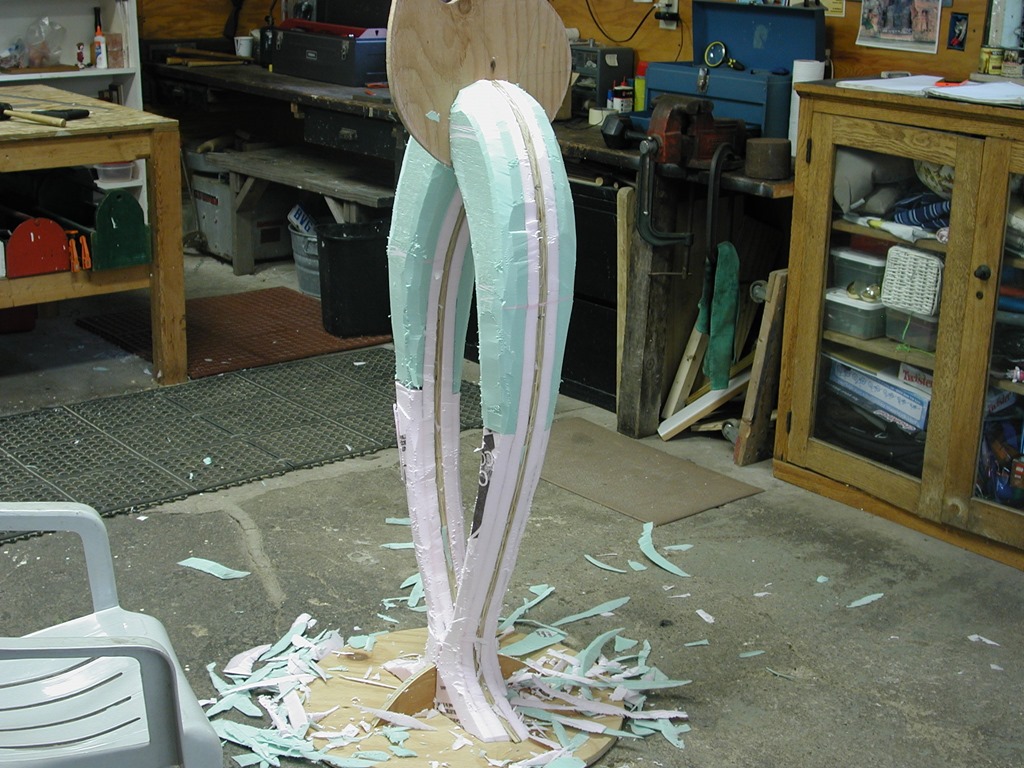
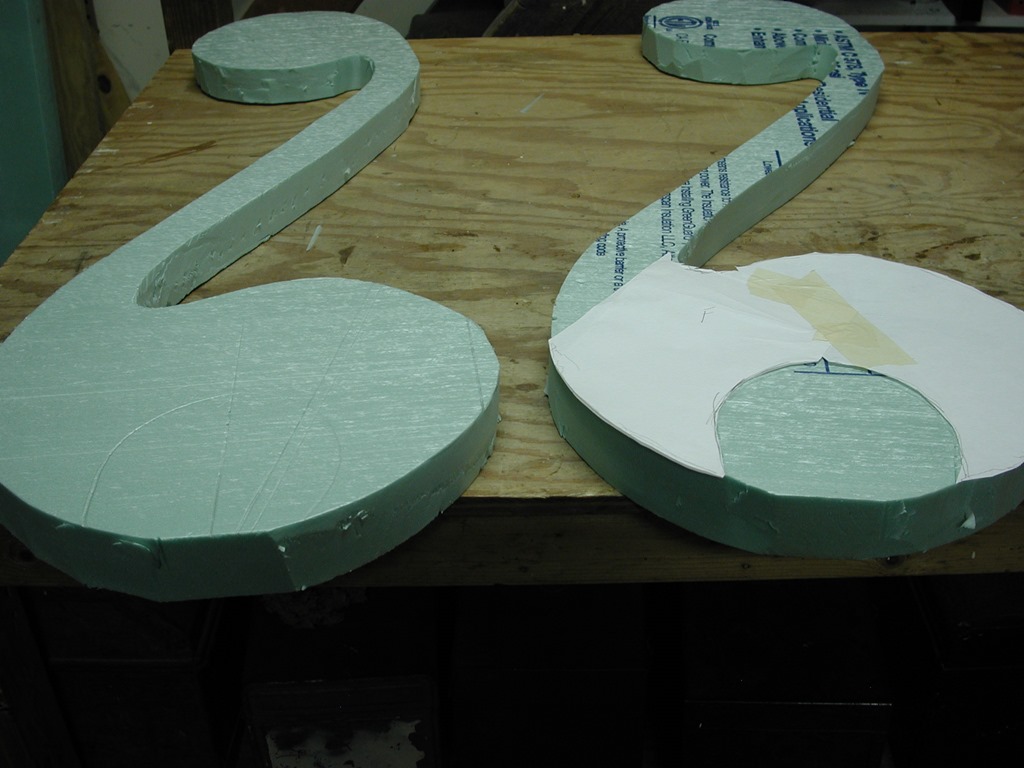
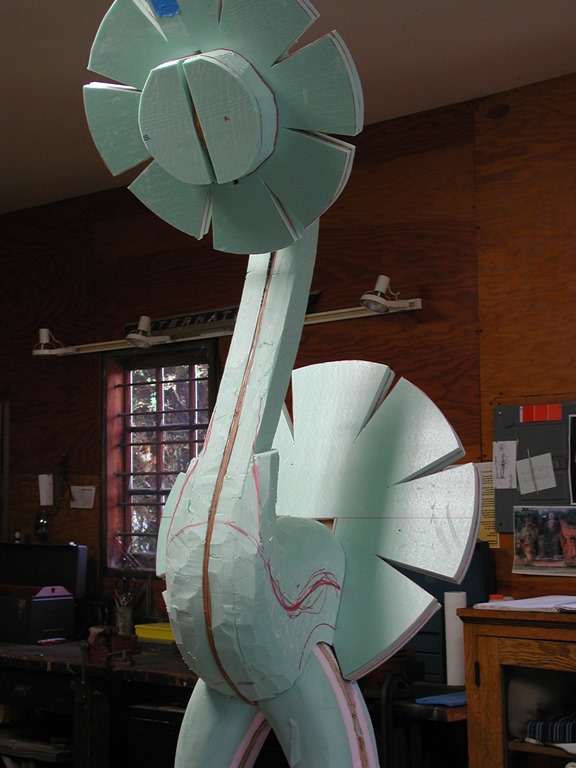
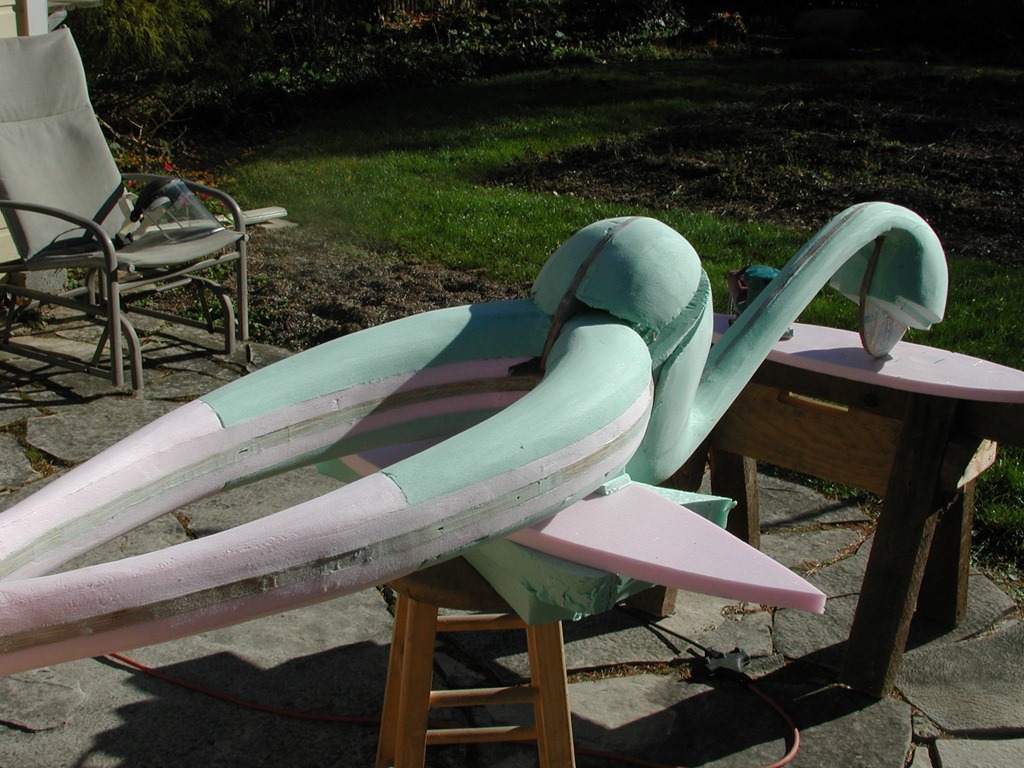
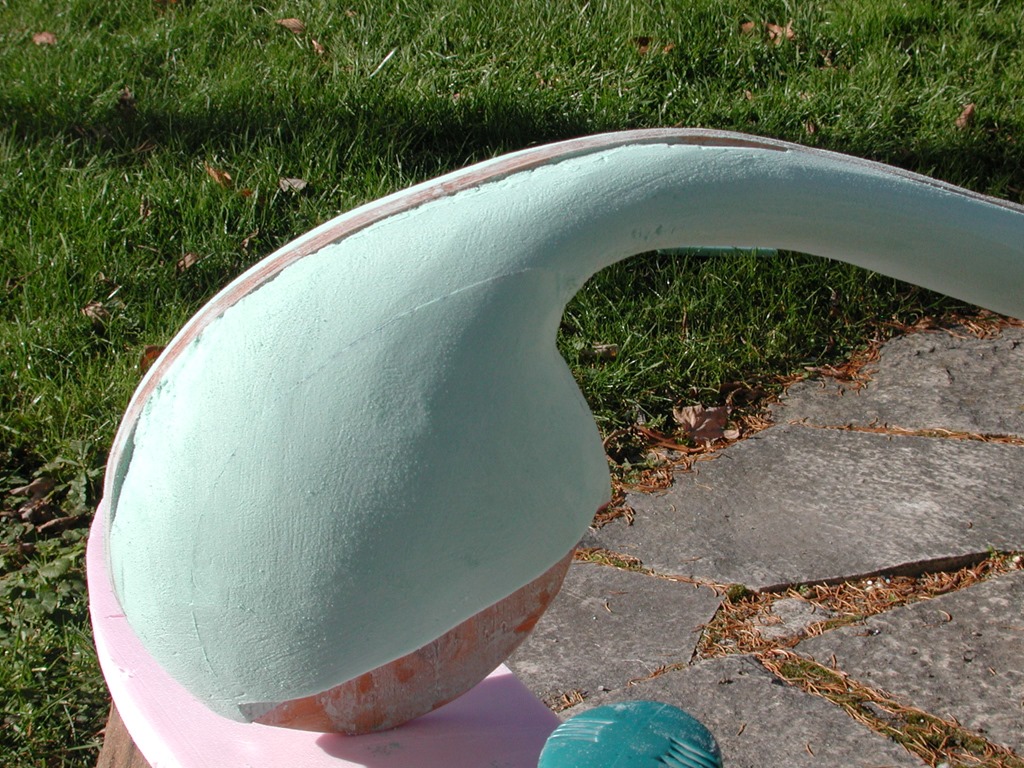
Carve body and face with a very sharp kitchen knife (sadly, no video), the fun part, glue up parts for a rounder butt and head.

a_4SunBirdWomanb_4SunBirdWomanc_4SunBirdWomand_4SunBirdWomane_4SunBirdWomanf_4SunBirdWomang_4SunBirdWomanh_4SunBirdWomani_4SunBirdWomanj_4SunBirdWoman

5

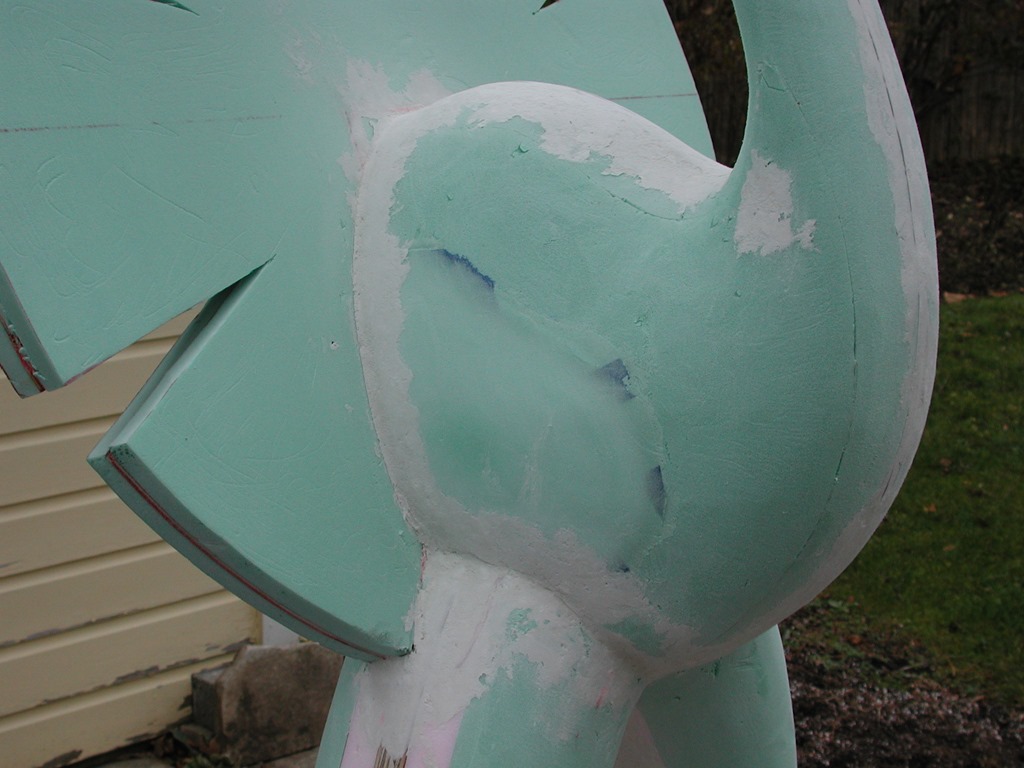
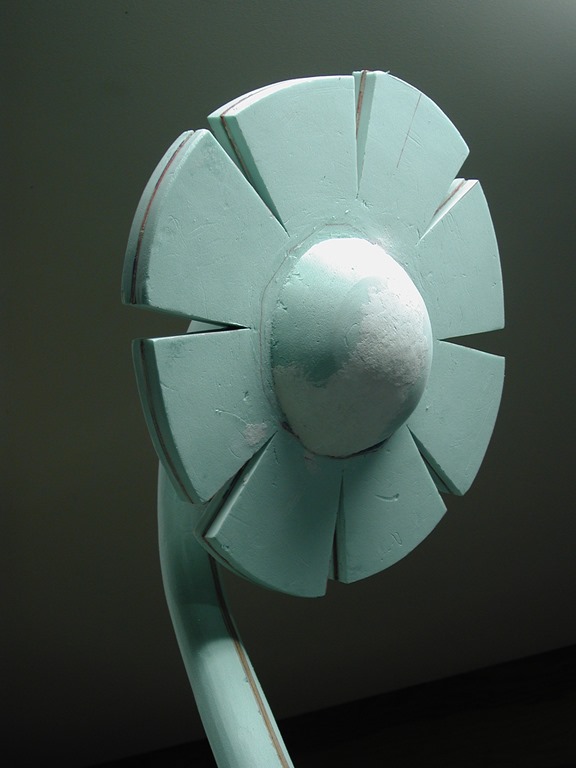
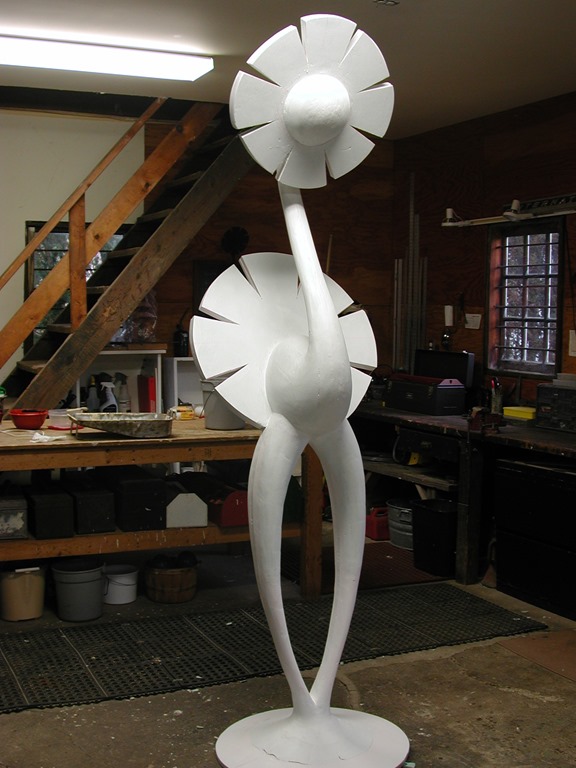
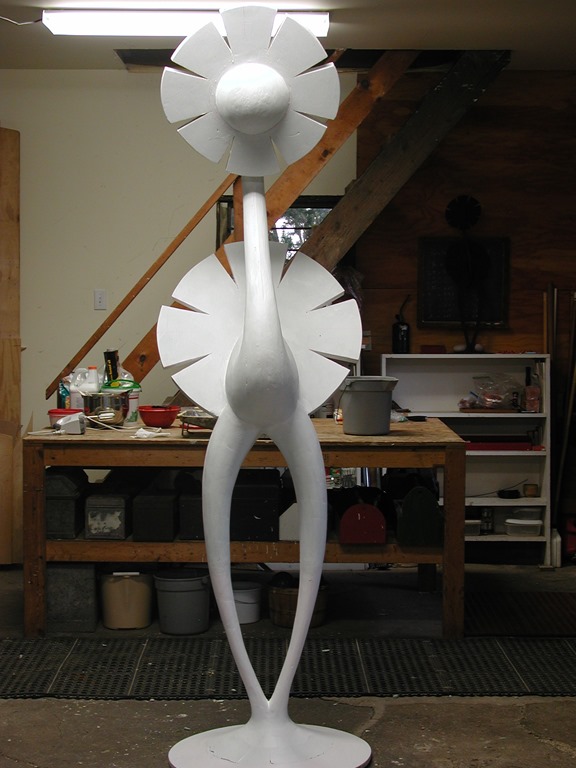
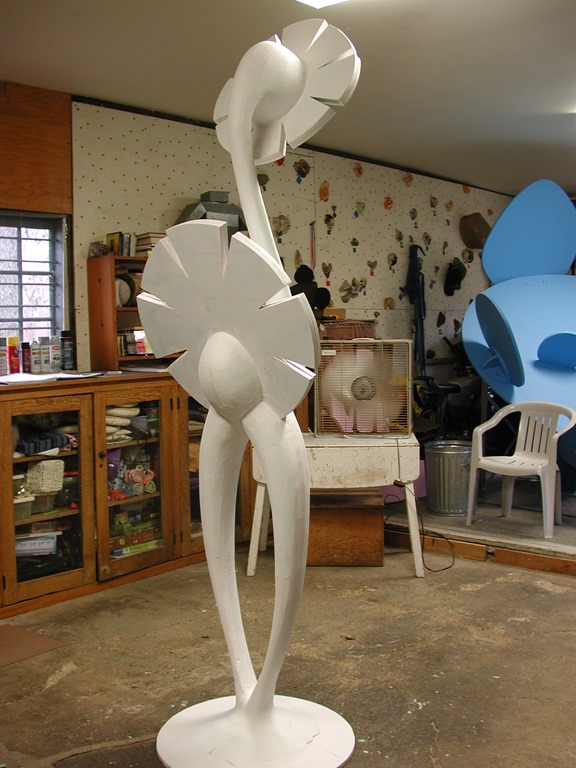
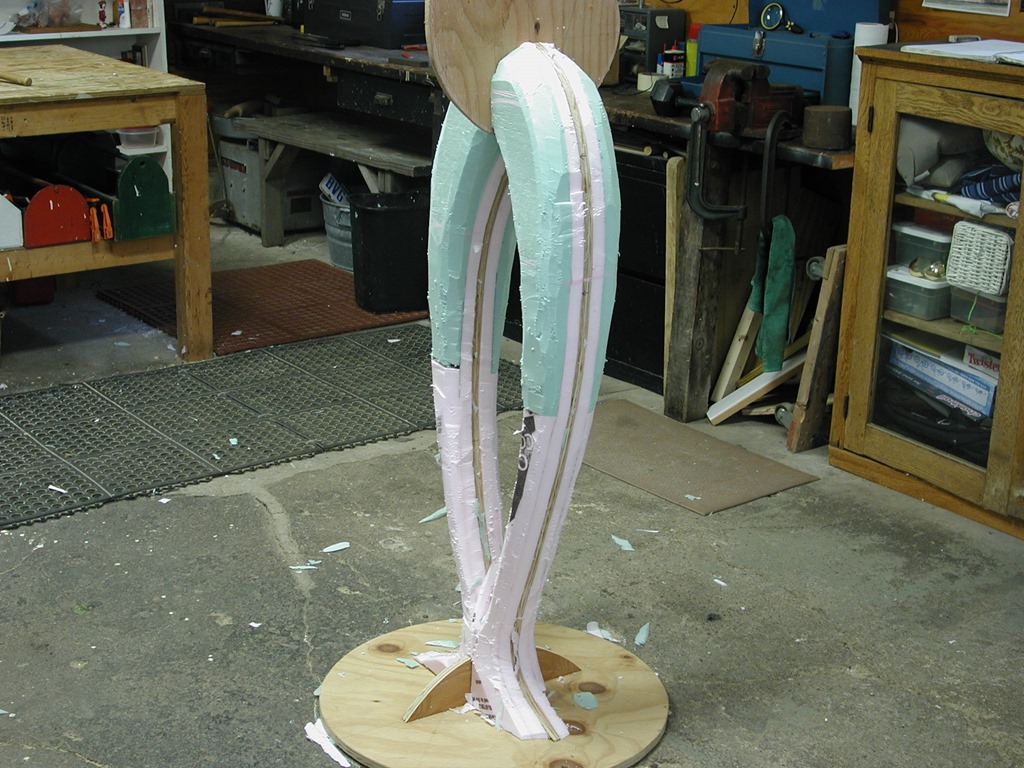
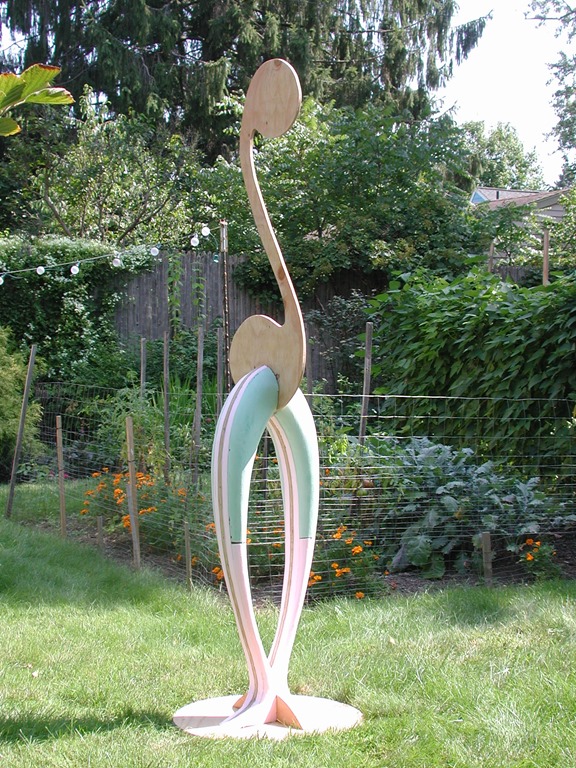
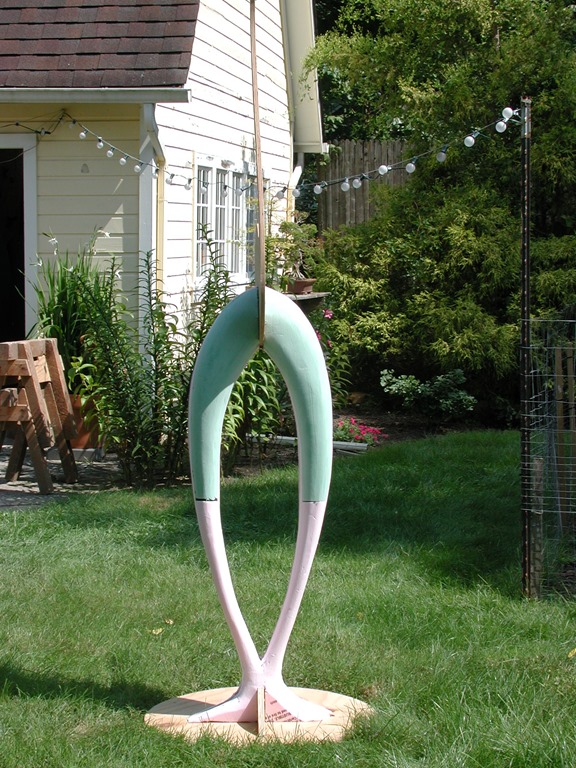
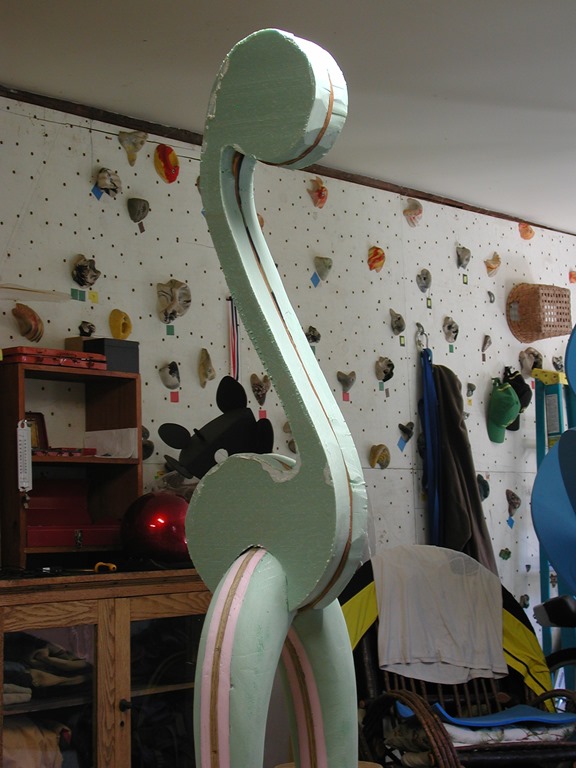
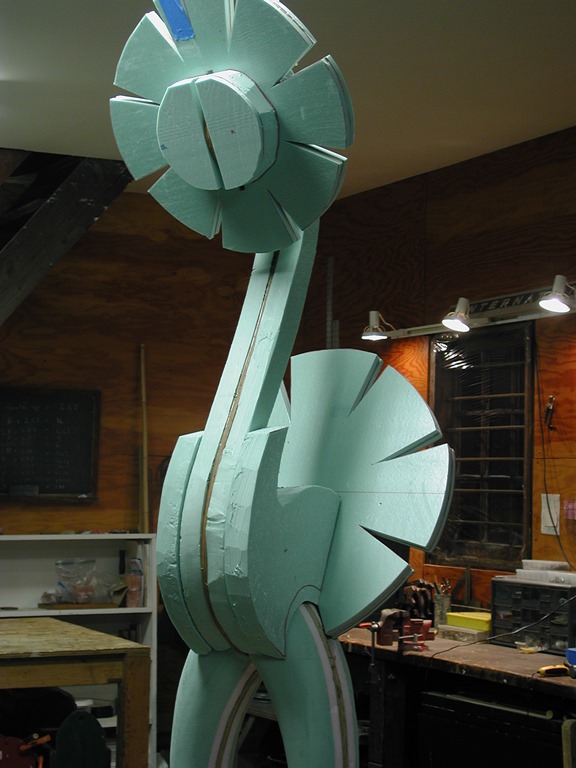
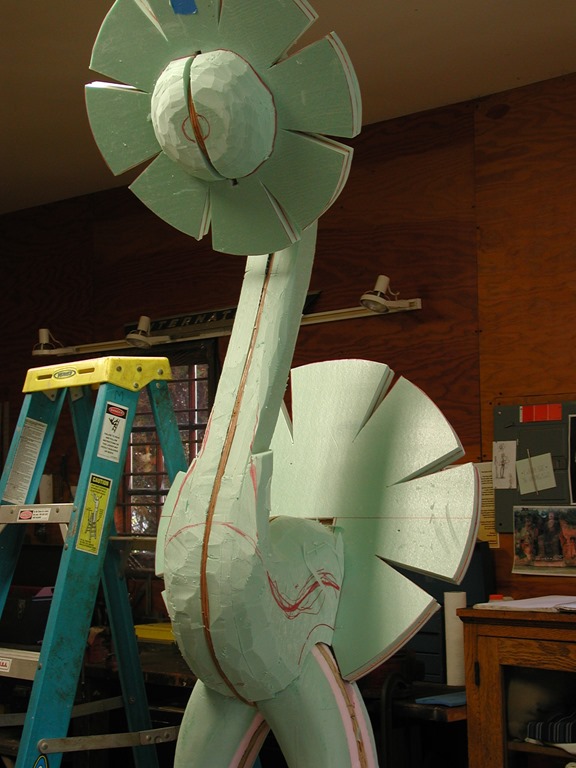
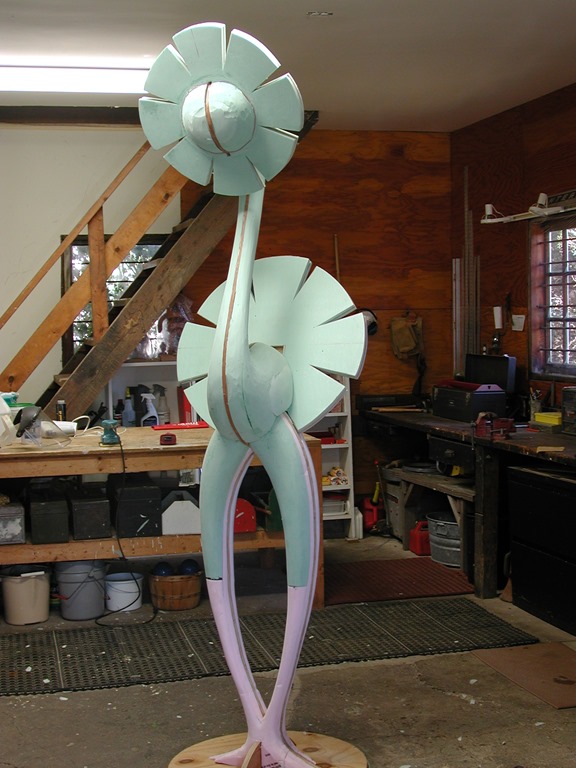
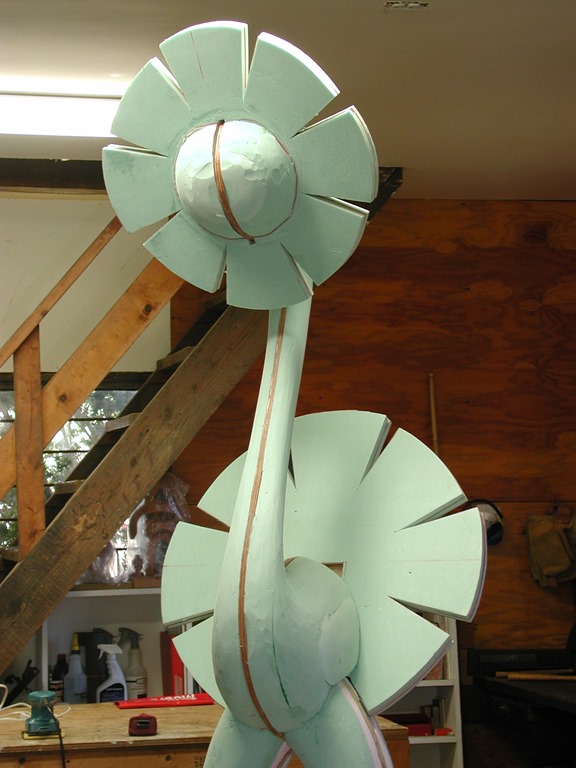
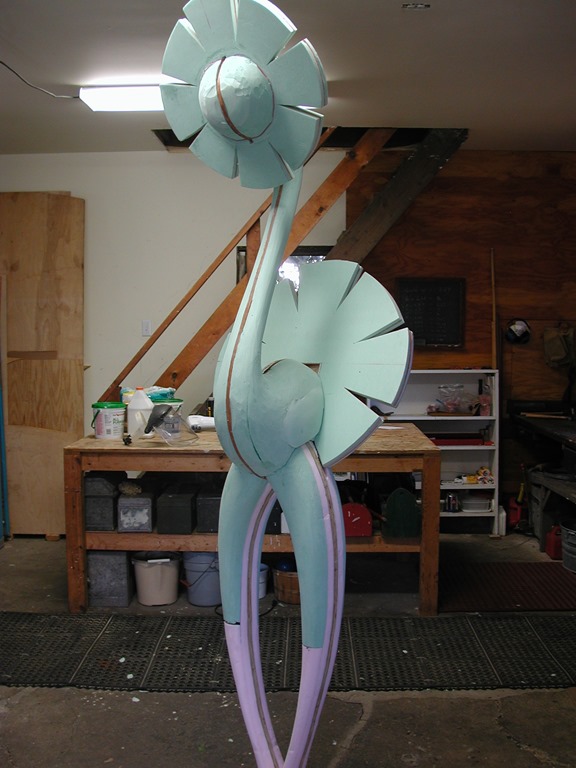
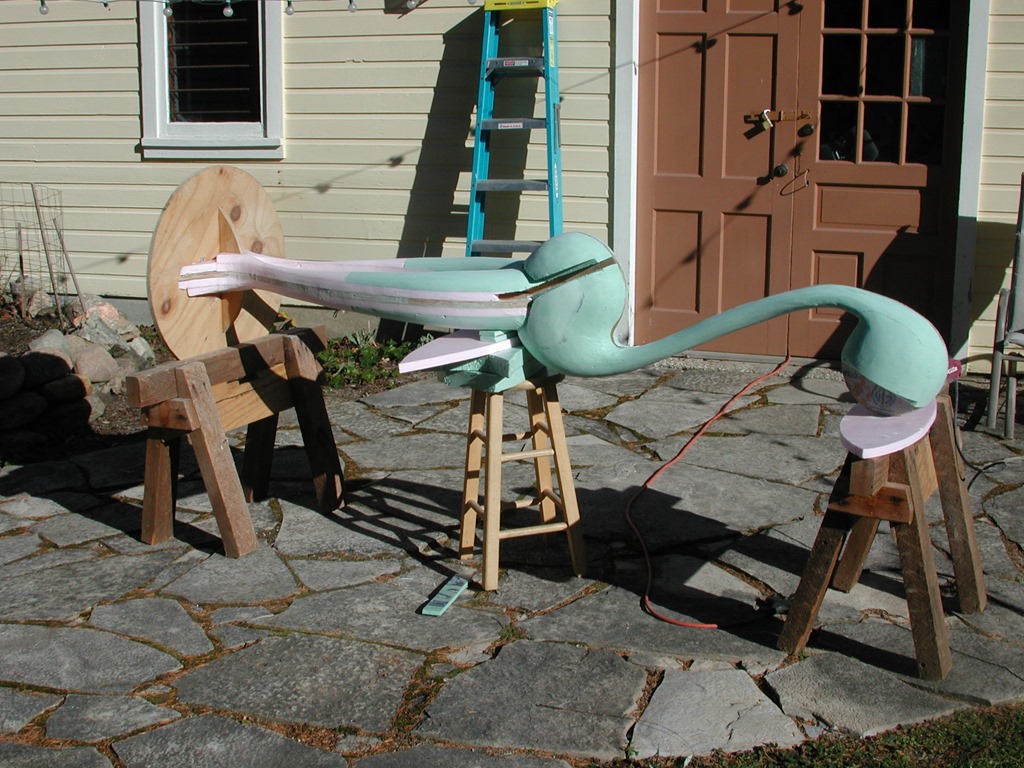
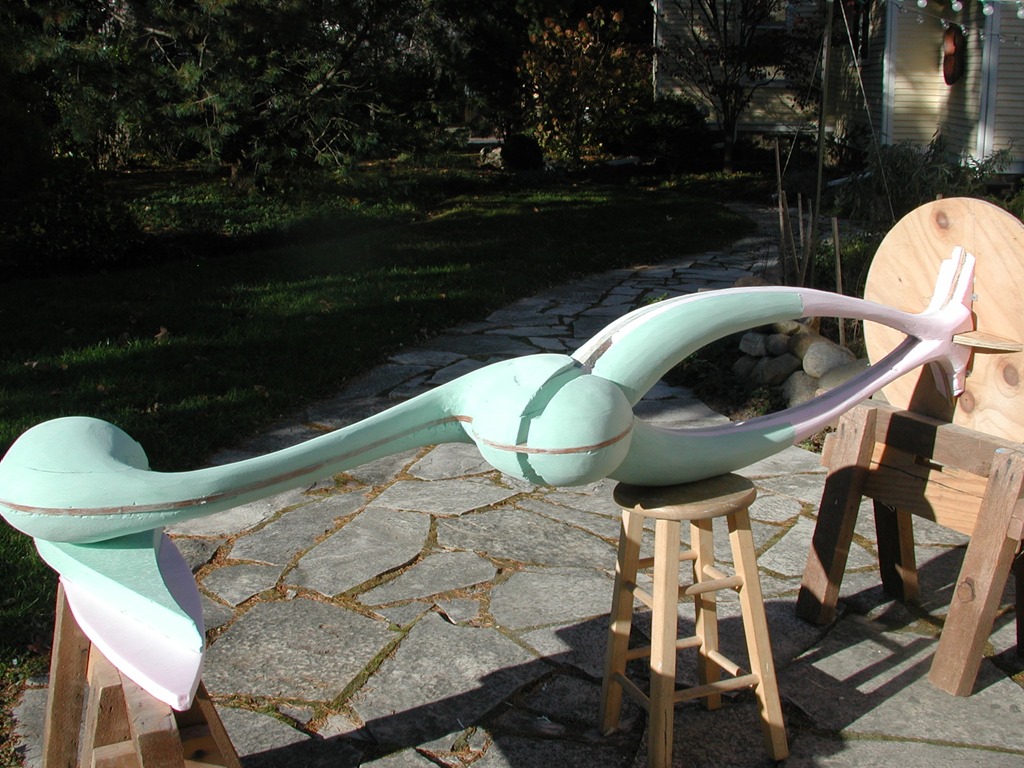
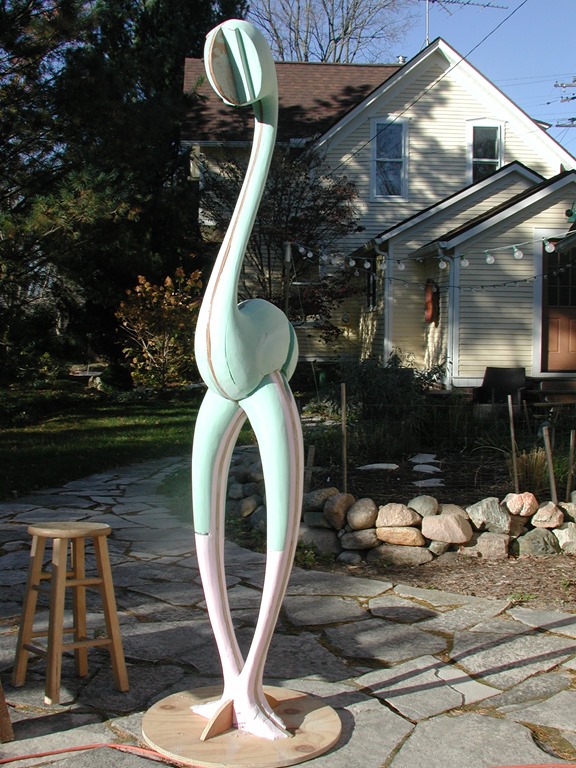
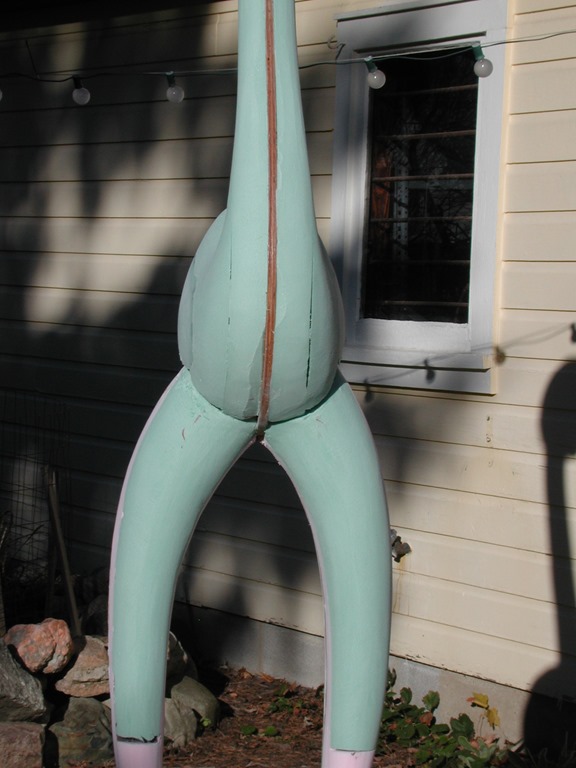
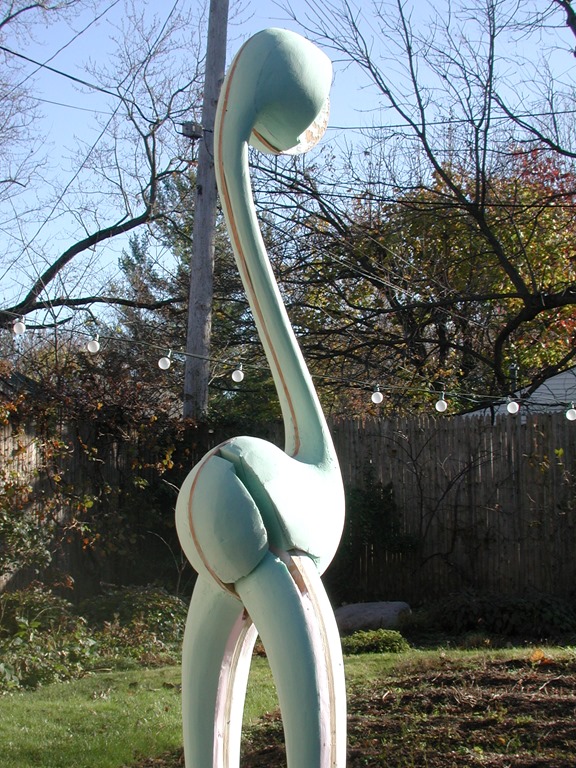
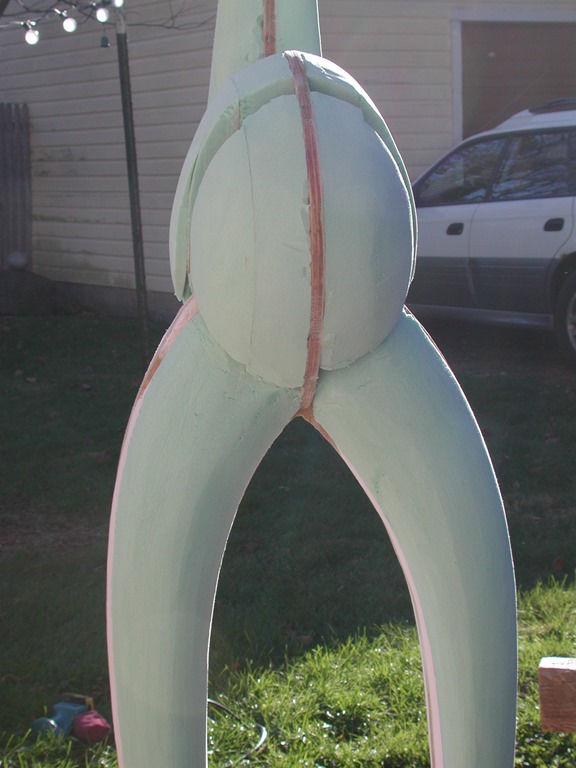
All Together Now, done carving, take outside to sand evenly – November low-angle sunlight ideal for shadows, foam-form finished.

a_5SunBirdWomanb_5SunBirdWomanc_5SunBirdWomand_5SunBirdWomane_5SunBirdWomanf_5SunBirdWomang_5SunBirdWomanh_5SunBirdWomani_5SunBirdWomanj_5SunBirdWomank_5SunBirdWomanl_5SunBirdWomanm_5SunBirdWomann_5SunBirdWomano_5SunBirdWomanp_5SunBirdWomanq_5SunBirdWomanr_5SunBirdWoman

That was three month’s of weekends’ work, excluding Tango dancing, some trips, vacation up north, visit my old Dad, Thanksgiving, &c. I say I’m 3/4 finished now. All the surface to do next.

Sketches and models

I make fewer measurements, and use sharper tools; Less power tools, less machine tools, less design tools. Sharper hand tools, and working by Eye, and not from plans; with less accuracy and with more details. Plans reduce precision to generalities. The eye creates detail wherever it wanders; produces variation and adornment and complexity. Is why, when you close your eyes, you see patterns and images, instead of simply darkness.

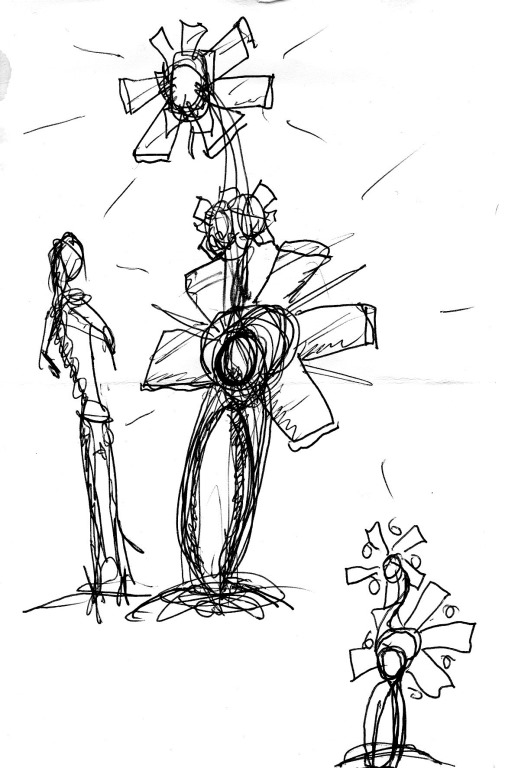
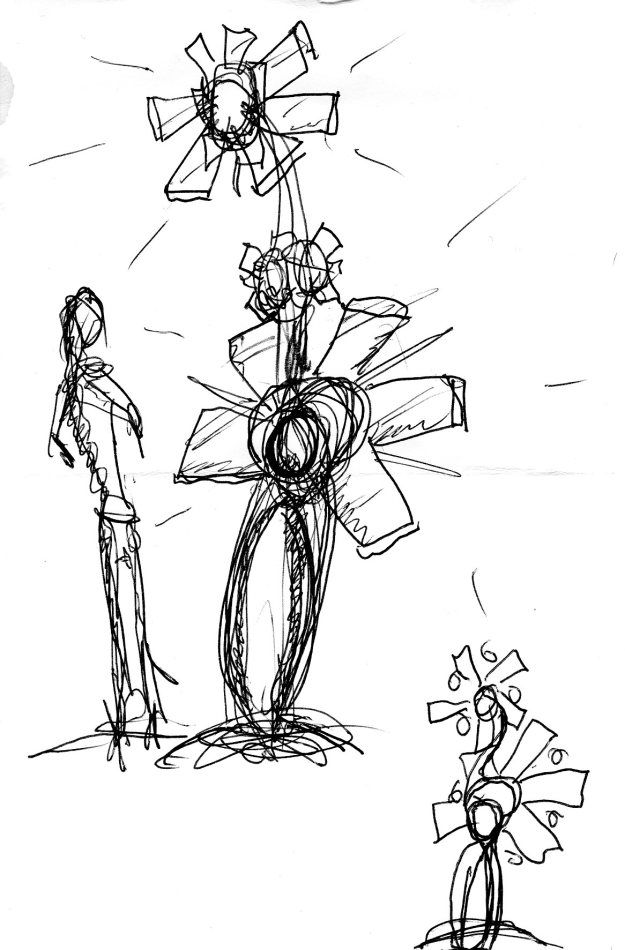
I will take a sketch and build directly to the model and then directly to the full scale. No intermediate designs, templates or tools. Free-Hand, by hand.

I’m not going to scan a sketch, scale it, grid it out in Illustrator, build a model, photograph and adjust for front-side-and-top views, enlarge to a template, print out a 1:1 pattern, cut materials, and build at full scale, No, but I have done that sometimes.

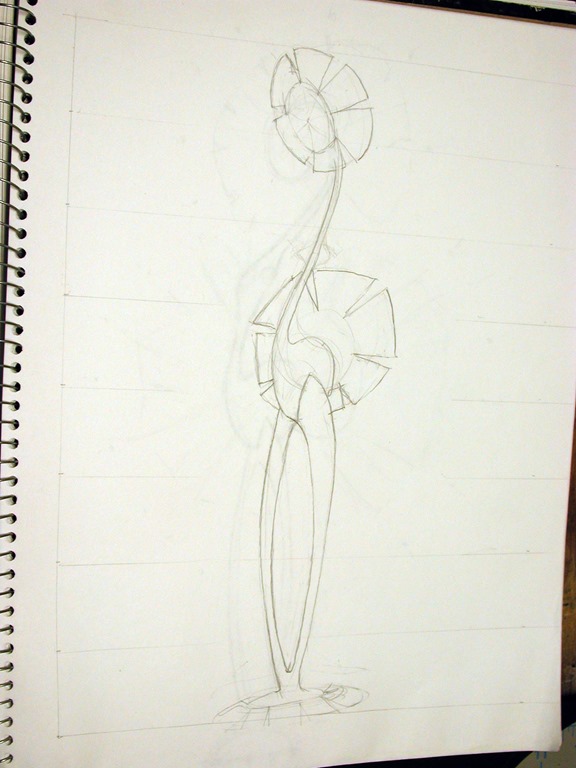
Napkin sketch, and notebook draft drawing.

sun-bird-woman001

a_SunBirdWoman


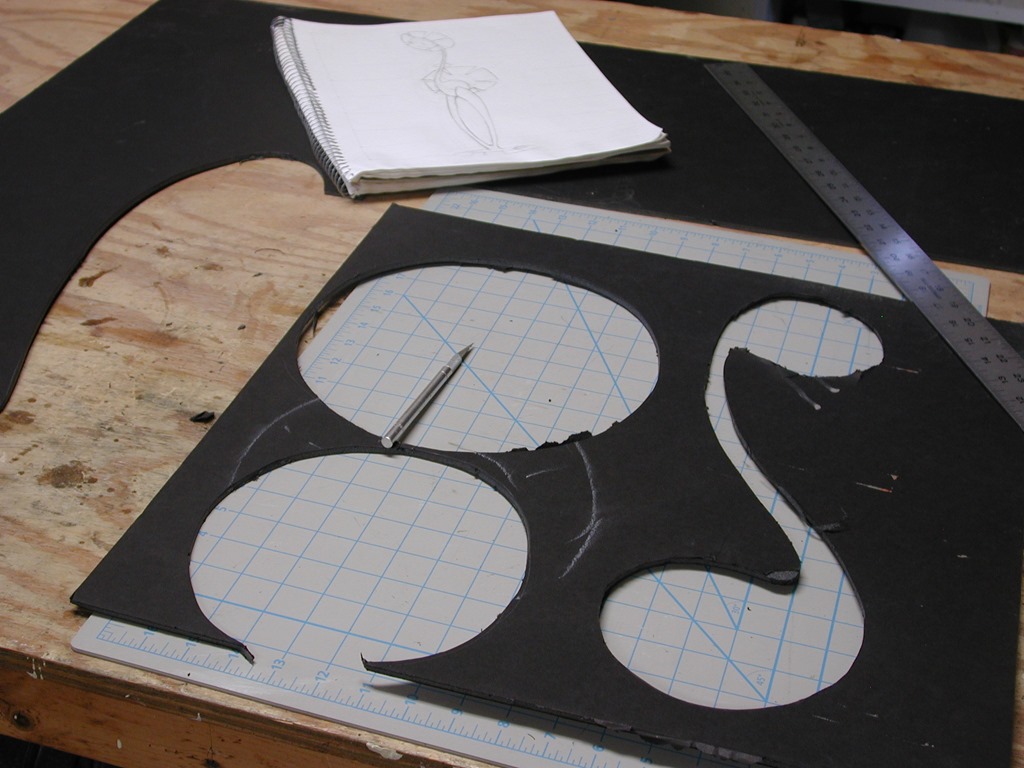
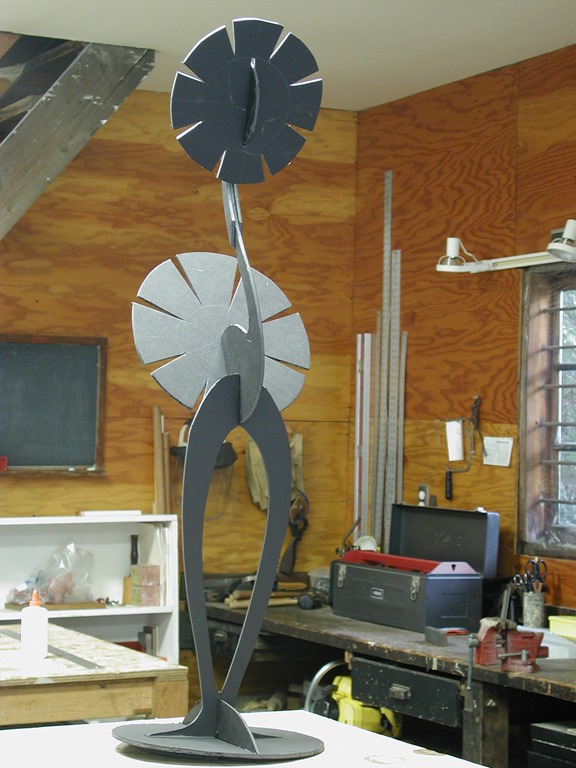
Foam-core cutouts, and flat-model hot-glued, eyeball’d from sketches, about 35”

b_SunBirdWomanc_SunBirdWoman

d_SunBirdWoman


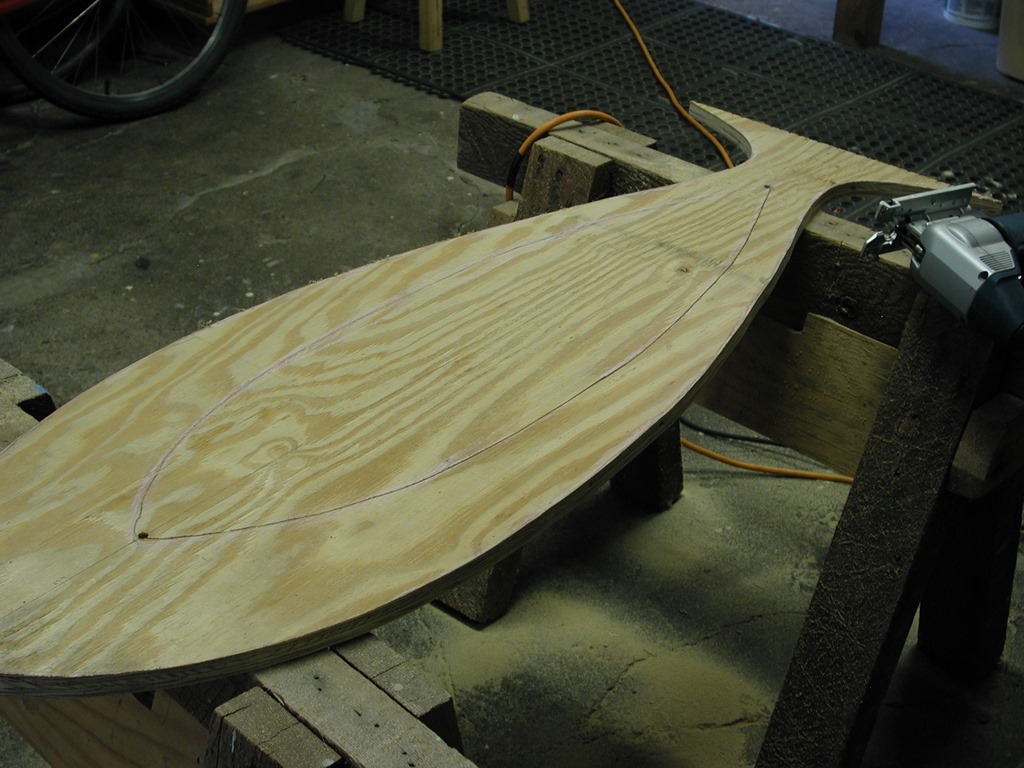
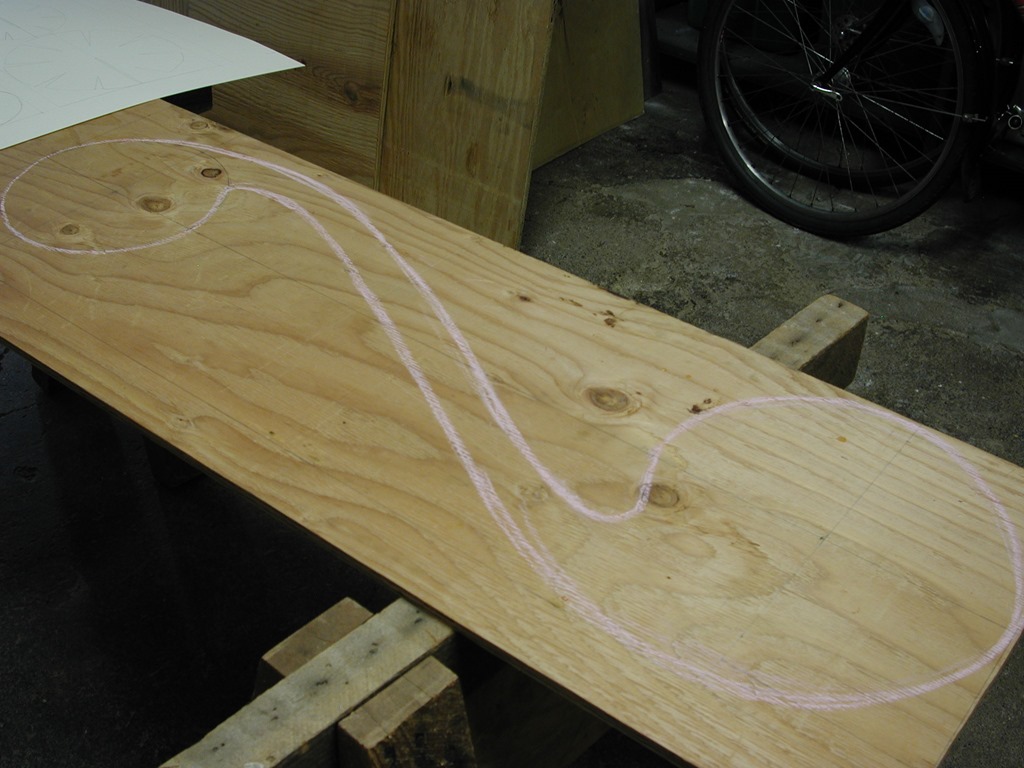
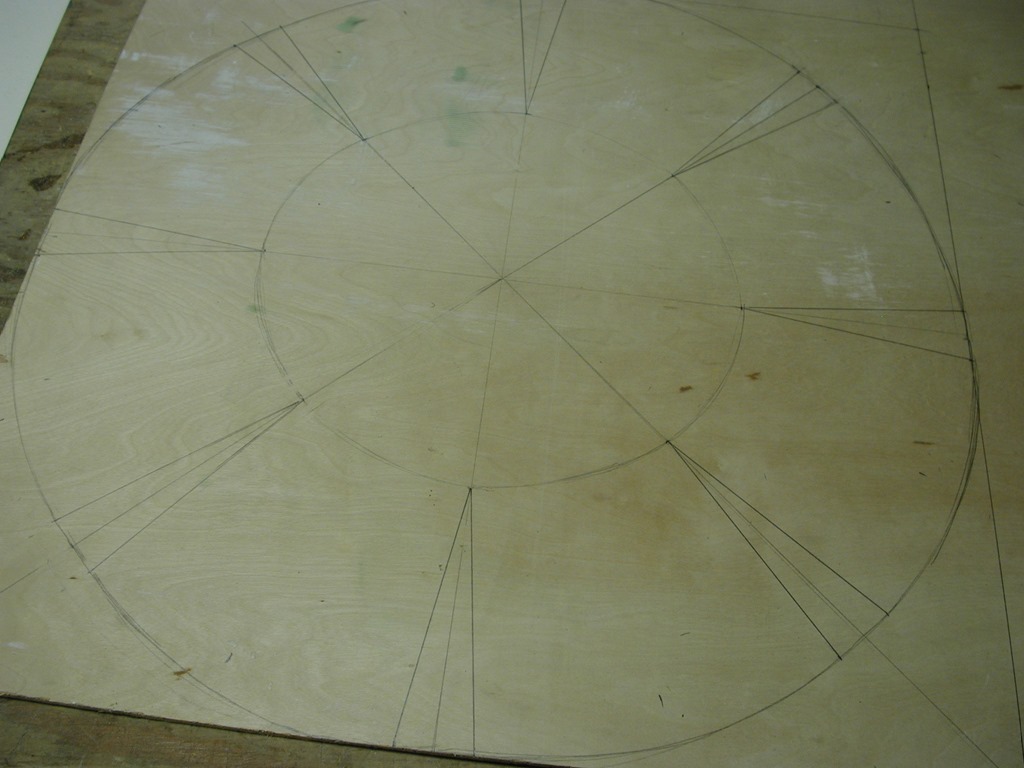
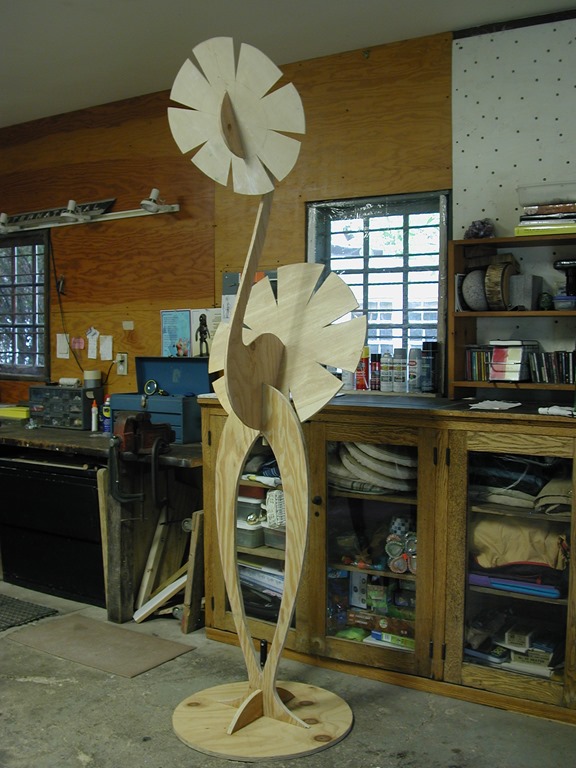
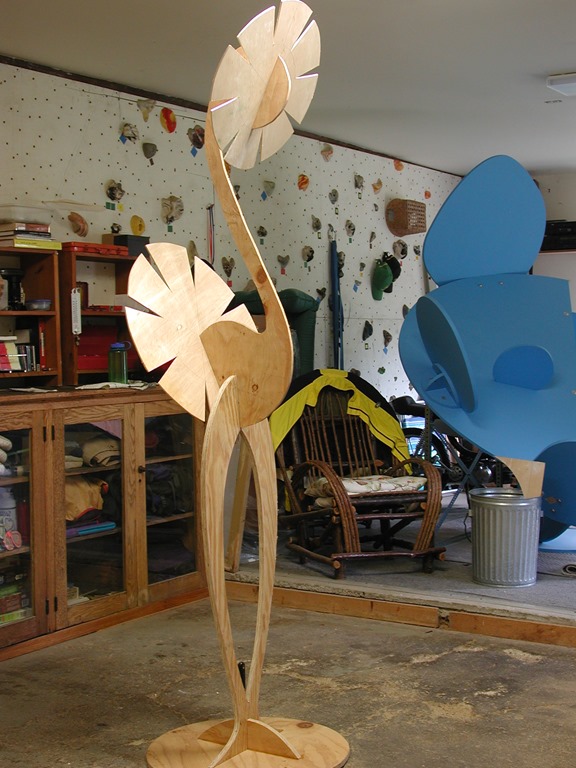
Using plywood from around the place, freehand with chalk the sized-up patterns. Trying for an 8 foot tall finished work, so, roughly multiply by 2.67 from the model.

e_SunBirdWomang_SunBirdWomanh_SunBirdWoman


i_SunBirdWomanj_SunBirdWoman


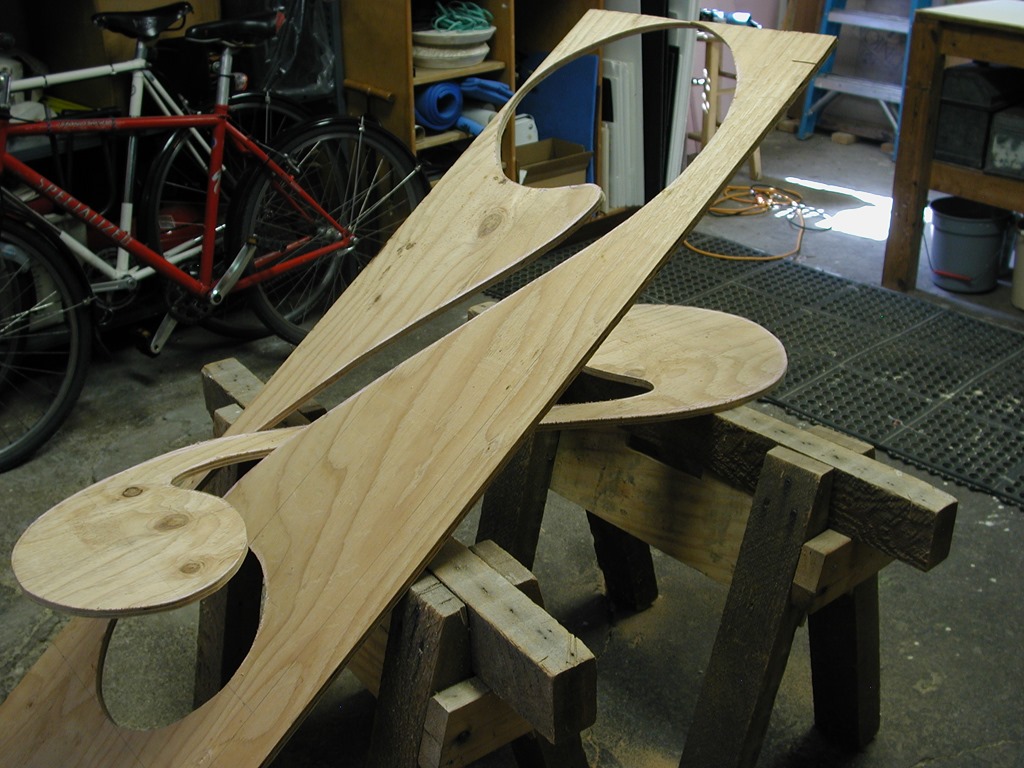
Notch-and-slot together, skipping some steps, and this is just the armature for a sculpture to be built-out upon it. Nice by itself, if it were done in steel maybe. Can still come apart for the work to come still.

l_SunBirdWomank_SunBirdWoman


Just the work of a weekend.

Emma

You know that I fervently deny any purpose for Art beyond the expression of the individual self, and so, I’m heartened to see the new video works by my niece, which are utterly hermetic and personal. A painter, she also works in video; dreamy & iconographic. Like much of this genre, it presents a quasi-narrative and non-sequential format of images and sound. In a word: Montage. Video is not the experimental medium, this form of storytelling is. Releasing from the formulas of drama, and amplified by the ubiquity of video content present everywhere to the young person’s perceptions, the ideas about flow of images and meanings in a constructed artistic expression are altering. There are extremes to this; On one hand I am too familiar with very fat books filled with blurry photographs, whose meanings are particular to the photographer through memory or the momentary, irrelevant to the viewer, with an equal pile of words to mediate that difference; On the other, epic installations, or lengthy and episodic “movies”, that display fantastic production values without need for structure, or reference outside of the elaborate internal logic of the work-of-art.

Her videos, Prisoners of Venus, White Sands, &c. are at: http://www.emmapryde.com/

In Museum

How My Drawing Ended Up in a Museum

Recently…

Dear Mr. De Genaro,
We are in the process of recording recent gifts and your drawing pictured below is among them. It came from the Estate of Judy Josephson Schreiber who lived in Mobile and Valdosta, Georgia.  We maintain artist records and I would very much like to know your date and place of birth.  Was there a title associated with this work? When did you create it? I noticed several similar ones on your website.  It would be very useful to know the background to this very distinctive approach. Congratulations on your ARTPRIZE. I was the curator at the Grand Rapids Art Museum many years ago. Please list us as having a work by you in the collection and keep us updated with your art activities.
Cordially,
Paul W, Richelson, Chief Curator
Mobile Museum of Art
4850 Museum Drive,  Mobile, AL 36608

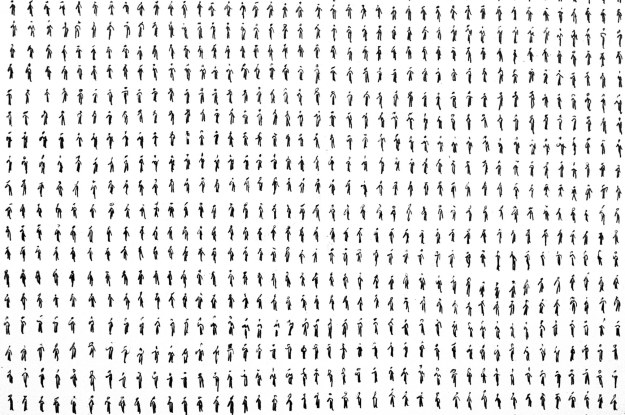
11034 People

b_cleanedPeople_003

Detail

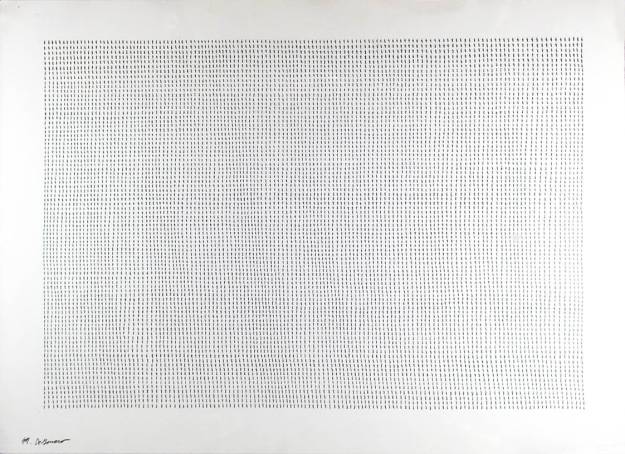
This drawing, titled 11,340 People, was created in 1983 and was one of three which are related. The others are 3040 people and 34,846 People. They are part of a phase of working on intense detailed pictures of sketch figures over a period of a year.

At the time it was made, I was working to establish my uniqueness as an artist, and, wanted to demonstrate, even just physically, something superlative. My work is the Figure, and Identity, and constructivist interest in materials. I am primarily a sculptor, but do some graphic works. I’d say that this drawing is built as an object is constructed, from elements repeated to form a structure. As the drawing progressed, I saw the optical effects of the pattern created in repetition, and this lead me to create more works like this.

Aaron and Judith Josephson bought this drawing from a show at The Contemporary Artist Workshop in Chicago while I was in graduate study at SAIC in 1983. The price was $275 after the commission and I lived on that money.

Mujer de las Flores


t_MujerDeLasFlores

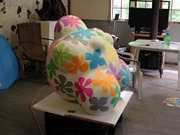
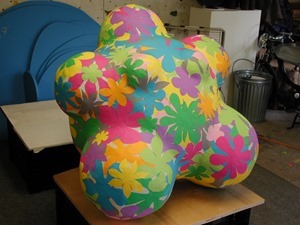
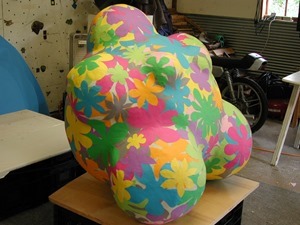
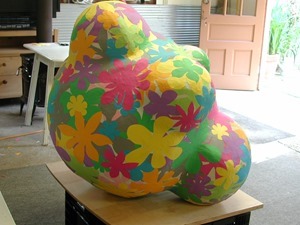
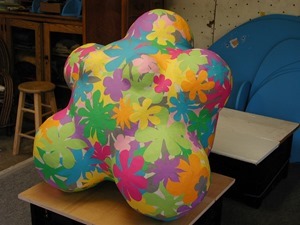
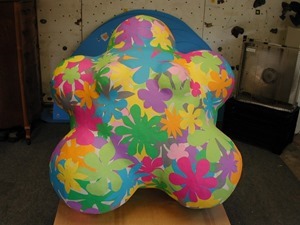
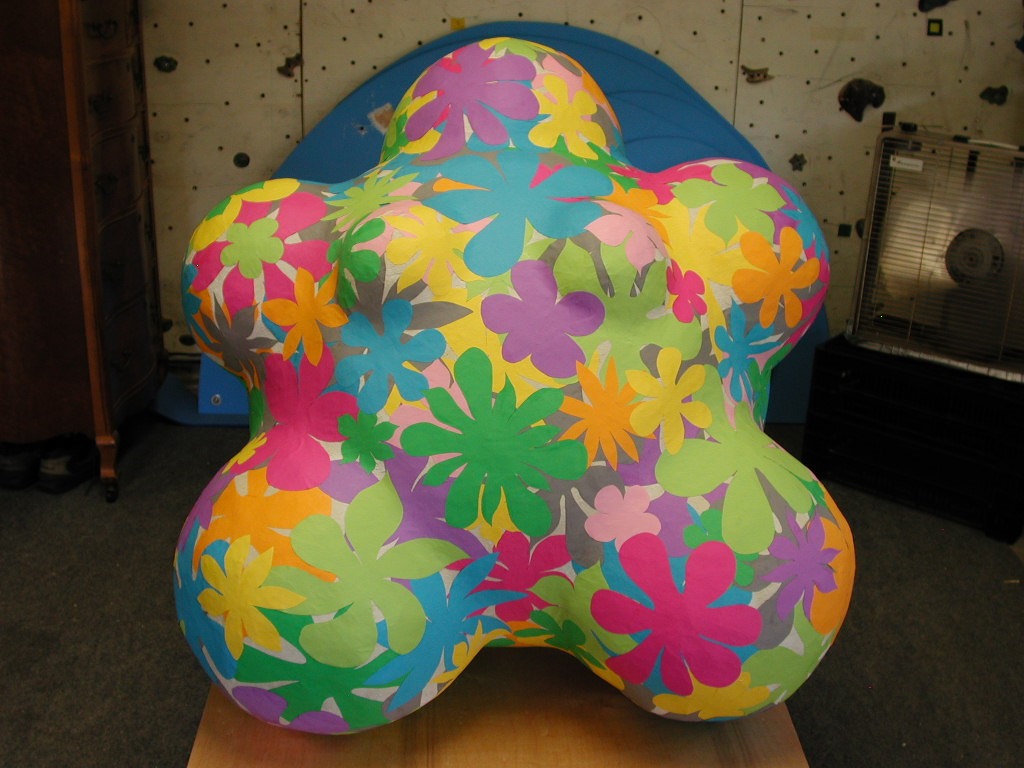
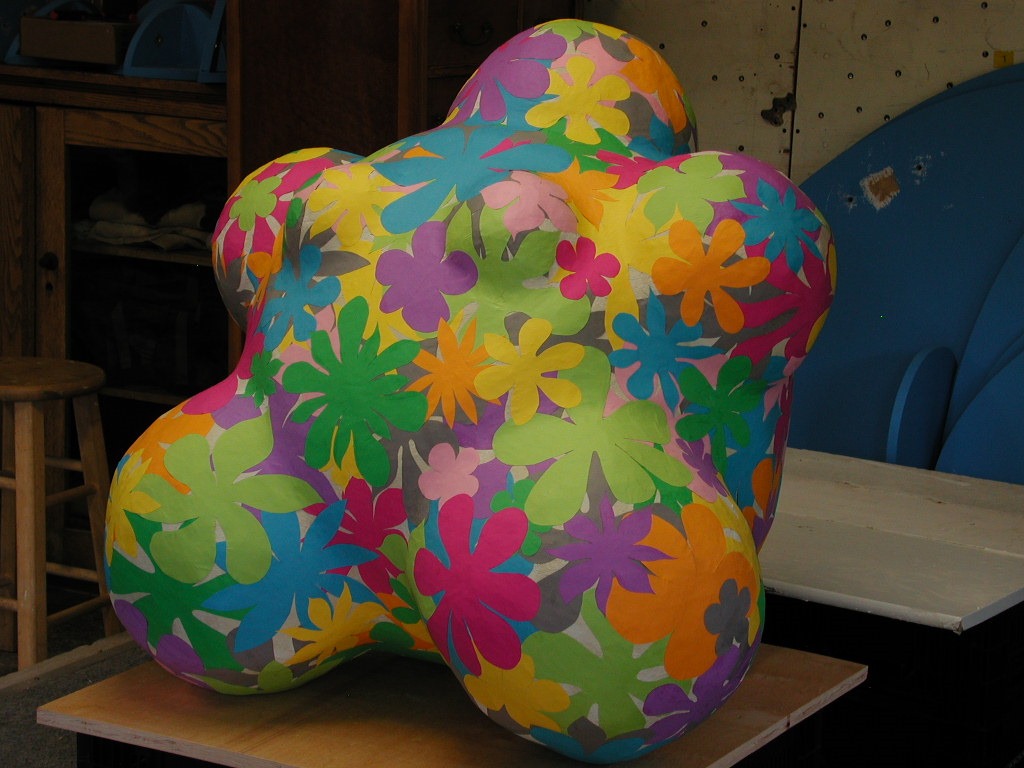
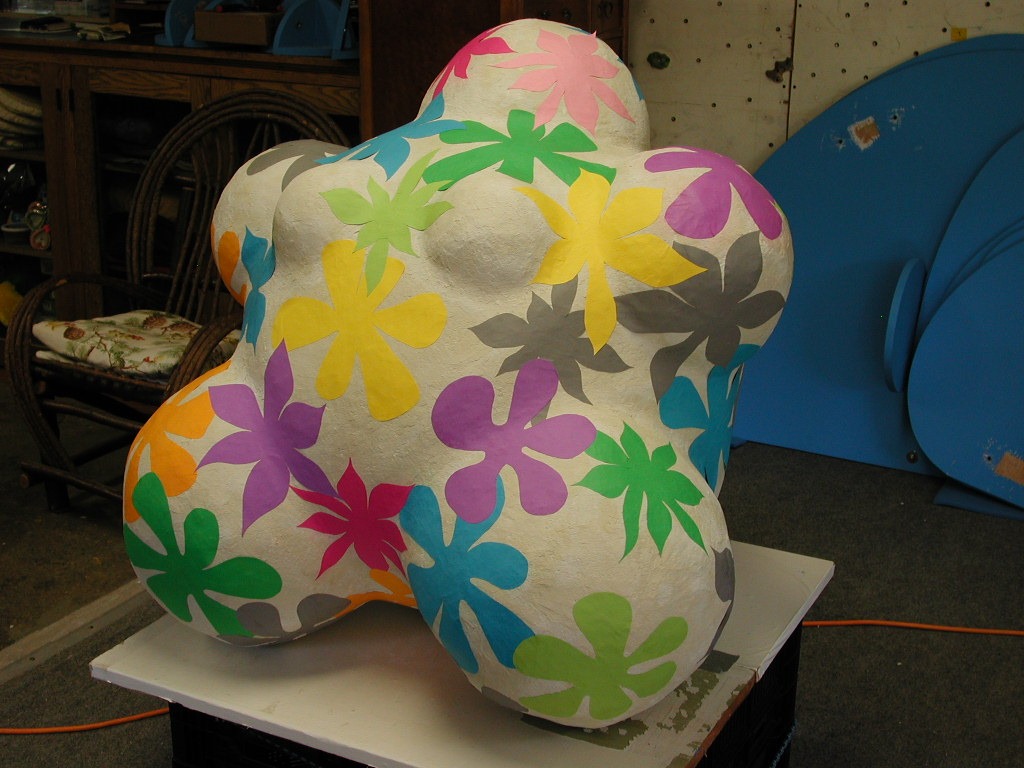
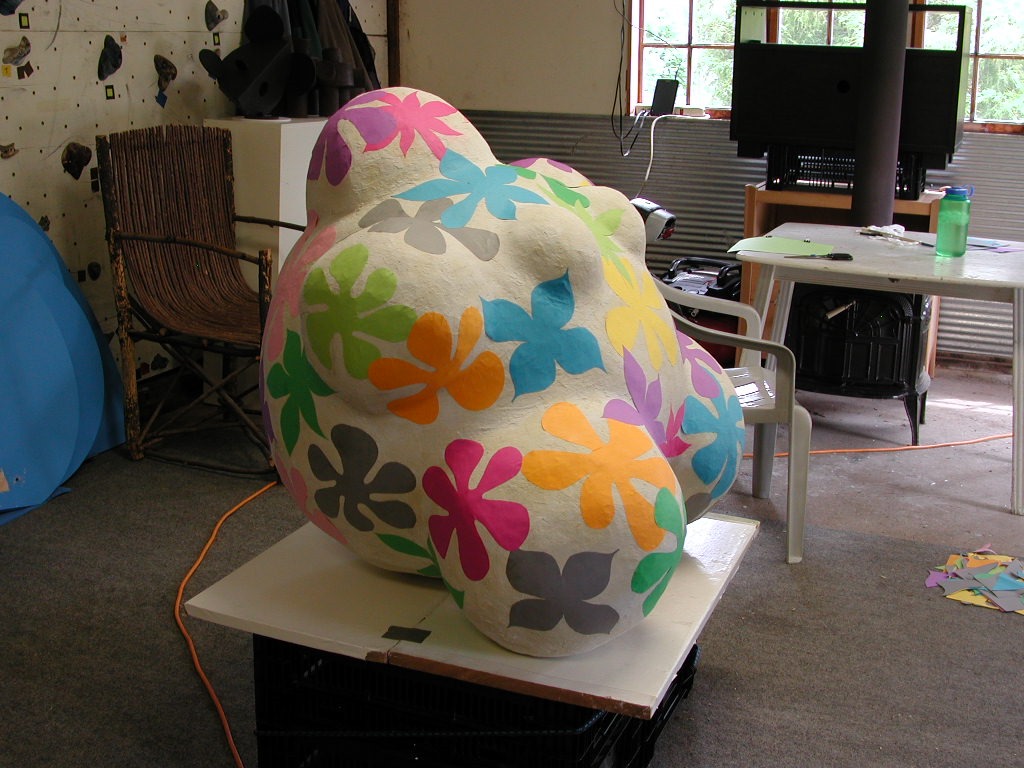
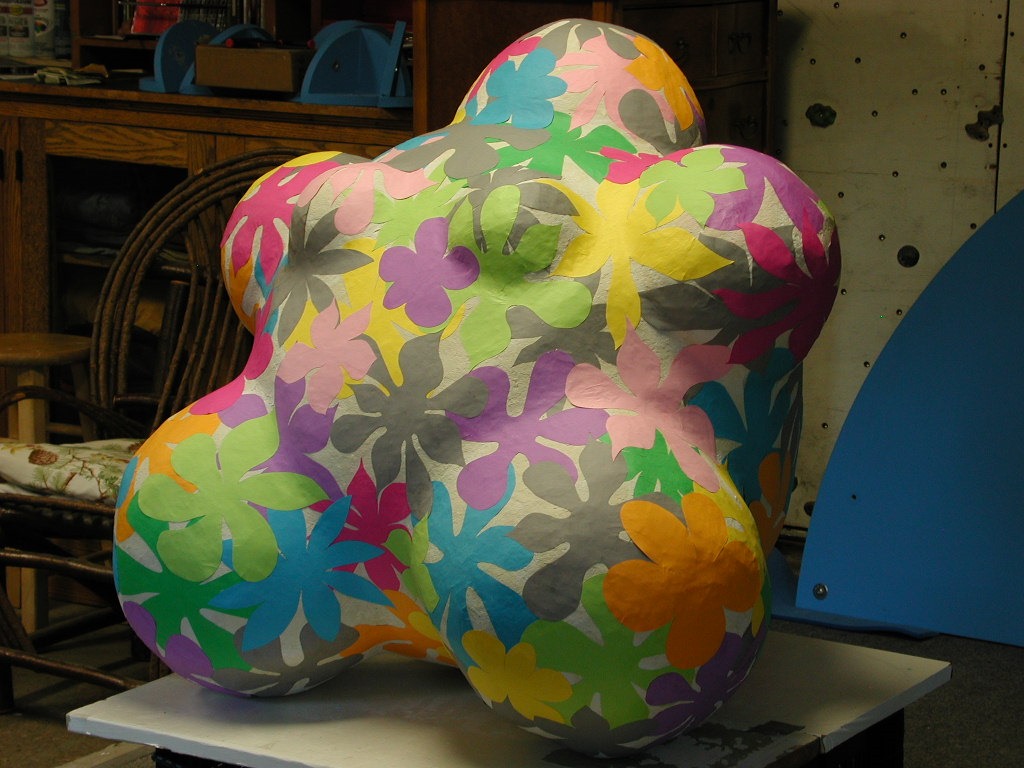
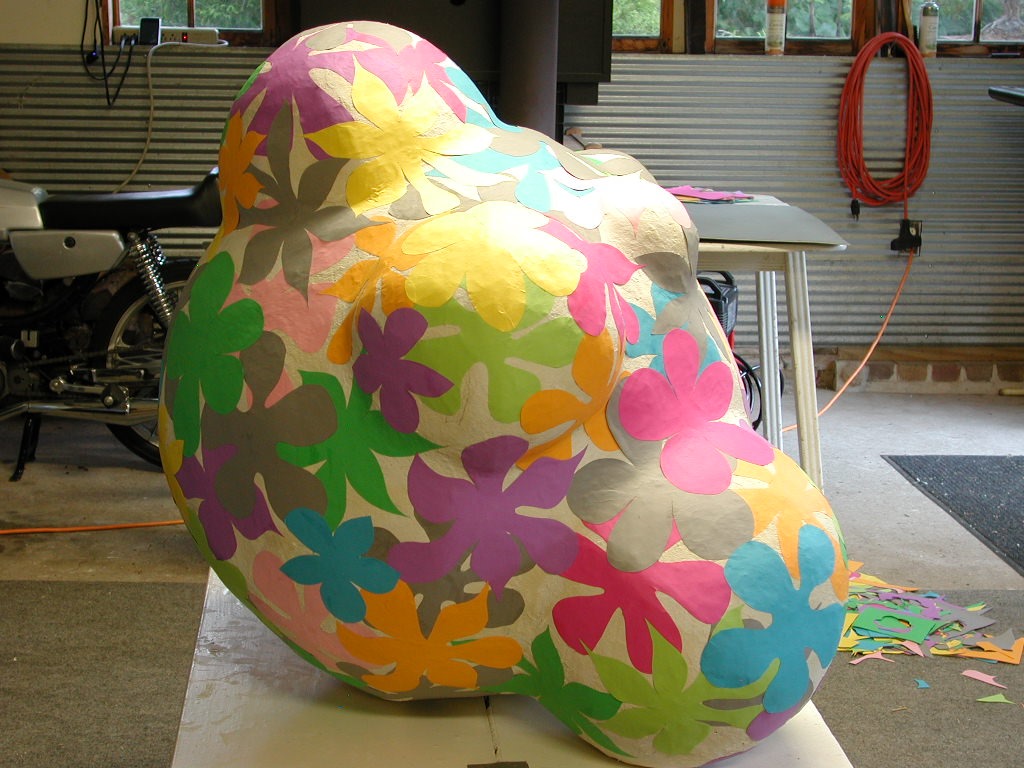
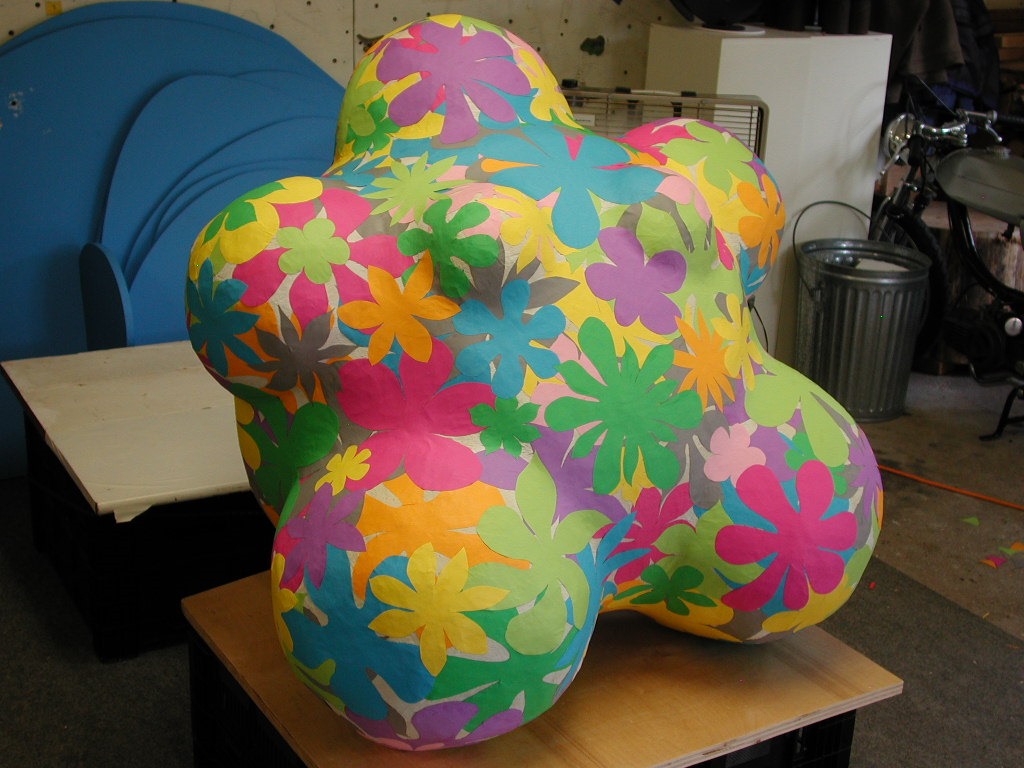
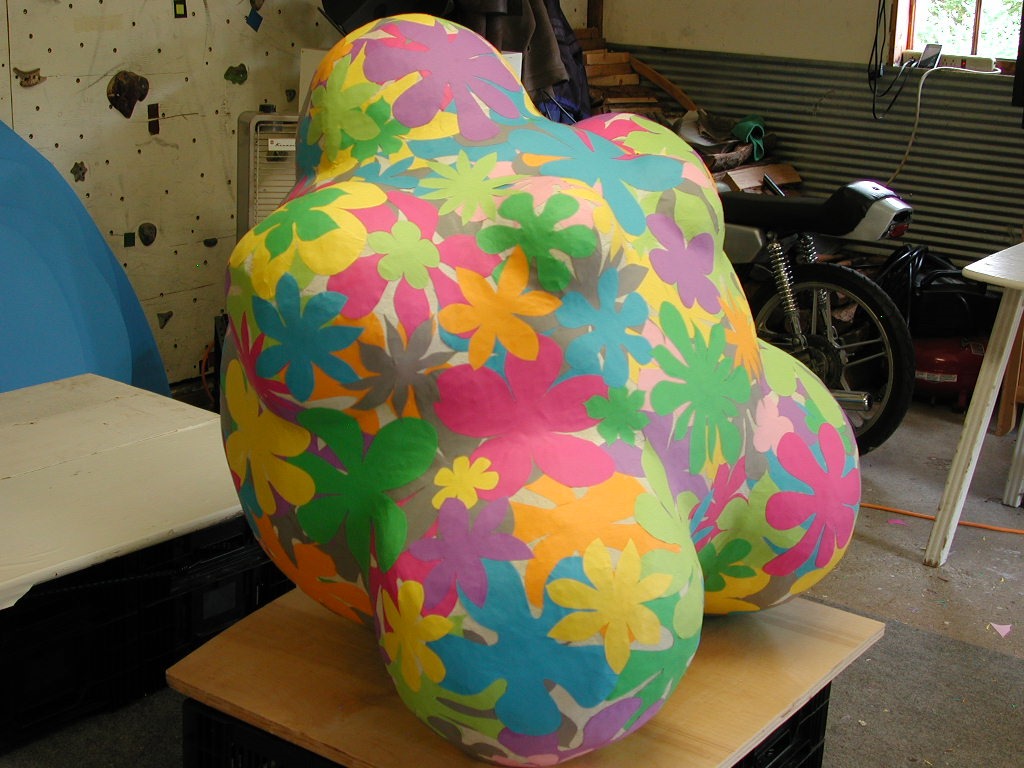
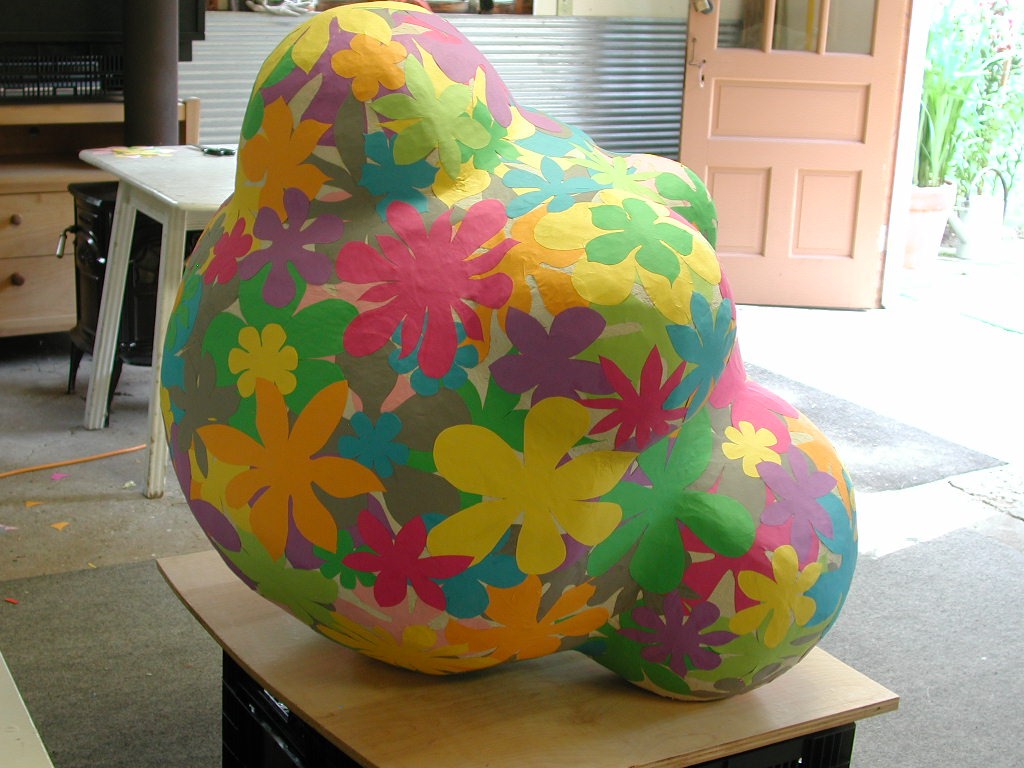
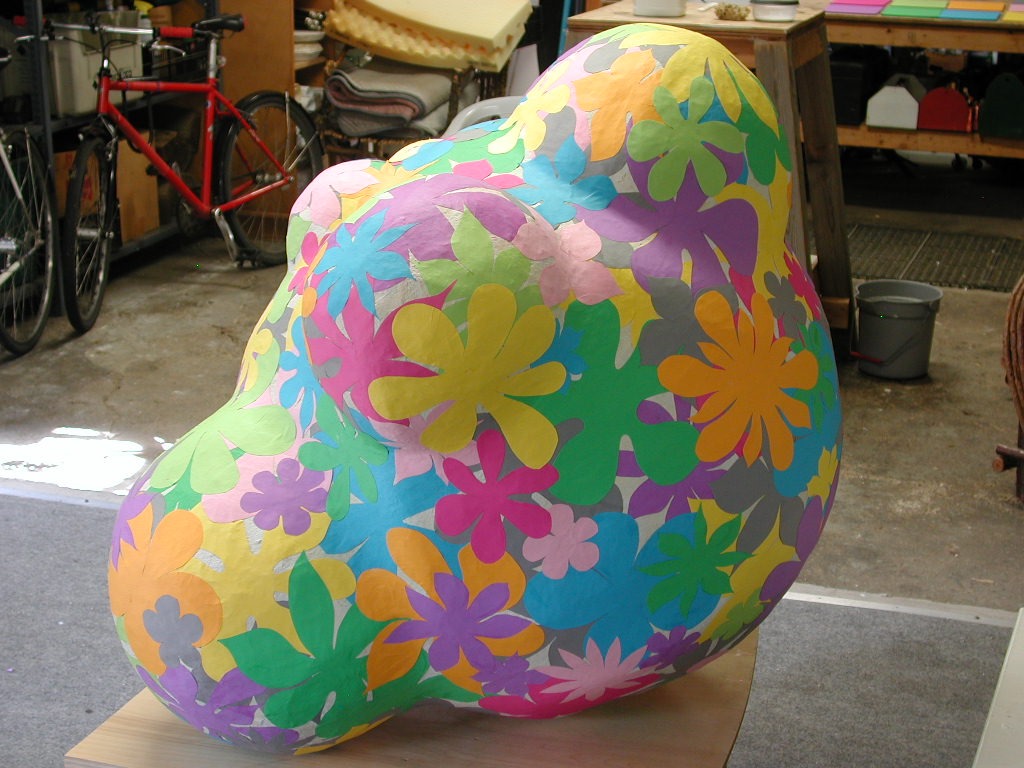
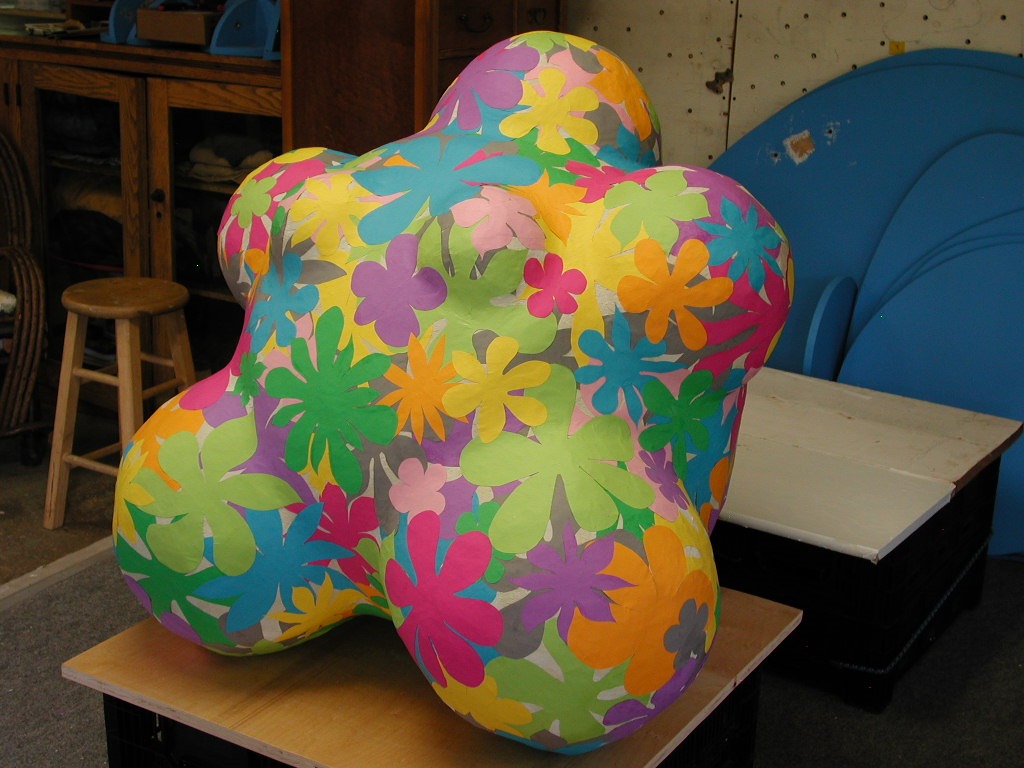
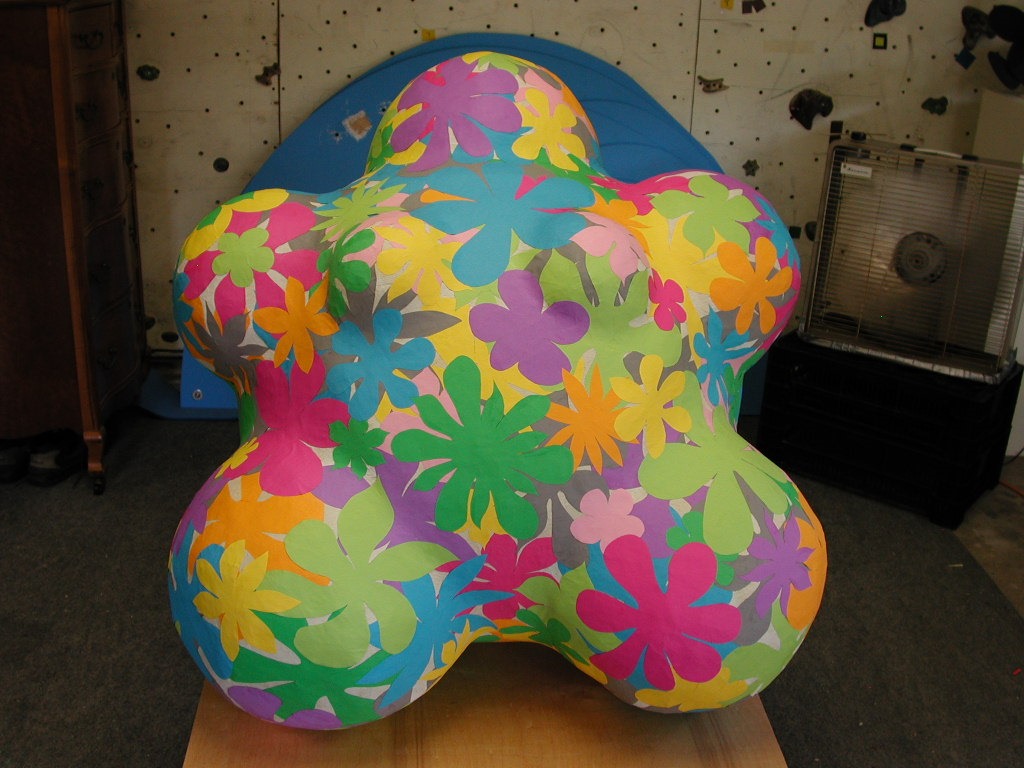
I resumed work on something from a while ago, renewed with energy from my vacation to Spain and Portugal. I knew now what I wanted to do with that iconic "Venus" construction, oh so minimal and cool. Now, I would adorn it to excess by hand-working the surface with bright colors and free shapes derived from nature. Flowers. You must know that those three things, excess, color, and natural forms, shaped my experiences in Spain and opened a way for me to relax my creative process. As a sculptor, inevitably a deal of "design" comes into play when building things; they must have integrity as real objects. But I also want the pleasure of creating with illusion and ornamentation, like when I draw in a sketchbook, creating a picture which may not need semblance to anything real in my vision. Shaping, modifying, without clearly knowing the outcome, without clearly knowing what it is desired to be. Creating with small marks and scribbles the image of something else, as a mirage or a feeling, transient in the mind and to the eye. This is the effort to do this in sculpture.
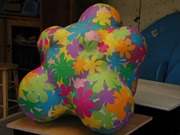
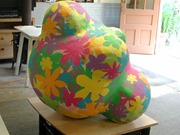
DSCN2393DSCN2400

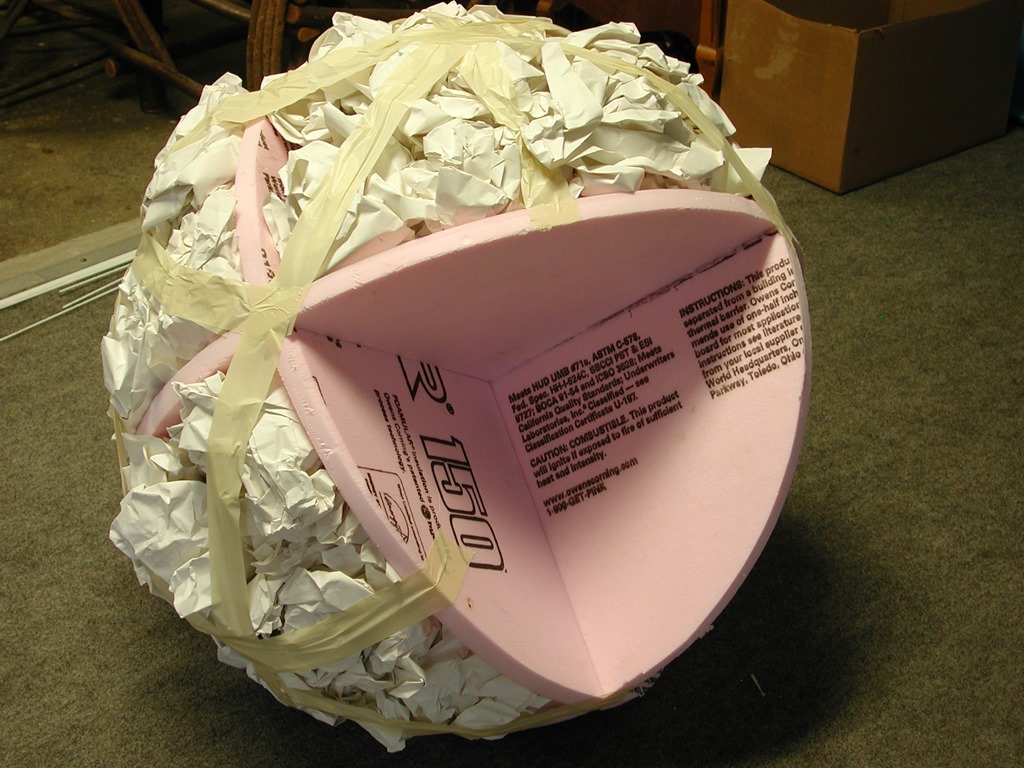
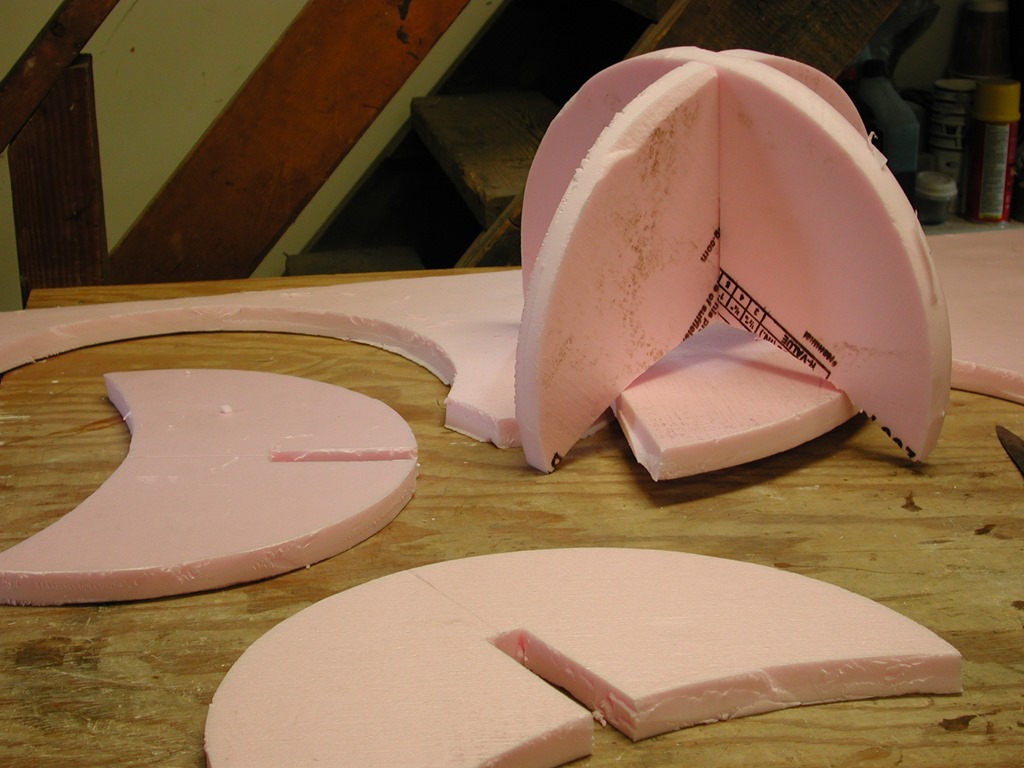
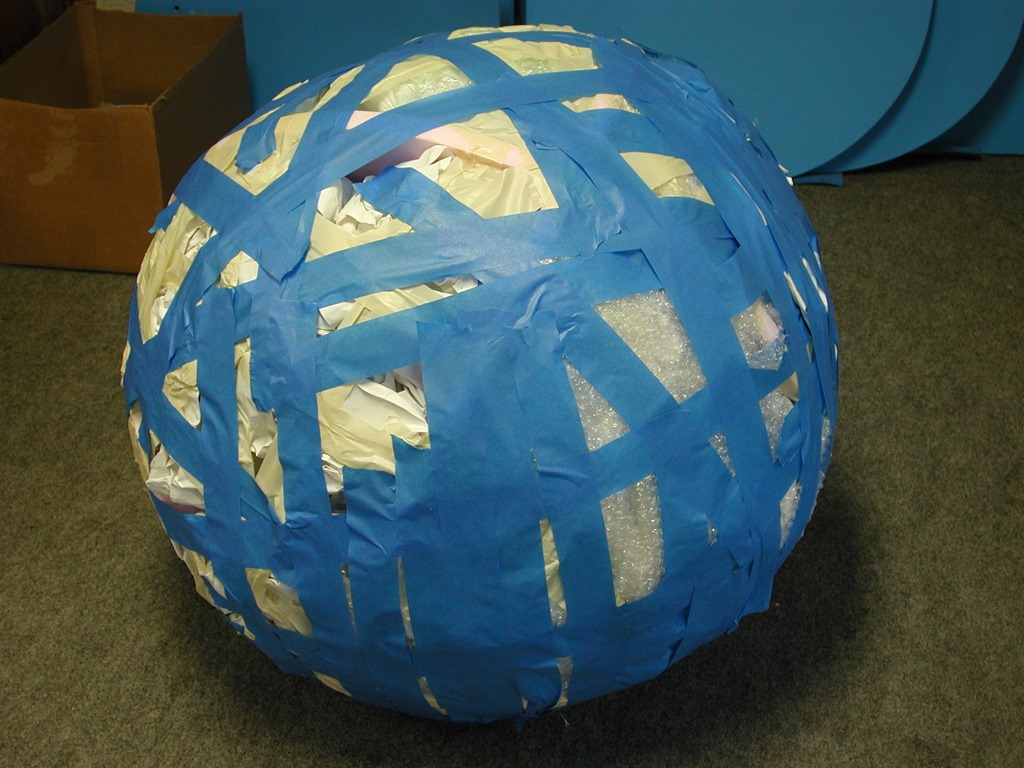
The construction is sketchy itself. The method is used for parade floats, mardi gras decorations, and the Fallas de Valencia. They’re not meant to be permanent, and they are large and need to be lightweight, cheap, and quick.  Build a core armature to the shape of your sculpture of whatever light and impermanent materials you have on-hand; foam, bubble wrap, wire mesh, cardboard, wood, paper.
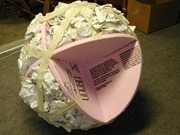
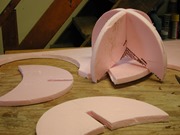
a_MujerDeLasFlores

c_MujerDeLasFlores

b_MujerDeLasFlores

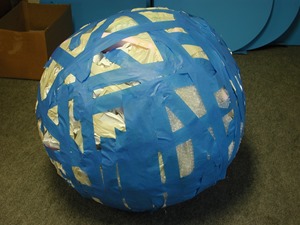
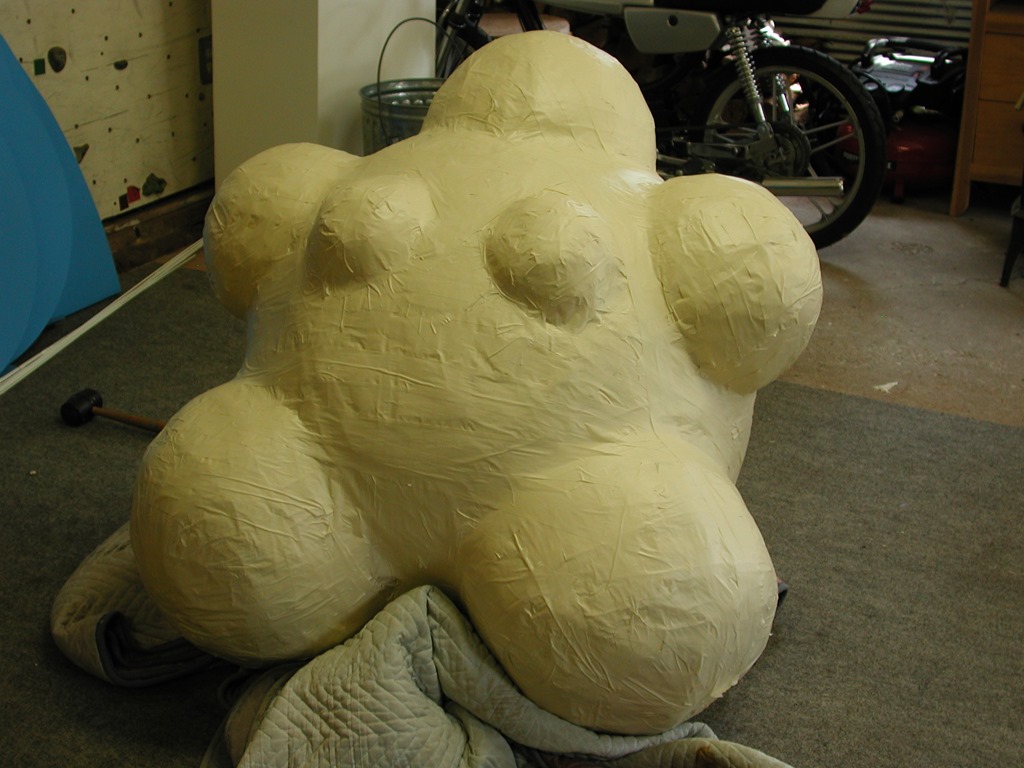
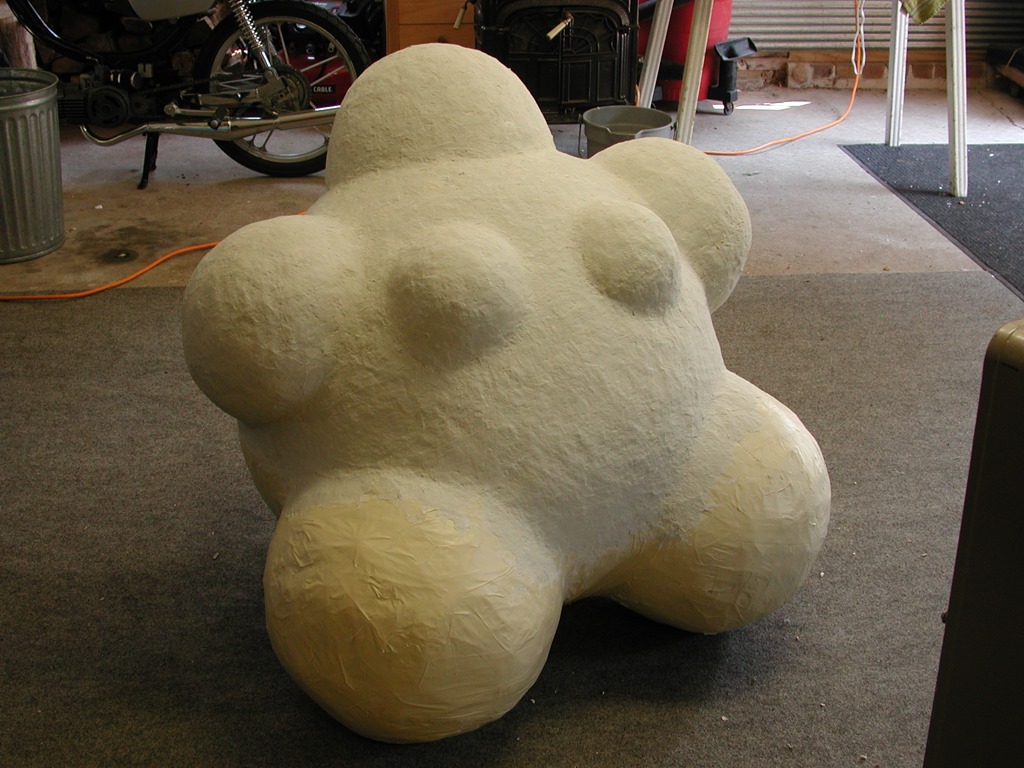
Begin to cover it with masking tape, layer upon layer, until the shape you want begins to have firmness and integrity. Something not right? Add more paper, packing peanuts, fiberglass insulation, and tape, tape, tape. Keep taping. Then add more tape. Finally, if it still doesn’t quite seem right, add more tape. And then, put a nice smooth finish layer of tape on top. This really works. Have faith. I used at least ten rolls of 60 yard masking tape. To get to this. She’s about 30"x30"x30" which is a large as will fit through a doorway. 
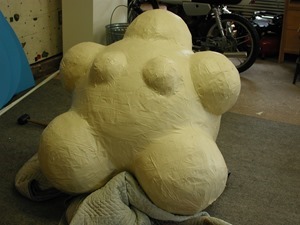
d_MujerDeLasFlores
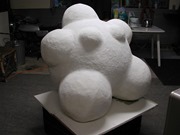
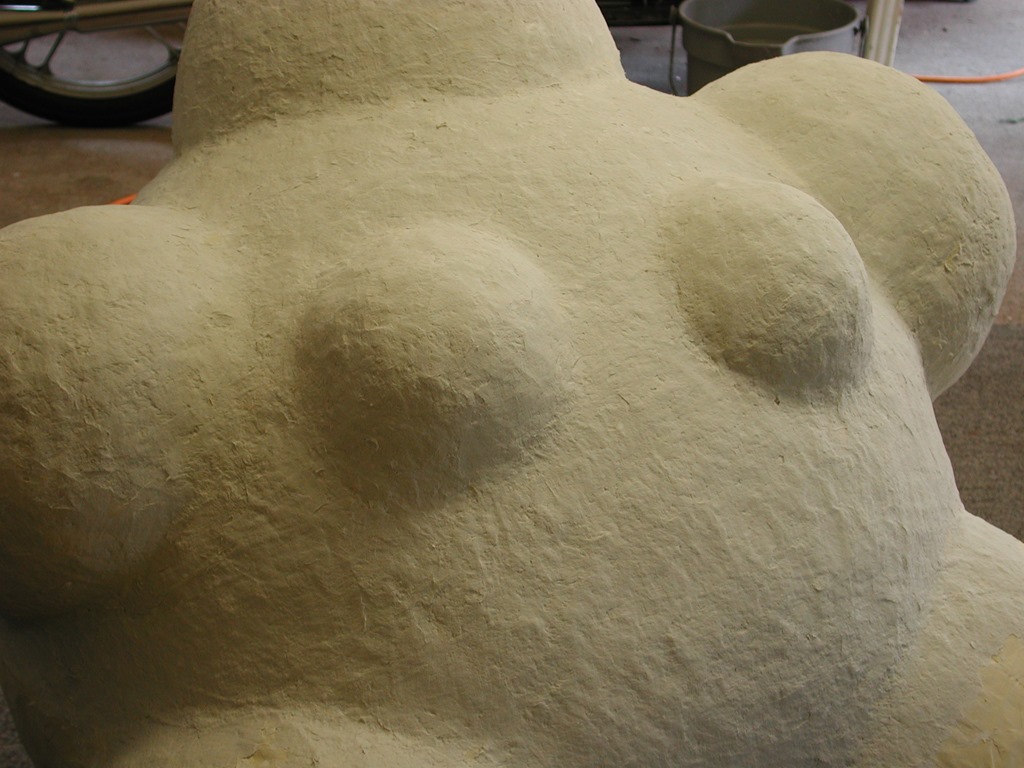
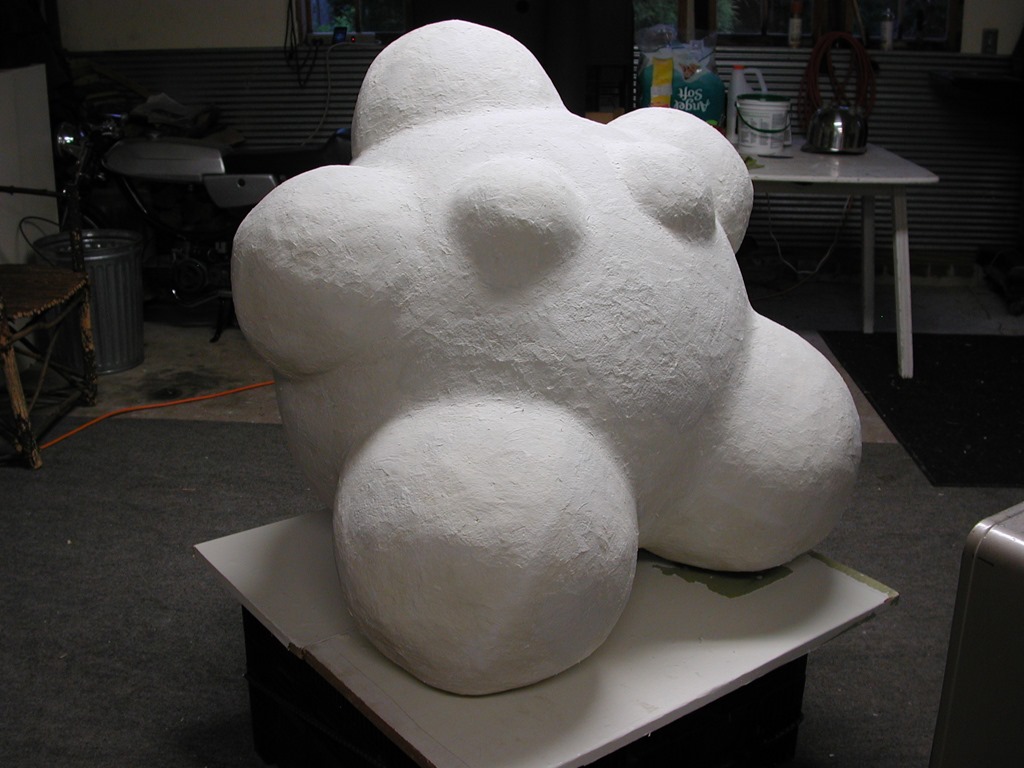
Next, prepare quantities of paper mache clay according to the popular way it is done now on the "internets". See: ultimatepapermache.com. There’s no point over thinking this; it has been figured out by very many creative "crafters" and you won’t find a better way, or at least any more well-tested way to do it. It is a strange mix of toilet paper pulp, drywall compound, Elmers glue, flour and linseed oil, and none of these things necessarily dry or cure in the same way, so I don’t know why it should work, but it does. Smear it on over your taped shape, just exactly like frosting a cake. Go in several thin layers, and dry it thoroughly between layers, by using large fans; this makes a big difference in the curing time. I used altogether 16(?) rolls of toilet paper, a gallon of drywall compound, and ¾ gallon of Elmers glue, or many small batches (16+). Take your time, play music, enjoy yourself, explore the details of troweling-on the mush; Spending time working in the studio is why you want to be an artist.
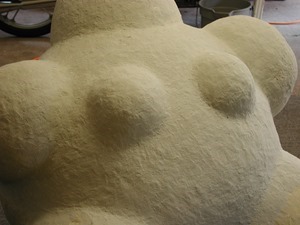
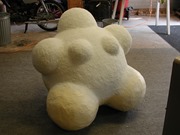
e_MujerDeLasFlores

f_MujerDeLasFloresg_MujerDeLasFlores

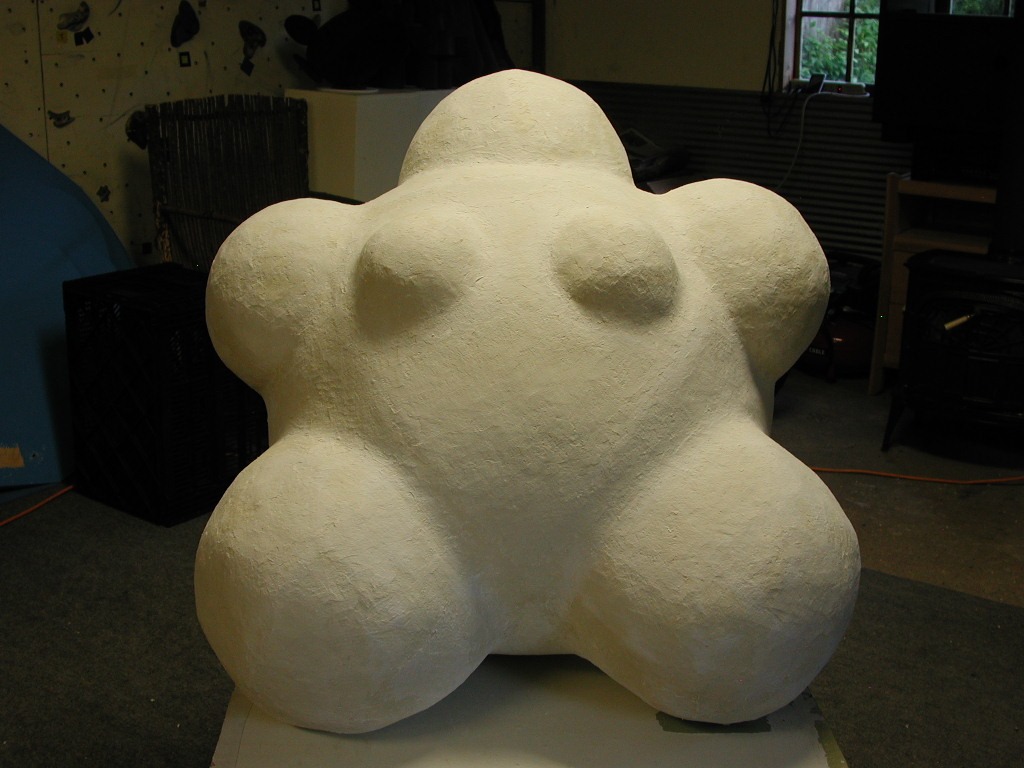
Finally, I guess I’m done. There’s no more soft spots. The material dries hard with a nice texture that looks like stone or cement. Congratulate yourself for not using some awful shit like Bondo or fiberglass like some idiots would do.
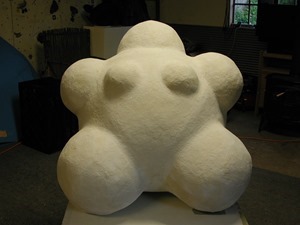
h_MujerDeLasFlores

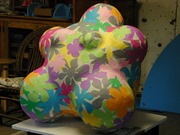
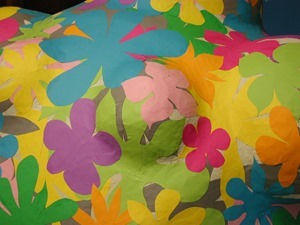
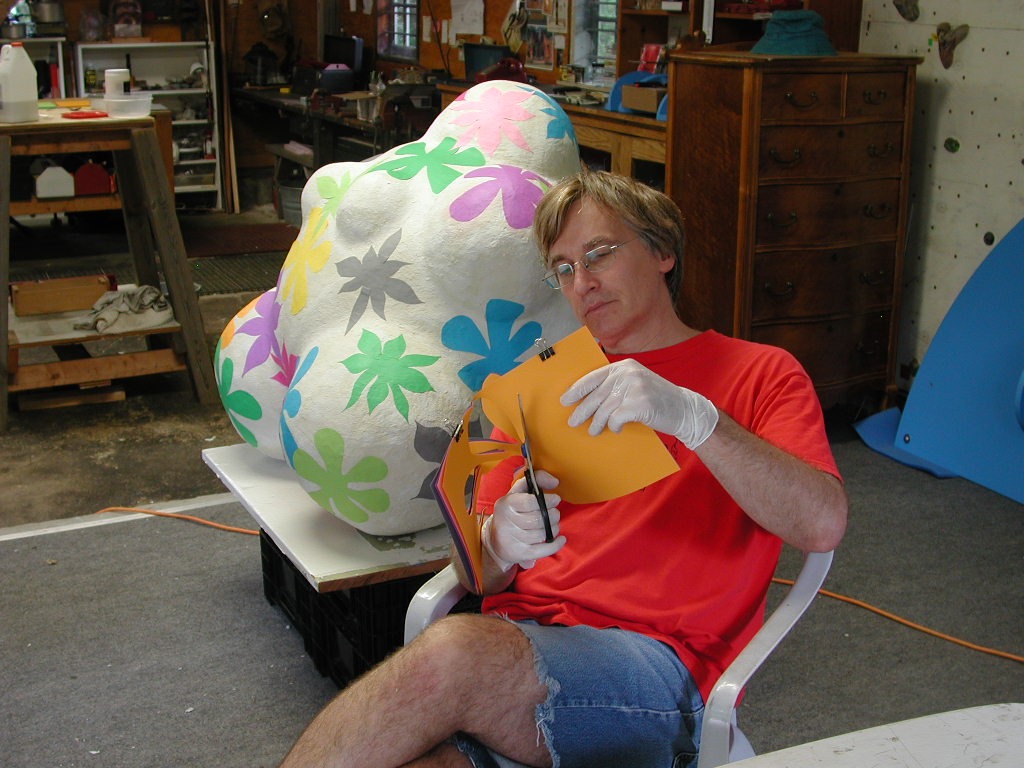
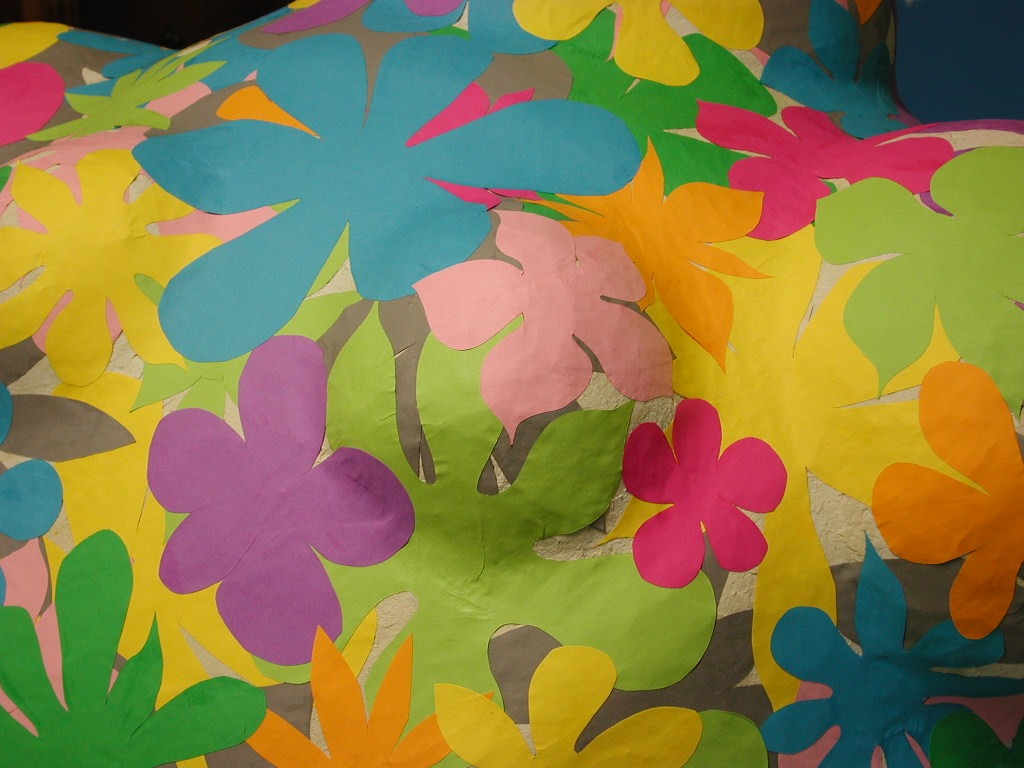
I’m ready for the adornment to begin. I had thought of all the ways I could machine cut paper flowers in great quantities until I realized what an opportunity for improvisation and play I’d be missing out on if I didn’t simply cut them out by hand with a pair of scissors, as well as free handing the drawing of the flower shapes in many varieties.
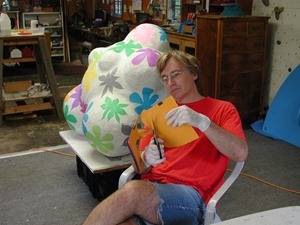
j_MujerDeLasFlores

The choice of colors, was for me, as usual, a challenge. I asked my trusted color advisor about this and she, as usual, immediately suggested the right combo of colors which would work well for this idea. She is flawless, really.

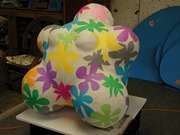
i_MujerDeLasFlores

k_MujerDeLasFlores

l_MujerDeLasFlores

m_MujerDeLasFlores

o_MujerDeLasFlores

..Until it finally feels right
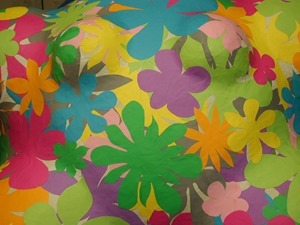
s_MujerDeLasFlores

q_MujerDeLasFlores

r_MujerDeLasFlores

x_MujerDeLasFlores

y_MujerDeLasFlores

v_MujerDeLasFlores

u_MujerDeLasFlores

p_MujerDeLasFlores

Adornment

I went to Portugal and Spain seeking and expecting to see a lot of decorative art applied to things from chapels to architecture to sculpture and streetscapes; instead what I discovered was something more intense than what I usually thought about decoration; what I’ll call Adornment. I may have thought of decoration as something applied to the surface, over something else, and and hiding, or not fully part of, another thing; an afterthought. Adornment means for me the accumulation of detailed elements into a synergizing aura becoming the object itself; there’s no boundary between the adornment and the object; each single part has adornment included in it.

DSCN3036

DSCN3037

DSCN3040

DSCN3061

DSCN3077DSCN3064

DSCN3107

DSCN3110

DSCN3177

DSCN3376

DSCN3393

I’m sure I’d like to bring adornment into my work, over-ripe, sensual, vibrant, and rich; Not words I normally use about my sculpture.

More Moore

Something I’ve wanted to do for a long time; in Toronto, I went to the Henry Moore Sculpture Centre at the Art Gallery of Ontario. I was in Toronto for the Tango Marathon, but Saturday afternoon I took off on my own. I rode the electric street trolley through town, which otherwise looks like Chicago.

At the AGO there is a large hall, and there are there displayed, some 20+ original full-size plaster models of many of the best known large public works by Moore.

th55WYG3DE
I’d been up ‘till 4 the night before, and I hadn’t had much breakfast, and when I entered that hall I felt humbled and bit sick to my stomach, and I thought of Prince’s Little Red Corvette:
I guess I should of closed my eyes
When you drove me to the place
Where your horses run free
‘Cause I felt a little ill
When I saw all the pictures
Of the jockeys that were there before me

thJE1E1QR4

These are all very large sculptures – 8 to15ft – far above life-size. There is a lot of surface area at this size. They’re different from the bronzes in this way: I know the bronzes have a rich surface texture of marks and scrapes, cuts and gouges, which are essentially Moore, but the metal is so dark, the patina so dark, that it can be difficult to really see the forms being evoked out of that surface of markings. On the plaster versions, these marks are very much clearer, and I can easily see the drawing-like gestures, and the painterly slinging and shaping of plaster. I love plaster as a medium. It applies like paint or clay, and carves like clay or stone. These works were all done in the 50’s and early 60’s, and you can see Moore working in full-blown abstract expressionist mode across the full surface of these large forms. The entire surface of a sculpture is a drawing surface.

The structure of his process makes this fully abstract and gestural surface possible. I think most of his designs start as small, complete models, of the size to be held in the hands. He worked these in the hand, at the size which can be easily turned and examined, and discovered, until certain. Then a greatly enlarged armature is built to the final size of the piece, by a crew I presume, who also skims it with first surface of plaster. Now Moore has a complete full-size form he can be confident in. No major adjustments  need to be made to the form. Now he can go over the whole surface with wet plaster as if a drawing surface freely and without restraint.

I love Moore. I don’t want to be Moore, but I want a structural approach to building sculpture which also allows for the totally free expression of the spirit through material forms.

In my own work, I have not dealt much with the surface. This is because ordinarily I let the material itself reveal itself as the surface. It is an integrity thing. The material itself is topical to the work of sculpture. However, I’m  beginning to see some ideas which I would work out in clay or plaster – universally plastic material – which has no definite quality of surface except what it made intentionally upon it. It will become necessary to be responsible for the surface of the clay or plaster object; I must discover the surface, and now it seems that the path to that is in drawing. I been doing drawing which I’ve thought of as very thin sculptural shapes. It may be next to think of sculpture as extremely thickened drawing surface.