Author Archives: matthew DG

Unknown's avatar

About matthew DG

What I'm making & seeing & saying

Machine-made art

Much of the production of visual art is done by machine now. Computerized digital cameras are highly automated, as are image processing systems for still and motion pictures. The digital network infrastructure reaches even to the palm of our hand, distributing images and words. Audio information production is the same. And that powerful combination, added to the printed word, is a mighty voice.

This system of machines supporting visual art does well what machines can do well; lower the cost of mass production and replicate products in large volumes. This is Ford style automated production line. It has progressed wonderfully during the recent digital revolution. The products are similar in source material, design, and workmanship, in that they all share the same imagery: the real world, aesthetics: human global culture, and purpose: communicating ideas and stories.

There is good art being done in digital media and it depends much on machinery. Are its practitioners, if deprived of their tools, prepared to to continue their personal expression in another material way? There may be a filmmaker who uses the media in a fashion that is essentially handmade with a SLR and a laptop, doing the script, acting, lighting, and sound himself. But without them, would he sit by a campfire and create the performance with only his voice, and gestures and a flashlight?  Works of digital media are mostly narrative storytelling, and when not, when being abstract, the meta-narrative of the creation technology becomes the story.

The individual object of art is almost unaffected by this change. It will continue to be created, mostly by one person, by hand, with simple tools, or un-specialized machines, individually. There is little distribution because the market is small and the object is unique and physical, limited in movement. The personal expression of the artist is unique in it’s source: the inner life of the person, it’s creation: the specific manual skill and sensibility of the artist, and it’s meaning: sensuality or spirit, or, whatever.

Individual art is a declaration, not a parable. A statement made by a person. Not the tired moralizing storylines, yet again and again, of good vs evil, the underdog who perseveres, of revenge fulfilled, of personal redemption, the hero, and all that other rot of manufactured sentiment. Enough of all that.

Duende

I have just learned about Duende, as explained by the poet Federico García Lorca, in a lecture he gave in Buenos Aires in 1933, “Play and Theory of the Duende”. (In Search of Duende, García Lorca, Federico; Maurer, Christopher (Ed.) New Directions 1998).

My understanding is that Duende is the quality of extreme emotional intensity, for example as experienced in Love or the grief of Death, typically. What has surprised me is this; I was taught that Western Art was conditioned by a dialectic between the Dionysian, intoxication, dreaming, the suspension of Self, and the Apollonian, clarity, knowledge, the transcendence of Self. Suddenly I’m understanding that there is a third pole to Art’s foundations, one that doesn’t arrive at the dissolution of the Self, but rather is a deep dive into emotion, and the Self, only. There’s no relief from our human condition, or any understanding of Truth, but only the expression of the strongest emotions.

In the book Pilgrim at Tinker Creek, Annie Dillard remarks on the intensity of the human emotions which cause pain, and why, as a species, we should have evolved these, to such strength. And the answer must be, that the opposite, the Joy of living, and of Love, are the evolutionary benefit of our emotional extremity.

Lately I’ve had a great satisfaction in using some very strong color in my sculpture. I know it is because of the pure emotional effect the color has. I feel the need to do something more with this.

What means Blue Woman?

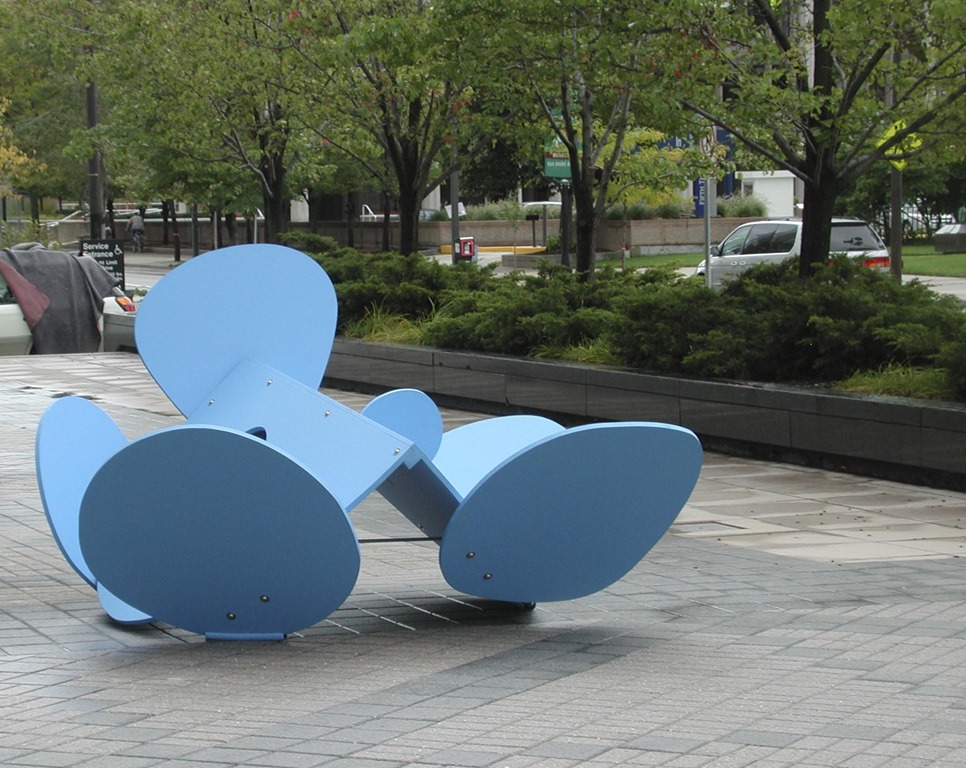
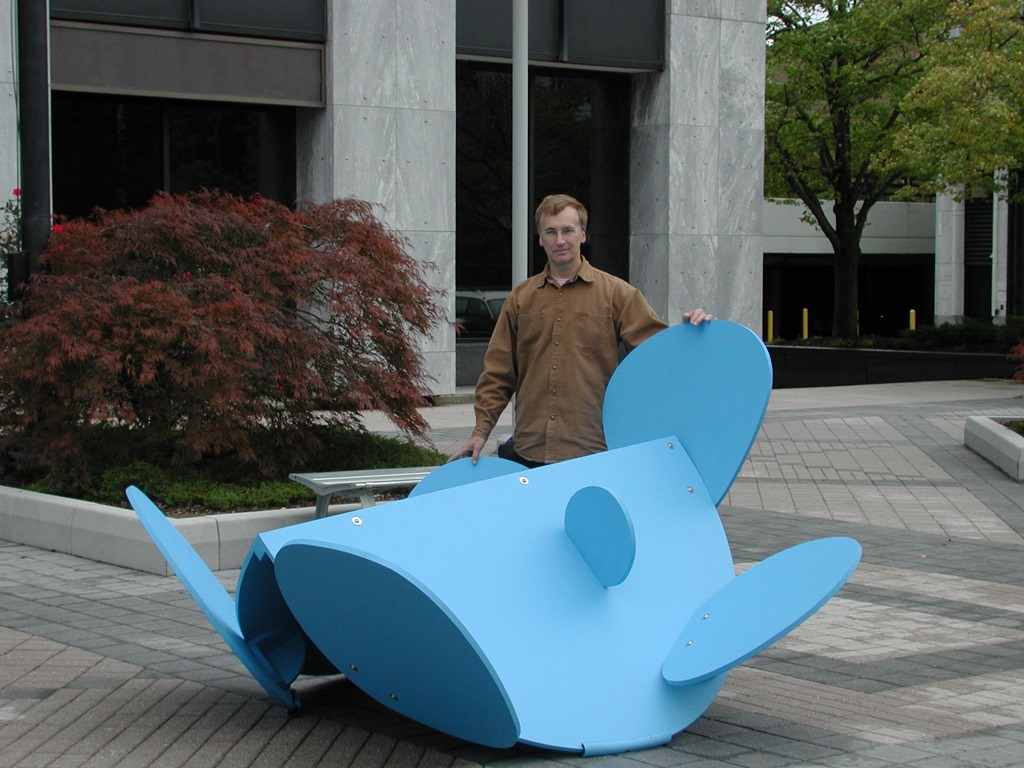
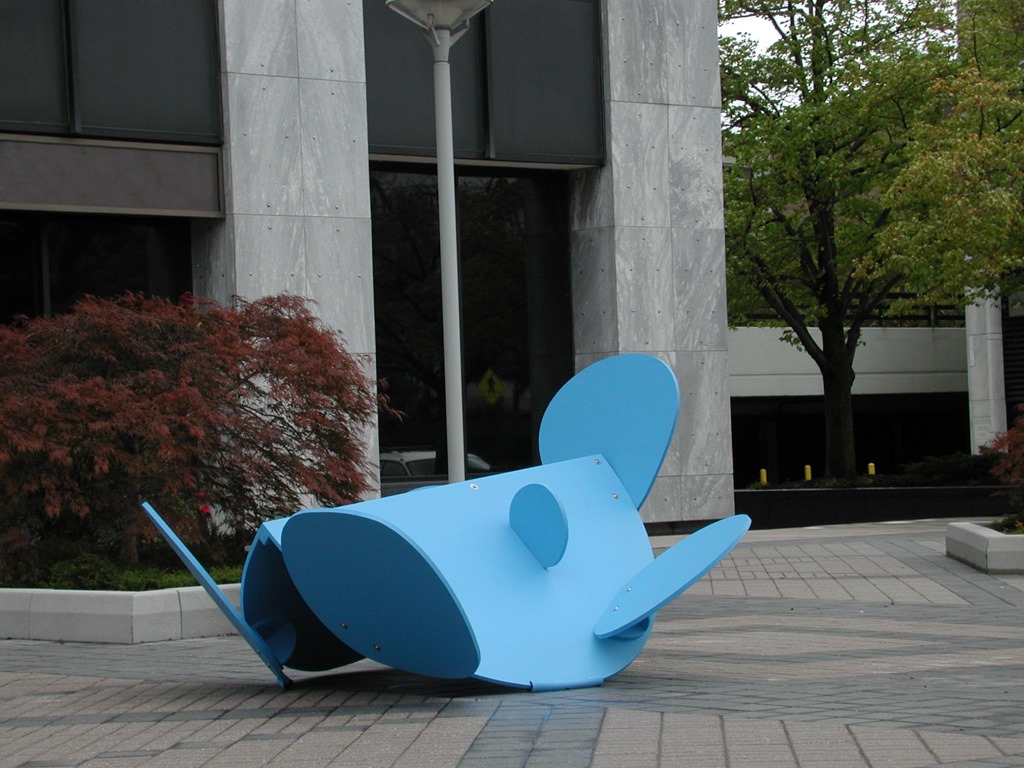
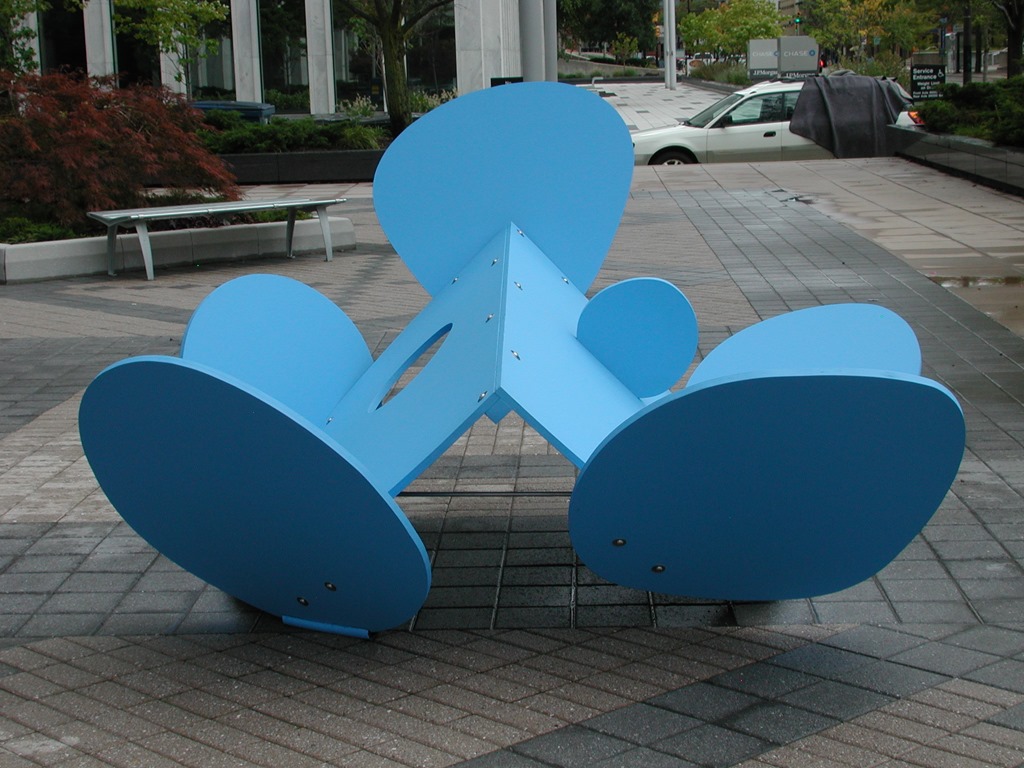
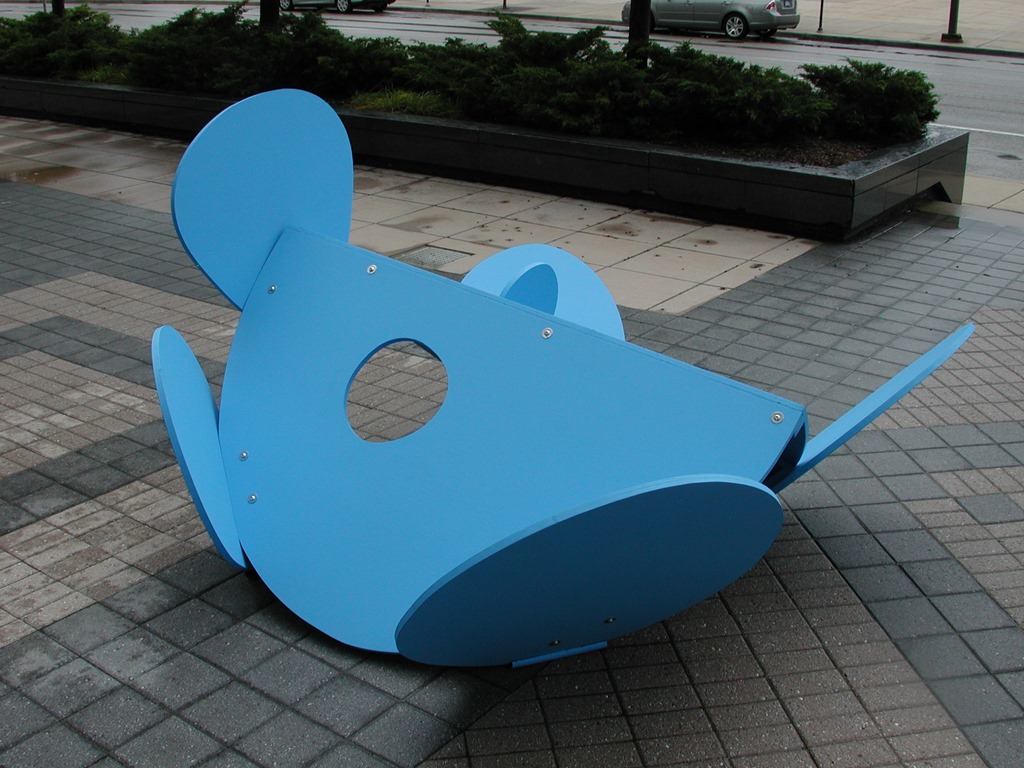
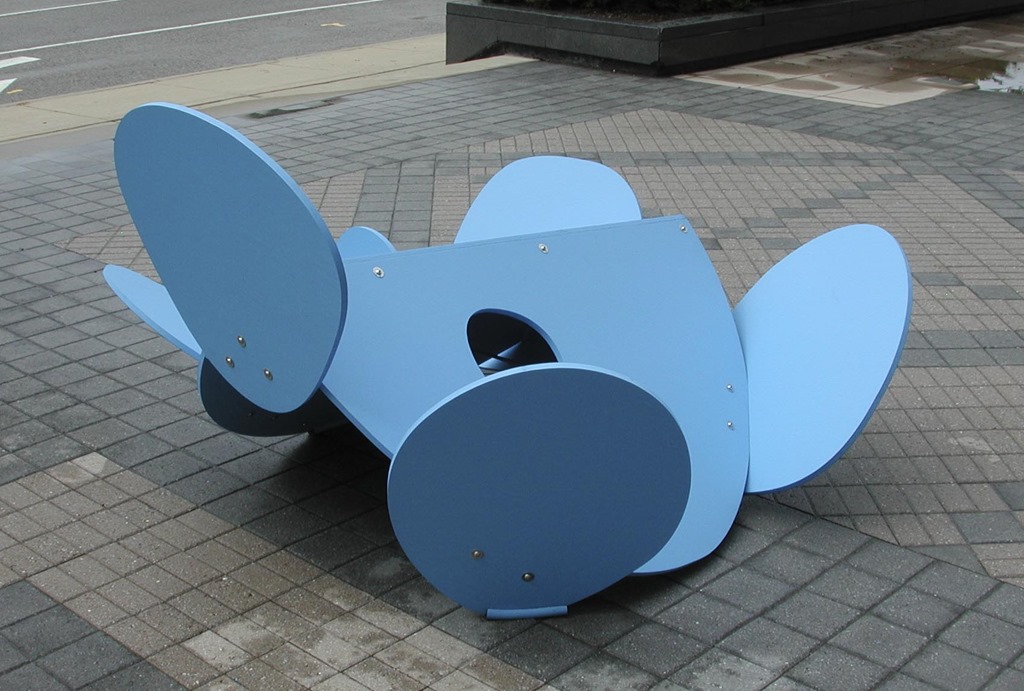
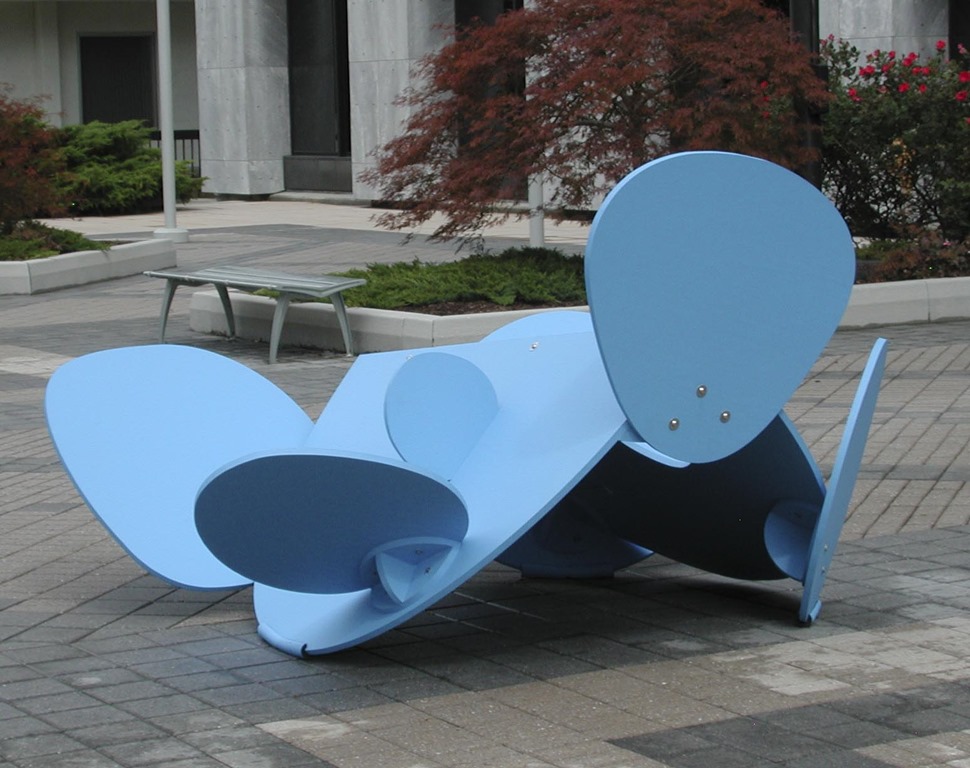
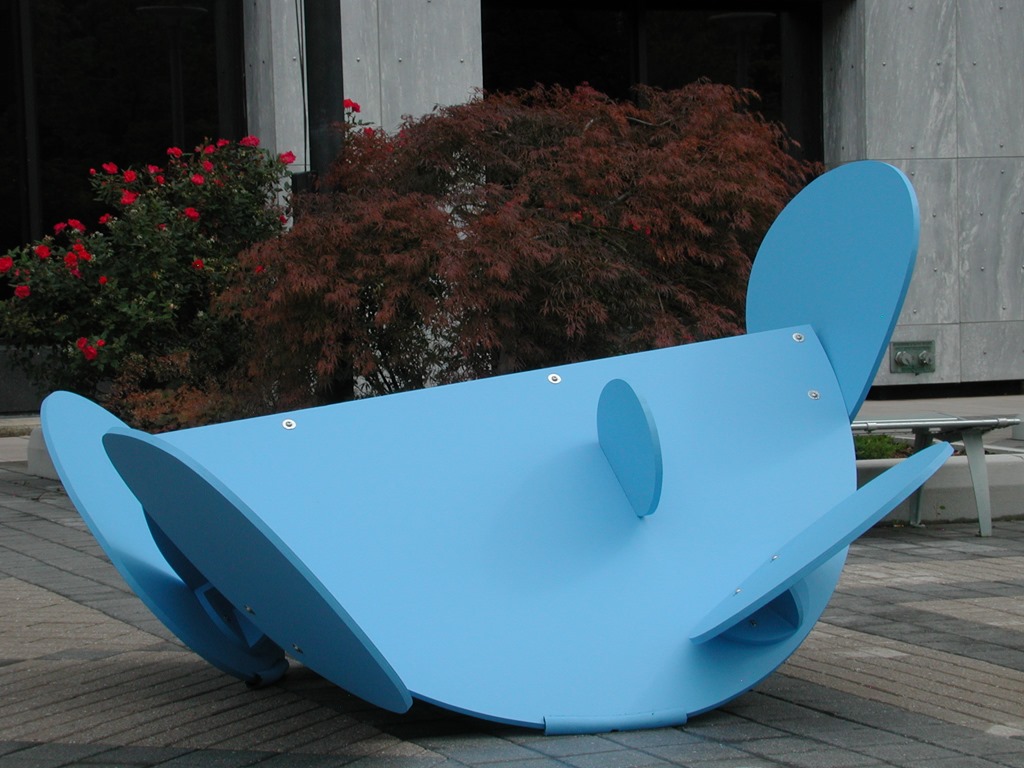
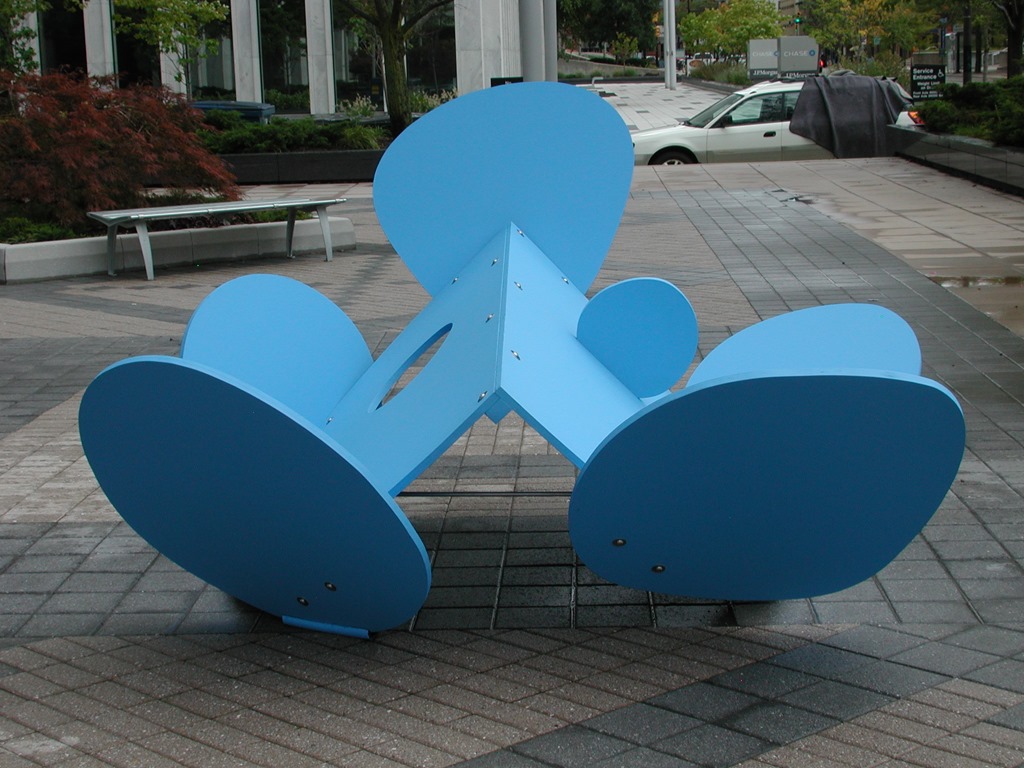
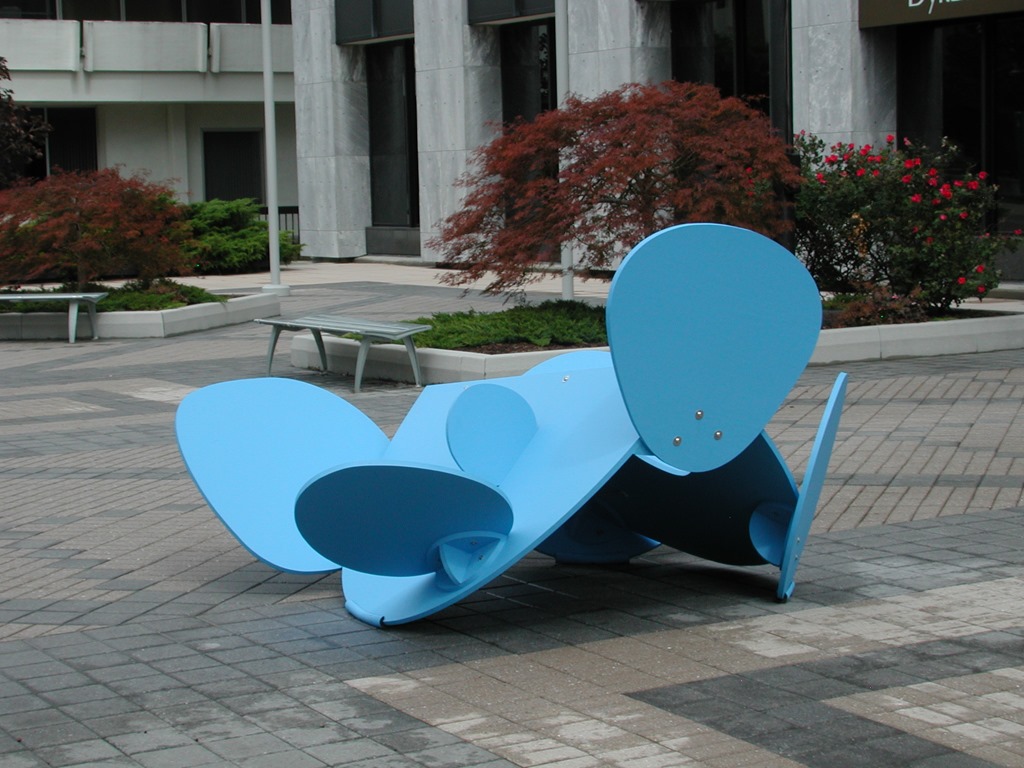
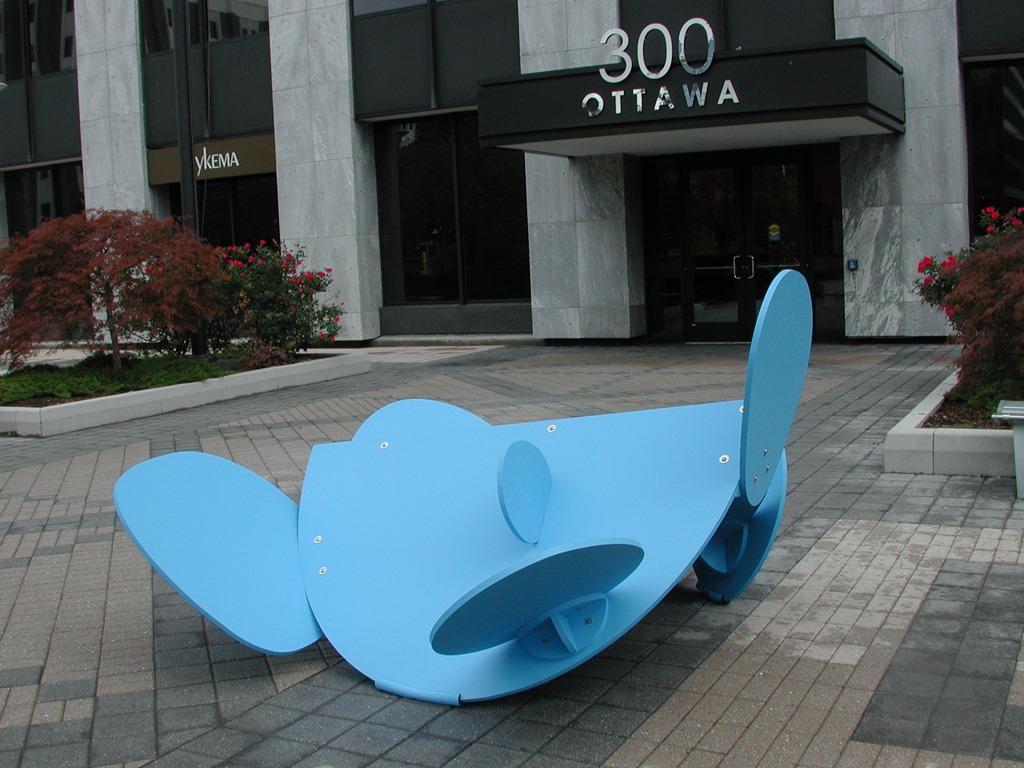
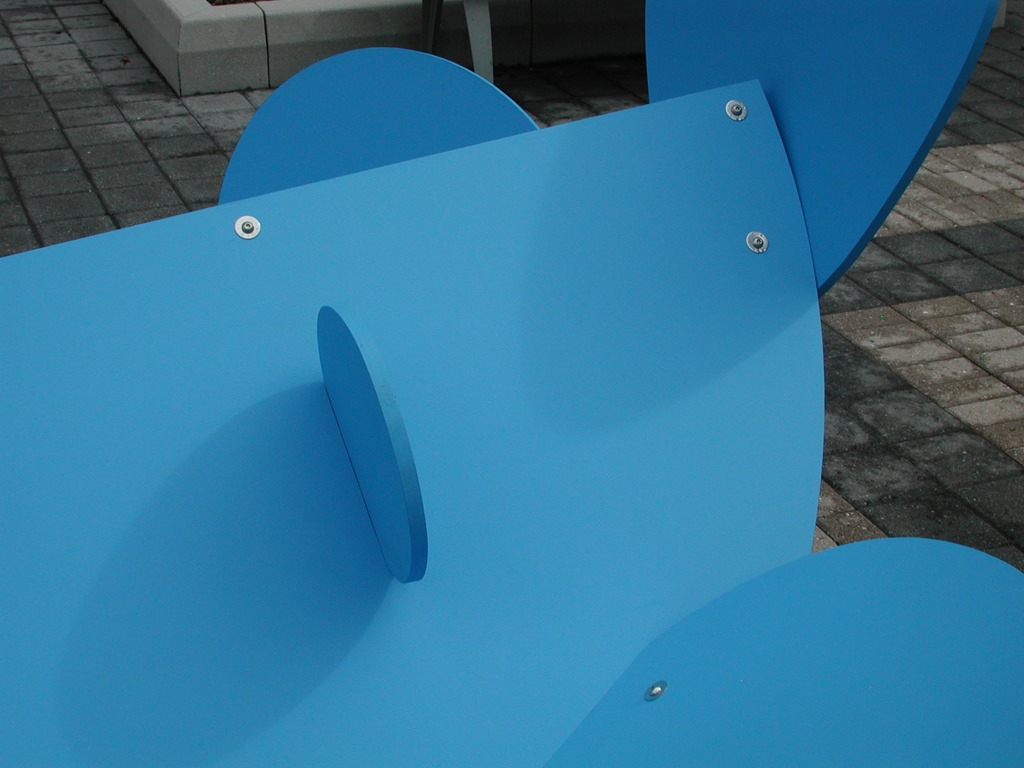
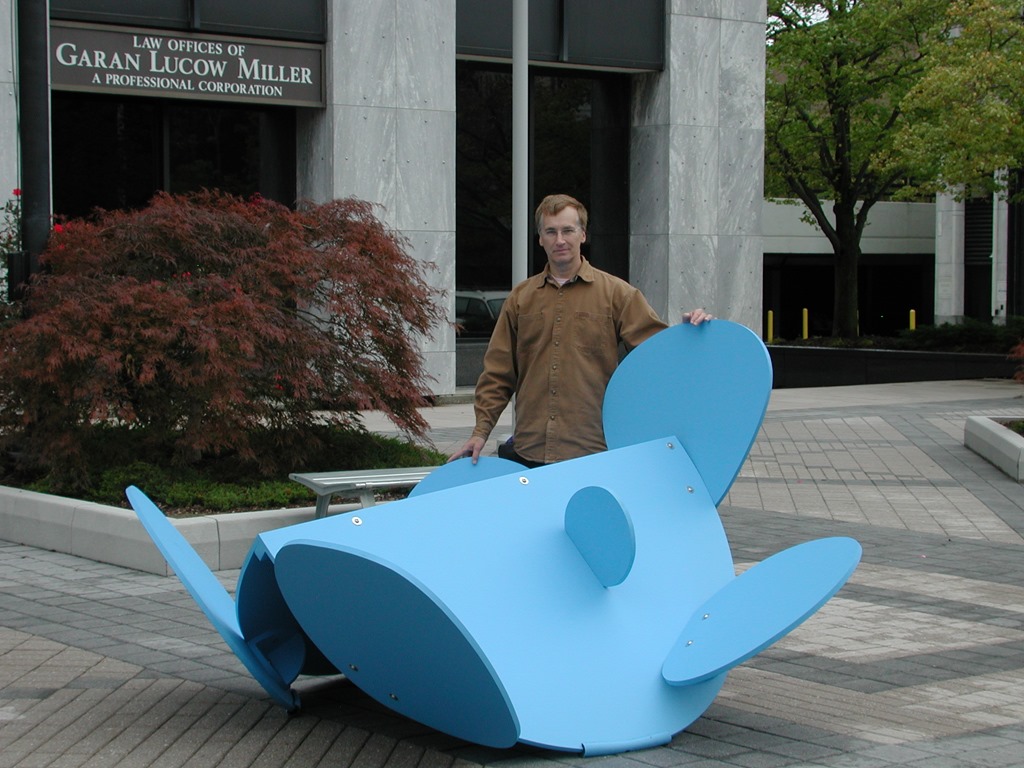
Being married to a slim athletic woman all my life, that was my orientation to women’s bodies in general. When I took up Argentine Tango dancing, I began to discover the variety of women’s bodies through the physical connection of dancing with a partner. For the first time I was encountering, experiencing and understanding women’s bodies of another type; Round, soft, and buoyant. The gentleness, the agility, the smoothness of motion, the fullness of physicality, all these thing sunk into my brain and slowly created the awareness which manifested in the sculpture Blue Woman. If you are a woman, round and soft, nimble and ebullient  with an open and generous spirit, this sculpture celebrates you!

a_complete crop

aa_complete

c_complete

f_complete

j_complete

k_complete

l_complete crop

p_complete crop

r_complete

y_complete

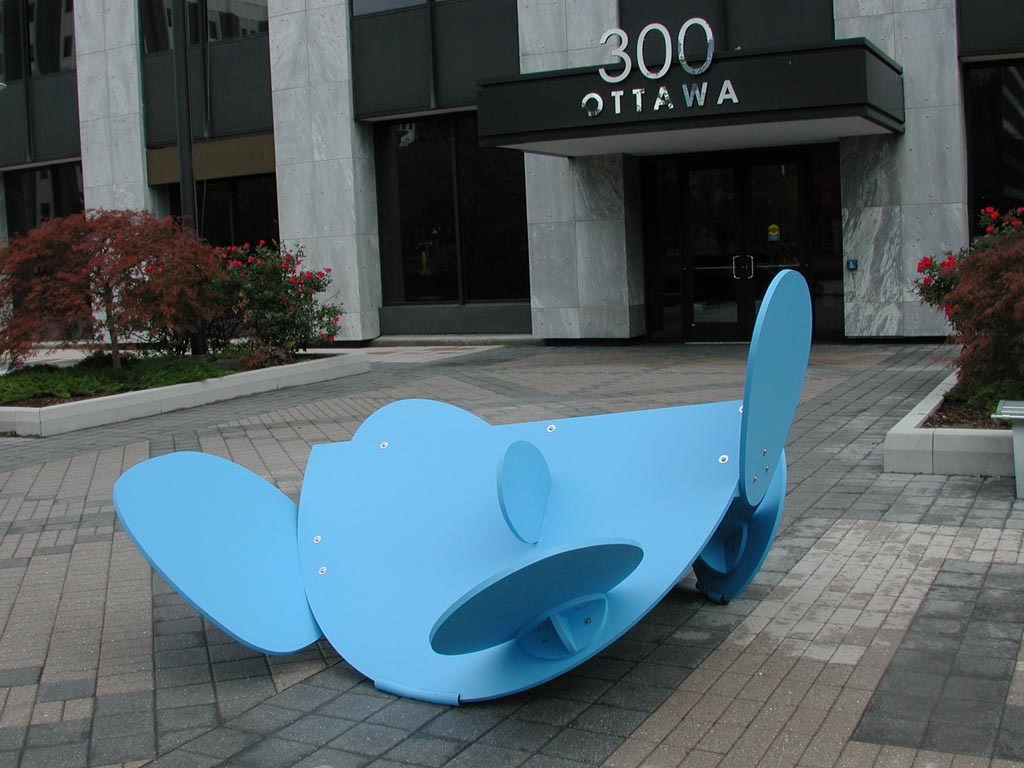
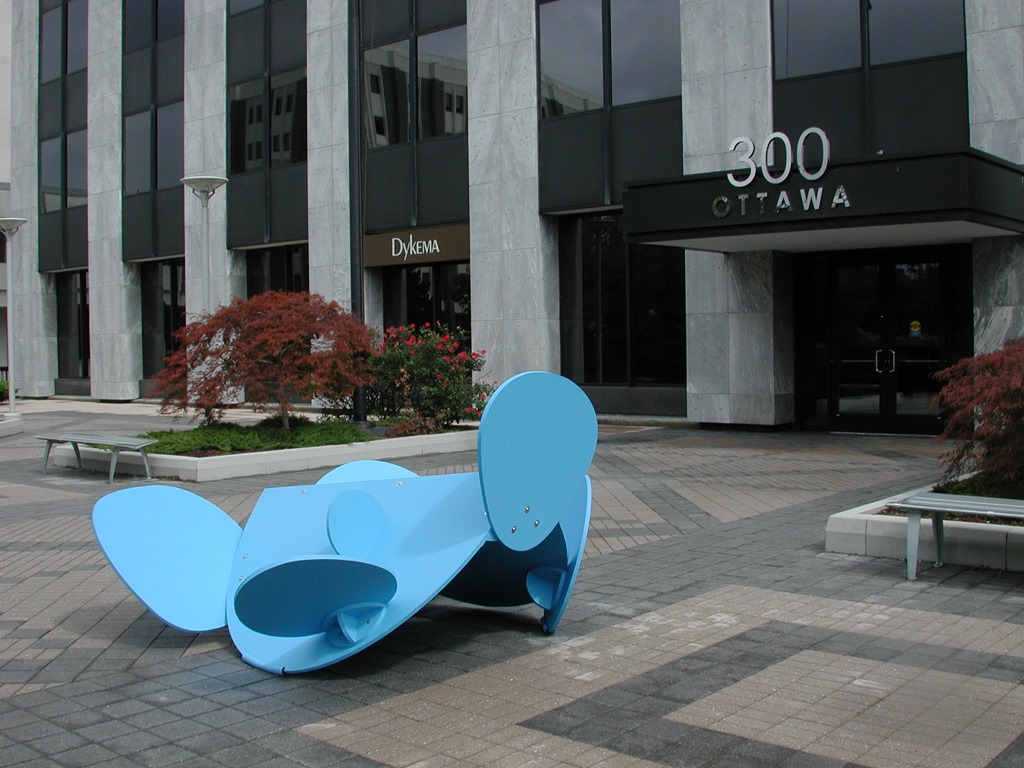
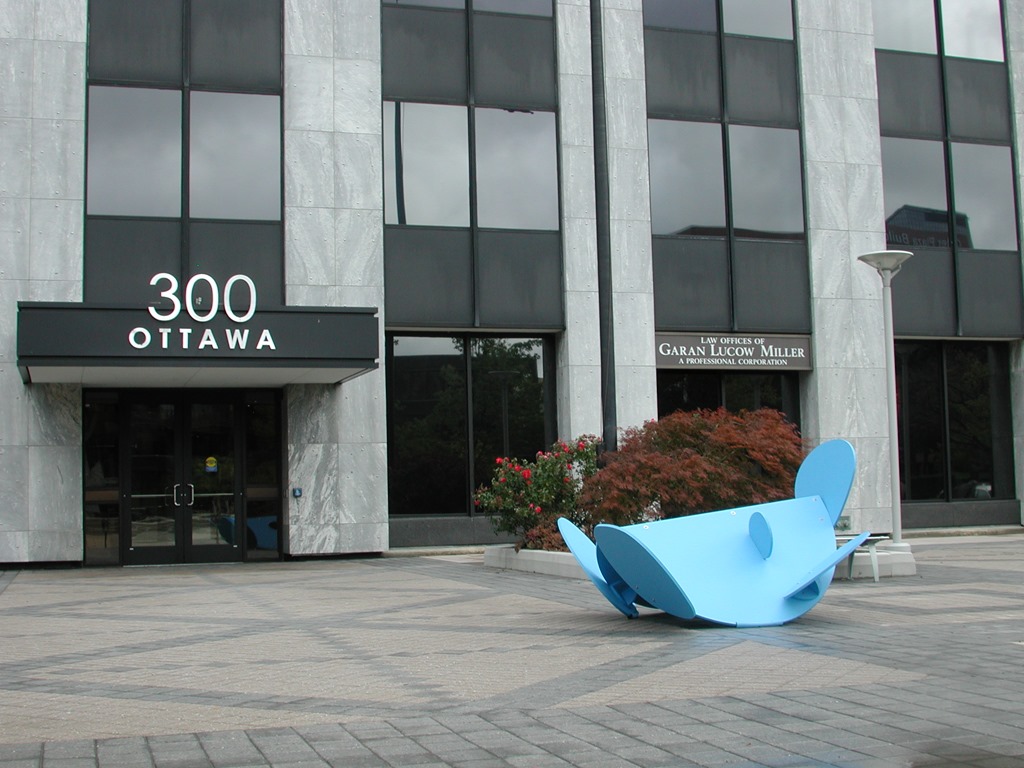
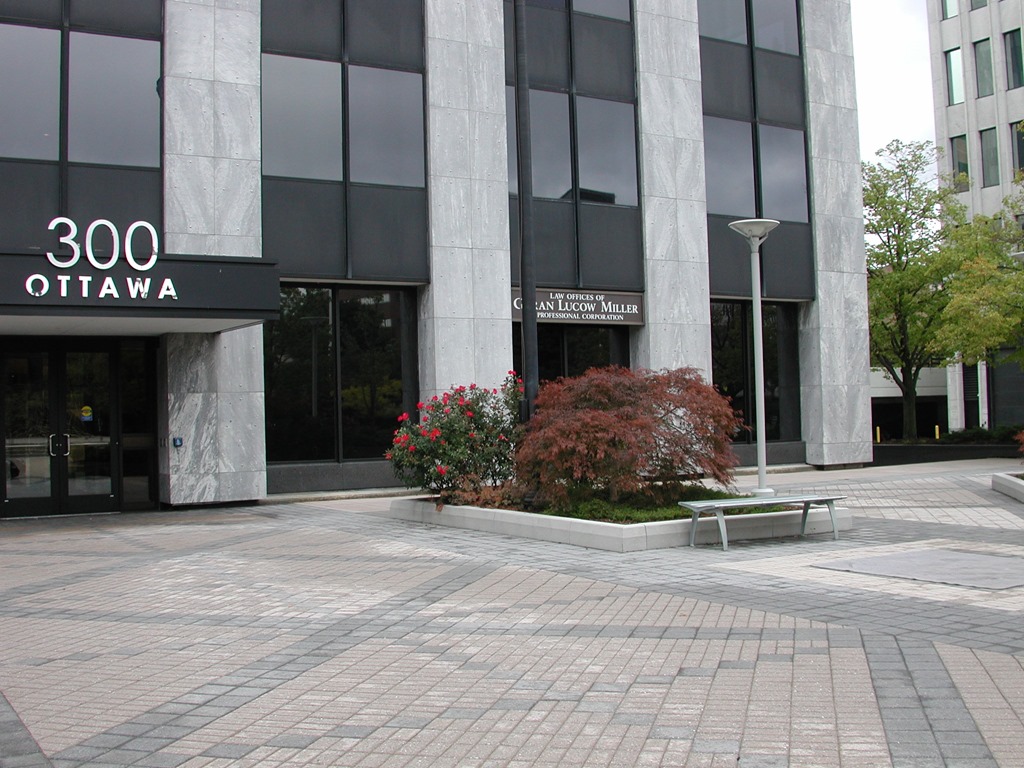
300 Ottawa

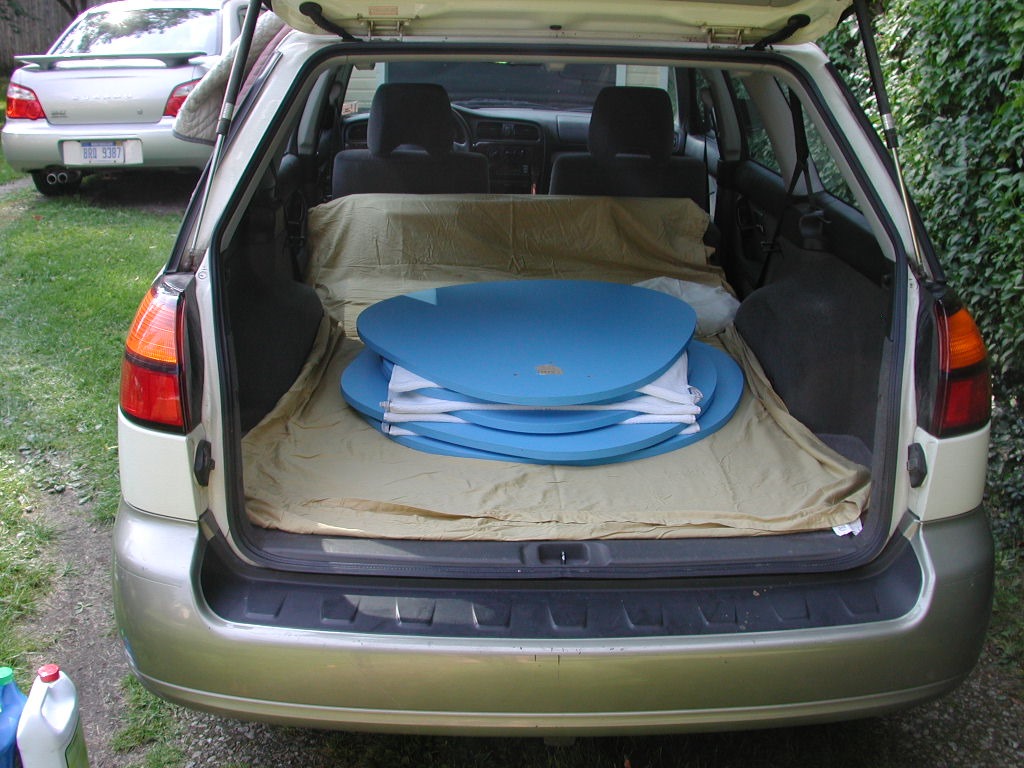
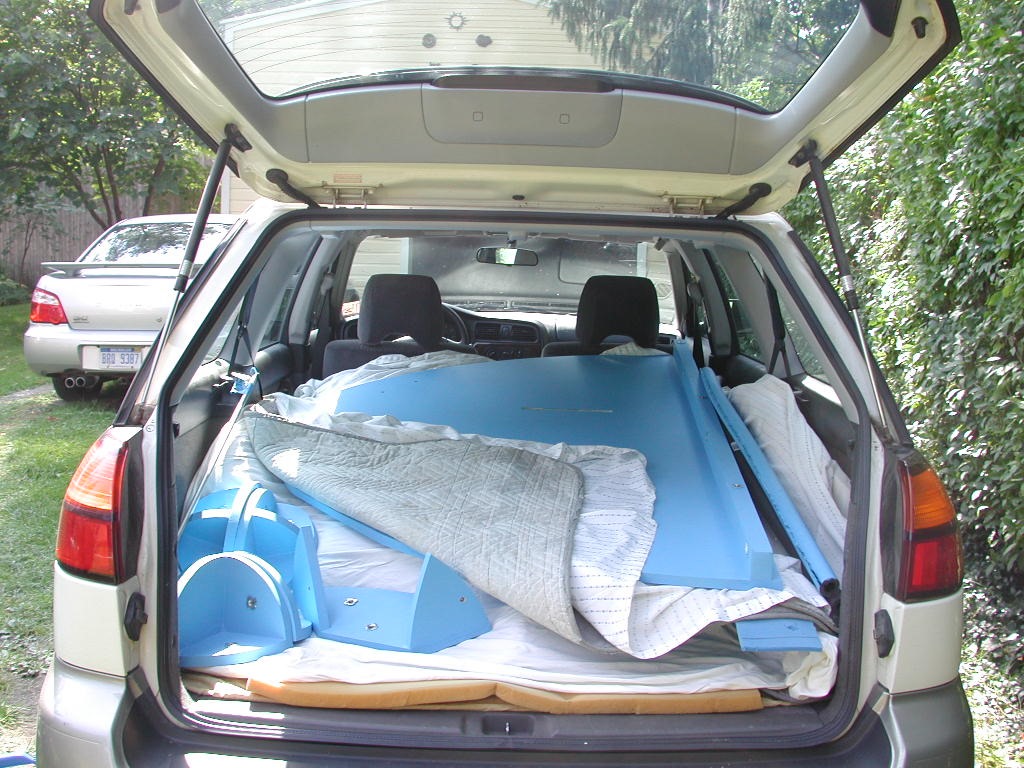
Now you know how crazy I am. The whole sculpture can flat-pack in the back of my station wagon. Delivery Day, ArtPrize.

a_assemble

b_assemble

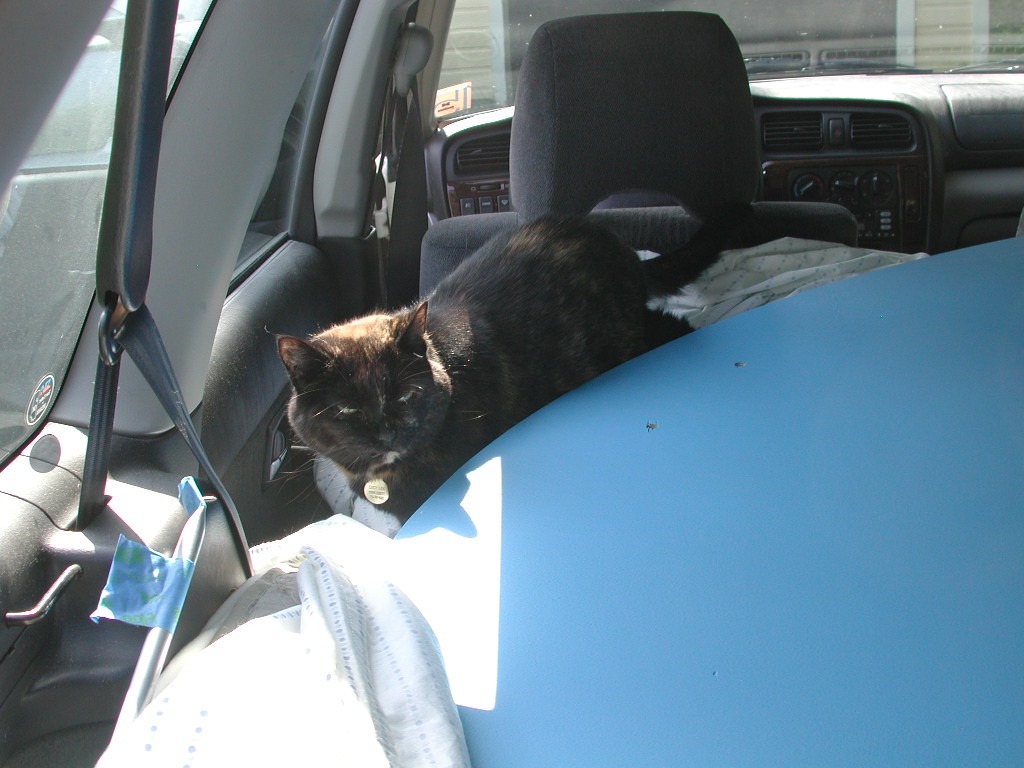
…could my helpful shop cat come along to supervise?

c_assemble

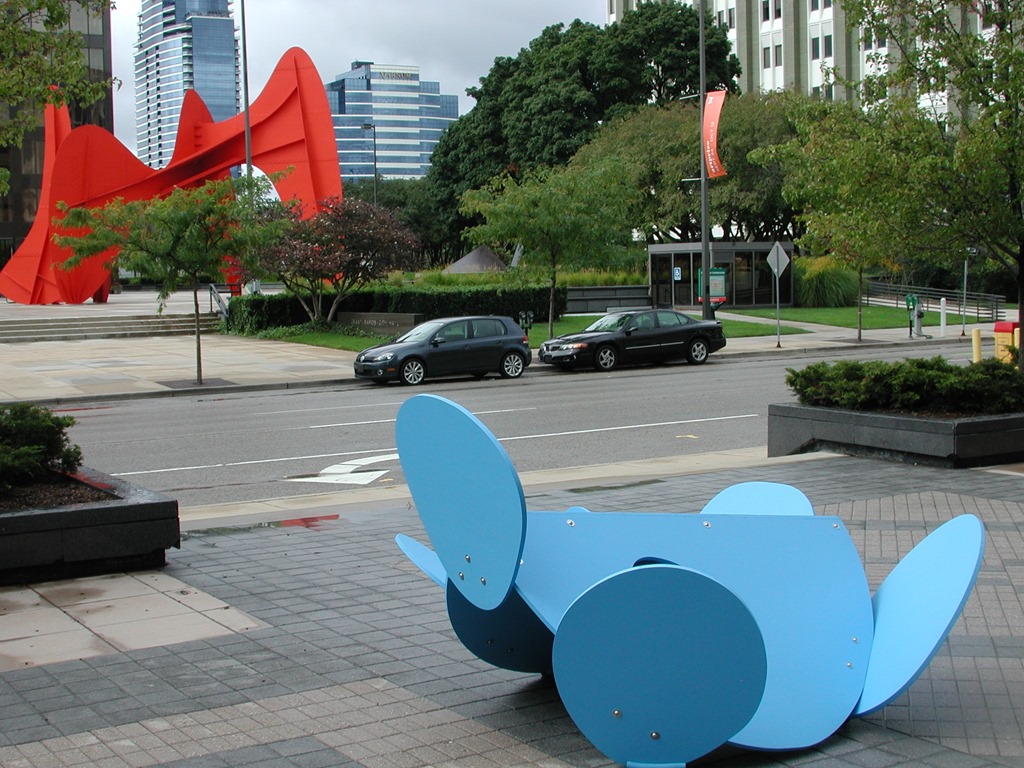
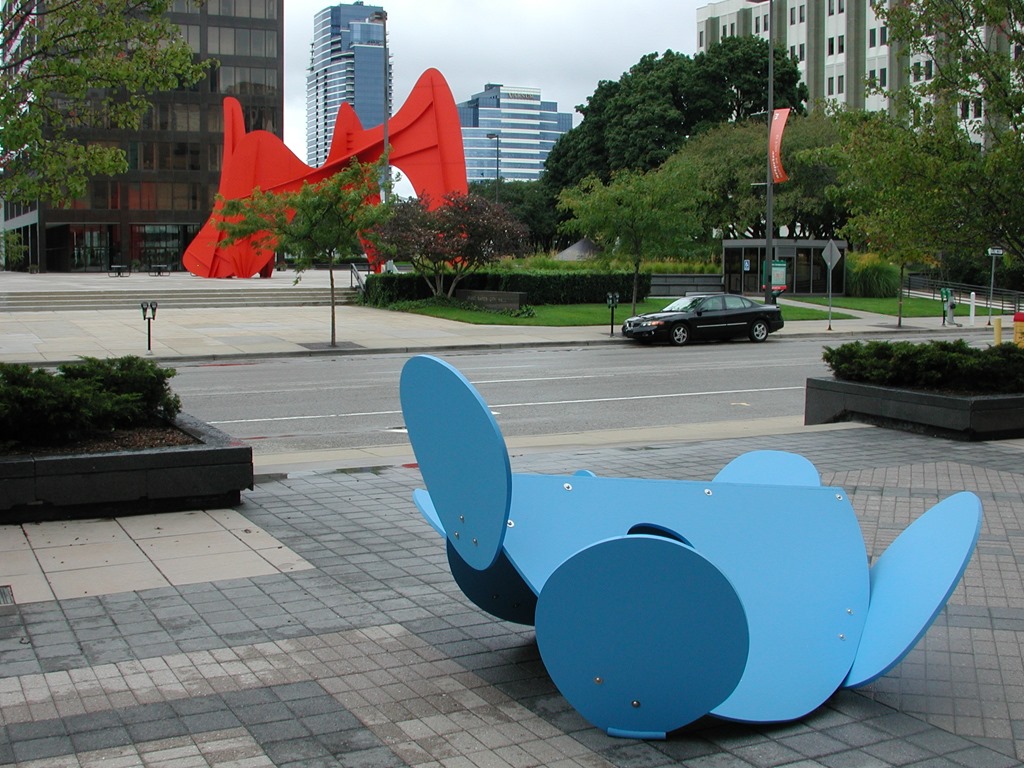
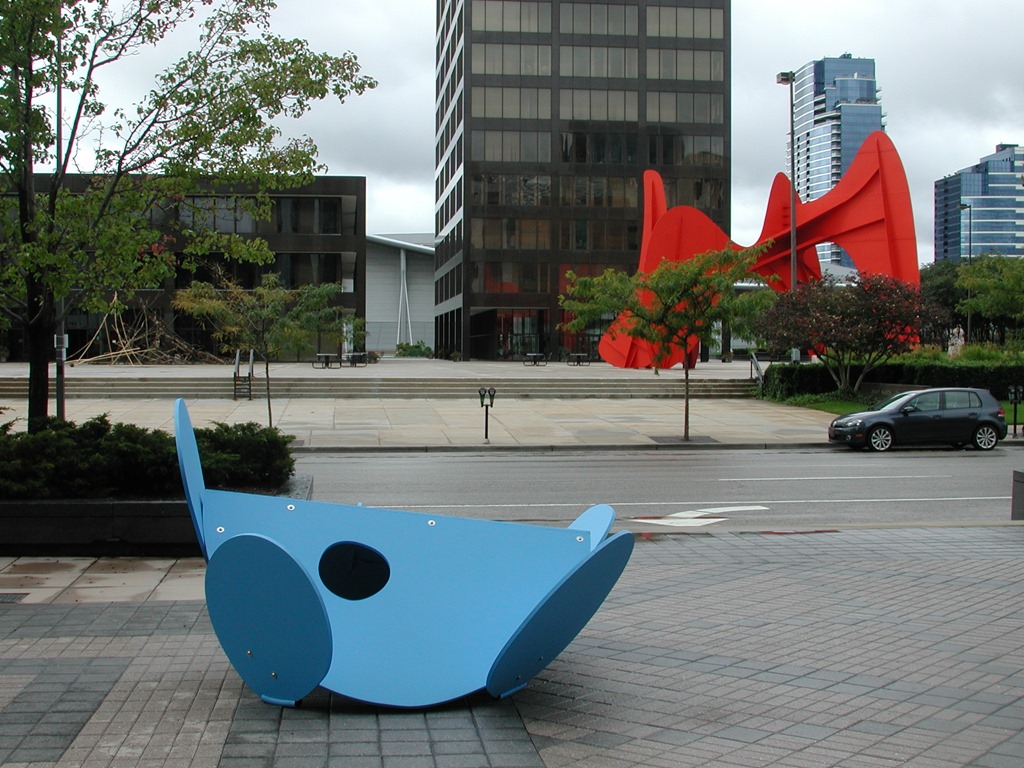
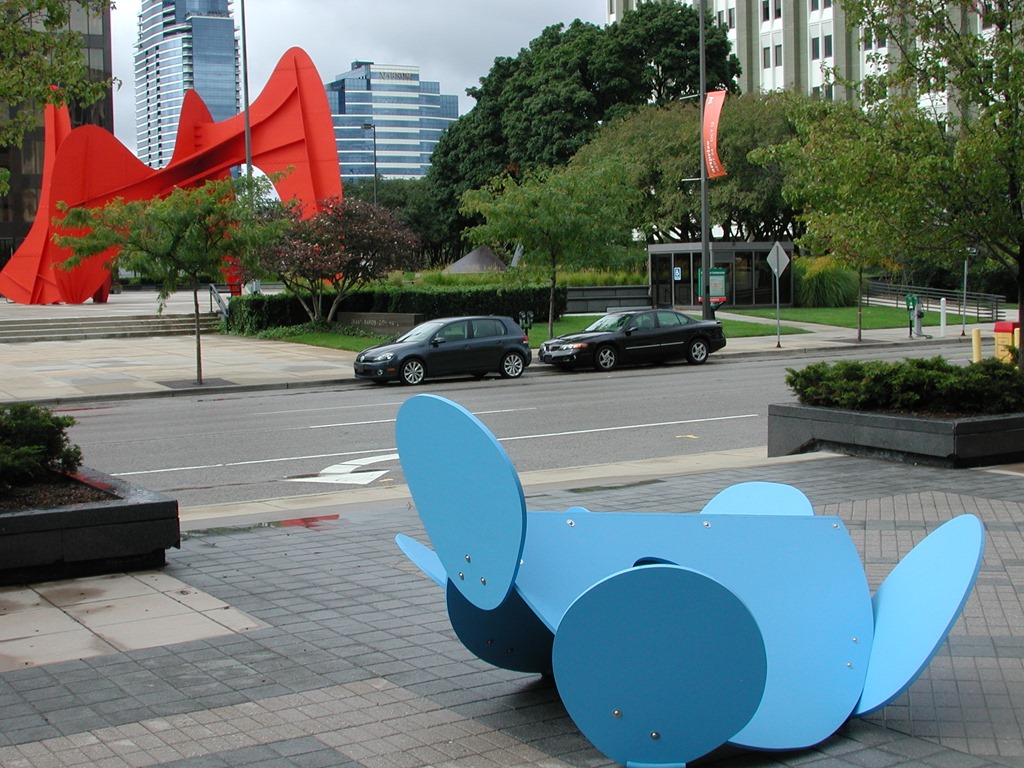
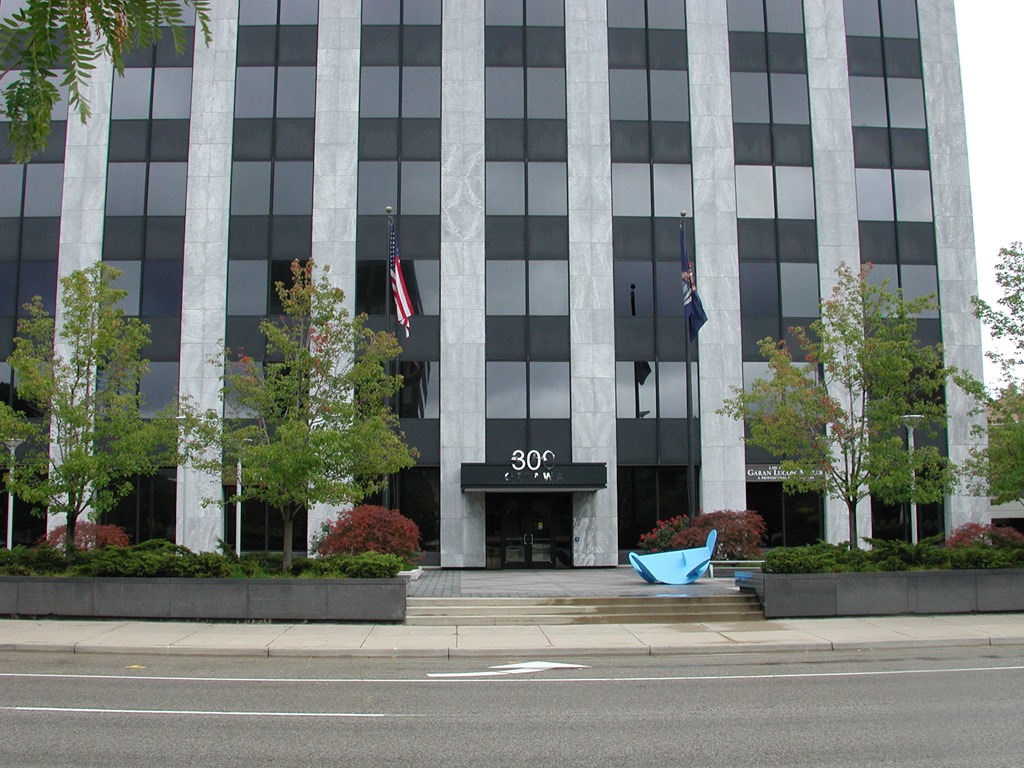
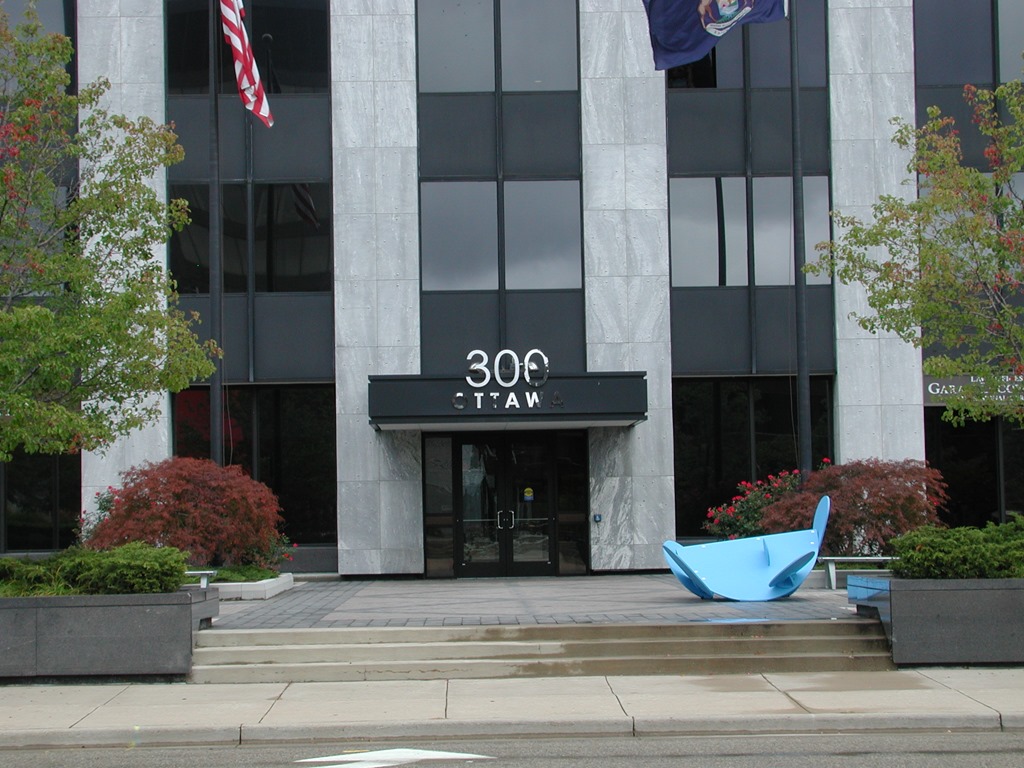
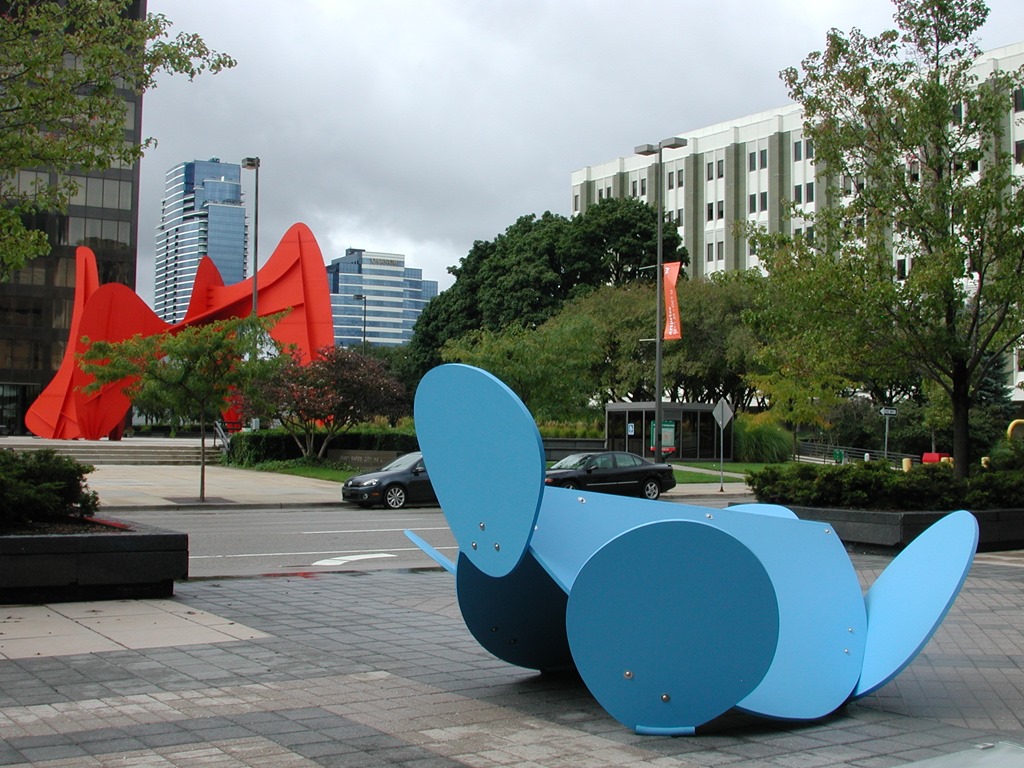
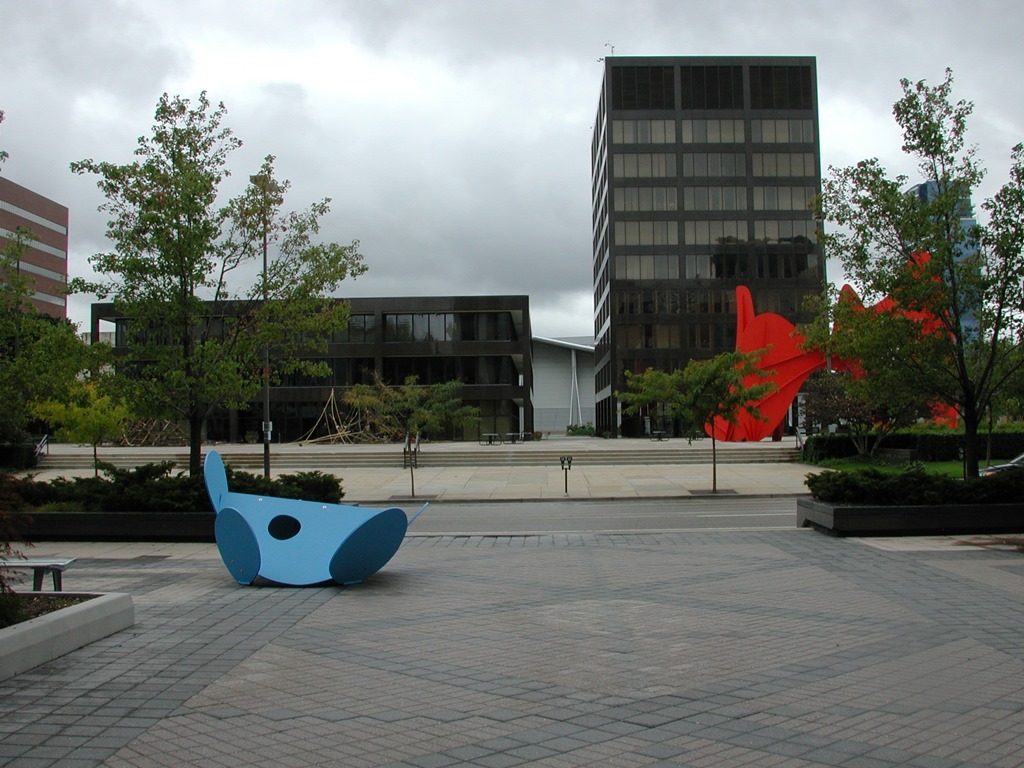
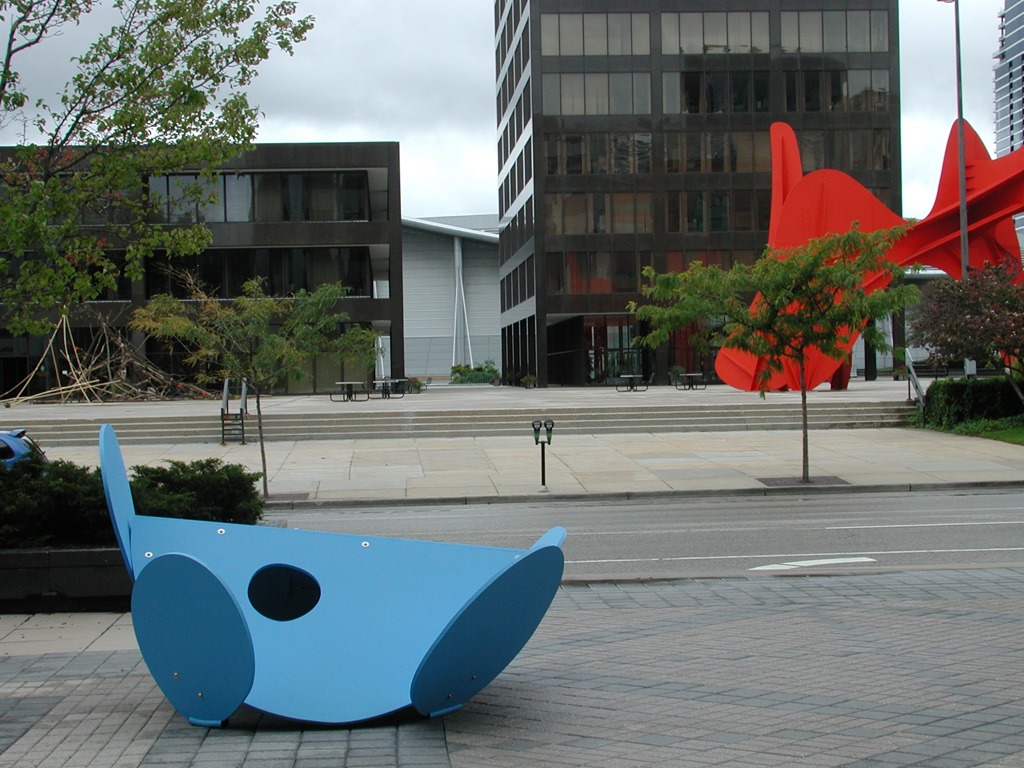
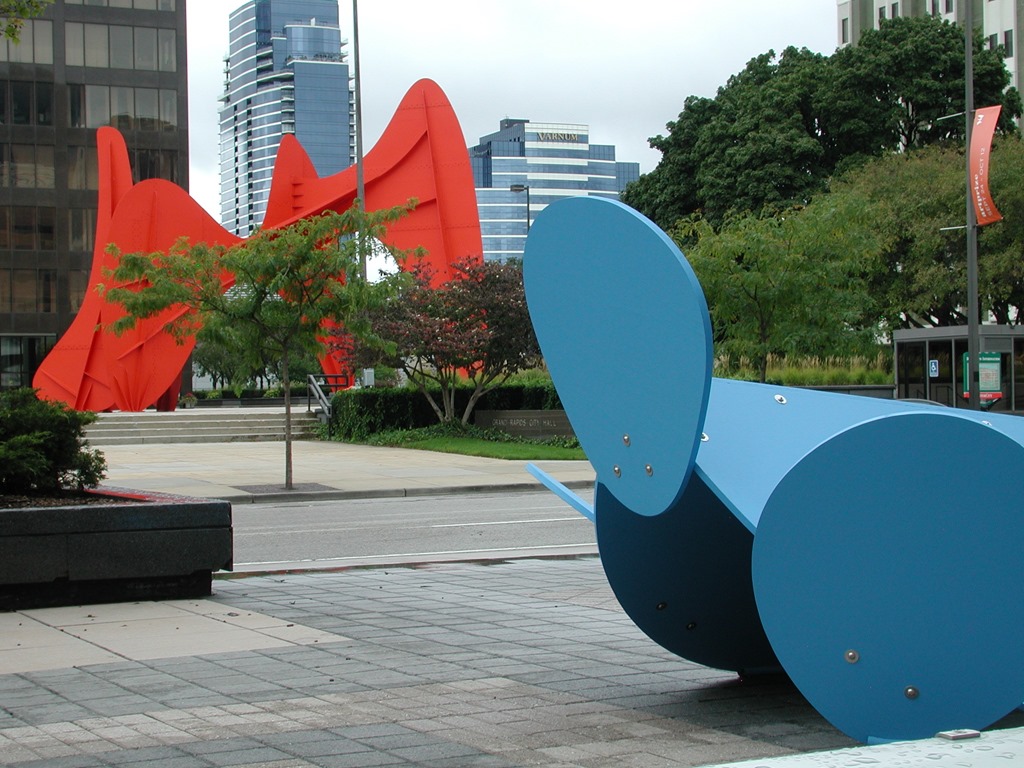
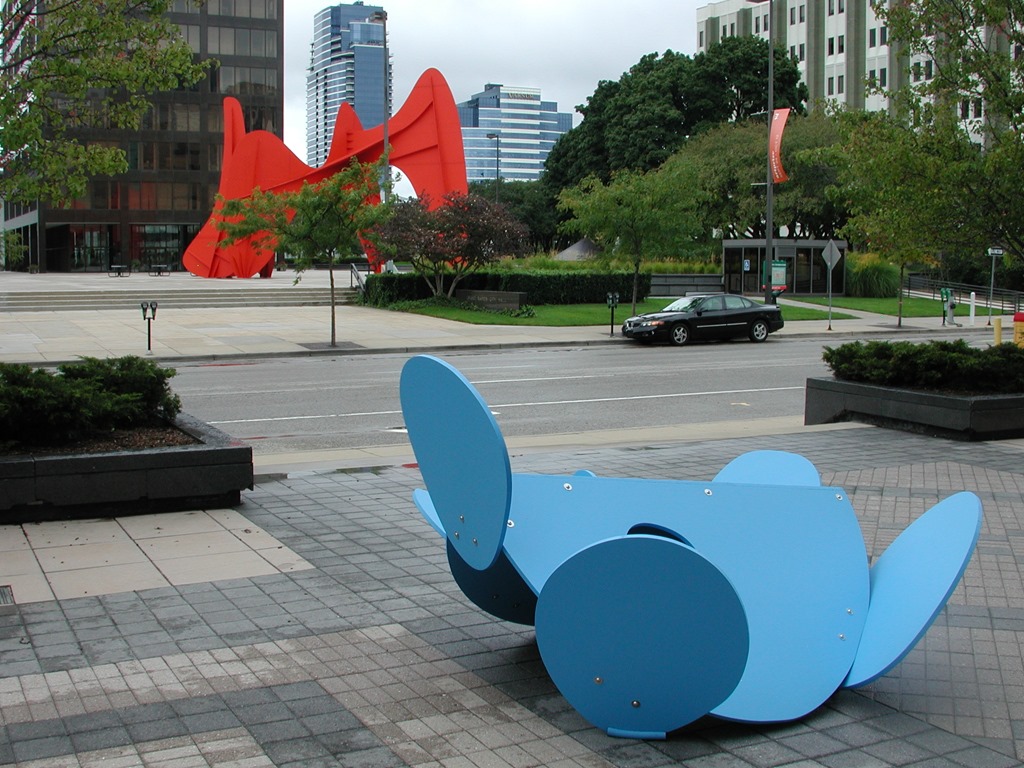
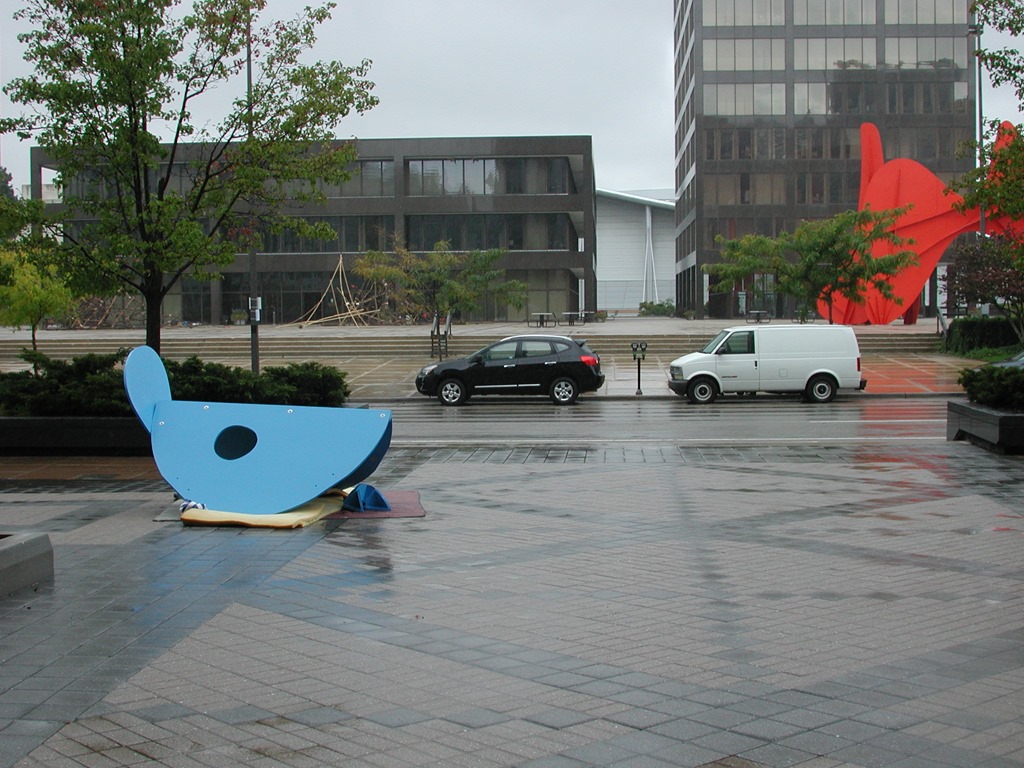
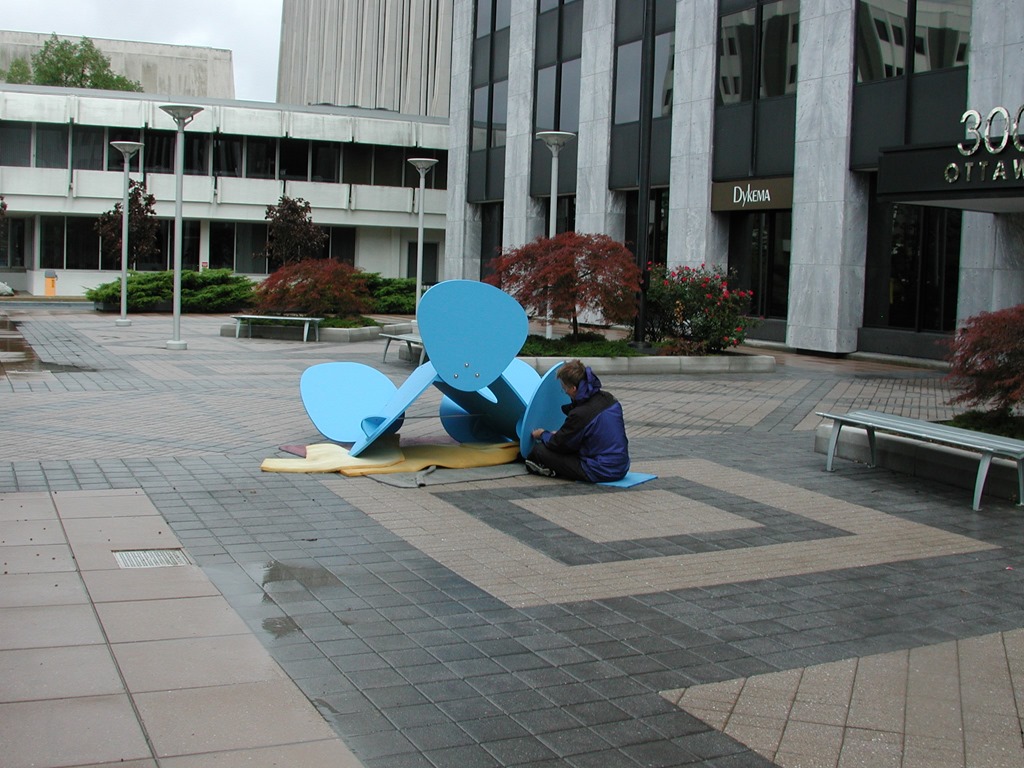
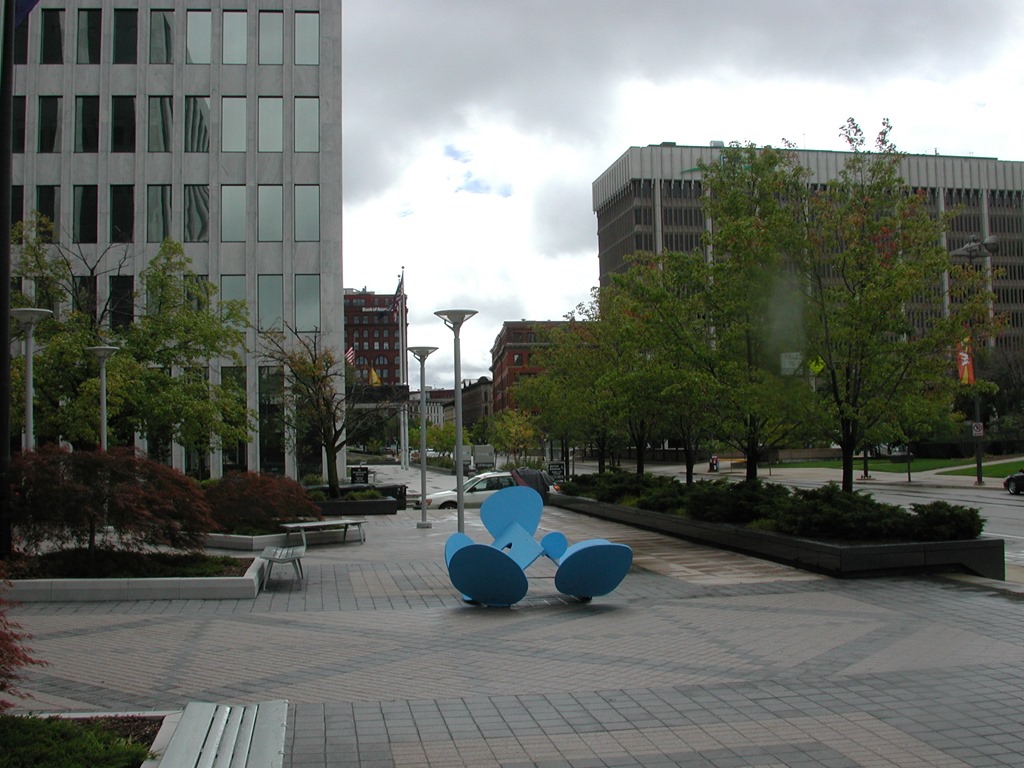
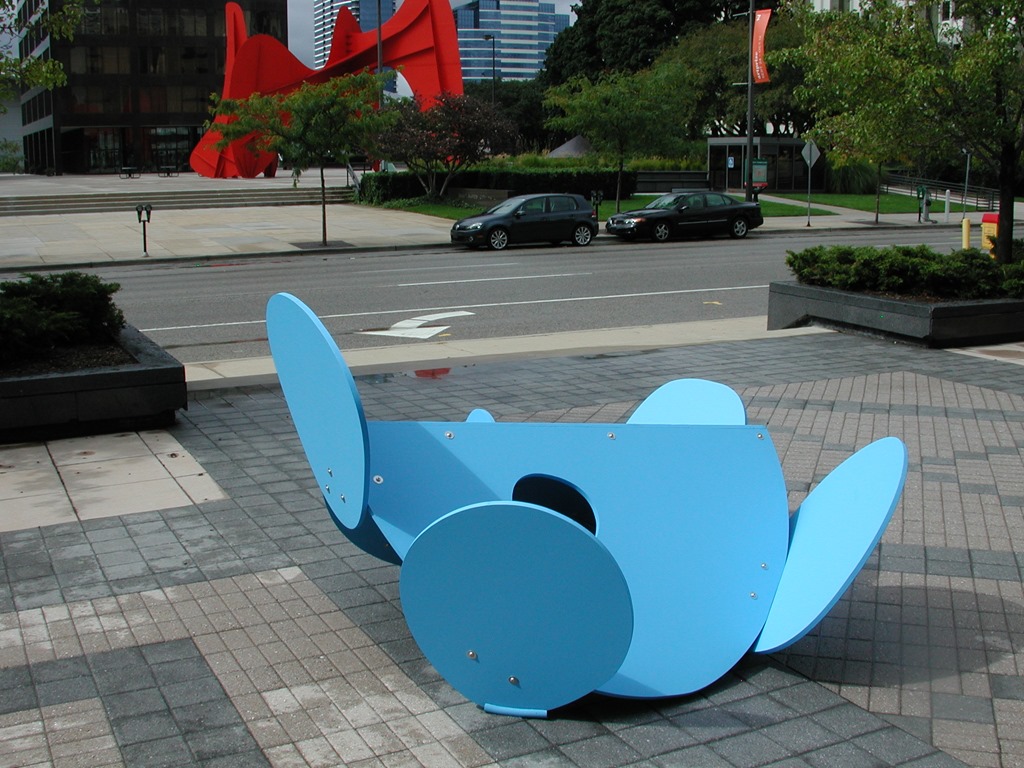
The site, 300 Ottawa. What must be the premiere Grand Rapids downtown private office building. A nice work of architecture, and the grounds courtyard plaza. The feeling is like New York or Chicago, only much much much cleaner. Your could eat off this plaza. Across the street, Alexander Calder’s La Grande Vitesse.

d_assemble

e_assemble

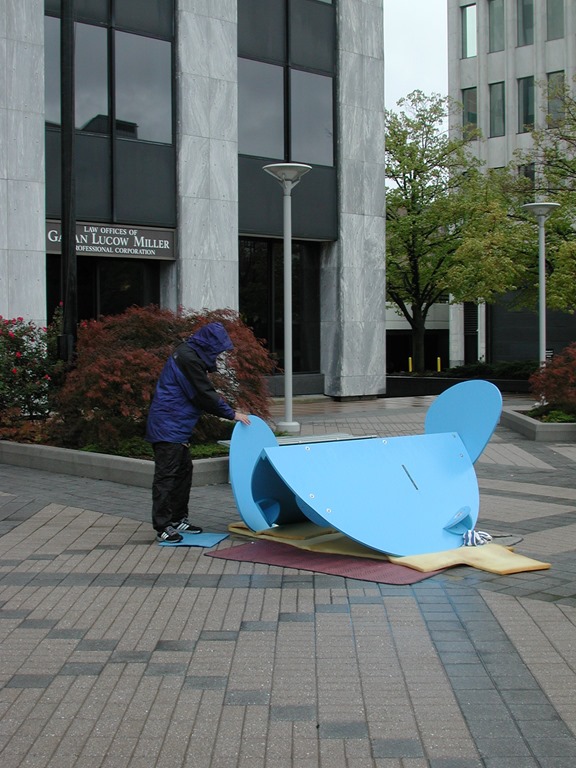
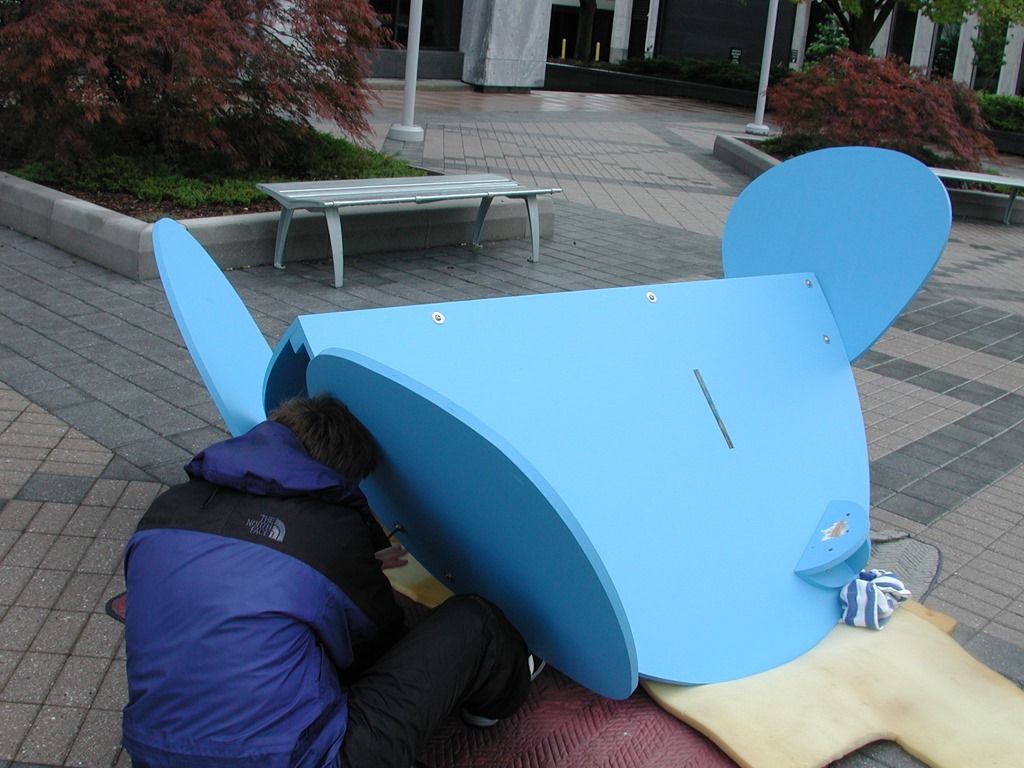
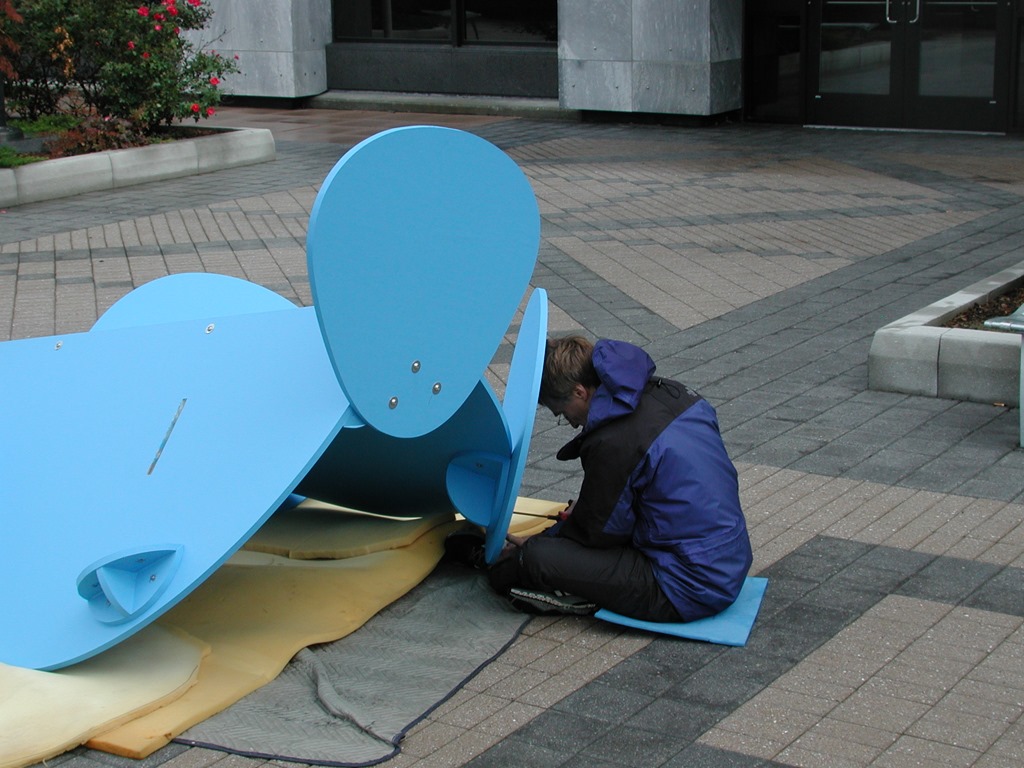
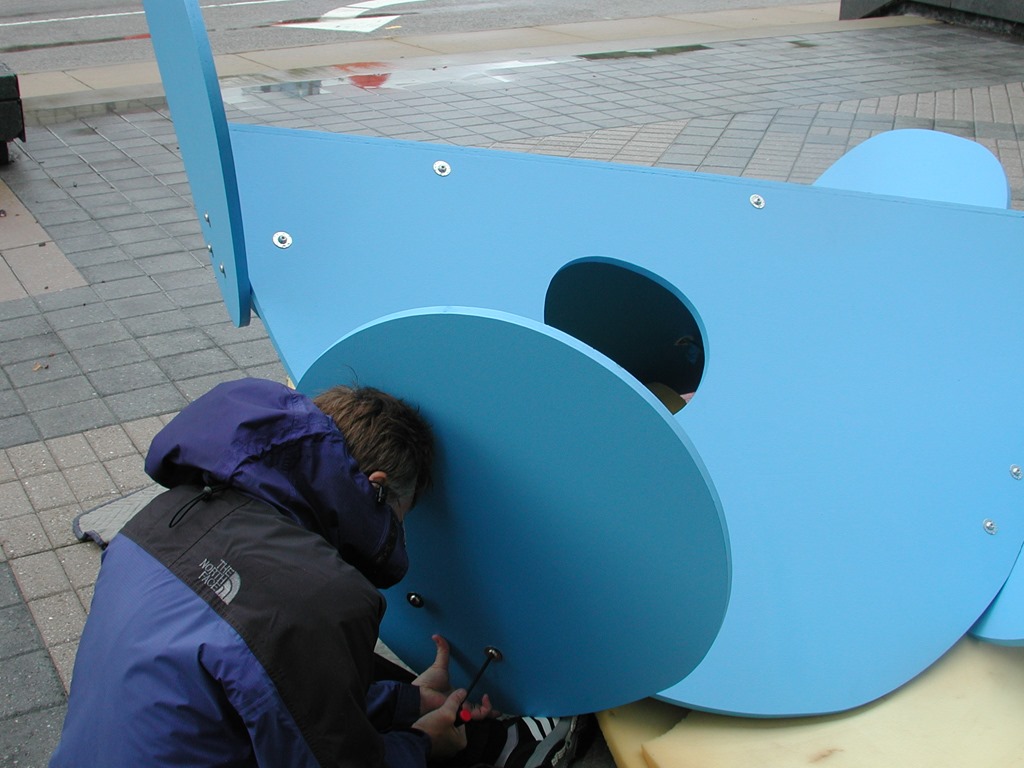
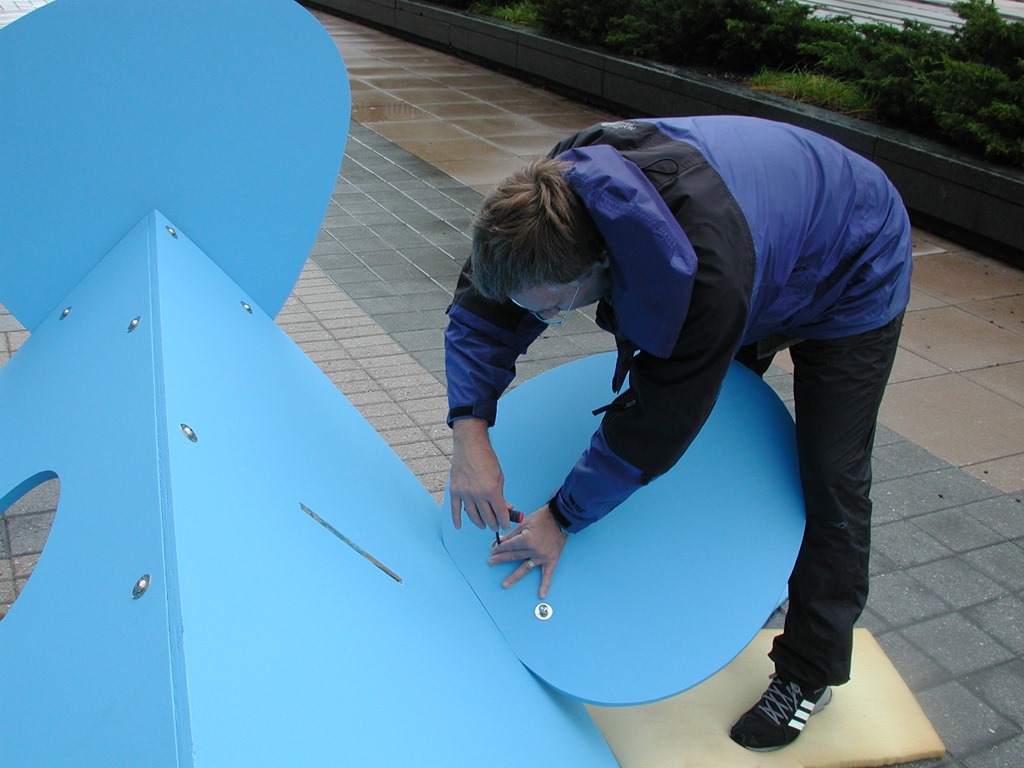
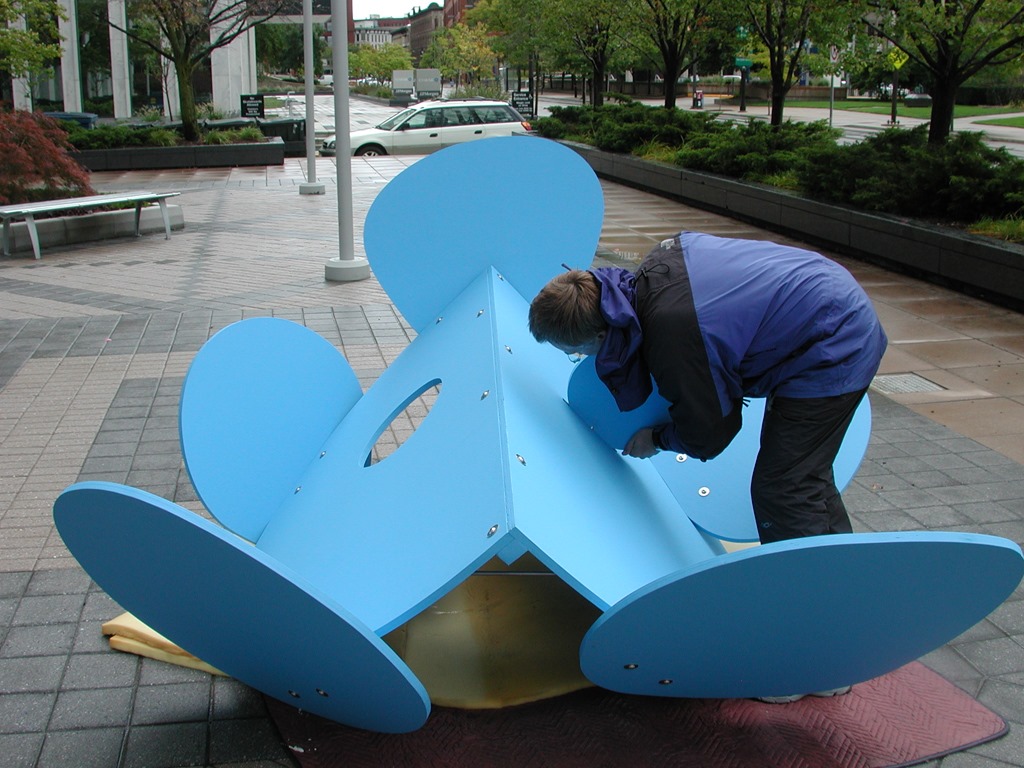
Getting to work, assemble the body halves, and get the head on, when it starts to pour down rain.

f_assemble

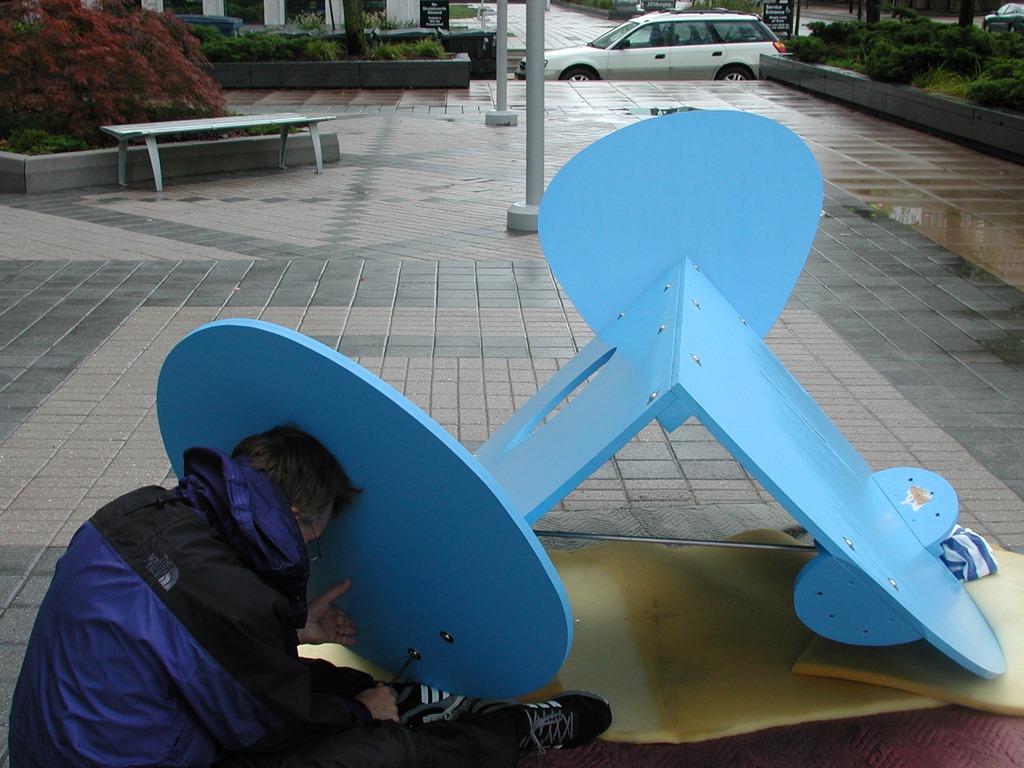
During the spells, attach all the brackets and and the right leg.

g_assemble

h_assemble


Also, the left leg,

i_assemble

j_assemble

right arm

k_assemble

l_assemble

left arm and breast.

n_assemble

p_assemble

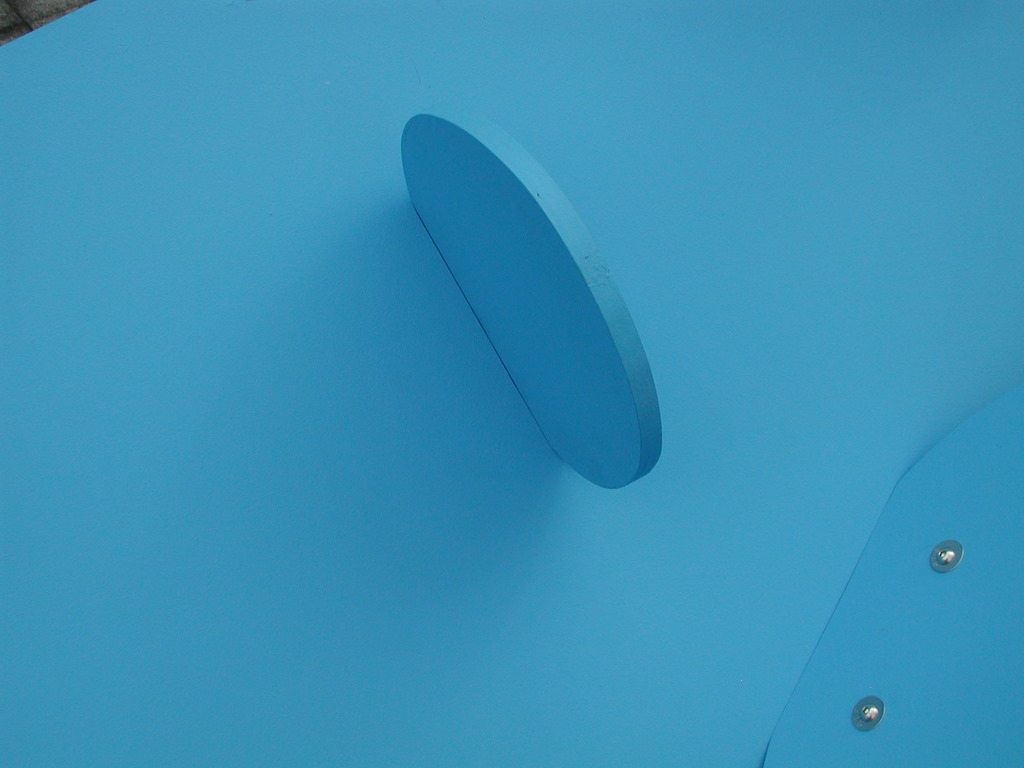
A small wooden pin holds the breast securely.

q_assemble

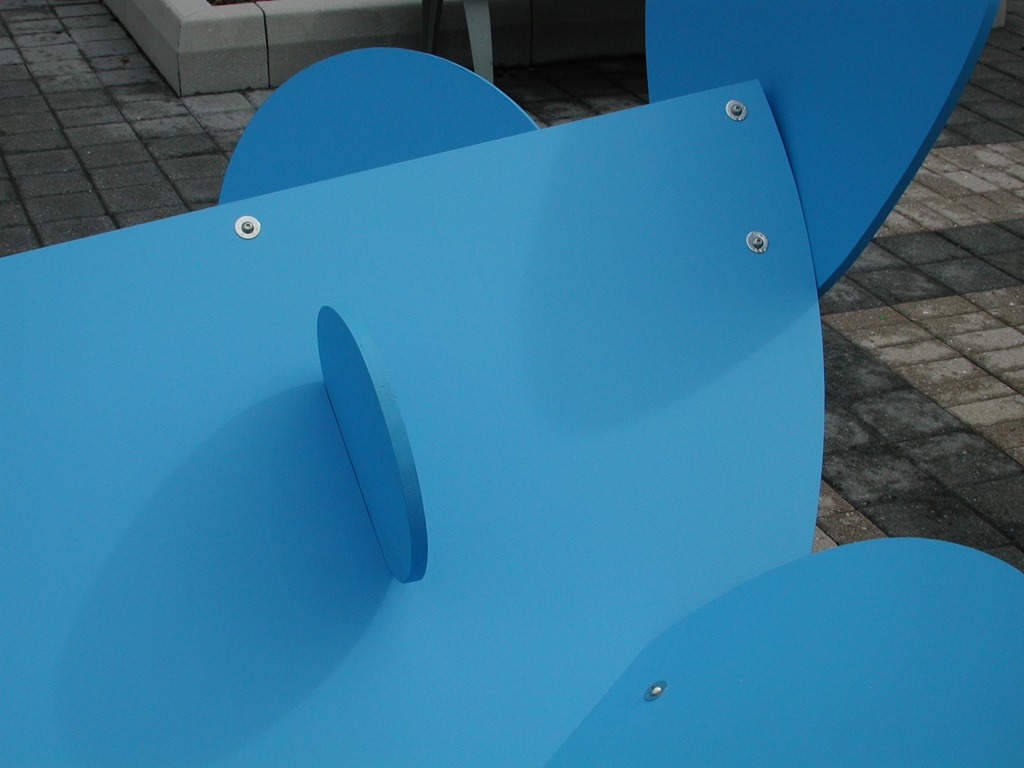
And there, under the clearing sky, blue brings forth blue. For the first time see I her assembled and painted, complete.

r_assemble

As in Blue

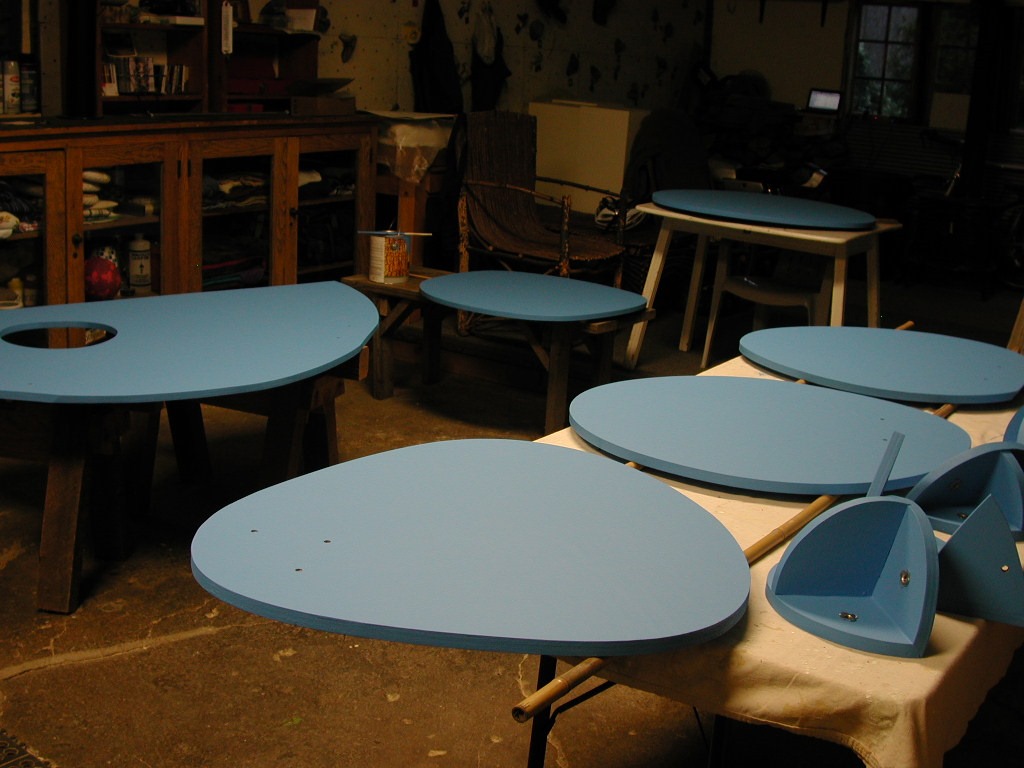
This is the color of blue. All apart for painting. I‘d love to show a pic of her put together again, I’ll try, but I spend too much time dancing Tango to put her together, take good pictures and take apart again for delivery to ArtPrize in Grand Rapids this weekend. I’ll at least put up good pictures of her when installed at the site.

a_blue

Here’s my personal page on the ArtPrize site, and here’s the page for the venue where I’m hosted, 300 Ottawa. This is a great site, across the street from the famous Calder sculpture La Grande Vitesse, and the people there are super-nice.

BTW my vote code is 56214.

Whatever you have heard about ArtPrize, you should go and read about it yourself. In my opinion, it is a innovative and an expertly run event. This is the fifth year, and it continues to evolve. For instance, this year there is a public vote prize as usual, and a professional juried prize too.

Blue Woman together

All the limbs to go on now, and that’s all except for paint. It is so simple looked at this way.

Left leg is clamped into position using the jig. The bracket is held by hand in the right position, and an outline is penciled on the leg & body pieces. Look closely and see that the bracket is already drilled with four pilot holes, one in each quadrant. Still hold the bracket in place, I tap a nail through the pilot holes to make a small mark on the surface of the leg & body.

ab_togetheraa_together

ad_together

ae_together

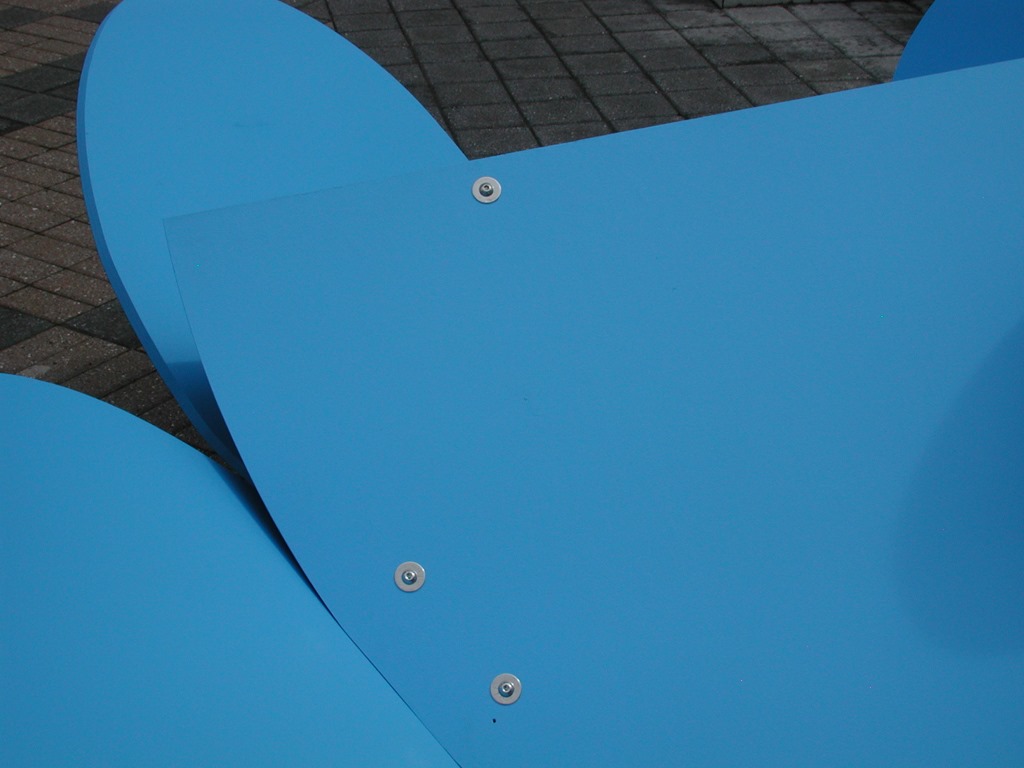
The bracket is placed in the drill press and a four holes 7/16” drilled  following the pilot holes, to accept the barrel of the Tee nuts, which are then hammered into it. There’s spikes too that hold them securely into the wood.  the holes in the leg piece are 3/8”, the size of the bolts, and are drilled  carefully straight with a hand held drill, centered by the nail marks which were made on the surface.
af_together

ag_together

Where the straight edge of the bracket meets the curved edge of the body an accommodation must be made. On the model, that line along the junction of the leg and body is just a glob of hot-glue; Here it needs to be a cut line beveled to the same angle of the bracket for it. The excellent Bosch saber saw is good for this job.

ah_together

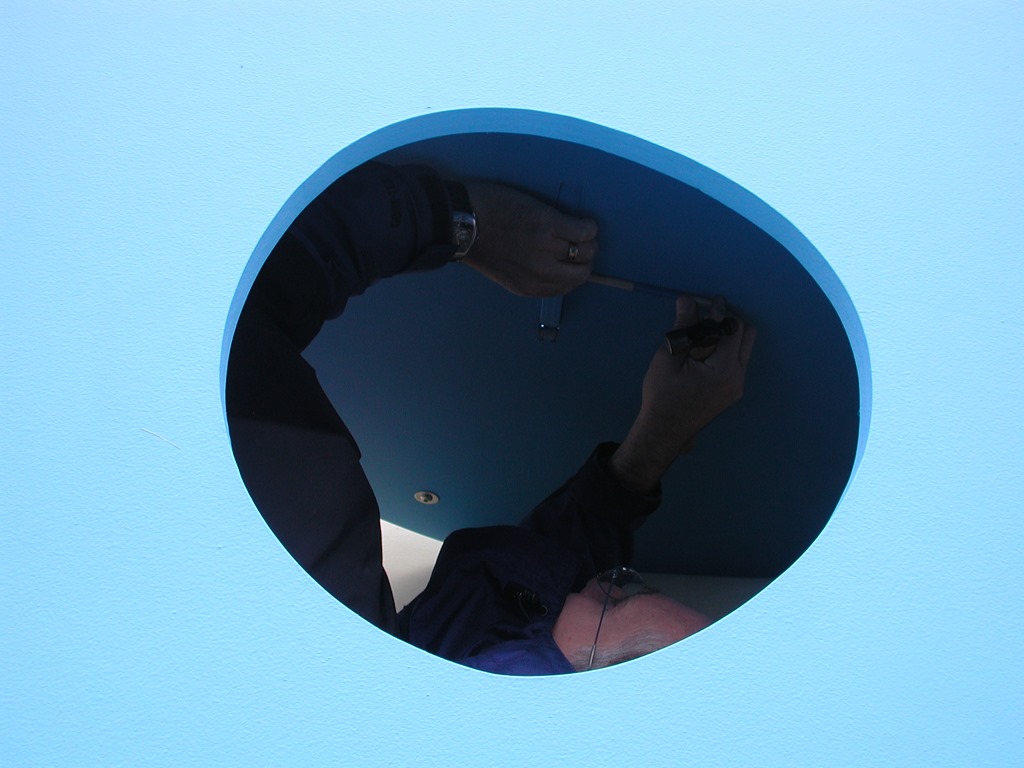
No details shown, but thread the bolts through the pieces and into the bracket’s Tee nuts, and the leg and body are attached together. There’s some jiggling to get this done. You might think a helper would help, but it can be easier to hold things into place with your own head, shoulder and feet, while you use your hands to turn the screws in.

ai_together


Cat: "Can I help?"  - Man: "You don’t have thumbs."

The attachment feels solid and secure to me. Pulling on or shaking the leg doesn’t feel like it could snap off or break away at all. Still, thinking, “A lot can happen” , I see it “couldn’t hurt” to reinforce these brackets with  more hardware, namely screws, to add extra mechanical connections to the part.

ba_together


Onto the right arm. At  this point it is starting to dawn on me that I can take measurements off of the model which are actuate enough to place the position of the arm & body relative to each other without the need of the jig to suspend the pieces for judgment by my eye. This is done mostly by finding the perpendicular of the junction line of the parts, and extending that to the visual apex of the roughly circular arm or leg piece.
bb_together

I’ve turned the whole thing over onto sawhorses this time, so I can work without crawling under. Mark and cut the straight edge matching the bracket angle. This one’s easy, it’s 90 degrees.
bc_together

Clamp in place, tap in nail-marks through pre-drilled 1/8” pilot holes in bracket, and because I have better working position, I drill the 1/8”pilot hole further through the facing wood now.

 bd_together

Remove and drill the bracket. Drill the 3/8” holes into the body at pilot holes. How Tee nuts go in.

be_together

bf_together

bg_together

The same steps again for the arm.

bh_together

bi_together

bj_together

And put the screws in, and assemble together.

bk_together

bl_together

Turned back over (legs removed).

bm_together


Left arm, and last one to do. This arm is uniquely placed with the bracket on the front surface of the body. I put the head legs and arms back on so I can see. I entirely measure on the bracket this time without need for the jig; I have experience at this now.

ca_together

Measure for and place the bracket on the arm. This time it’s the arm which gets the straight edge cut into it’s circular perimeter.

cb_together

cc_together

cd_togetherce_together

There she is mostly, but what still remains is to do her beautiful breast.

cg_together

cf_together

ch_together


"Amazing, you actually did it"


The breast attaches by fitting into a slot cut in the face of the left –side body. The slot position is measured off of the model, and adjusted in length for 1 1/2’ depth of Once again, the excellent Bosch saber saw is good for this. Use a new blade, live it up. Somewhat nerve wracking; it may look like I know what I’m doing but I’m making it up as I go along.

da_together

db_together

dc_together

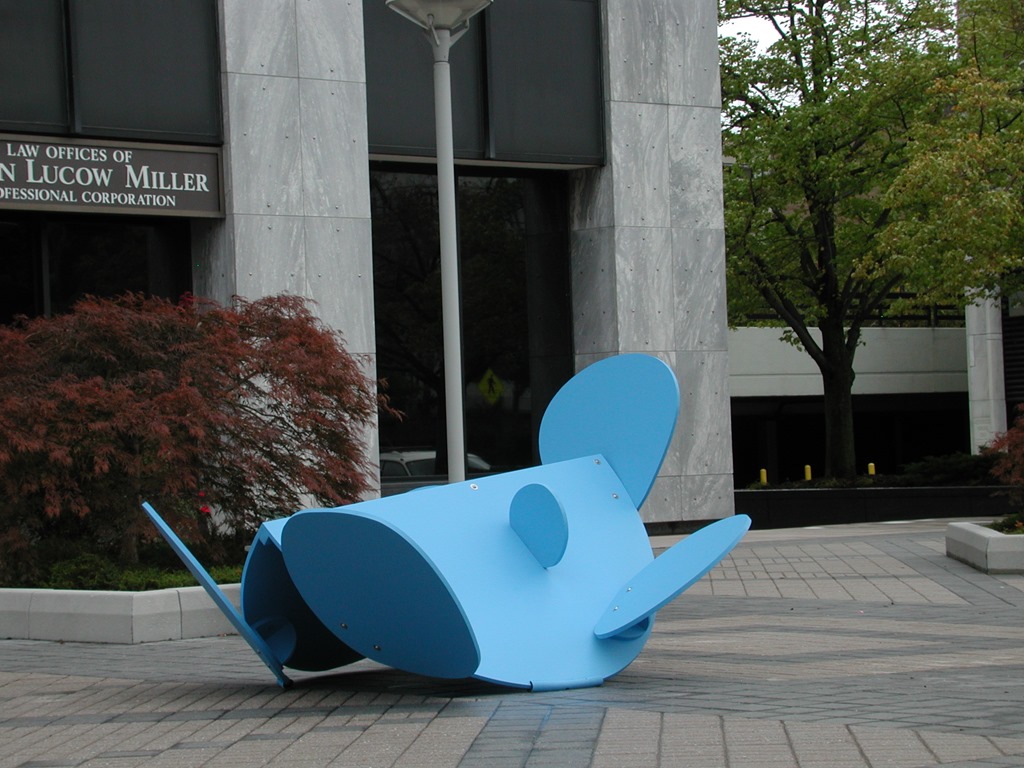
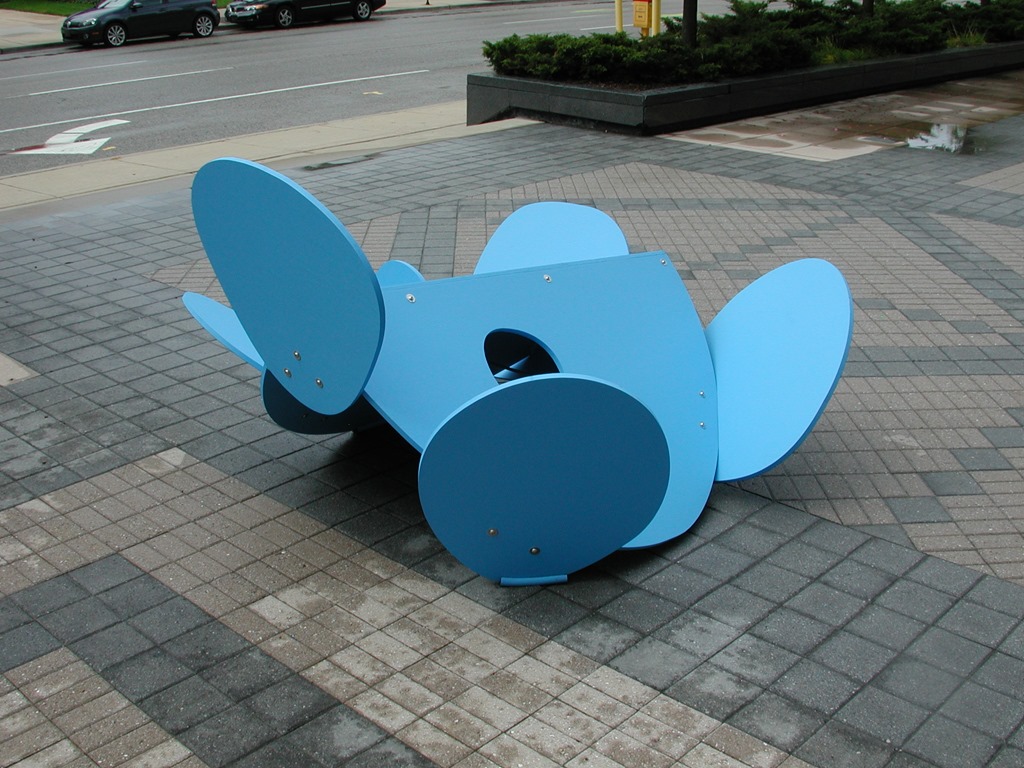
The Blue Woman Sculpture fully assembled together for the first time:

ea_together

eb_together

ec_together

ed_together

ee_together

ef_together

Hurray! Let’s paint BLUE.

BW 3

The body can go together now, and the attachment of the limbs.

The body is set upon the floor, and the head-piece is clamped into position with the help of a jig to hold it in place while adjustments are made, viewpoints are checked-out, comparisons to the model are referenced, and markings are drawn.

b_limbs

Mounting holes to the bracket are measured, drilled, Tee nuts inserted, and the head is fastened on. Nice.

c_limbs

d_limbs

e_limbs

f_limbs

g_limbs

The right leg goes the same. It is clamped into place and compared to the model.

h_limbs

At this point I’m not certain about the best way to arrange, mark, and drill the mount bracket for the leg, and I’ll have four of these to do, so I want to get it right, have a system, and repeatable. The four holes on two pieces to be joined must line up accurately, or it’s a mess.

i_limbs

I drill a 1/8” pilot hole centered in each quadrant of the bracket. I then mark the placement of the bracket, and hold it with nails through the pilot holes. One at a time, I remove a nail and drill the pilot hole deeper through the leg or body part. Then I can remove the bracket and drill the four 3/8” holes for the bolts, through the body and leg following the pilot holes. I put the bracket on the drill press to drill the holes for the Tee nuts nice and perpendicular. I don’t want that angled or it will be difficult for the bolts to thread into them. That’s how I figure it, and this first one’s a test. I have better pictures of this to follow, during the mounting of the other three limbs.

j_limbs

k_limbs

l_limbs

This works. I can even do it mostly by myself without a helper. I feel this will come together quickly now, well, not exactly, because there’s a lot of complicated marking and drilling to do for each bracket and limb, so I’ll say instead, come together reliably.

A system, Ahh!