Category Archives: Art Commentary

Comments about what I’m seeing

19th c. psychedelic

I was in Washington DC last week, going to the museums there. It was a good moment for me to take a break from working on my own stuff and re-charge my art batteries. I saw many fine things and was reminded that the reason I’m not in the museum is that I suck compared to the things you find there that have stood the test of time. I’m not talking about, for instance, the whole of the New York School of abstract  painters, all of which will be forgotten when the living generation of people who talk the line about them die off. Except Jackson Pollock, OK. I mean something more, like the wealth of 19th and 18th century French sculpture which resides like ballast of the ship of post renaissance sculptural history.

From the Baroque to Modernism, this French sculpture stayed the course for 300 years. A panther attacking a horse upon which standing a naiad holding the reins of four stallions pulling a chariot made from a scallop shell rolling on top of two porpoises. A nobleman in a lace collar and ermine fur doublet caught in the wind with an elaborately coiffed and curled wig. I stood for as long as fifteen minutes before some of these, spellbound by the sequential vortex of complimentary details demonstrating the infinitude of creation. Like the psychedelic experience of looking at a dandelion, mesmerized, seeing more and more, on and on into infinity, the nuance and subtly of the beauty and wonder of its construction.

notes: Jules Dalou, Jean-Baptiste Carpeaux
Water, smoke, and fire

Yet not finished, The SPLASH series is designed and awaiting casting. The designs, based on a graphic, necessarily have a two dimensional aspect. I would want to, in another design, more fully describe a three dimensional completeness, which is possible if the design proceeds from a three dimensional source.

I want to capture in sculpture the formless motion of physically elusive elements like Water, Smoke, and Fire. By studying the fluid shapes of these ephemeral forms, I think I can realize the movement and flow apart from the material itself, then, capture those qualities in a material form.

Difficult? Yes. But my mind and intelligence want to do it. If you have a Flying Horse, you don’t use it to plow a field.

About risk

When I was a mountain climber, I thought I knew about risk; taking risk and weighing reward. Now I realize that I probably never climbed anything that I wasn’t fairly assured that I could get on top of. I planned a strategy, and followed examples of success. A route, a season, equipment, partners. Sculpting isn’t like that. There is no guidebook. When you’re standing before a block of wood, chainsaw in your hand, there is just you, and irreversible consequences. When climbing you may be at risk of your life, but Sculpting makes risk of your intelligence and your ability to control at your will, the material and the idea. If you mess up, it’s not a physical limitation, but the limits of skill, experience, courage, imagination – your artistic identity – that you are up against. I have less courage for the destruction of Self than of injury or death.

One beauty of climbing is that when you are standing at the bottom of the mountain, you have in your possession everything required to summit. The outcome is unknowable, you only know that you can make an attempt. And in Sculpting it’s the same. You have everything required to create the work you are imagining. How often in life can you say that? That you are ready to begin, to embark, and strive? This means of course, you must have also accepted the possibility of failure.

Thoughts to matter

In writing about Australian aboriginal symbolic design, Tjurunga, or as it sometimes spelled, Churinga, and in reference also to native American graphic designs:

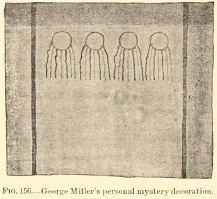
“It cannot be doubted that these designs and paintings also have an aesthetic character; here is the first form of art. Since they are also, and even above all, a written language, it follows that the origins of design and those of writing are one. It even becomes clear that men commenced designing not so much to fix upon wood or stone beautiful forms which charm the senses, as to translate his thoughts into matter. (c.f. Schoolcraft Indian Tribes 1 p405,  Dorsey Siouan Cults pp.394 ff)” 

Durkheim, Emile The Elementary Forms of the Religious Life The Free Press Macmillan Co NY 1965 p. 149

As Tjurunga are culturally sensitive material, I will not show an example here. If you would like to see some, you can do so at Simon Pockley’s website Flight of Ducks . Try the results for 2011 and 2010.

From Siouan Cults :

1siouanDesign2siouanDesign

Six arts

“Guruji has mentioned in class that yoga is the mother of all arts. There are six principal arts from which the others emerge. They are Yogita, Mallika, Natya, Sangitika, Dhanusya, and Vyaraharika. Yogika is yoga – the principal art. Mallika is wrestling, boxing, weightlifting, or any other martial art. Natya is dance,drama, and acting. Sangitika is music – instrumental and vocal. Dhanusya means “bow”. This art, along with the strategies of using the bow and arrow includes military training. Yyaraharika includes agriculture, economics, politics and other sciences. The whole process of civilization depends upon these six basic arts.” (Dasti, Ali “Yoga and Marmakala” Yogadhara, A Stream of Yoga The Light of Yoga Research Trust Mumbai (2000) p. 303)

Yoga, Martial arts, Performing arts, Music, Military tactics, Science. There are elements of of these arts in sculpture– Yogika, steadyness of mind and purpose. Mallika and Natya, ability of execution. Sangitka, harmony and proportion.  Dhanusya, tactics and strategy, Vyaraharika, science and methodology.

Modern Art

I don’t disagree with French Theory, but it does not help me to make artworks based on it’s principals. In sum, it says: Because of the subjectivity of persons, all meaning is ambiguous. This includes Art.

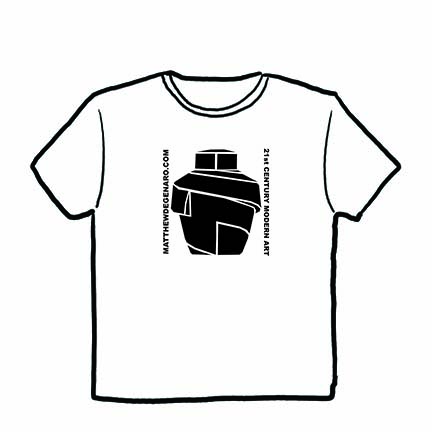
I want to now clearly state my preference as Modernist, I’m a Modern Artist, making work in the tradition. You know what I mean, Twentieth-Century Modern Art.

I’m thinking of a t-shirt:

Contemporaryism Art

Writing about two art shows which took place in 2007, one by a graphic artist, the other by a group of young band members. Chris Kraus says:

“Looking at images from Yates’ Burnout exhibition alongside the Get Hurt documentation, I’m struck by the intangible quality that differentiates art from ephemera. Both shows featured works composed from the same materials, in similar styles. Both bodies of work orchestrate collisions of signifiers drawn from the same bank of cultural references. Yet Yates’ magnificent posters… are decidedly works of visual art“. Kraus, Chris Where Art Belongs Semiotext(e) 2011

What I’m remarking here is the notion that contemporary art is easily identified by its use of signifiers and references – so much that it represents a de facto style in itself. An “ism” of art consisting of signifiers and cultural references.

Wait for my next post to see where I’m really going with this…

1961

I want to take a minute to explain what I’ve been looking at and thinking about lately, that is, the works of the French Nouveau Realists – which is to say the group of Tinguely, St Phalle, Arman, Sporreri, Ceasar, Christo, &c. in and around the late 50’s and early 60’s. One of the methods of Nouveau Realism was the use of real objects in and of the world in the making of art. While Duchamp proposed the idea of the ordinary object elevated to the level of Art by the choice of the artist, he only produced a few banal examples. It was in the works of the Nouveau Realists that this idea was brought to fruition with beauty. It is, after all, pointless to propose revolution in art if it does not result in beauty.

I say “1961” because it seems to me a pivotal year for Western culture. It marks the change from abstraction in art to the sequential popular art movements of the 60’s which continue to this day, the rise of Rock and Roll culture which has supplanted the (revolutionary) role of the artist with that of the star, and television’s spectator culture which created the audience for it.

The inversion of “61” gives 1919, roughly the year Duchamp quit readymades, and, 1961 is fifty years ago from today.

At this time also, was the “concrete” movement in music and film. I think  of Xenakis, Robert Breer, and especially of Stan Brakhage. Concrete elements in art are acquired from the real world, and are not related to abstract elements which are Platonic distillations of real elements, or expressionistic elements, which are emotional subjective representations.

I think some creative people of that time were trying very hard to be in and of the real world, fully engaged in the experience of it, and making in artworks which themselves were real-world things, objective, and not responsive or interpretative.

The reader may be helped in his understanding by exploring these links:

Arman - Untitled

Arman:     http://www.armanstudio.com/fernandez-arman-untitled-234-3-17-eng.html