Category Archives: Sculpting Progress

Progess updates of what I’m working on now

&c

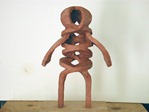
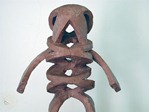
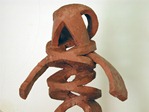
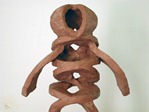
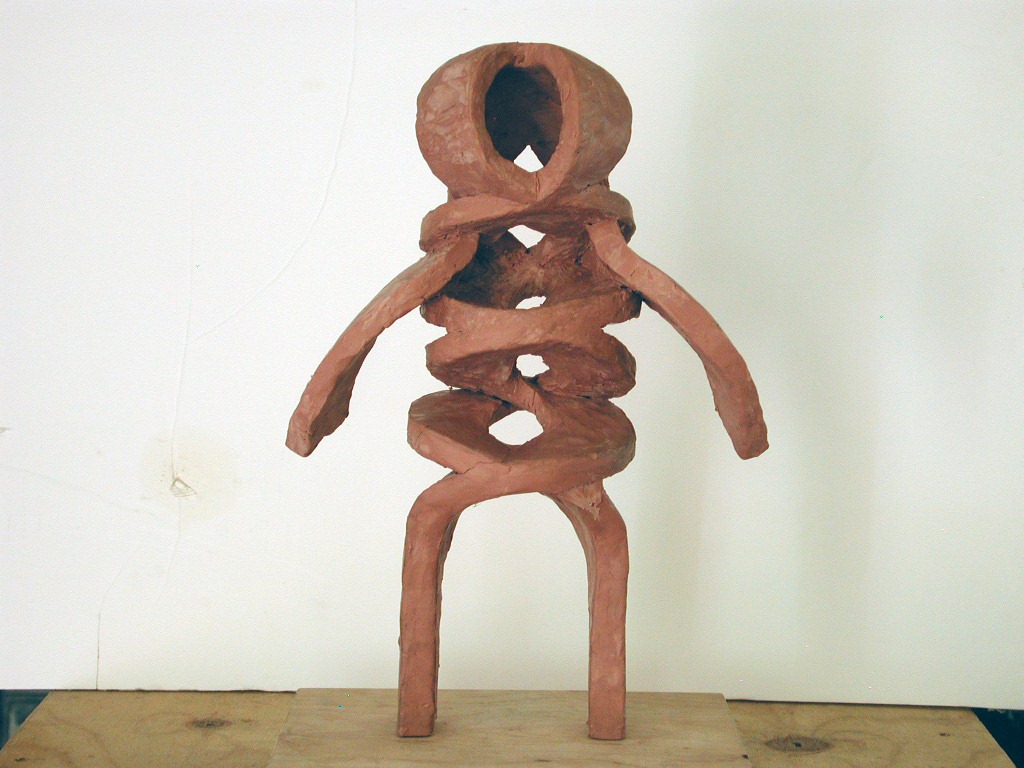
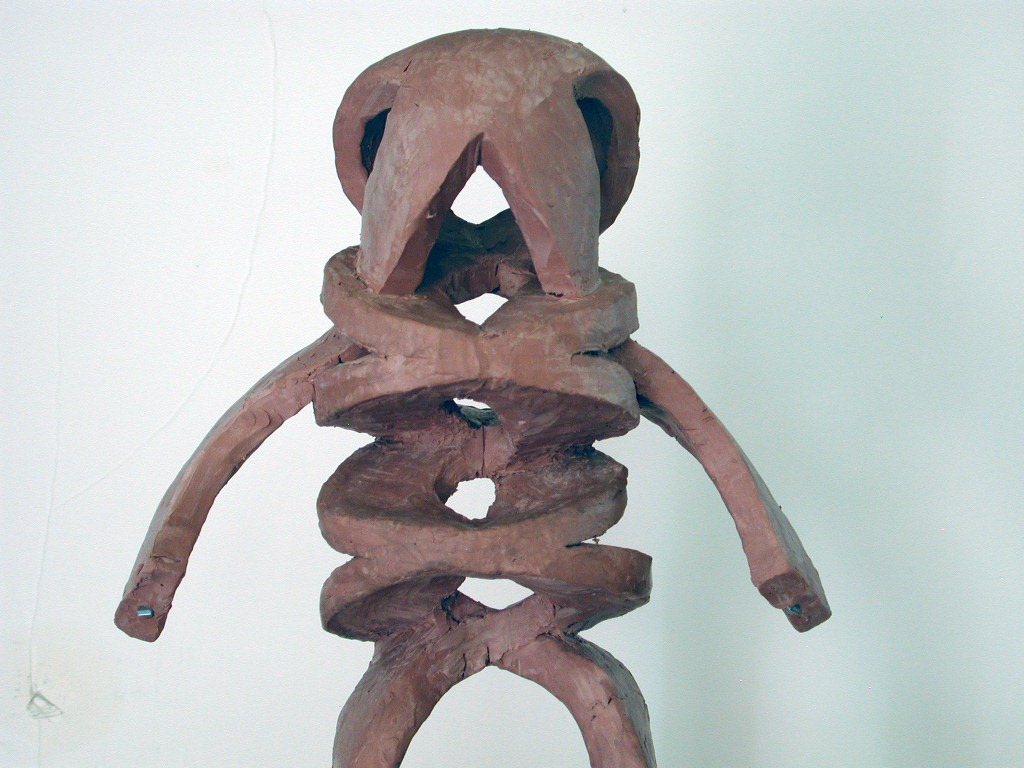
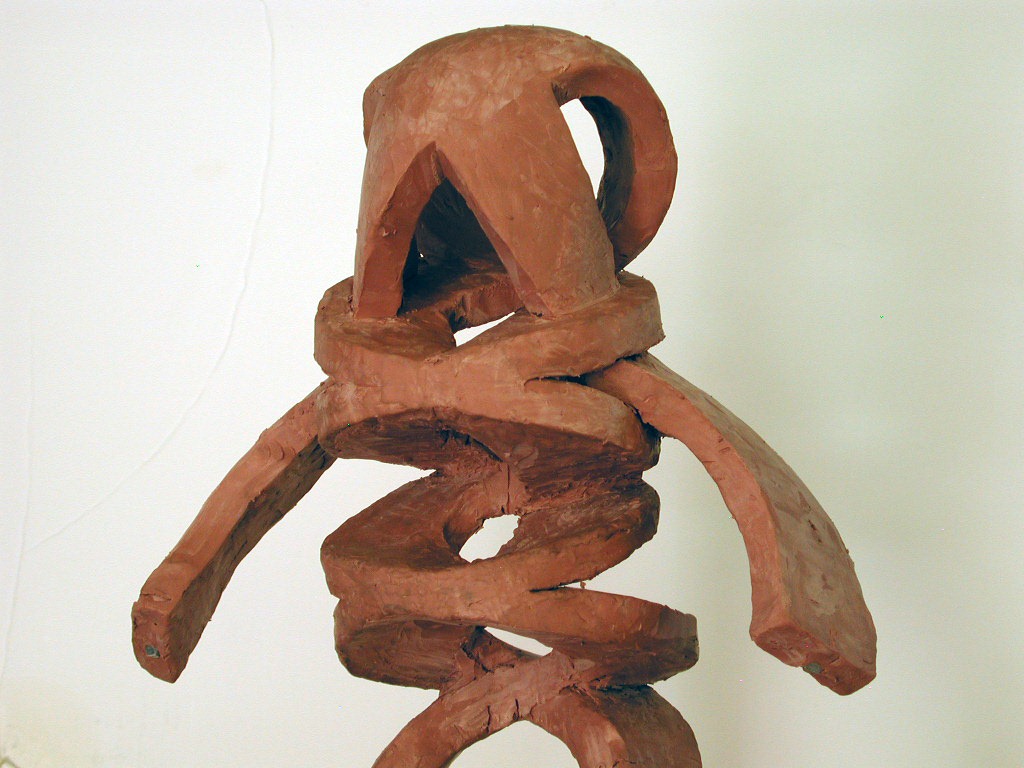
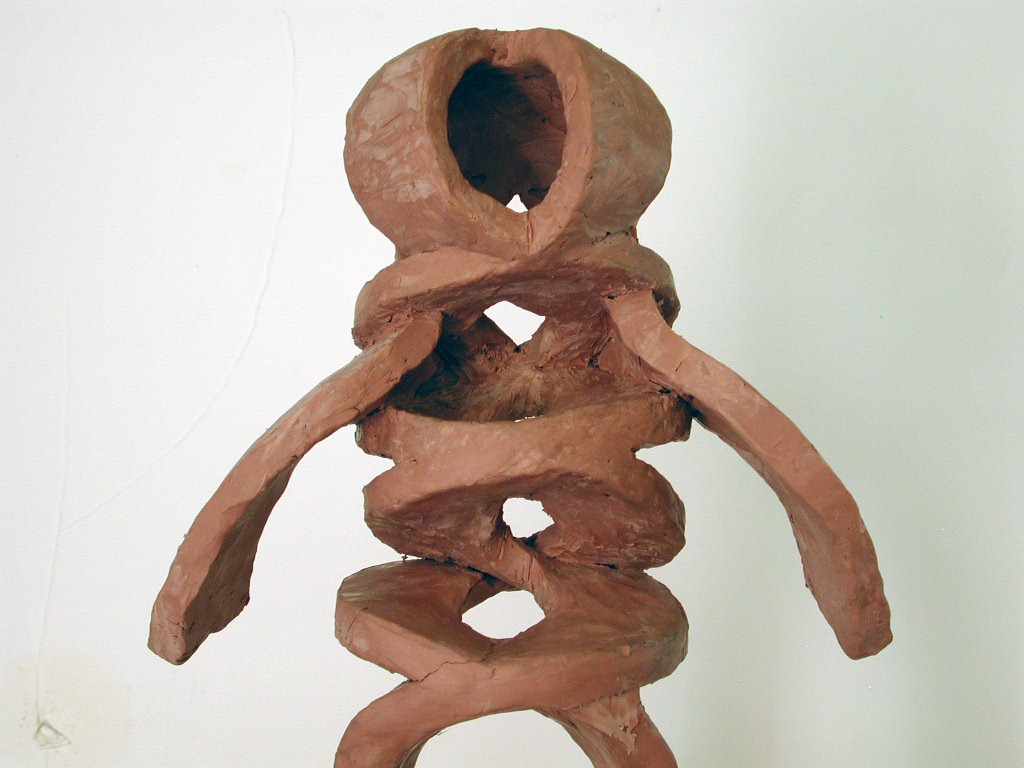
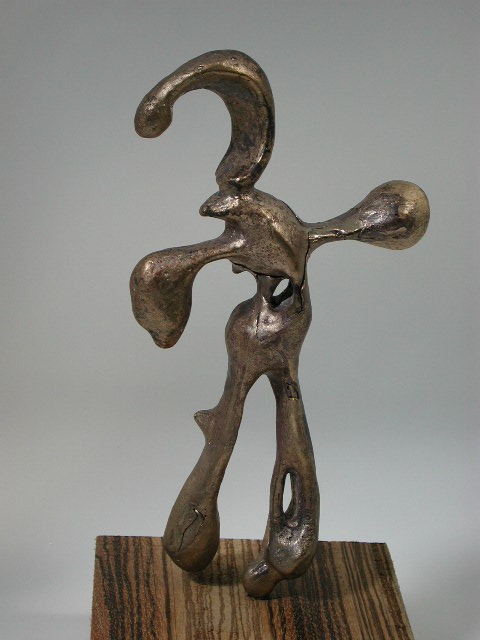
I’m giving some weight to the figure, more mass and volume, trying surface treatments, refining the movement of shape, overbuilding so I can carve it back later, leaving harder sharper edges and planes.

a_&c

This is when I learn the most; playing around with an idea that’s already working, enjoying the time, growing the intelligence in my hands.

Un-puzzled

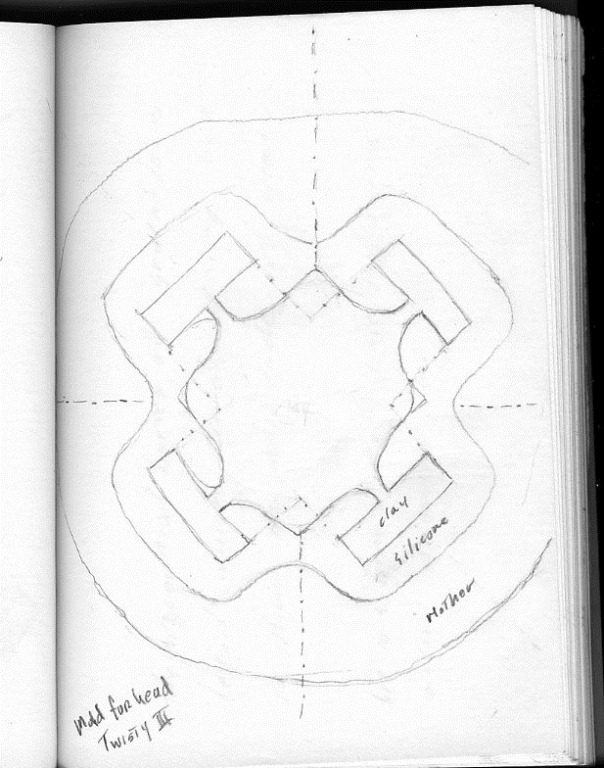
I have seen the way I can make the mold for my current project, Twisty III. I guess that’s what time off, taking trips and seeing new stuff does for for you. This is a sketch for the mold which will do the hollow head part:

moldPlanT3002

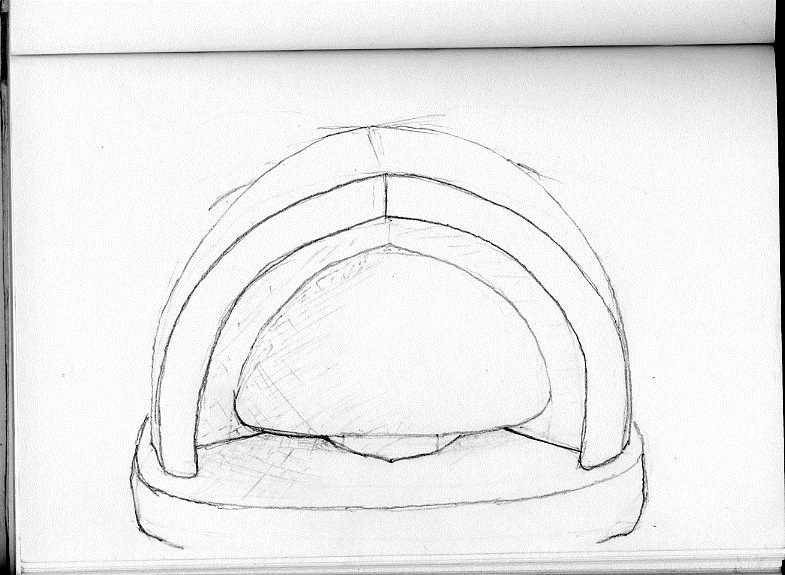
This is a top view through the head. It will be a 4 part mold with a core piece that is meant to be cut away after the wax is poured into the mold and removed. The mold is made with effectively a solid head, but designed in a way to be easily removed from the cast part, making a hollow head. Easy that is, if it is wax, which is soft enough to be cut out with small tools. Much more difficult to do in a hard material like plaster or plastic. Seems this is going to be a bronze project after all.

This is a side view of the core piece to be modeled into the head cavity from the angle of one quadrant:

moldPlanT3003

It will still take two more parts at least to do the body, so a six piece mold is going to take some time to do, and will be the most complicated ever, for me. It is going to take time. Gian Lorenzo Bernini, the greatest sculptor that ever lived, could do this; I should at least try.

Puzzled

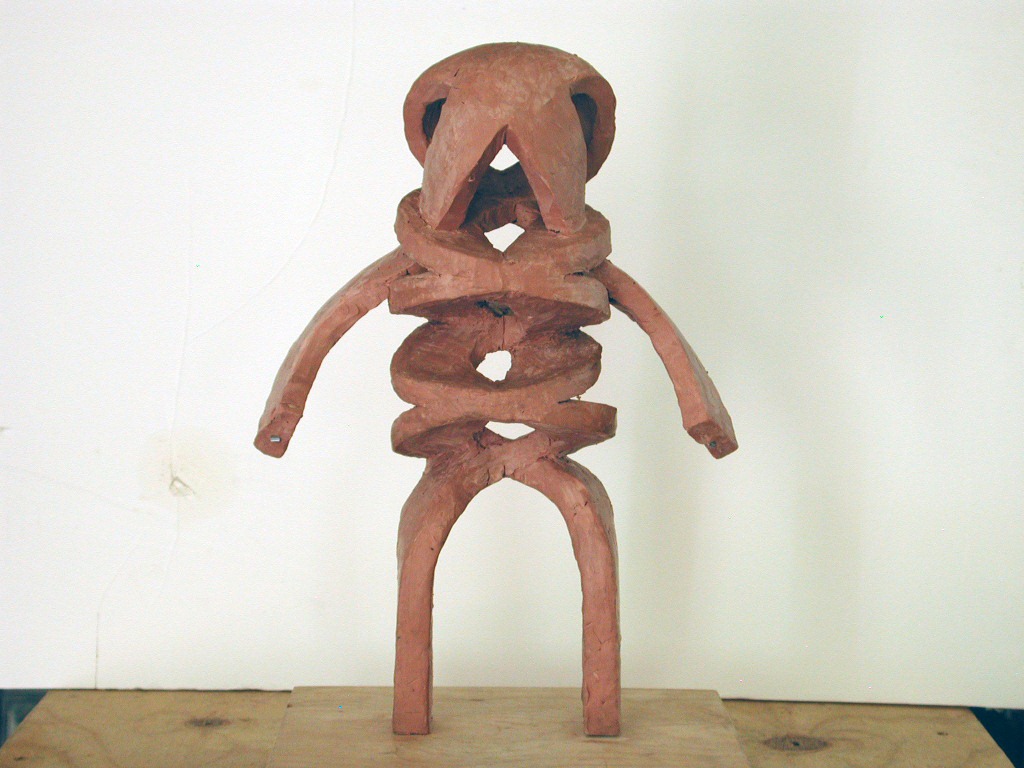
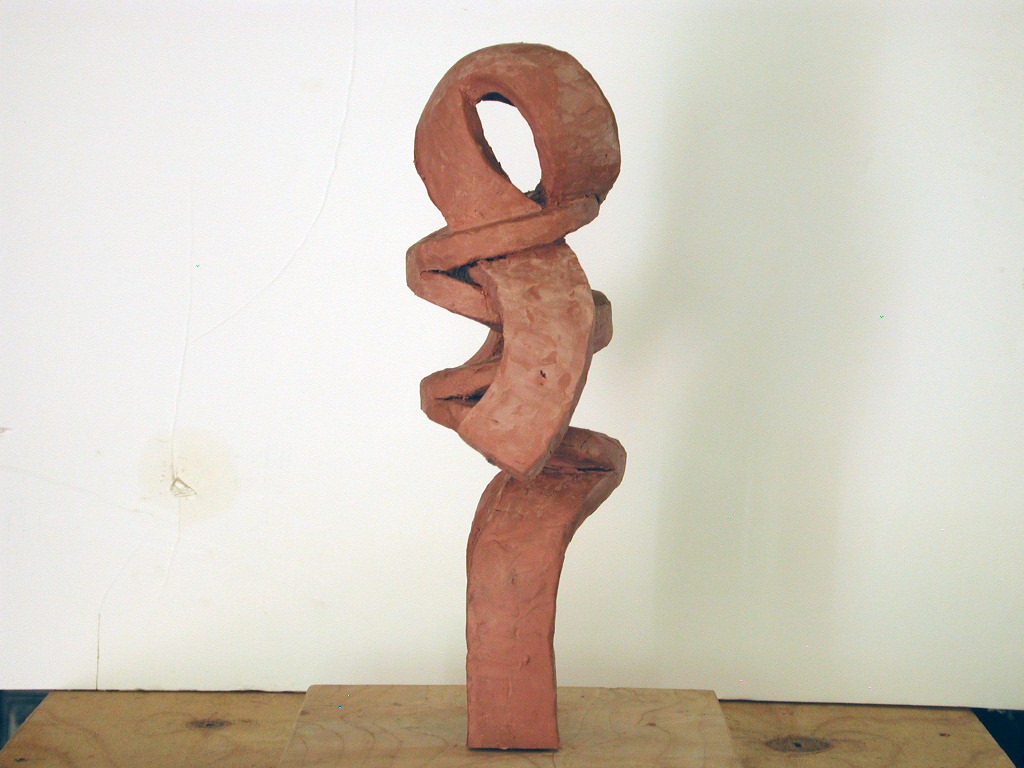
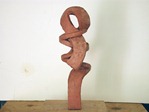
I have this done to the point of my vision; established the structure of the crossing spirals, out of my head and into the flesh, as it were. What I have now though, puzzles me.
a_modeled

c_modeledb_modeled

d_modeledf_modeled

e_modeled

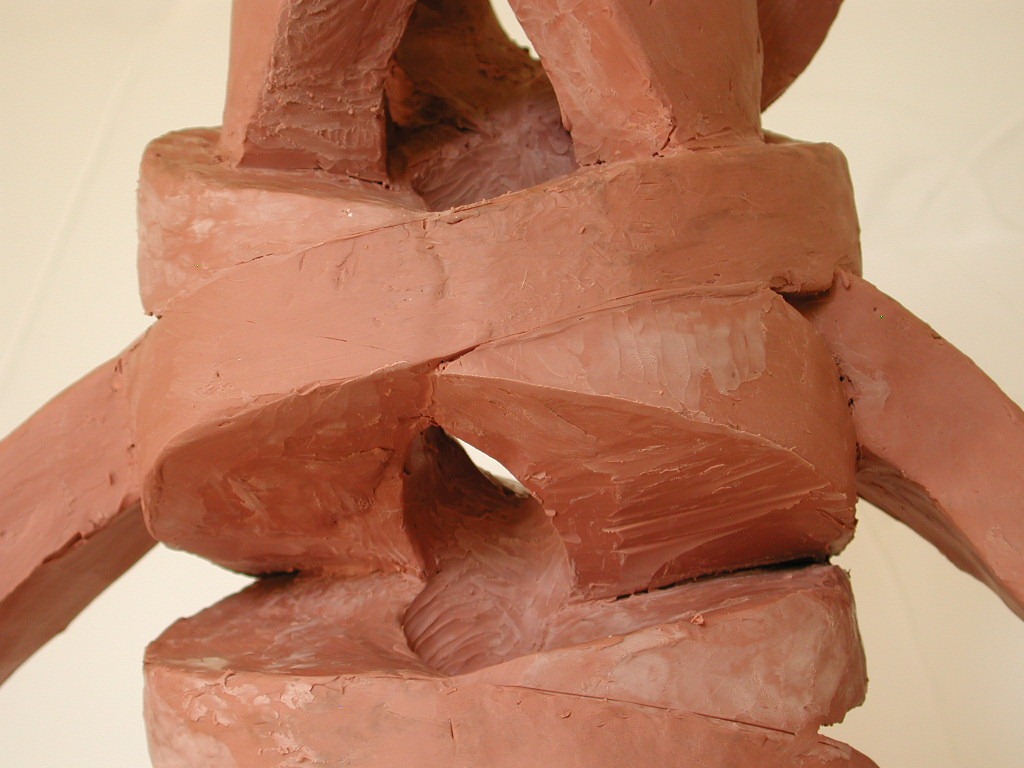
I’m not at all understanding how I’ll take this from model to production. I can hardly make a mold of something with such interior\exterior, positive\negative spaces, unless in at least four and maybe five or six parts, if at all. The complexity is daunting and far from the spontaneous flowing water-and-smoke ideal of why I did the Splash pieces. Multiple cast parts welded together? More work.

I’ve thought to continue the model, closing up the open interior spaces by thickening up the spiral elements. This would give something bulkier and thick, Olmec I’m thinking. Still, I’m not sure that’s possible and keep the flow at the core of the piece. In order for it to spiral, mustn’t it be hollow at the center? Who can picture clearly a solid tornado? How do the spirals turn across each other if there is no circumference to the inner arc? This is what I’m going to try next anyway.

If it can’t be molded, it could be carved from a solid block. Uh, … I’m not ready for that.
Pour

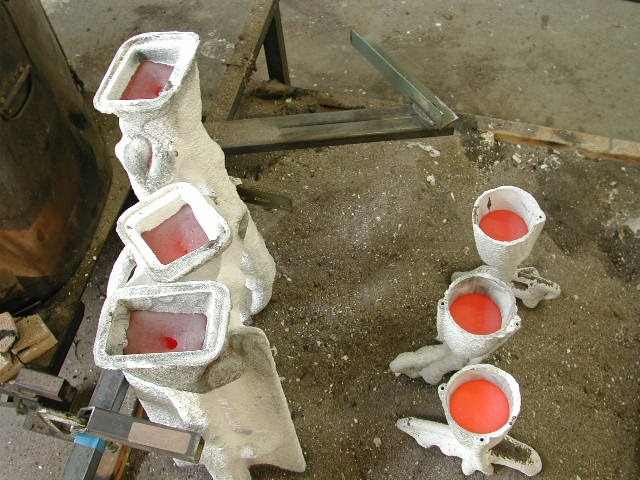
I’ll set the scene. It’s bronze pour day. The furnace is on. Suited up and ready. Camera, action! We have problem with a breakout of one mold…

…but after that we pour everything else.

a_pour

Cool, knocked the shell off:

b_pour

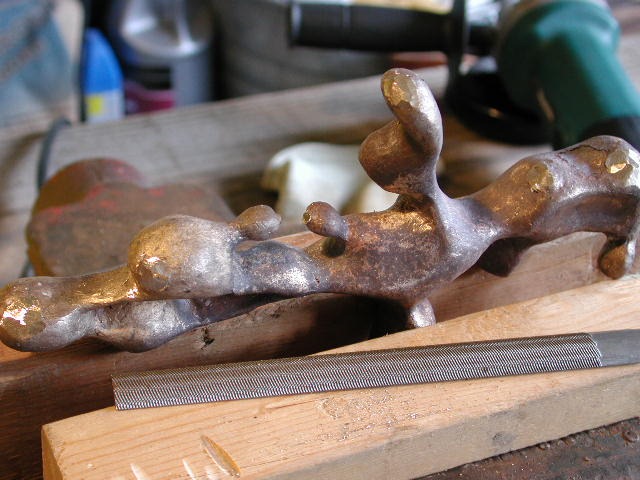
Cut off the sprue system and clean up with hand files.

c_pour

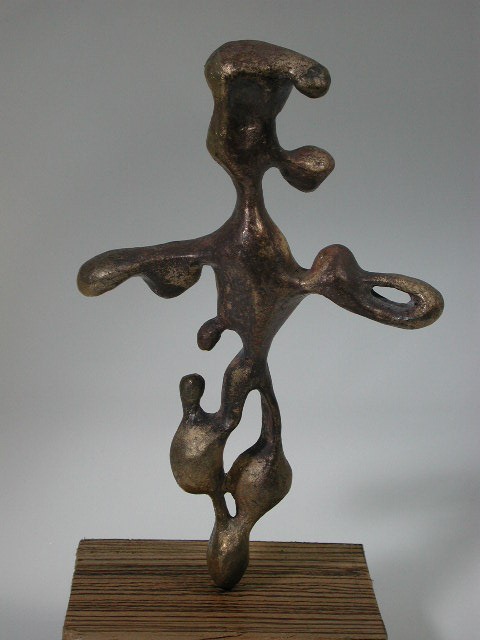
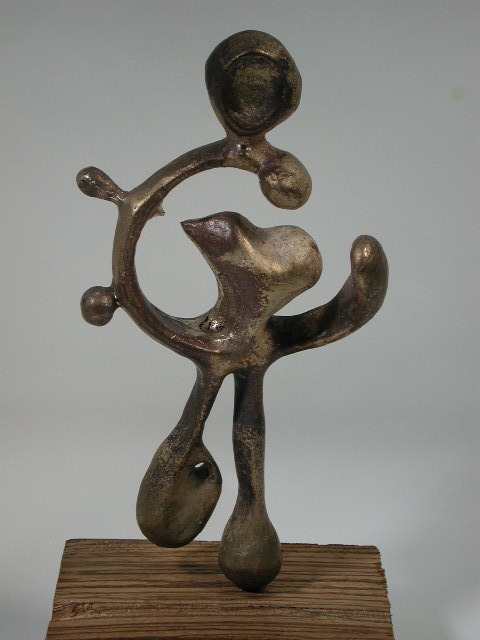
I’ll need to live with them awhile to consider how to finish them. The raw fired coloring is nice but I don’t think it will keep.

e_pour

f_pour

d_pour

Something else twisting

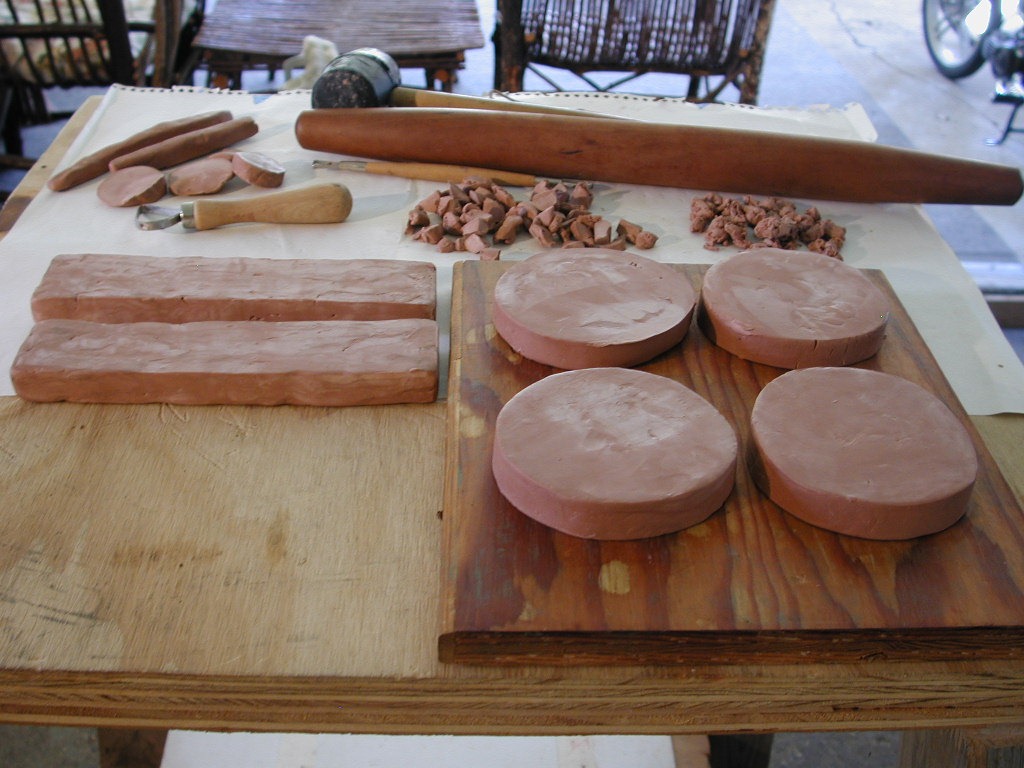
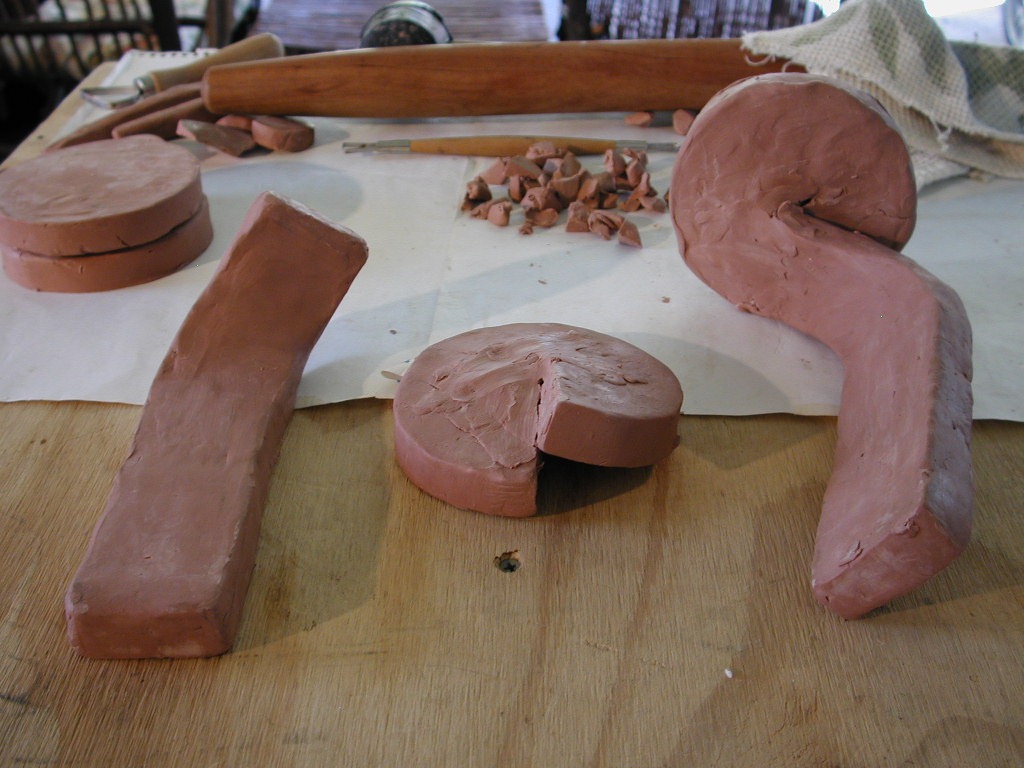
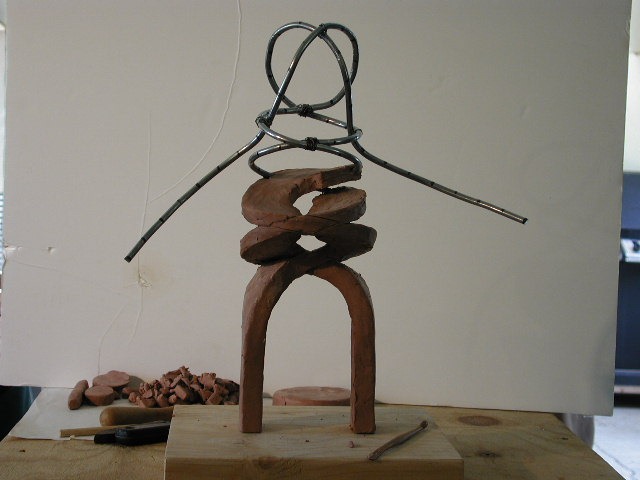
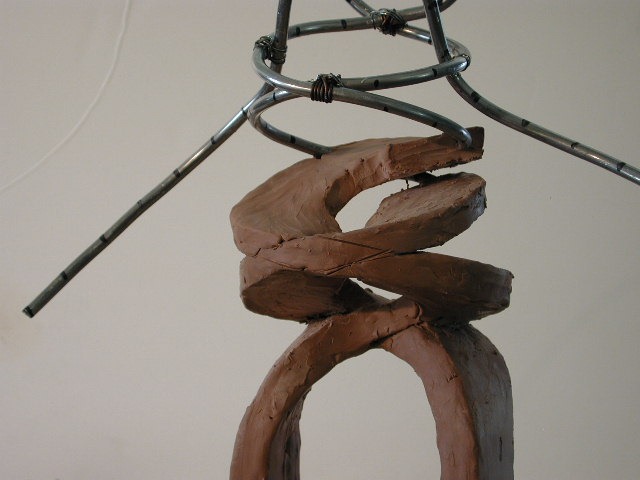
I began something recently, not smoke not water, something else I’ve been thinking about for many months. It comes from the spiral idea which you see in Twisty and Henry (Twisty II). I’ve had it in the vision of my mind, only I hadn’t figured out how to build it exactly. I’ve been waking up in the night and turning this form over in my mind, trying to discover the way to do it, while I fall back asleep. Thank God I’m not one of those people who lays awake at night unable to sleep. This I do just for my own amusement. So I saw finally how I could build it out of parts, basic shapes which would assemble into the piece, how many and what they’d be like. I’m beginning with modeling clay to rehearse how this will work. I’m not sure yet if this finally result in a wax for bronze, or a formal clay model from which to make a good mold, or what. I don’t have much in the way of prepared sketches either. The form is too complicated for me to draw well, so I need a process of sculptural “sketching” to work it out.

Here are some parts, as we say.

a_twisyIII

d_twisyIII

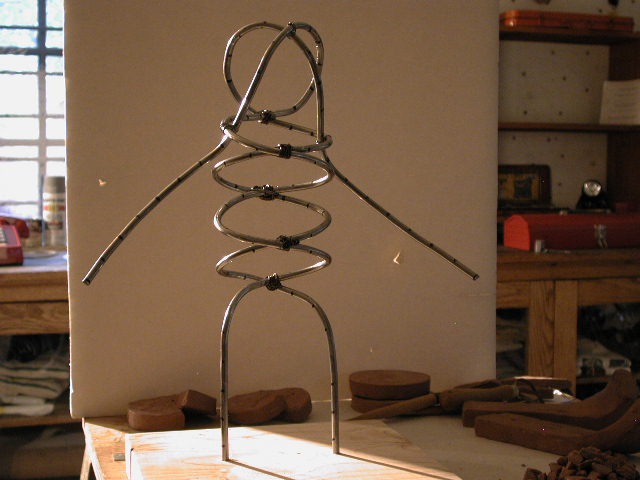
I can tell already that this will never free-stand, so I supposed I’d have to make an armature of some kind.

i_twisyIII

And now,

j_twisyIII

n_twisyIII

Burnout

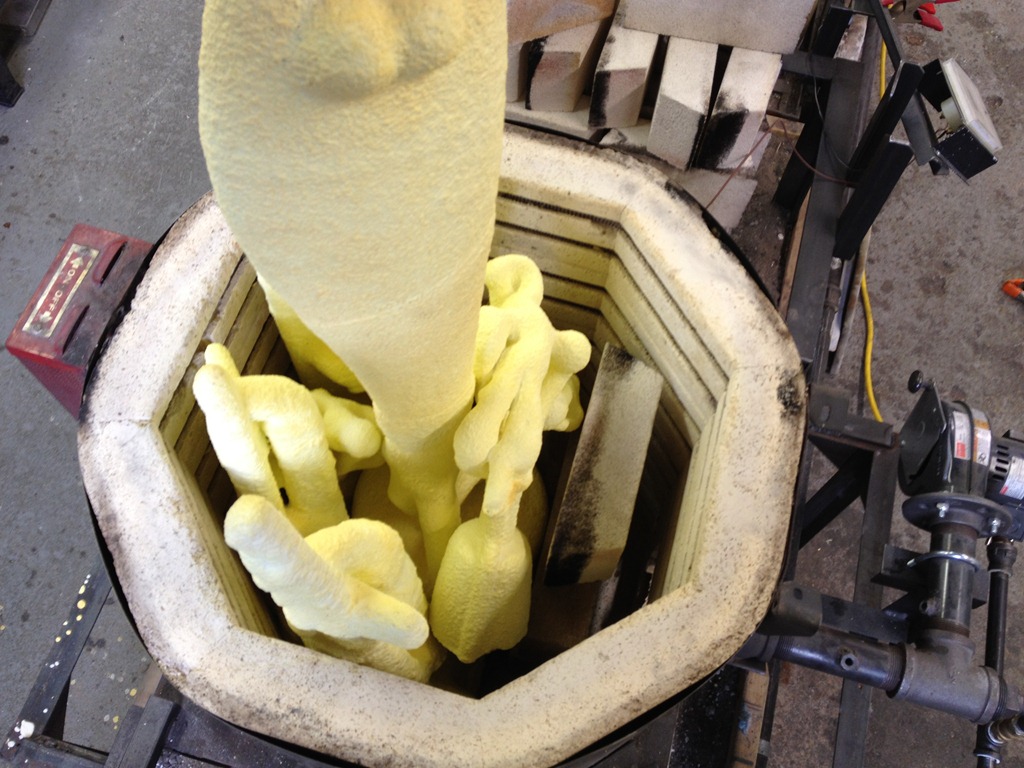
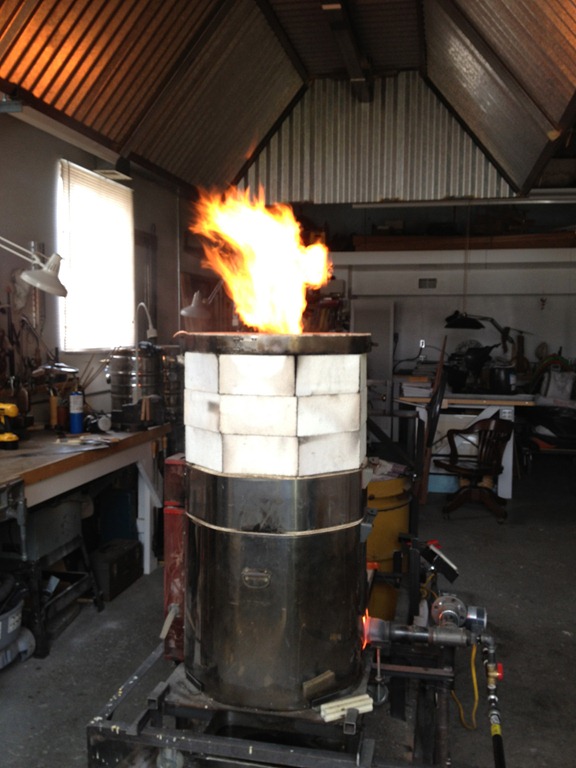
The molds are set in a kiln to burn out the wax. We say burn-out , not a melt-out because the kiln gets crazy hot, as you’ll see. This guarantees all the wax is gone from the mold – which is important because were any left behind when the bronze was poured in, it would cause something like a small explosion. Also, the extreme heat “fires” the mold into a harder substance better able to support the heat and weight of the bronze. (Pictures by Howard)

a_burnout

This kiln is made from an old electric clay kiln which Howard refitted to run gas and expanded a bit with extra firebricks. Most of his gear is home built of the highest design and workmanship.

b_burnout

“successful burnout today – extreme wind today helped to disperse the black smoke”

c_burnout


Ten coats

More dips,

b_splashtencoats

d_splashtencoats

Ten coats total, including top coat of clear without sand.

e_splashtencoats

h_splashtencoats

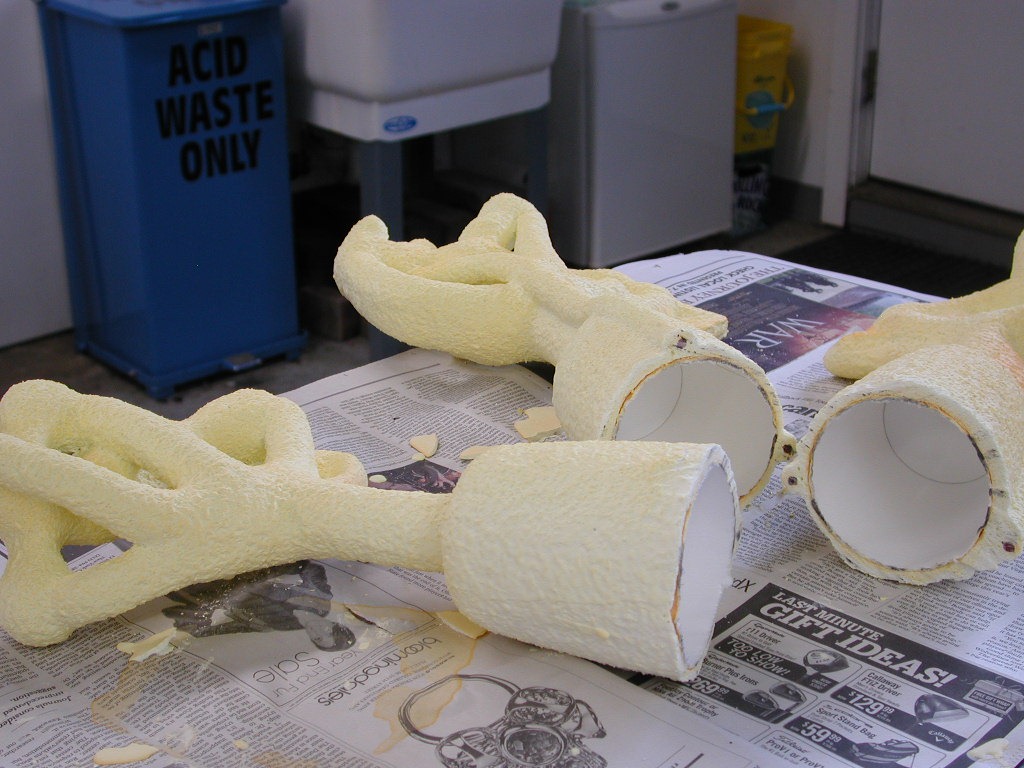
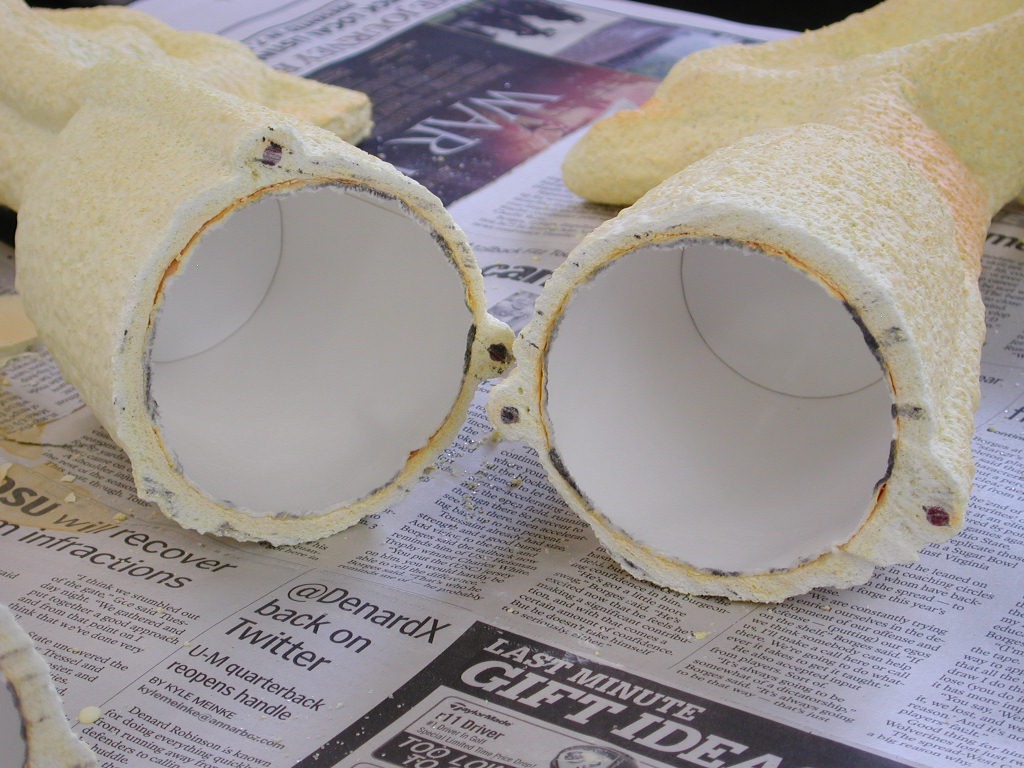
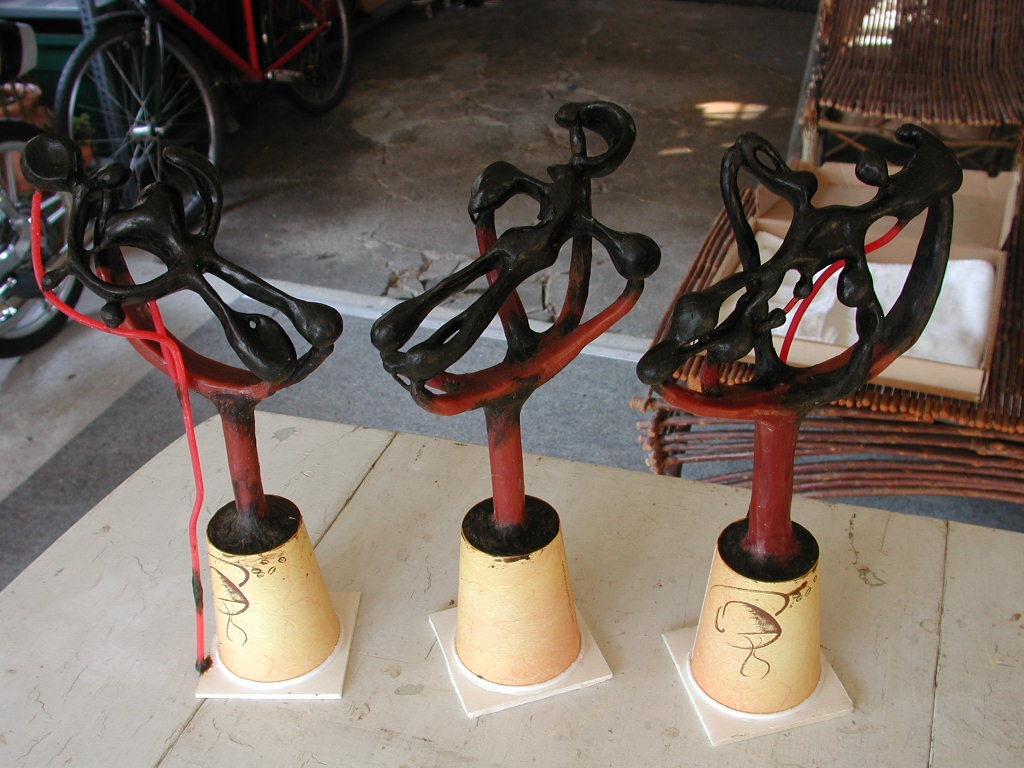
The cups with the tops cut off. The paper cup will burn away and the wax behind it will melt out when it is placed in the burn-out kiln, leaving a hollow shell mold into which the bronze will be poured. Eventually, the shell will be broken away, leaving the bronze, one-off. This is the part that has confused many people. I hope it has become clearer now.

m_splashtencoats

n_splashtencoats

Dipping

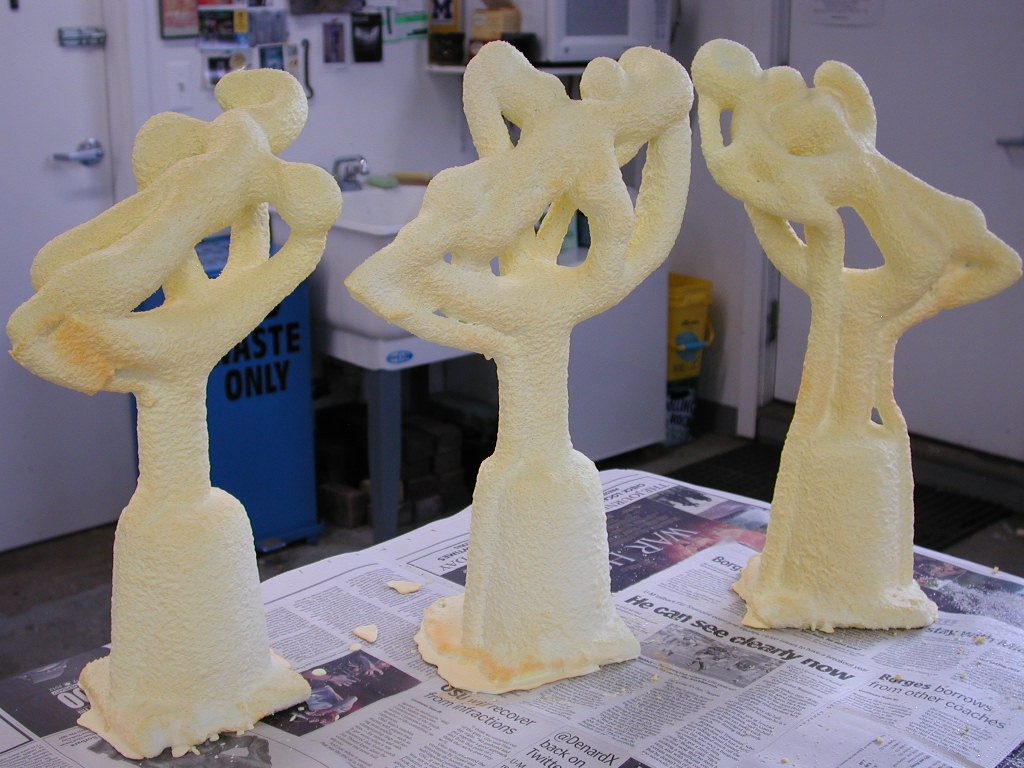
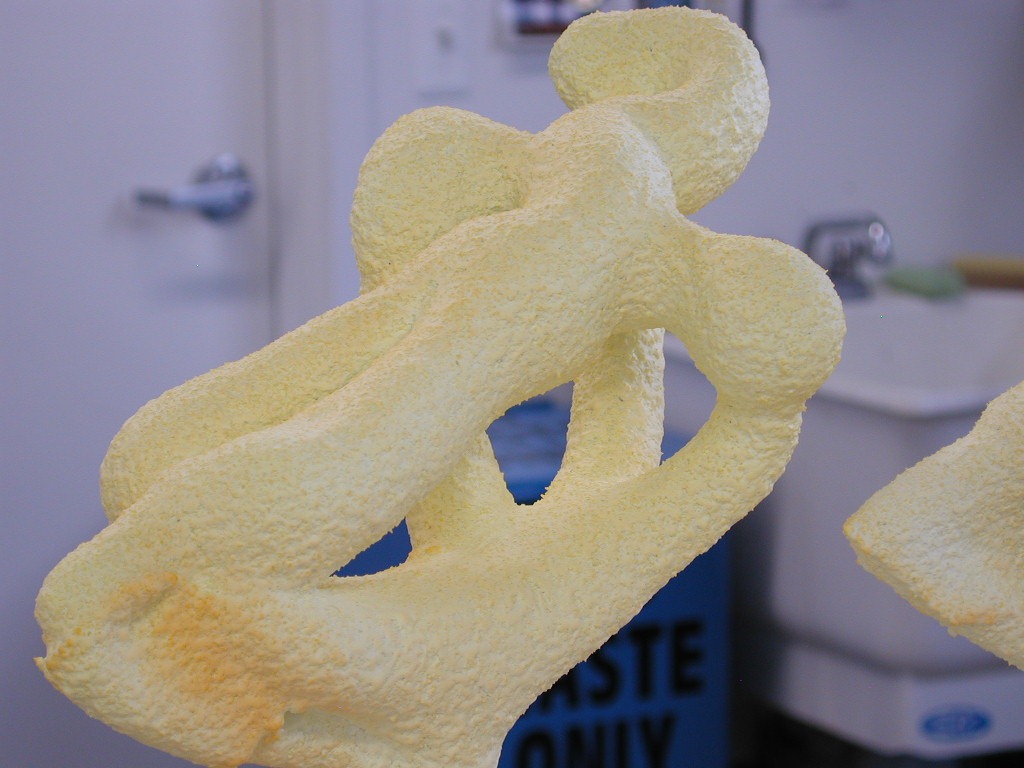
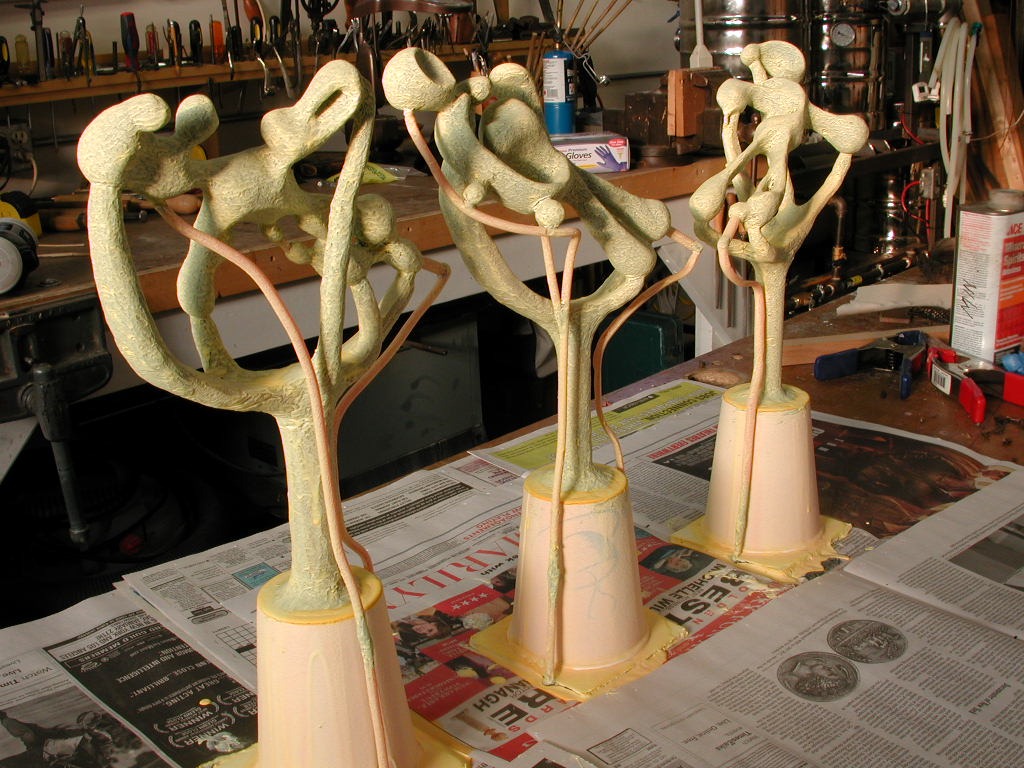
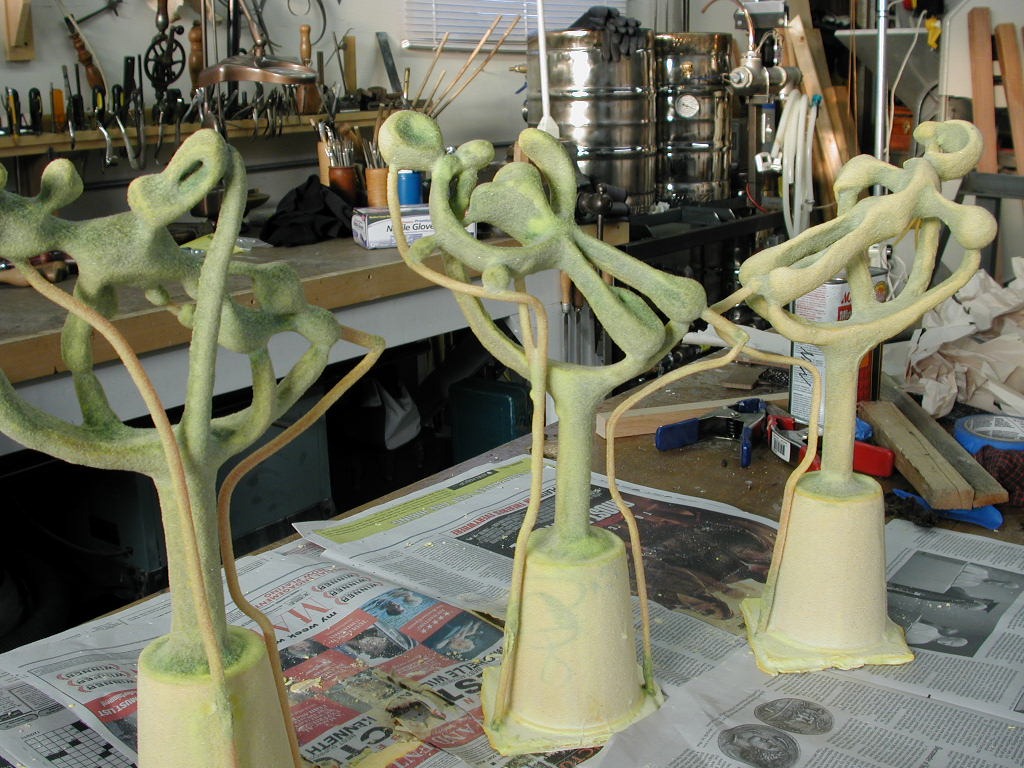
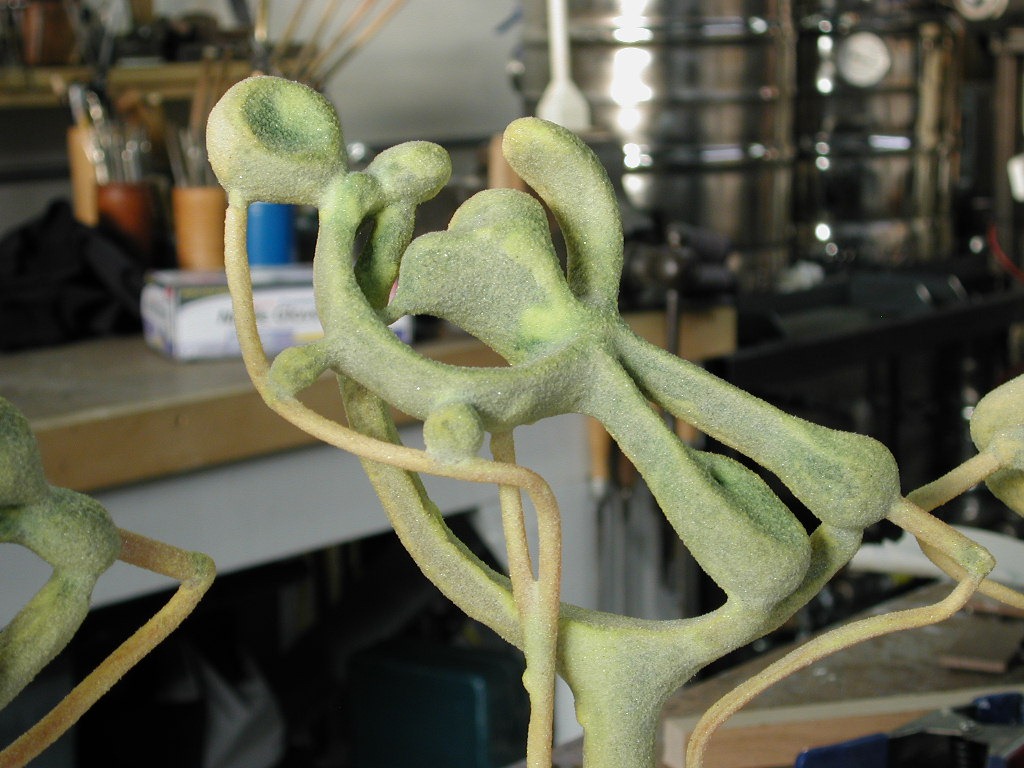
The finished waxes with sprues, pour cups, and a few extra vents.

a_splashdipping

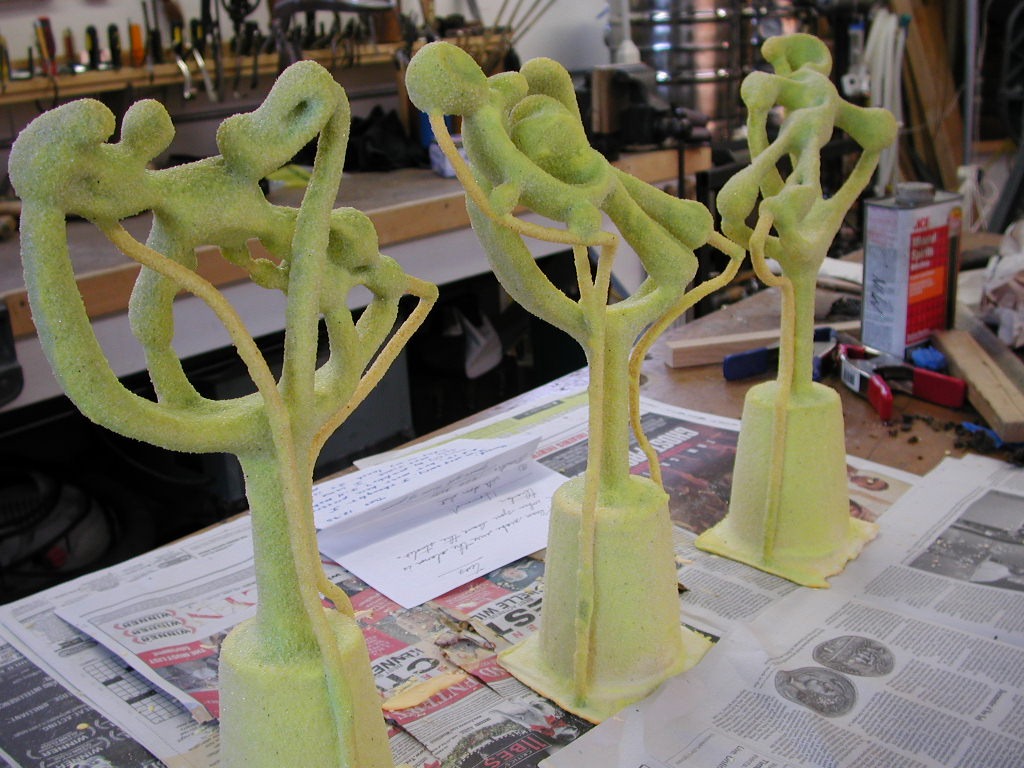
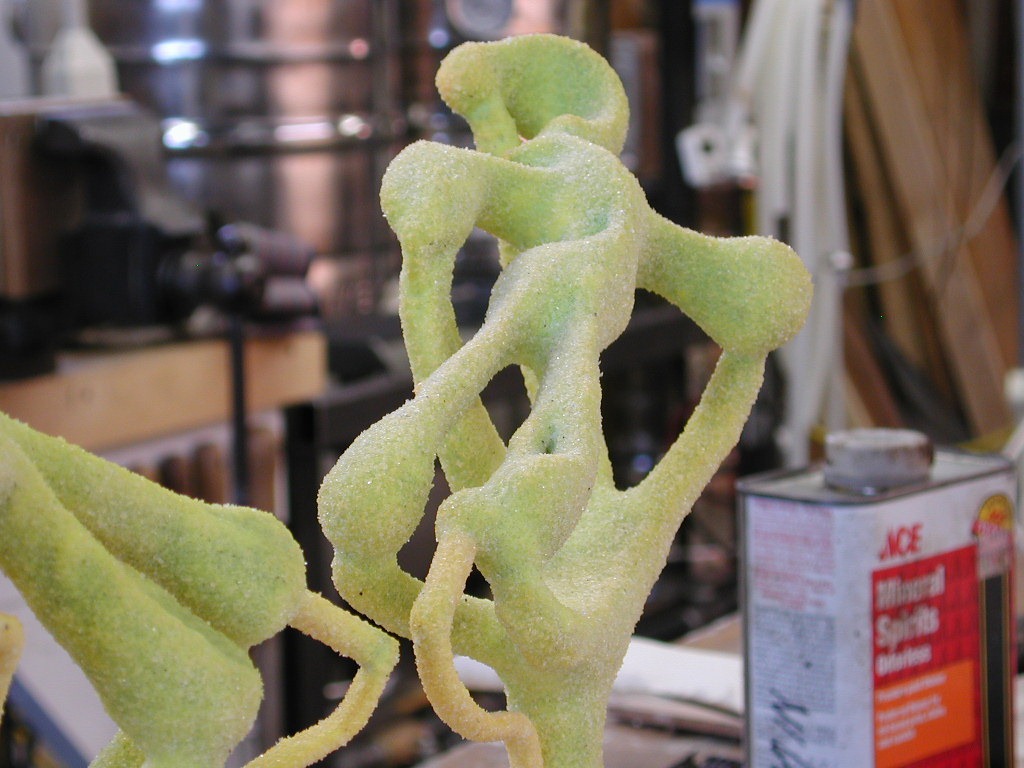
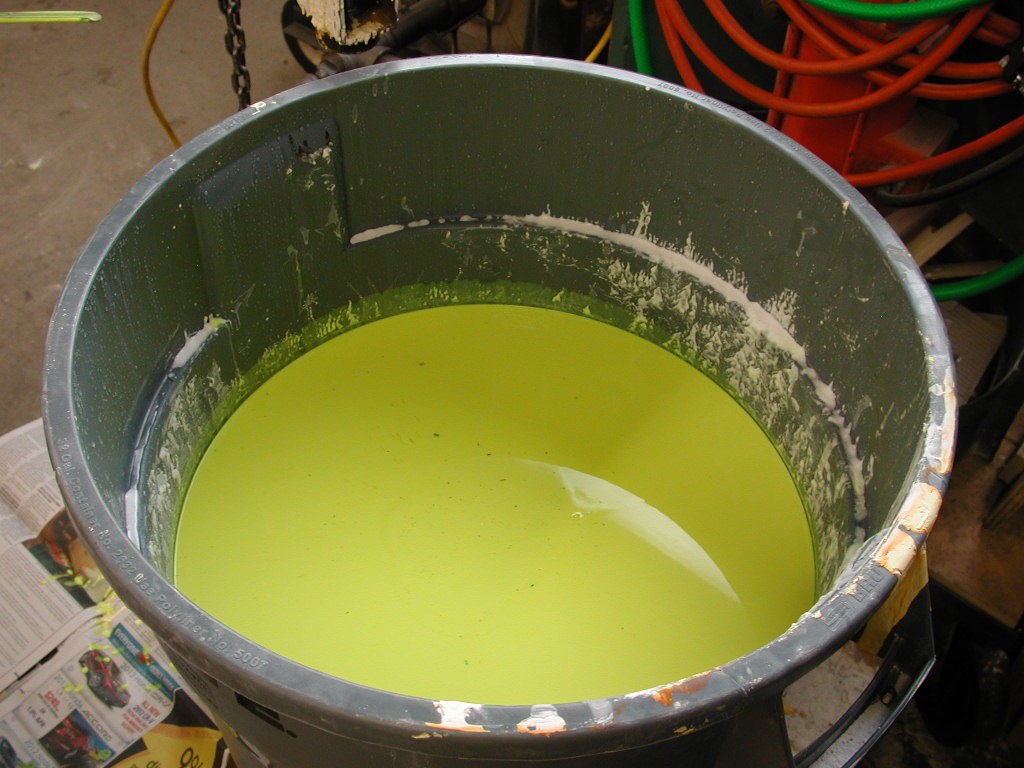
Moving to Howard’s studio, I’m beginning the process of dipping the wax in a ceramic slurry mix (colloidial silica) and refractory silica sand. This is ceramic shell moldmaking. The systems in his studio are really well-designed and working there is easy and efficient. See the beautiful chartreus color of the slurry:

c_splashdipping

The first coat is “clear”, without sand. This preserves the surface detail.

b_splashdipping

After drying, the wet second coat is bonded with fine sand.

d_splashdipping

e_splashdipping

The next 8 coats use a coarser sand. The shell for a piece this size should be about 3/8th inch thick. Each coat should dry overnight – it will take some time to finish this mold. Maybe I can get by there on my lunch hour?