Dipping

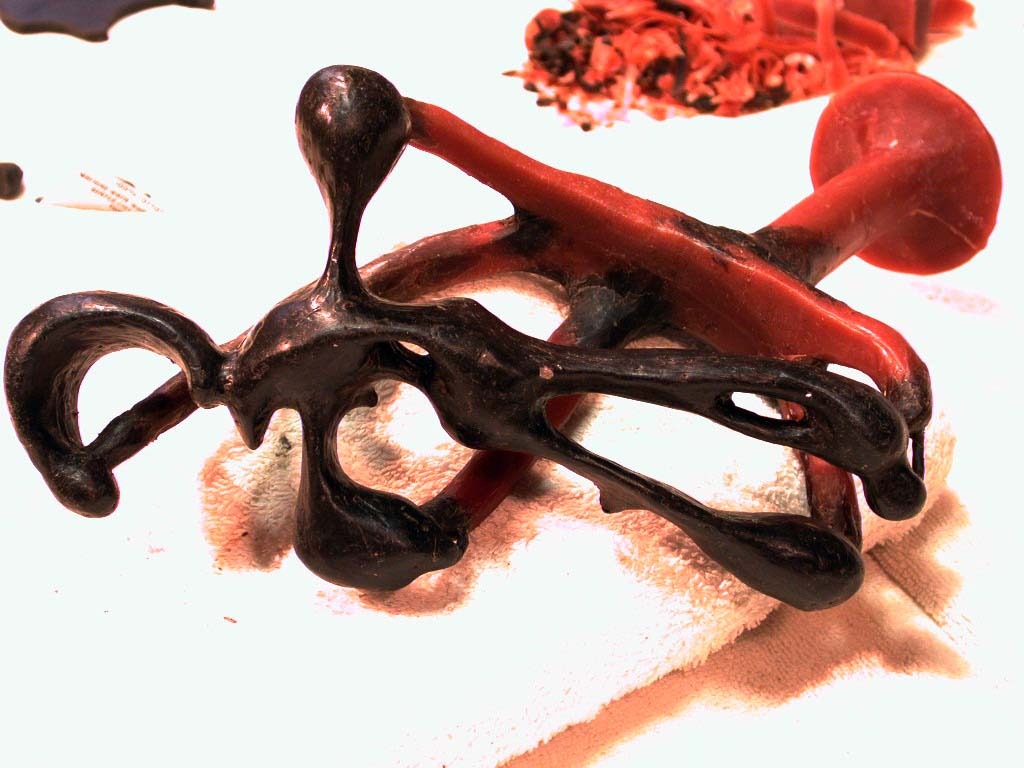
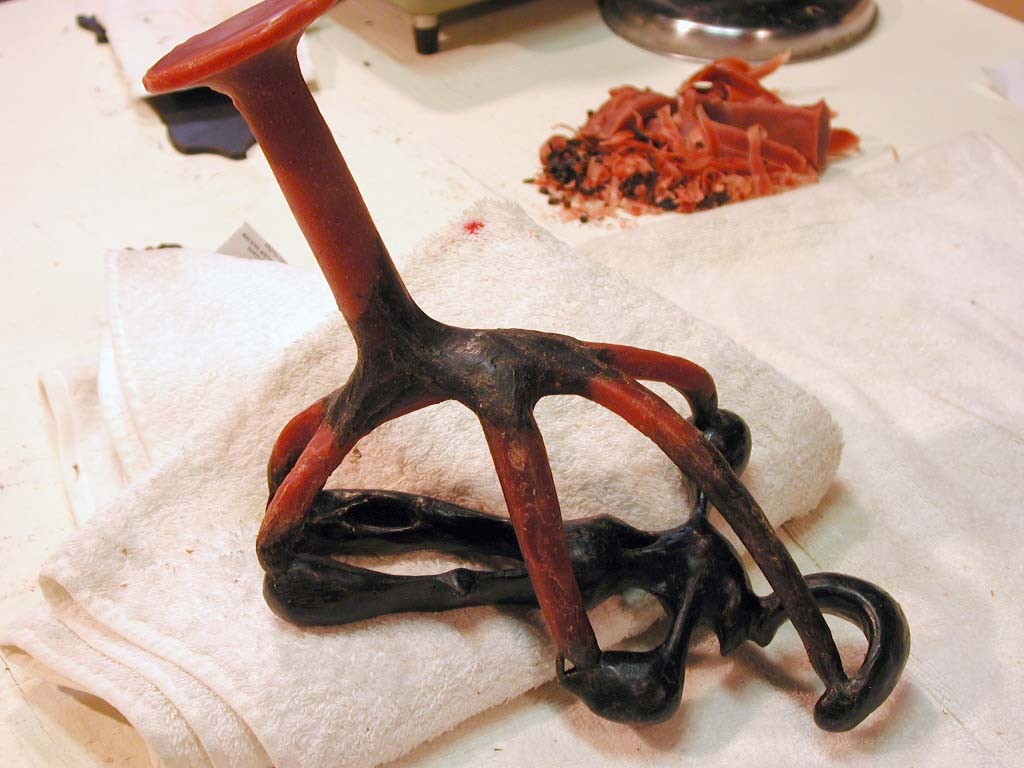
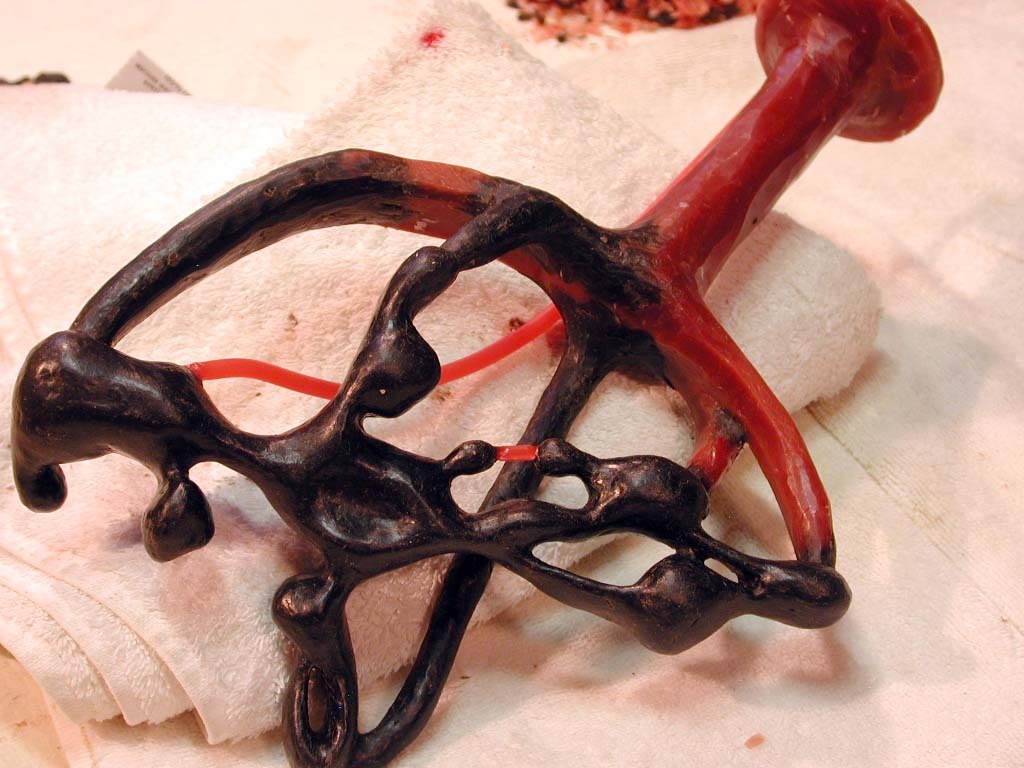
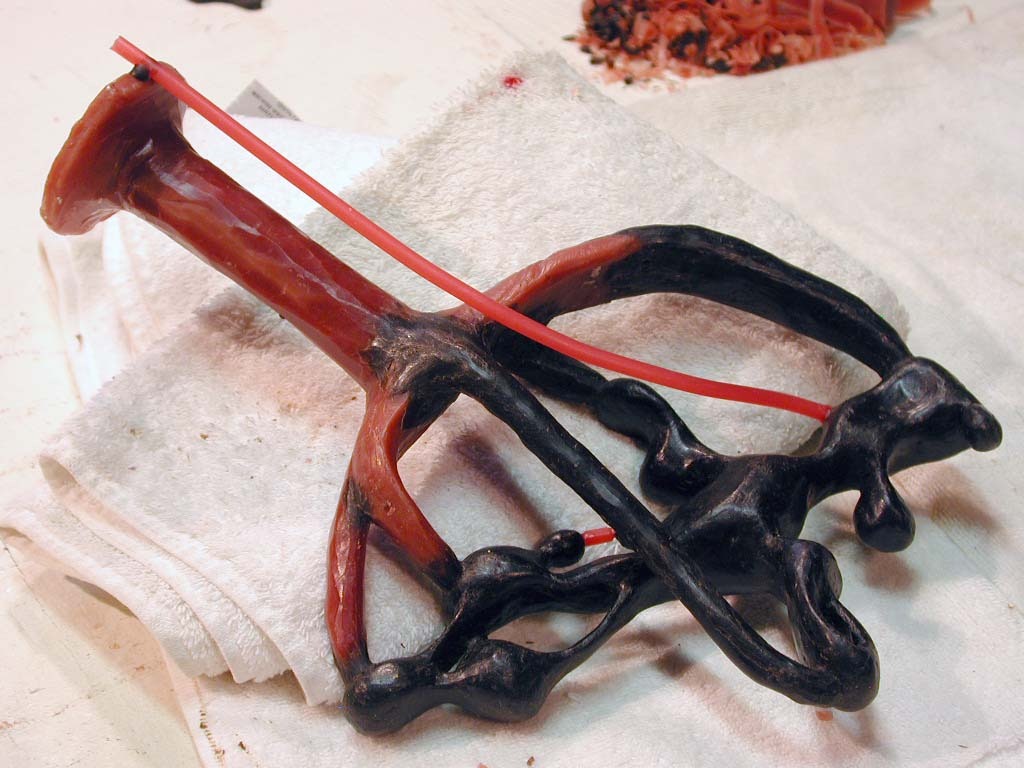
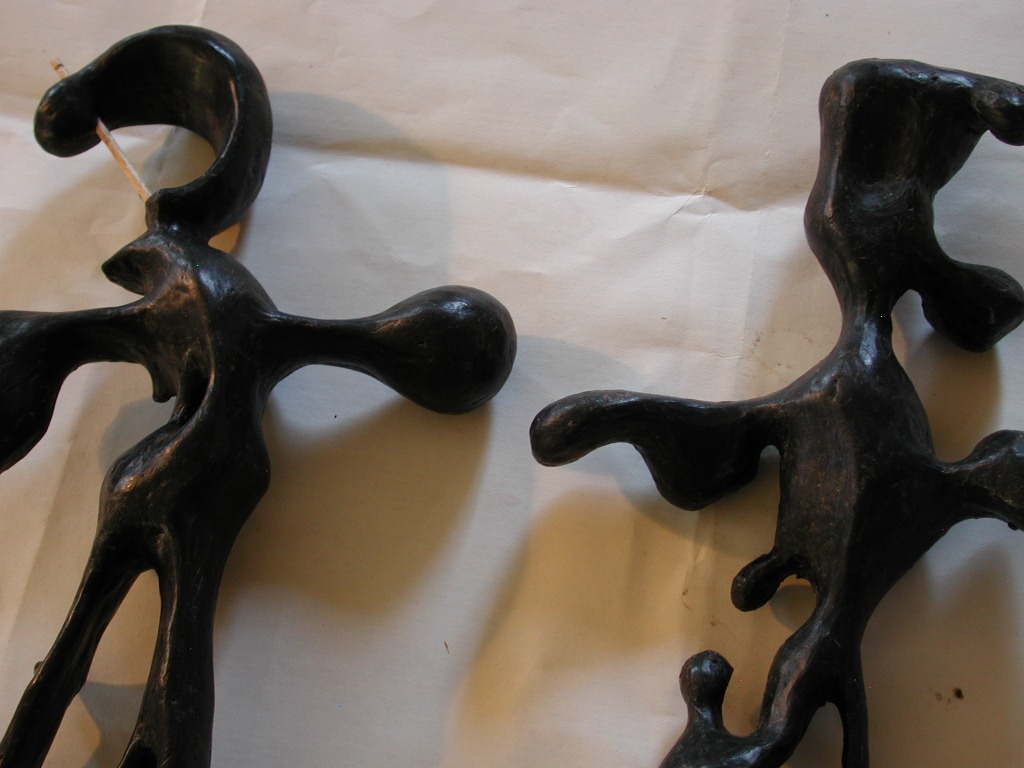
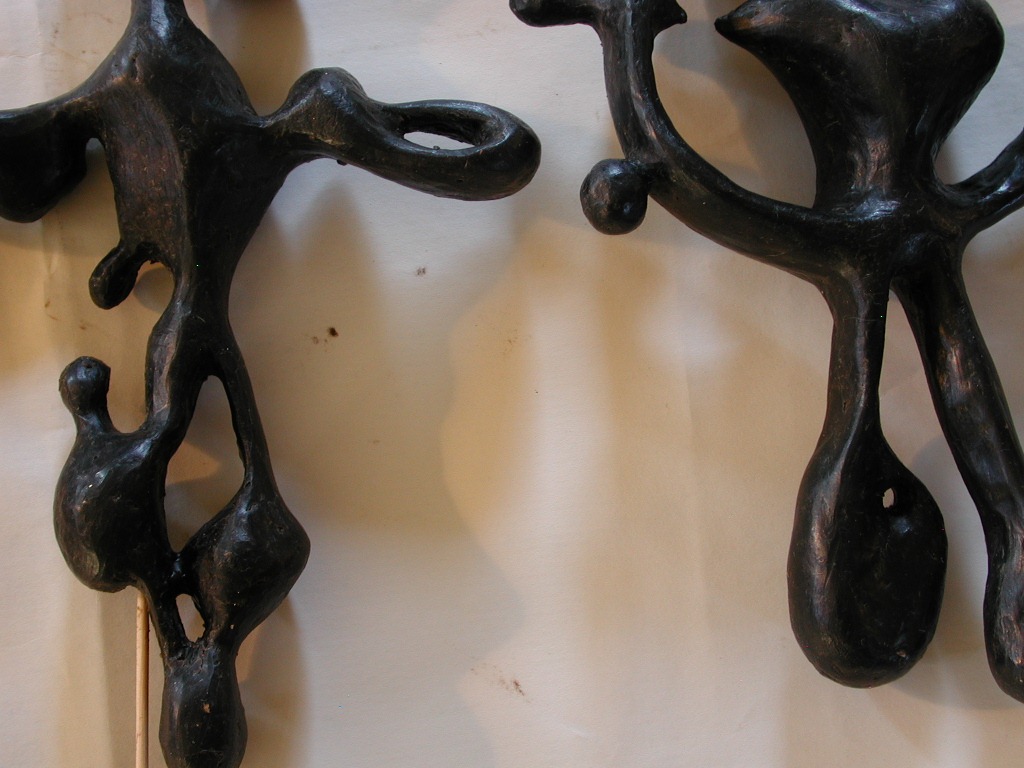
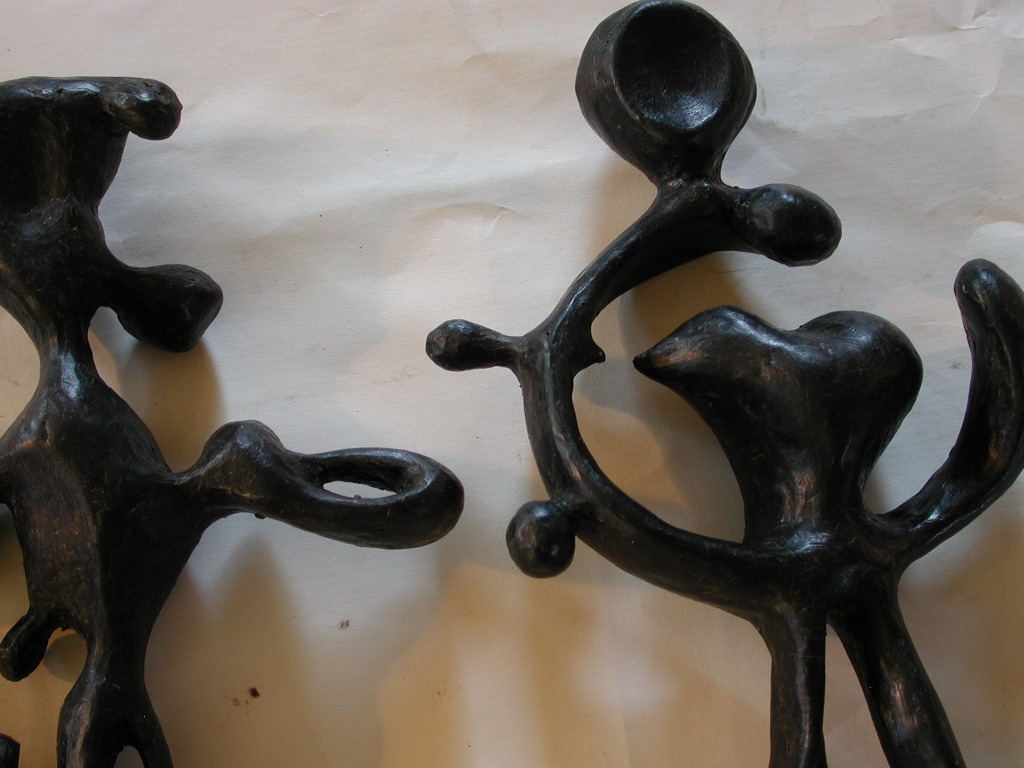
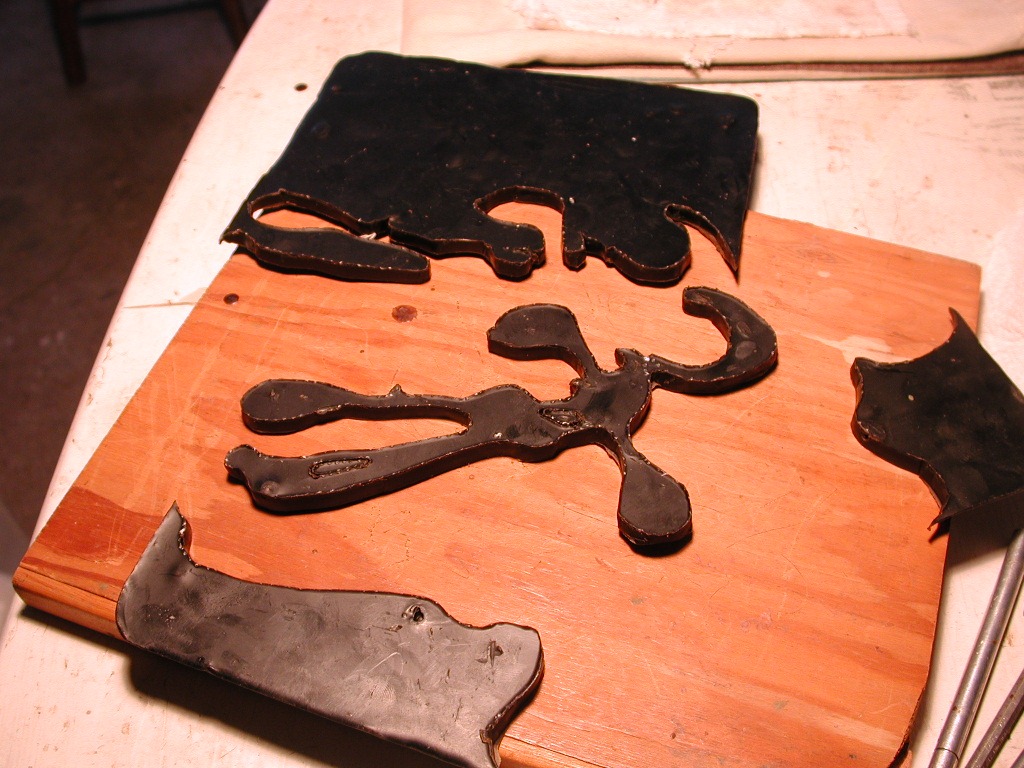
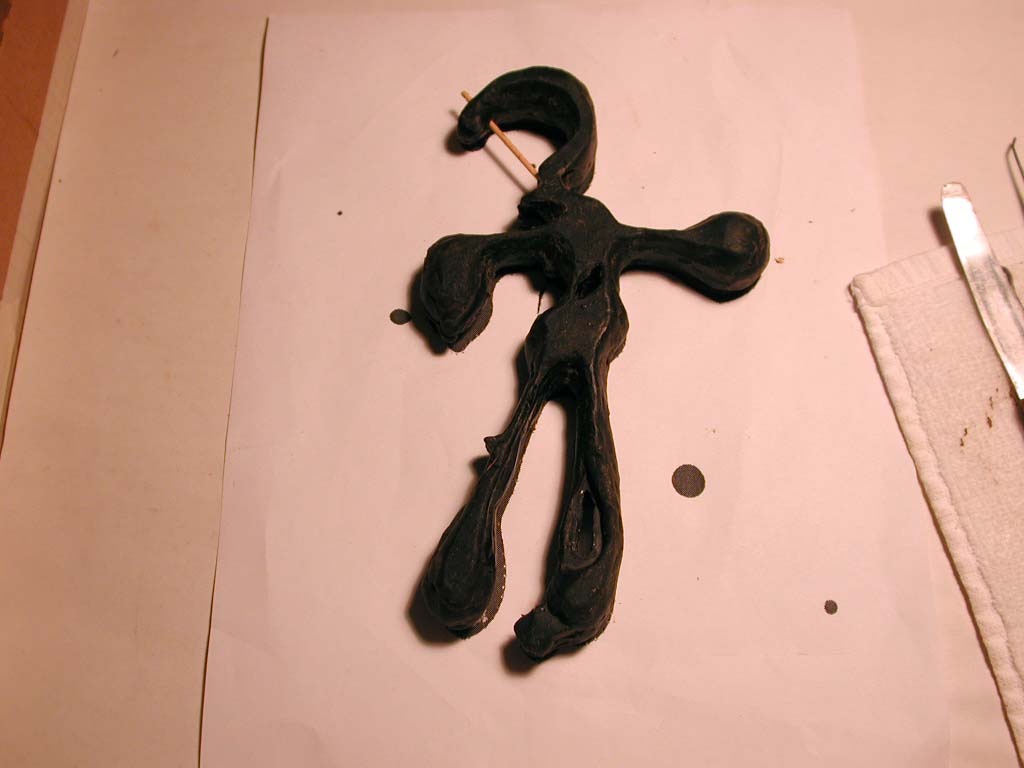
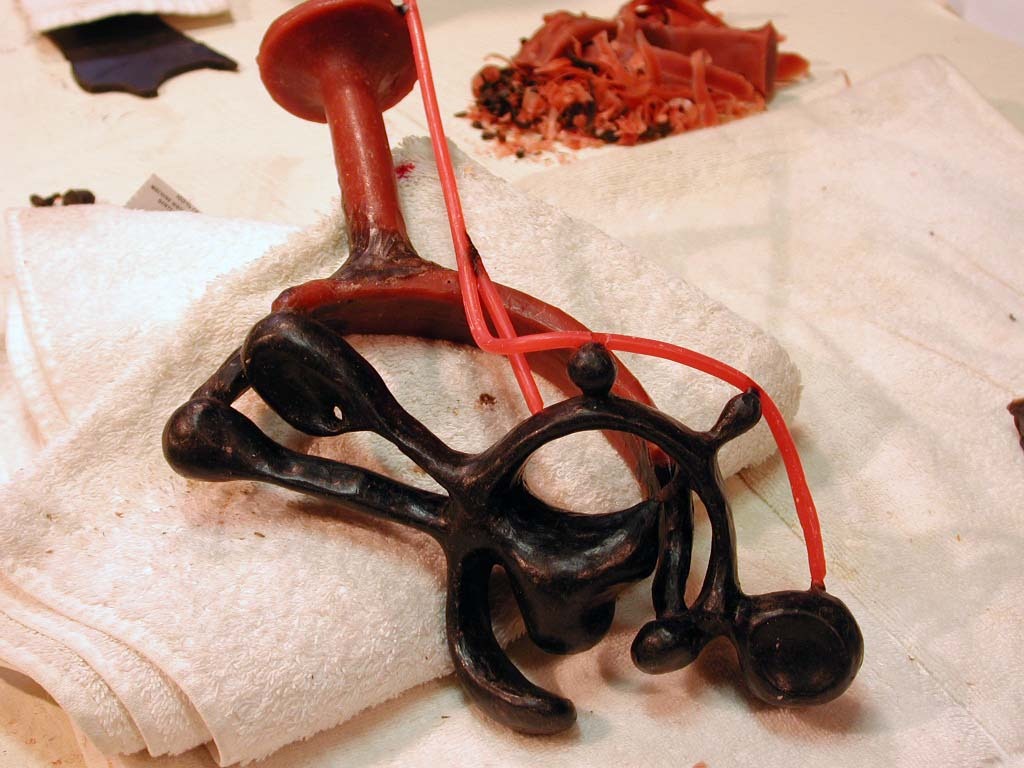
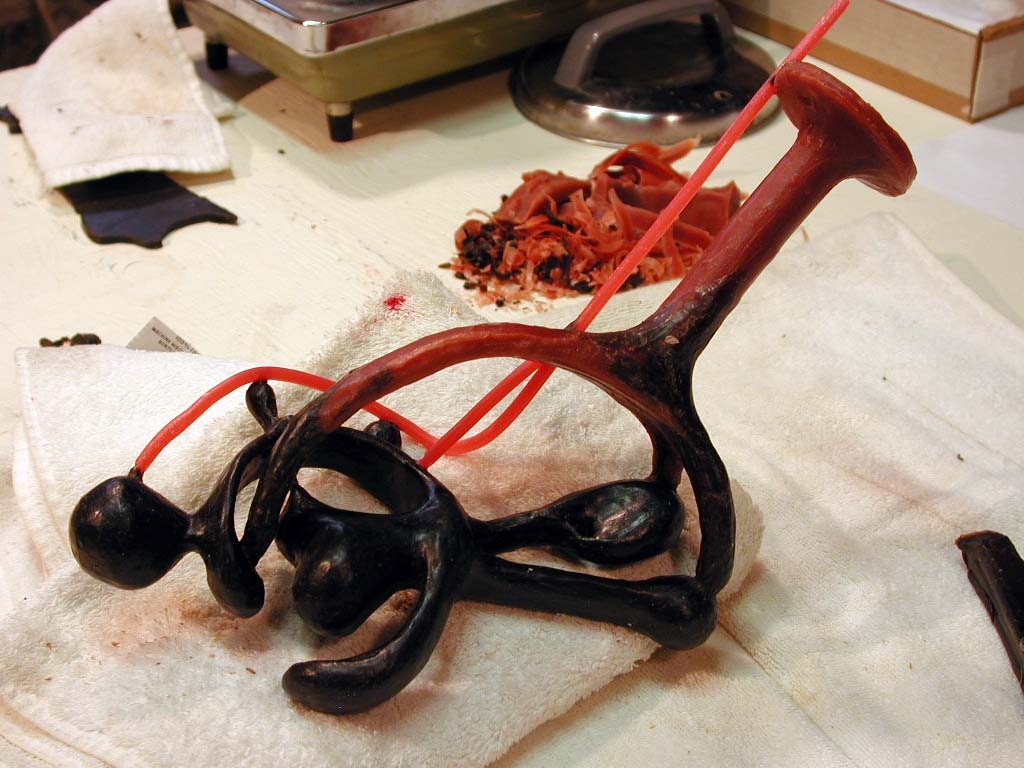
The finished waxes with sprues, pour cups, and a few extra vents.
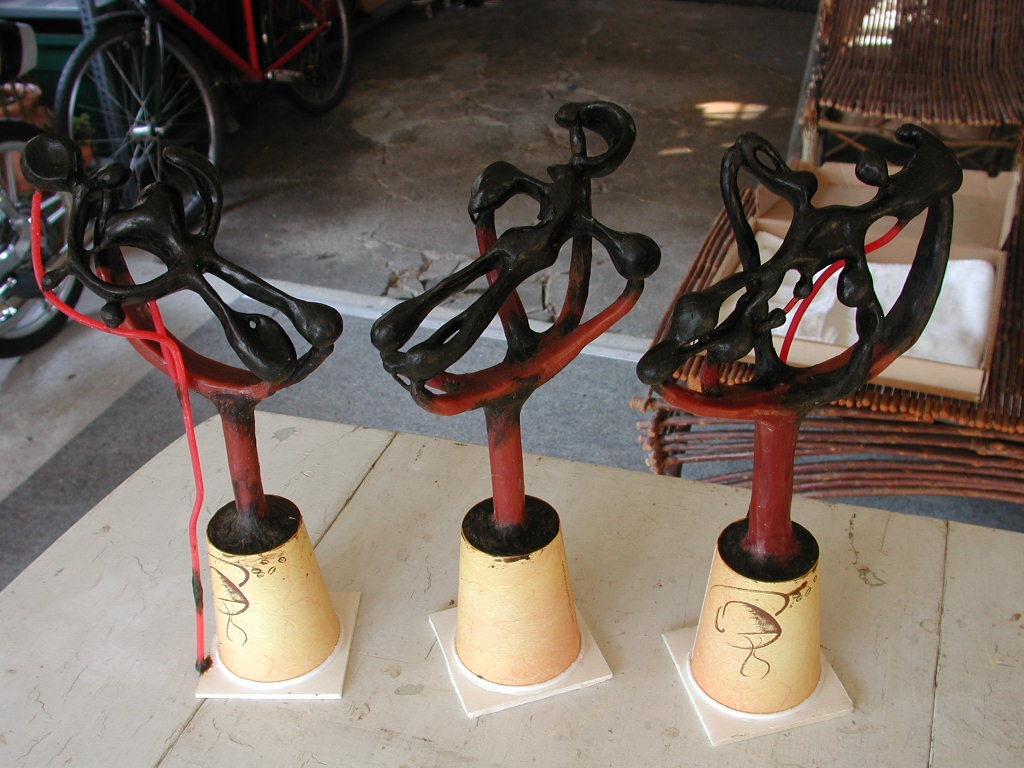
a_splashdipping

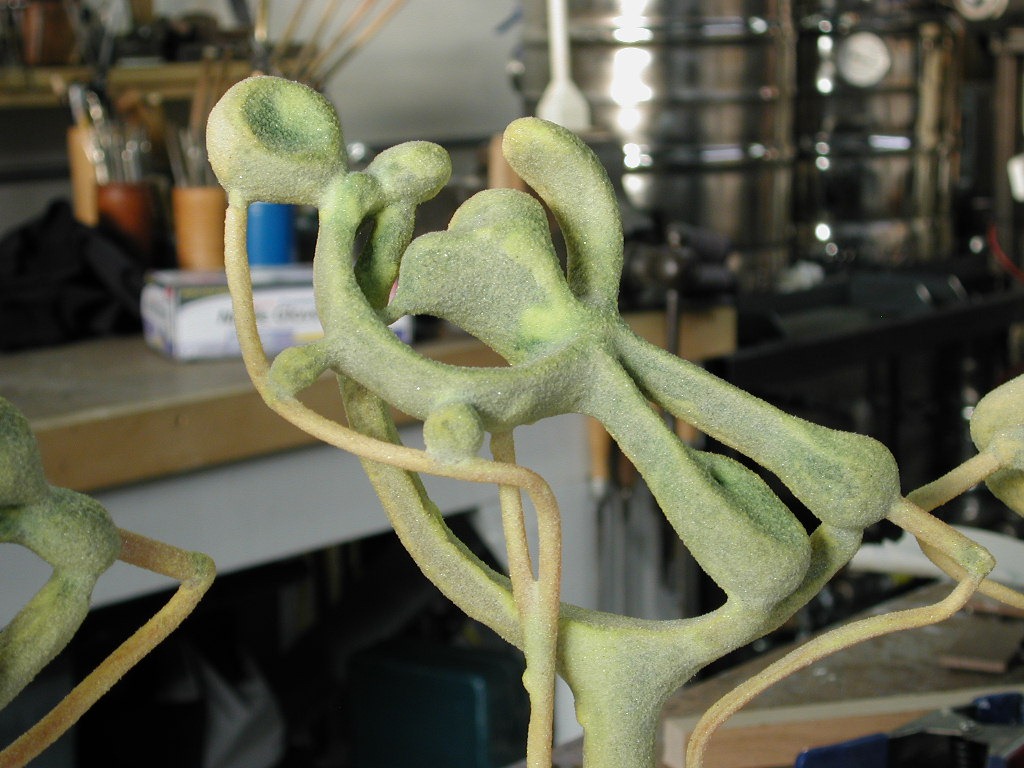
Moving to Howard’s studio, I’m beginning the process of dipping the wax in a ceramic slurry mix (colloidial silica) and refractory silica sand. This is ceramic shell moldmaking. The systems in his studio are really well-designed and working there is easy and efficient. See the beautiful chartreus color of the slurry:
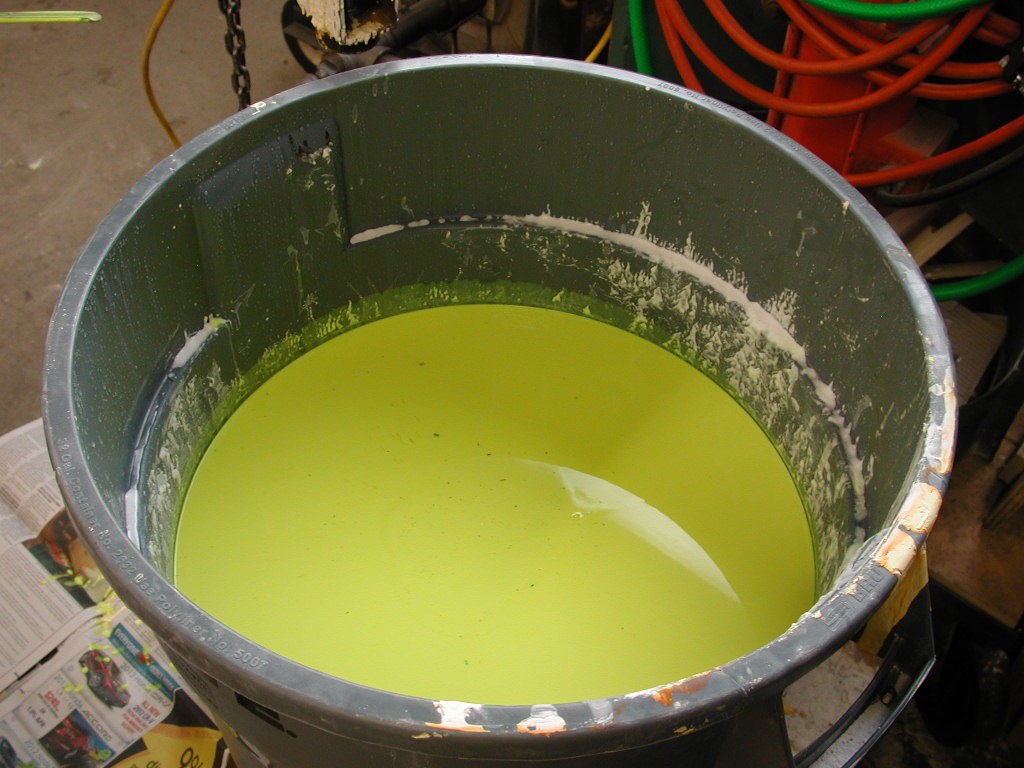
c_splashdipping

The first coat is “clear”, without sand. This preserves the surface detail.
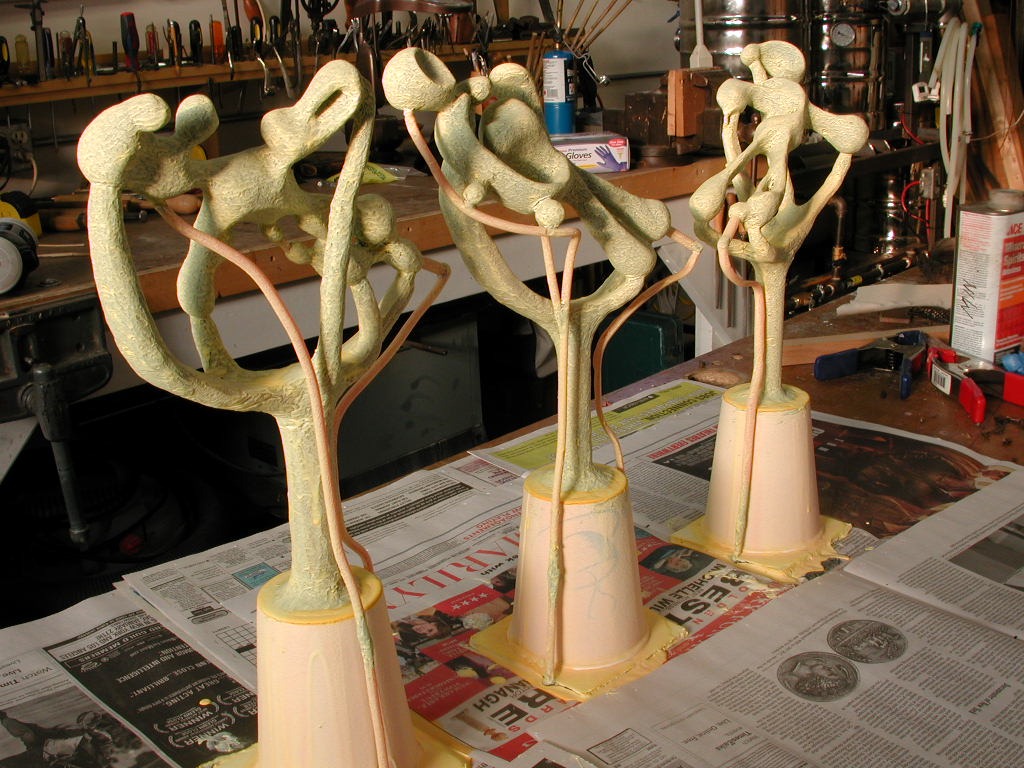
b_splashdipping

After drying, the wet second coat is bonded with fine sand.
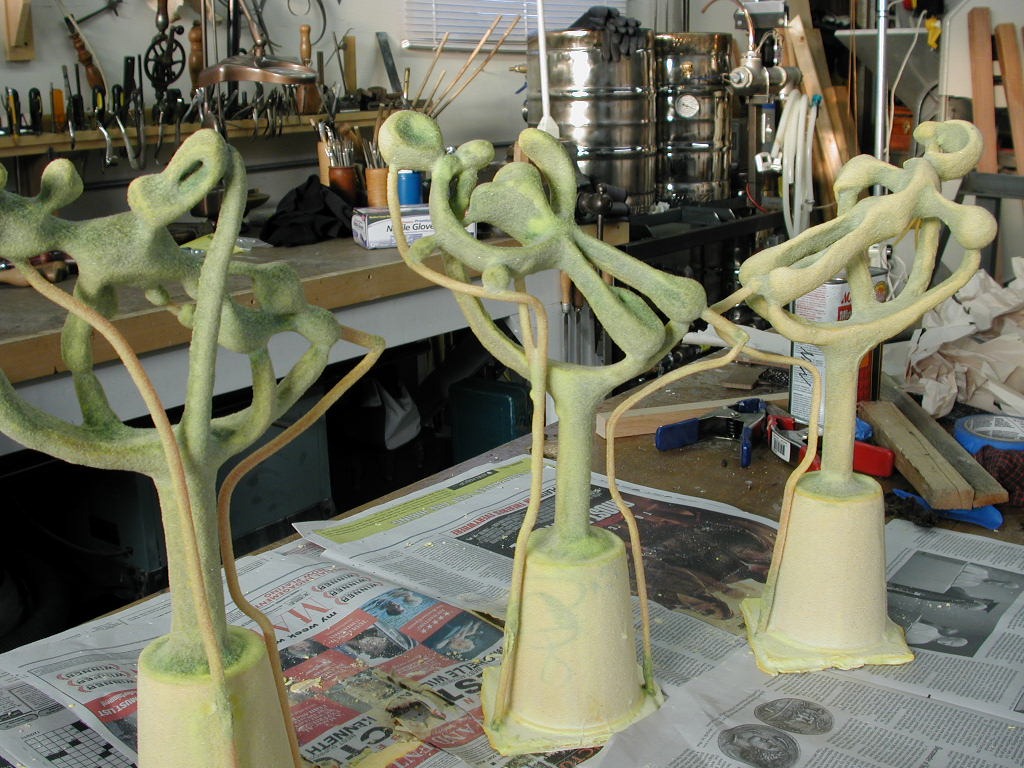
d_splashdipping

e_splashdipping

The next 8 coats use a coarser sand. The shell for a piece this size should be about 3/8th inch thick. Each coat should dry overnight – it will take some time to finish this mold. Maybe I can get by there on my lunch hour?
About risk

When I was a mountain climber, I thought I knew about risk; taking risk and weighing reward. Now I realize that I probably never climbed anything that I wasn’t fairly assured that I could get on top of. I planned a strategy, and followed examples of success. A route, a season, equipment, partners. Sculpting isn’t like that. There is no guidebook. When you’re standing before a block of wood, chainsaw in your hand, there is just you, and irreversible consequences. When climbing you may be at risk of your life, but Sculpting makes risk of your intelligence and your ability to control at your will, the material and the idea. If you mess up, it’s not a physical limitation, but the limits of skill, experience, courage, imagination – your artistic identity – that you are up against. I have less courage for the destruction of Self than of injury or death.

One beauty of climbing is that when you are standing at the bottom of the mountain, you have in your possession everything required to summit. The outcome is unknowable, you only know that you can make an attempt. And in Sculpting it’s the same. You have everything required to create the work you are imagining. How often in life can you say that? That you are ready to begin, to embark, and strive? This means of course, you must have also accepted the possibility of failure.

Sprued-up

Now is the time to add the sprues to each piece. A sprue is a downward channel the bronze will follow into the mold. The mold should fill quickly, so that the metal doesn’t cool before the mold fills, and completely, so there is no area in which air is trapped, causing a void in the finished piece. This is a matter is visualizing the flow of metal through the piece as you turn it to discover the optimum position which will accomplish both. Of course, there is some intuition and experience involved too, and every piece must be considered uniquely. In some cases there are vents which give a path for air to leave the mold from areas where it might otherwise be trapped. I naturally tend to overdo this sort of thing, but since these pieces have some thin and narrow sections, I want to be sure that the metal will not “freeze-out” or cool anywhere, so I have placed a sprue into each hand foot and head to get metal into every area. As well, all those sprues can serve as vents too.

a_sprued

b_sprued

c_sprued

d_sprued

e_sprued

f_sprued

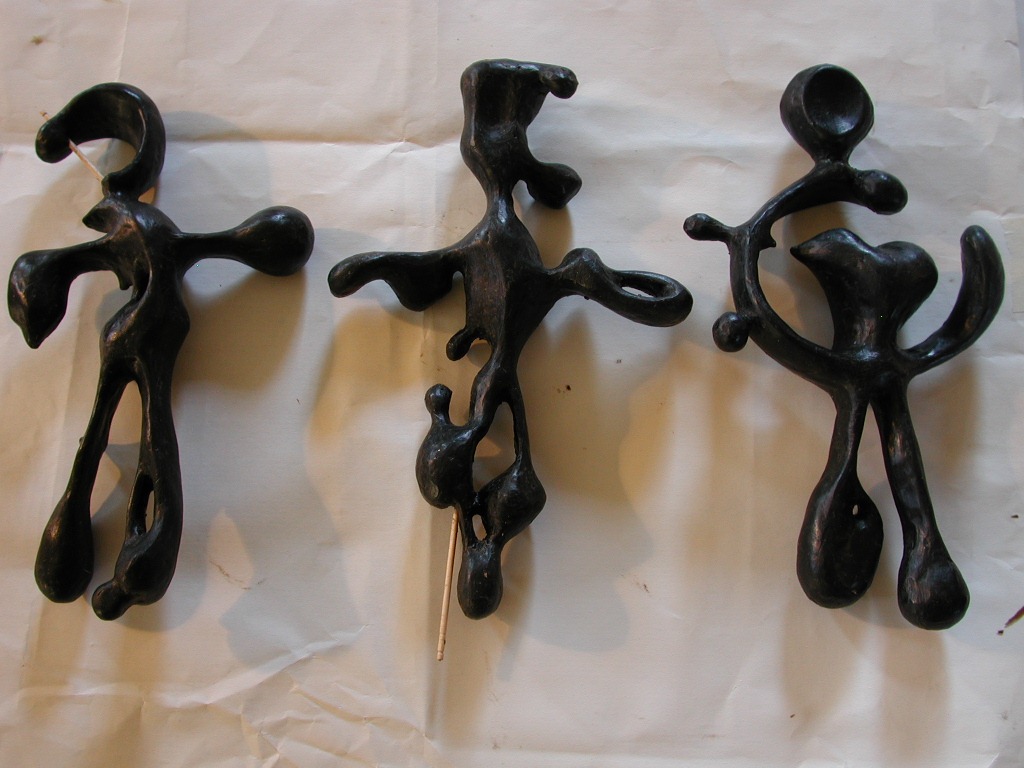
Three splash

I decided to do a third splash because people tend to gender-ize them too much when there are just two.

c_splash

a_splashthirdwax

All three, at a good stage of progress, about three good work sessions apiece,but I’ll need to decide how much more to go on from here in texture and smoothness.

b_splashthirdwax

d_splashthirdwax

e_splashthirdwax

c_splashthirdwax

Here we go SPLASH

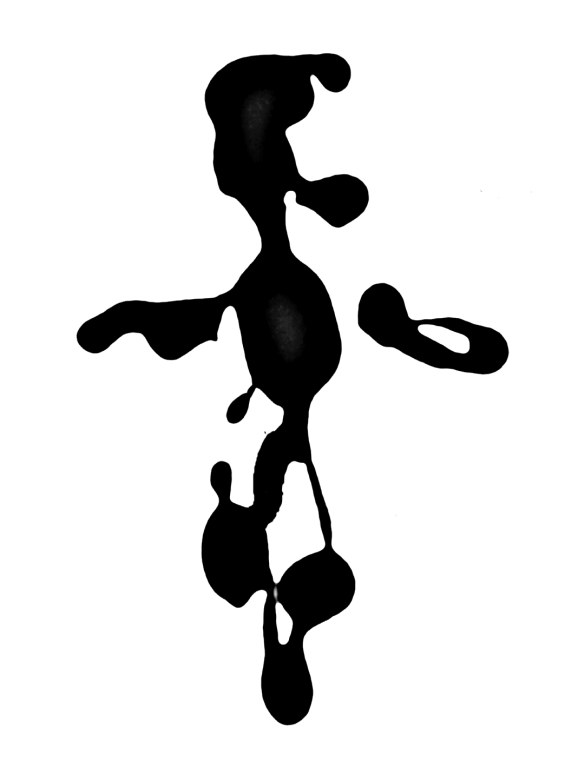
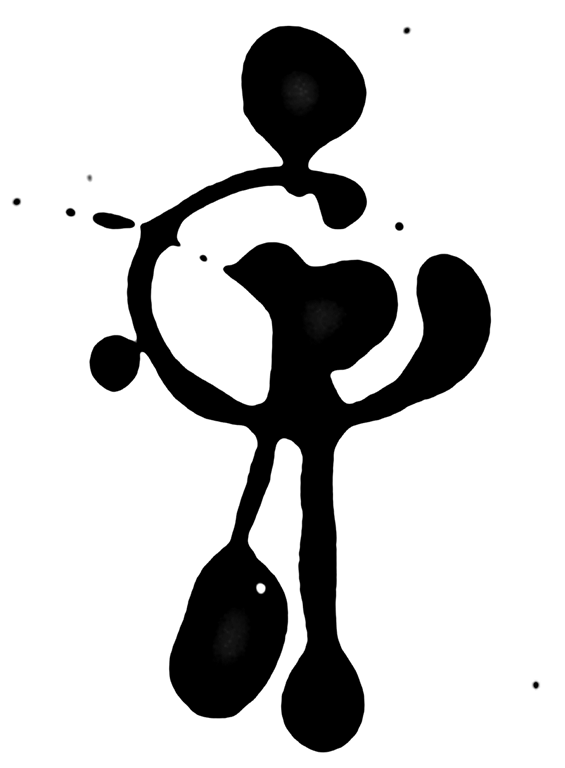
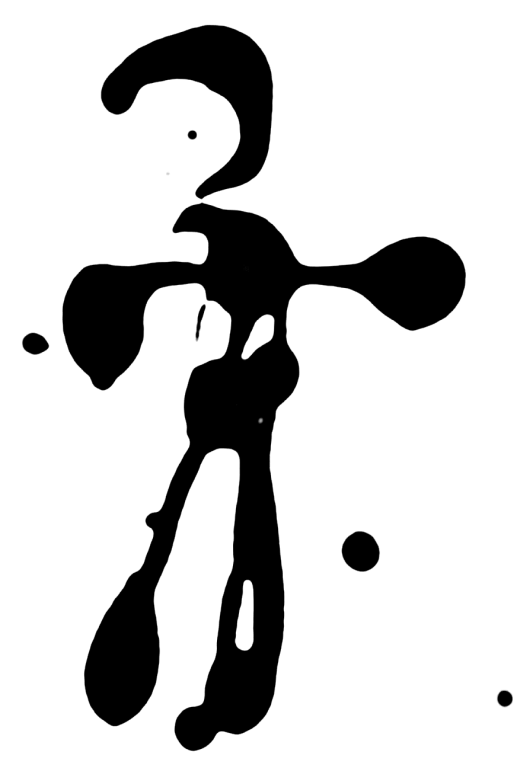
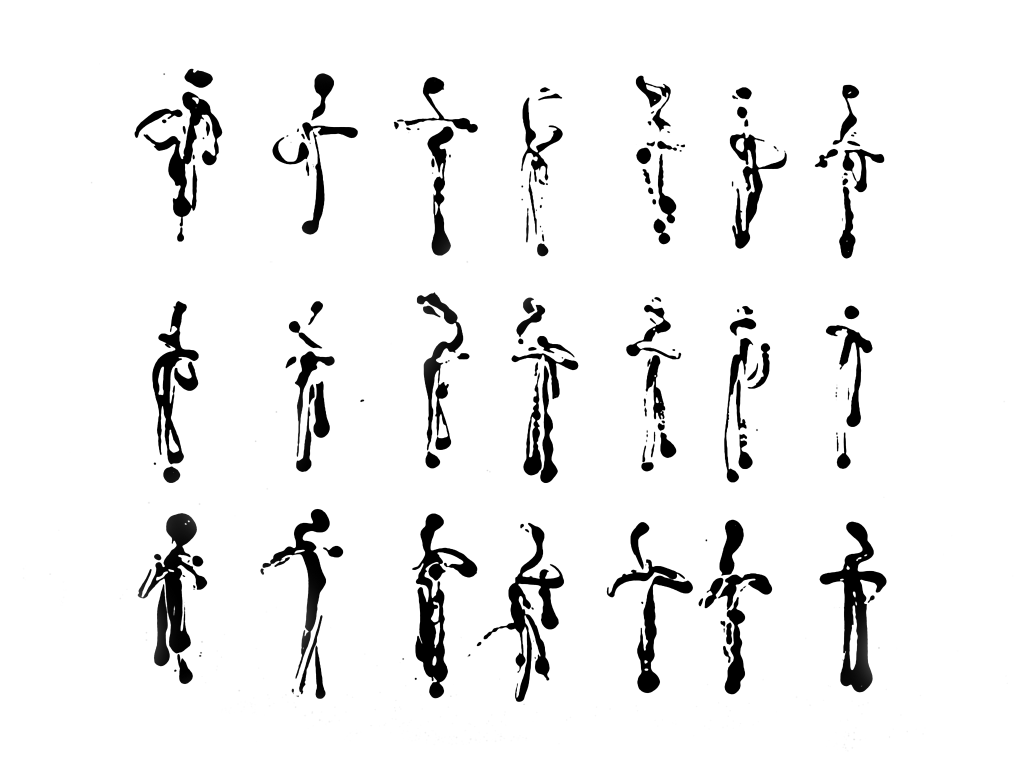
God I love Winter. This is when I get all the best designs done. Here are the ones I’m starting with for this project, titled “Splash”.

a_splashb_splash

The goal is to get these graphics to viable fully modeled 3D sculptures.

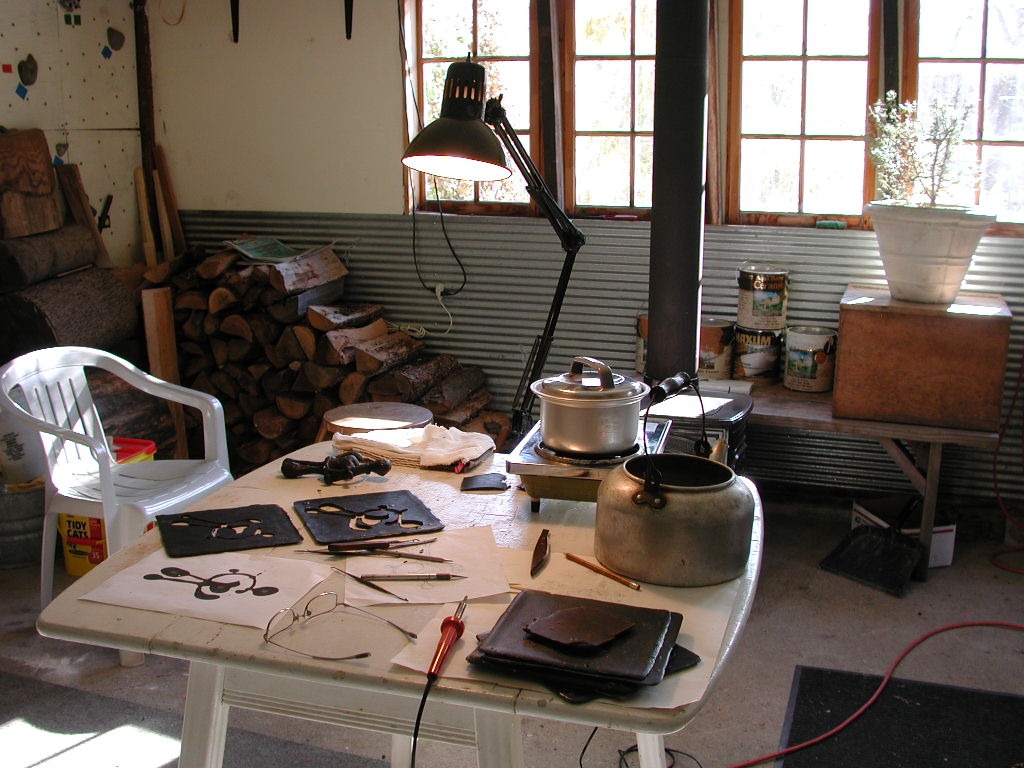
So, it’s out to the shop to get some work done. Another unglamorous picture of how sculpture gets made. The sun is shining and that’s nice.

 c_splashfirstwax

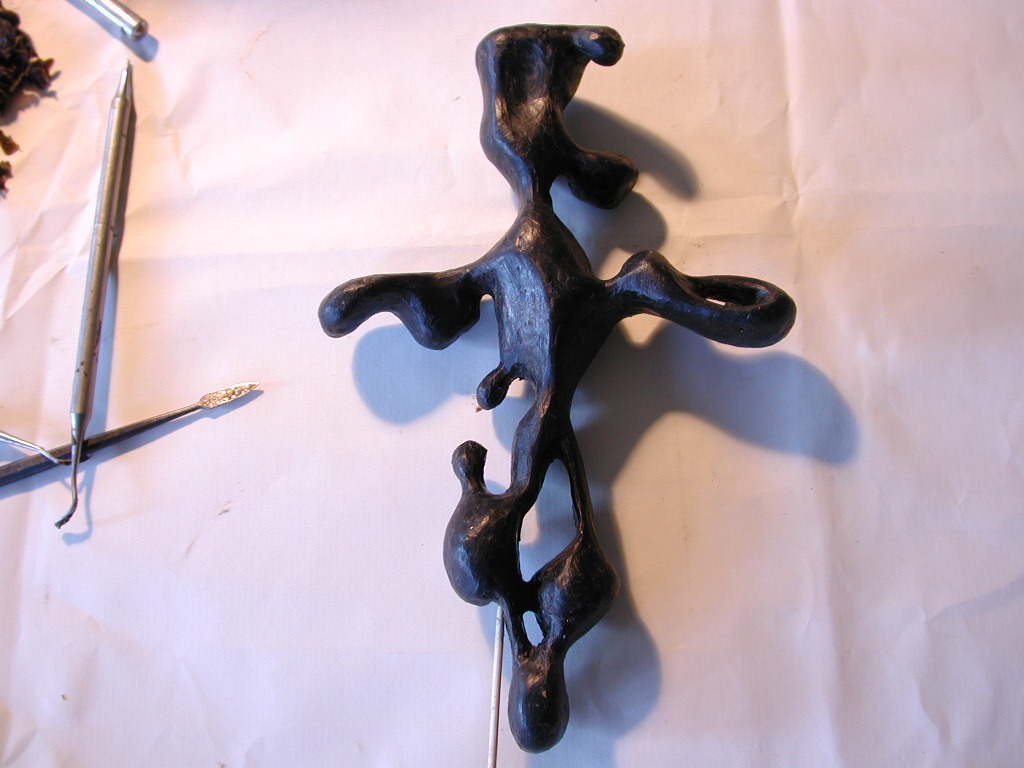
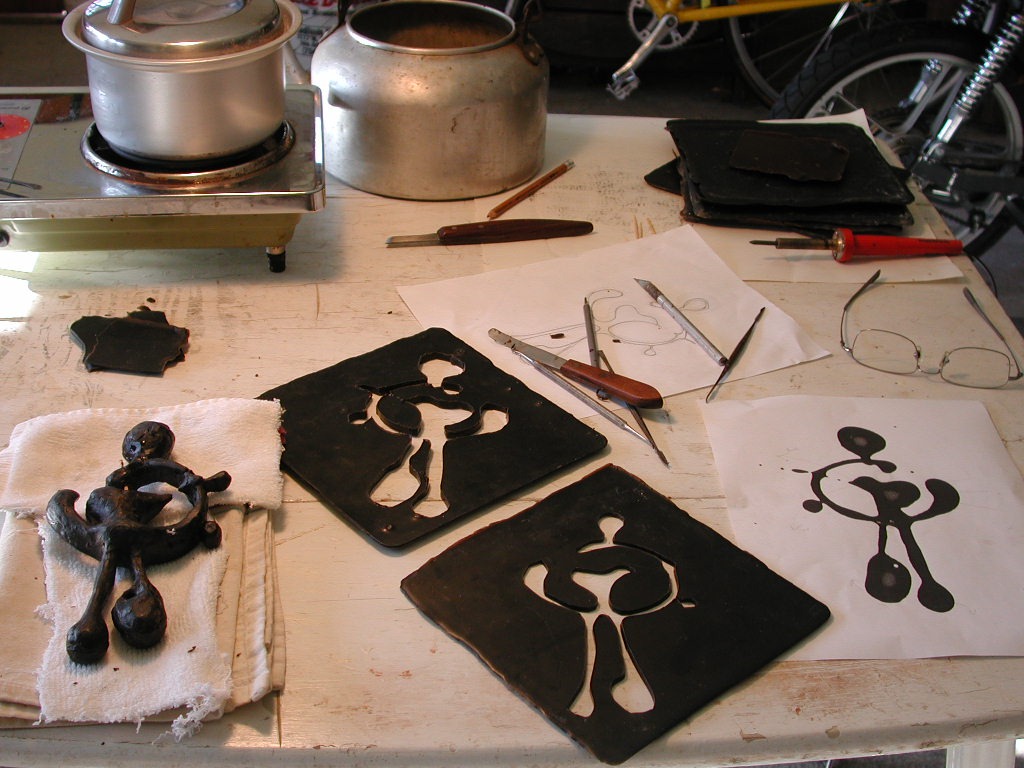
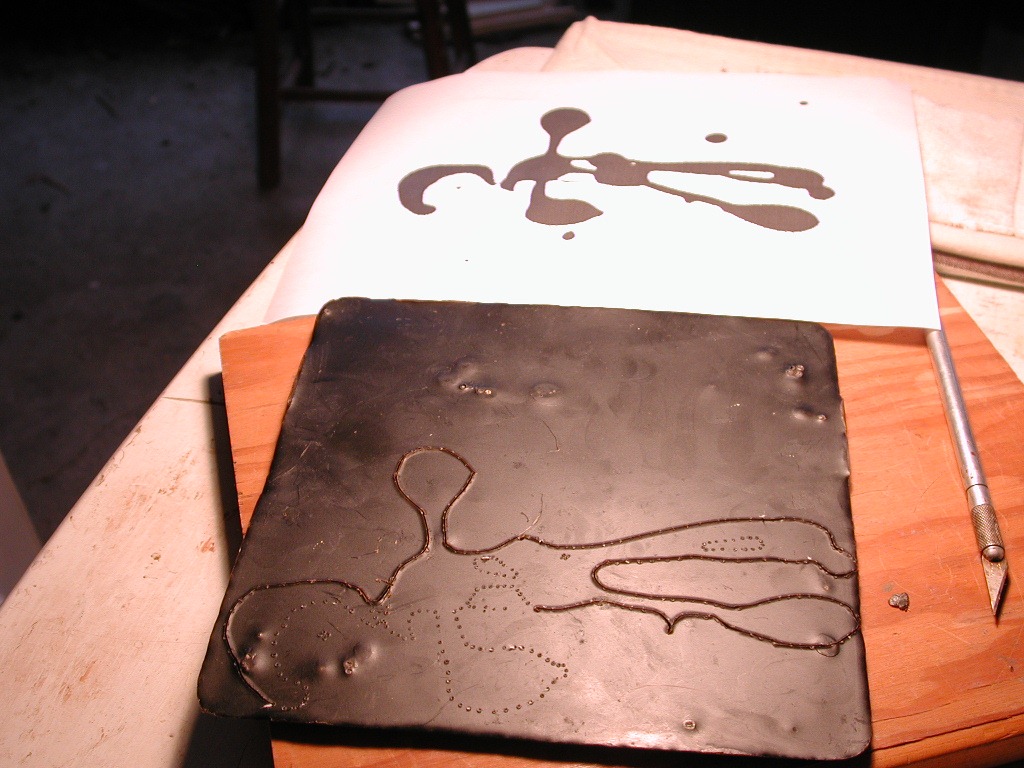
Since these are going to be bronze castings from wax models, I make some wax sheets, use the design as a template to cutout the figure, stack them up like a relief map, and add soft wax to flesh out the forms and emphasize the third dimension. Dip the whole thing in warm water and bend and shape it. Working outside in the barn with the wood stove going is actually very helpful; the cold air keeps the wax firm and holding it’s shape. Moving it nearer to the stove warms up the surface of the wax so you can smooth it, without warming the core so much that it starts moving where you don’t want it to. Take it outside for a few minutes to really get hard. When working with wax in the summertime it is all the time too soft to get decent results. It gets too soft to hold it’s shape right and you end up putting it in the icebox to chill and firm up. Of course you are sitting in the sun in a T shirt and shorts instead of long underwear and Carharts. On the other hand, Winter, you are not tempted to go skateboarding or swimming at the lake.

a_splashfirstwax

d_splashfirstwax

Second Splash:

a_splashsecondwaxb_splashsecondwaxc_a_splashsecondwax

Several things together

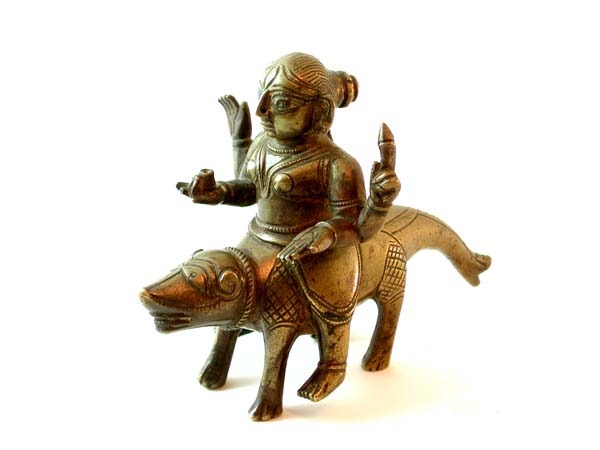
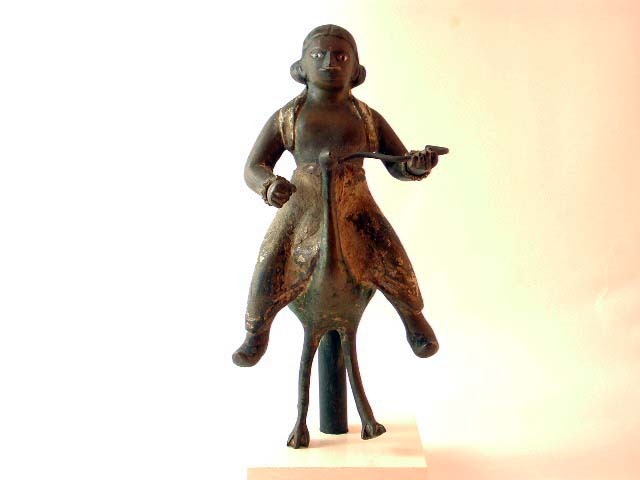
Several things are coming together to give me a direction to go in next. I have been interested for some time in Indian Folk Bronzes. These are mostly images of Hindu Gods used on traditional household altars. They are informal, yet have the same value and symbolism as “high” temple art. The difference between these and the others is only of context.

1_ganga

1_kartakiya

I have been wanting to do work that is more spontaneous. After my last project which was over a year in length, nice as that was, I think I need to loosen up with some quick and smaller things. A little more expressionist, not so engineered and analytical. I’ve some things like this from before, nicely gestural and lively.

f_Paper_025.bwClean.BlurSharpen3x.EnlargeSharpen.18x24exact.Align

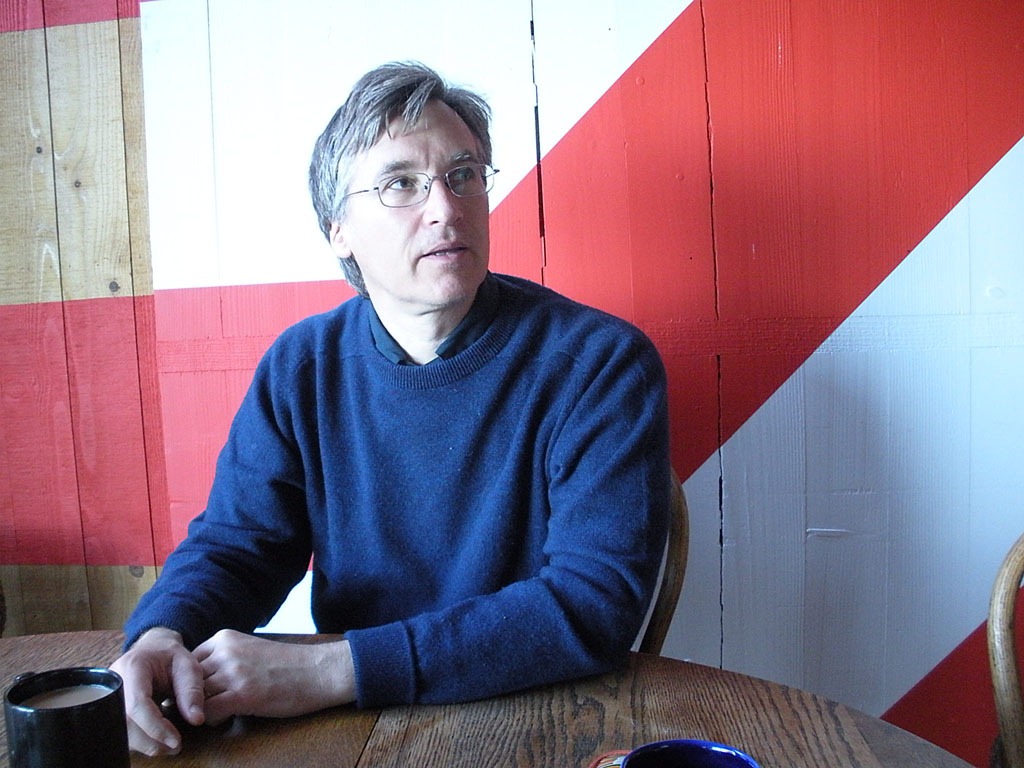
I recently met an artist with a personal bronze foundry he built for himself. I proposed to work with him on his pours in exchange for the chance to do some of my own work there. He has generously invited me access to his studio. 

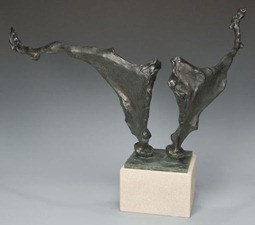
Olecranon at the Ballet, Howard Haarer

Thoughts to matter

In writing about Australian aboriginal symbolic design, Tjurunga, or as it sometimes spelled, Churinga, and in reference also to native American graphic designs:

“It cannot be doubted that these designs and paintings also have an aesthetic character; here is the first form of art. Since they are also, and even above all, a written language, it follows that the origins of design and those of writing are one. It even becomes clear that men commenced designing not so much to fix upon wood or stone beautiful forms which charm the senses, as to translate his thoughts into matter. (c.f. Schoolcraft Indian Tribes 1 p405,  Dorsey Siouan Cults pp.394 ff)” 

Durkheim, Emile The Elementary Forms of the Religious Life The Free Press Macmillan Co NY 1965 p. 149

As Tjurunga are culturally sensitive material, I will not show an example here. If you would like to see some, you can do so at Simon Pockley’s website Flight of Ducks . Try the results for 2011 and 2010.

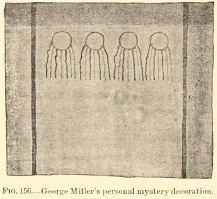
From Siouan Cults :

1siouanDesign2siouanDesign