Title is sometimes Henry or Kouros, or Twisty II … 2011, Elm Wood, 22 x 18 inches.

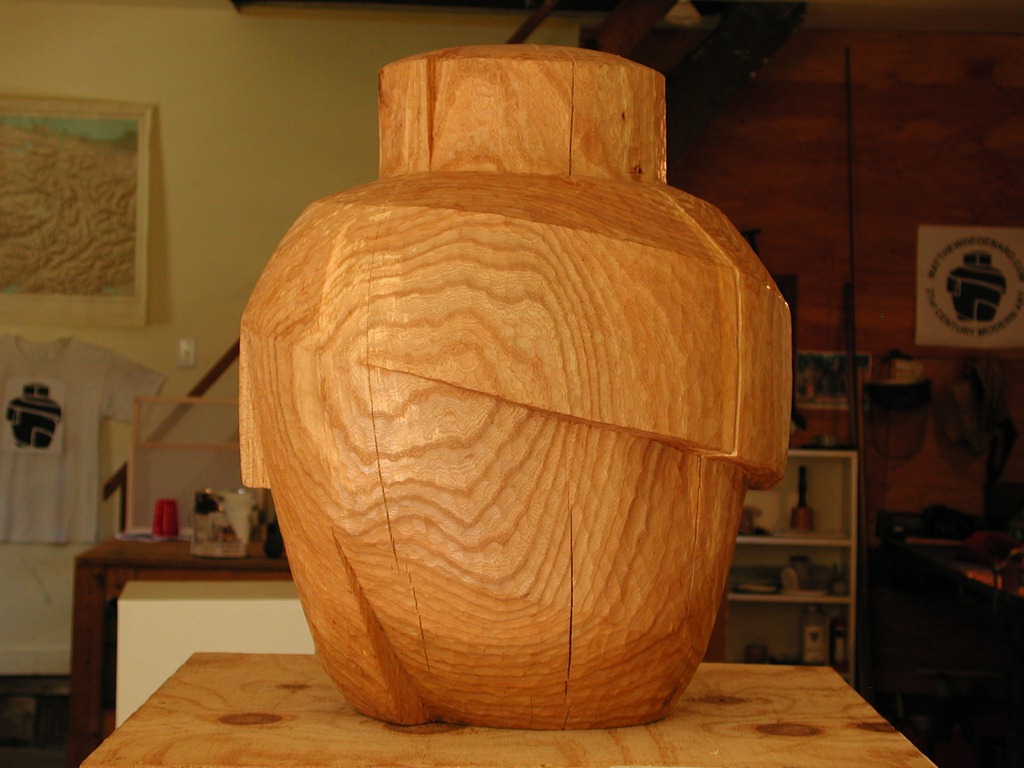
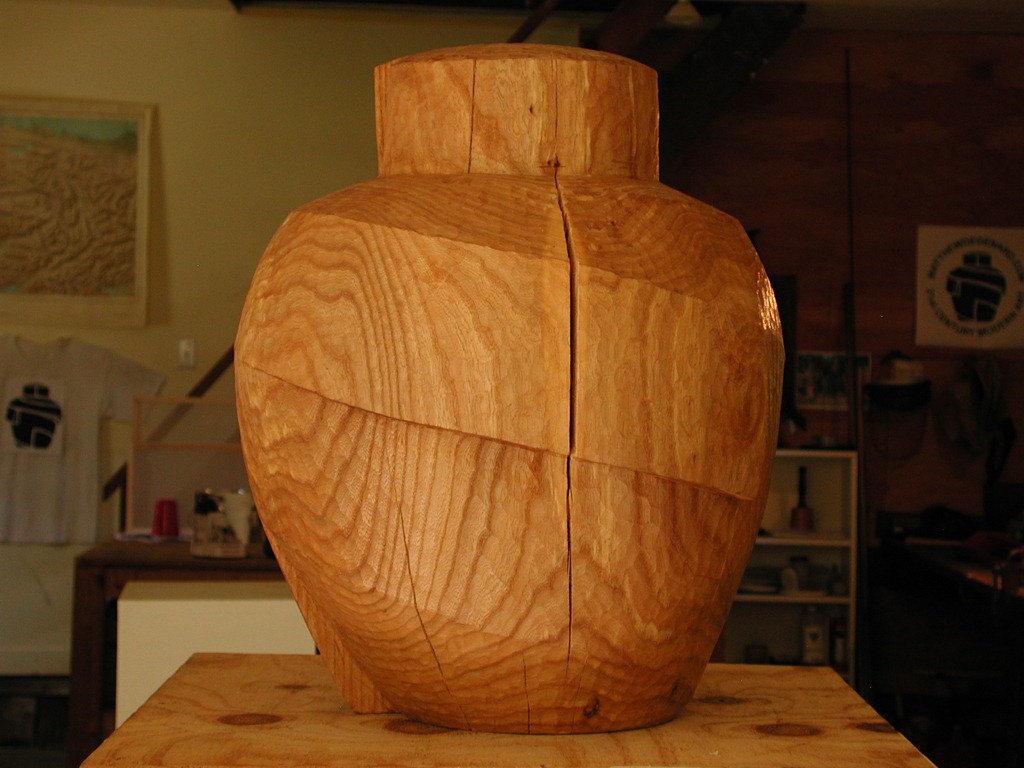
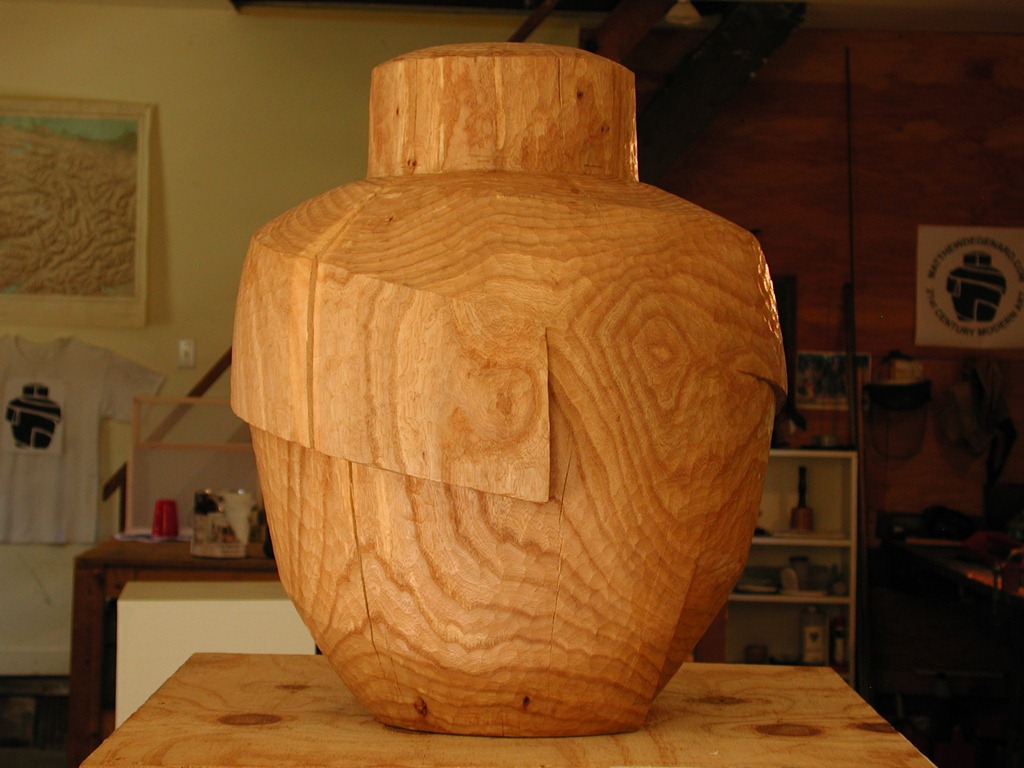
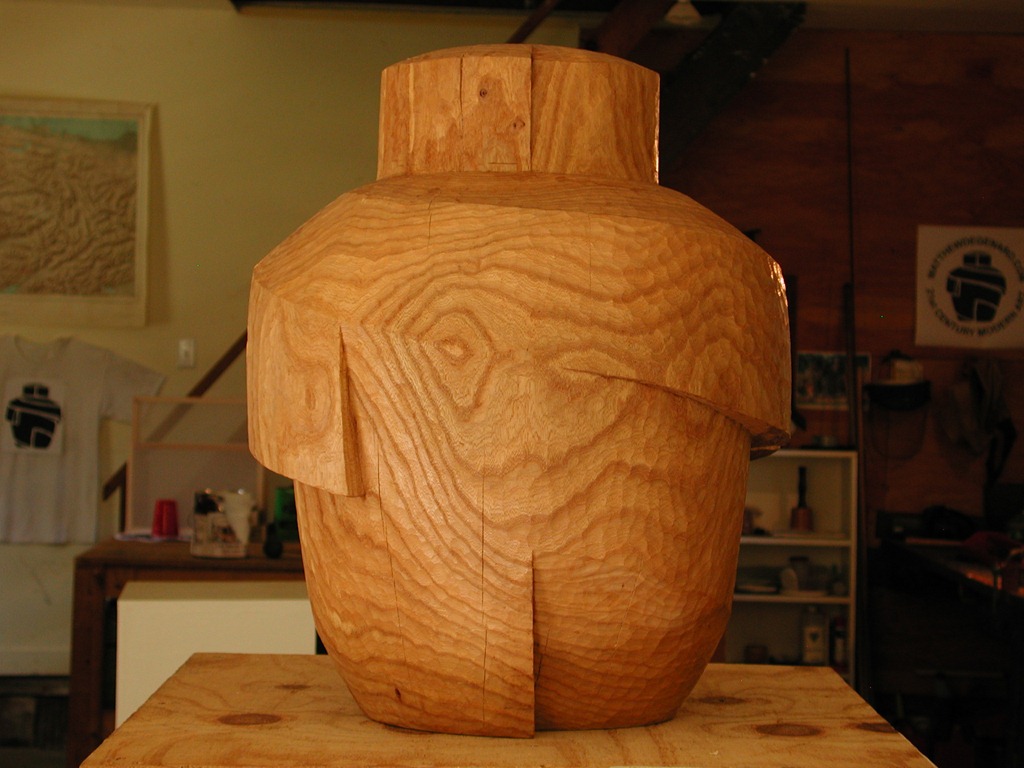
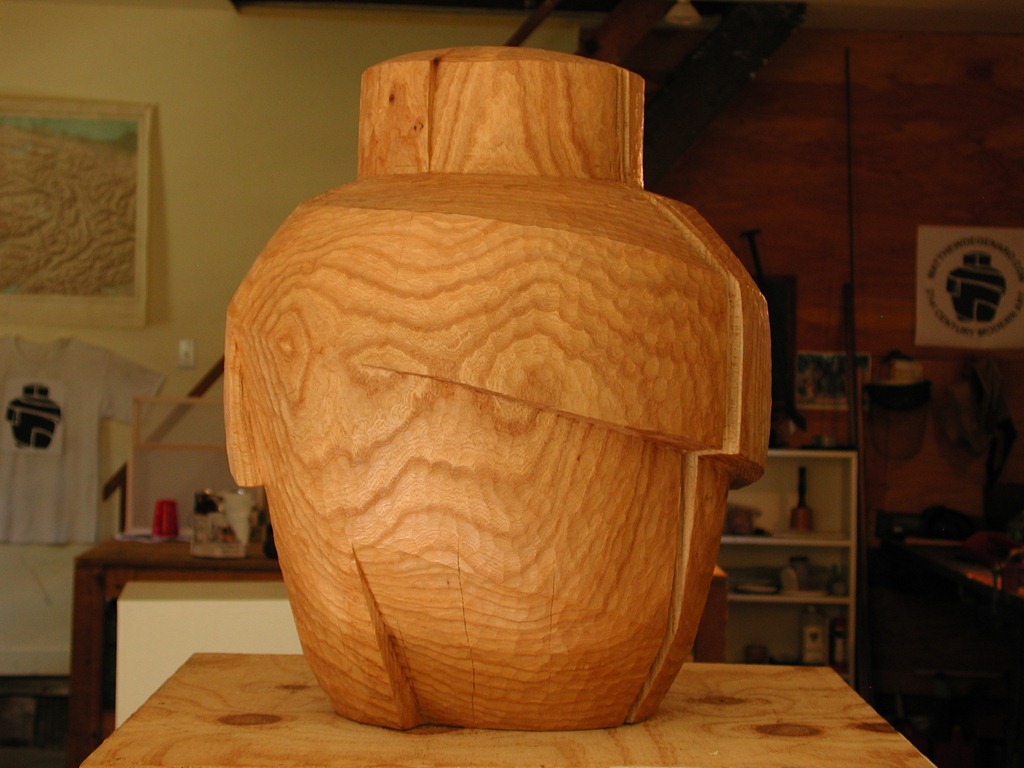
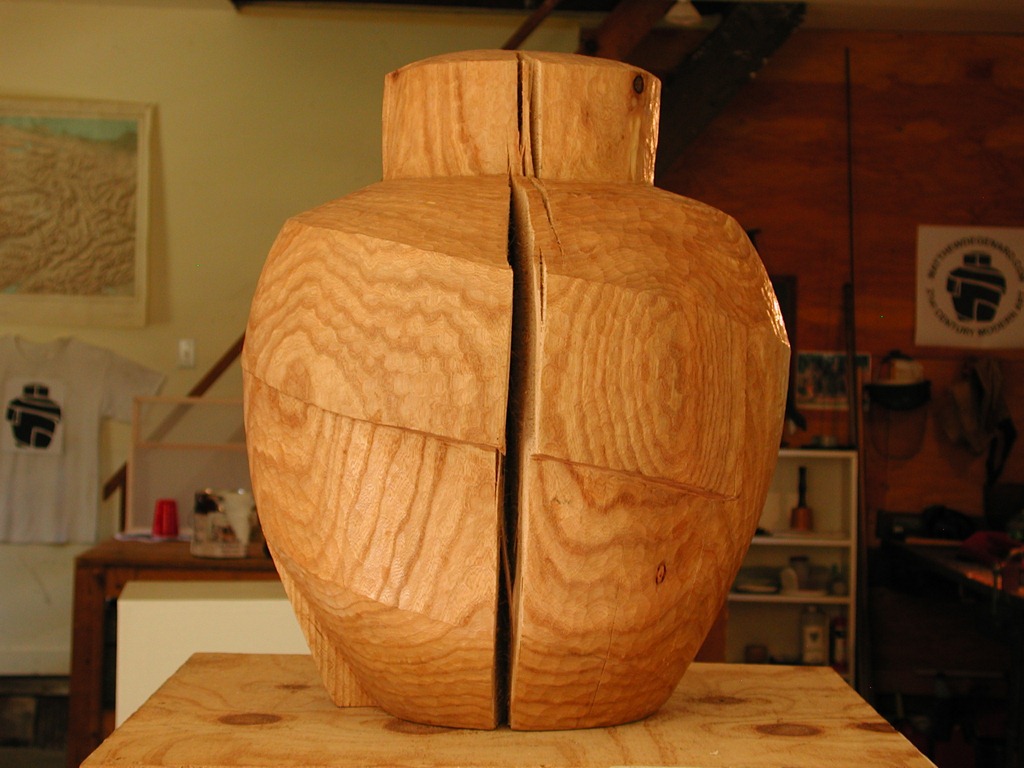
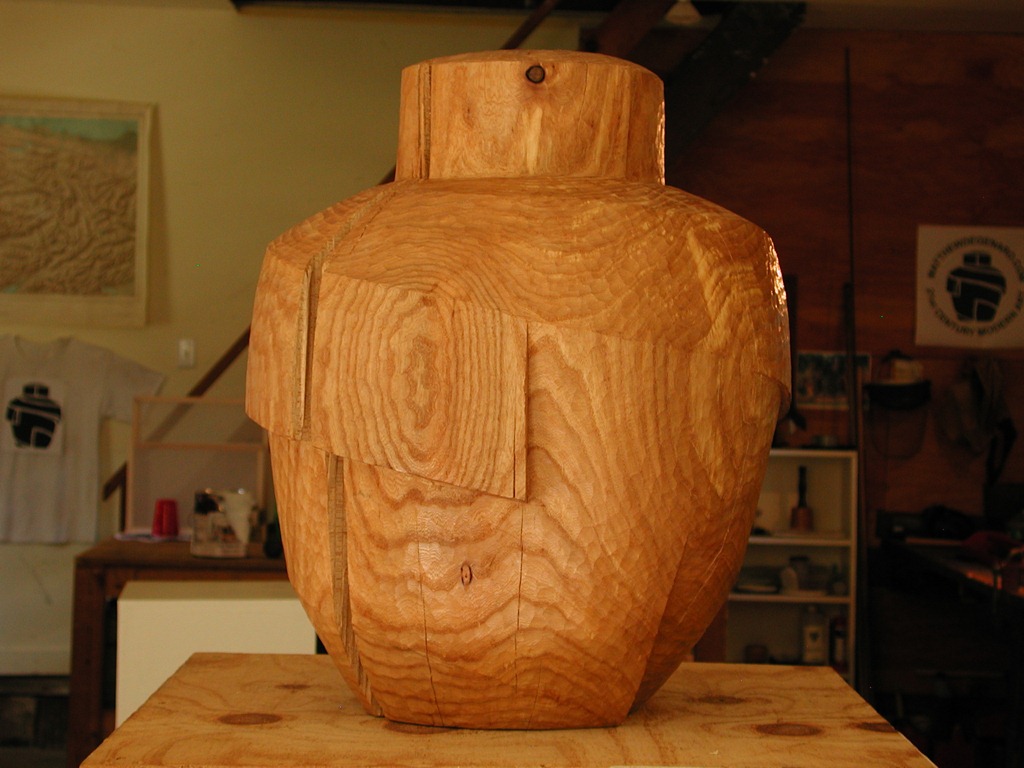
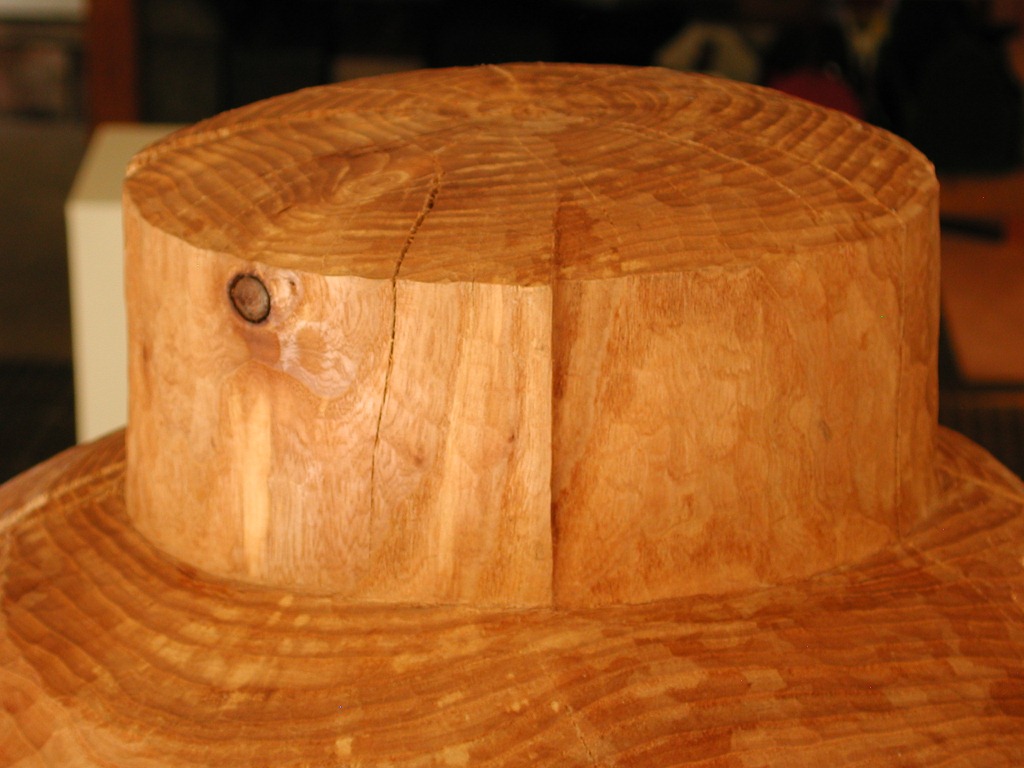
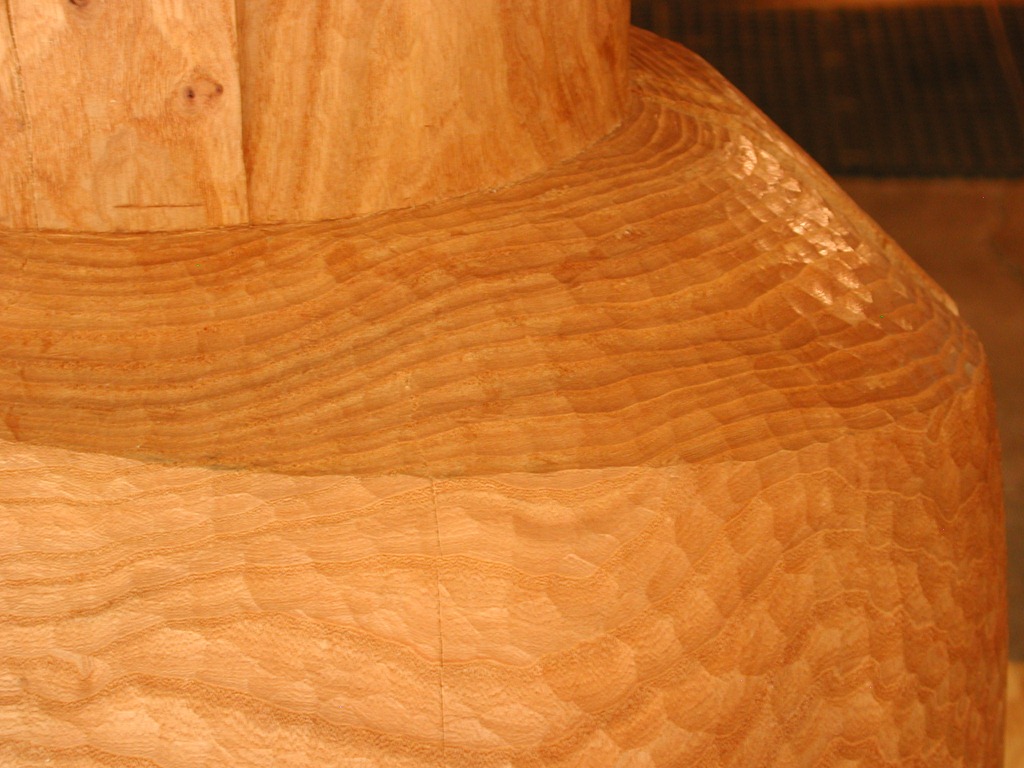


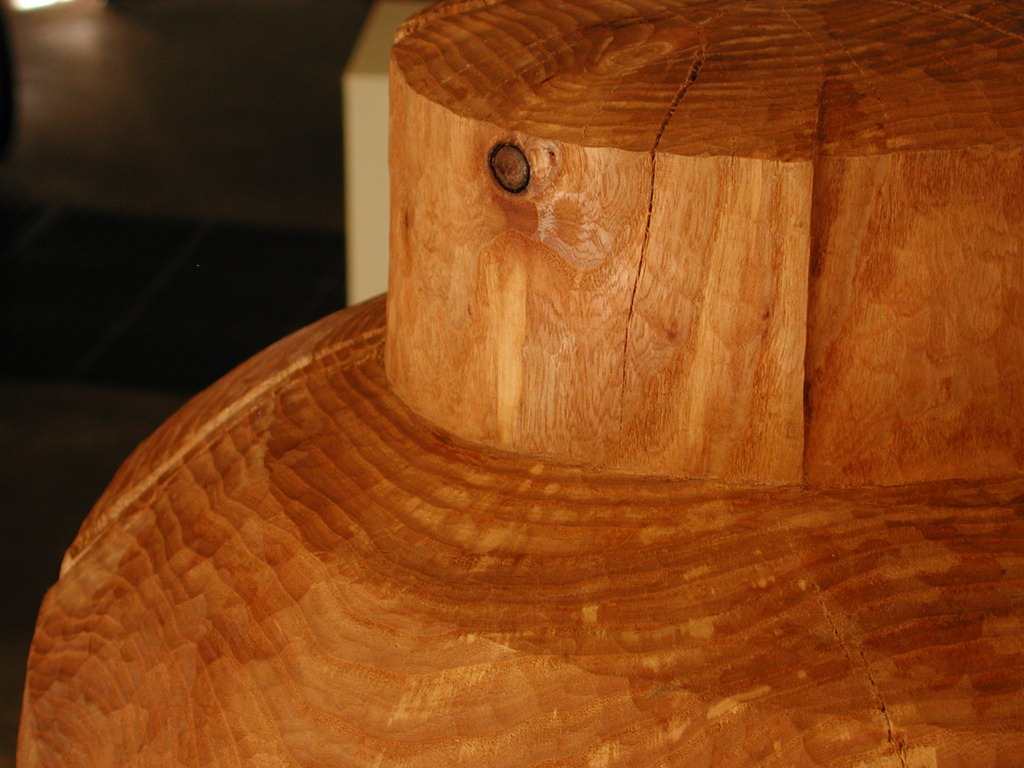

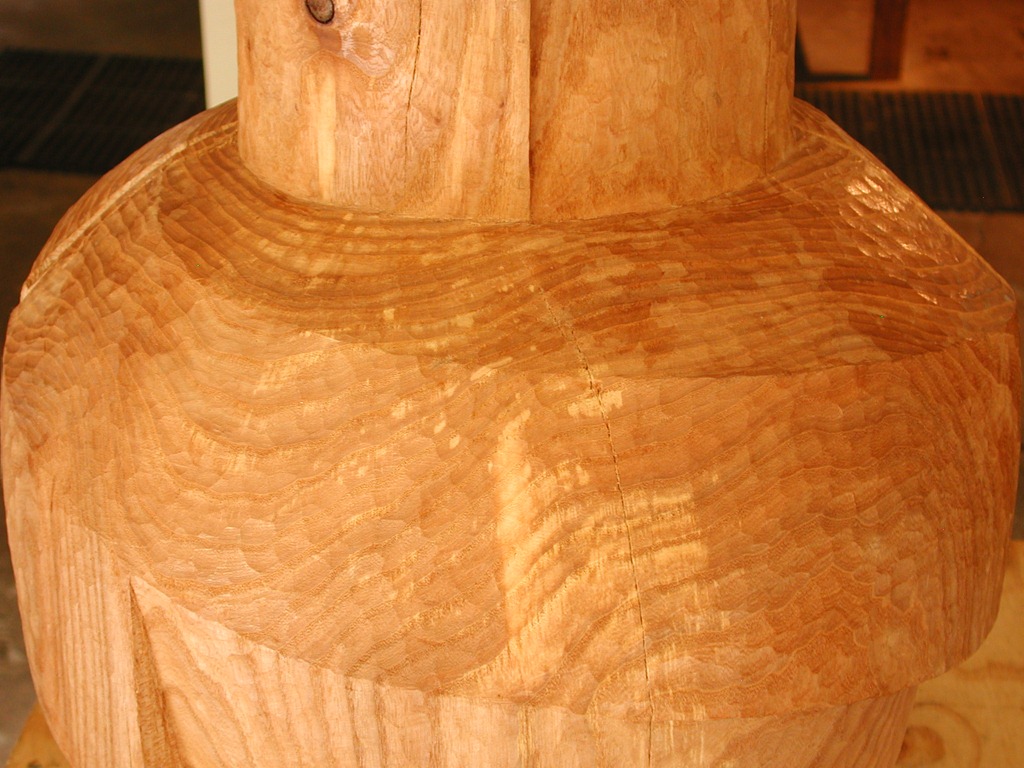
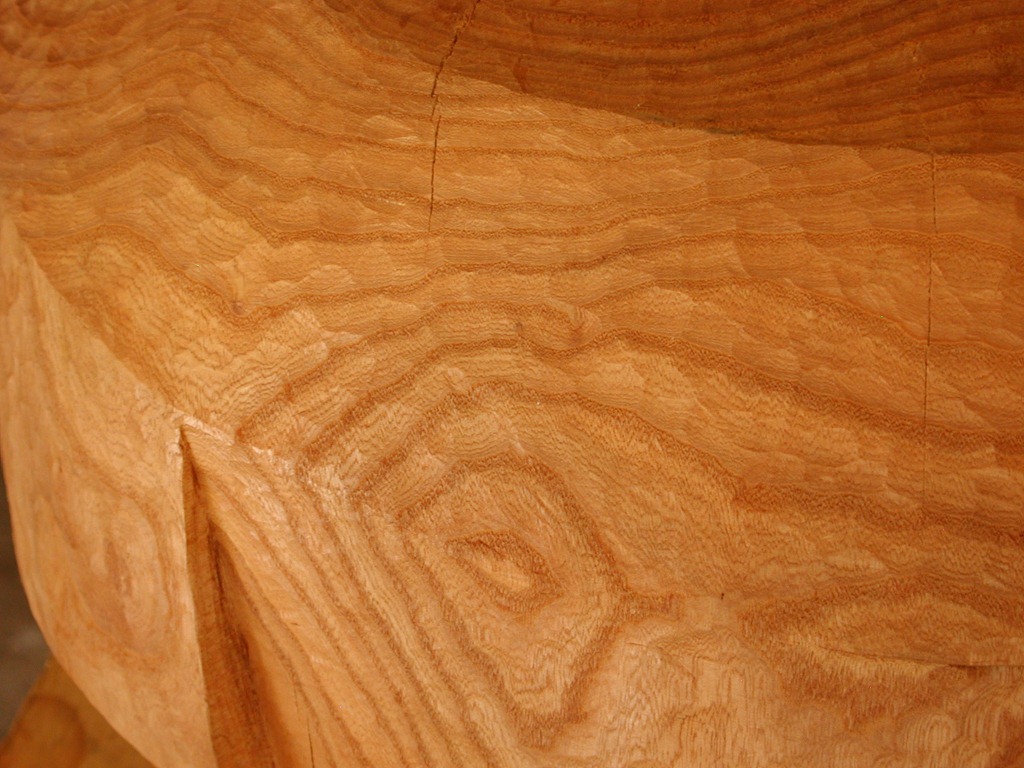
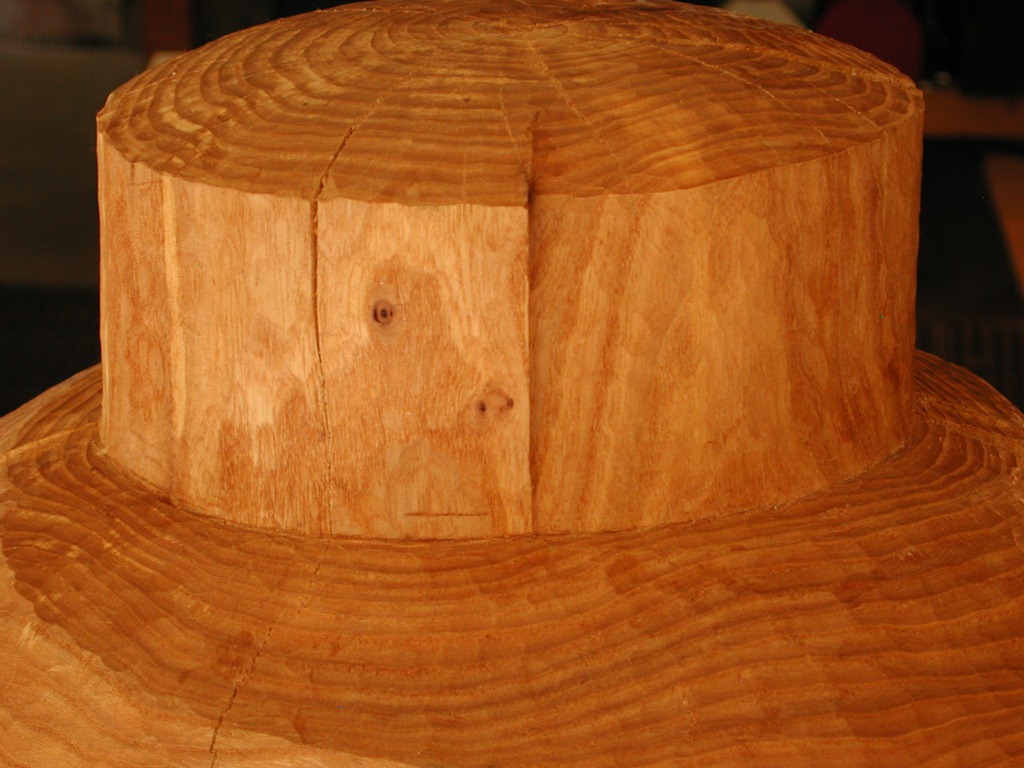
Title is sometimes Henry or Kouros, or Twisty II … 2011, Elm Wood, 22 x 18 inches.
The finish is the finish – I paint on 5 wet coats all over with a foam brush, keeping it wet the whole time, the wood just soaking it up, until I began to see it slightly puddle- up on the sides. The end grain can soak up everything. Then I wipe down the wood with a cloth before it gets sticky, so it doesn’t dry shiny and wet looking. This warmed up the color and took away the dry look of the raw wood. I let it dry for a week, looking at it, thinking.
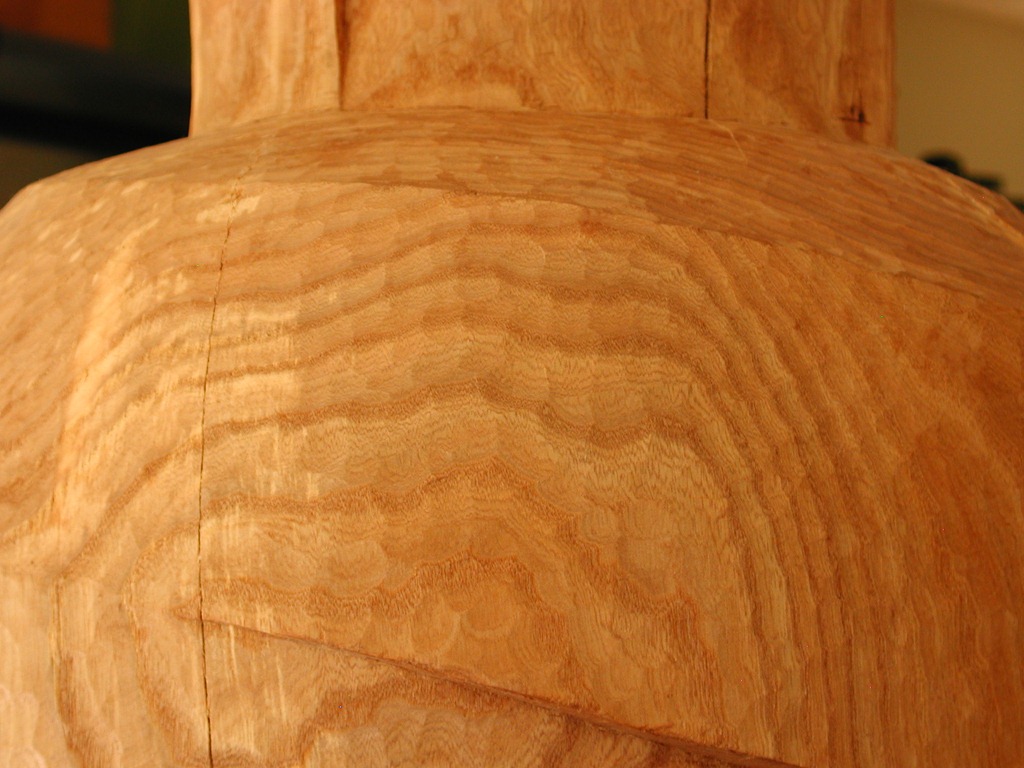
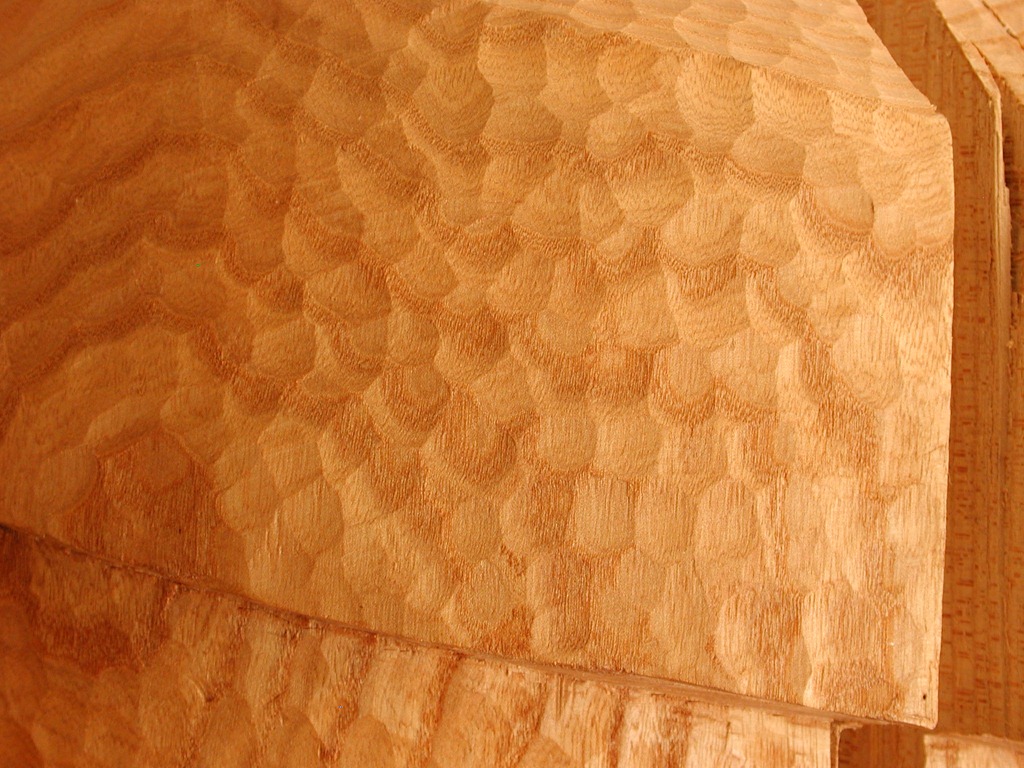
I used some ultra-secret 3000 grit sandpaper that comes on a thin foam backing, kind of like a mega-fine 3M pad (thanks Garry), to buff down the fine hairs and grain raised by the application of the first coat, especially around the equator of the piece where the grain is flat and difficult to chisel as sharply and cleanly as on the end grain at the top and bottom. The trick is not to dull the sharp edges of the chisel marks which are so nice, and this special sanding pad can do it much better that I could do on the practice piece with regular 2000 grit paper. This gave those areas a much “harder” surface, without the vaguely distracting fuzz of the loose hairs, which as hard as they are to see, still create a lack of visual sharpness.
I applied a second coat, this one thinned about 10% with mineral spirits and wiped on lightly with a cotton cloth – an old t shirt. This is all mostly automatic since of course I’d done some testing before. It is worth all that rehearsal so as not to be a nervous wreck when doing the real work. I like adventure, but I suppose I like most adventure which leads to success.
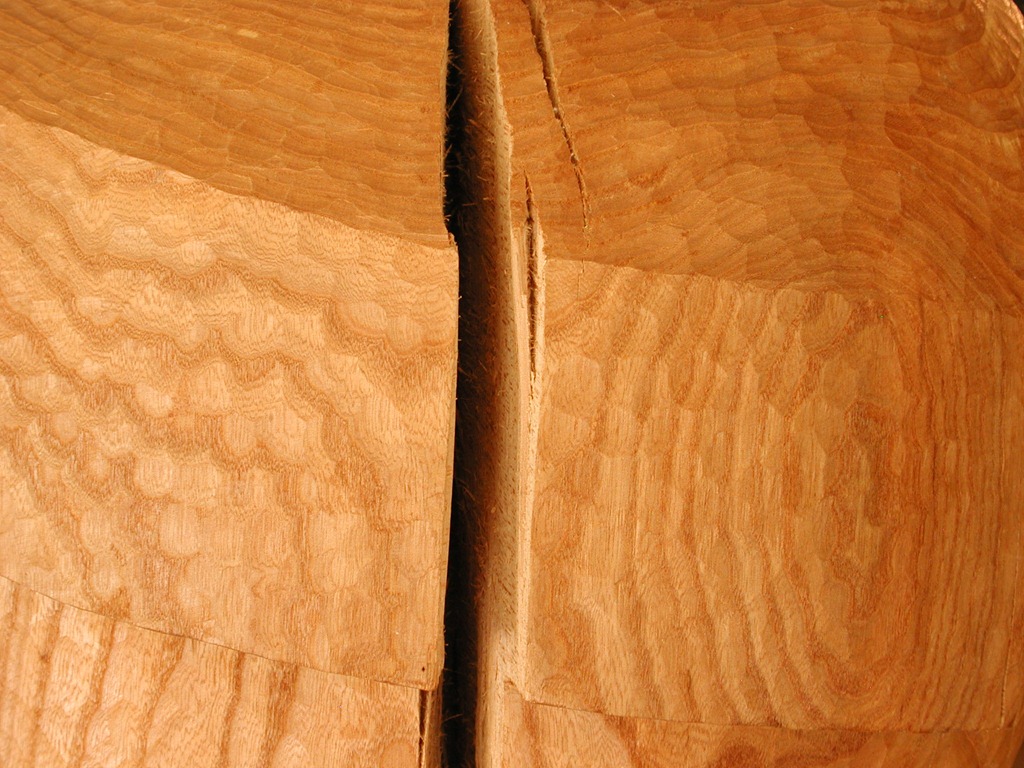
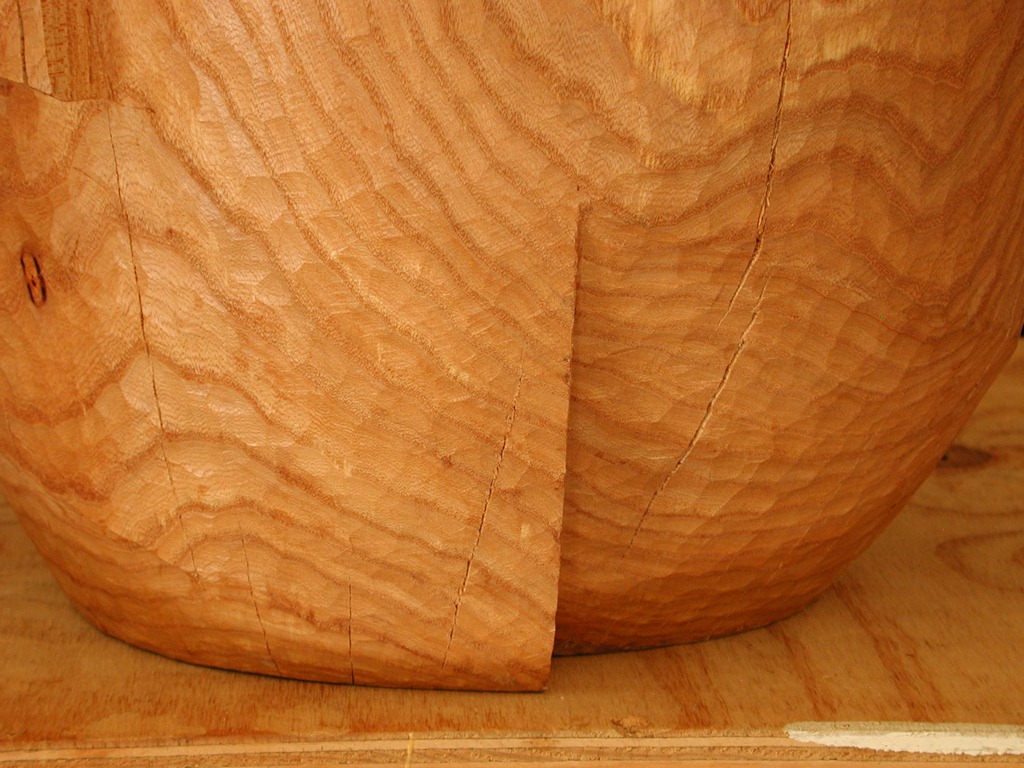
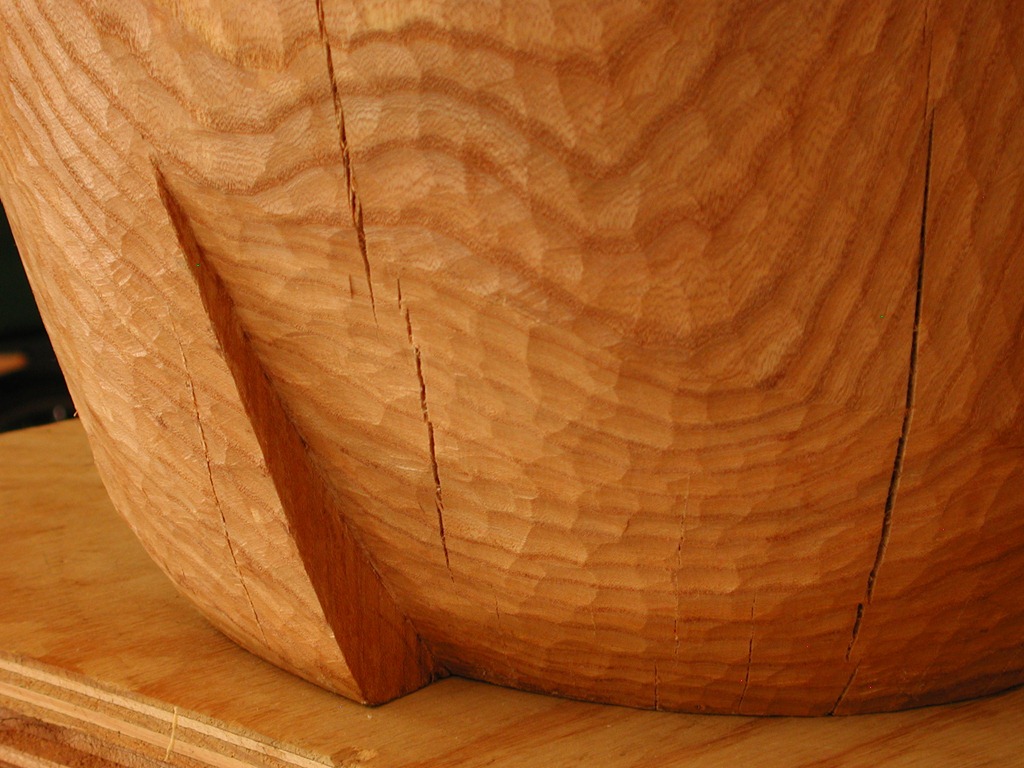
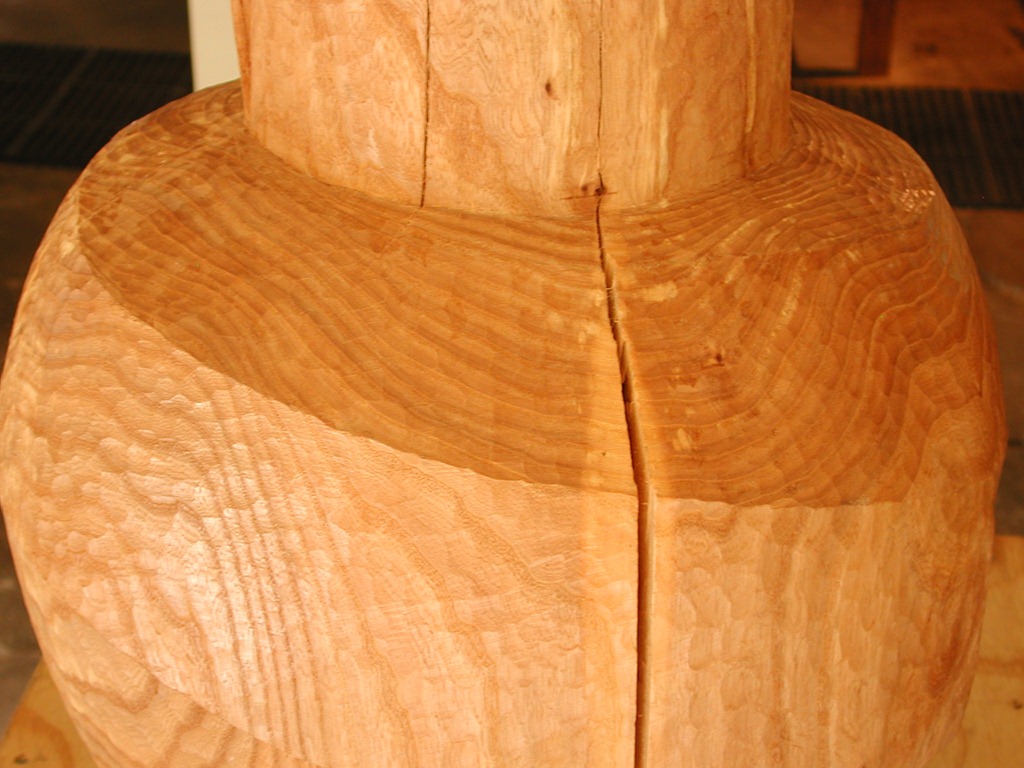
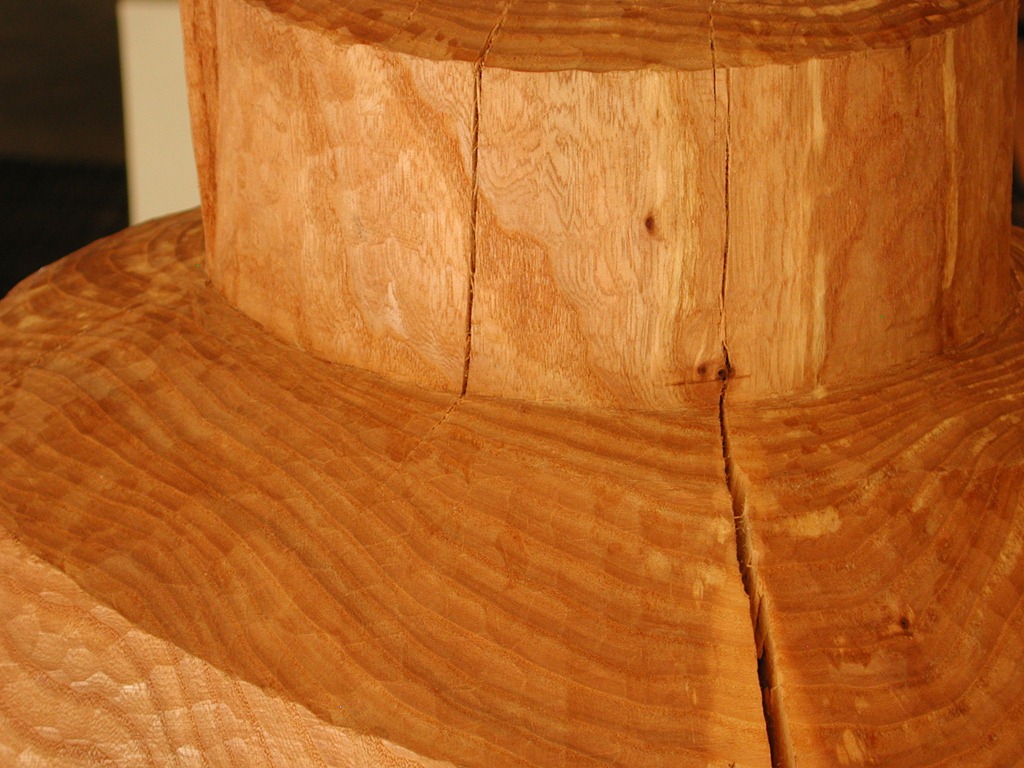
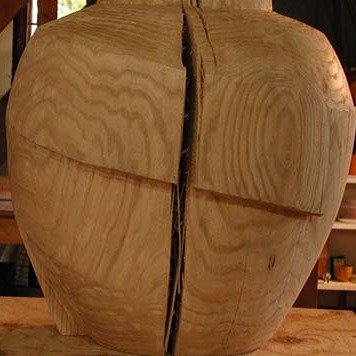
I was finally ready to apply the varnish finish, when I realized I still had some loose ends to deal with. There is always more. Sorry, I know the suspense is killing everyone. That large crack? It has a few larg splinters which I can try to glue down, and many small hairy slivers that should be cleaned up.
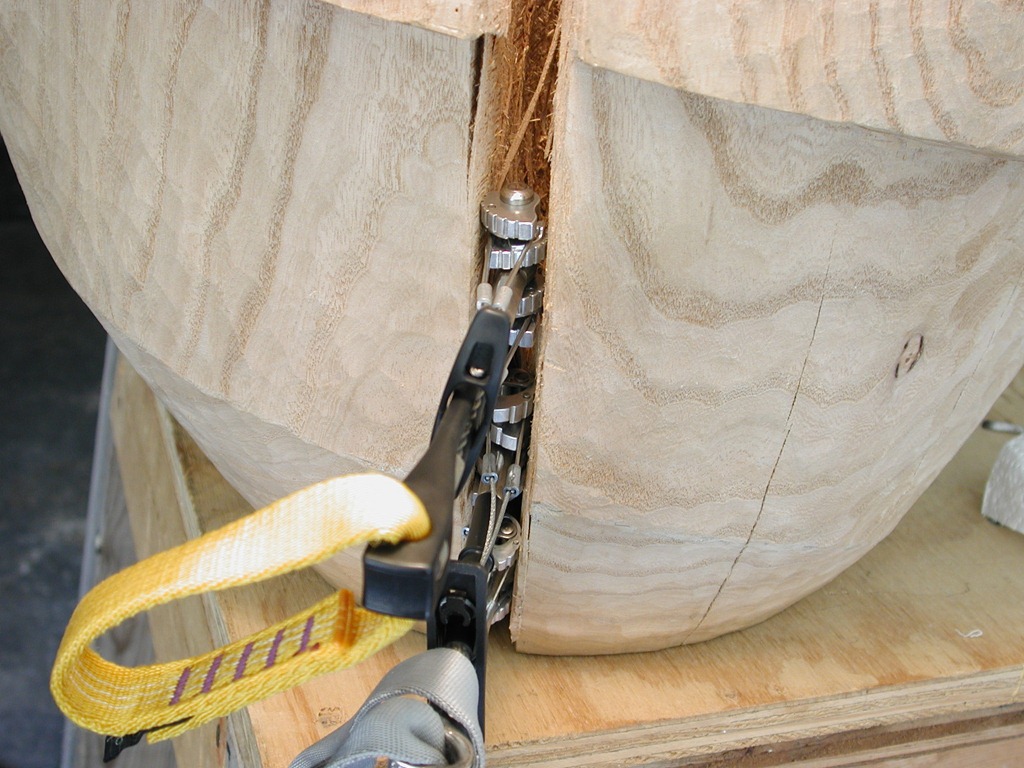
I think it was clever to use rock climbing camming devices to apply outward pressure on the splinters to hold them in place while gluing.
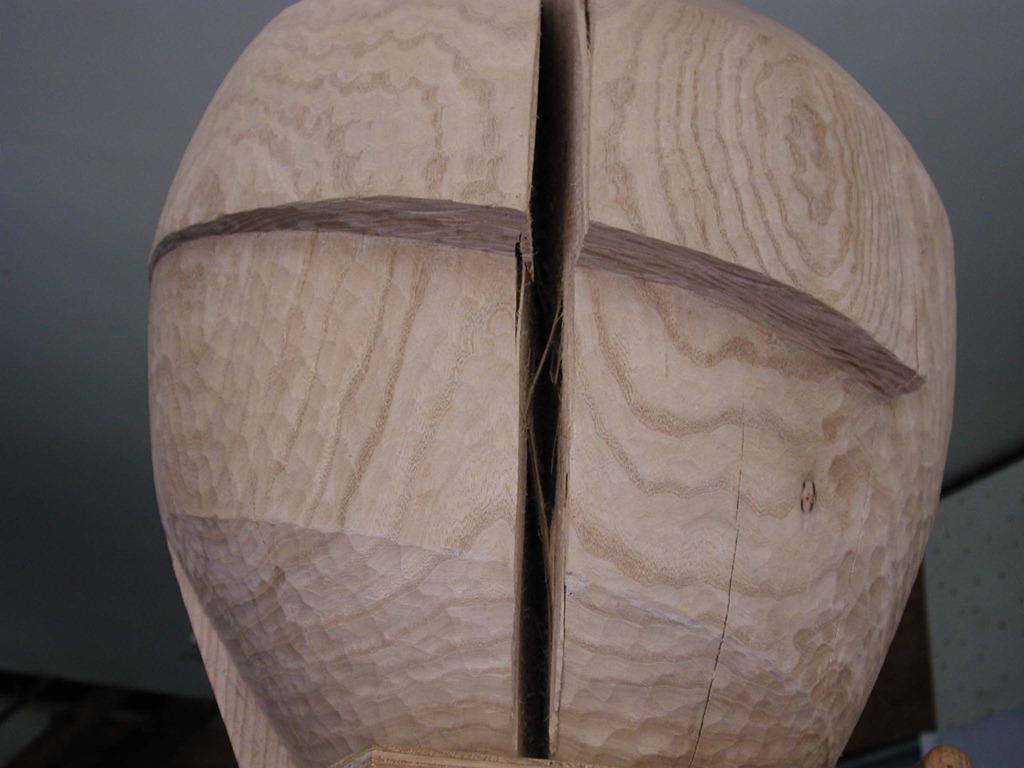
I clipped and pulled out most of the fine slivers, and blew out all the sawdust and chips with compressed air.
“Guruji has mentioned in class that yoga is the mother of all arts. There are six principal arts from which the others emerge. They are Yogita, Mallika, Natya, Sangitika, Dhanusya, and Vyaraharika. Yogika is yoga – the principal art. Mallika is wrestling, boxing, weightlifting, or any other martial art. Natya is dance,drama, and acting. Sangitika is music – instrumental and vocal. Dhanusya means “bow”. This art, along with the strategies of using the bow and arrow includes military training. Yyaraharika includes agriculture, economics, politics and other sciences. The whole process of civilization depends upon these six basic arts.” (Dasti, Ali “Yoga and Marmakala” Yogadhara, A Stream of Yoga The Light of Yoga Research Trust Mumbai (2000) p. 303)
Yoga, Martial arts, Performing arts, Music, Military tactics, Science. There are elements of of these arts in sculpture– Yogika, steadyness of mind and purpose. Mallika and Natya, ability of execution. Sangitka, harmony and proportion. Dhanusya, tactics and strategy, Vyaraharika, science and methodology.
Since I know nothing about wood finishes, I asked my trusted advisors Sharon Q and Garry V what I should do that would be most of all, easy and safe for rustic like me. First, get and read the book Understanding Wood Finishes by Bob Flexner, Fox Chapel Publishing 2010. I can’t believe I’ve spent my life until now in the dark about the differences between varnish, shellac, and lacquer. Then, understand the pore structure of the type of wood you’re using. Finally, consider again what is within your abilities and experience. Remember also that this is a sculpture, not a piece of furniture.
All that realized, I decided to use Arm-R-Seal Wipe-On Oil Varnish, available at Woodcraft. Garry said he’s had good results with it, and it was easy to control by wiping on, or off, with cloths. I set about carving up a test piece which would have samples of the different grain faces which are to be found in the sculpture.
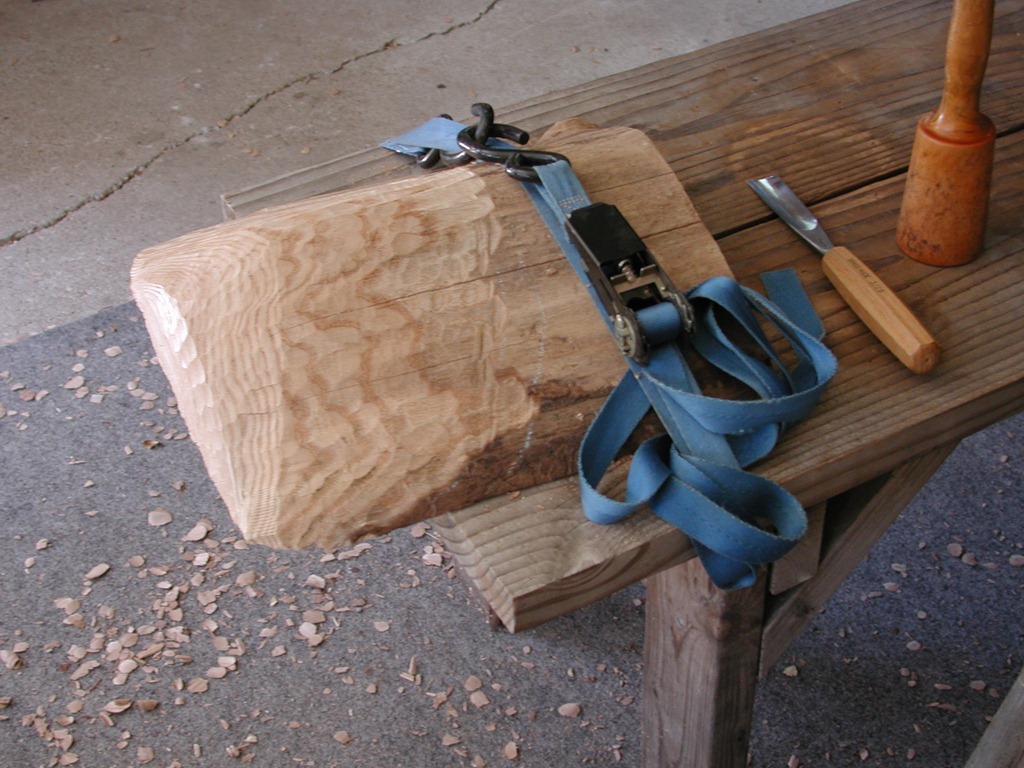
I tested sanding both before and after he initial coat went on, and also tried up to two and three coats un-sanded, to see the effect. Ultimately I preferred a hard sculpted finish that retains the un-sanded sharp edges of the chisel marks, but not yet shiny or glossy.
The right side was sanded. I don’t like how the edges flatten out and catch the light. 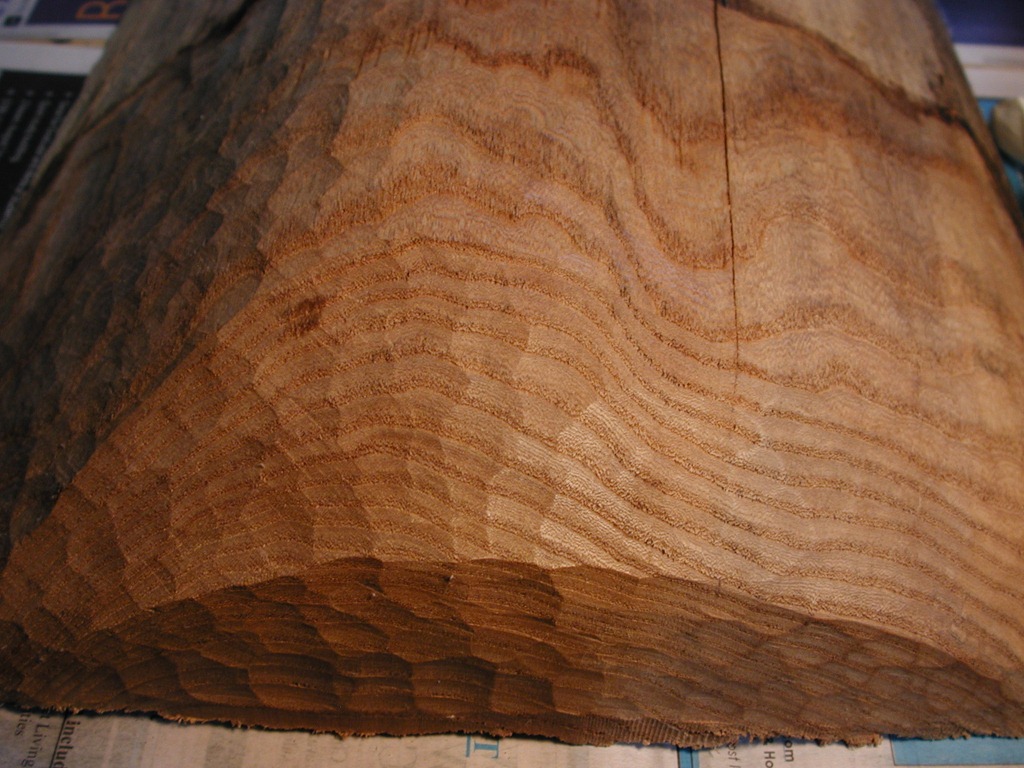
The center is three coats.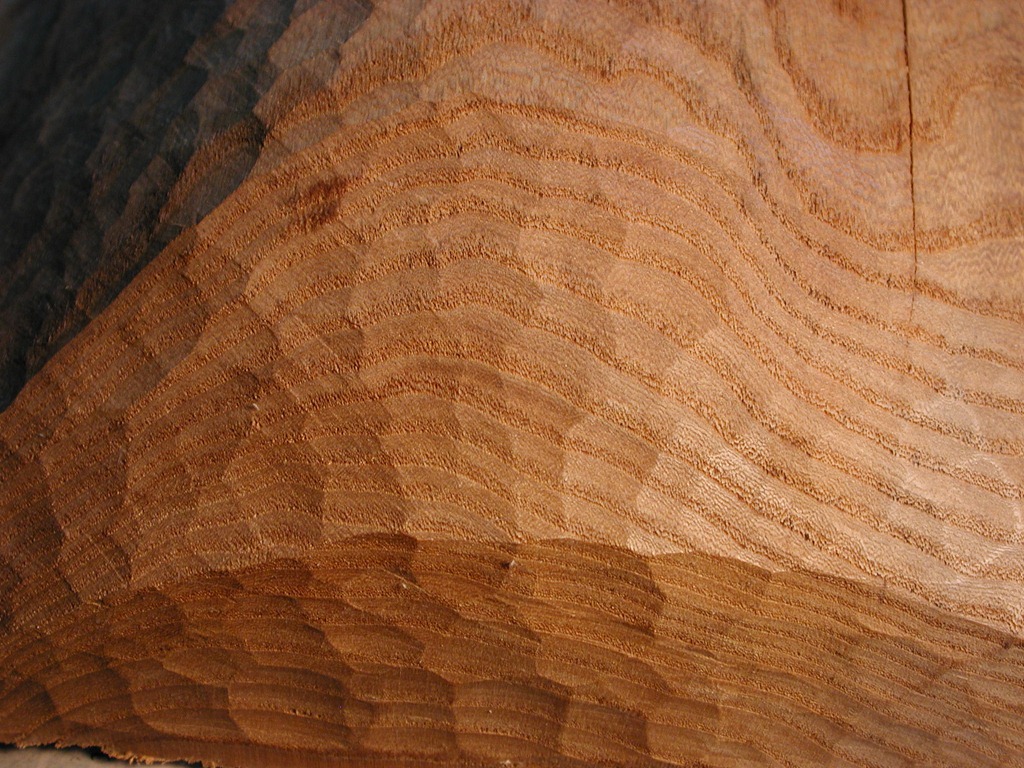
The far left side is two coats, not glossy.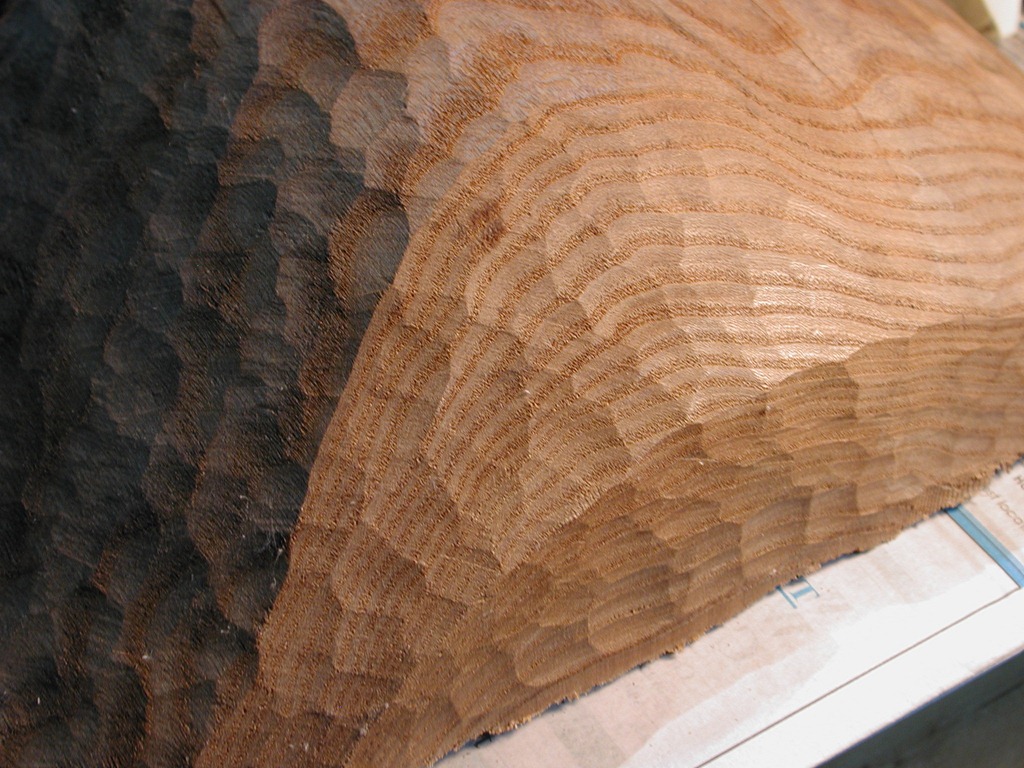
The best outcome is probably to use a very heavy first coat, as much as will soak in, followed by two very thinly wiped-on coats. The color is nice. So much warmer than the raw wood. Not dry-looking.
I’ve been holding onto this post for a long time, because of course, no sooner to than you want to declare that you’re done carving then you see some little details that you need to deal with. Finally I had to keep it under cover for about 3 weeks until I forgot exactly what it looked like, then I uncovered it could see it fresh. I was happily with what I saw. It’s a big raw thing, but I’m pleased with the amount of details verses the overall volume of the form. It seems balanced and even, and I’ve settled on it.
What an adventure making this has been. By adventure we think we mean climbing mountains, paddling rivers, or riding a moped to South America, an endeavor whose outcome is unknown, entailing possible risk. But this sculpture has been a journey to the unknown too. If people wonder how I can be so compelled to follow this through to the ending, it is because I do not know where the ending is, and it is a process of pure, joyful discovery. How often can you say that about life? A mountain is a hard thing to climb, but when you stand at the bottom, you are in fact in possession of everything you need to accomplish the task, and all else depends only on your will and enthusiasm. How often are you alone set to a task where you posses all the abilities and resources to accomplish it? “Truth is a pathless land…”, and can only be found by oneself. This sculpture is a journey for me to knowing the Truth, and I find it as fascinating, exciting, dangerous, and fun, and any mountain I’ve climbed or, or adventure I’ve had. If people say, that sculpture is so tedious to do, I say that tedium is made out of doing what you know already or looking for what you can expect to find. Such are most of the efforts of our lives, inevitably.
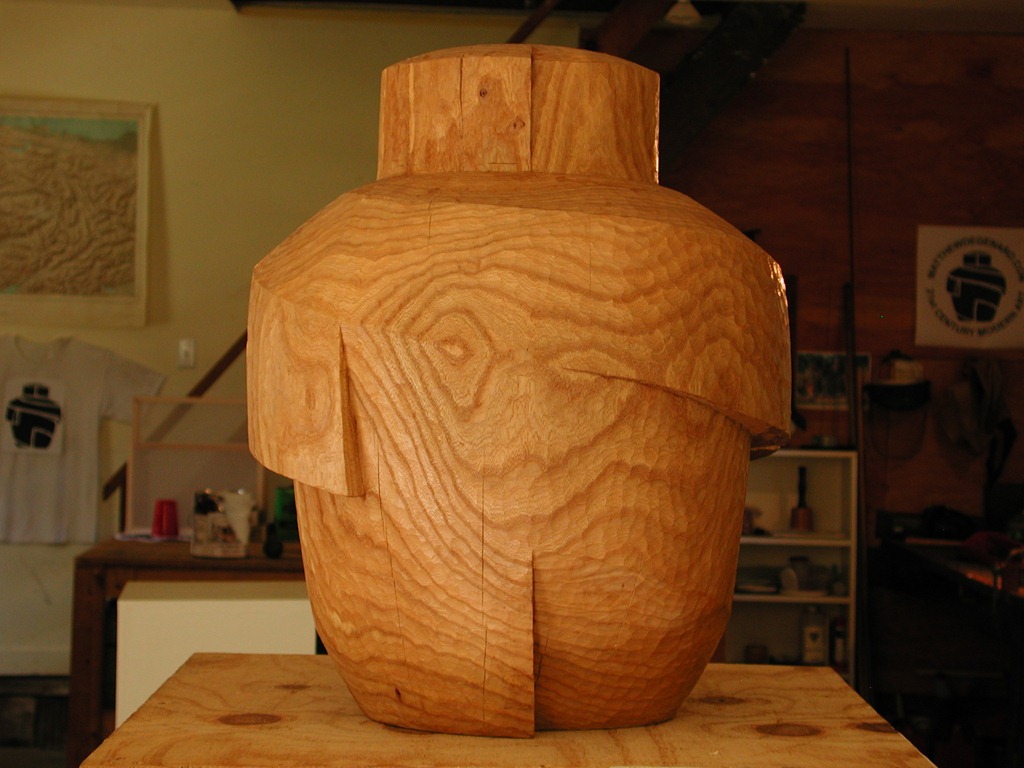
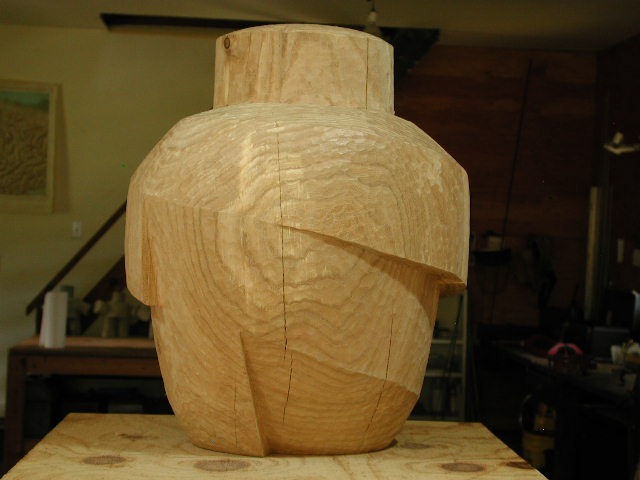
Anyway, and now, here is the completely carved figure.
One side:
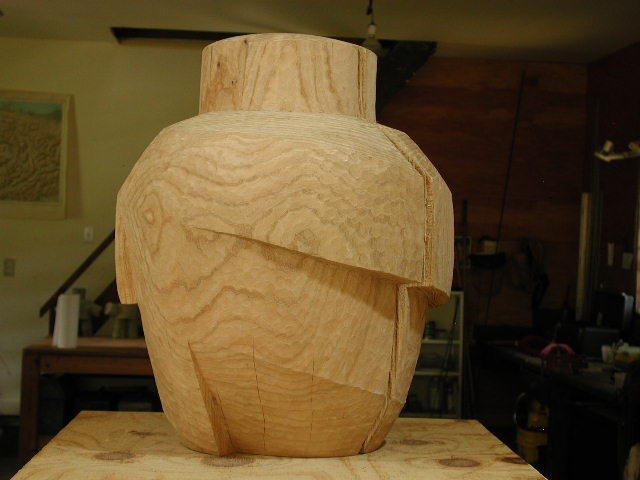
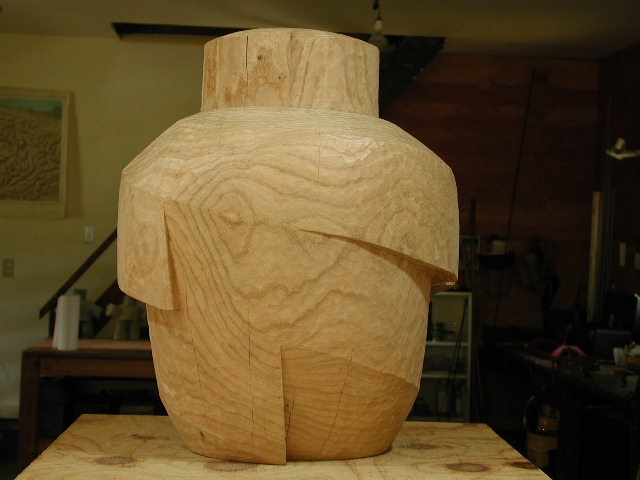
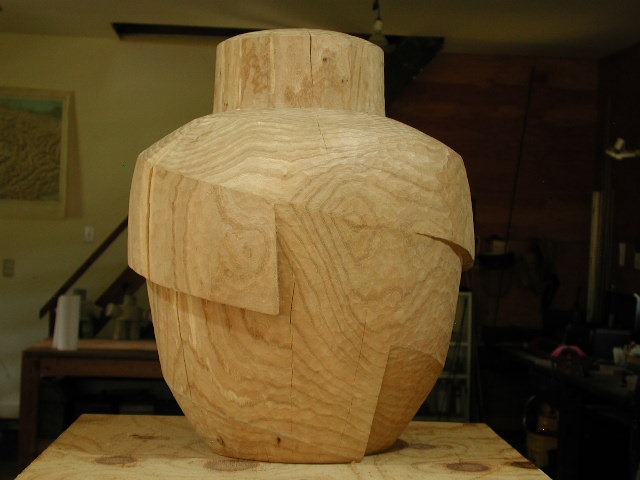
The other side:
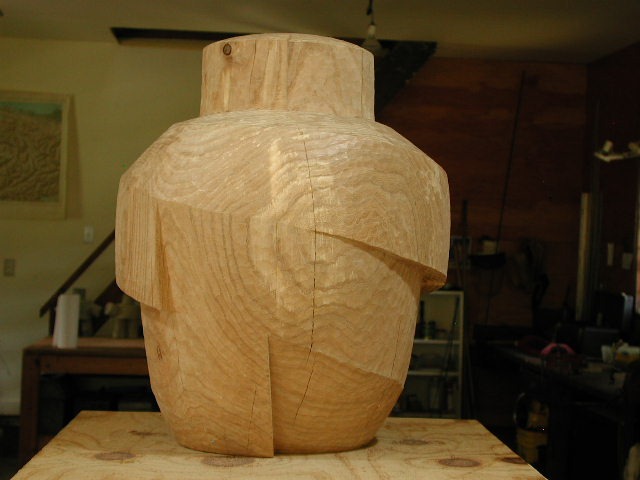
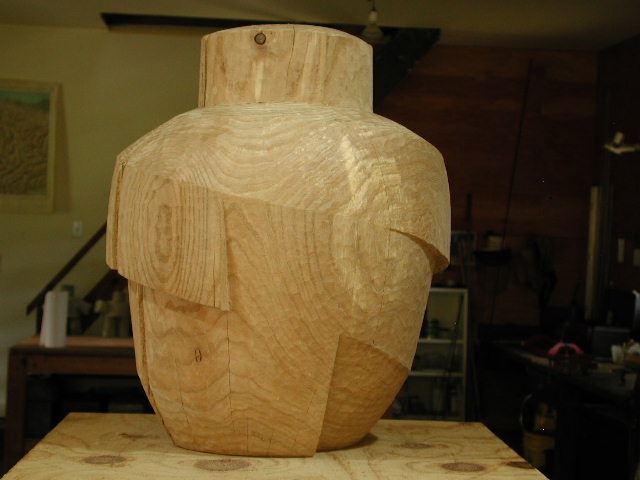
Close up:
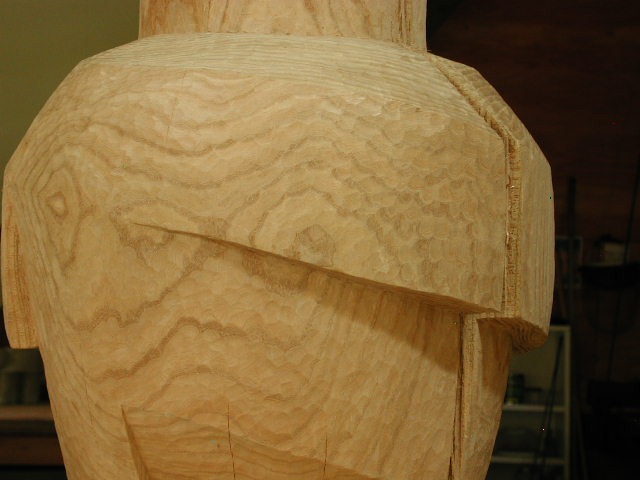

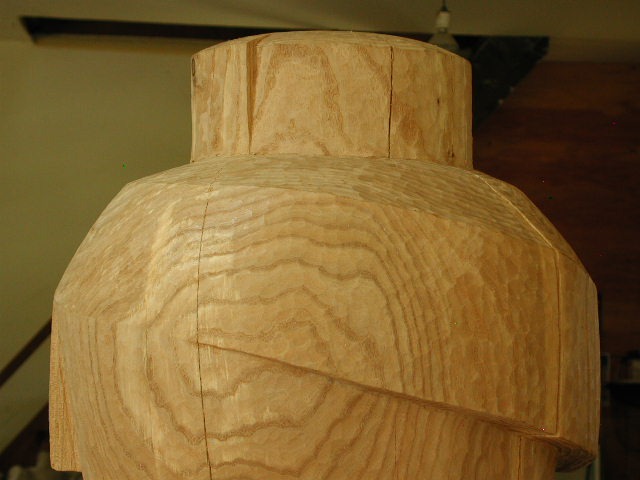
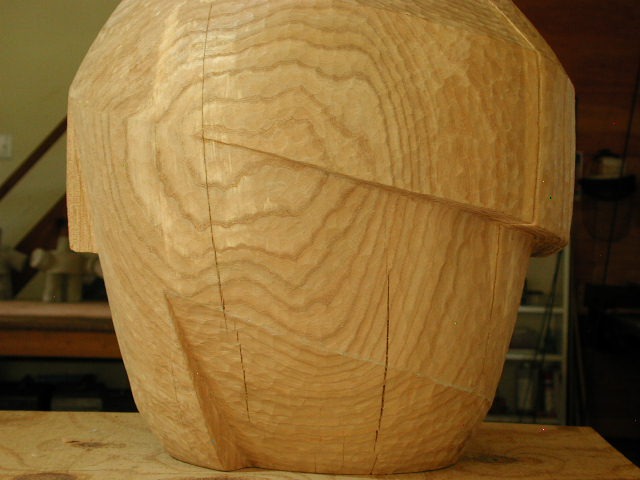
So next, I’ll want to apply a finish, probably an oil varnish, to protect the wood and mellow the color and texture.
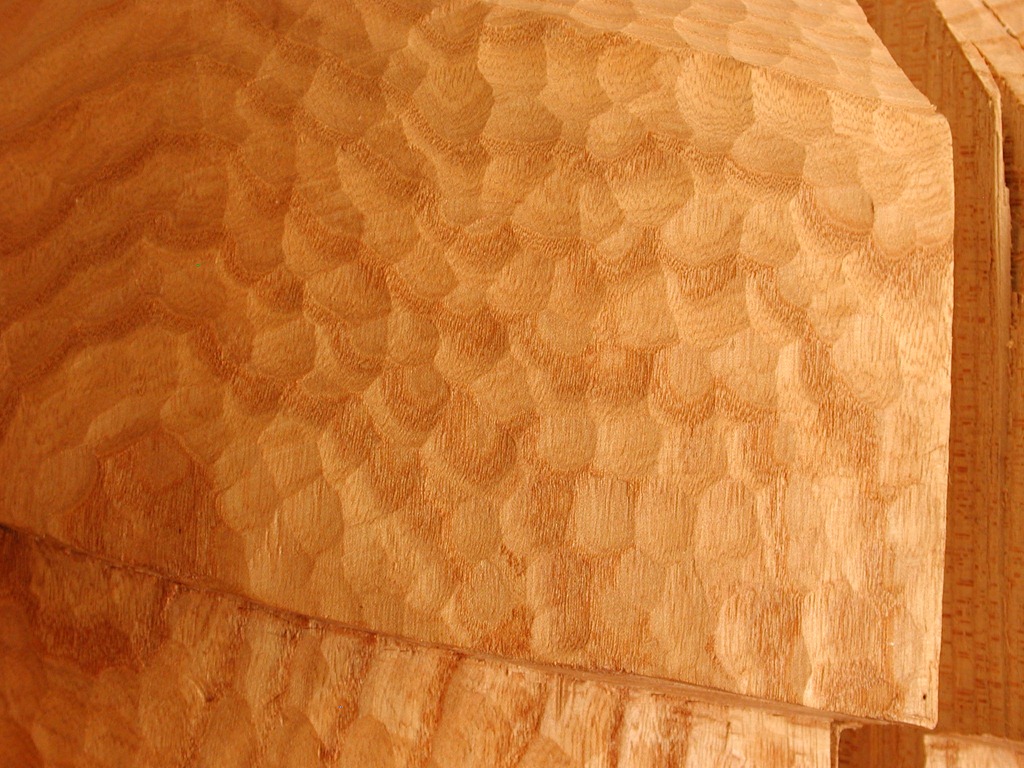
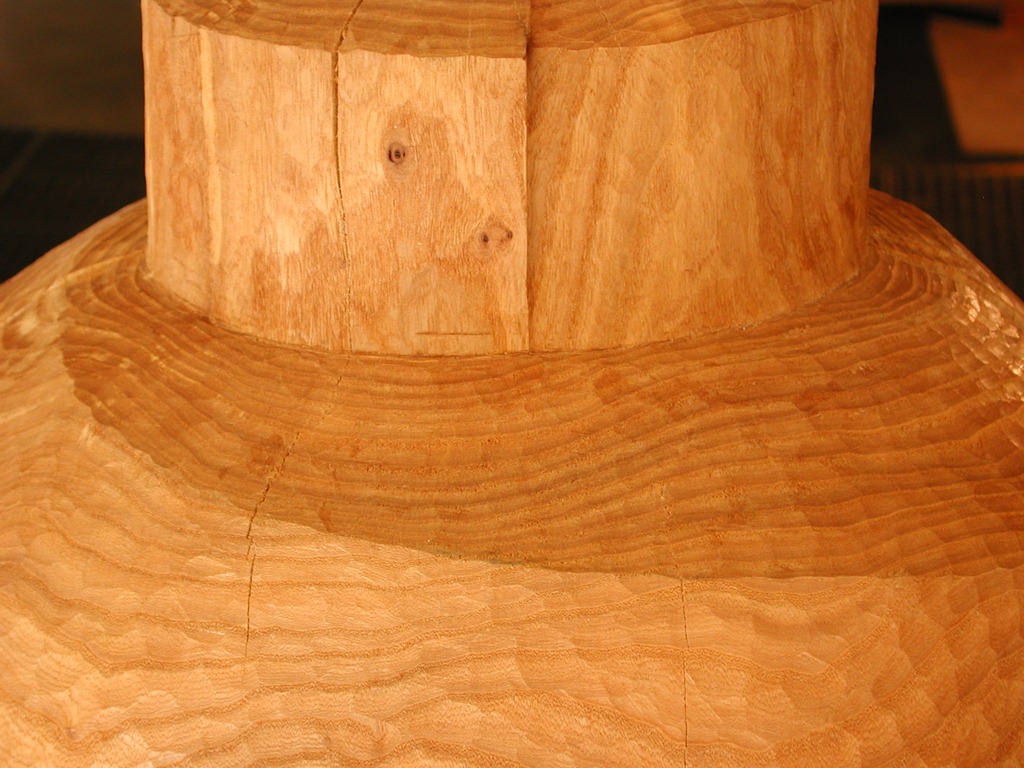
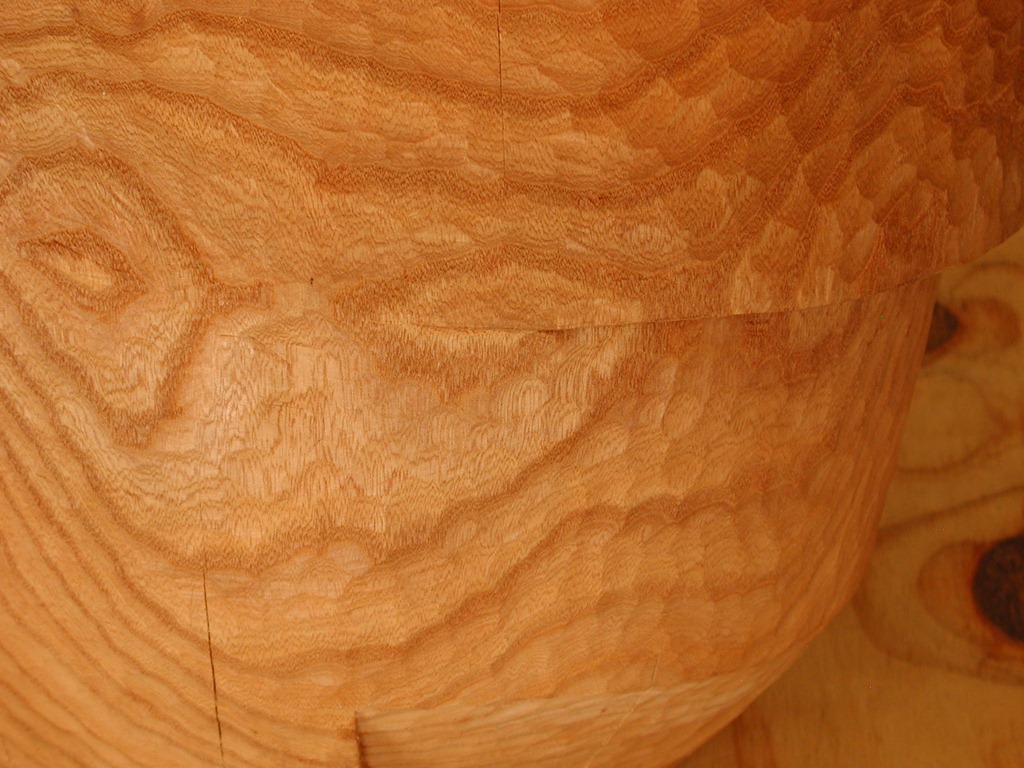
I’ve decided to go over the whole surface with a hand chisel, giving it an even scalloped effect, like small waves on water. This is the handmade look that I want, otherwise, it could look too much like furniture, with a typical smooth sanded surface.
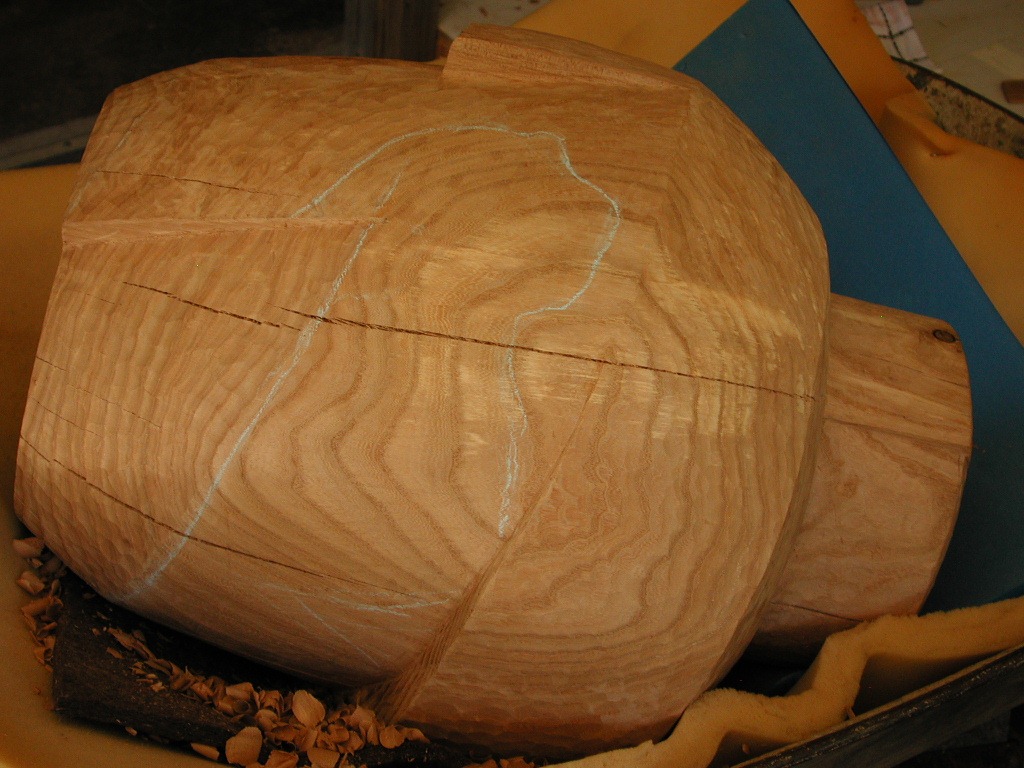
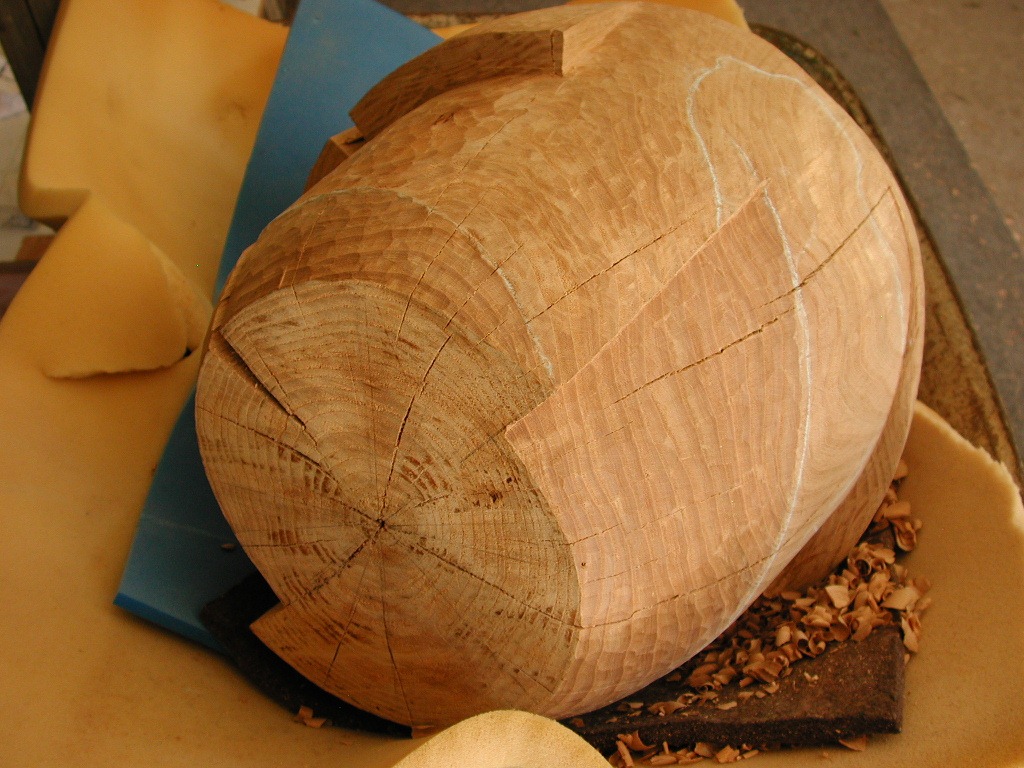
I use chalk to mark the areas where I still need to carve in and remove the smoother surfaces that were left from the surform tool.
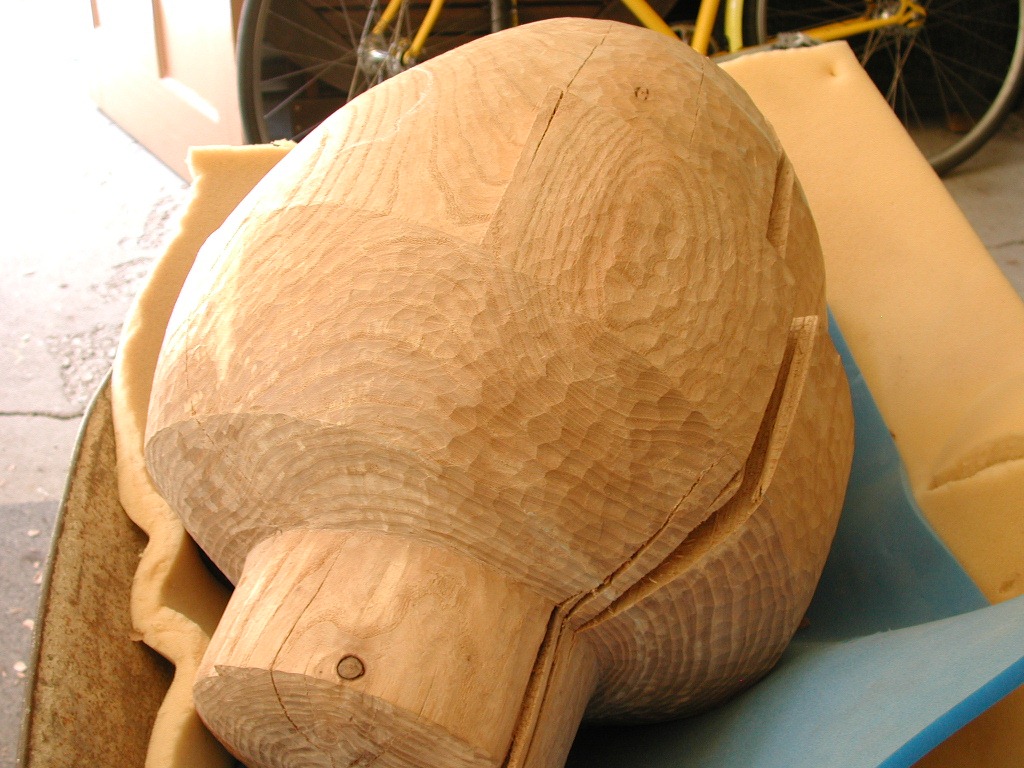
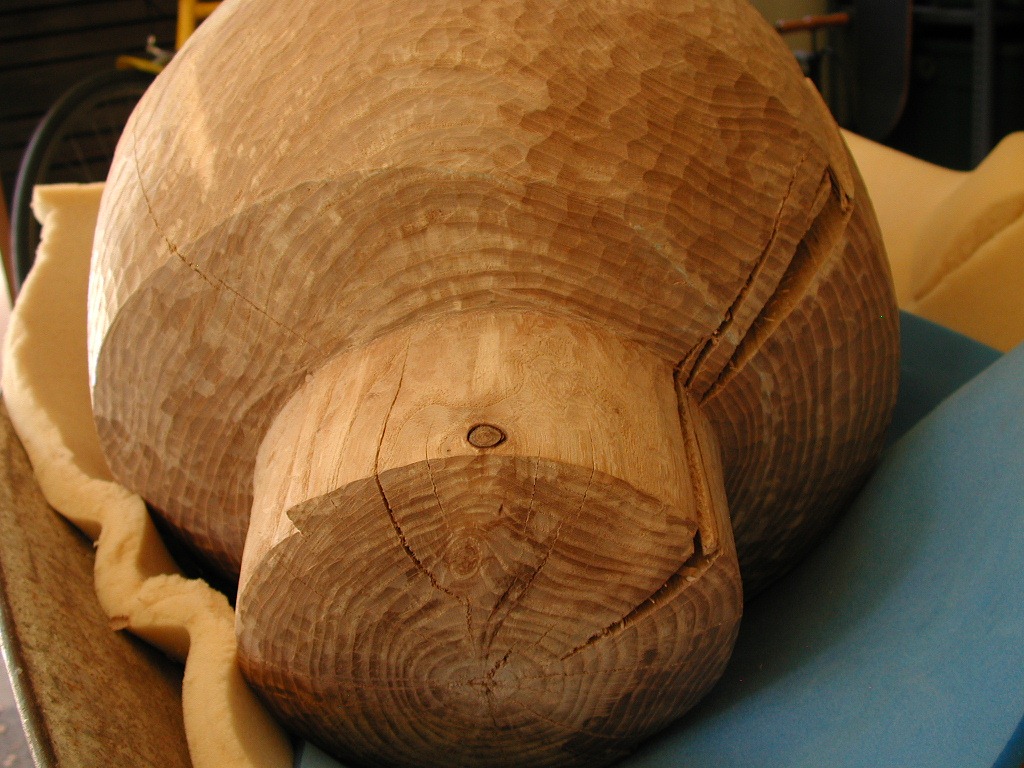
I can also even or flatten out a few planes, and sharpen up some edges.
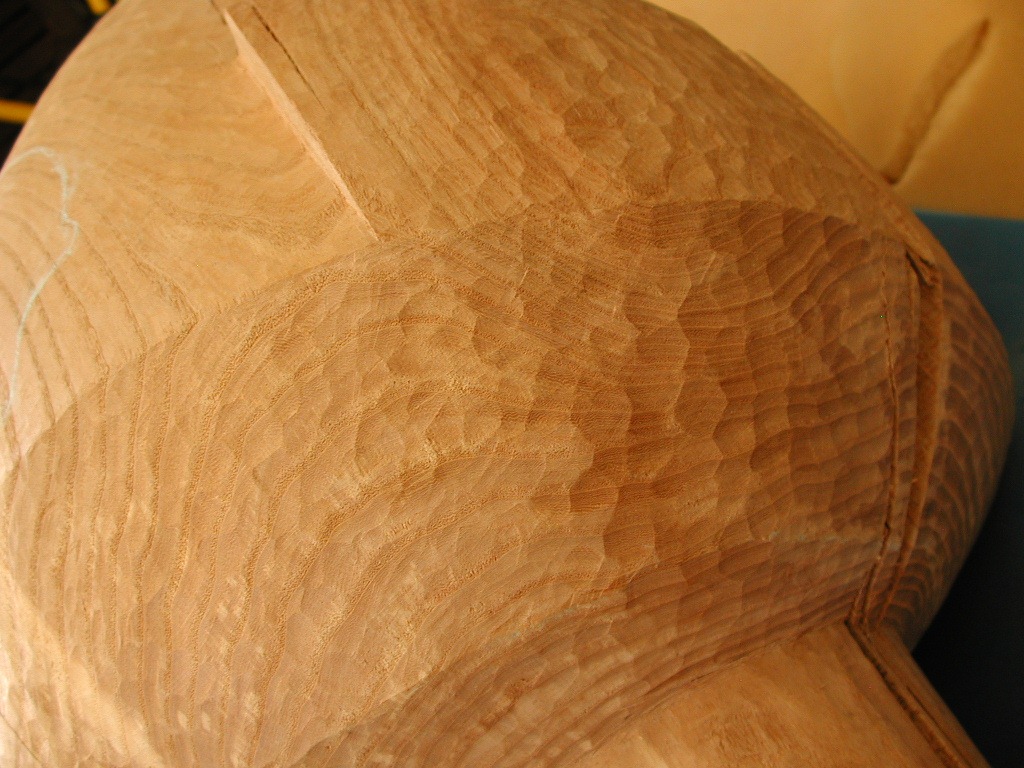
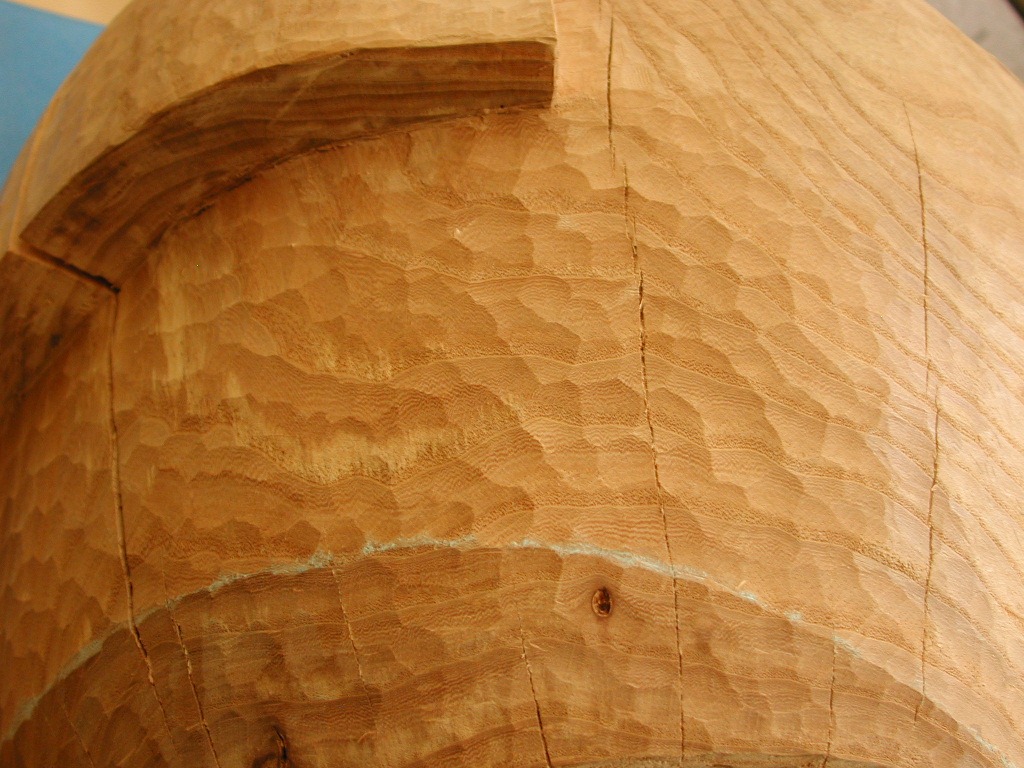
This is an enjoyable stage where I feel the most like a real sculptor, working with a hammer and chisel, shirt off, summertime in the studio.
I still need to ding off some high spots here and there, and start to consider a finish to preserve the wood.
I don’t disagree with French Theory, but it does not help me to make artworks based on it’s principals. In sum, it says: Because of the subjectivity of persons, all meaning is ambiguous. This includes Art.
I want to now clearly state my preference as Modernist, I’m a Modern Artist, making work in the tradition. You know what I mean, Twentieth-Century Modern Art.
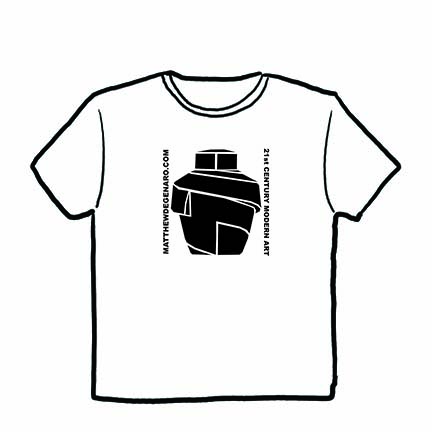
I’m thinking of a t-shirt:
 matthew DG