I was looking through a book of Alexander Calder when I heard a voice in my head say “I need some assholes to blow up my 6 inch models to 30 feet tall”. What is meant by that I don’t know. Maybe that anyone’d be dumb enough to do that kind of work, and who could I get to pay for it? What’s it mean that lately I’m thinking I want to do something that big?
Tourist life
Not getting much sculpting done lately. I was in Madison WI. for Thanksgiving . Made a point to see again something I really like at the Chazen Museum. But someone should bother to dust it off once in a while. It is furry on the shoulders with dust. Shame.
Saw some good David Smith, Barbra Hepworth, and Deborah Butterfield, which reminded me that abstraction is not chaos, rather, it is rational. People sometimes confuse expressionism of a melodramatic type with abstraction.
Also stopped in Chicago and saw Cloud Gate by Anish Kapoor. It is bogglingly great. It works on so many levels. People can engage with it depending on whatever they are prepared for. It could be a funhouse piece for some, and be an Op Art illusionism for others, just depends.
Refining form
I’m refining the form of the figure around the areas where I’m marked and cut before, the arms, the legs, creating more relief and contour, shaping and smoothing the lines. Still using power tools and carefully referring back to the plans.
Working on this is becoming more expressive, as the figurative form is more clearly dominating over the log form finally. Pleasant time now, chewing gum, burning incense. Sour Bubble and Sandalwood, the flavors of the airs that surround me.
If I can get the head rounded off and the face defined, then I’ll maybe take a few weeks off. Come back and be working with hand tools only. Wood fire in the stove, cats nearby.
A story
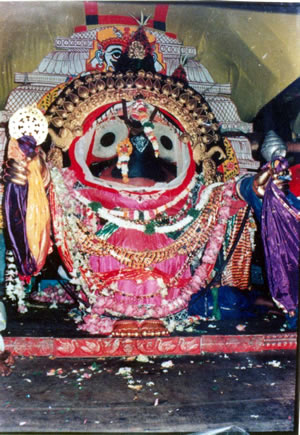
There, to the south of Bengal, on the east coast, a miraculous thing happened when, according to legend, a log of wood was seen floating in the sea and a mythical king ordered a carpenter to make it into an image of God. The carpenter stipulated that he be left working behind closed doors for twenty-one days. The king opened the door prematurely; the carpenter, who was God himself, vanished. Though the image remained incomplete, it was installed in the temple. The image of Jagannatha, Lord of the World – in his temple of the twelfth century in Puri, an imposing structure built in the Great Tradition and of lavish sophistication – is a log of wood Just that and nothing else. Large eyes are painted on it and arm stumps branch out. (Binayak, Mishra “Folklore and Pauranic Tradition about the Origin of God Jagannatha” Indian Historical Quarterly XIII (1937) 600-609)
Defining features
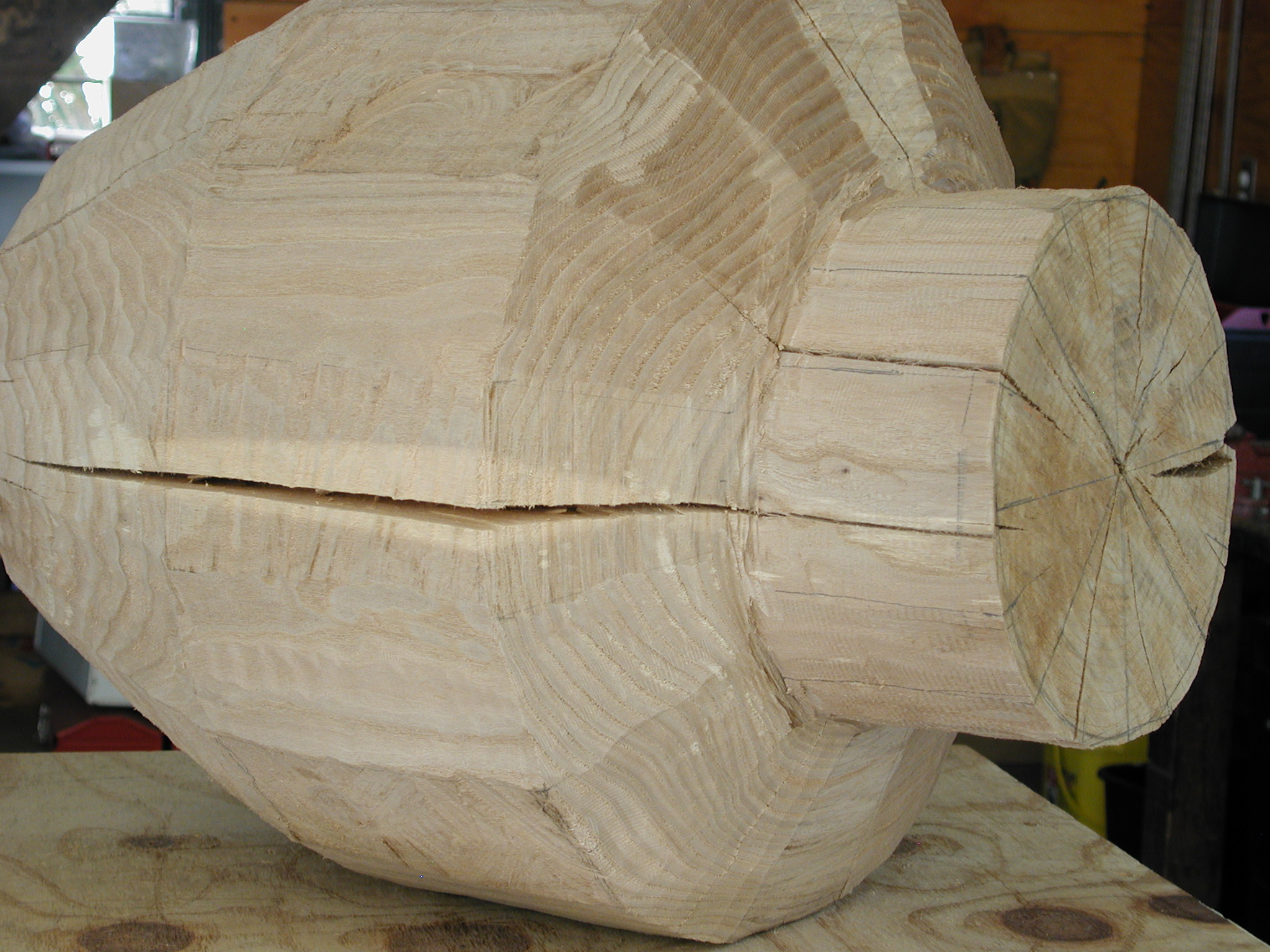
Now, I’ll start refining the spiral line of the neck and shoulders a little higher, also defining where the notches for the arms and legs and face will appear.
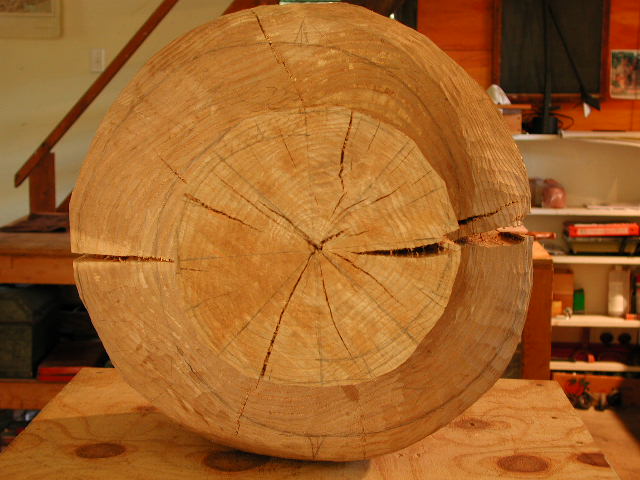
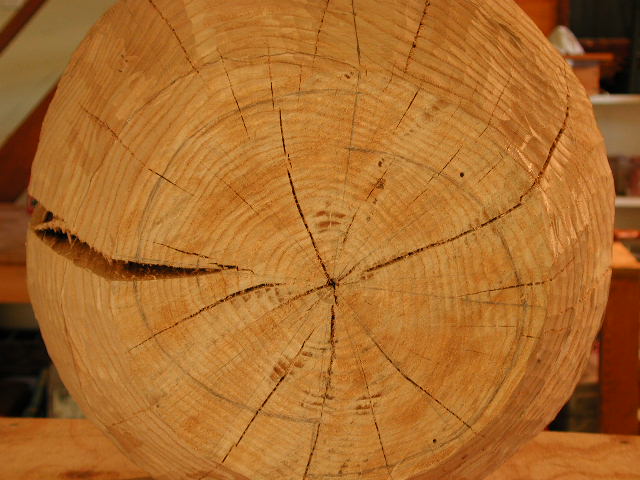
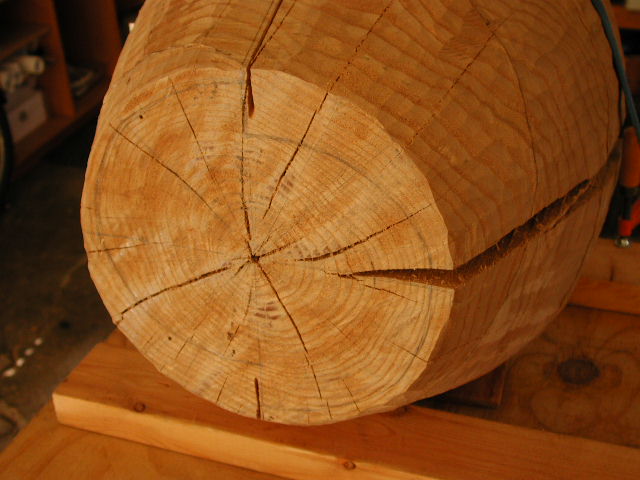
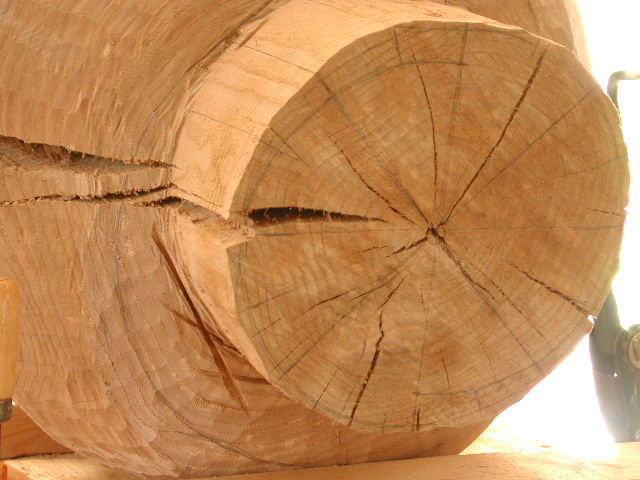
Sketching up on the end grain to stimate the location and depths of the notches which will denote the legs and face.
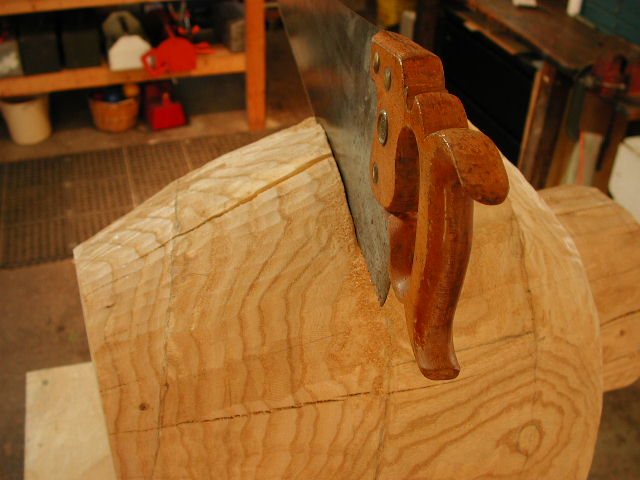
With caution, I commit to sawing the depth of the notches – again with the handsaw. More controllable. This will give me maximum depth when I later apply the chain disk tool to remove most of the excess wood.
Now I can take it outside and start power grinding on it, relying on the saw cuts to be my guide limits, ending up with a much finer contour around the neck and shoulders, and the beginnings of some definition to the arms and legs. It’s starting to look not like a log, but like a sculpture. A lot of the rest of the work from will be to refine the shape of the arms and legs by removing more material.
Spiraling around
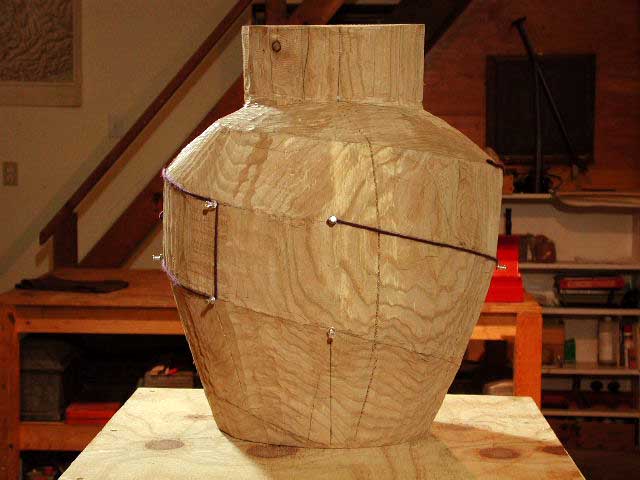
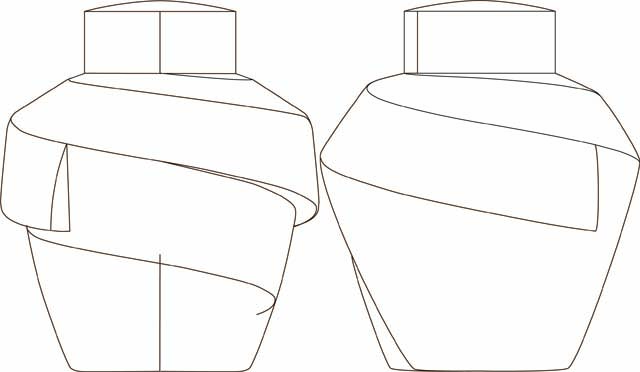
I want to work that spiral plane I’m imagining up to the surface now. I carefully measure off my drawing, mark some locations for reference points, and think about marking a line (2 lines really) that smoothly move around the piece from top to bottom. Pushpins and some yarn let me define the line by eye and by measurement.
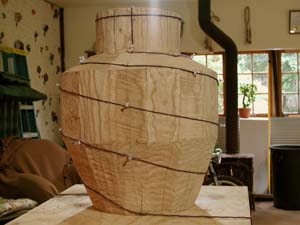
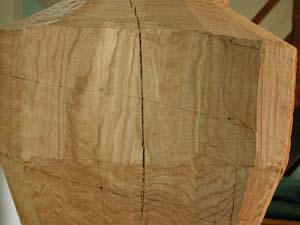
I realize that seeing this may not meet some people’s idea of the heroic sculptor. Not a lot of gestures and waving of tools. Just diligently following the design, and trusting it to go where it’s supposed to. When I’m confident, I pencil in the lines to follow with the chain-disk tool.
Here’s another unglamourous image of work being done. Outside is the best place for the amount of dust this makes. Also, the wheelbarrow is about the right height to work at holding a heavy grinder. It makes heavy things eaiser to move. And why not sit down while you’re at it. It takes time, be comfortable. On a cool early Fall day it is good to be outside in the garden.
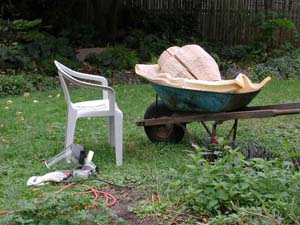
The work half done. Taking a break.
All the way done, after few hours work.
Rounding off
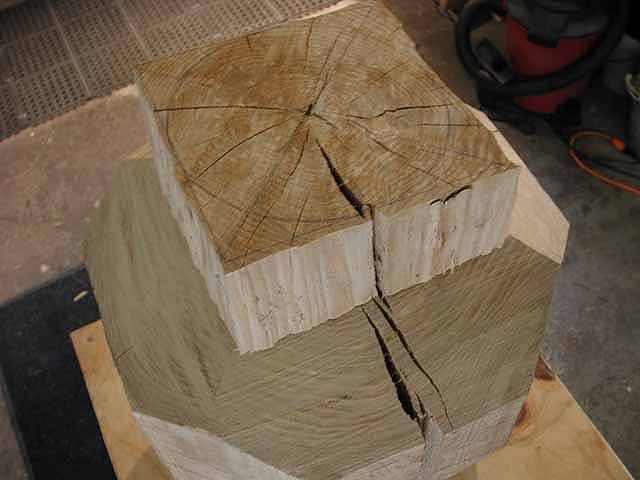
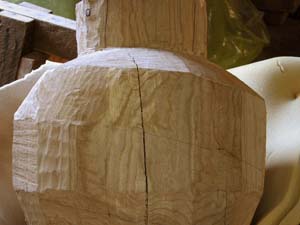
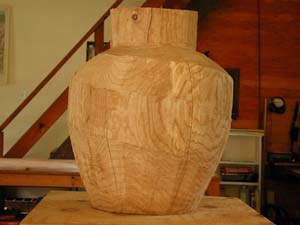
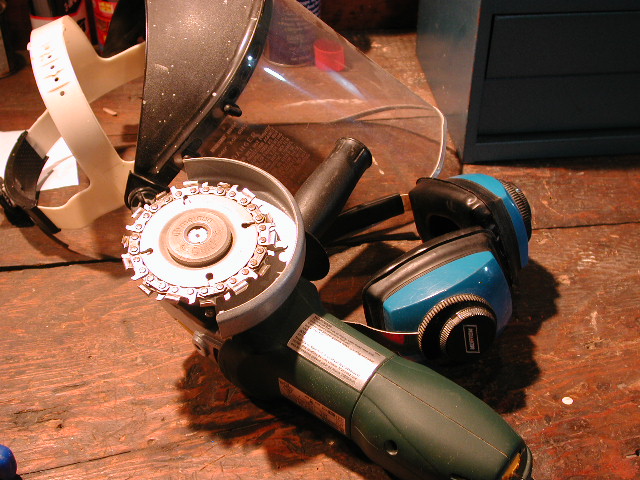
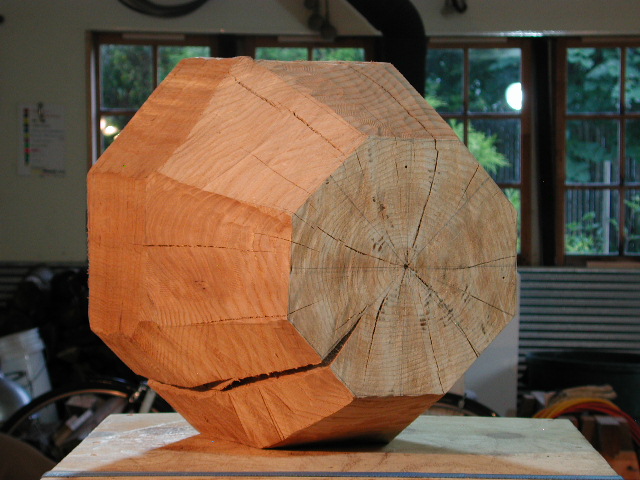
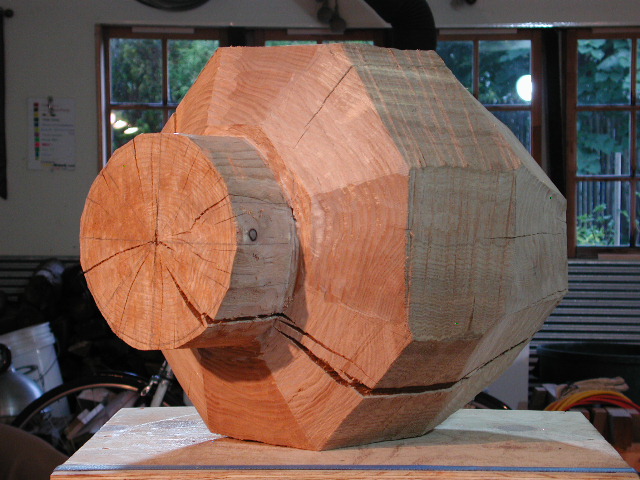
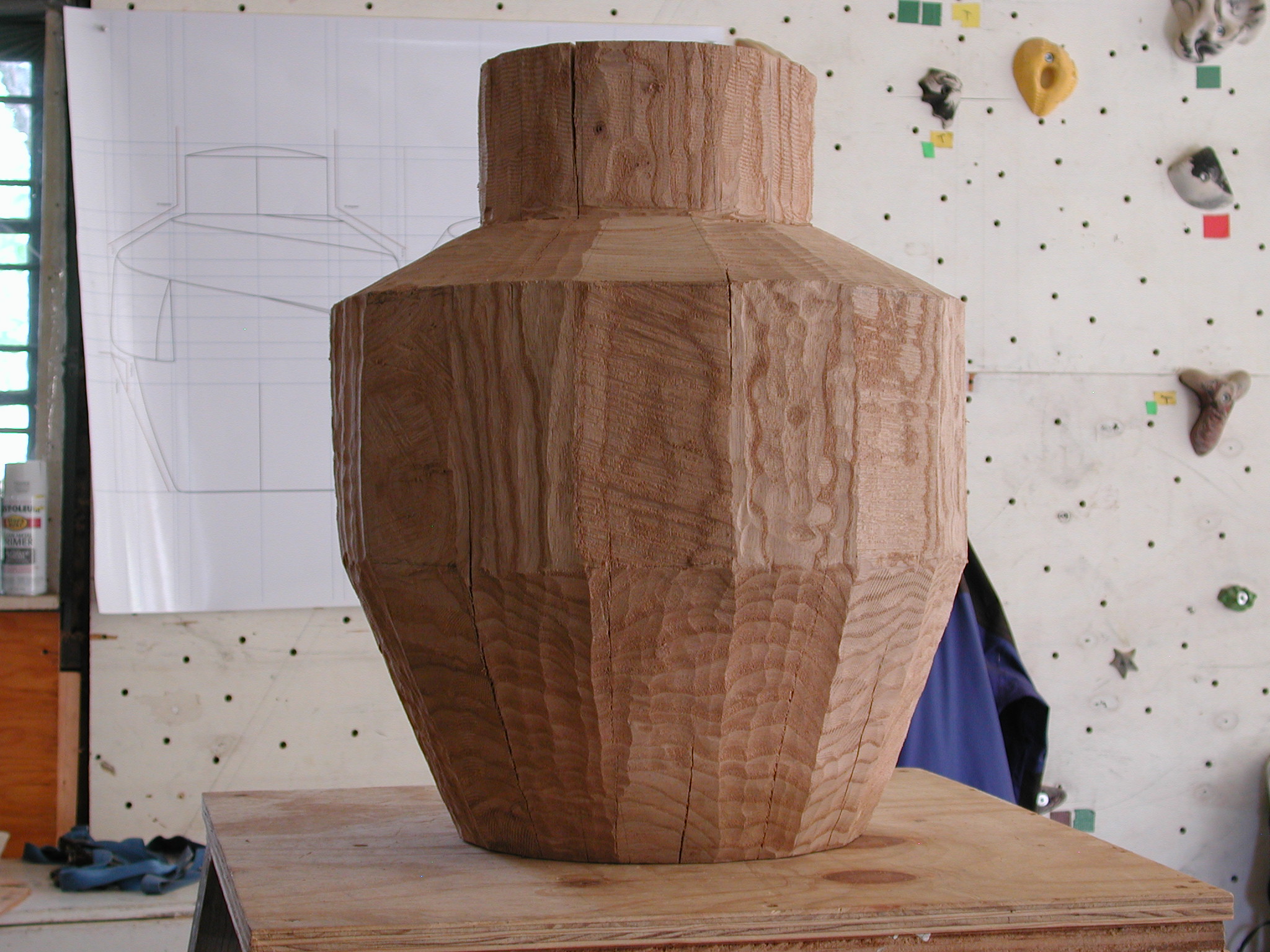
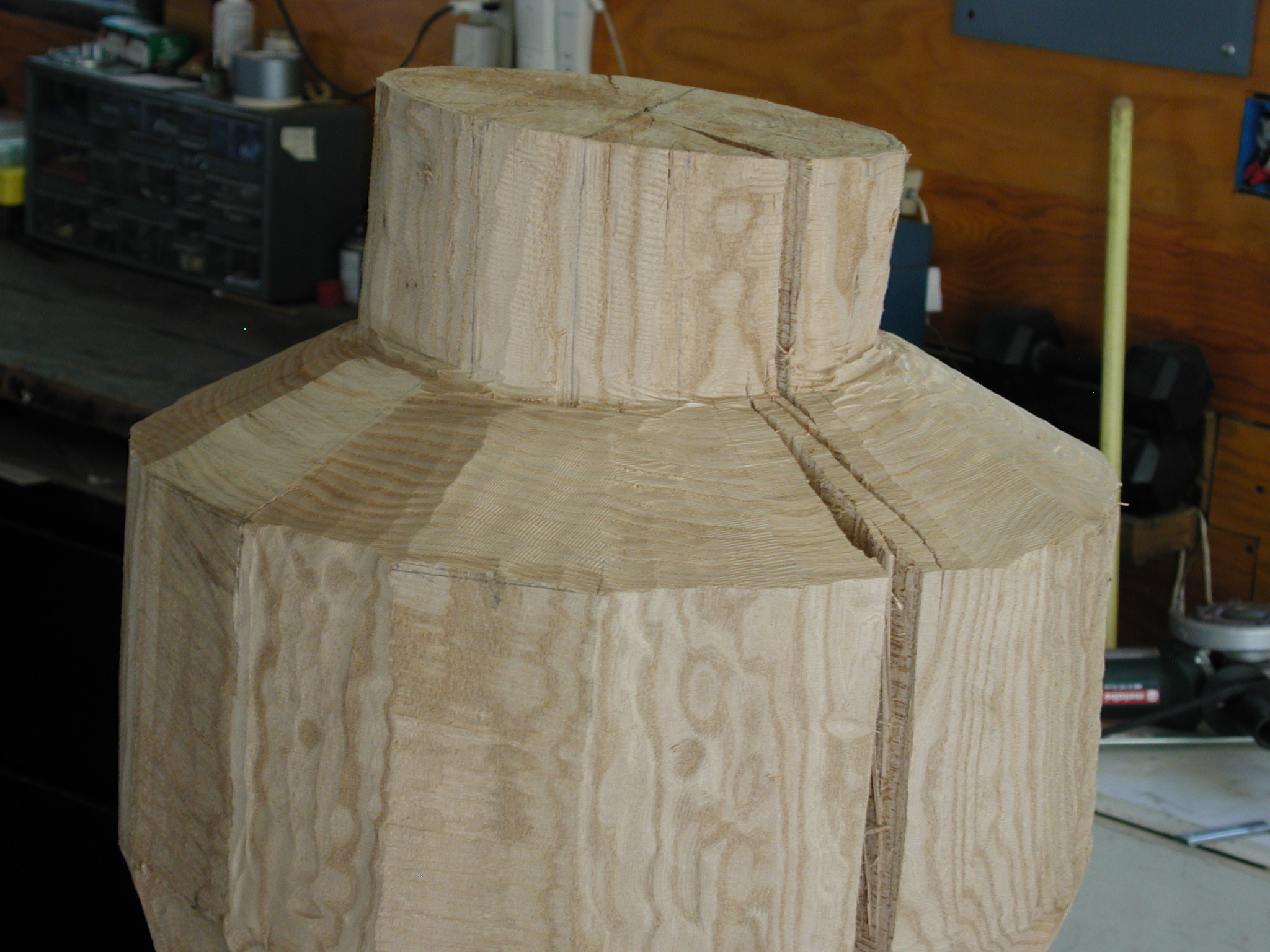
Now I take the block from a something I’ve cut into from 4 sides basically, to something smoother, rounder, carved on 8 sides more fully. To do that I’ll be using new tools. This chainsaw cutting wheel chews up wood like an army of supernatual beavers, no problem.
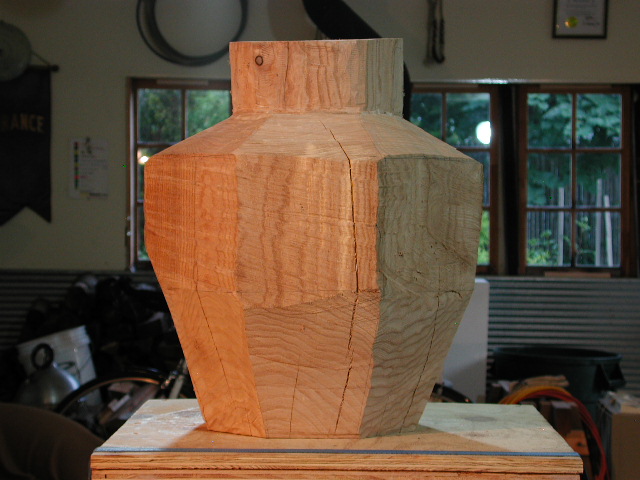
I’ll angle and shape the sharp points of the shoulders and legs. 4 on the shoulders and 4 on the legs. Now it is more fully an octagonal symetric shape from top to bottom.
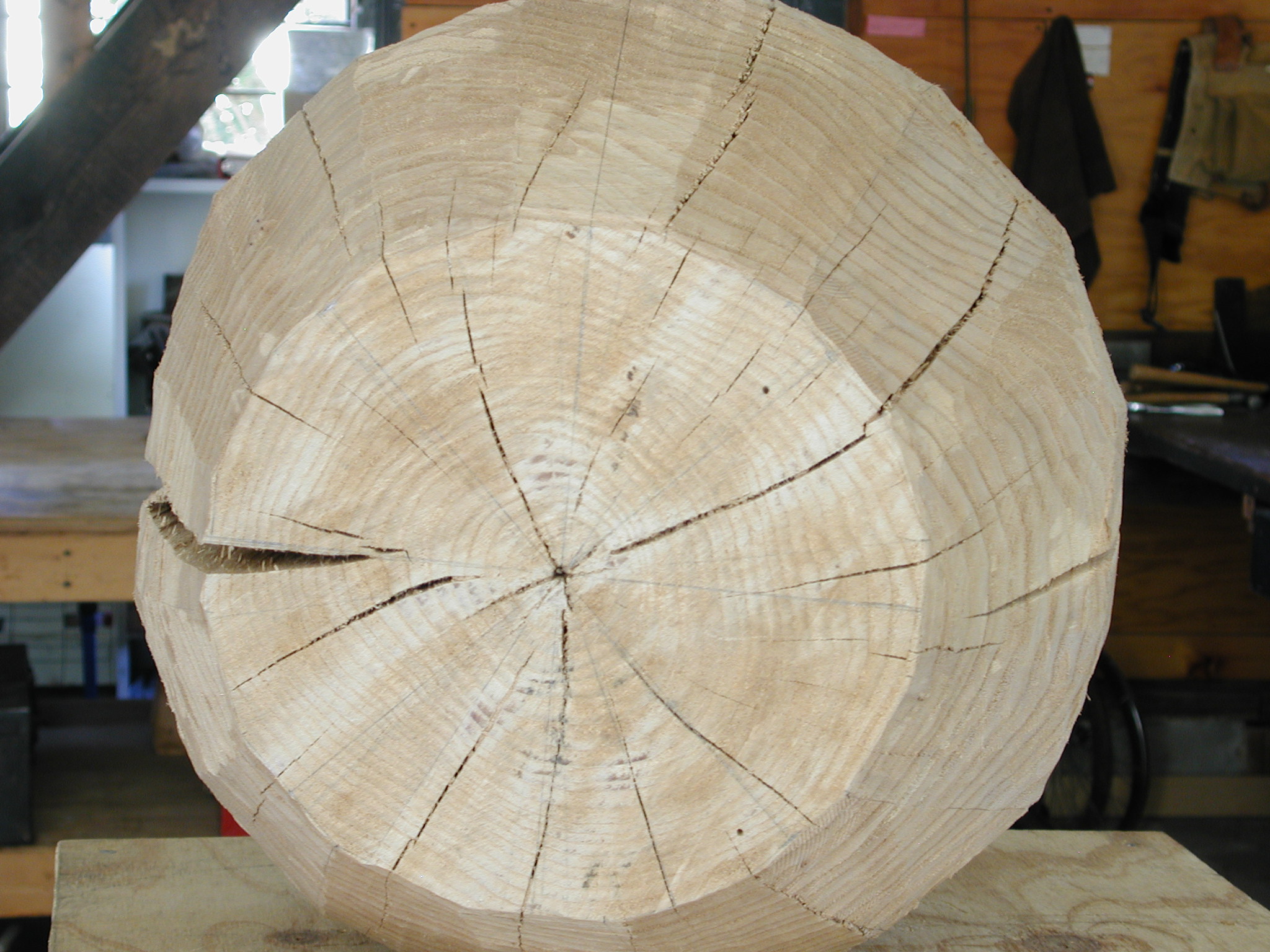
Again I’ll do it to get 16 sides. At this point it is virtually round.
I sketch radial lines from the center to help me mark the cutting lines to get this shape, there’s a bit of measuring and marking-up done. This makes using the tool easier since it is not a machine for delicate work. Having lines to follow prevents mistakes when tired.
Roughing out
What I’m making.
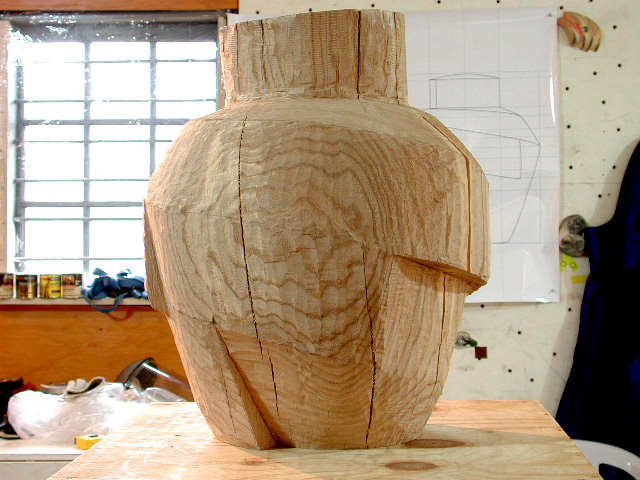
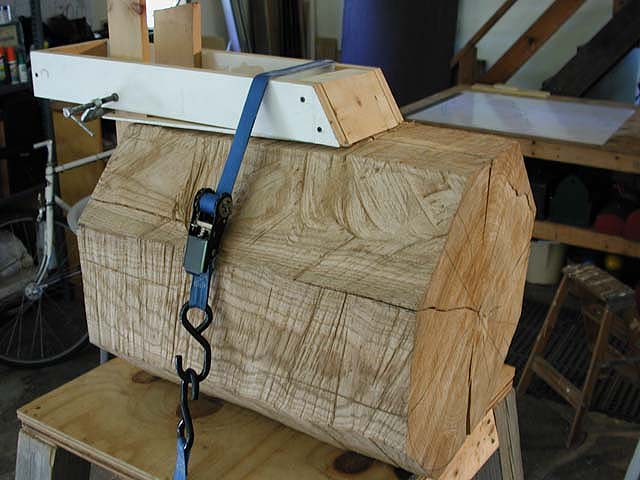
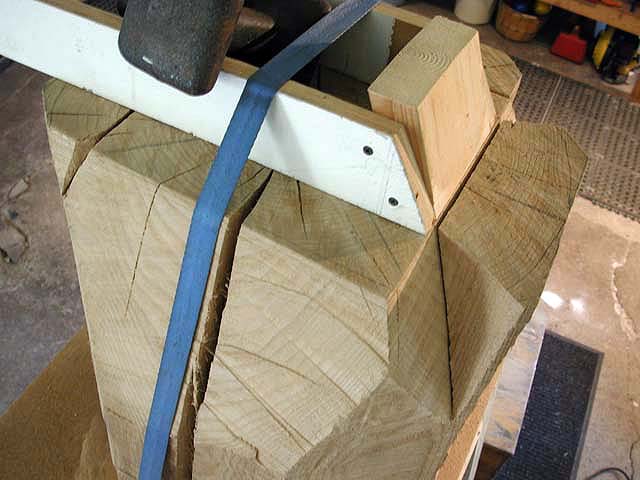
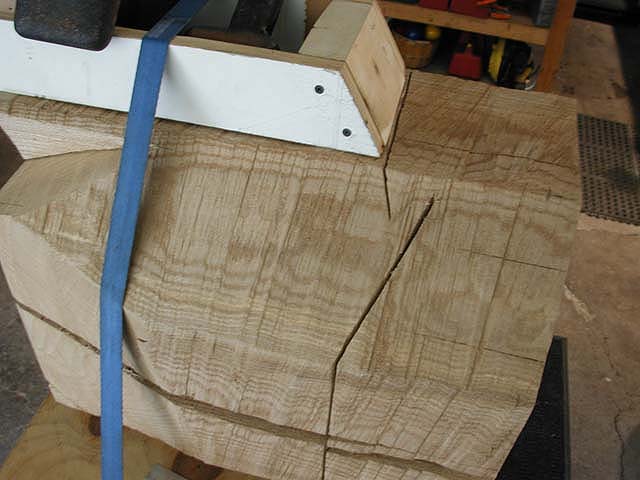
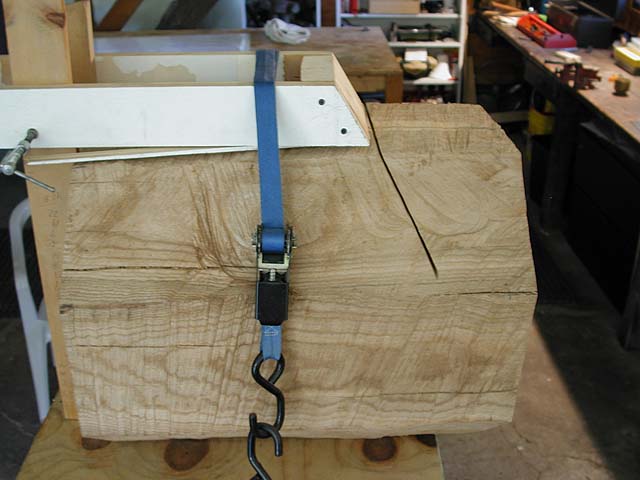
To begin roughing out the general shope from a basic block hewn with a chainsaw, I use a handsaw and a jig to start it at the right angle.
It works well. Outlining what will be a shoulder.
The line of the legs. Using different jig angle, 70 degree
More work on the shoulders, chest, back areas.
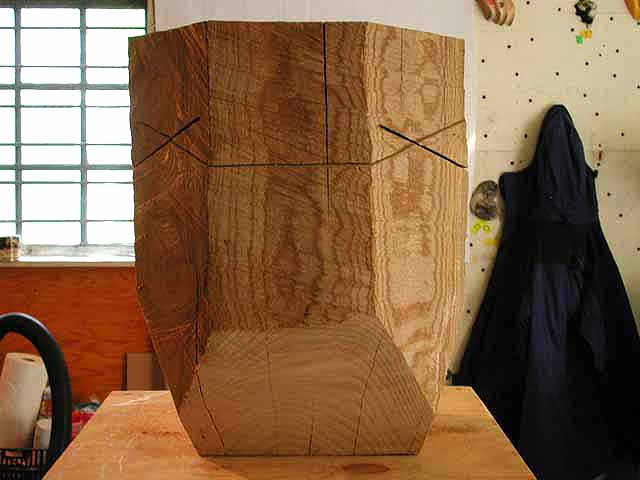
That’s eight cuts in all.
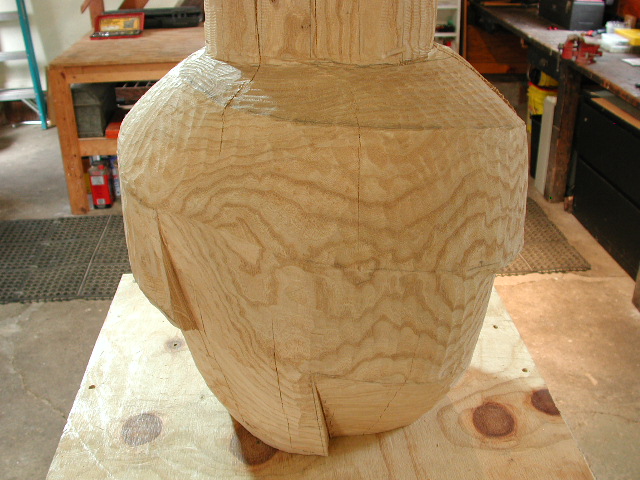
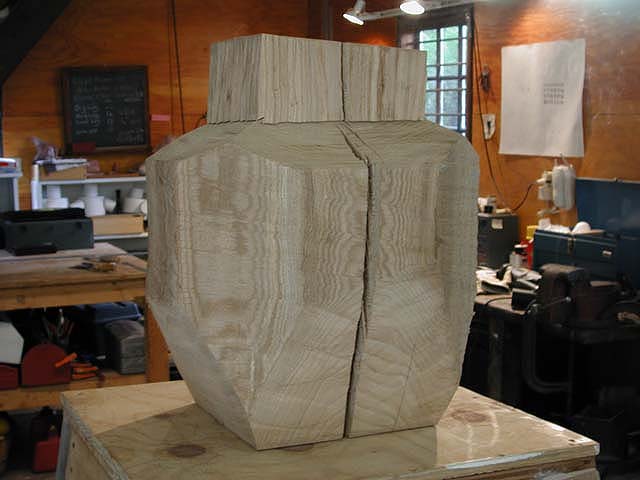
Split head out from shoulders, trim off legs.
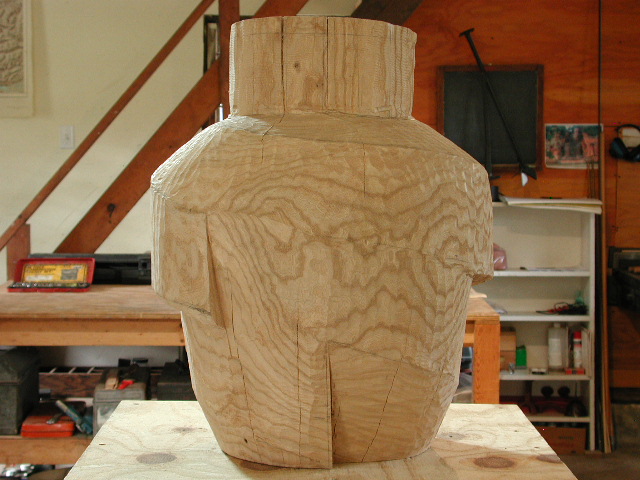
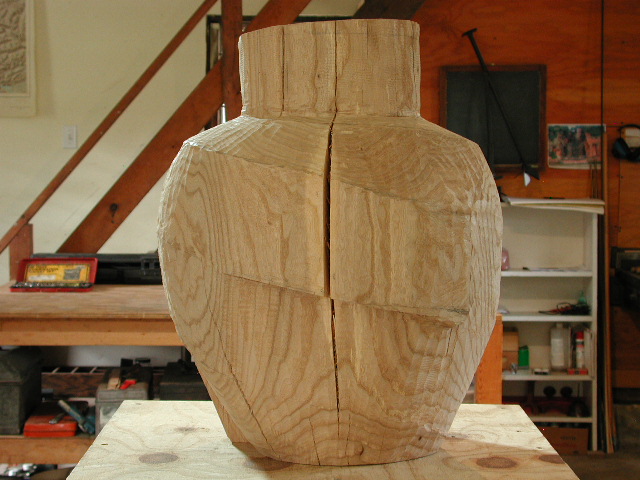
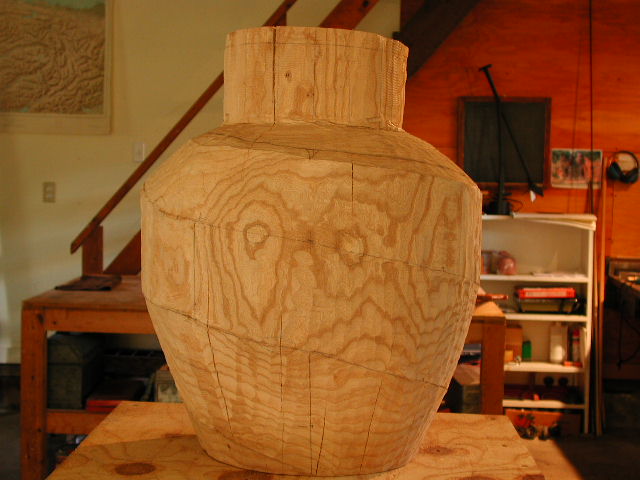
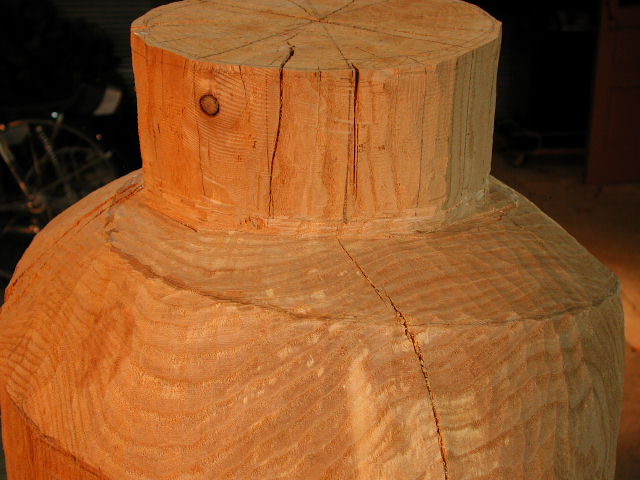
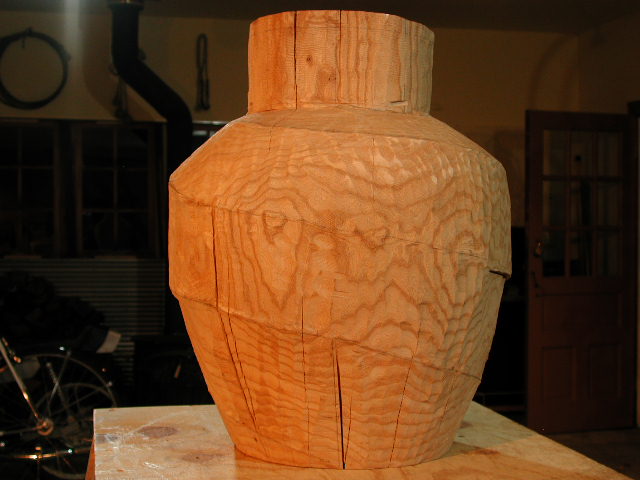
The Phase I finished blank.