Tag Archives: fine art

Wax cast proof

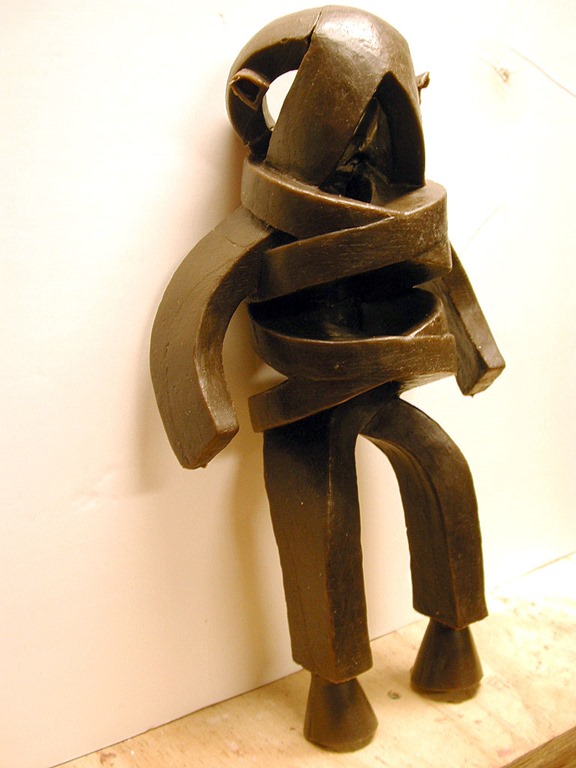
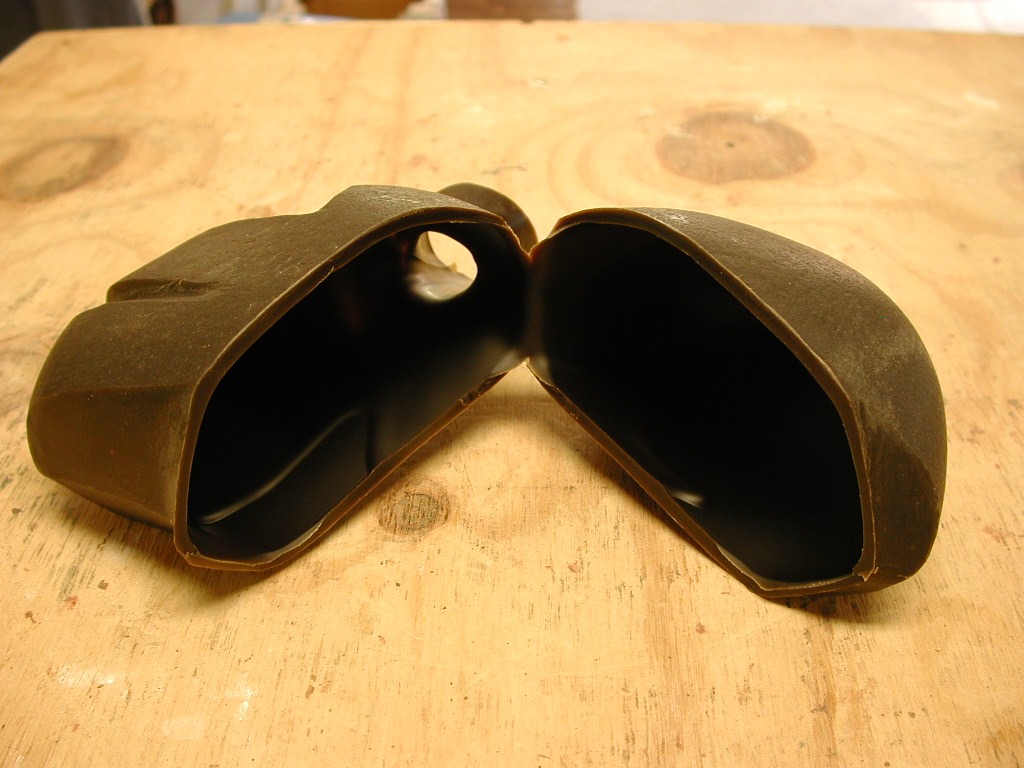
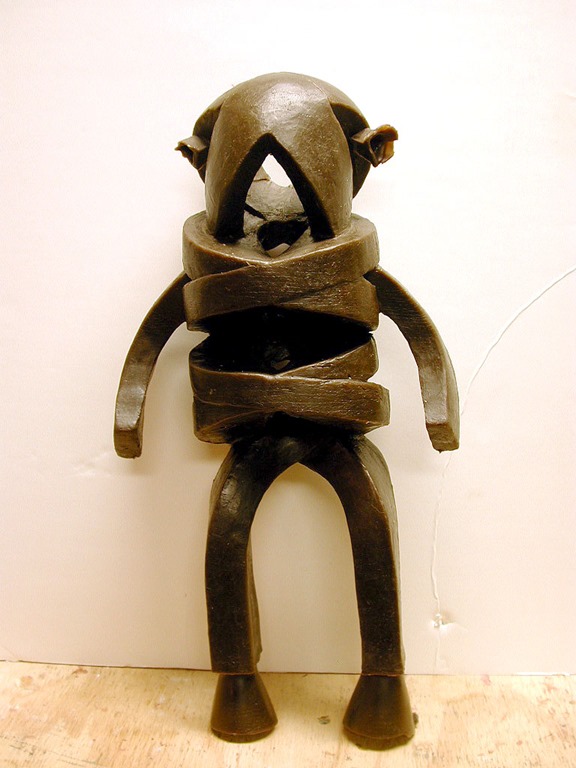
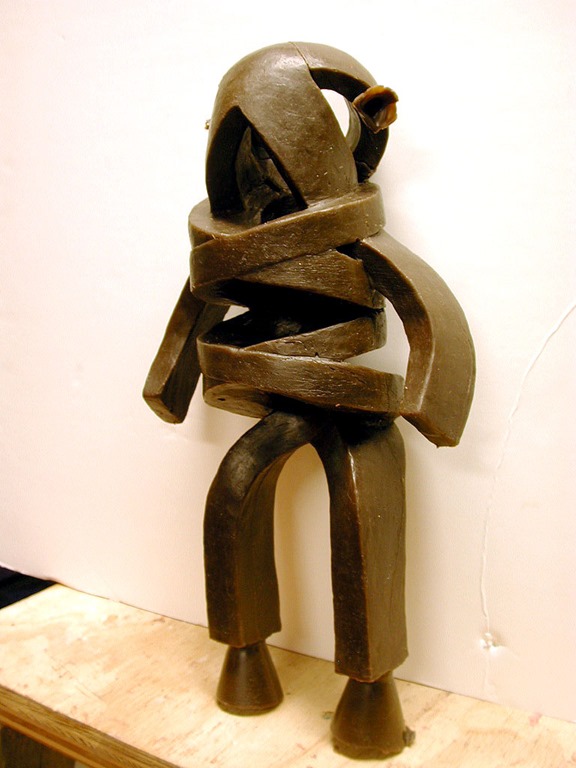
Casting a wax proof from the mold that is free of defects begins the process of making a bronze casting. Ideally, the wax cast is not solid, it is wasteful, and I have had problems with the wax expanding the eventual ceramic shell mold in the burn-out  kiln, cracking it. (ceramic shell investment casting) What I want is like this, another piece I’ve been working recently.
a_waxcastproof

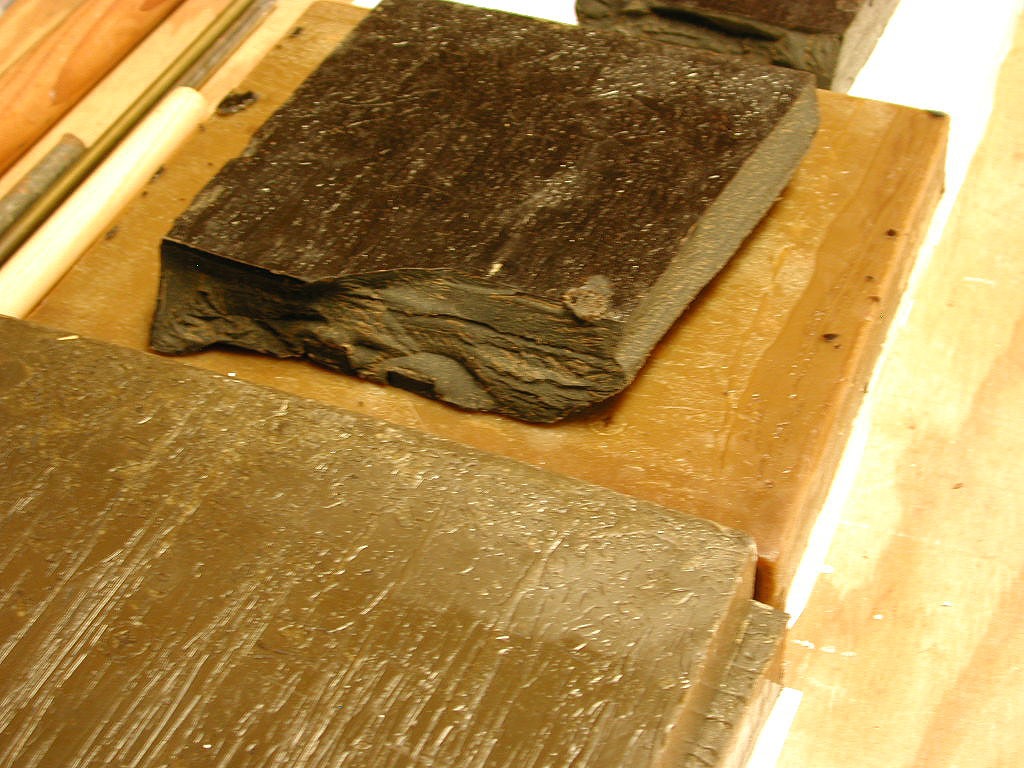
This is Victory brown sculptor’s wax. Usually dark brown, but in other off-colors lately from my supplier, which is annoying. It comes in ten pound slabs,
e_waxcastproof

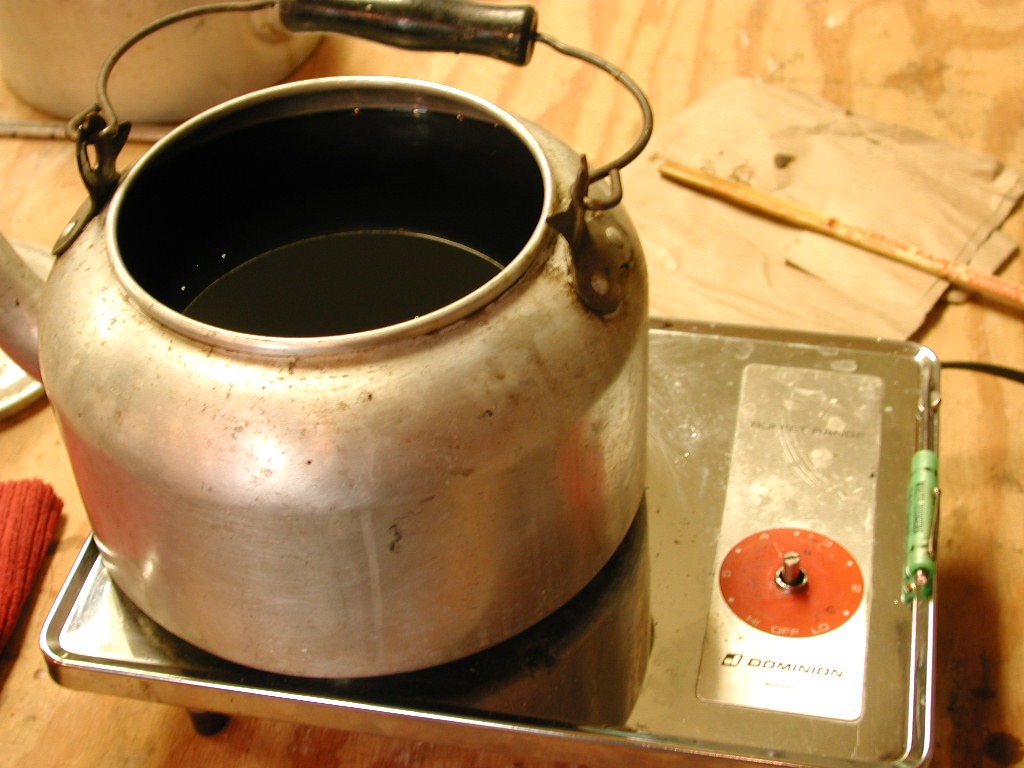
which I melt down in this kettle, enough to fill the mold fully.
c_waxcastproof

The idea is to fill the mold, allow it to cool briefly, and pour out the excess, leaving a hollow form with walls about 1/4 inch thick. The trick is to get the wax to the right temperature; too hot, and the walls won’t cool enough, be too thin, and the hot wax pouring out will re-melt carry away the wax around the pour hole; too cool, and the wax won’t take on the surface details of the mold correctly, or flow evenly throughout the mold. By experience, the correct temp is between 155 degrees and 160 degrees. Of course it takes more heat than that to melt the wax, so use a kitchen cooking thermometer to measure as it cool to the right temp. Essentially it is the temp where the wax begins to solidify from a liquid; it gets soupy, and begins to build up on the sides of the pot, instead of staying thin and watery.

Mount the mold in something securely. A lot of hot wax is dangerous.
d_waxcastproof

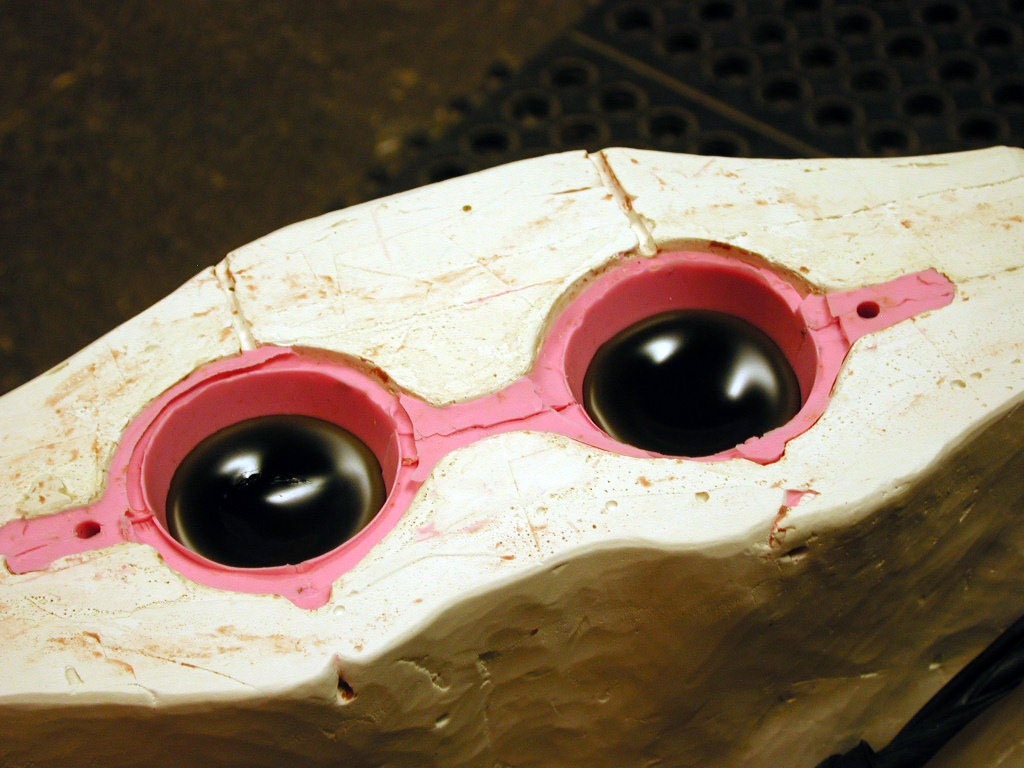
Pour it in a steady stream. For this mold, I let it cool then for three minutes.
i_waxcastproof

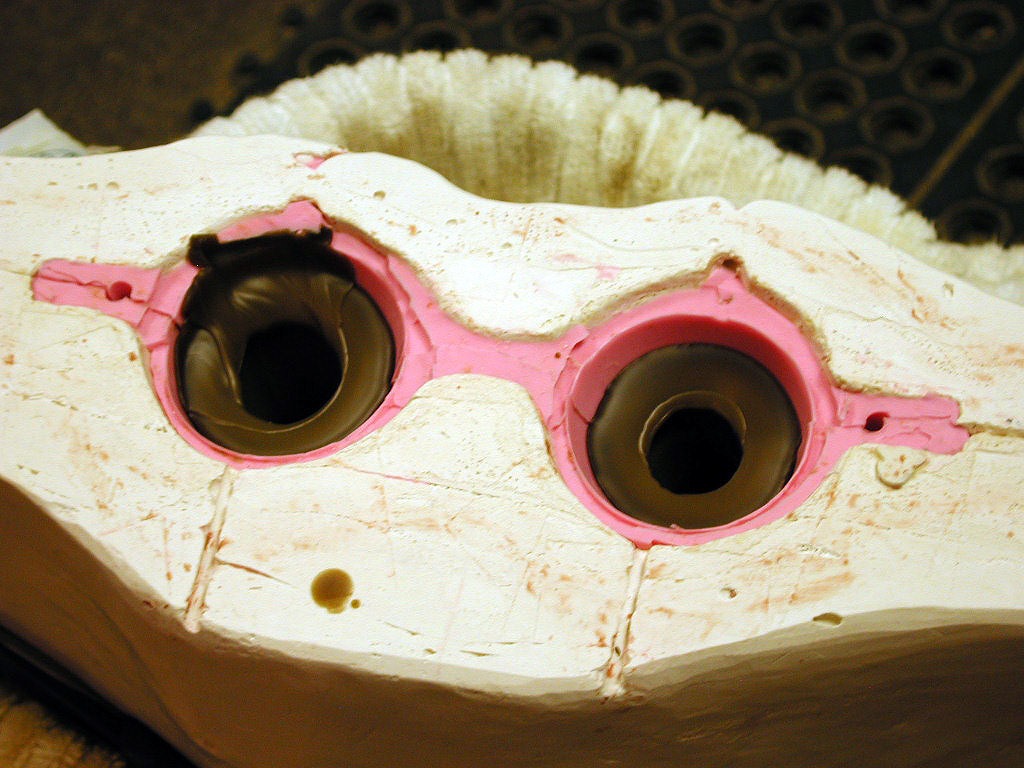
Invert the mold, and pour out the remaining liquid wax.
f_waxcastproof

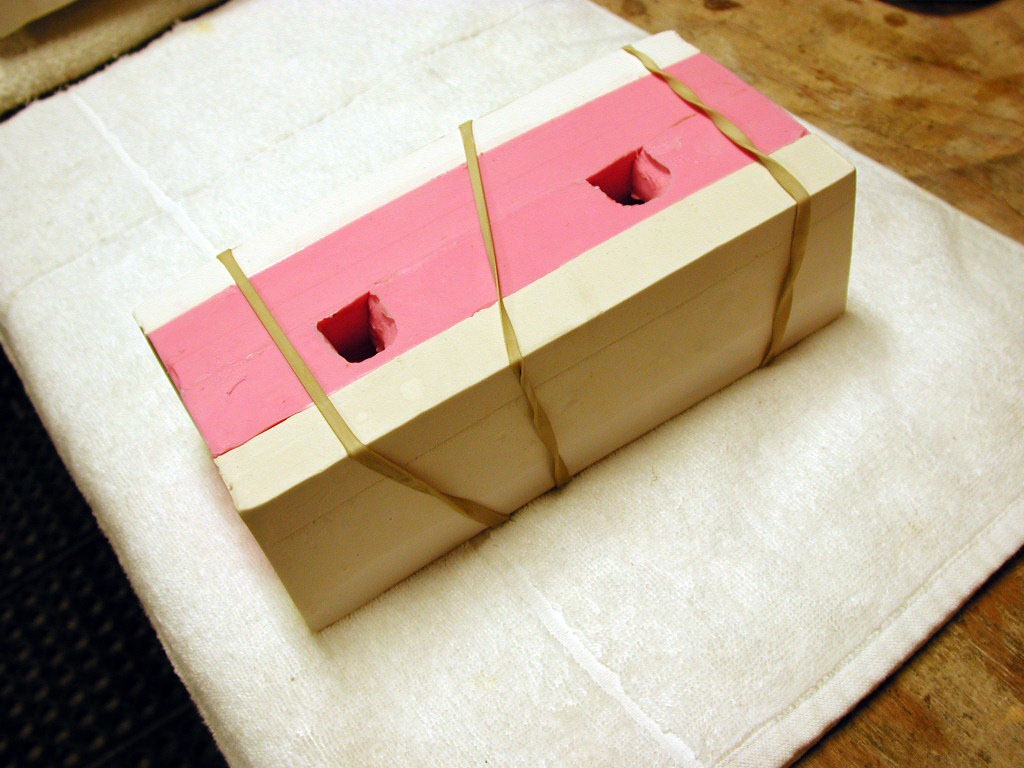
This is the little mold for the two head parts to the sculpture. These get re-attached to the main piece later.
g_waxcastproof

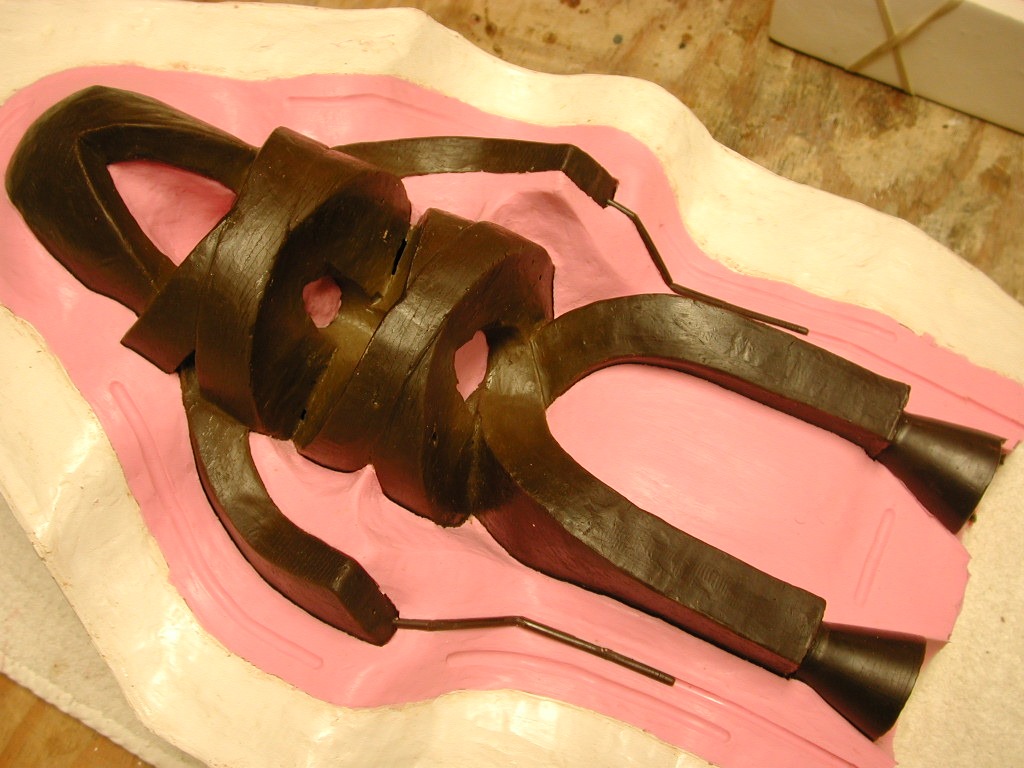
Allow time to cool completely. Opening the mold too soon, while it is still warm, can deform or tear the wax apart if it hasn’t completely re-solidified. Here’s the fine result I was expecting
h_waxcastproof

Wow, I’m pleased. That’s a very complicated form to get from a two piece mold. I put a lot of planning and work into this, and the proof is in the quality of the cast. This wax needs very little clean-up to be ready for the bronze casting process. Mostly just cutting the spouts from the head and feet, and smoothing the reattachment points lines on the head parts.
l_waxcastproof

m_waxcastproof

n_waxcastproof

I won’t actually use this one, it was a test. I’ll pour several more, and pick the one or two that I like best to cast bronzes of.

Oh, there is still a lot of work to do. I’ve had some time off, but now I need to push on, and get this done.

There are other sculptures filling up my head that I want to get started.
Full reveal

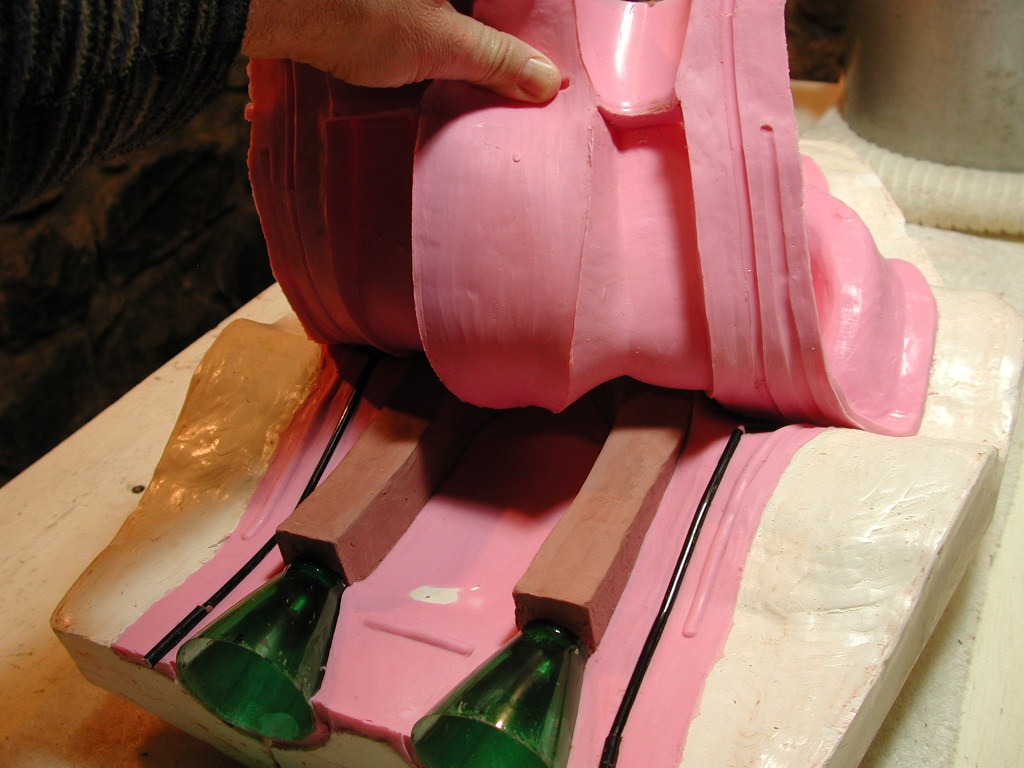
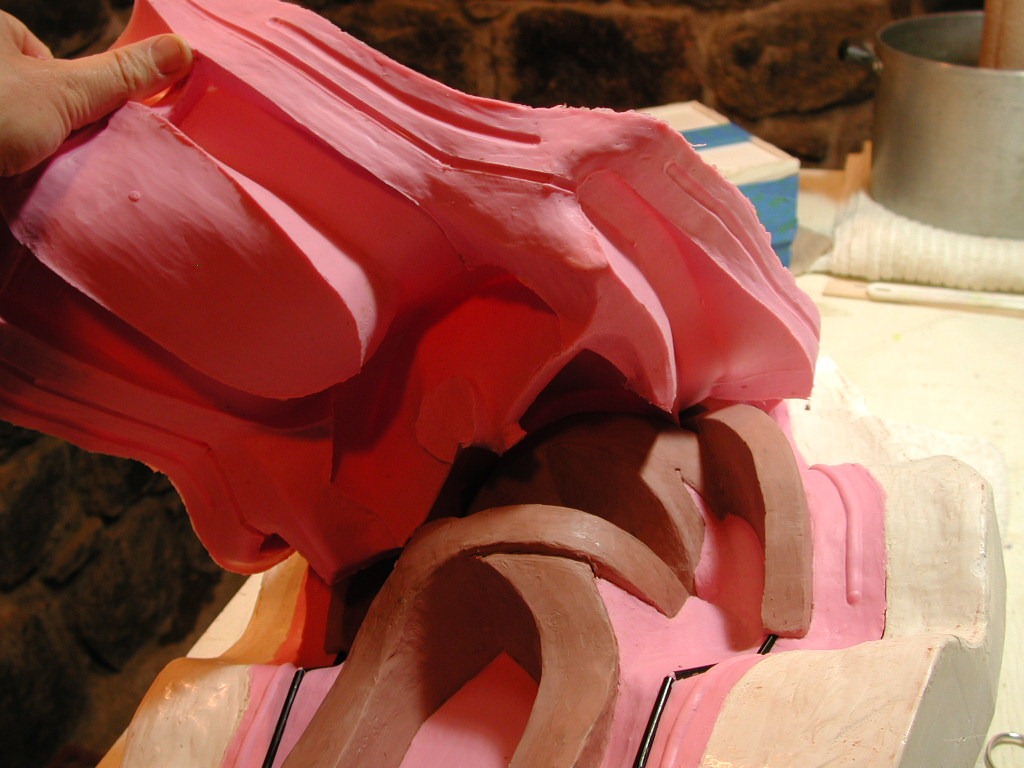
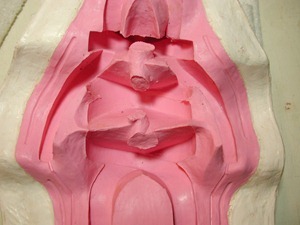
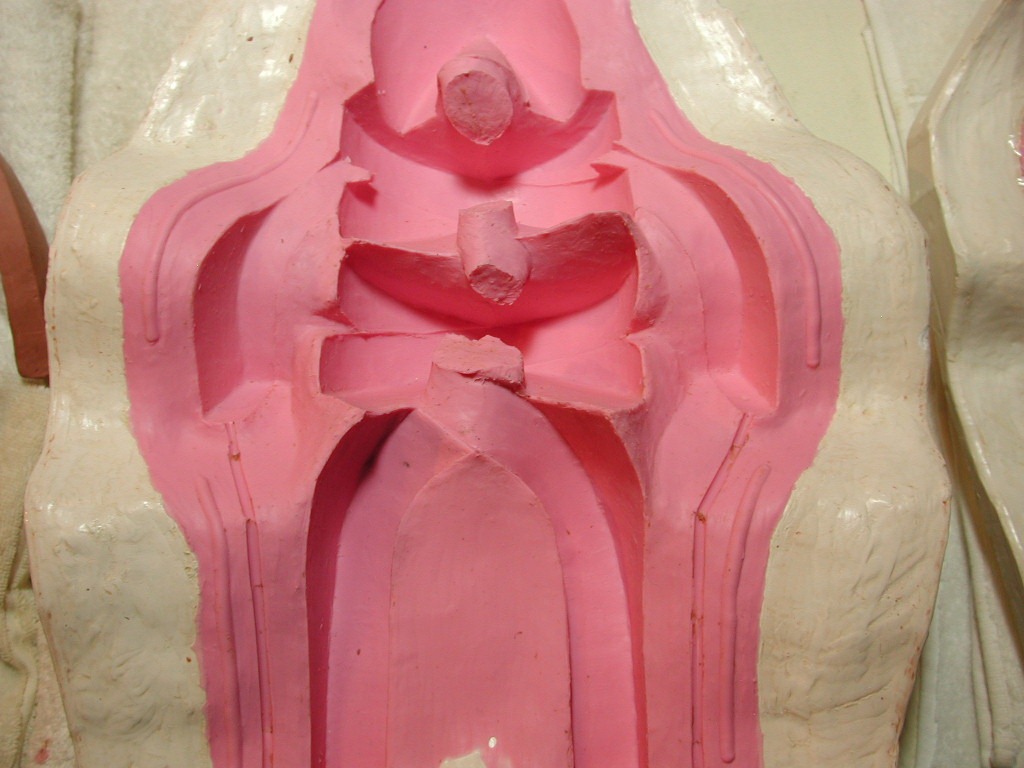
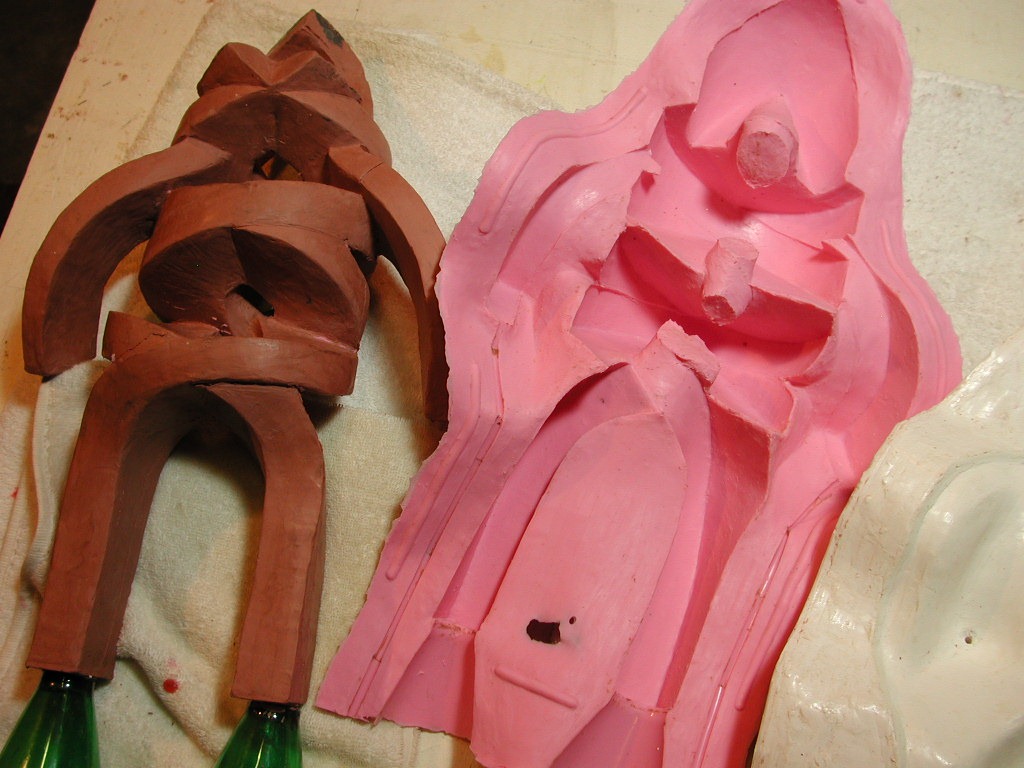
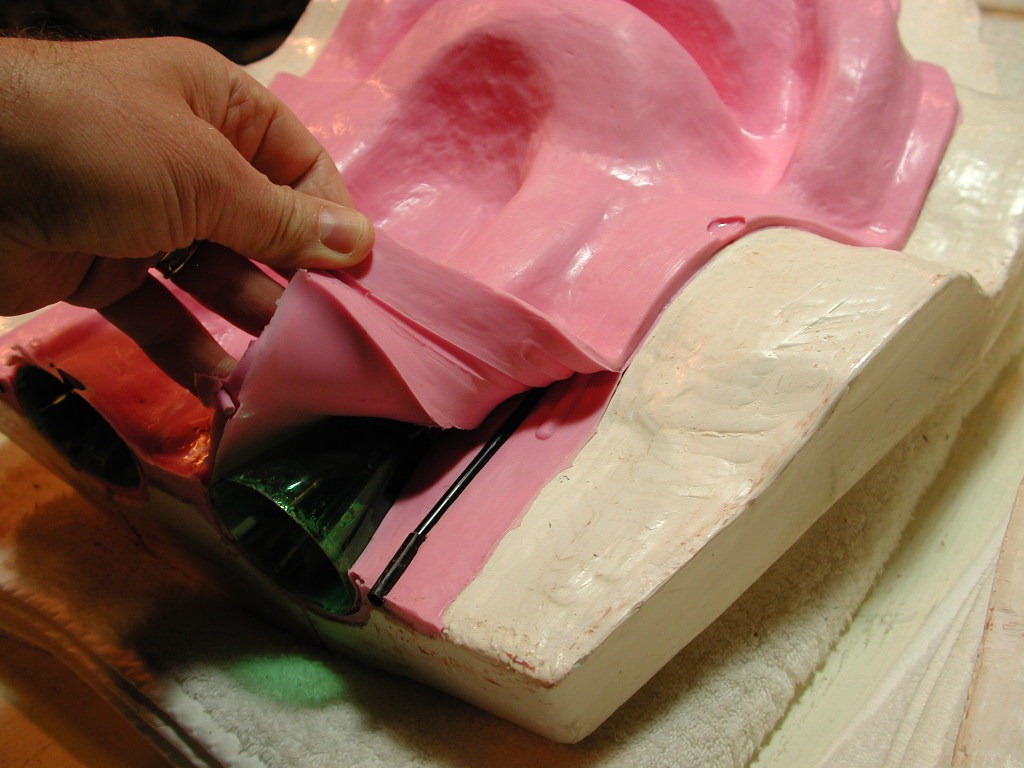
There is nothing left but to remove the model from inside the two halves of silicone mold. Starting at a corner I can peel apart the mold gently all around. Because of the release, the two parts will separate.

b_fullreveal

c_fullreveal

d_fullreveal

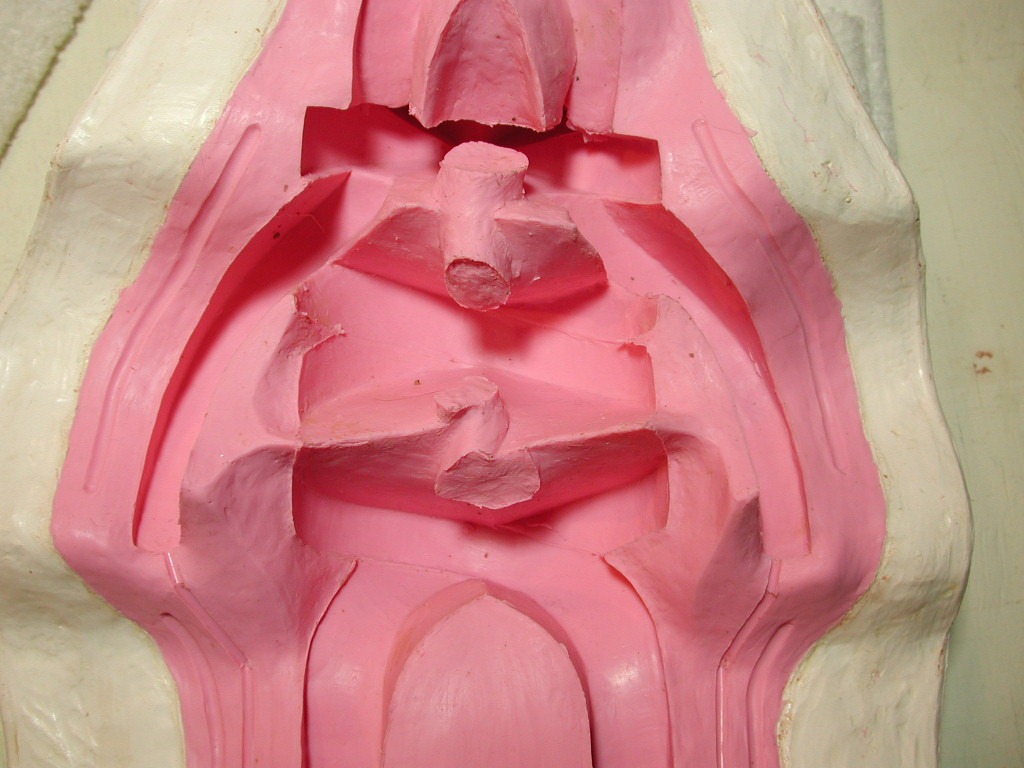
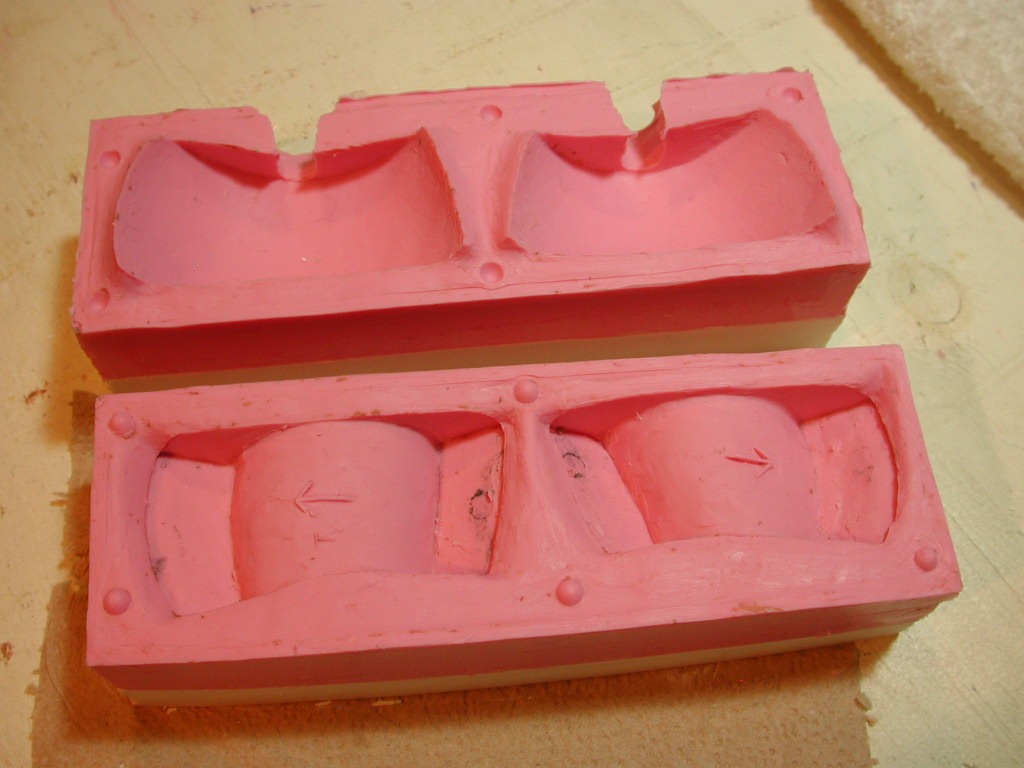
The deep crevices, and where there are holes through the model’s axis, are the trickiest, but because of the thinness of the mold layer, as I had planned and hoped, the mold bends away and removes easily enough, and cleanly, without tearing the model up any. That should mean my wax casts later will come out undamaged and with the minimum about of touchup needed.Those holes through the axis were critical in my planning of this piece from the beginning, in both the design of the model and the mold, and I am grateful that it all turned out so well.

Silicone back-

f_fullreveal

g_fullreveal

Silicone front-

i_fullreveal

j_fullreveal

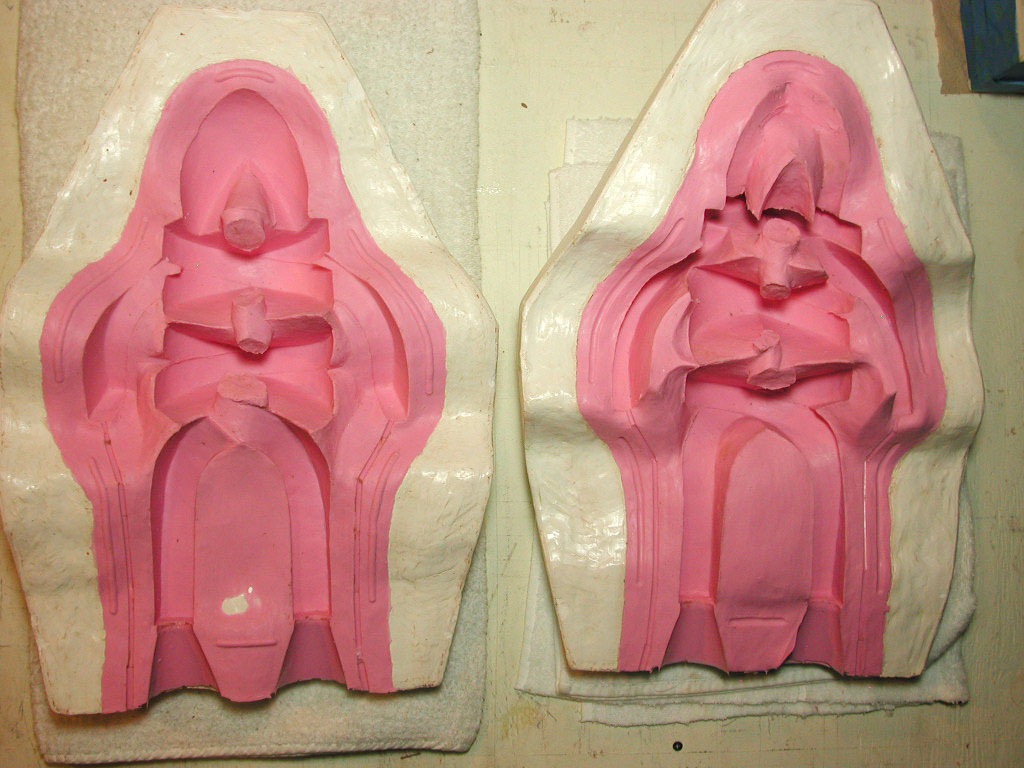
I surprise myself sometimes. With care and patience, I see that many difficult things are possible. The model, after so many months, now free, and in pretty good shape. And the two mold halves, complete. Complicated. It’s kind of amazing that all of that is two parts. The silicone rubber mold material is amazing.

h_fullreveal

l_fullreveal

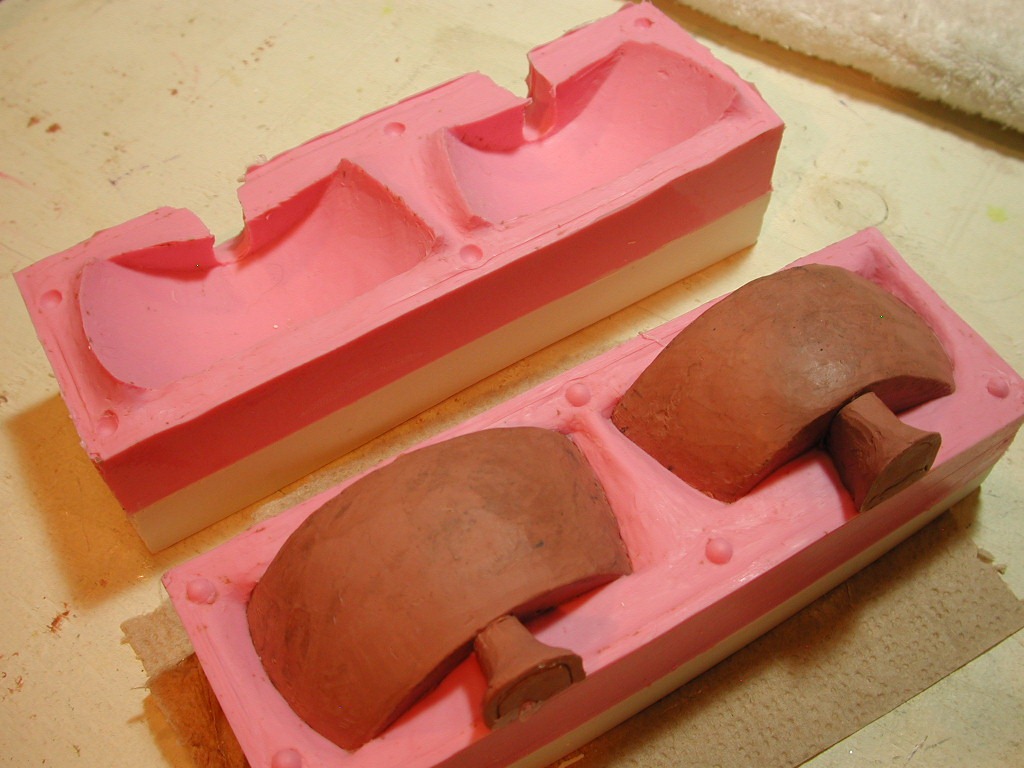
The little block mold of the two head-pieces turned out well. I’d had a brief scare where I doubted if I could definitely recall that I had applied the release or not, but I had, it all came apart just fine. I had poured a plaster top for the mold.

a_fullreveal

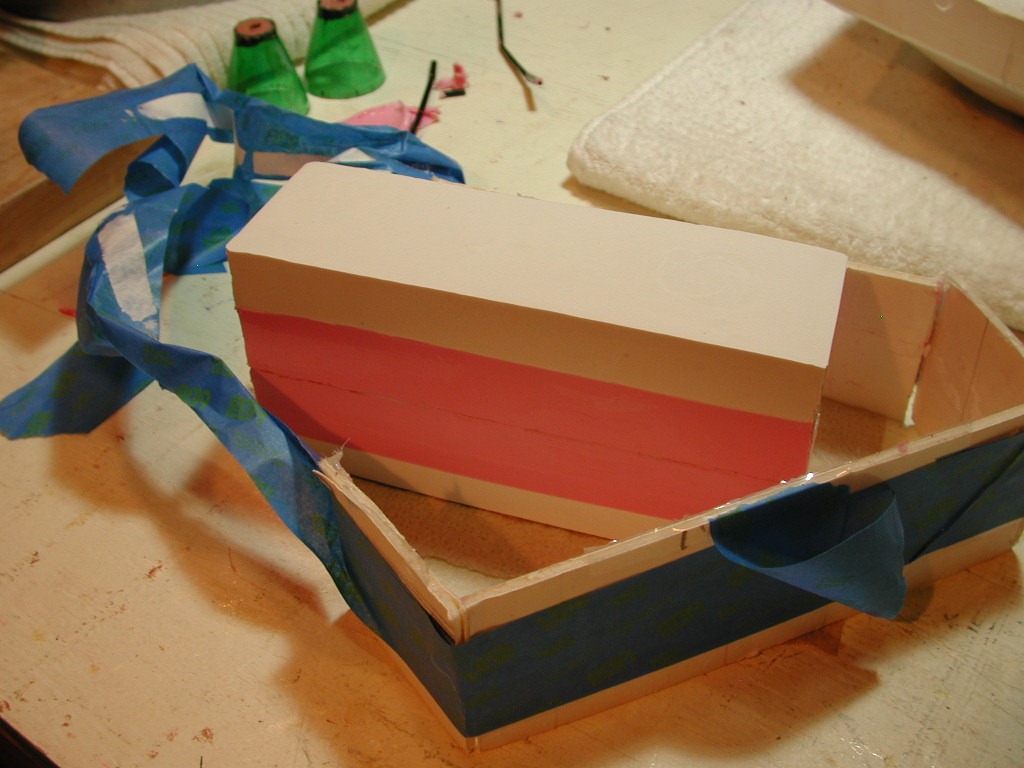
Remove the box

m_fullreveal

Split the mold

n_fullreveal

Remove the models. Done.

o_fullreveal

I’ll clean and wash the molds next. Then, I can’t think of anything to prevent me from casting a wax from this, and that will begin another sequence of complicated events leading up to the bronze pour itself. But before that, I am so overcome with a feeling of relief about this project coming to success that I may want to take a short break and do something nice. The weather’s getter good finally, and this Winter’s worth of effort is completed. It would be a nice thing if I took my wife on a date.

Silicone front

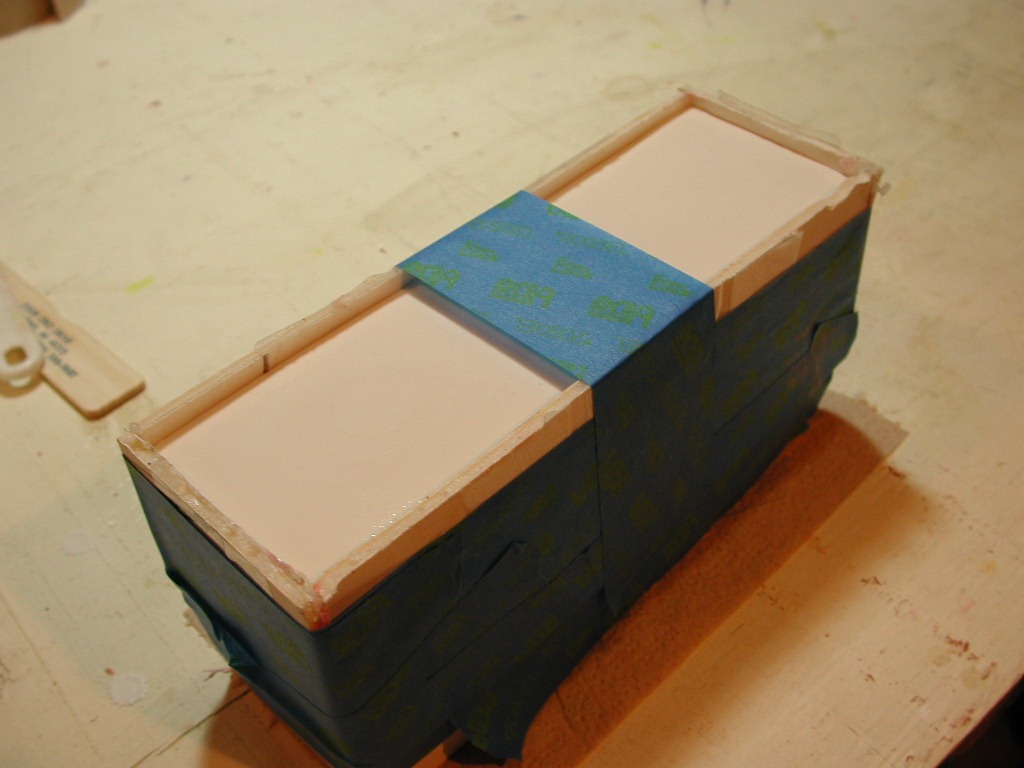
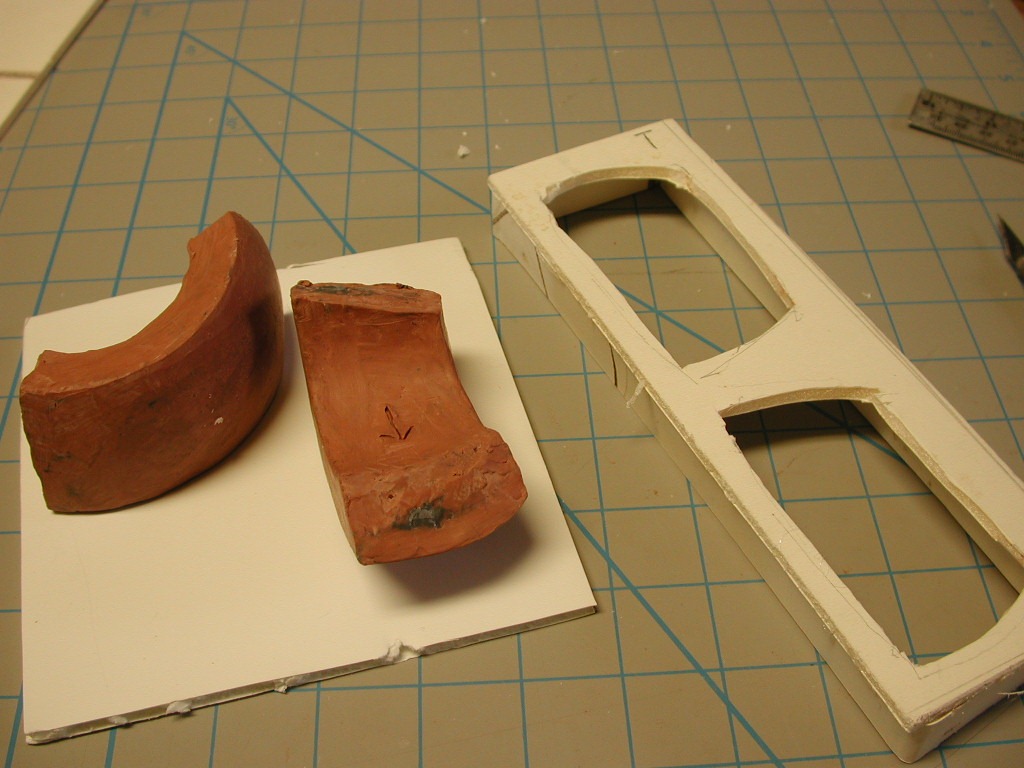
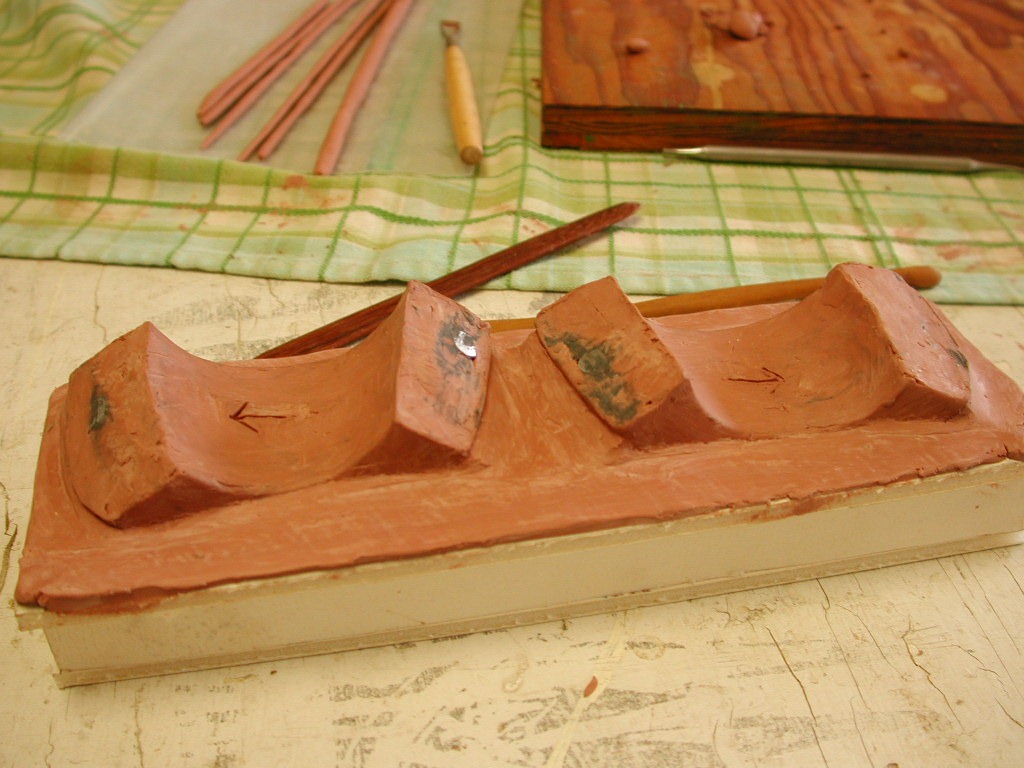
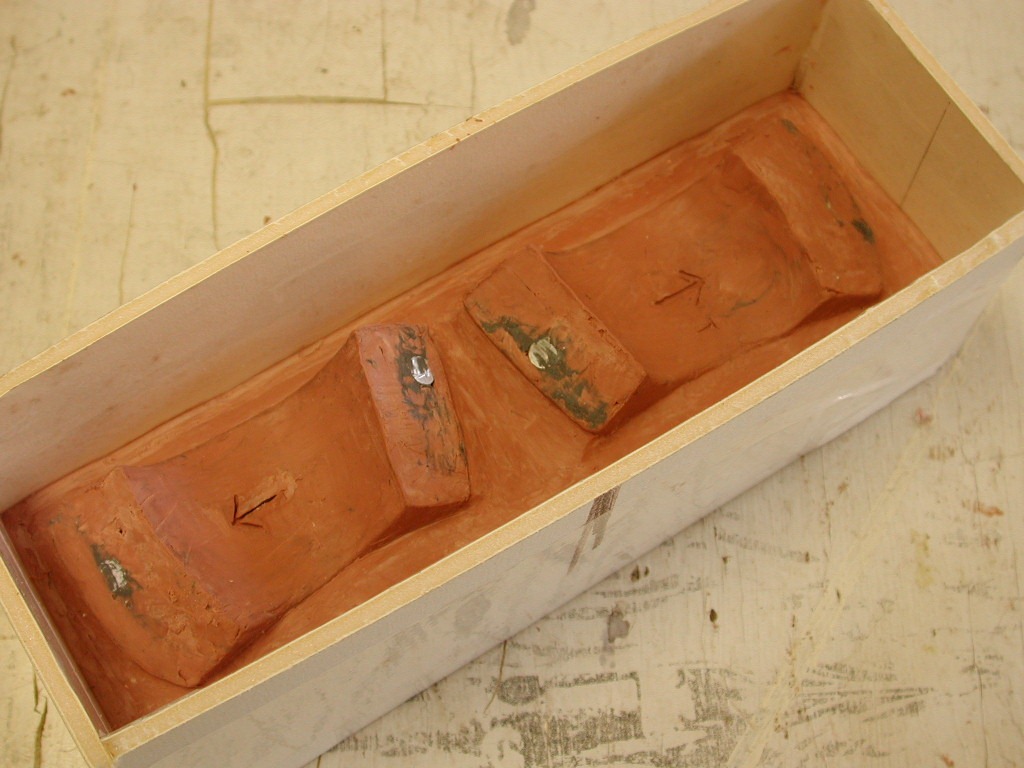
I’ve been holding back something; remember that I had to cut off two pieces which make the back of the head to get this mold to work? I need to make a quick box mold for these, because, if I’m smart, I will be mixing enough silicone material to fill my mold up with some leftover, and I’ll have this second mold to use it up in. So, the usual procedure. Make a cradle, model clay up to the parting line, and box it in.

a_siliconefront

b_siliconefront

c_siliconefront

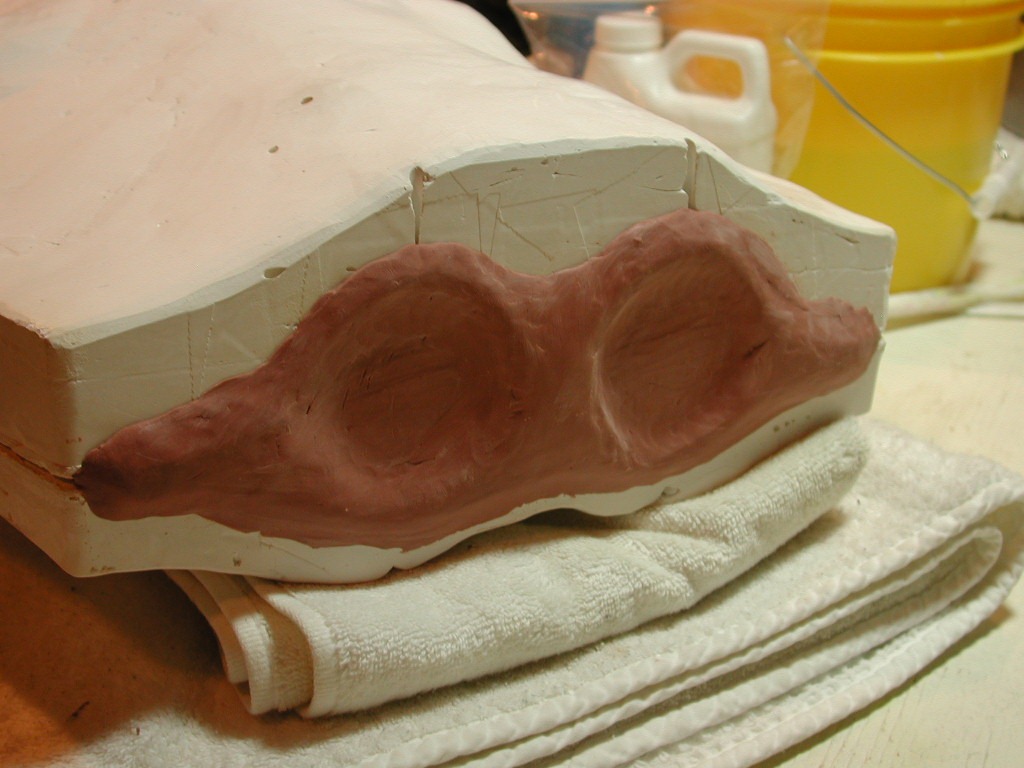
Next, I’m ready to pour the silicone blanket for the front side of the big mold.

It is especially important to apply mold release to all the surface of the clay model, and paste wax to the plaster shell that contains it; otherwise, the silicone rubber will stick tenaciously to both and make it impossible to part the mold later, destroying the work entirely. I use a spray-on product, Mann Ease-Release 200, which is hydrocarbons in ether base, that I get from Smooth-On, same place I get the silicone rubber (Mold Max 30) from . The paste wax is Briwax, a furniture wax with a lot of solvent of some kind like Toluene that vapors off quickly. I get it at a hardware store. USE RELEASE, over use it, and use it AGAIN. And if you can’t remember for sure, use it again. That’s where this high-end release is good; it doesn’t build up and alter the model’s surface like many other common household substances which are often use for release. I won’t even name them.

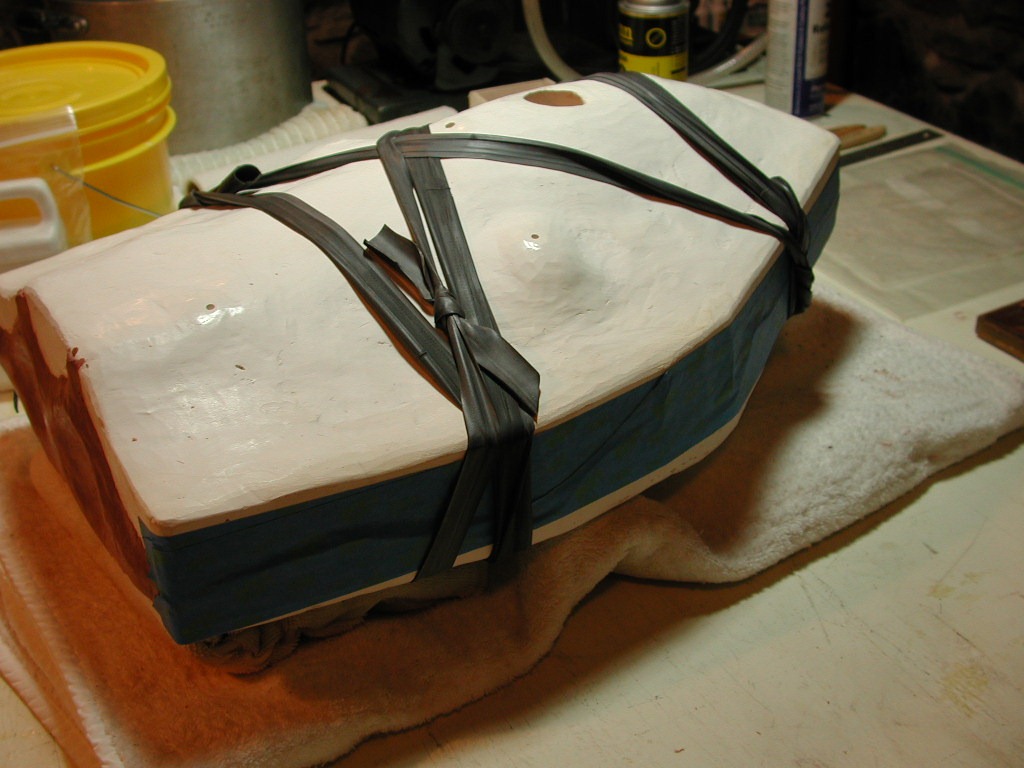
After that, I assemble the mold, and seal off the bottom with a flat clay piece, which is the pouring funnel area for the finished mold, to keep the silicone in. Wrap the mold seam with tape, to seal, and bind it up with a rubber strap, a cut up bicycle inner tube. They work great.

d_siliconefront

e_siliconefront

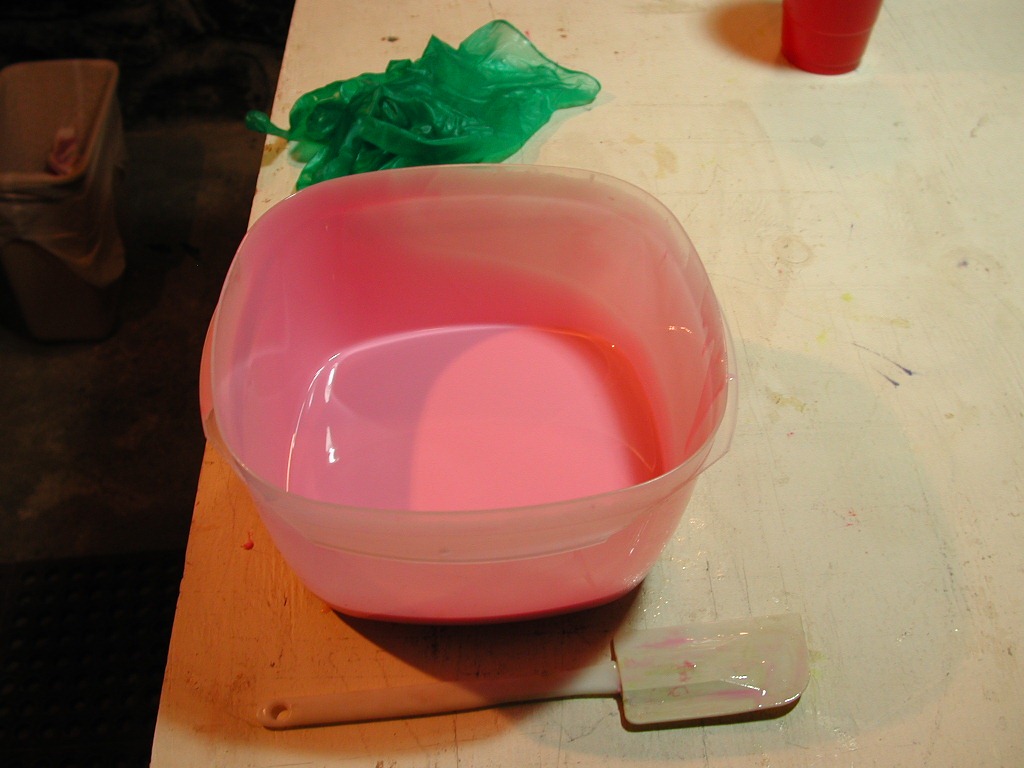
Next, I mix the silicone. I never have pictures of this because I’m too busy working quickly before the material passes it’s pot life. Here’s the summary: Decide how much silicone you’ll need to fill the mold. This is hard. What I do, is weigh the clay blanket that I removed earlier. Based on a lot of experience, I make some calculations. The weight of clay times 1.06 equals the volume cubic inches of the clay. The volume cubic inches times .68 equals the weight of the Mold Max 30 silicone product that I’ll need. Think about this. The clay is heavier that the silicone rubber, but the volume is the same for both, so I’ll want this formula to figure how much less of the silicone by weight I’ll need to fill the same volume as the clay. I derived it from the product’s specification sheets. Believe it, I have a whole notebook of these numbers worked out for each mold I make. There is more: Realize also, the clay blanket doesn’t precisely define the volume of the mold. It is like a loose drape over the sculpture. By much trail and error, I have learn that the volume of clay is about one half the volume of the space the silicone needs to fill. So double the volume calculation and work from that. You want to have enough to pour the whole mold at once. You do not want to have to mix up extra while the first batch is setting-up. You can, but it is stupid. I have done it too often, trying to be frugal with the cost of material. Just mix up what you know will be more than you need, and have some other small molds going which you can pour the extra amount into at the moment. It is better to mix up too much and throw it away, than leave the material on the shelf getting old past its expiration date. For this mold, I am mixing double plus another one-half, or 250%, of the volume of the original clay blanket. This mold is intricate, so I’m also using a silicone thinner at 5% of the total in order to help it flow better into and throughout the mold.

You can find instructional videos on the web which explain the proper mixing and pouring of silicone rubber material.

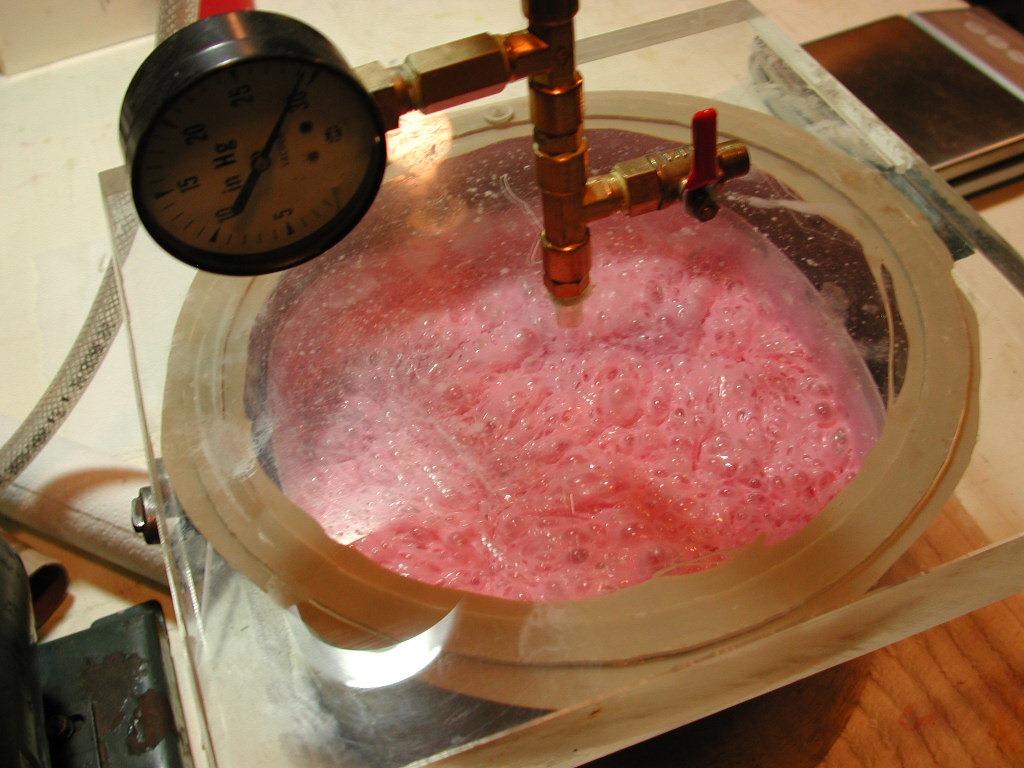
It helps a lot to use a vacuum pump to depressurize the air bubbles out of the mix. You’ll get a smoother mold without the chance of small pin-bubbles marring the surface details.

f_siliconefront

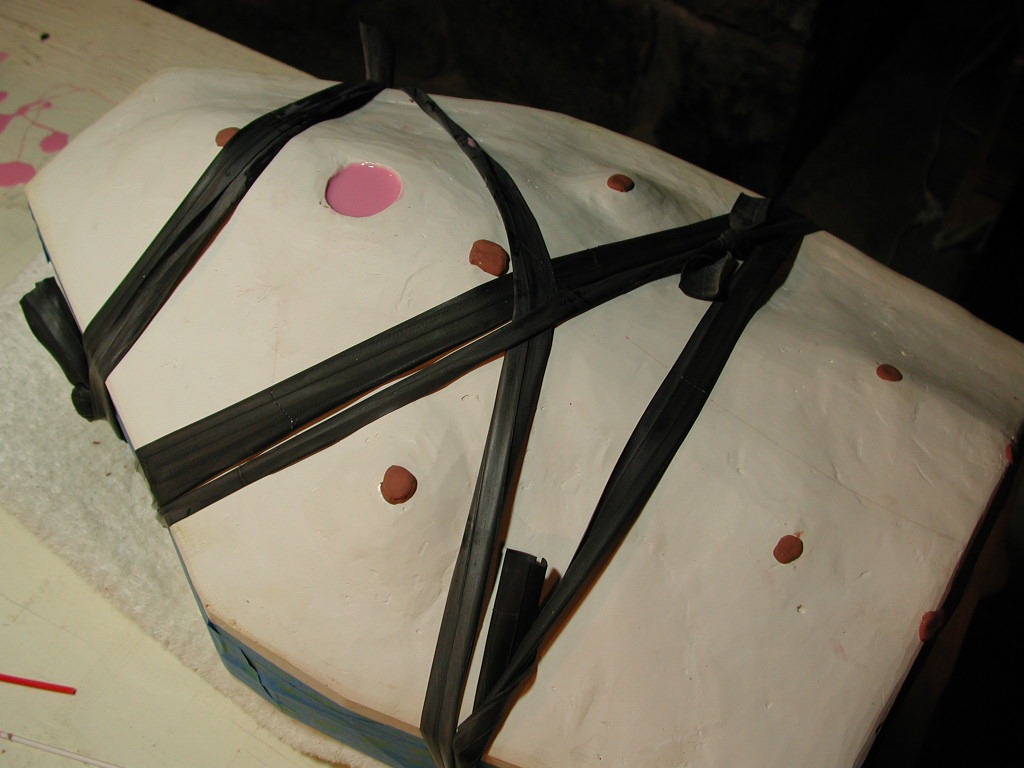
The silicone is poured in from the highest point of the mold. Various other high spots in the mold are vented to allow air to escape, so that the rubber can fill the mold completely. As each vent shows rubber flowing out of it, it is plugged with a bit of clay, so that the rubber will continue to fill higher and higher. There are eight vents to see in this picture.

g_siliconefront

On the side, is the box mold for the head pieces.

h_siliconefront

And some leftover. That’s good.

i_siliconefront

It’s a lot. A lot of planning, a lot of work, a lot of time. Truth is, it stresses me out, doing this. Sometimes, I think I should find another way to live my life.