Author Archives: matthew DG

Unknown's avatar

About matthew DG

What I'm making & seeing & saying

Silicone front

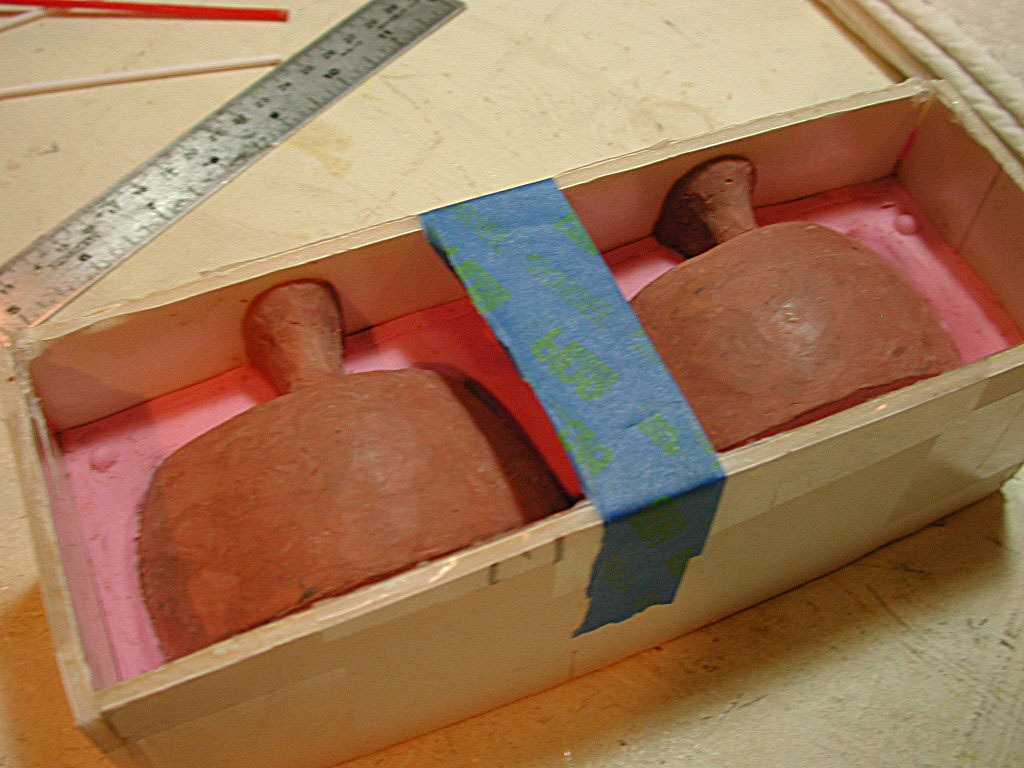
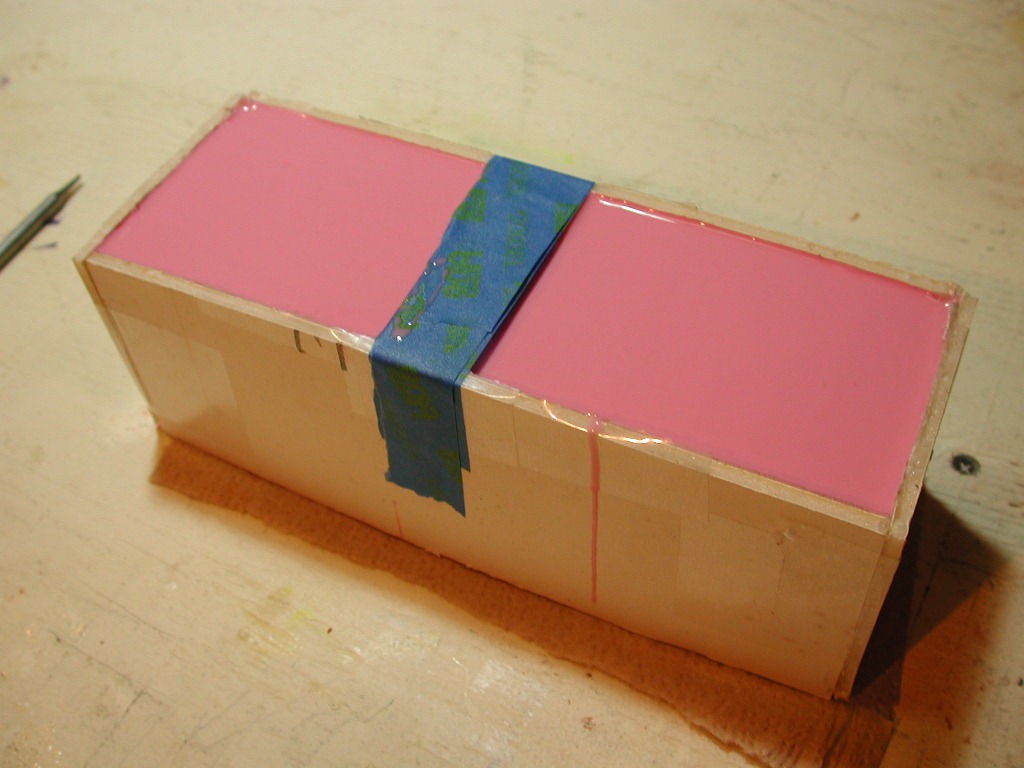
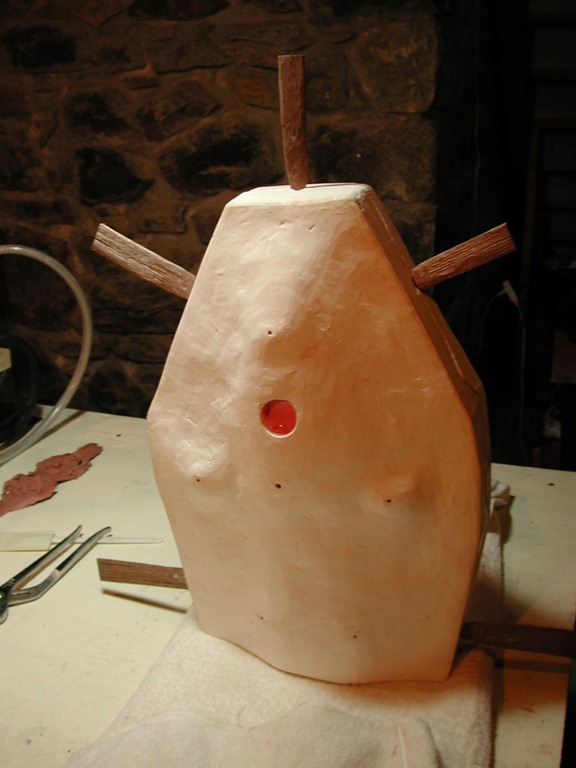
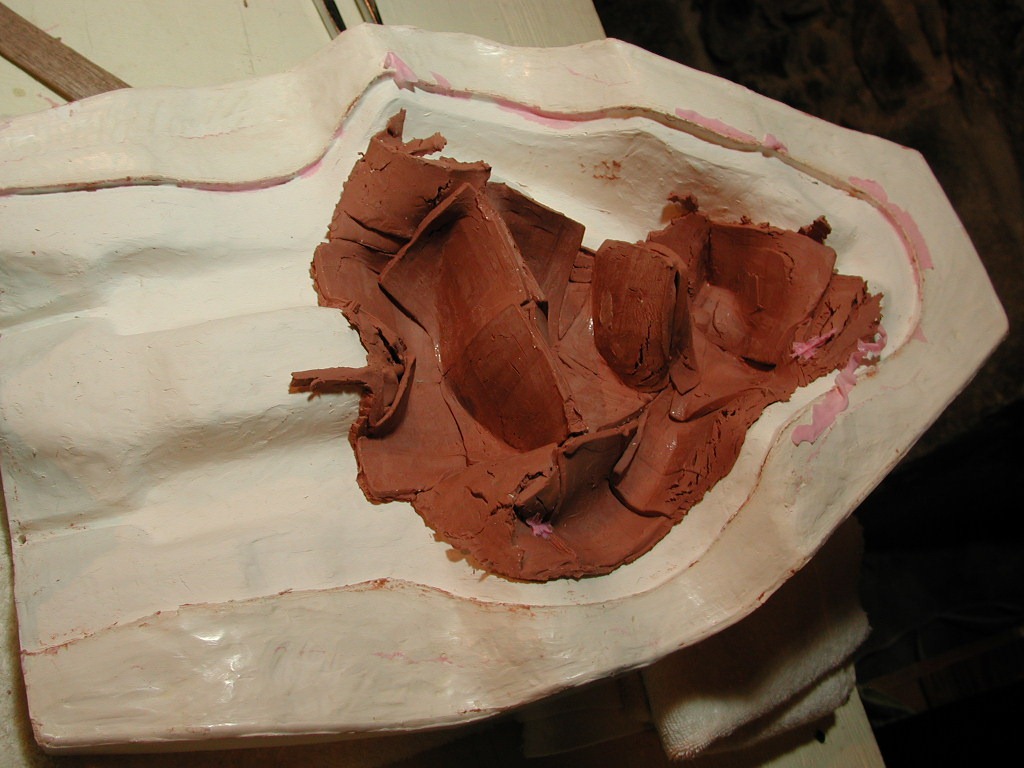
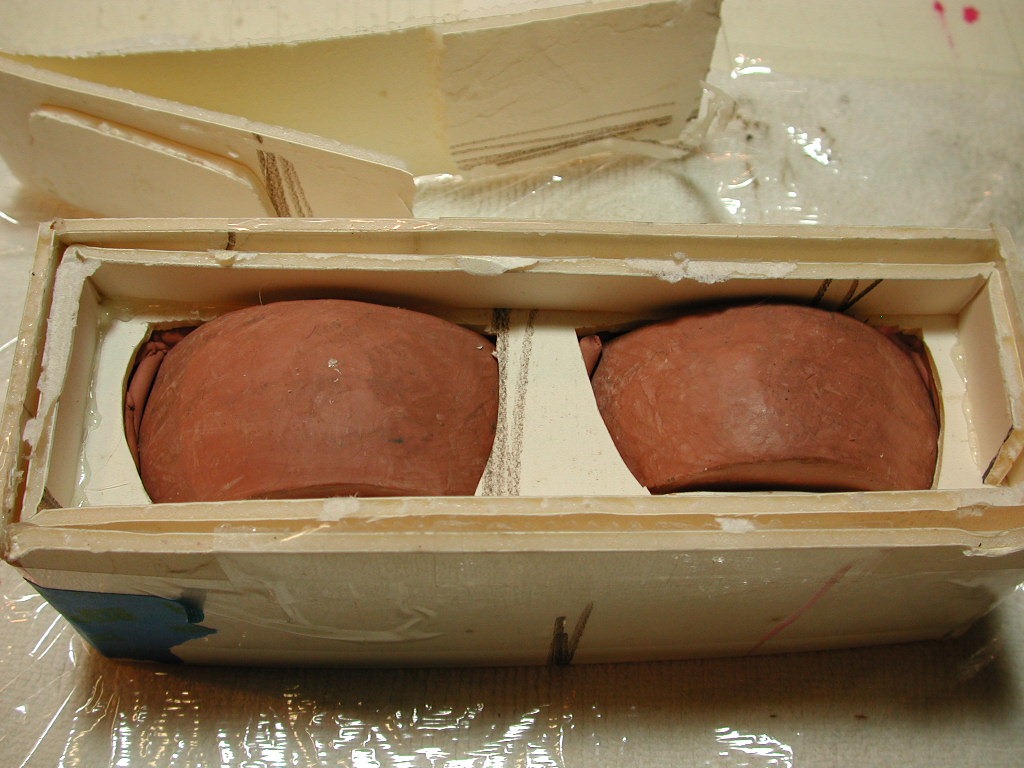
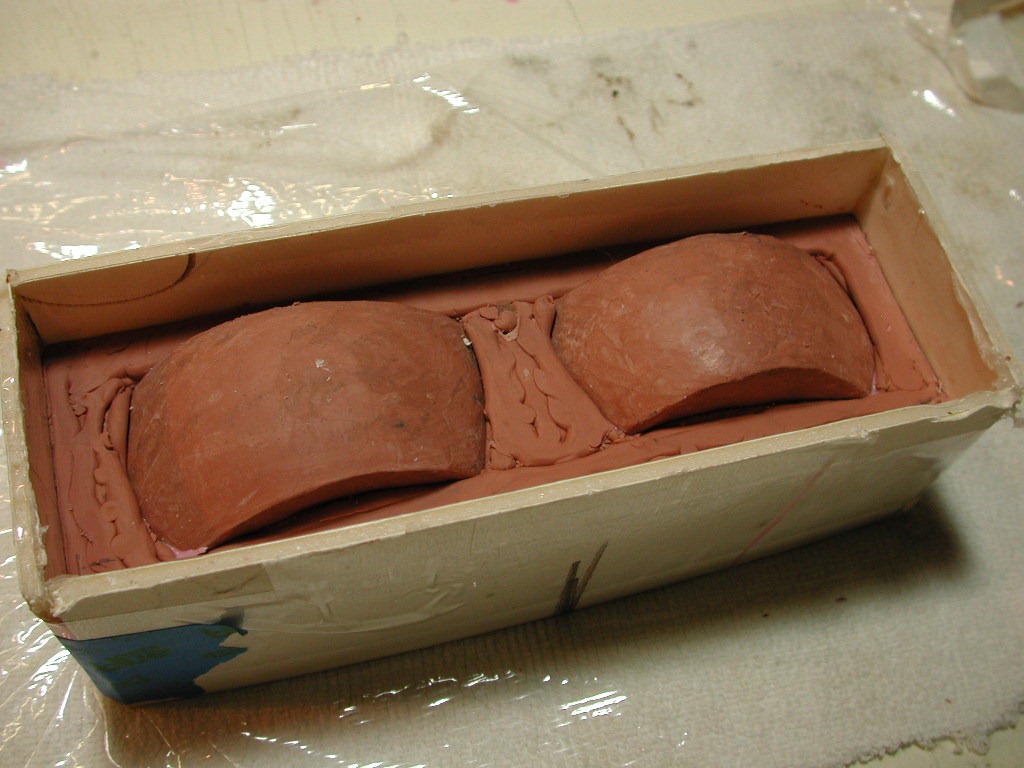
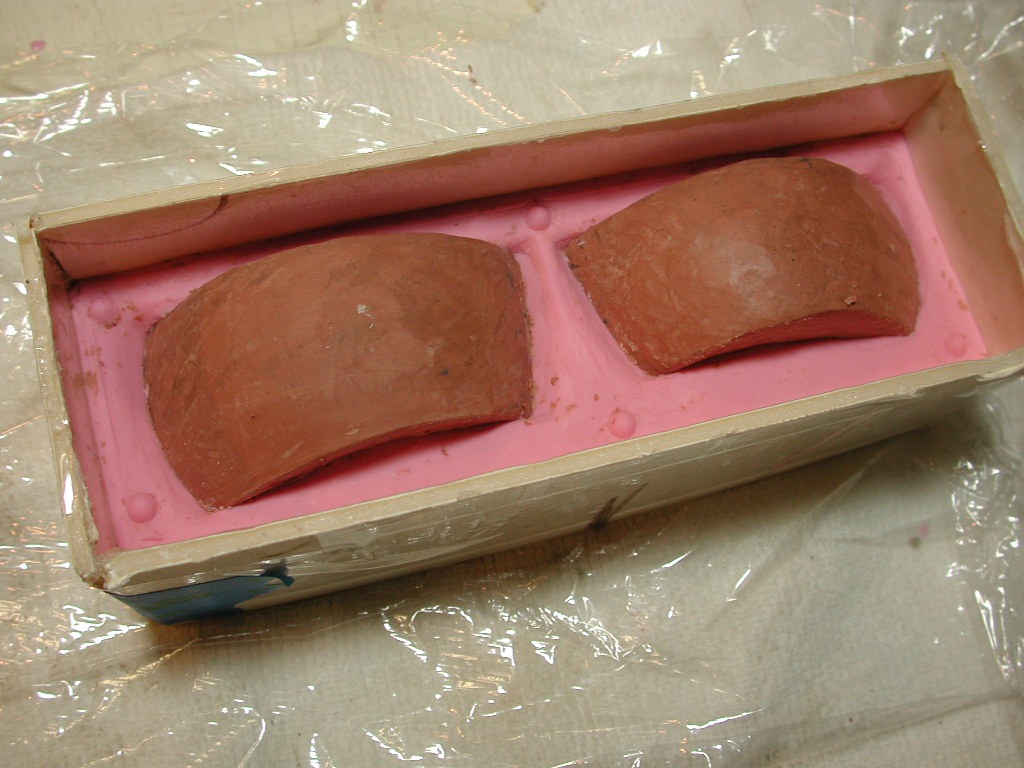
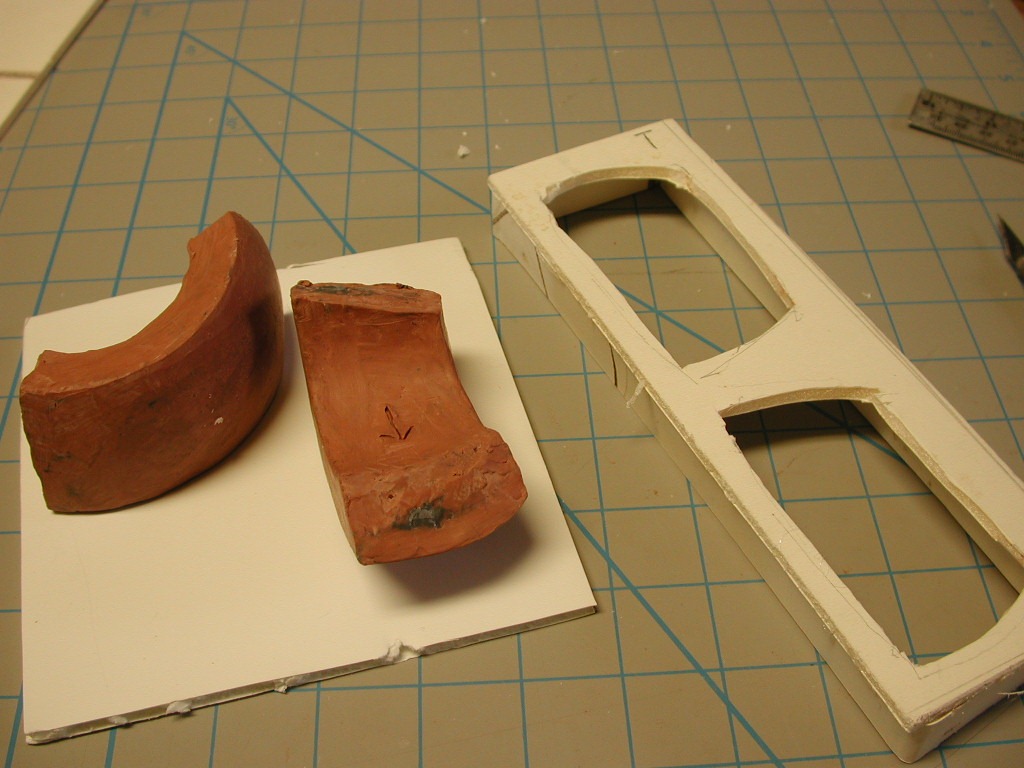
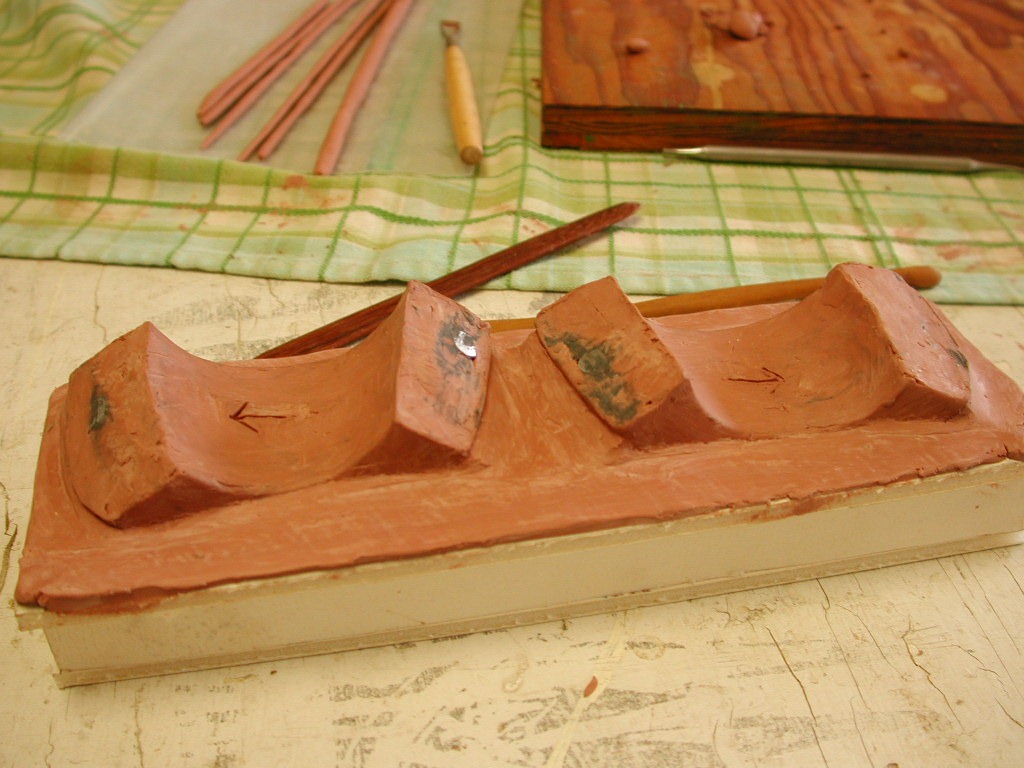
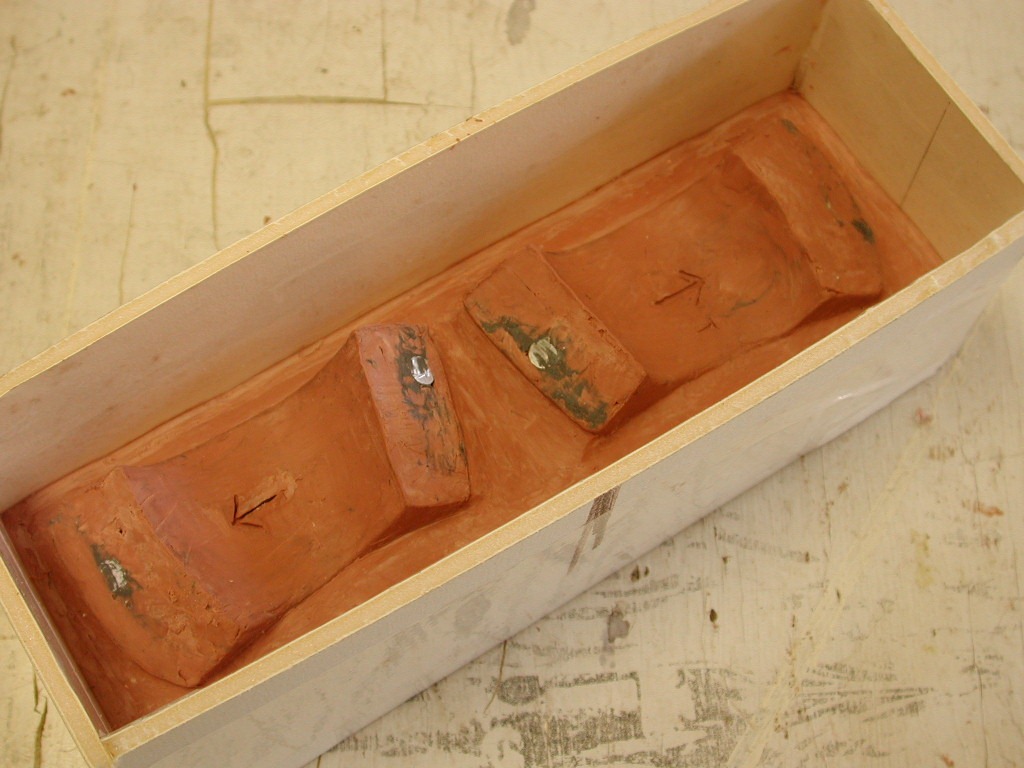
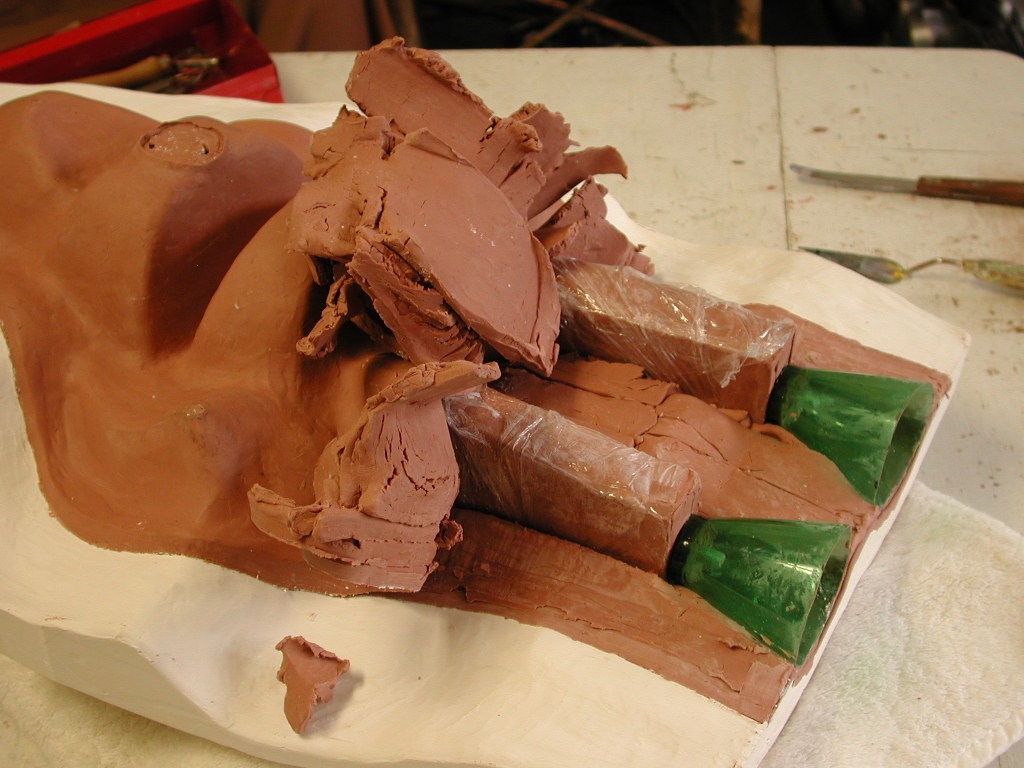
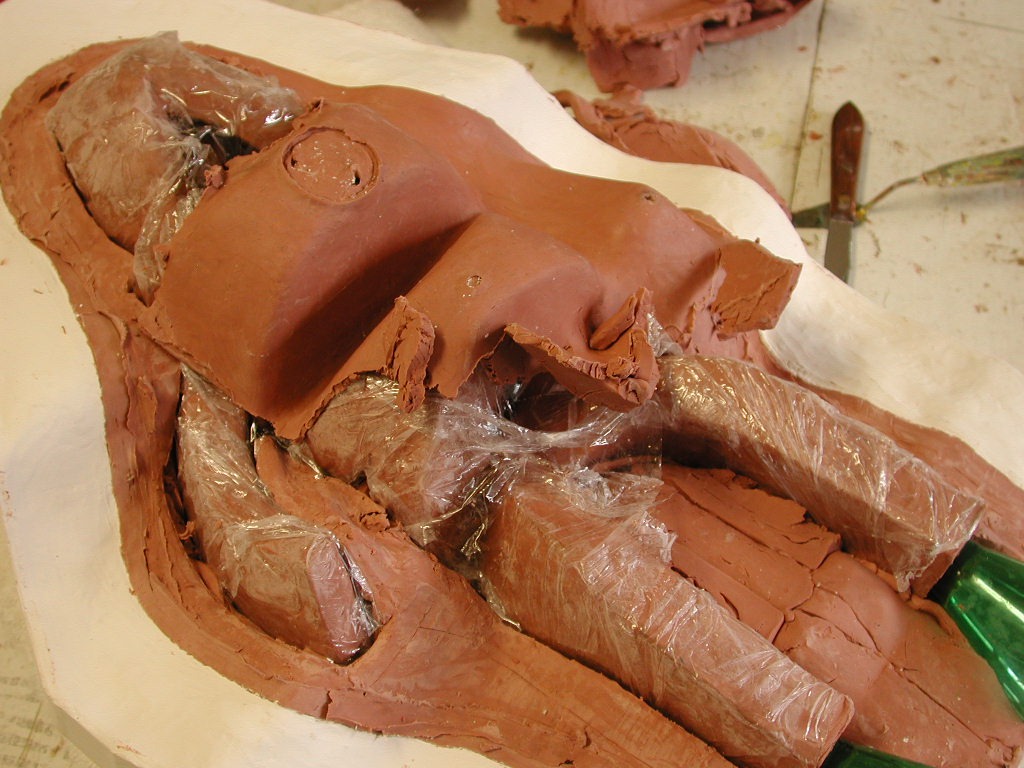
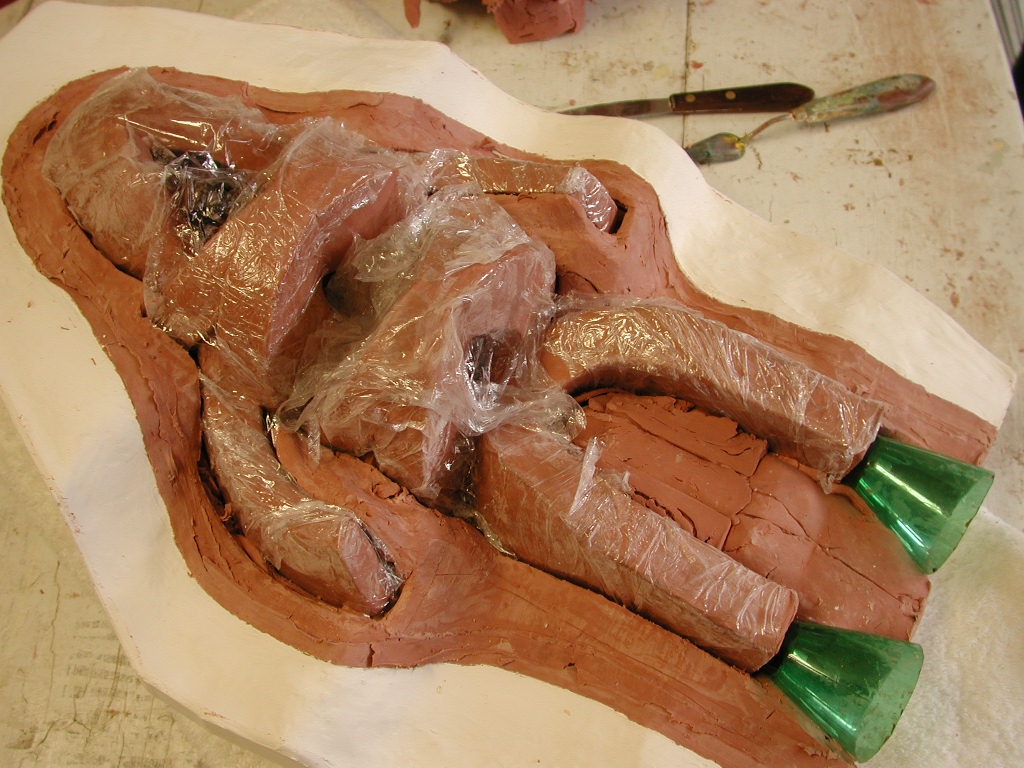
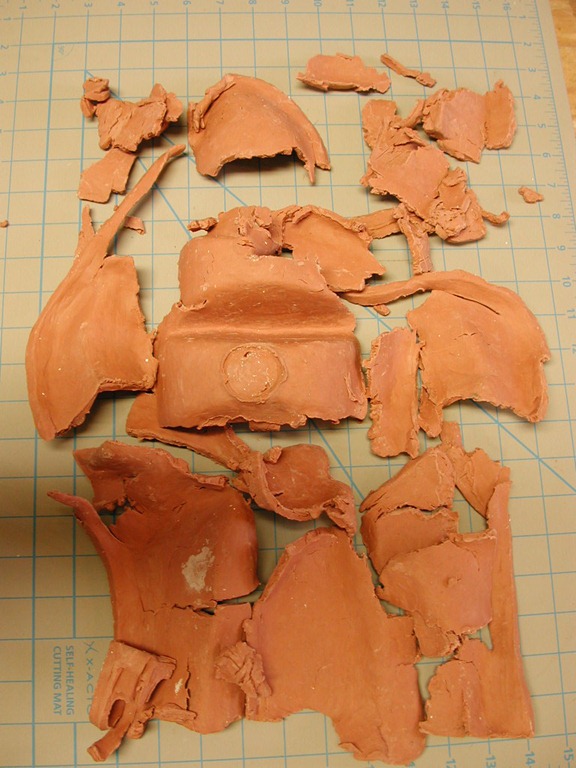
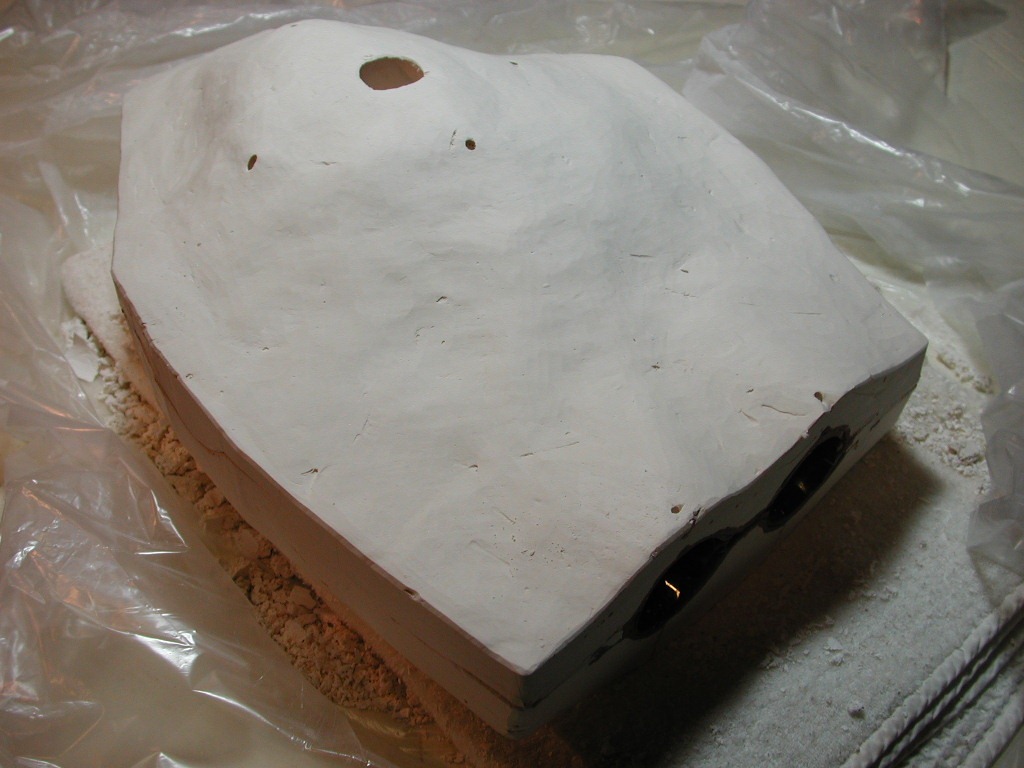
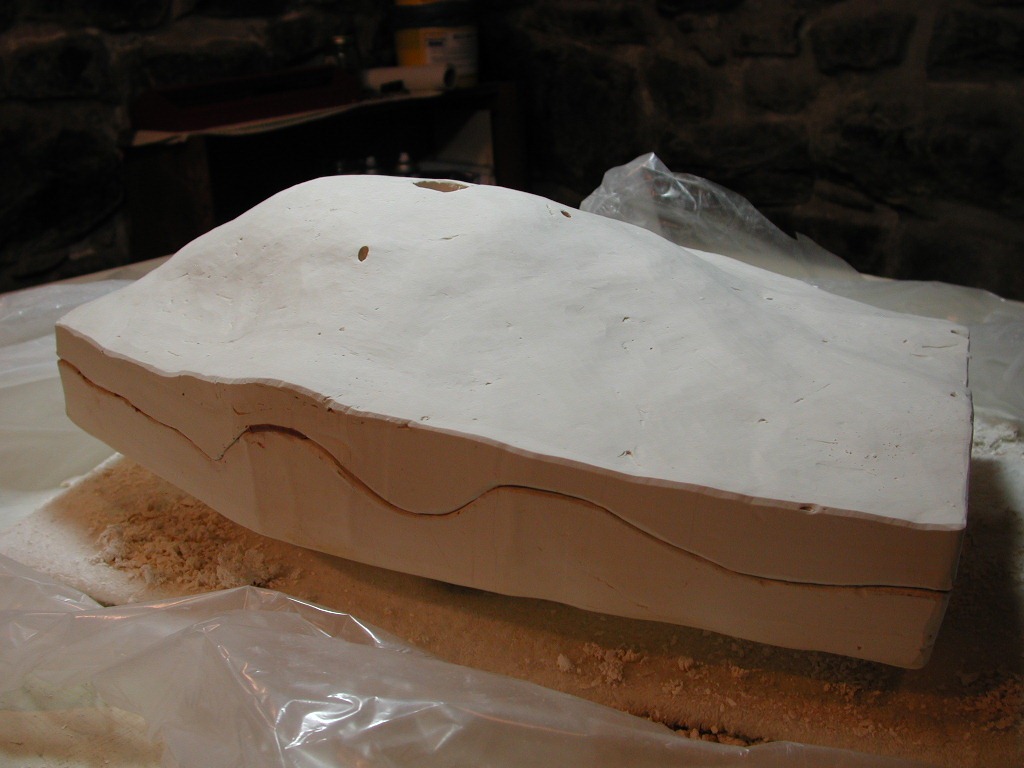
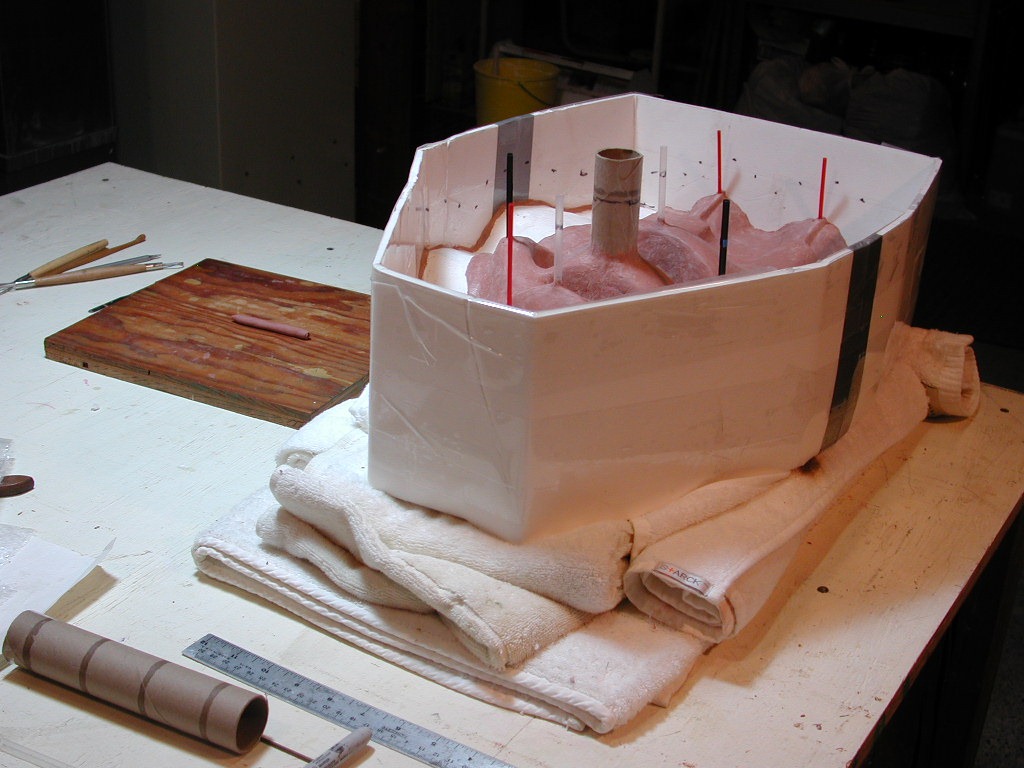
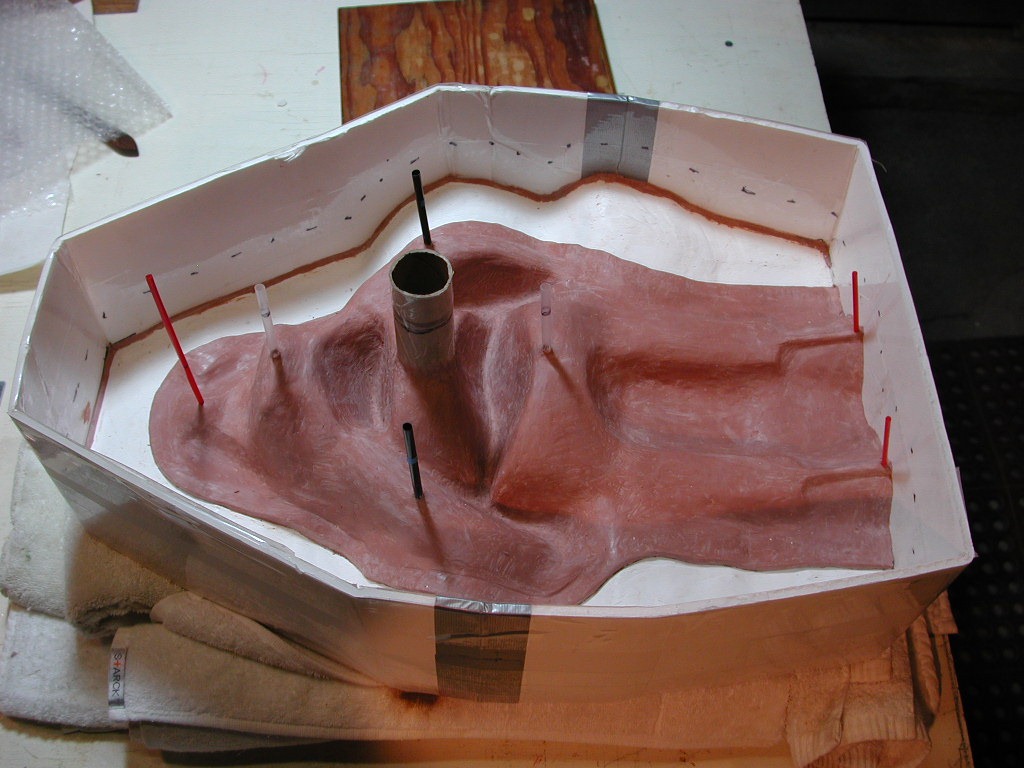
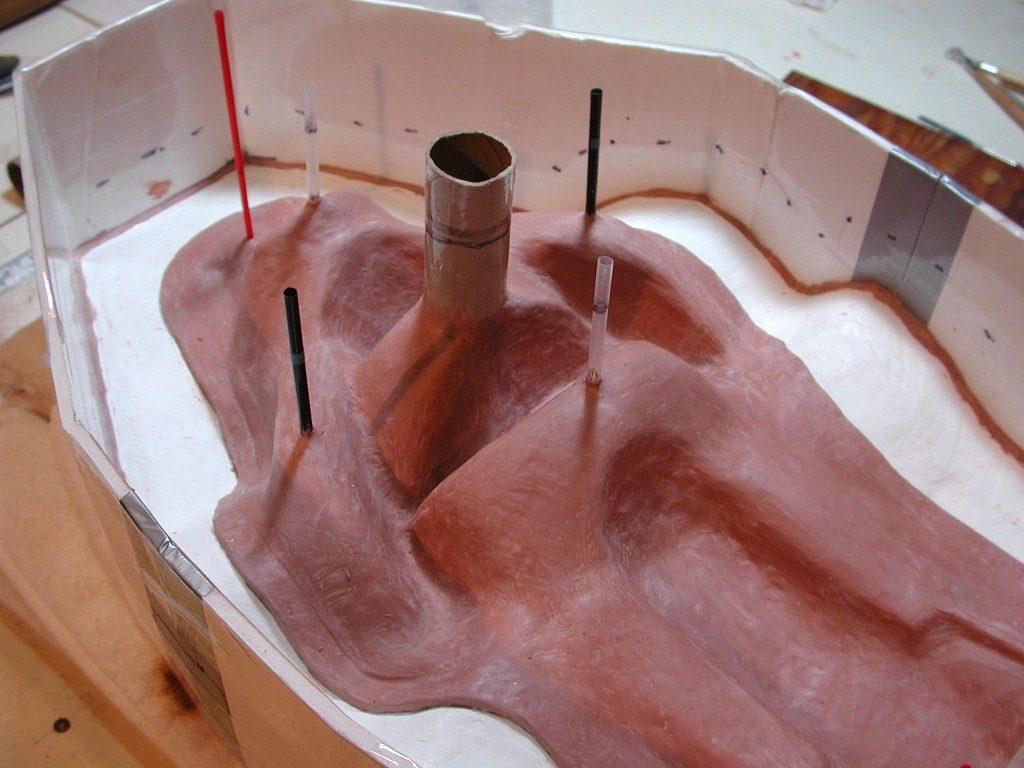
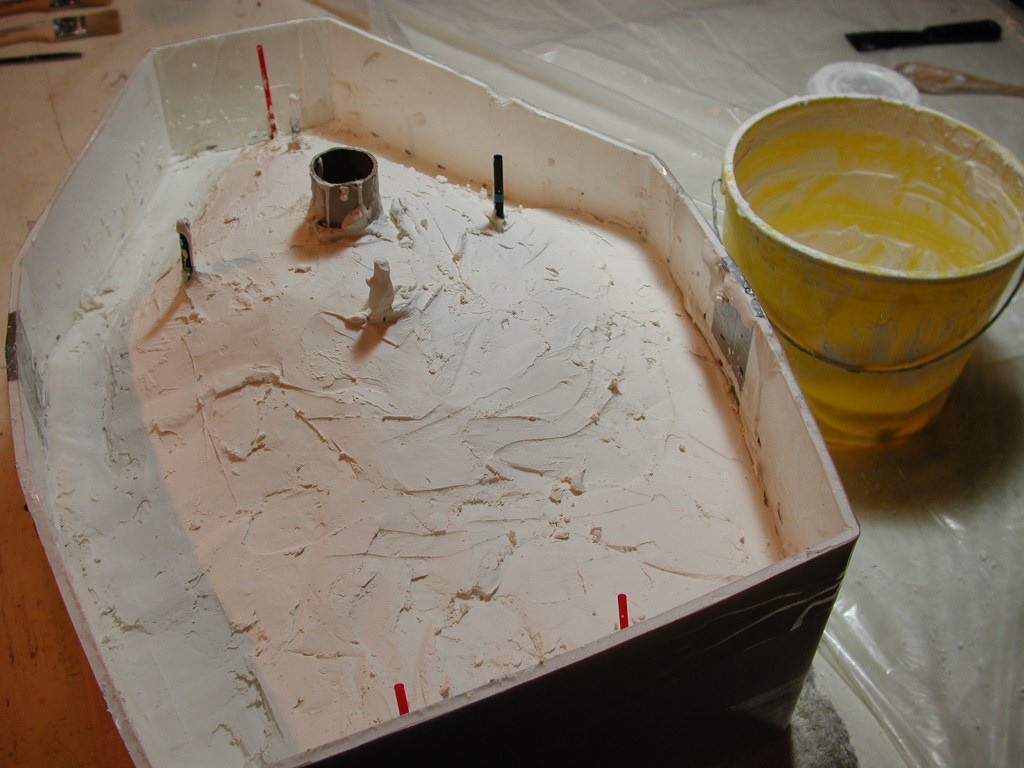
I’ve been holding back something; remember that I had to cut off two pieces which make the back of the head to get this mold to work? I need to make a quick box mold for these, because, if I’m smart, I will be mixing enough silicone material to fill my mold up with some leftover, and I’ll have this second mold to use it up in. So, the usual procedure. Make a cradle, model clay up to the parting line, and box it in.

a_siliconefront

b_siliconefront

c_siliconefront

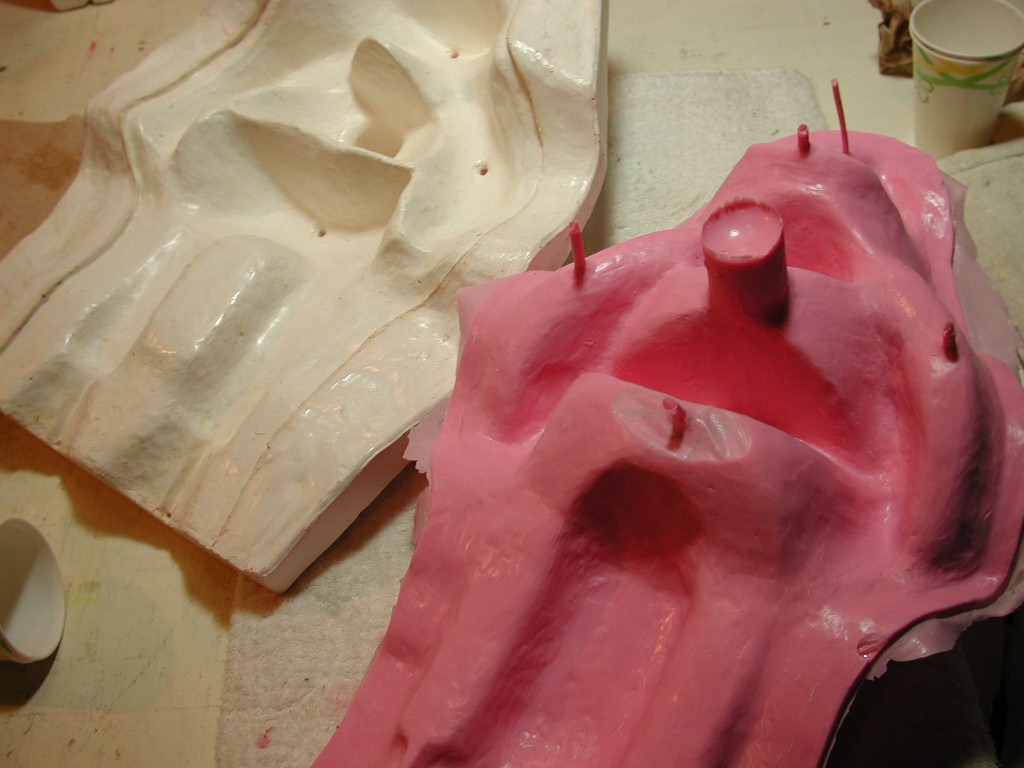
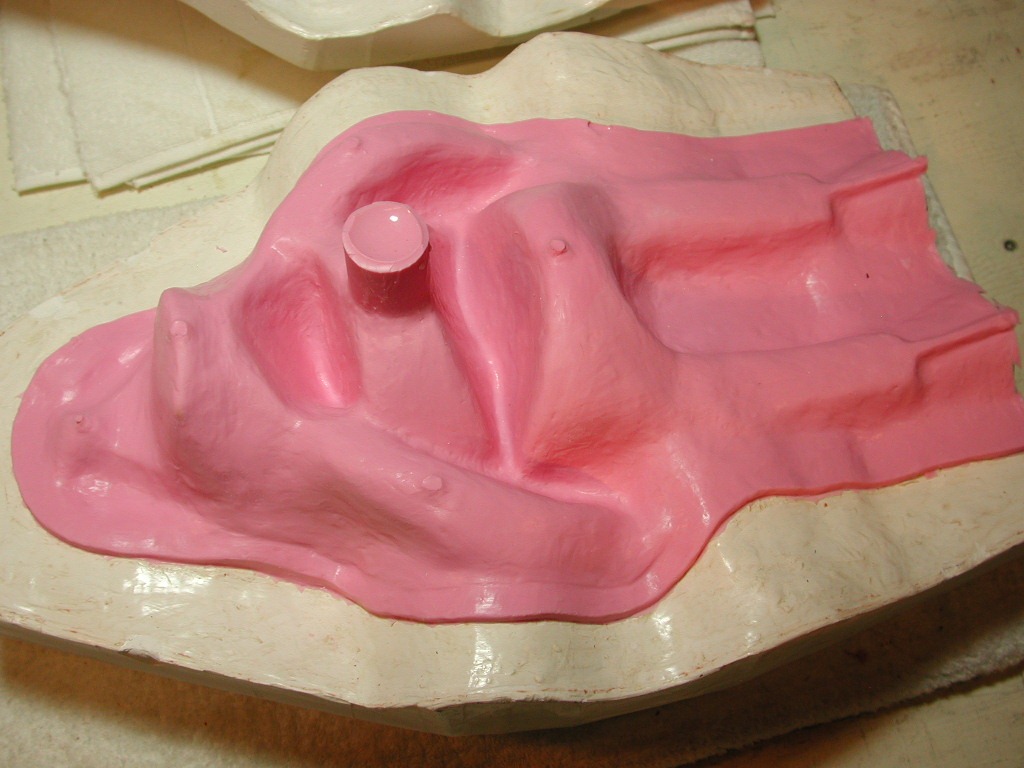
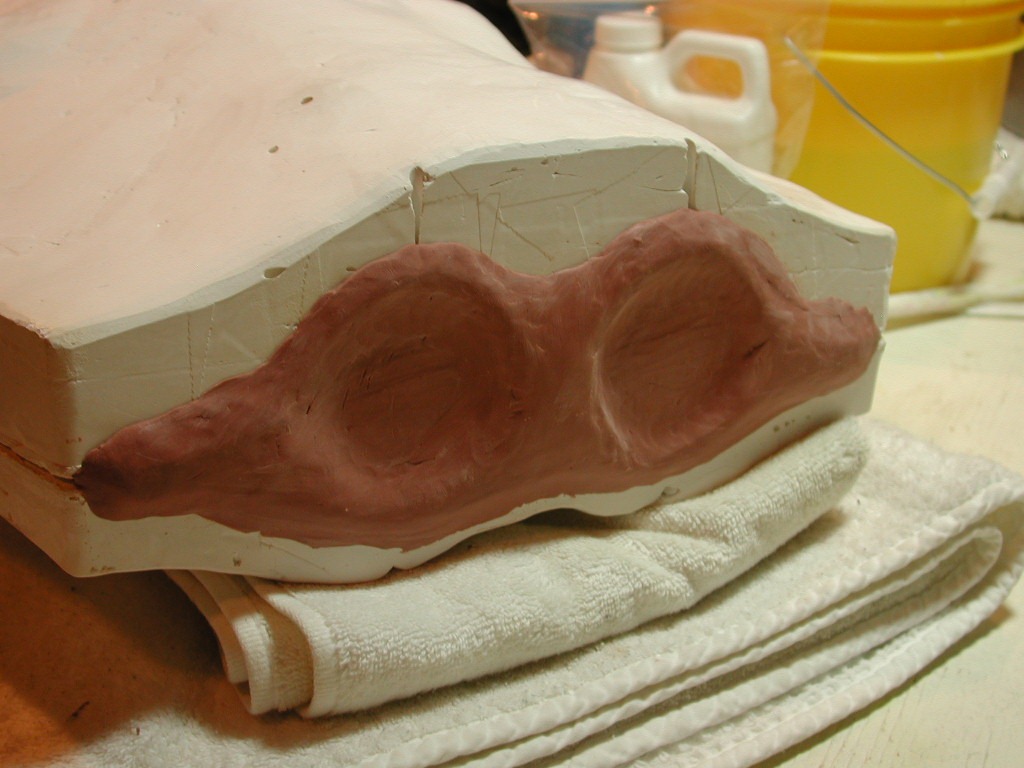
Next, I’m ready to pour the silicone blanket for the front side of the big mold.

It is especially important to apply mold release to all the surface of the clay model, and paste wax to the plaster shell that contains it; otherwise, the silicone rubber will stick tenaciously to both and make it impossible to part the mold later, destroying the work entirely. I use a spray-on product, Mann Ease-Release 200, which is hydrocarbons in ether base, that I get from Smooth-On, same place I get the silicone rubber (Mold Max 30) from . The paste wax is Briwax, a furniture wax with a lot of solvent of some kind like Toluene that vapors off quickly. I get it at a hardware store. USE RELEASE, over use it, and use it AGAIN. And if you can’t remember for sure, use it again. That’s where this high-end release is good; it doesn’t build up and alter the model’s surface like many other common household substances which are often use for release. I won’t even name them.

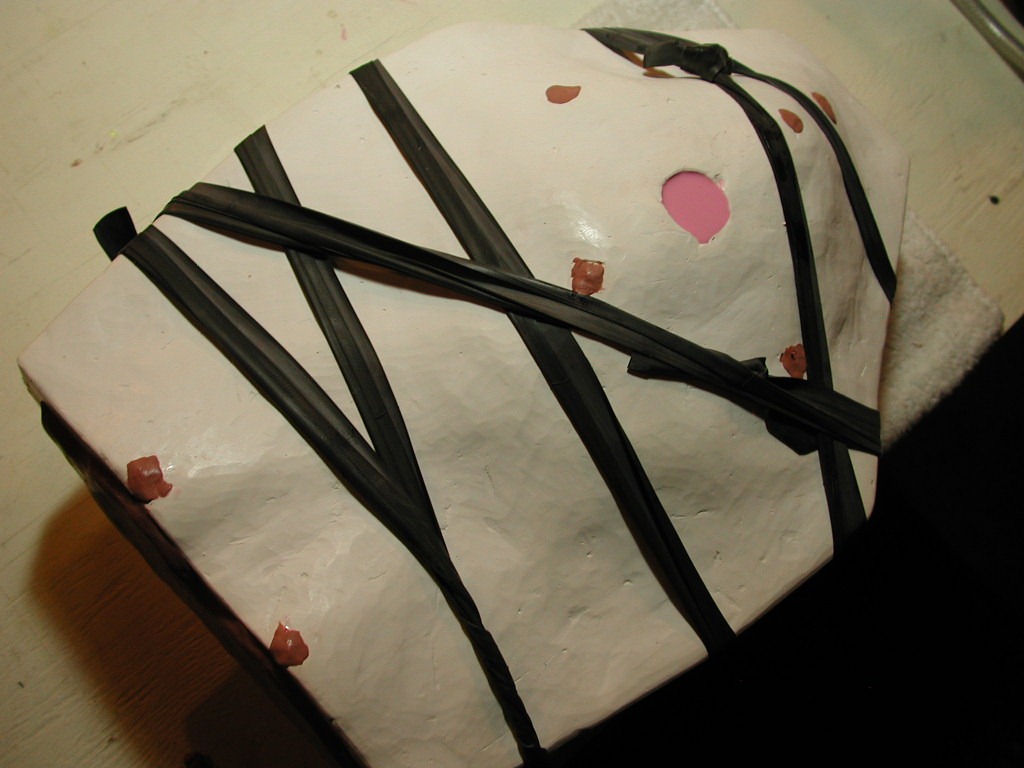
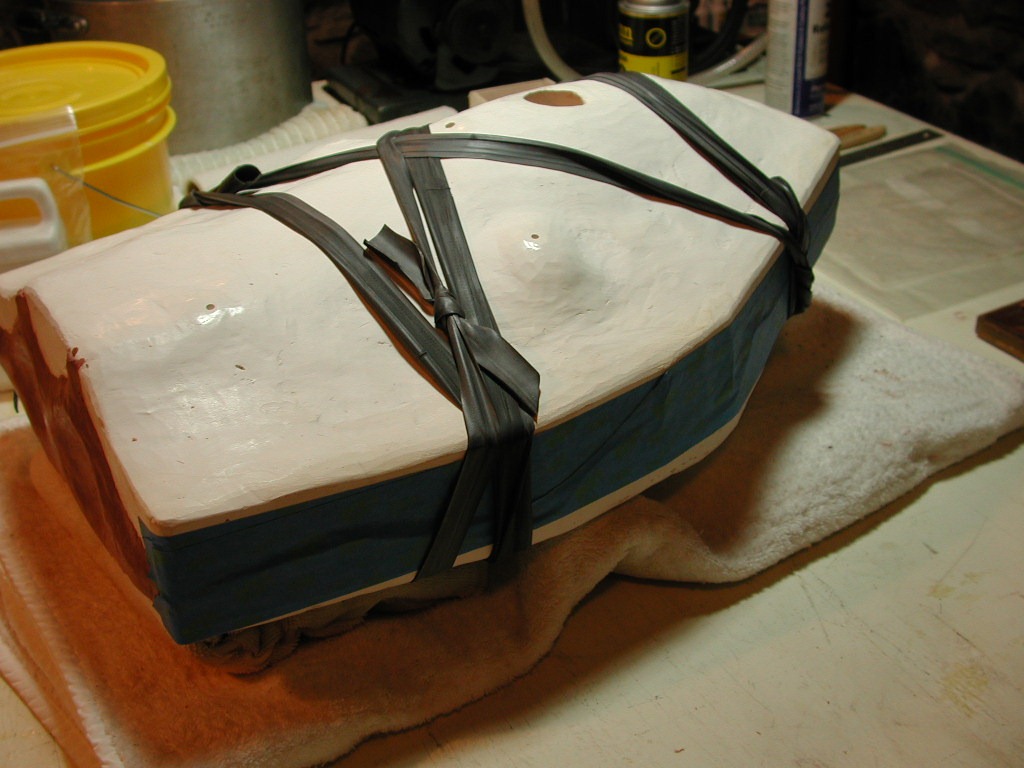
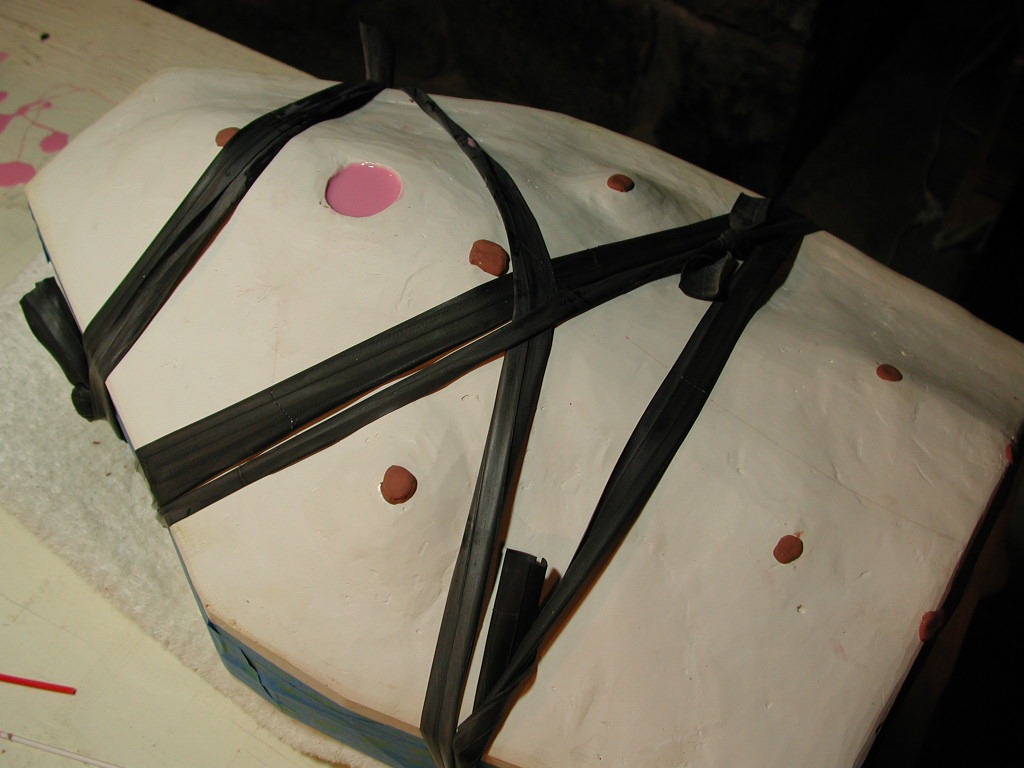
After that, I assemble the mold, and seal off the bottom with a flat clay piece, which is the pouring funnel area for the finished mold, to keep the silicone in. Wrap the mold seam with tape, to seal, and bind it up with a rubber strap, a cut up bicycle inner tube. They work great.

d_siliconefront

e_siliconefront

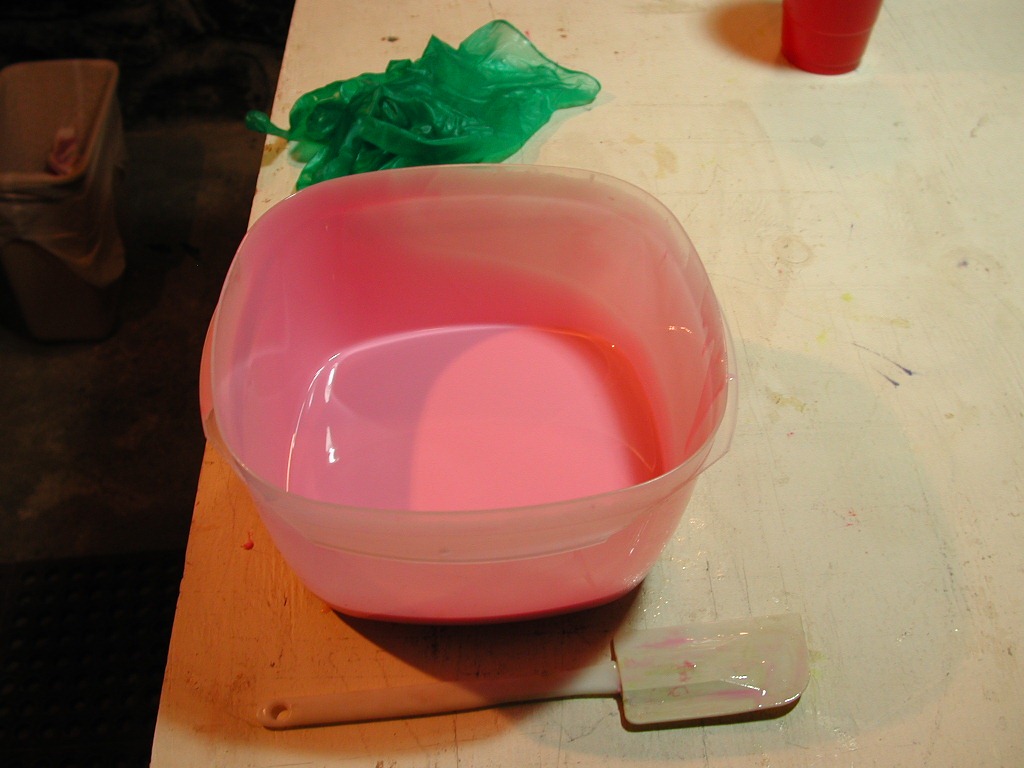
Next, I mix the silicone. I never have pictures of this because I’m too busy working quickly before the material passes it’s pot life. Here’s the summary: Decide how much silicone you’ll need to fill the mold. This is hard. What I do, is weigh the clay blanket that I removed earlier. Based on a lot of experience, I make some calculations. The weight of clay times 1.06 equals the volume cubic inches of the clay. The volume cubic inches times .68 equals the weight of the Mold Max 30 silicone product that I’ll need. Think about this. The clay is heavier that the silicone rubber, but the volume is the same for both, so I’ll want this formula to figure how much less of the silicone by weight I’ll need to fill the same volume as the clay. I derived it from the product’s specification sheets. Believe it, I have a whole notebook of these numbers worked out for each mold I make. There is more: Realize also, the clay blanket doesn’t precisely define the volume of the mold. It is like a loose drape over the sculpture. By much trail and error, I have learn that the volume of clay is about one half the volume of the space the silicone needs to fill. So double the volume calculation and work from that. You want to have enough to pour the whole mold at once. You do not want to have to mix up extra while the first batch is setting-up. You can, but it is stupid. I have done it too often, trying to be frugal with the cost of material. Just mix up what you know will be more than you need, and have some other small molds going which you can pour the extra amount into at the moment. It is better to mix up too much and throw it away, than leave the material on the shelf getting old past its expiration date. For this mold, I am mixing double plus another one-half, or 250%, of the volume of the original clay blanket. This mold is intricate, so I’m also using a silicone thinner at 5% of the total in order to help it flow better into and throughout the mold.

You can find instructional videos on the web which explain the proper mixing and pouring of silicone rubber material.

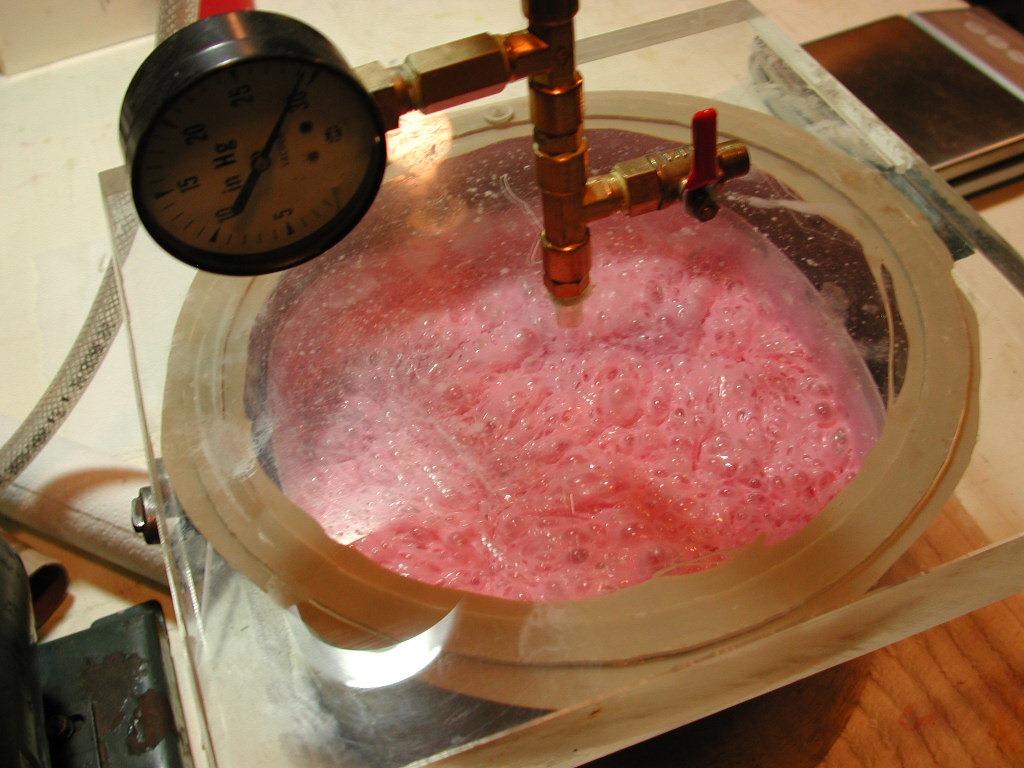
It helps a lot to use a vacuum pump to depressurize the air bubbles out of the mix. You’ll get a smoother mold without the chance of small pin-bubbles marring the surface details.

f_siliconefront

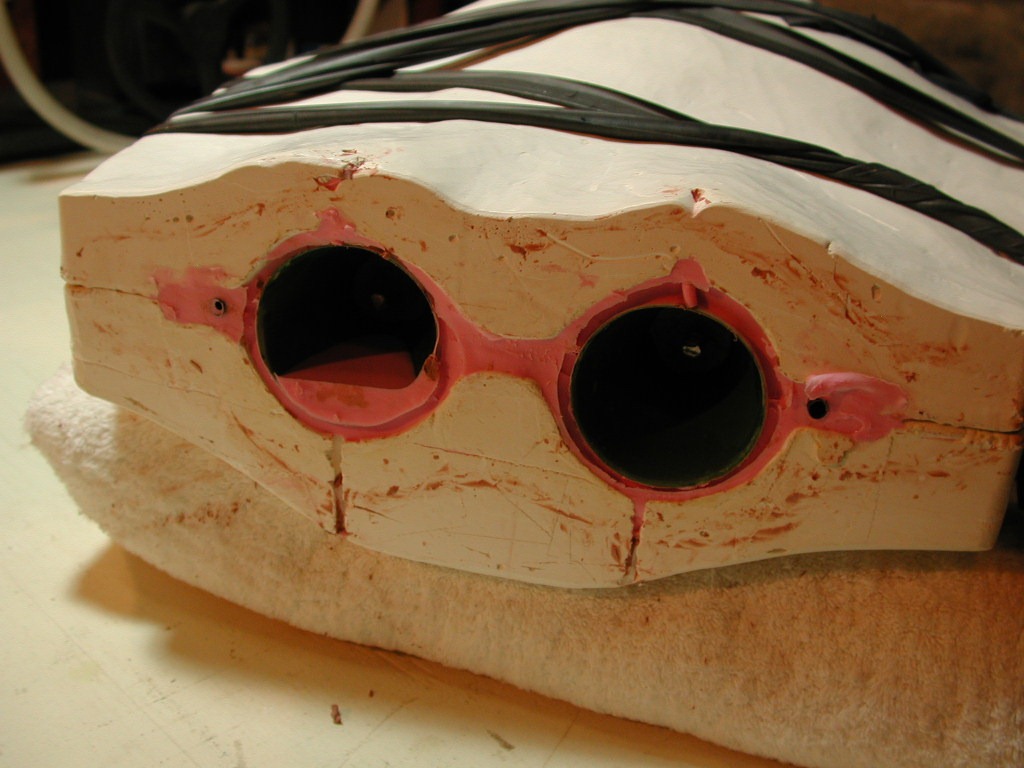
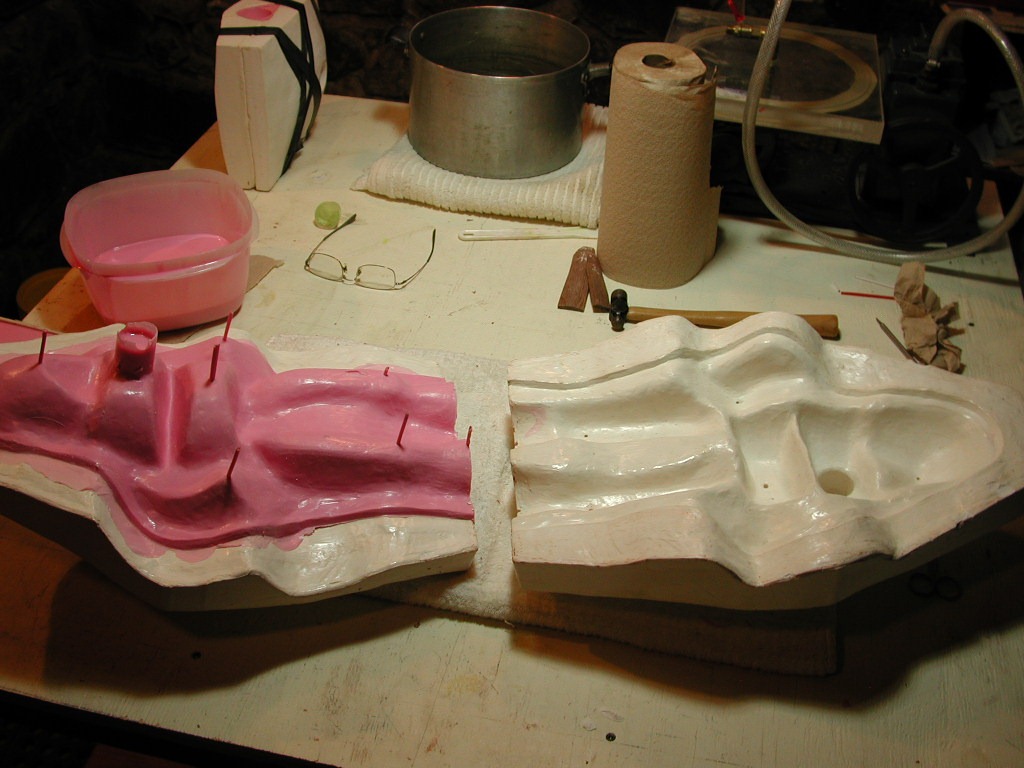
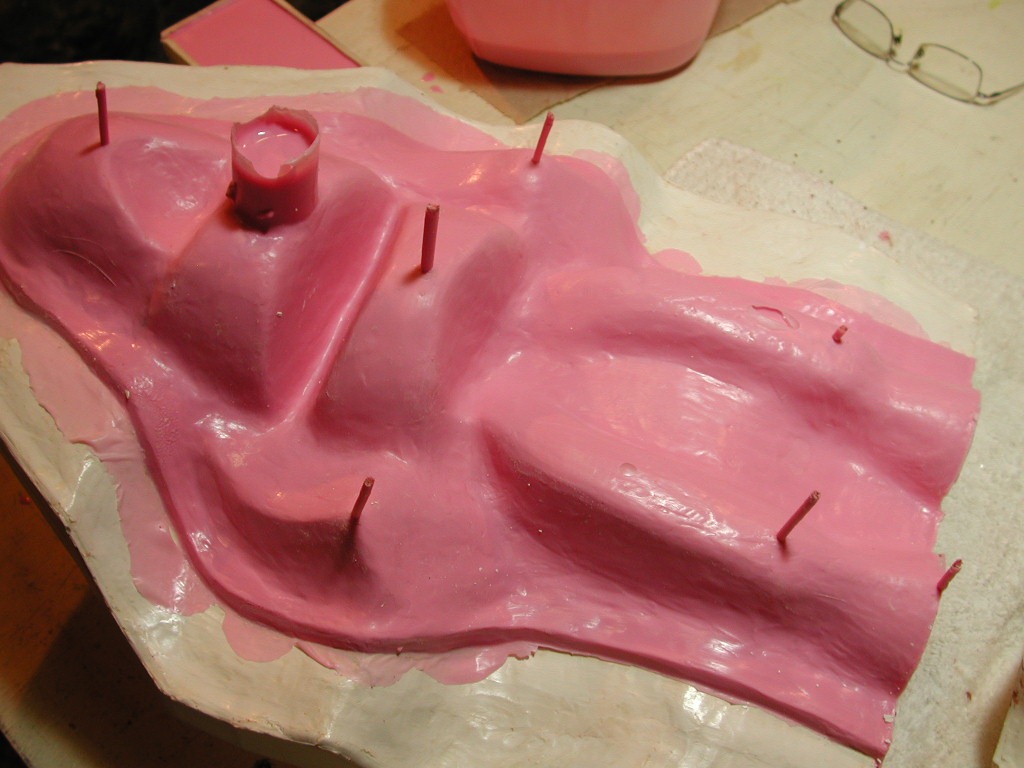
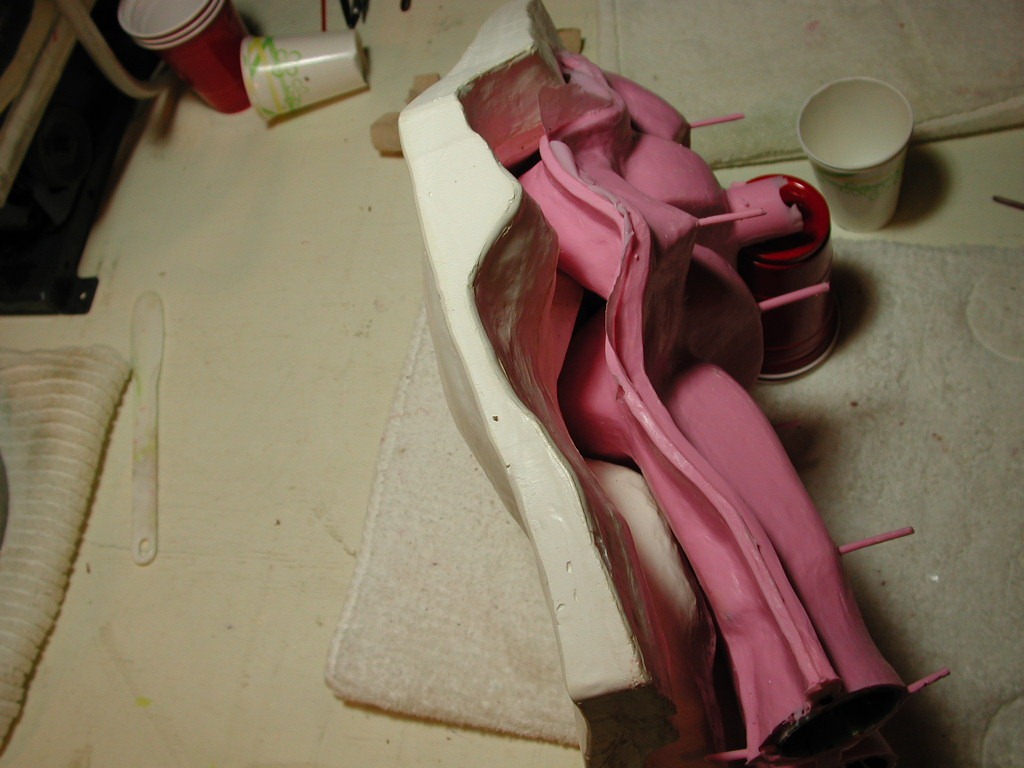
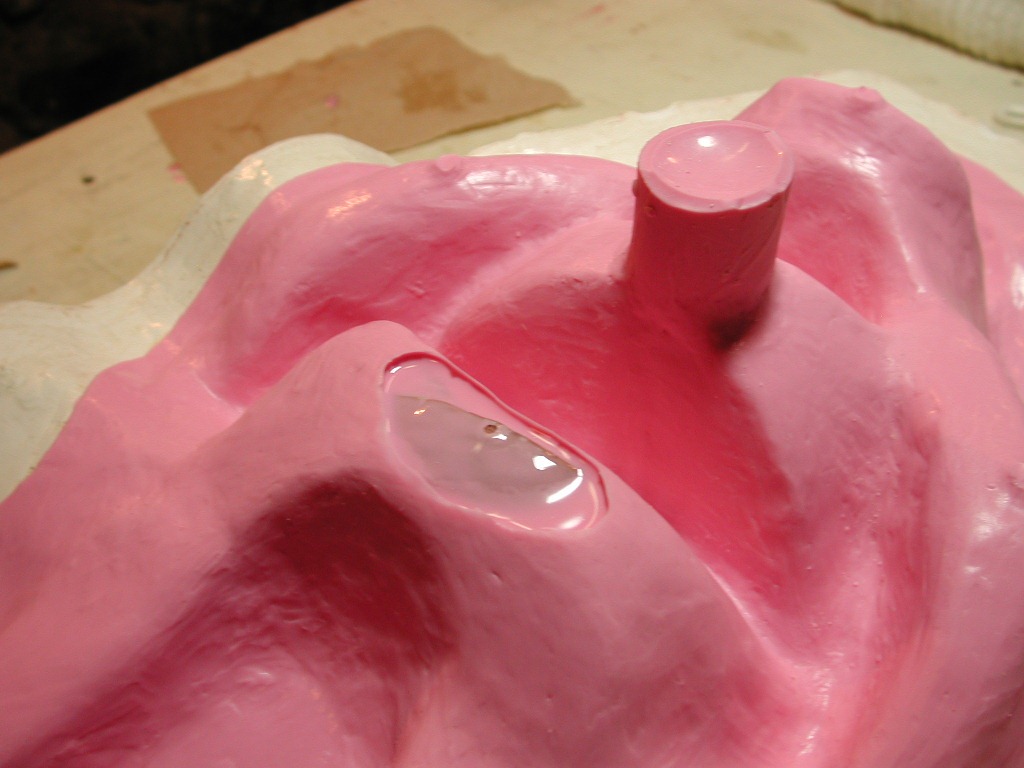
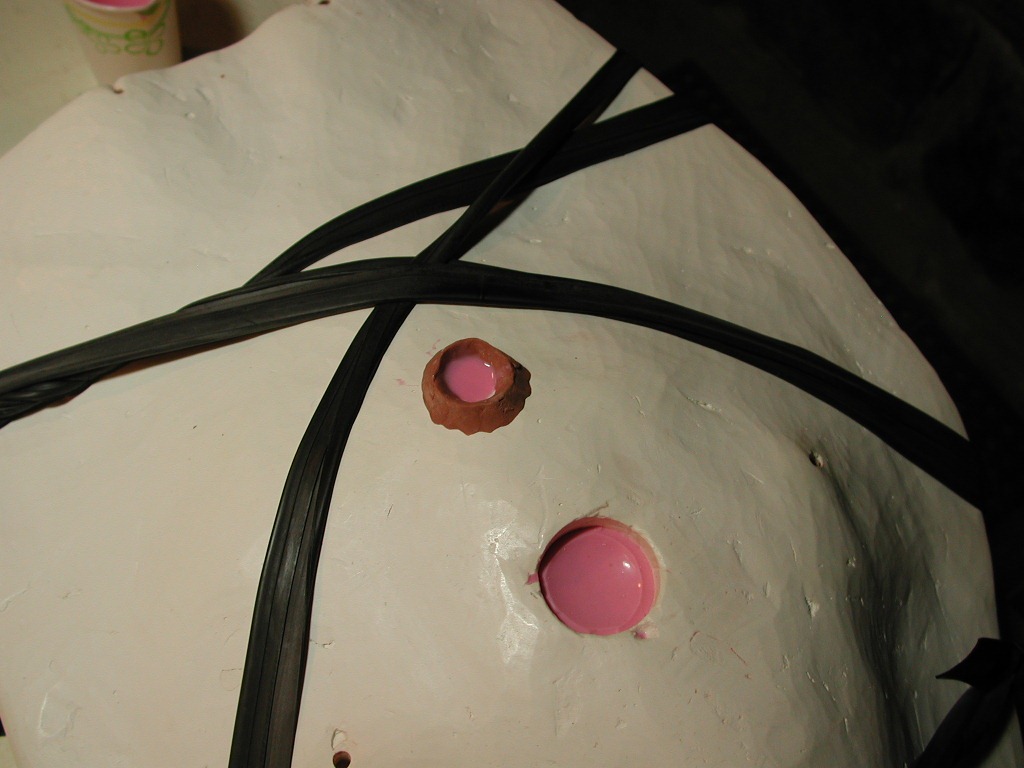
The silicone is poured in from the highest point of the mold. Various other high spots in the mold are vented to allow air to escape, so that the rubber can fill the mold completely. As each vent shows rubber flowing out of it, it is plugged with a bit of clay, so that the rubber will continue to fill higher and higher. There are eight vents to see in this picture.

g_siliconefront

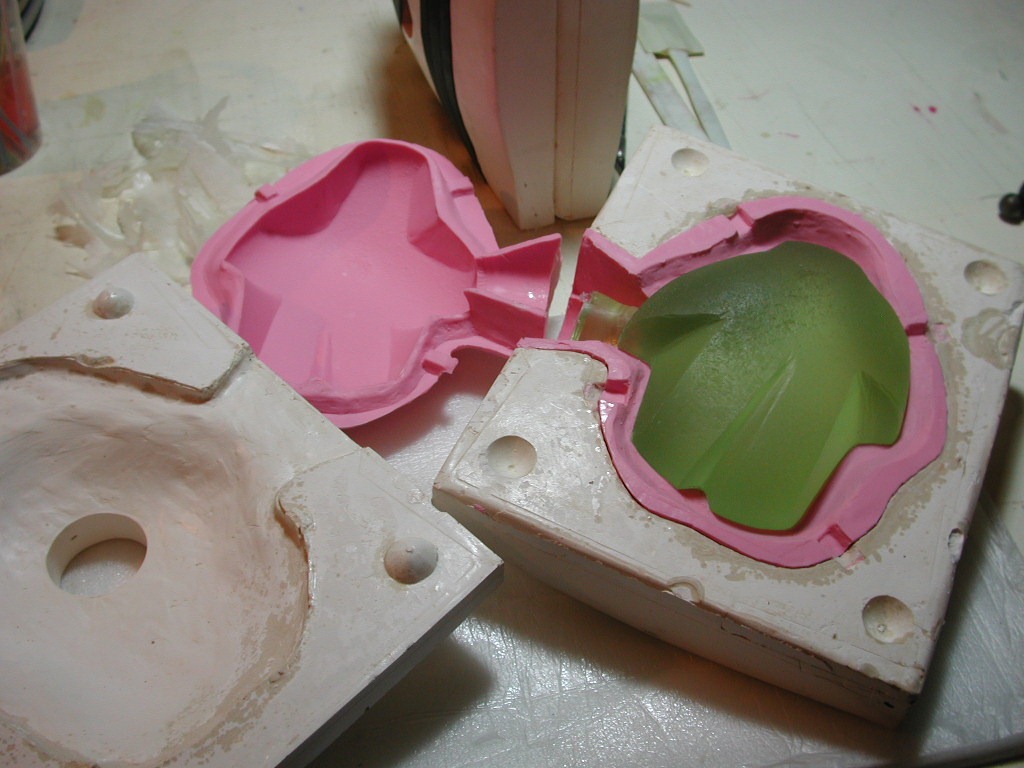
On the side, is the box mold for the head pieces.

h_siliconefront

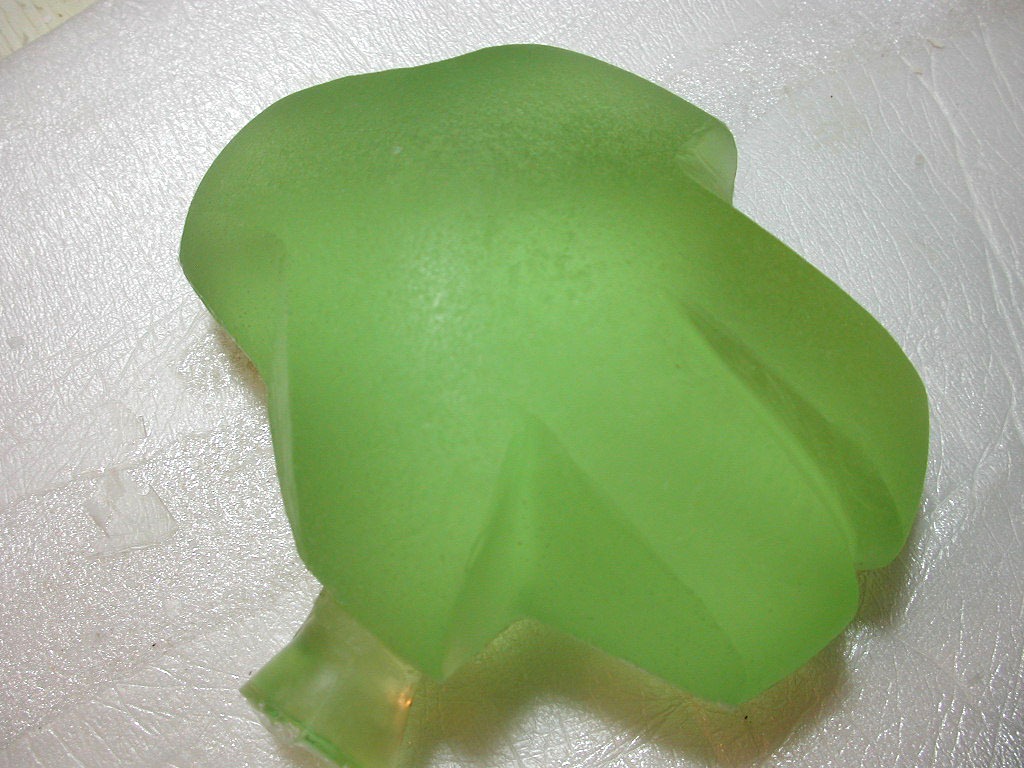
And some leftover. That’s good.
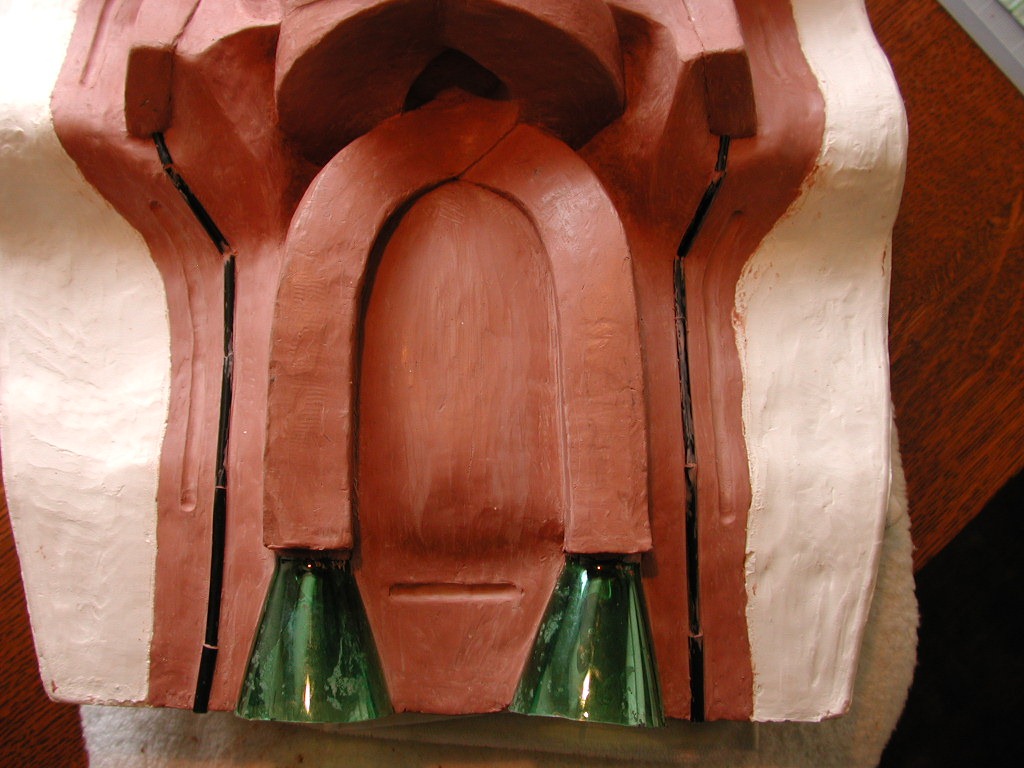
i_siliconefront

It’s a lot. A lot of planning, a lot of work, a lot of time. Truth is, it stresses me out, doing this. Sometimes, I think I should find another way to live my life.

Parting line

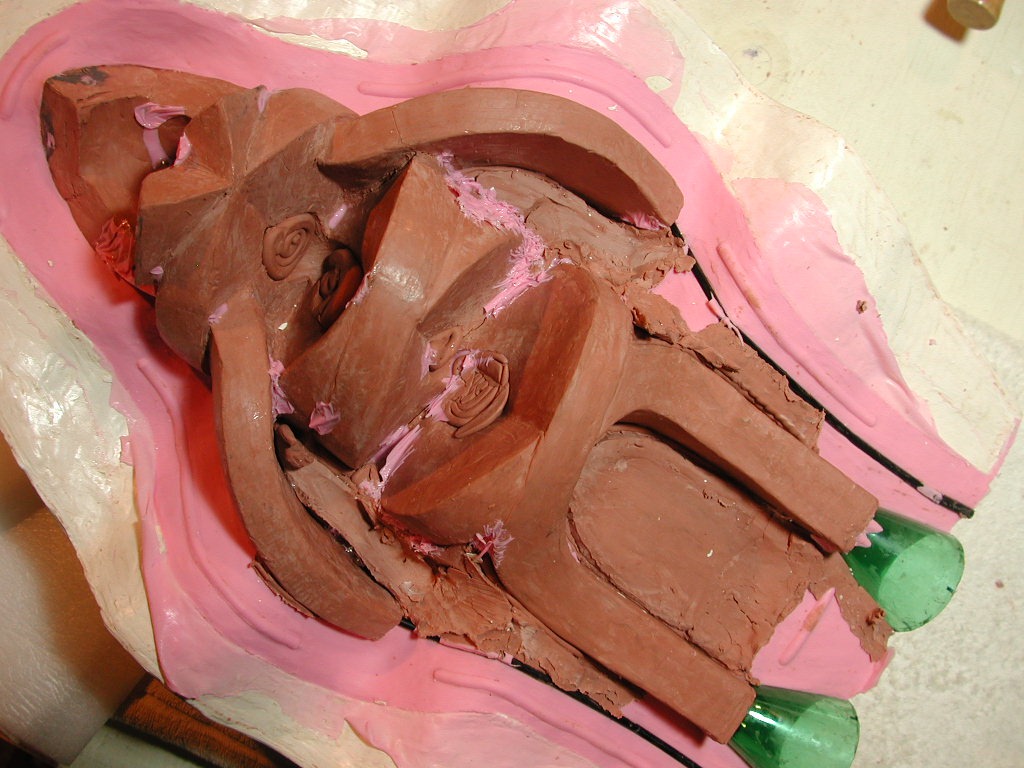
I added vents at the ends of the arms. They are cocktail straws, snipped and buried halfway in the clay bed.
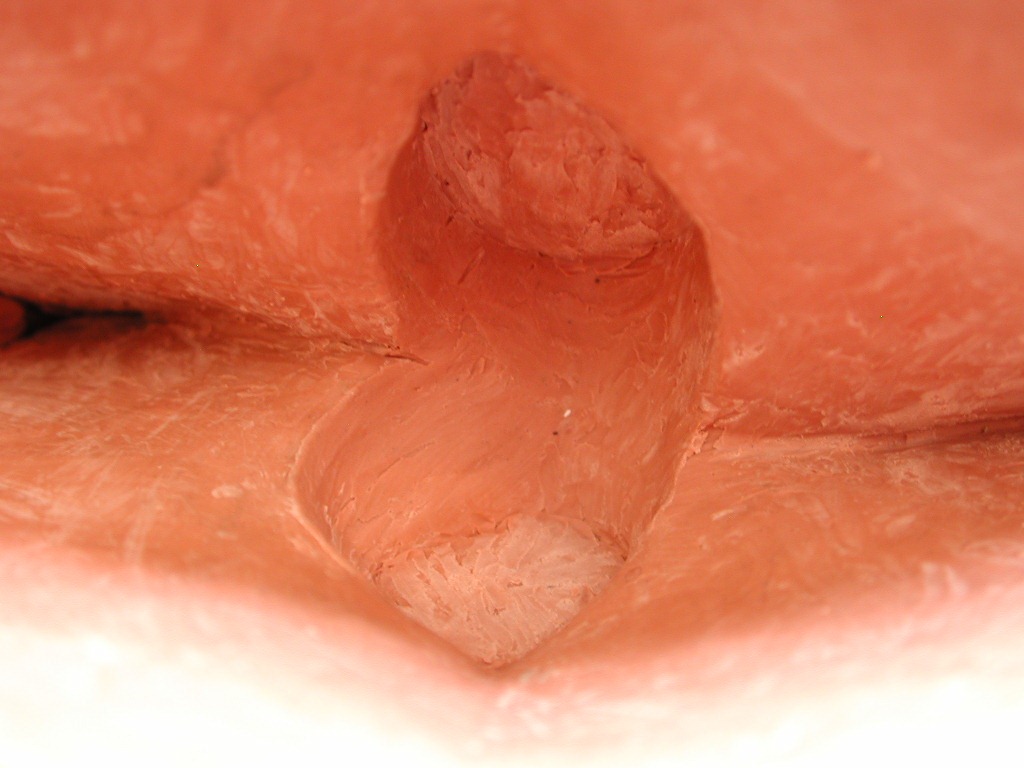
a_partingline

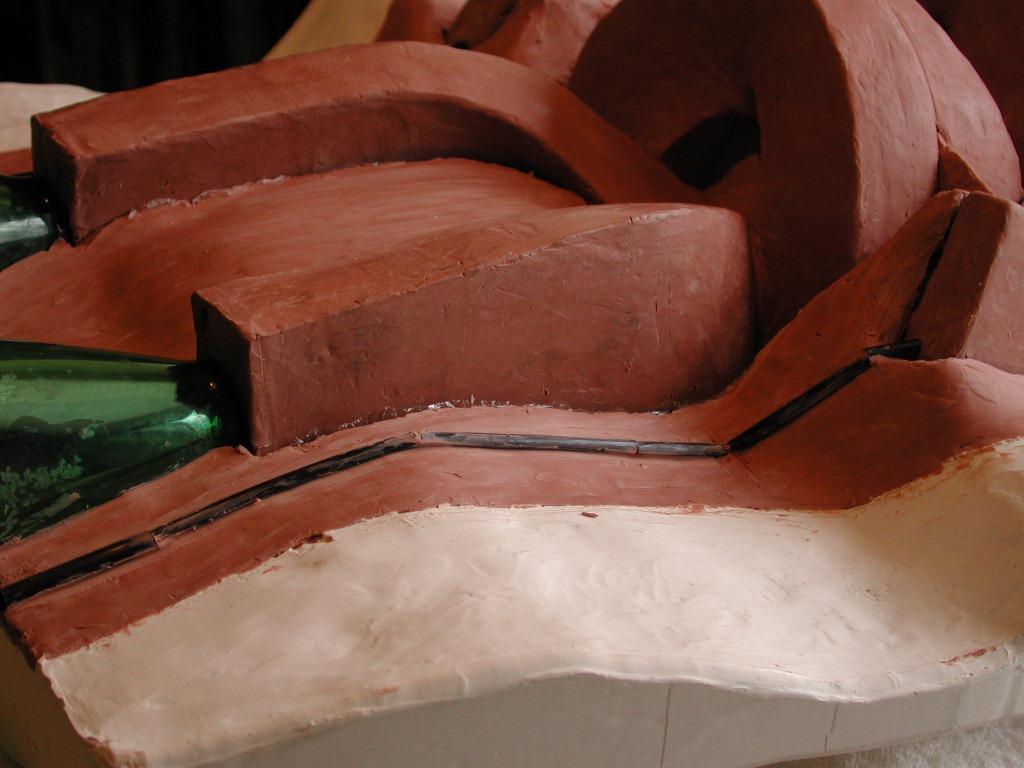
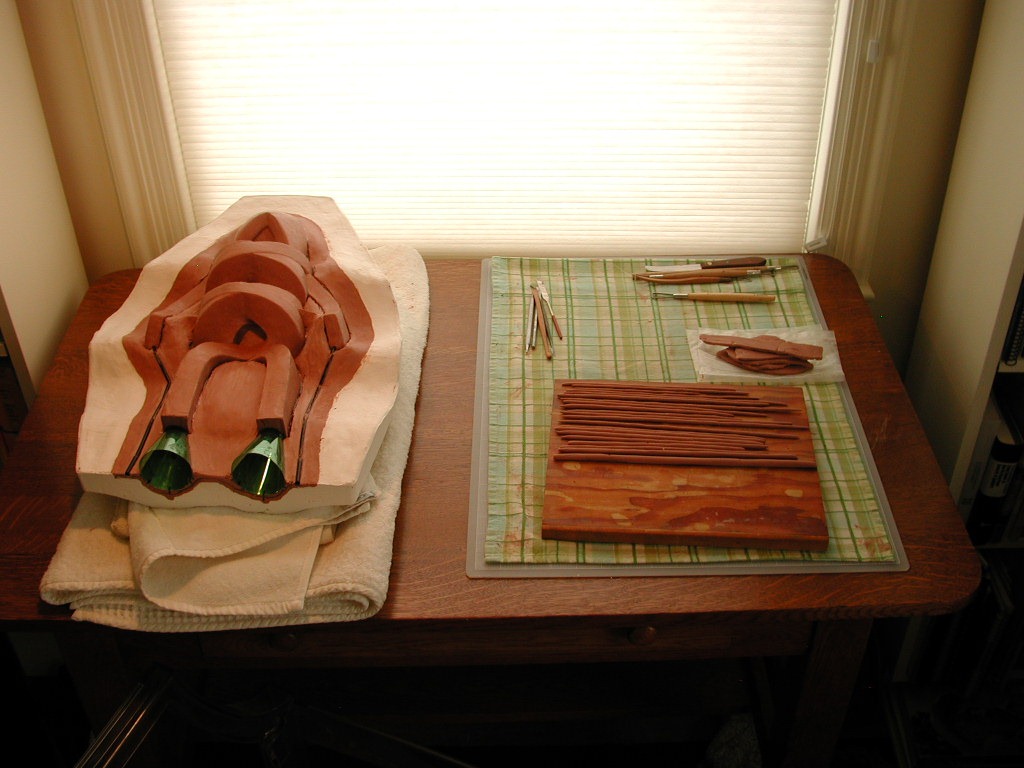
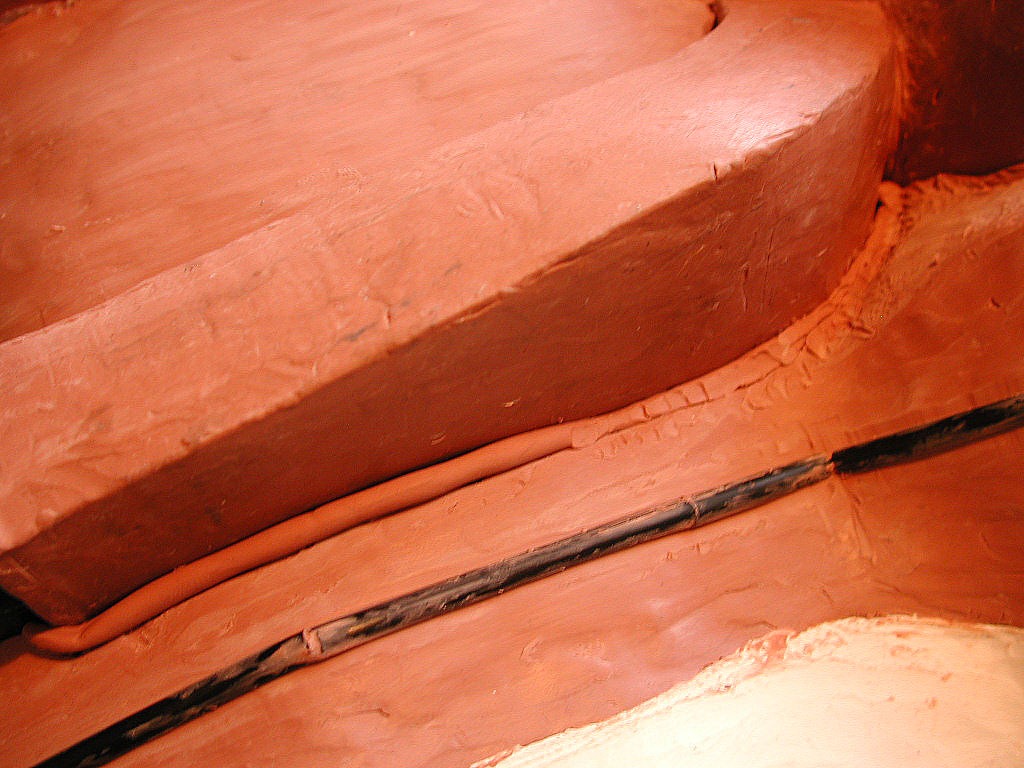
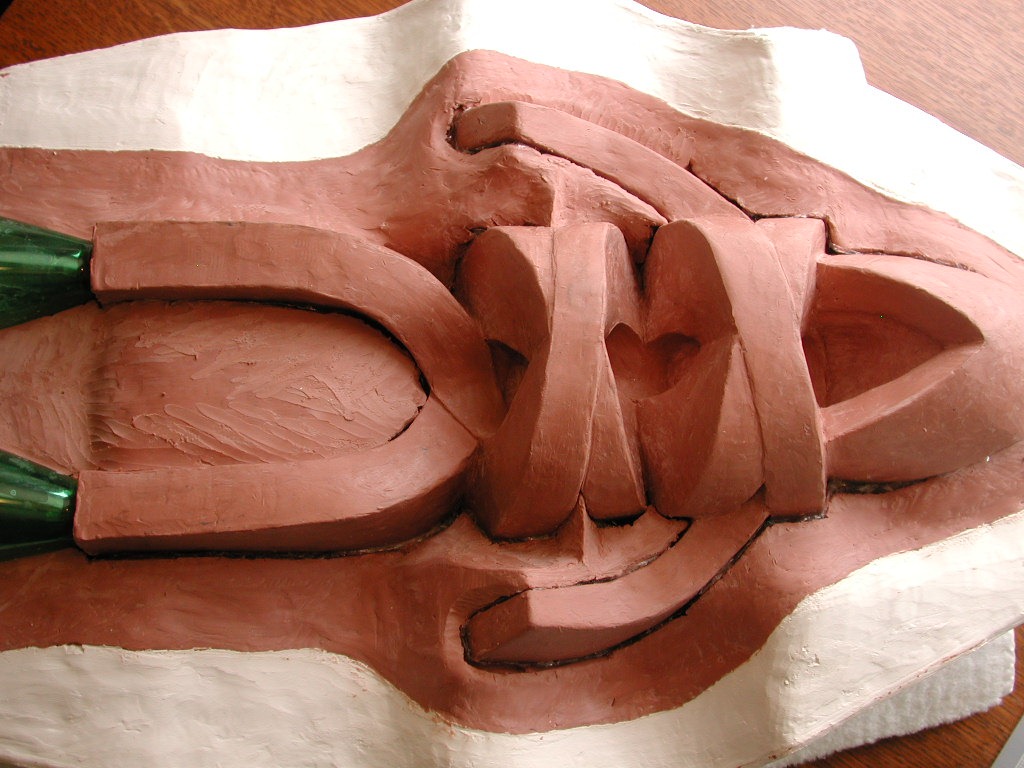
At last I’ll finalize the parting line around the piece for the mold halves. Prepare a variety of clay snakes, collect your favorite tools, and find a comfortable place to work with good lighting:
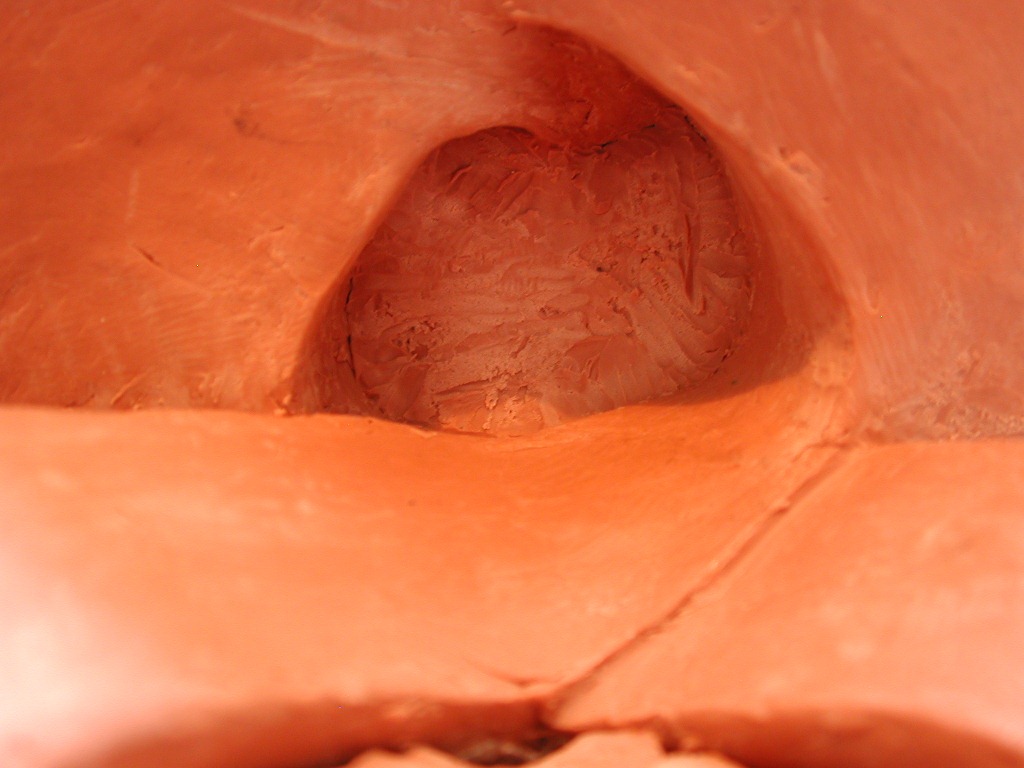
b_partingline

Also, have a good cup of coffee, and listen to Radio La 2×4 Buenos Aries. (http://www.buenosaires.gob.ar/la2x4)

The techniques I think works best is, having built up in a general way close to the piece, to now lay a line of clay along the remaining gap of about the same size as the gap or slightly larger, and simply press it gently into place with small tools.

c_partingline

This neatly fills and seals the gap, without applying pressure onto the piece which will make the clay line difficult to remove cleanly and without blemish to the piece later. The gap must seal completely.

One side done, halfway around.

d_partingline

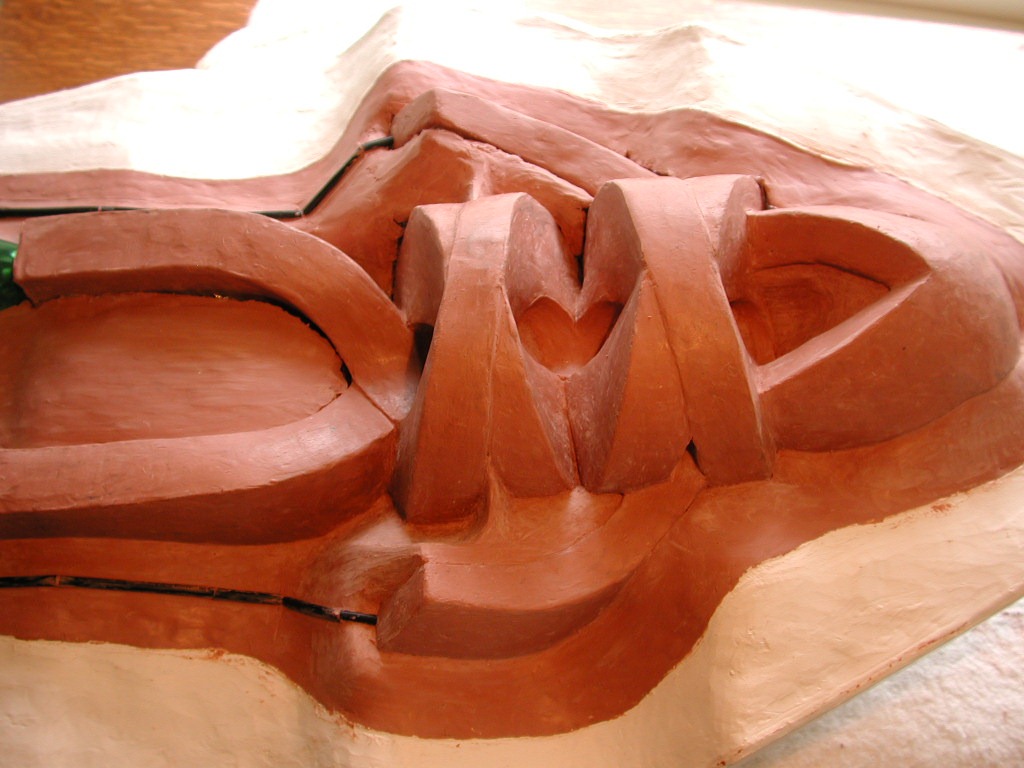
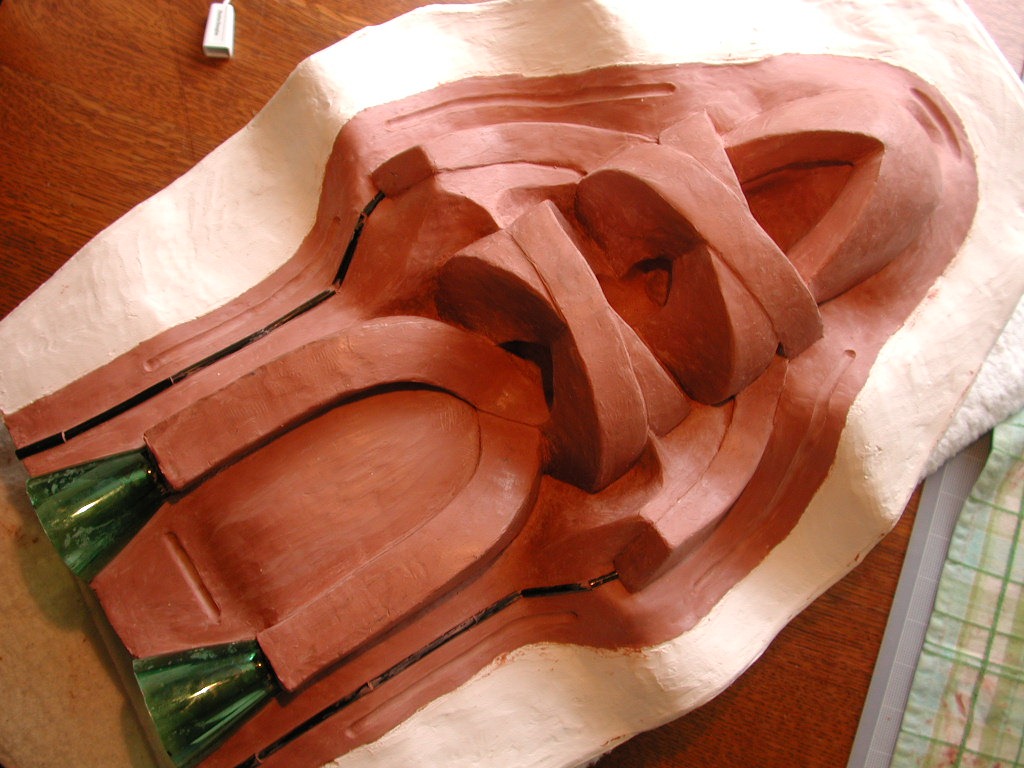
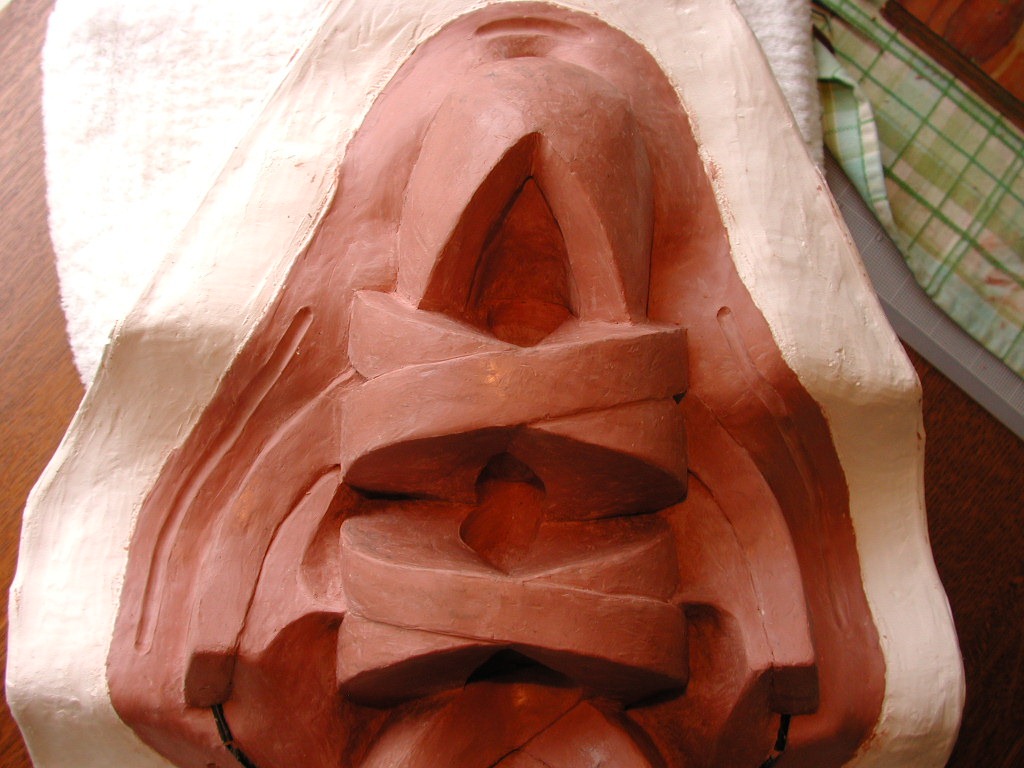
And finished, including some keys which can help to keep the two halves in alignment. I don’t take keys too seriously like some people. I think the complexity of the plaster mother mold’s shape, is enough to keep the silicone in place, but people expect to see these in a mold so  do a little of it, for example. I think channel shaped keys like this do more to help prevent material you pour into the mold, like wax or plastic, from leaking out at the seams while it solidifies.

e_partingline

f_partingline

g_partingline

h_partingline

i_partingline

Next, I’m ready to pour the silicone to form the blanket mold of the first side you see here. Exciting!

Filling

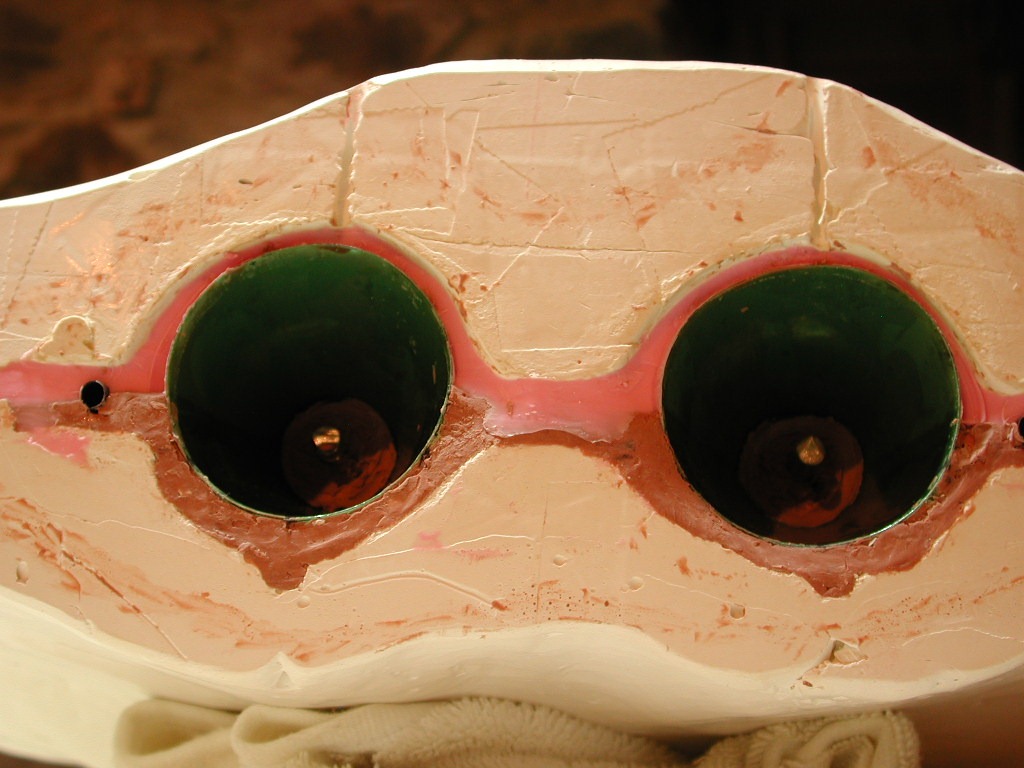
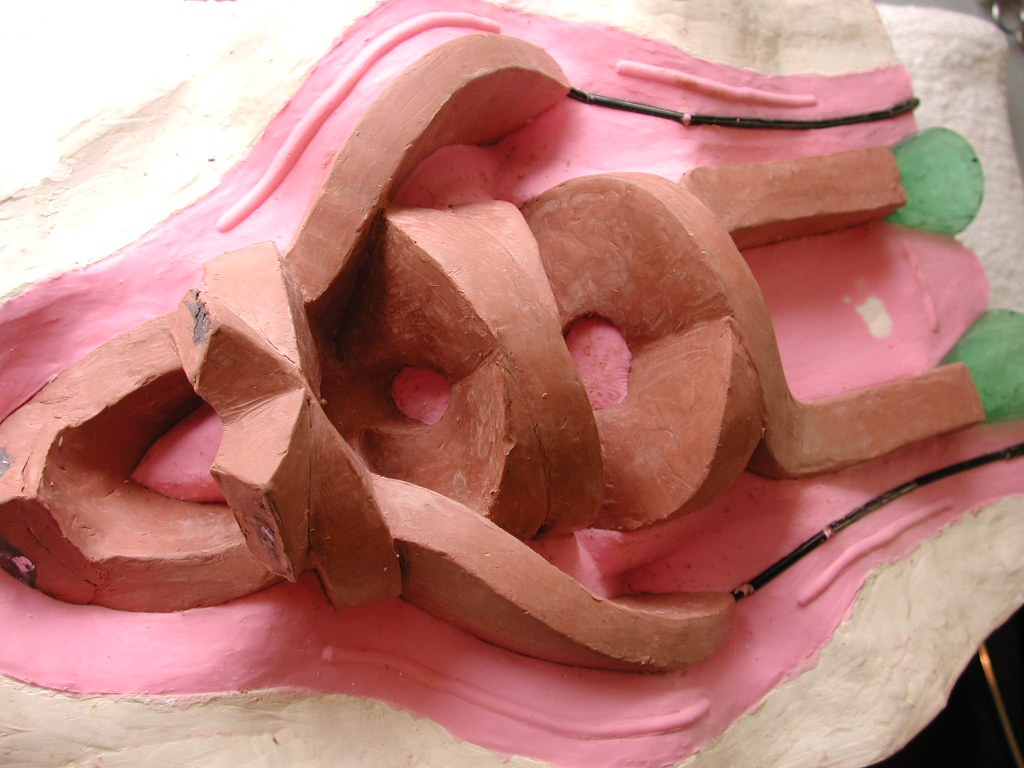
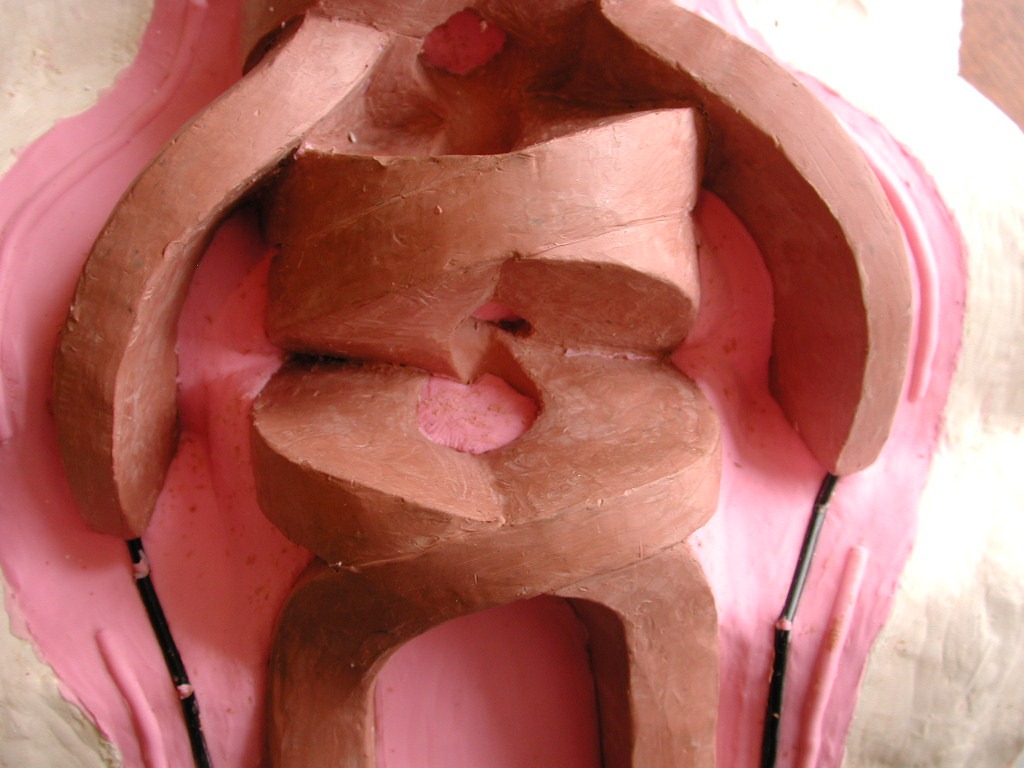
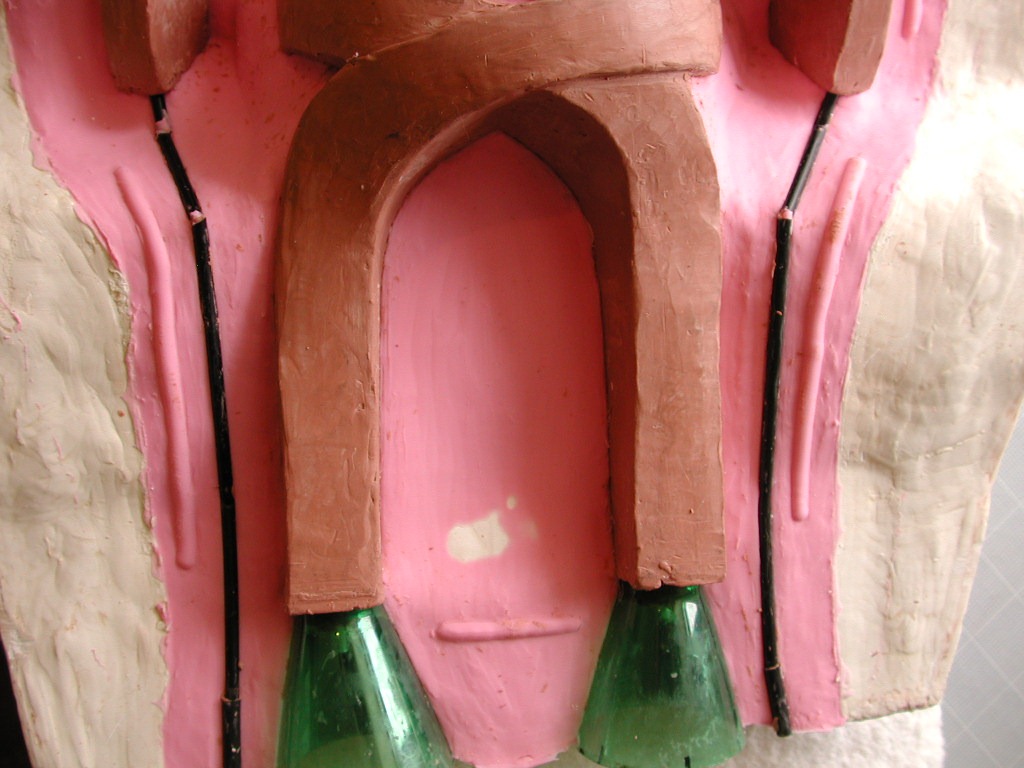
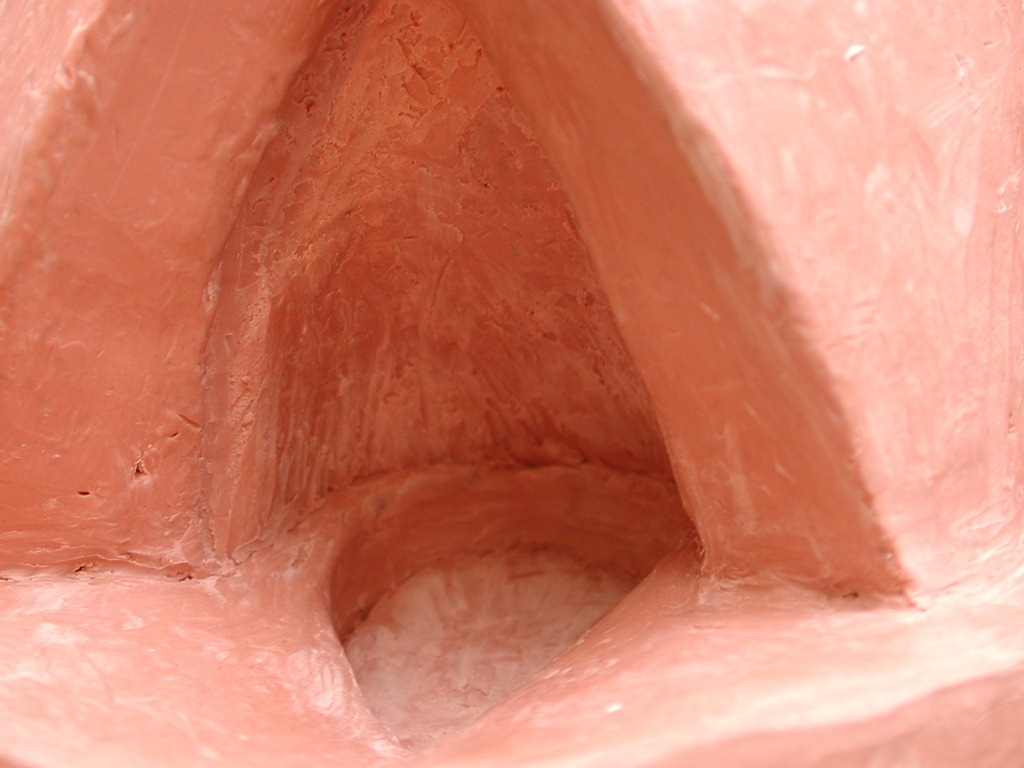
I’m filling in the five holes which are on the center axis of the figure. This is just parting line on the interior of the figure. Not much to look at really, but these details are for my own notes.

a_filling

b_filling

c_filling

d_filling

e_filling

f_filling

I’m depending on having made the silicone blanket thin enough to peel-back, pinch-away from, extract, the mass of these plugged holes from the narrow V-shaped crevice they are in. If not, I’m still confident that the silicone will peel off with only some amount to damage to the wax, which I will eventually pour into this mold, in which case , I’ll repair the wax by hand before making the bronze from it. No big.

Open

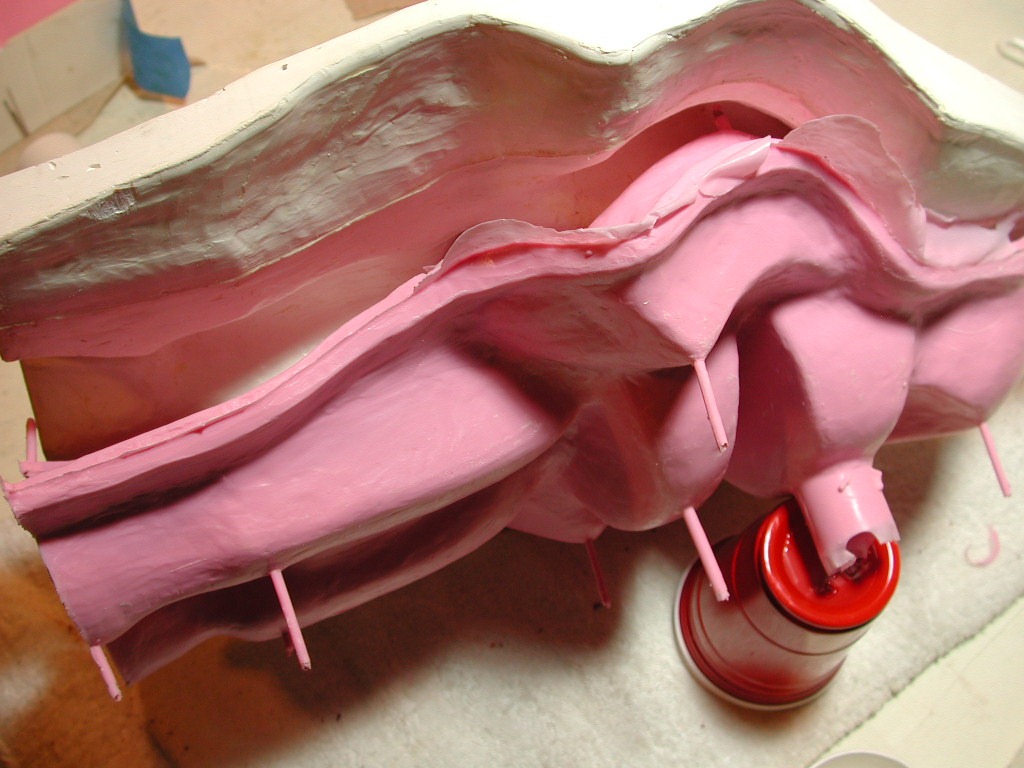
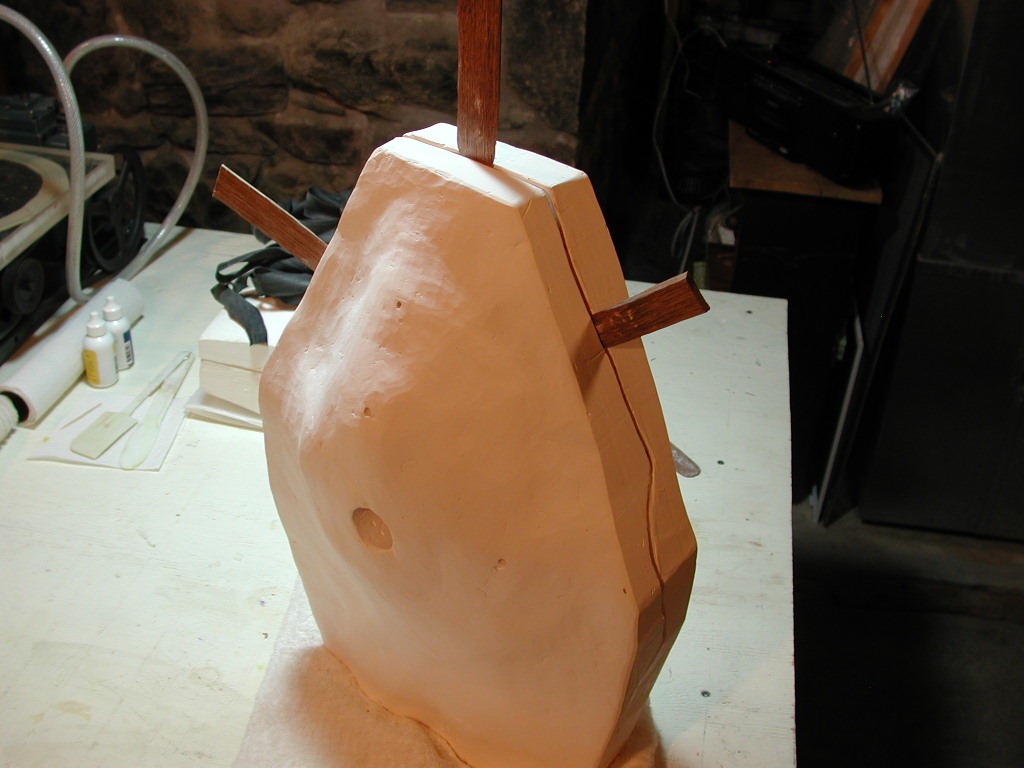
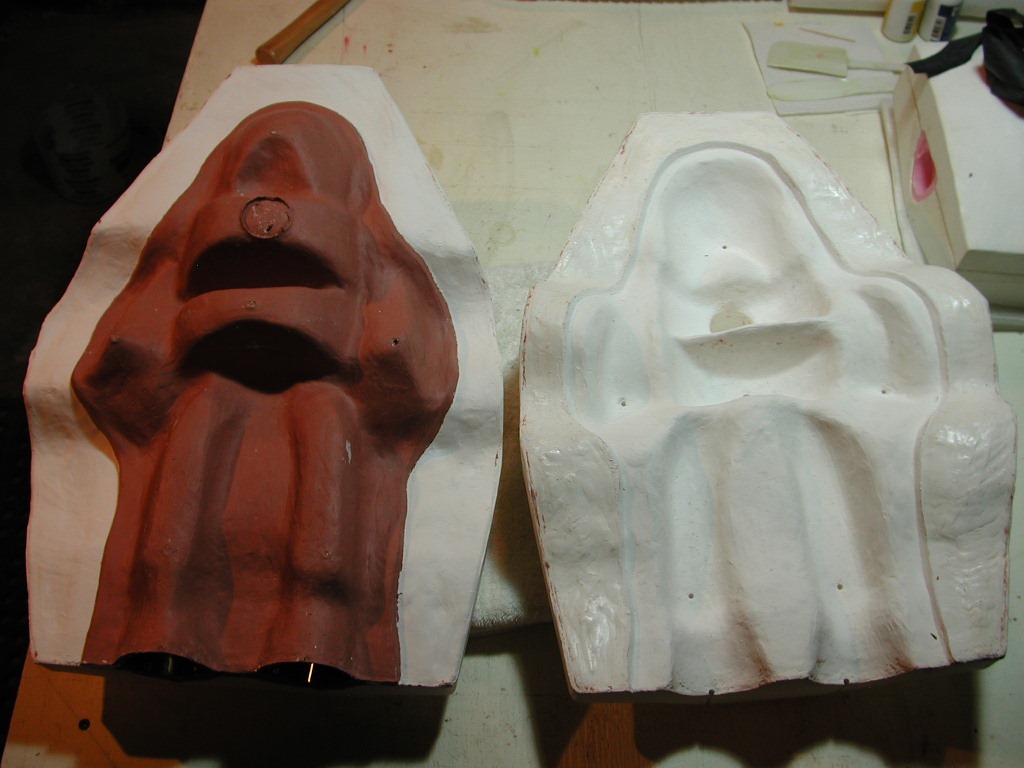
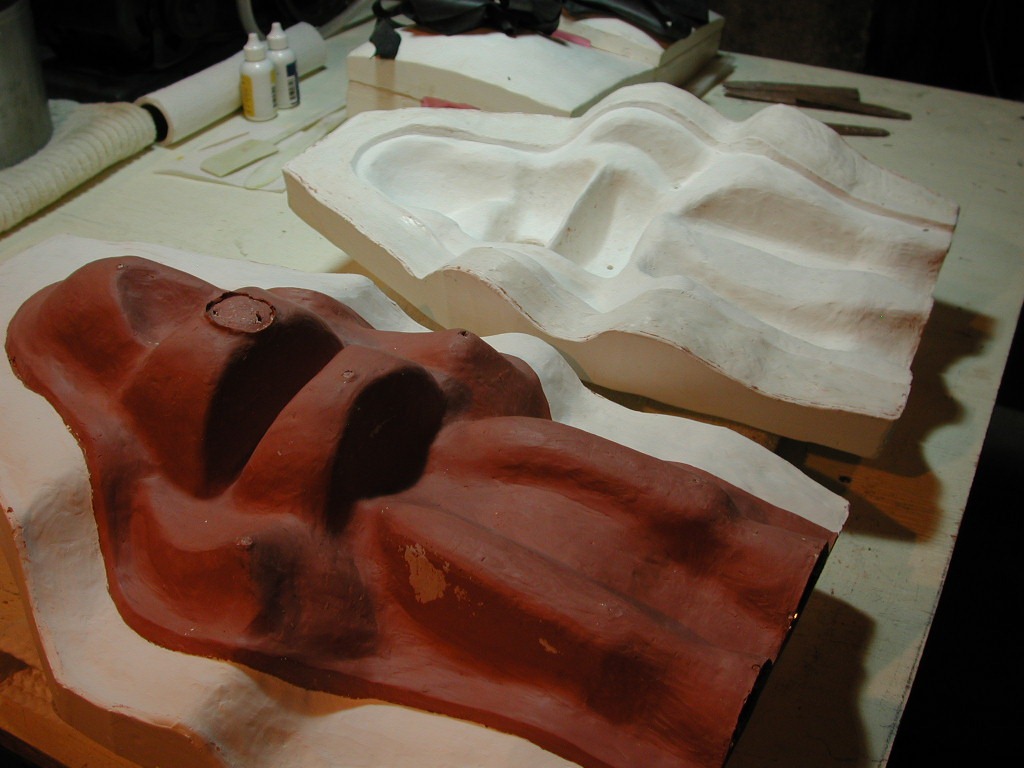
I had to go snowboarding again, sun and snow perfect, clear-minded oblivion. By now the plaster shell is really dry. I stand it up and very carefully, open it by inserting some wooden wedges  and tap gently with a hammer. As soon as the suction is broken it comes apart easily. Do not pry. Be patient. I open the mold so as to reveal the first side that I worked on, that hasn’t seen daylight since the end of December. Nice, isn’t it? Face it, there is satisfaction in doing your craft right.

a_open

b_open

d_open

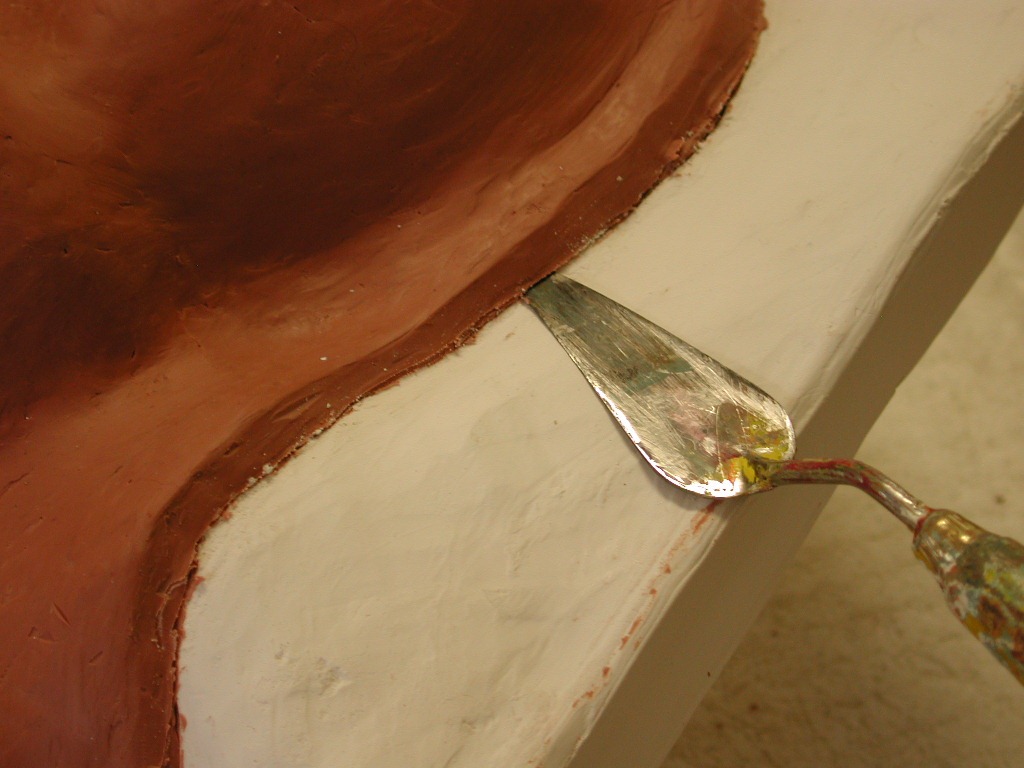
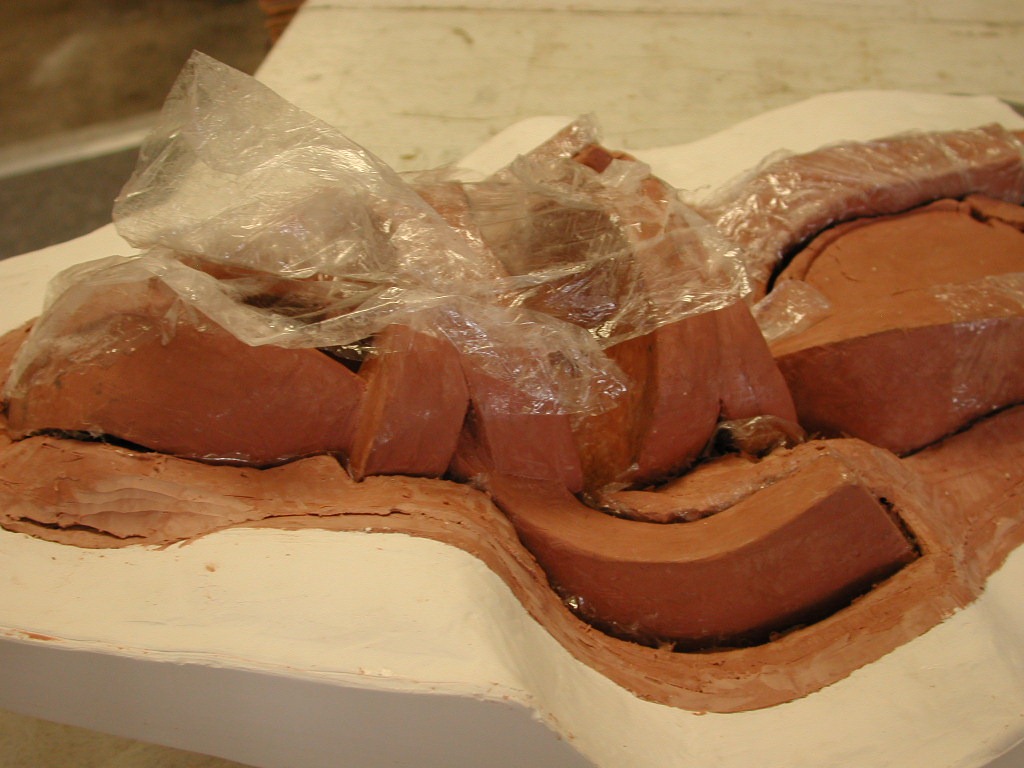
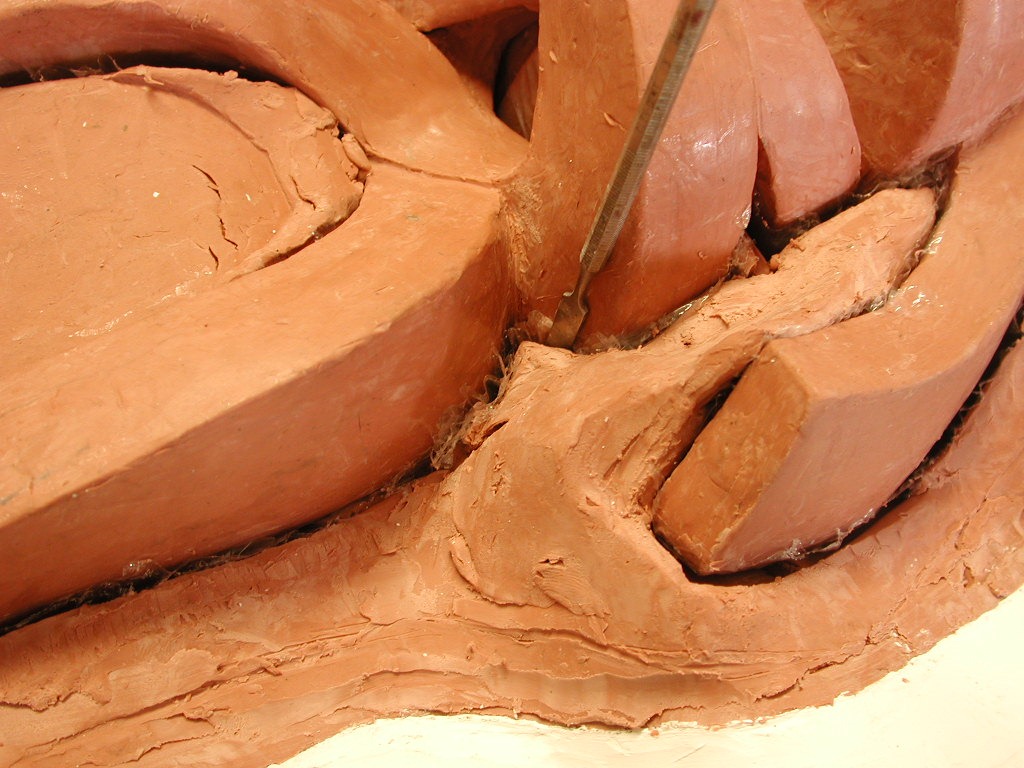
Now I’m going to remove that pretty clay blanket and reveal the model under it. I’ll use a palette knife to cut and separate the blanket from the plaster,

e_open

carefully peal back the blanket,

f_open

more,

g_open

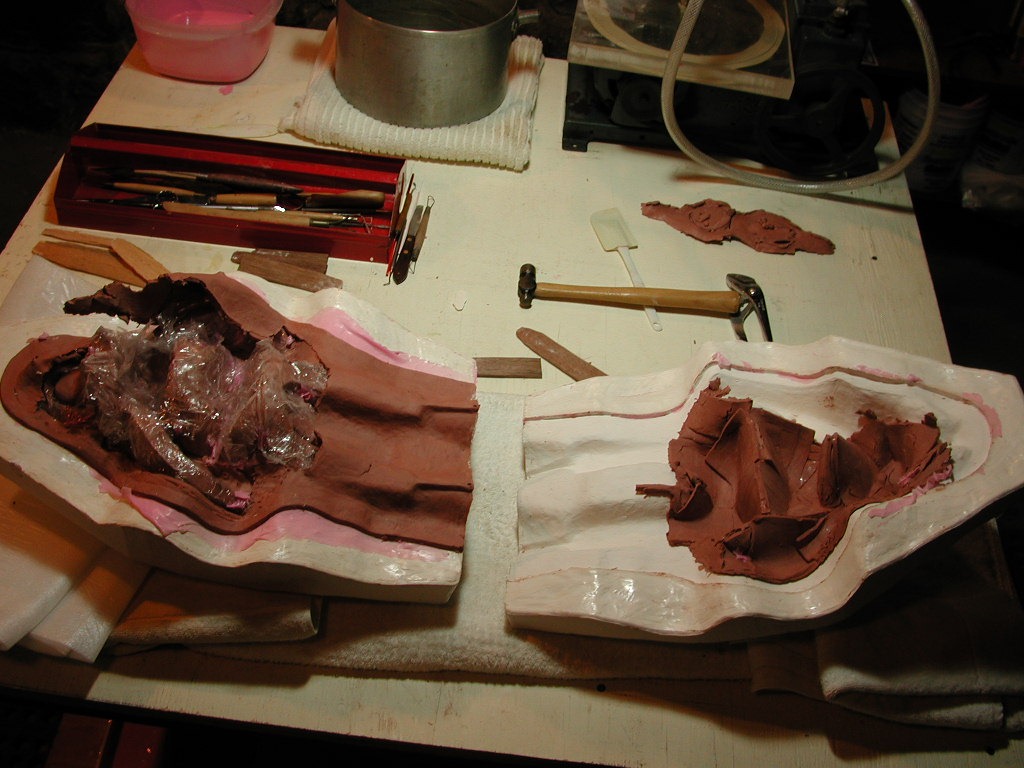
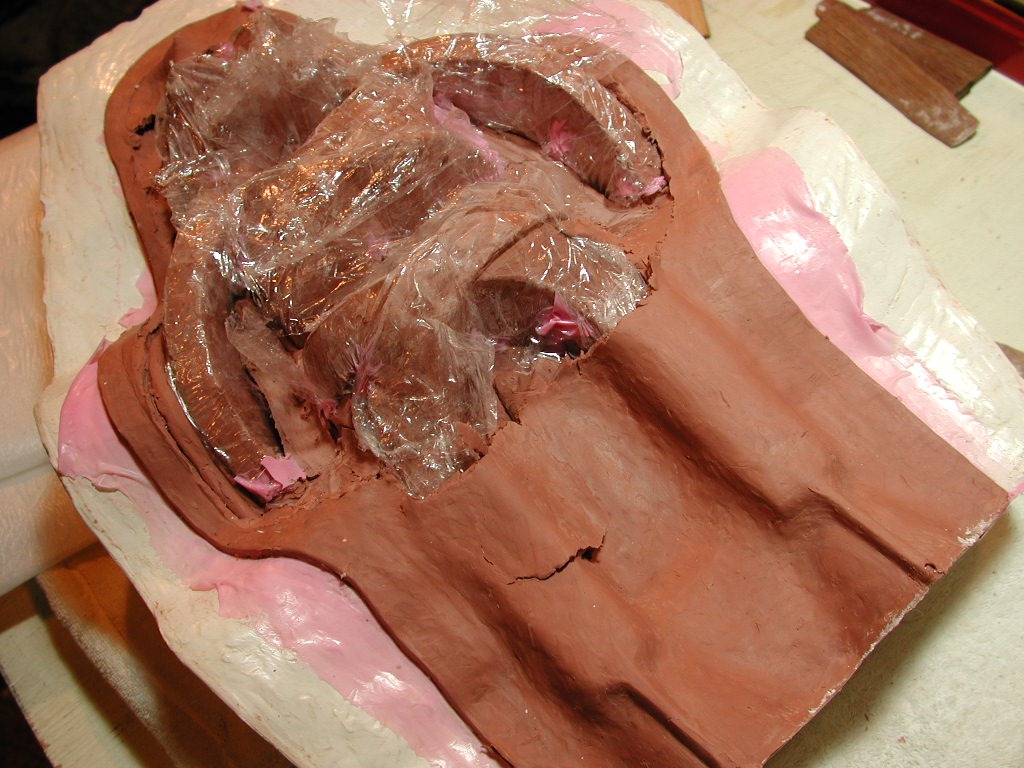
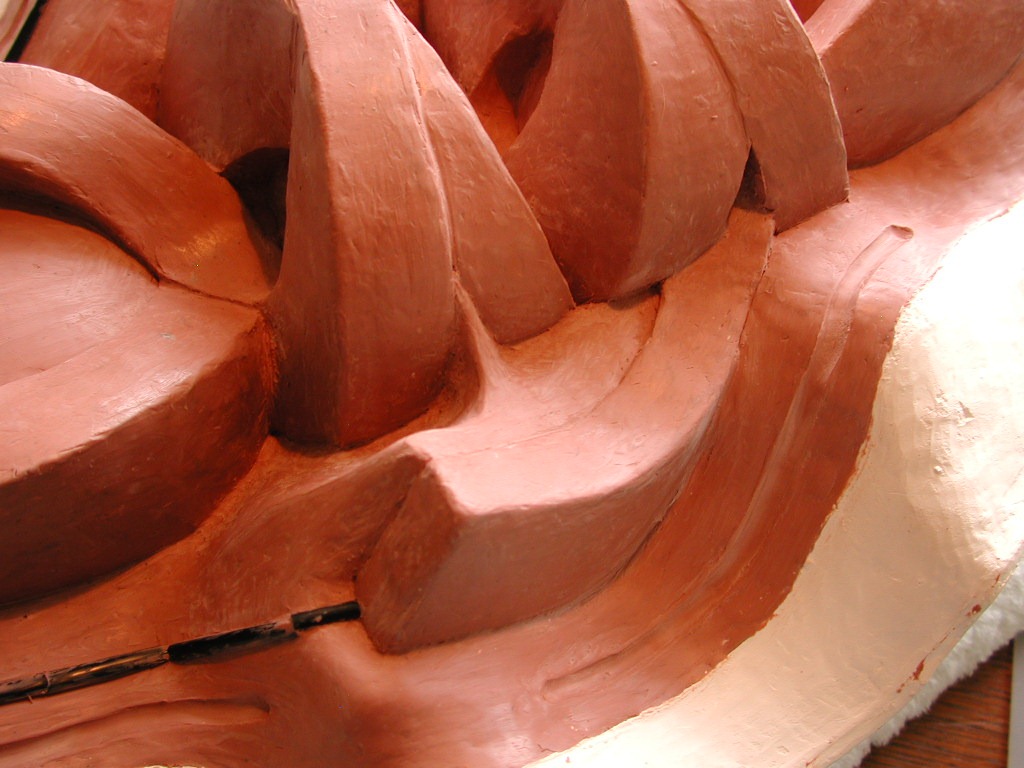
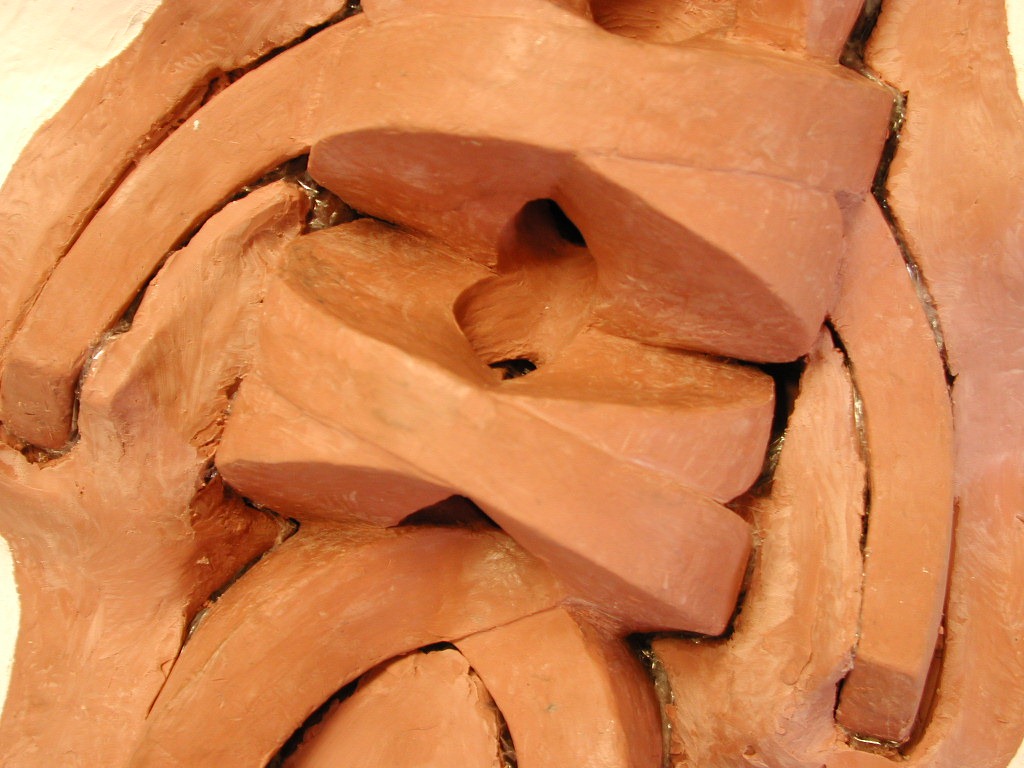
and more, until the model is revealed, but still resting in the bed of clay which is the second-side blanket. I had done some work earlier on to roughly define a parting line in clay from this first side, when it was still in the cradle, and you can see some of that in place still. The task now is to detail that parting line perfectly.

h_open

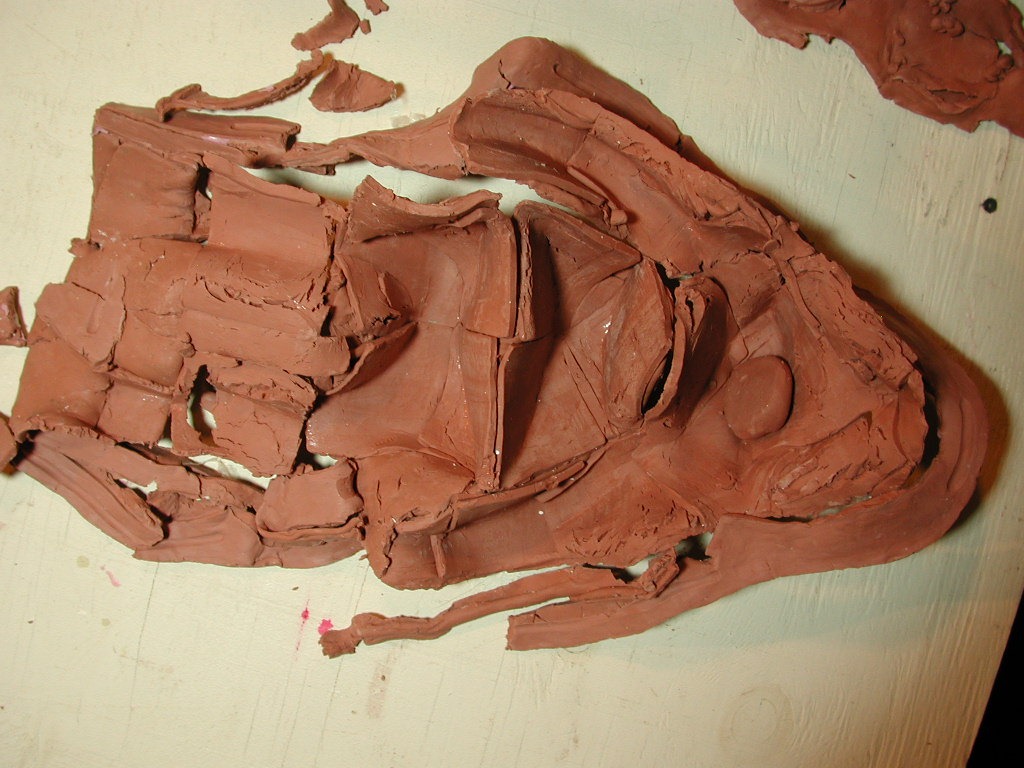
I save the clay blanket that was removed, because I can weigh it and know roughly the amount of silicone rubber I’ll need later to fill the void between where the blanket was removed and the plaster mother mold. We’re some way off from that still.

i_open
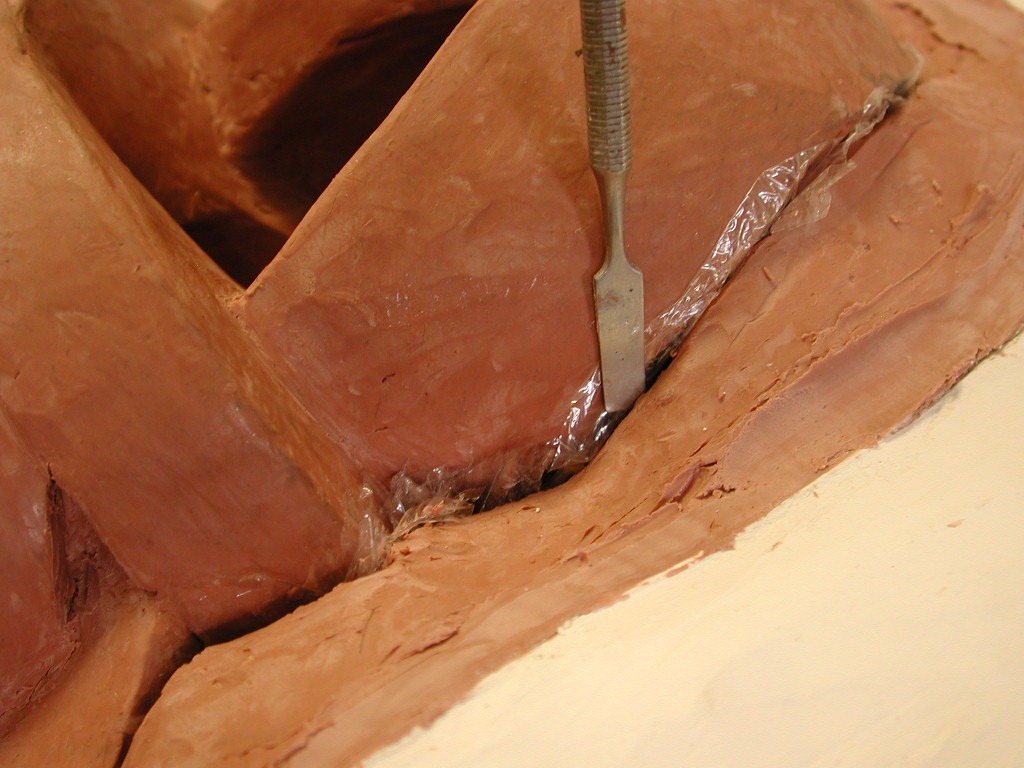
I cut back the plastic wrap with small scissors, which has been helping to protect the model from the clay blanket to the existing rough parting line,

j_open

and tuck in the loose edges under the rough parting line. This way the plastic is still protecting the second side, you don’t need to remove the model from the mold at all, to get the plastic off, and it’s usually hard to do that without harming the model anyway.

k_open

l_open

There we are, ready to begin work on the final parting line. I’ll point out that the outlines will be pretty simple, but the holes through the middle of the body must be handled somehow and even though the silicone rubber material is very forgiving about undercuts and such, I’ll need to proceed with deliberation and reason.

m_open

Shell fini

The box removed, and the plaster shell mold smoothed.

 e_cyclbackplaster

f_cyclbackplaster

I’ll just let it cure, dry, and harden up a little longer, so when I split the two half apart, very gently, I won’t crack either half. The clay underneath undulates a lot, so removing the shells evenly, in one piece, using small wooden wedges, will be  a trick.

Meanwhile, on the side, to use up the free time, I cast the Beachstones molds I made last Fall in urethane resin. (The waxes I made earlier from these molds for bronze didn’t work out too well and I’m going to do them over, soon I hope.)

a_beachstonesplastic

b_beachstonesplastic

It still needs finishing, but I’m very please with the way it turned out – that’s saying it came out looking like I’d hoped – like beach-glass, you know, that sand-smoothed broken glass you find at the beach. Look forward to more.

Back plaster

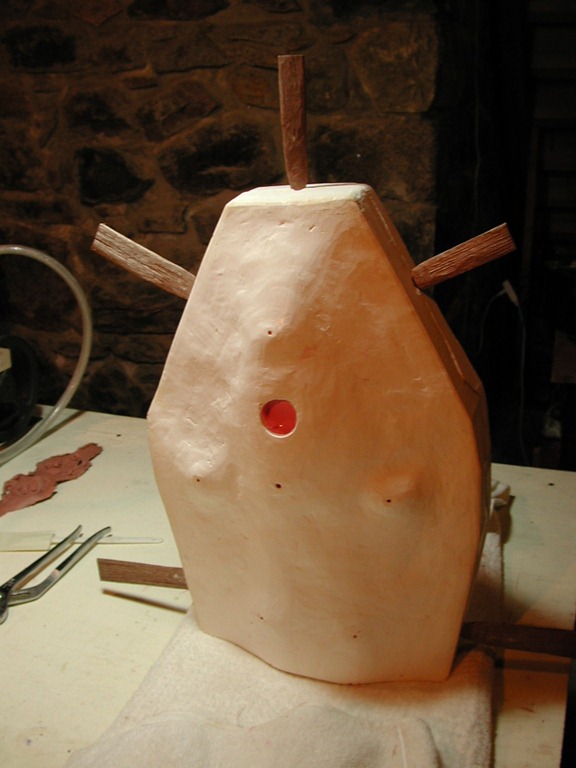
I boxed up the mold, preparing to pour the plaster for the back side. I just build this quickly using foam-core, hot glue, and tape, lots of tape. I seal the inner seam of the box with clay where it meets the front side plaster so there is no leaking out of the new plaster. I line the inner side of the box with packing tape to release the plaster. I added the sprue and vents for the silicone to eventually pour into, in the form of cardboard tubes and soda and cocktail straws, but that step is still a way off (the clay under the plaster will be removed and replaced with poured-in silicone, forming an inner blanket which is supported by the solid plaster outer mold). It’s a lot of details with not much to picture.

a_cyclbackplaster

b_cyclbackplaster

c_cyclbackplaster

Mix the plaster, something I’m not showing you, pour it on and shape it up. You can see some markings above which I use to estimate the thickness I want from the plaster.

d_cyclbackplaster

I’ll let this dry a few days, take away the box and smooth it out some more.

It is a relief to be at this point. I’m maybe halfway done, but some of the most critical planning and preparation steps are complete now, and if I’ve done this correctly, most of what follows will be clean straight-forward work without anxiety.

Back blanket

It’s been a while. Went snowboarding in Wyoming with my brother-in-law, his wife & my remarkable niece. What fine hosts, and I had the greatest time there. I’d been to the Tetons many times in the summer to hike and climb, but this was my first time there in winter to snowboard. An excellent variety of terrain, rugged and scenic. I miss those days when I would lose myself in nature & the dissolution of the self, but after being so out of my head there and on return, I and ready to get back to work on this. The few people following this blog have told be they have in fact no complete idea what the process is here I’m illustrating; and how I can focus so much seeming effort upon it?

It is the complexity of it all which lets me lose myself in the work.

Here’s the first side again, now trimmed back from the edges to expose the plaster surface and match the extent of the first side blanket, which of course you can’t see, so it’s helpful to have pictures to refer back to. The new second plaster side will match face-to-face with the exposed plaster, creating a shell, or mother mold, within which the silicone mold is supported.

a_cyclblanketbackside

Another clay blanket is made now for this, the back side of the model. Again, these are sheets of clay not more than 3/8th inch thick, laid on the model.

b_cyclblanketbackside

After a rudimentary smoothing-out. This layer will become the shape of the silicone mold rubber to eventually take its place, and the second side plaster will be poured on top of it, so it must not have any undercuts to interlock with the plaster.

c_cyclblanketbackside

The nearly final form of the blanket.

d_cyclblanketbackside

Next, I create the sprues and vents for where the silicone will (eventually) pour in, and box it up all around (again) so the plaster can be poured on.

Cradle remove

a_cyclcradleremove

The first half of plaster is finished. Now I flip it over and remove the cradle. The front-side plaster now serves as the cradle for the work.

b_cyclcradleremove

The cradle is removed in pieces and carefully pulled back from the clay blanket which remains in place against the plaster and surrounding the model. Toss out the cradle thankfully, for the work it did.

c_cyclcradleremoved_cyclcradleremovee_cyclcradleremovef_cyclcradleremoveg_cyclcradleremove

h_cyclcradleremove

The second side is ready to begin working on. Another clay blanket and plaster will be made to enclose this side of the model.