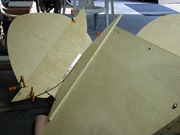
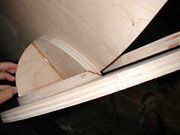
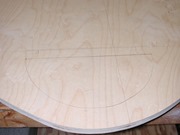
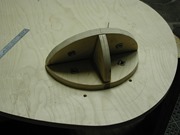
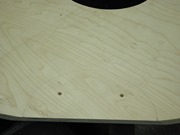
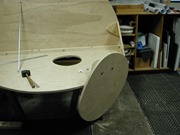
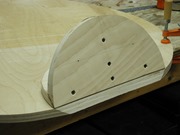
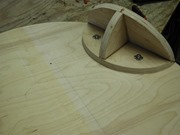
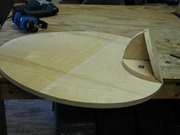
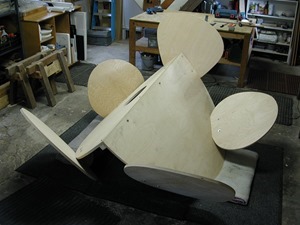
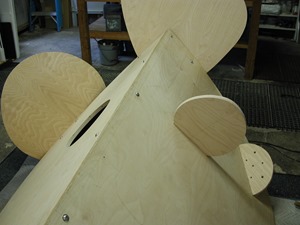
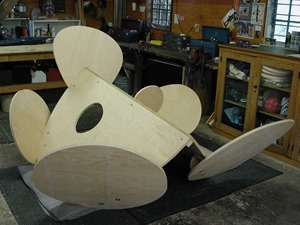
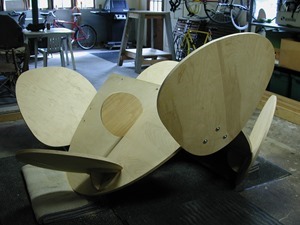
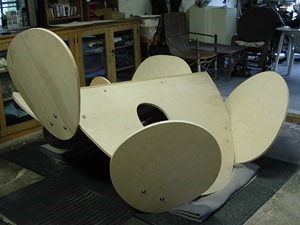
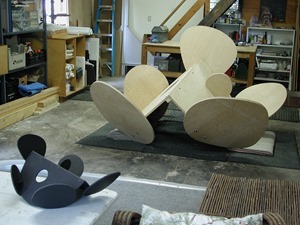
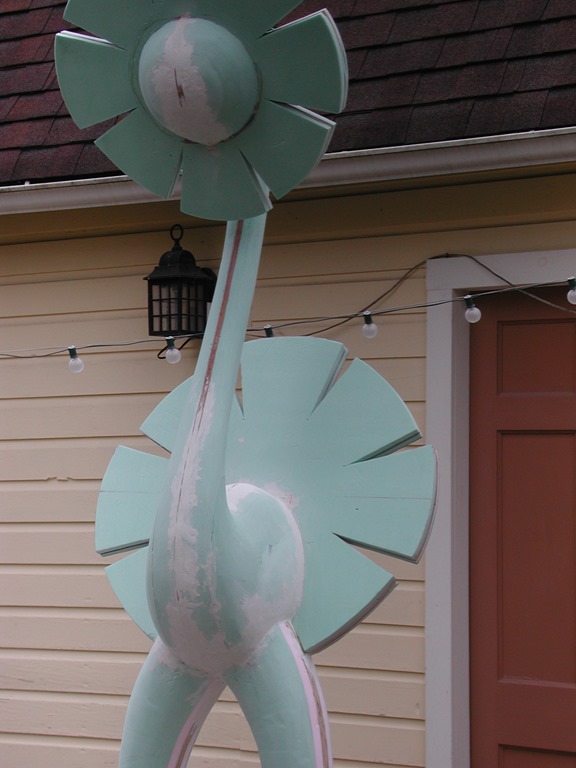
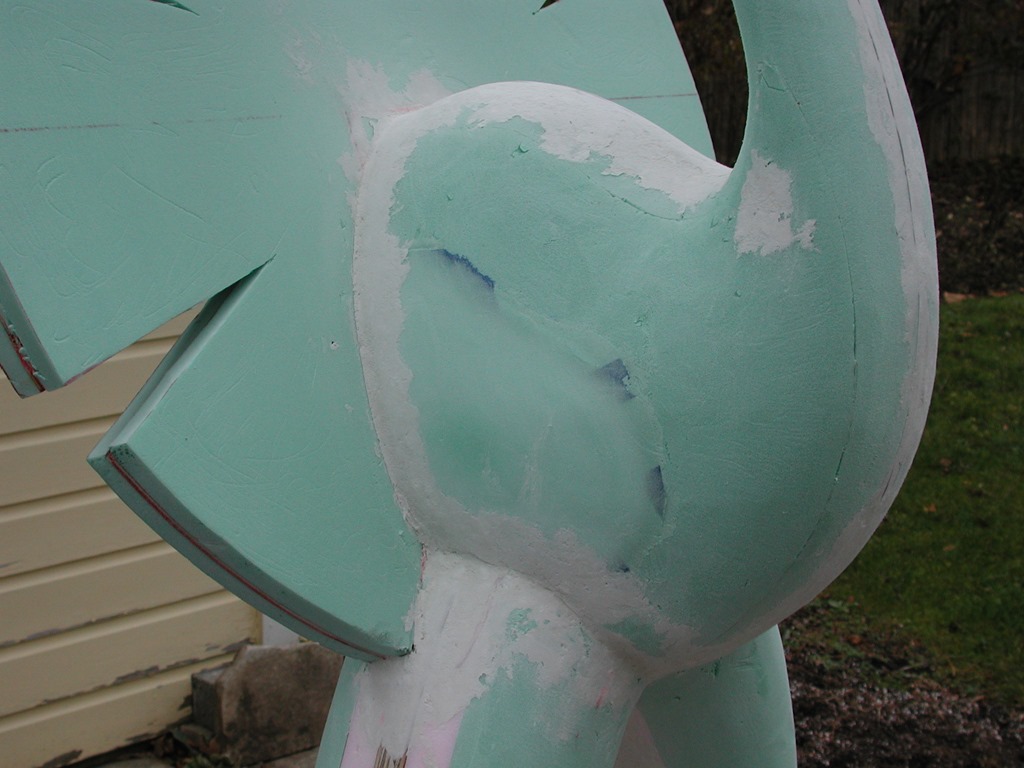
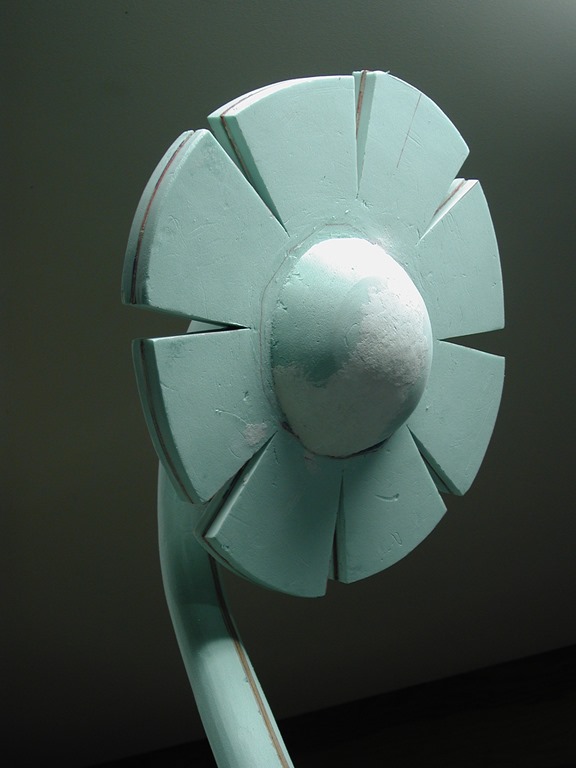
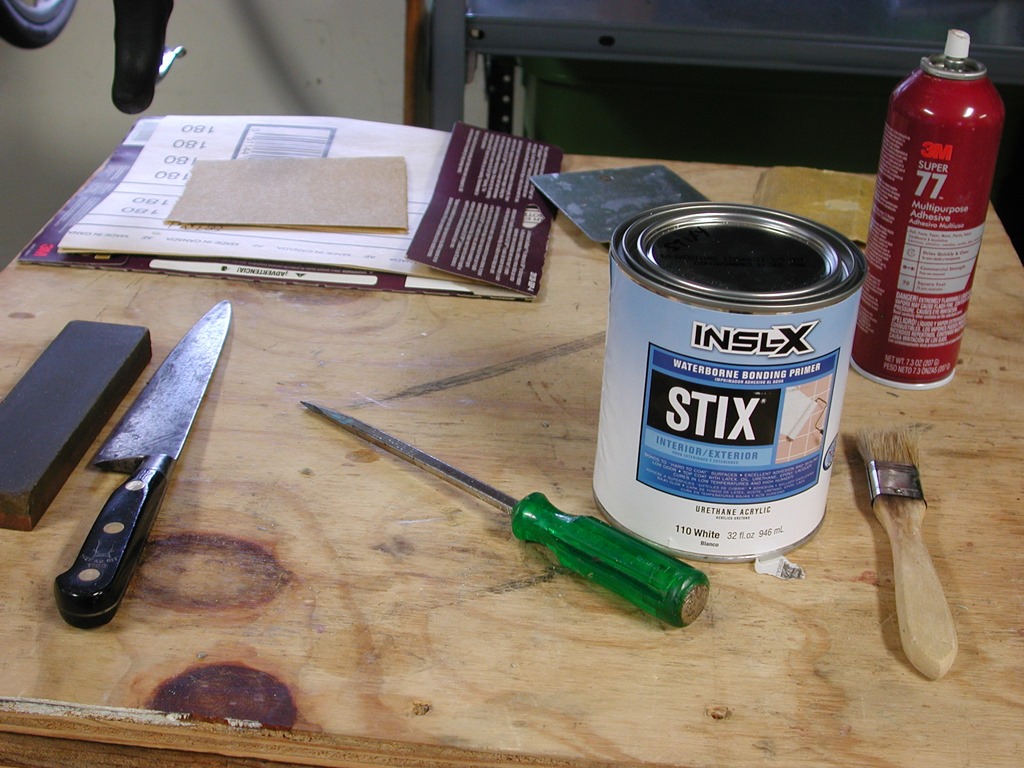
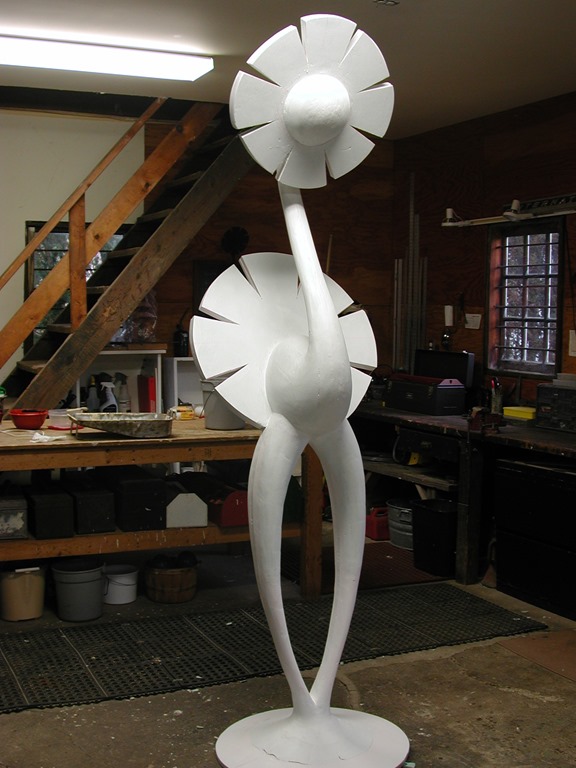
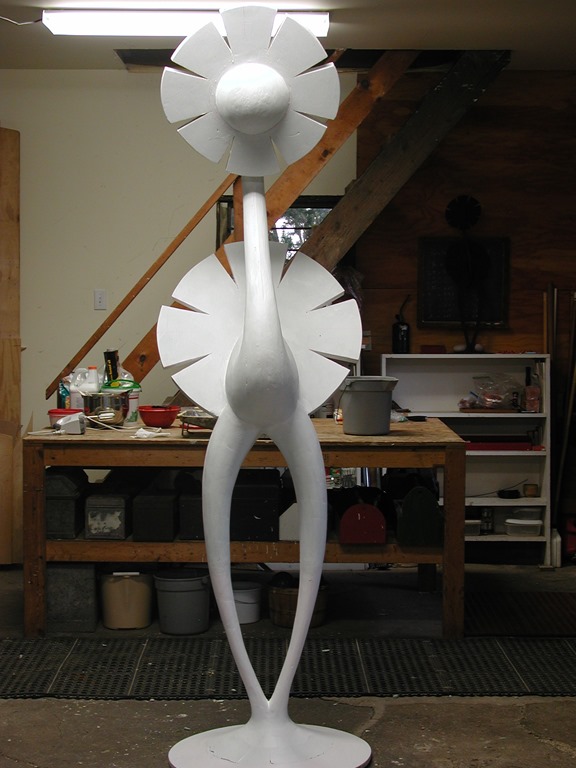
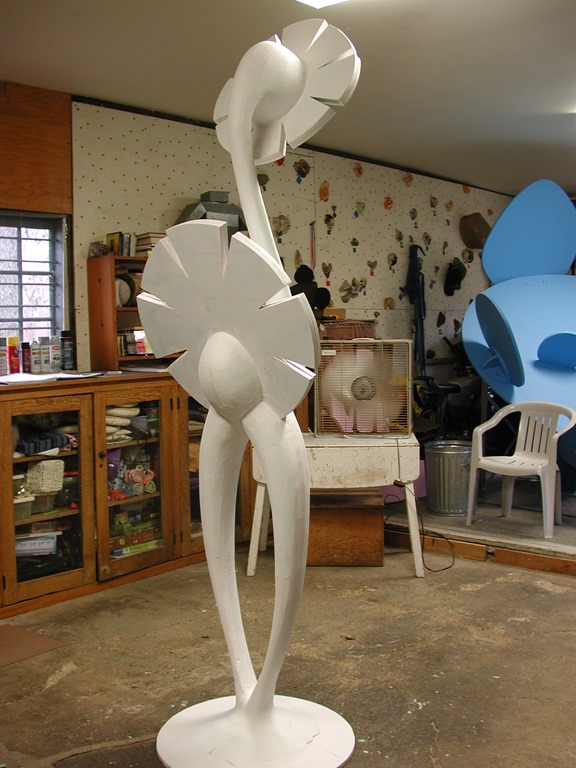
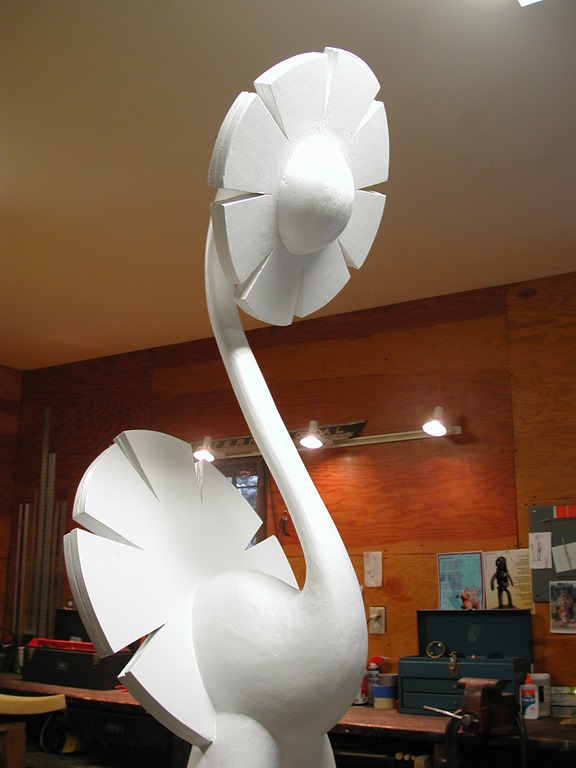
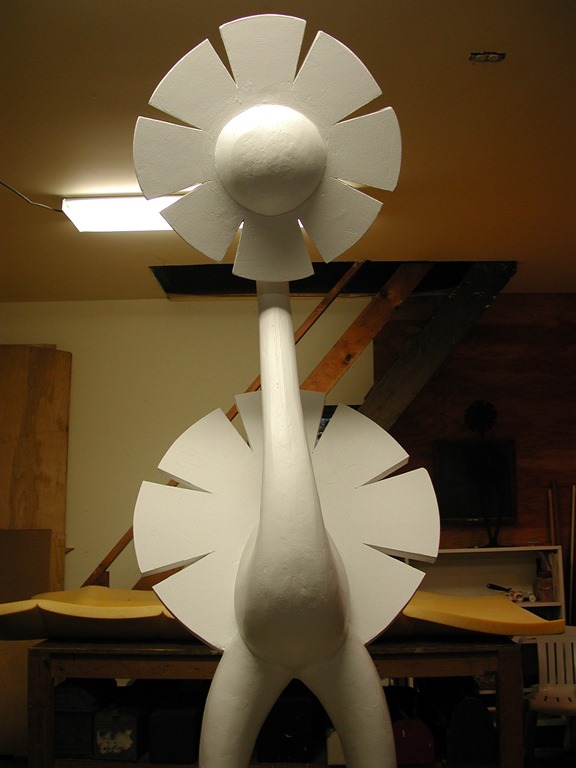
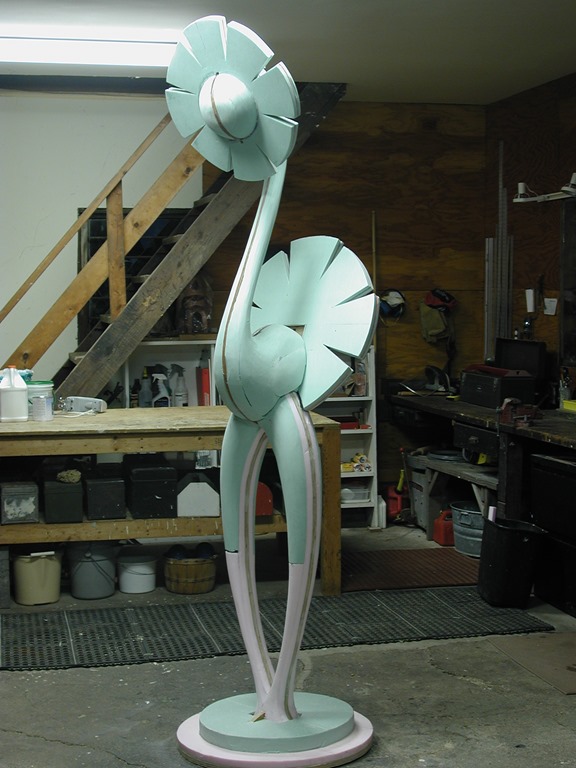
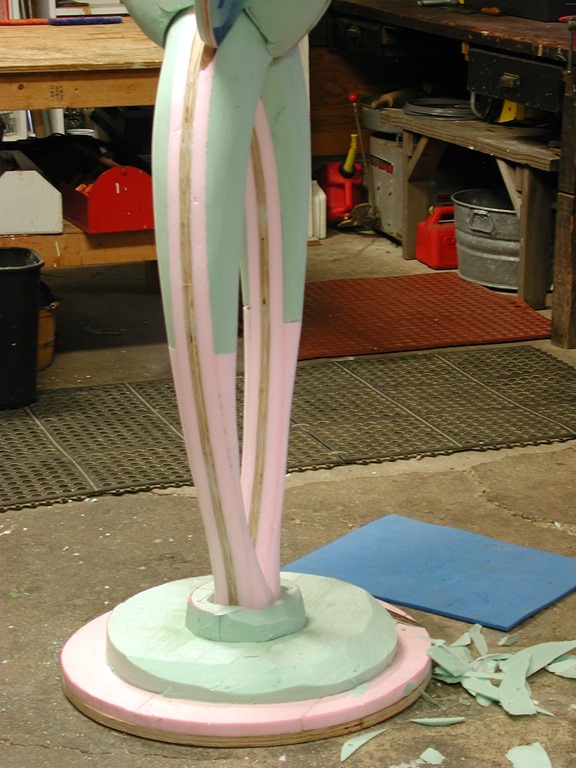
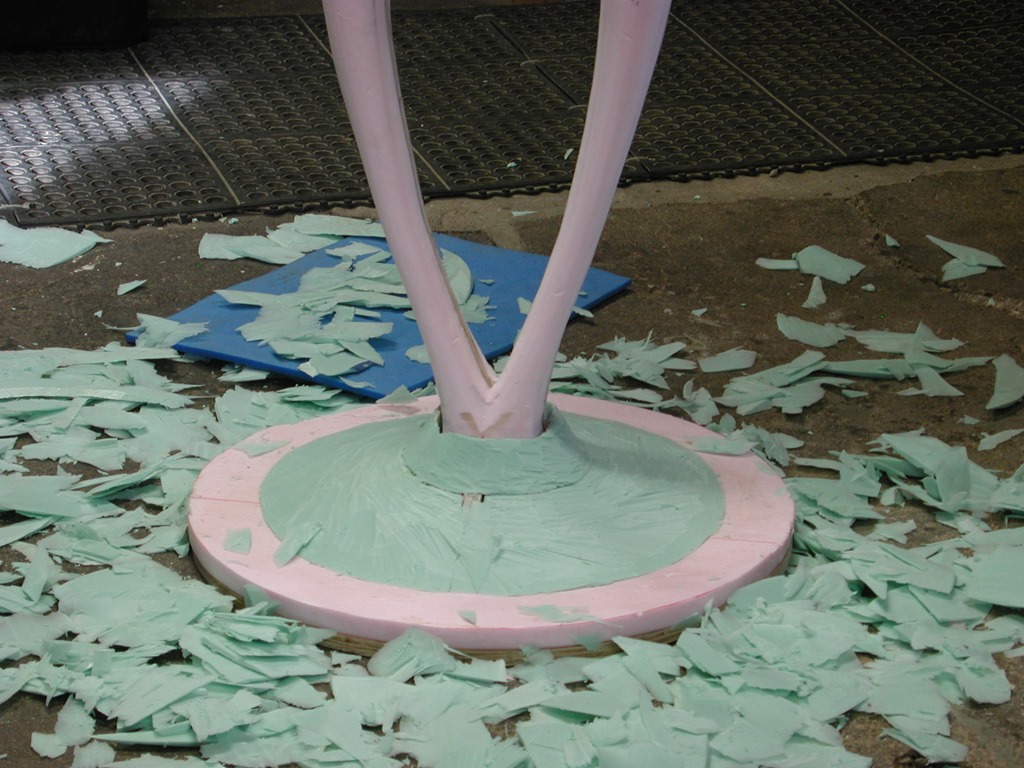
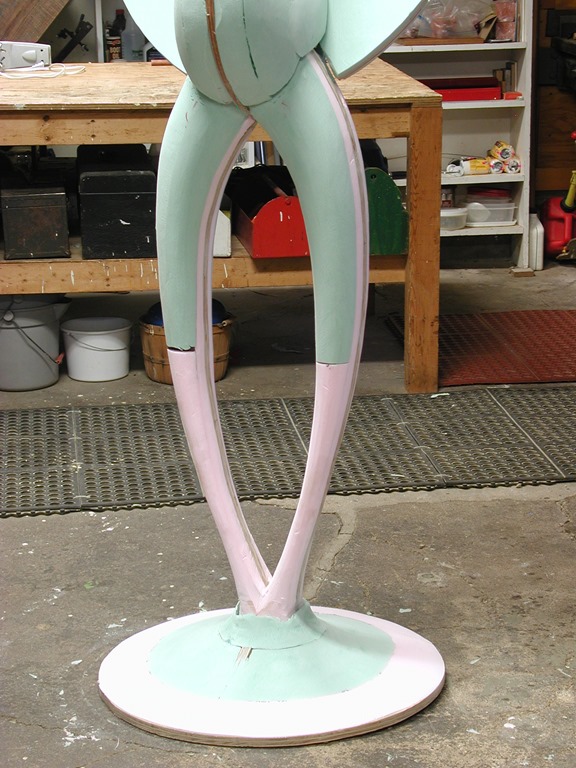
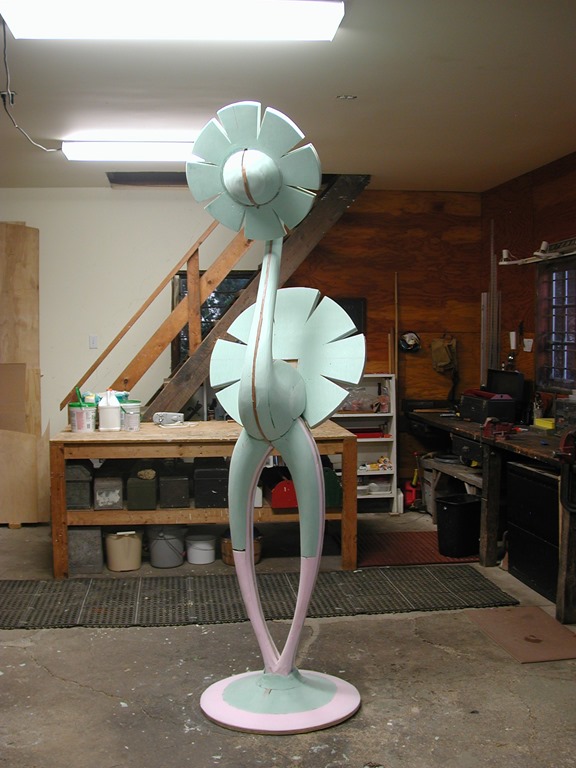
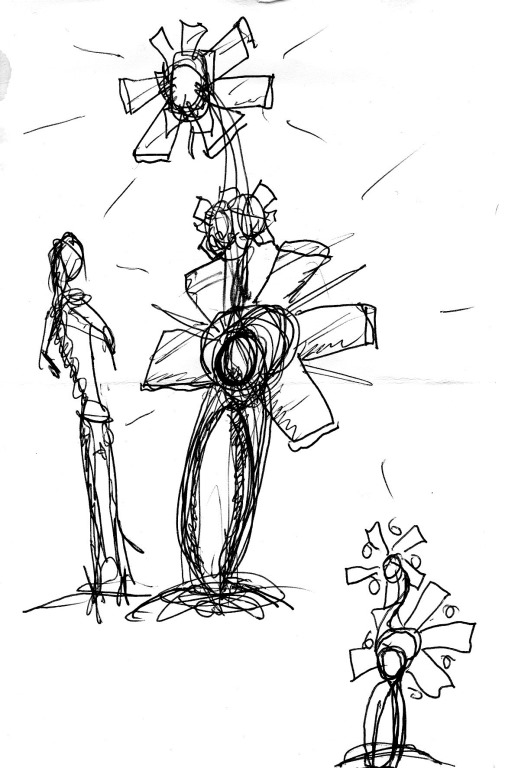
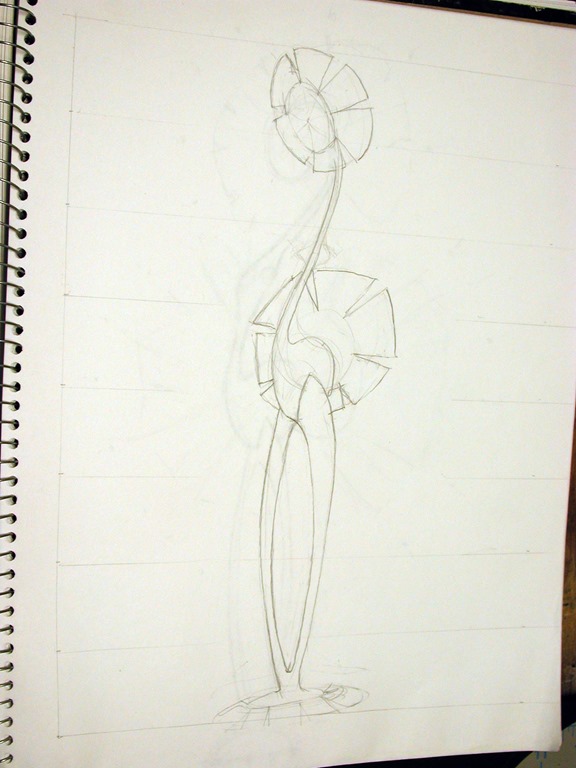
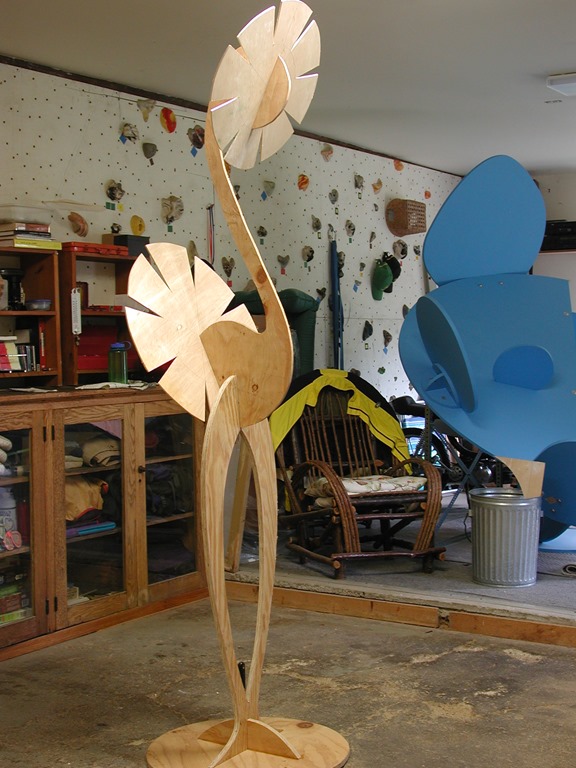
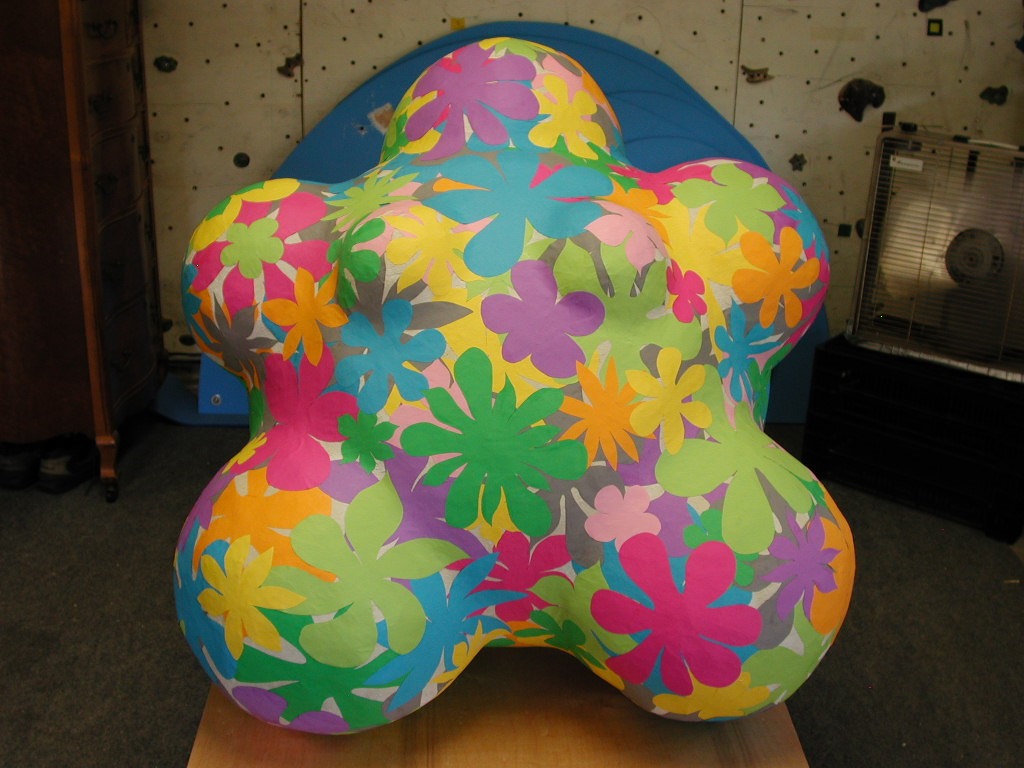
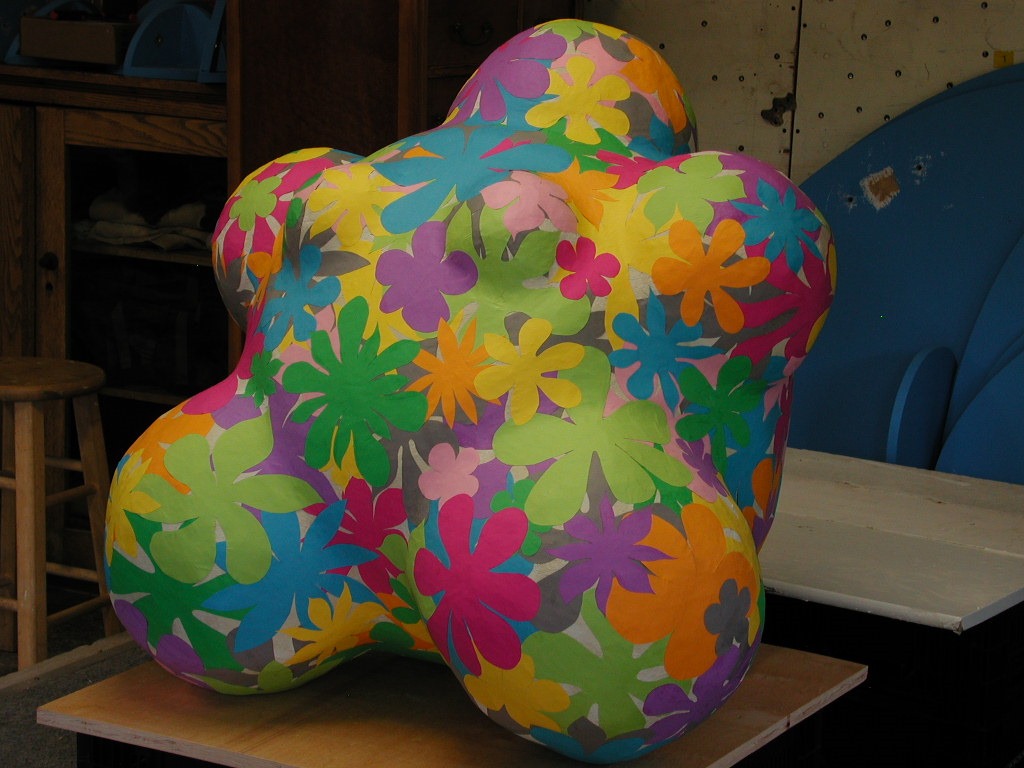
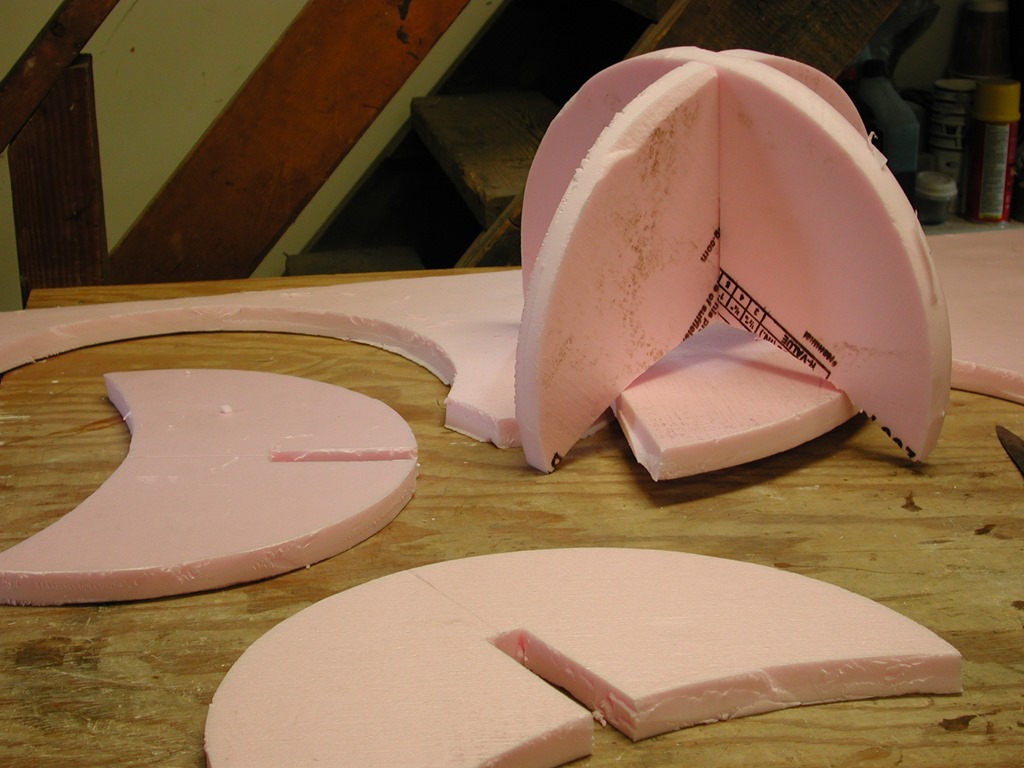
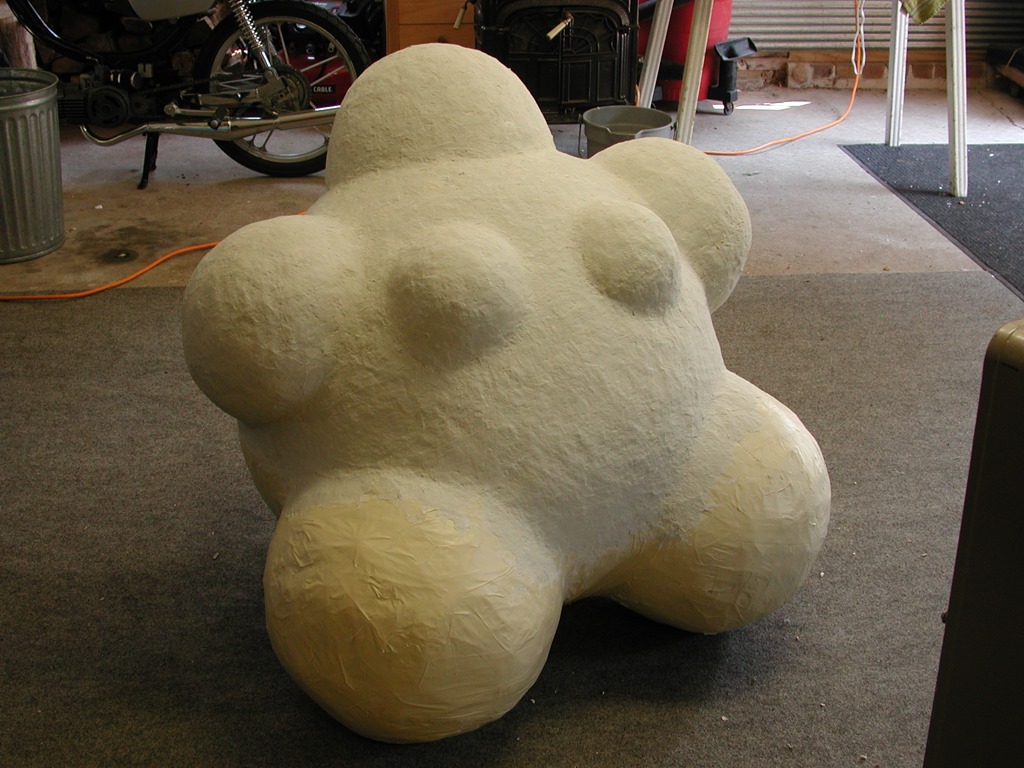
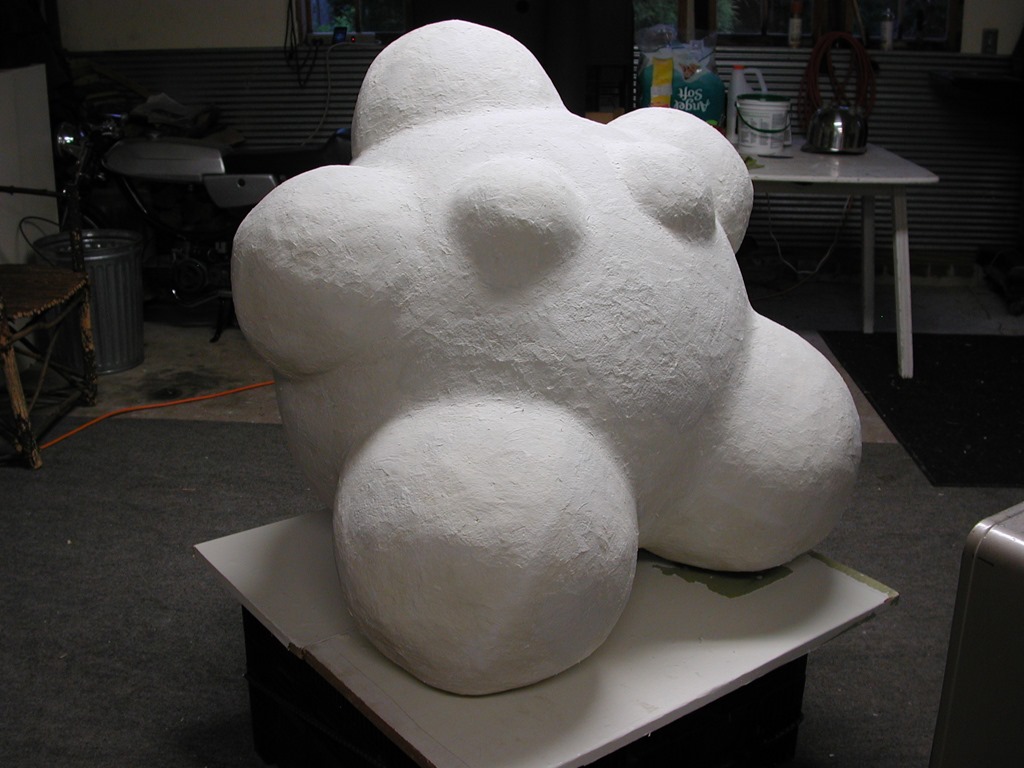
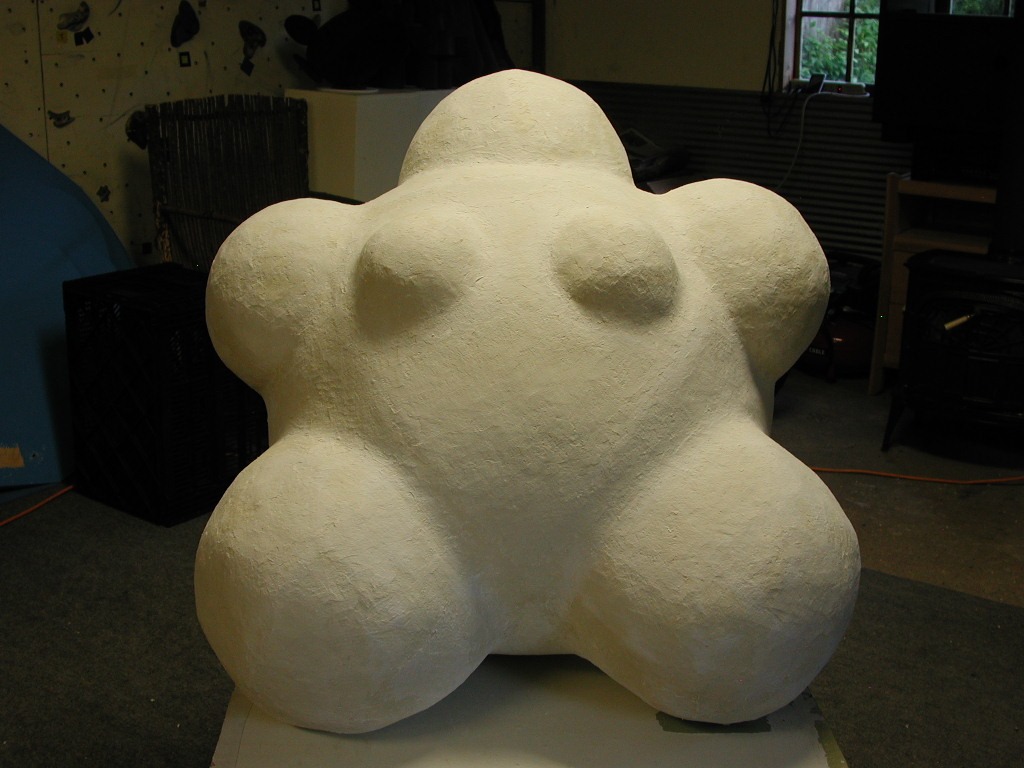
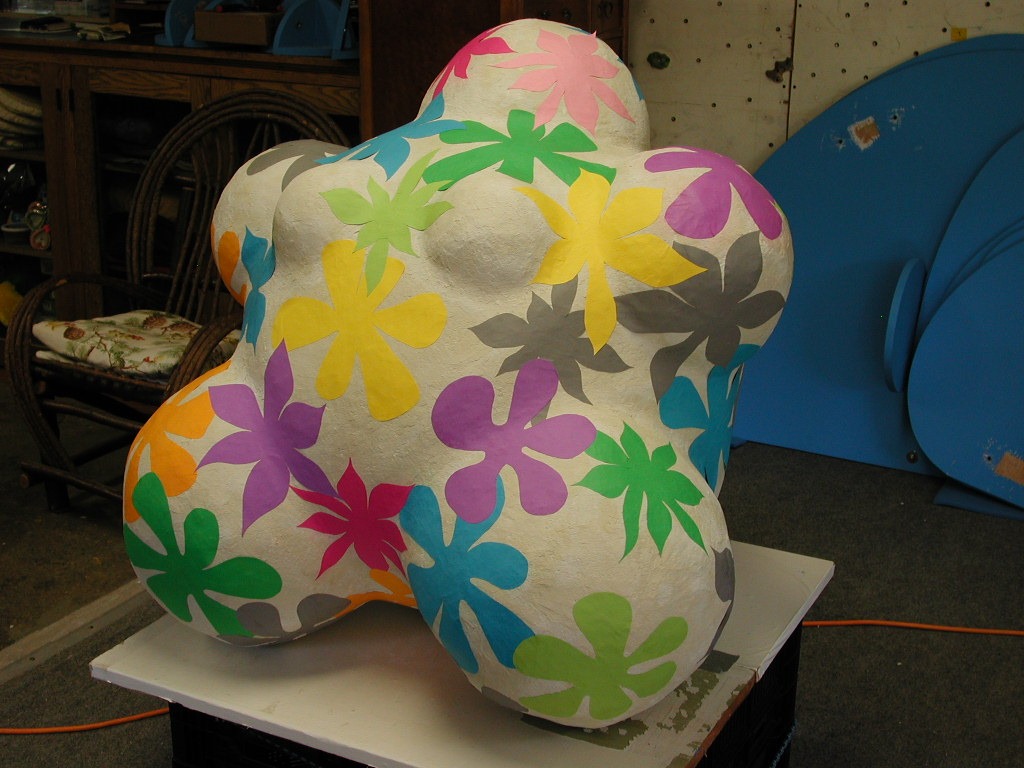
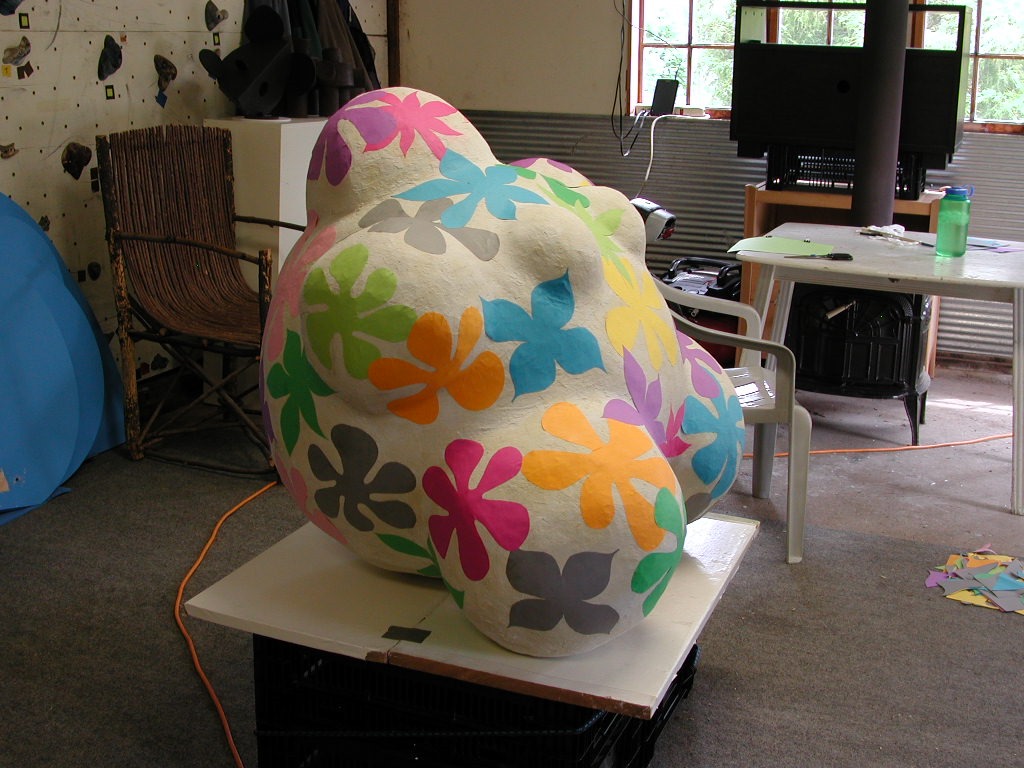
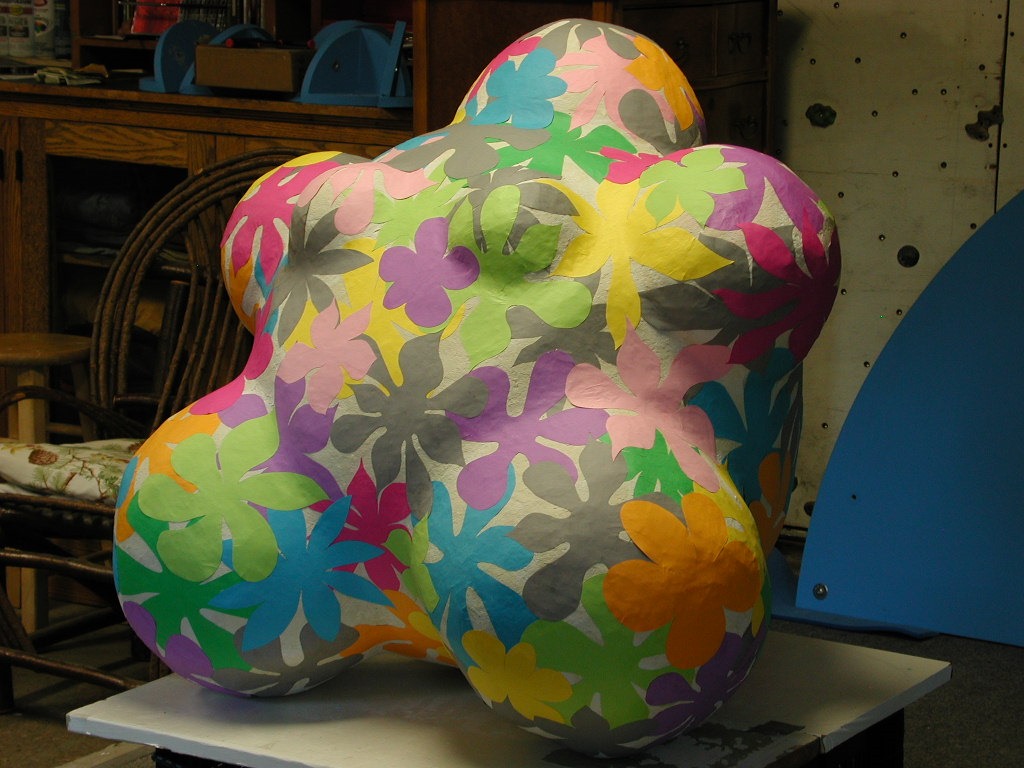
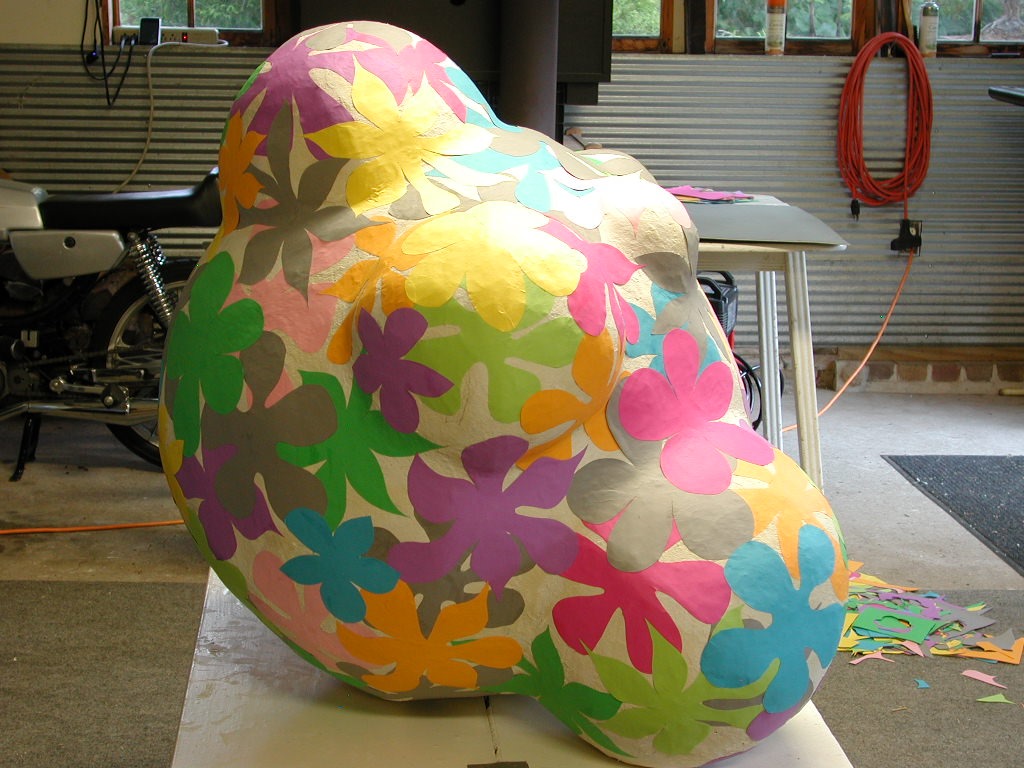
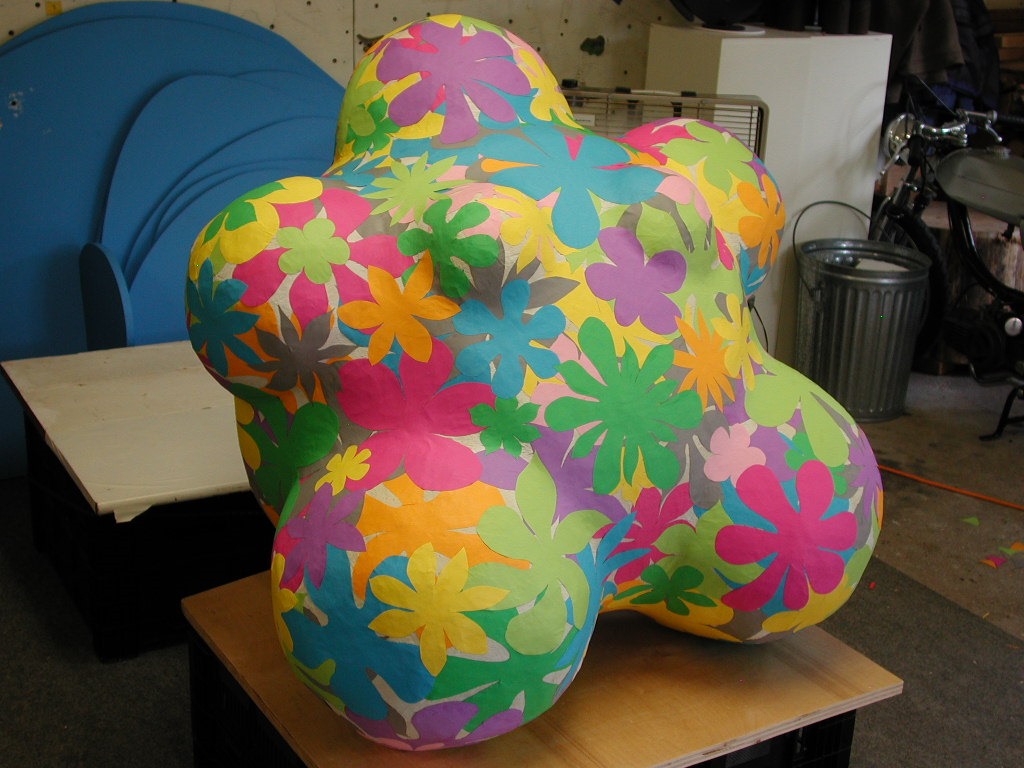
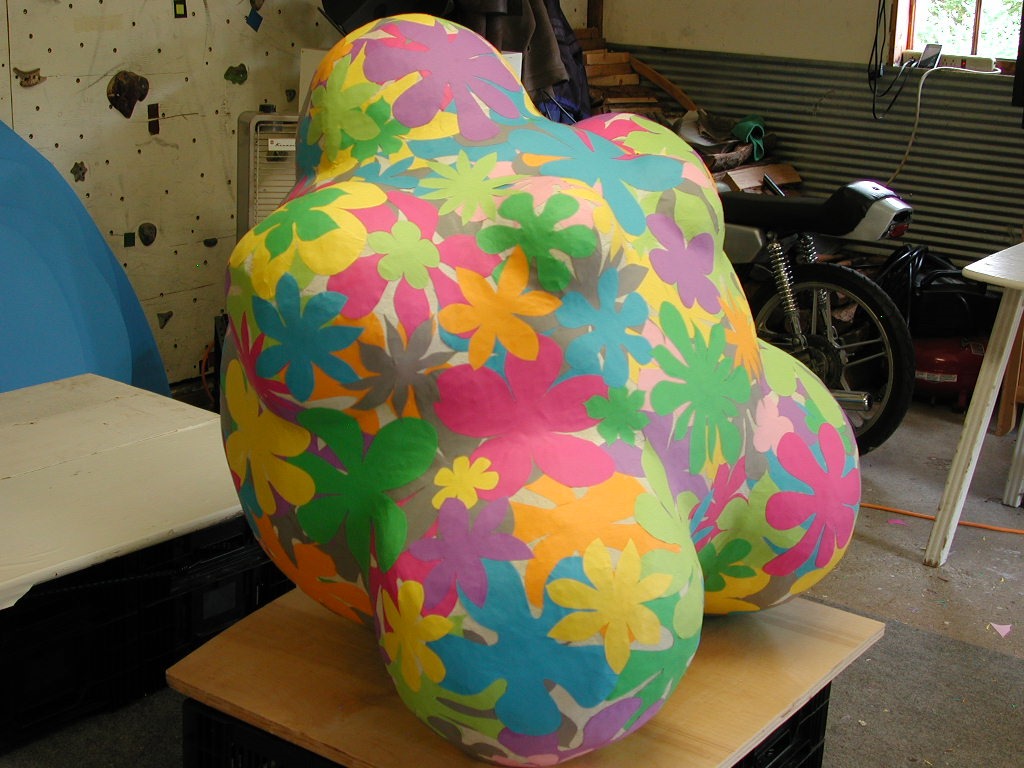
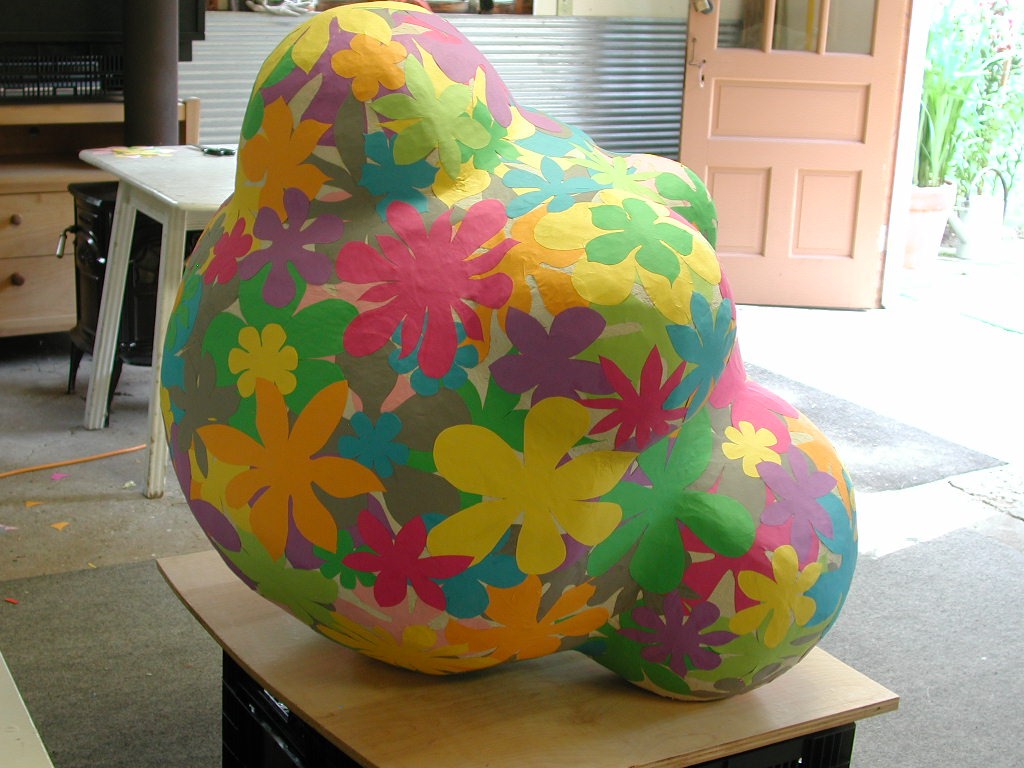
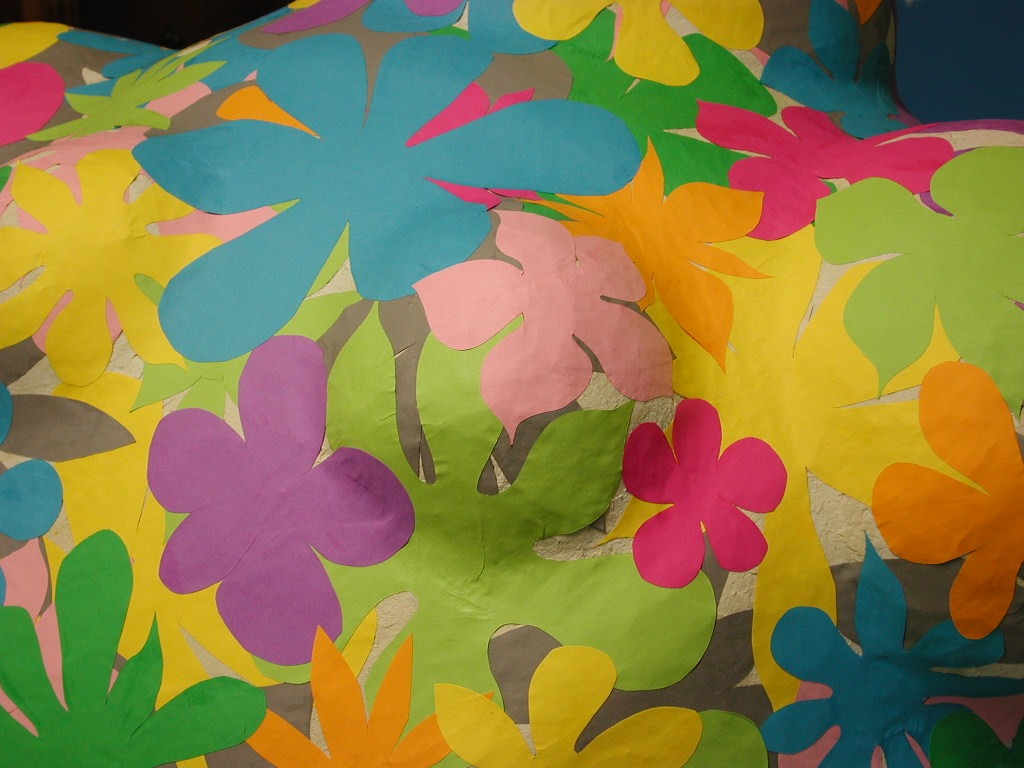
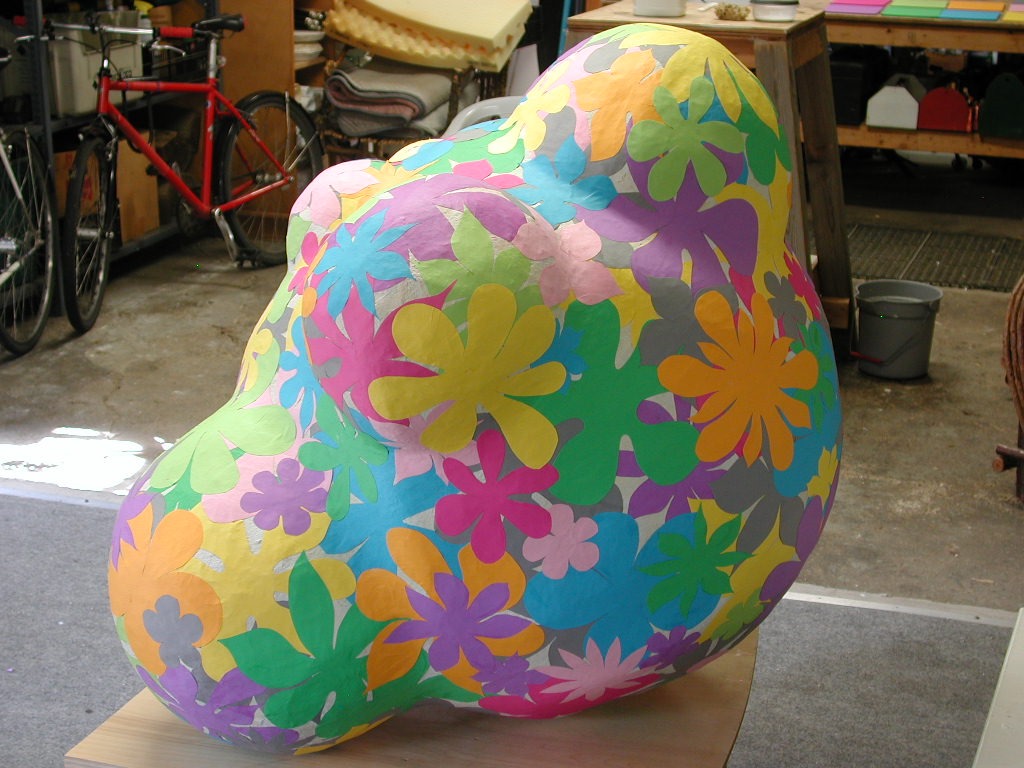
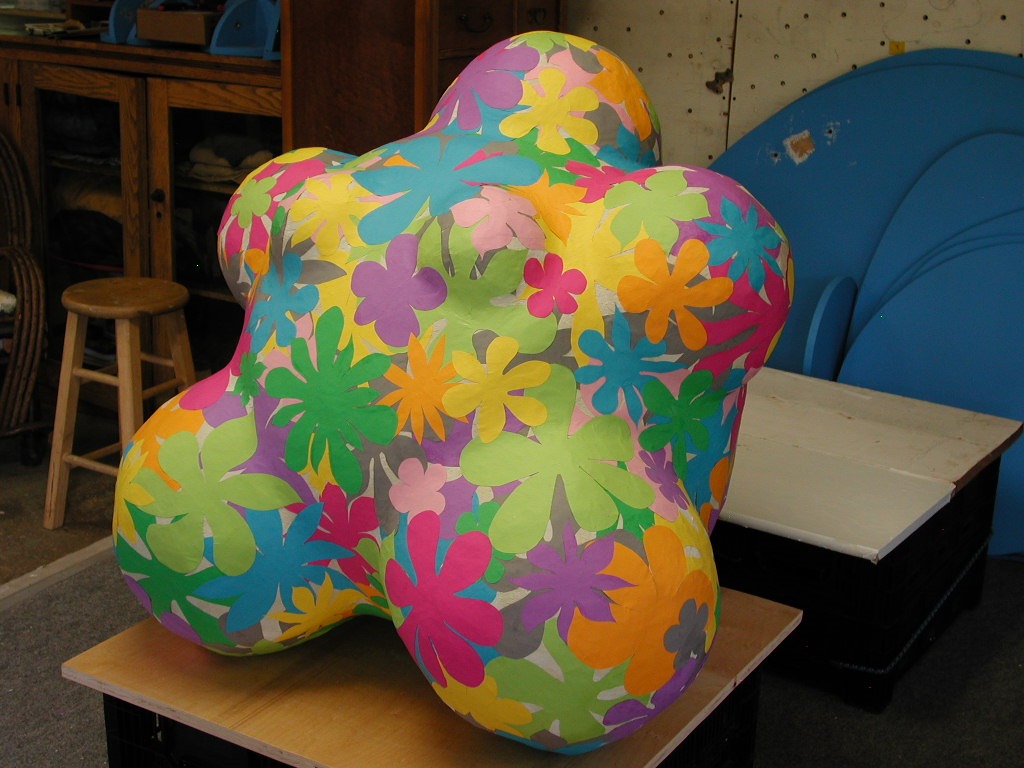
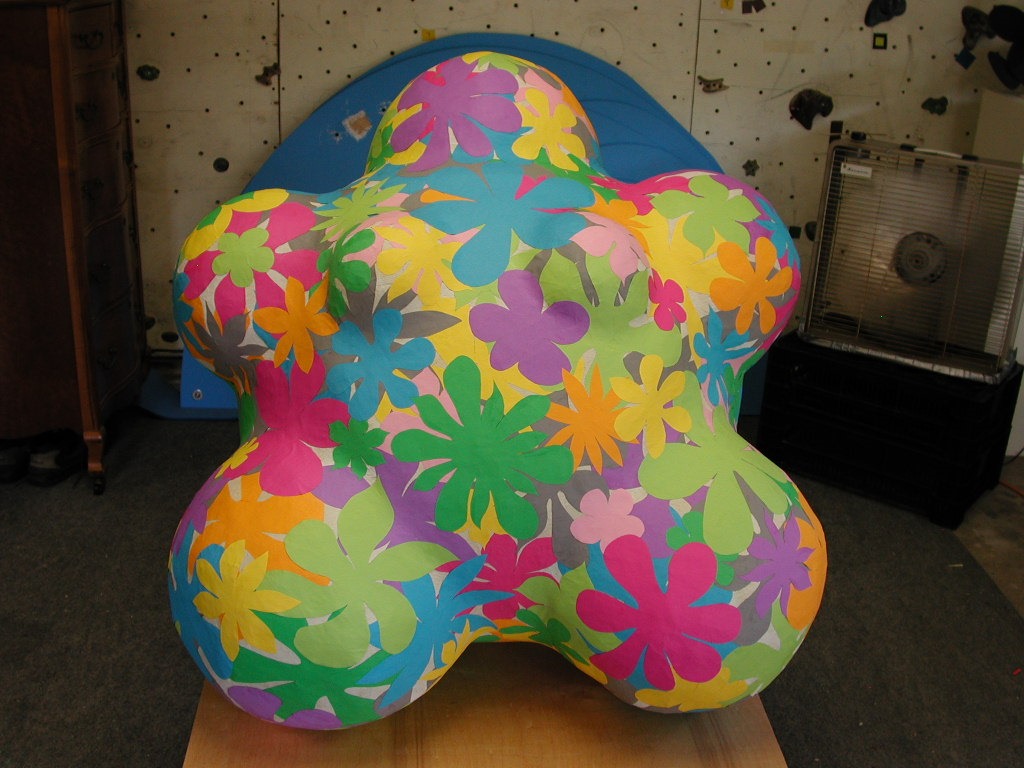
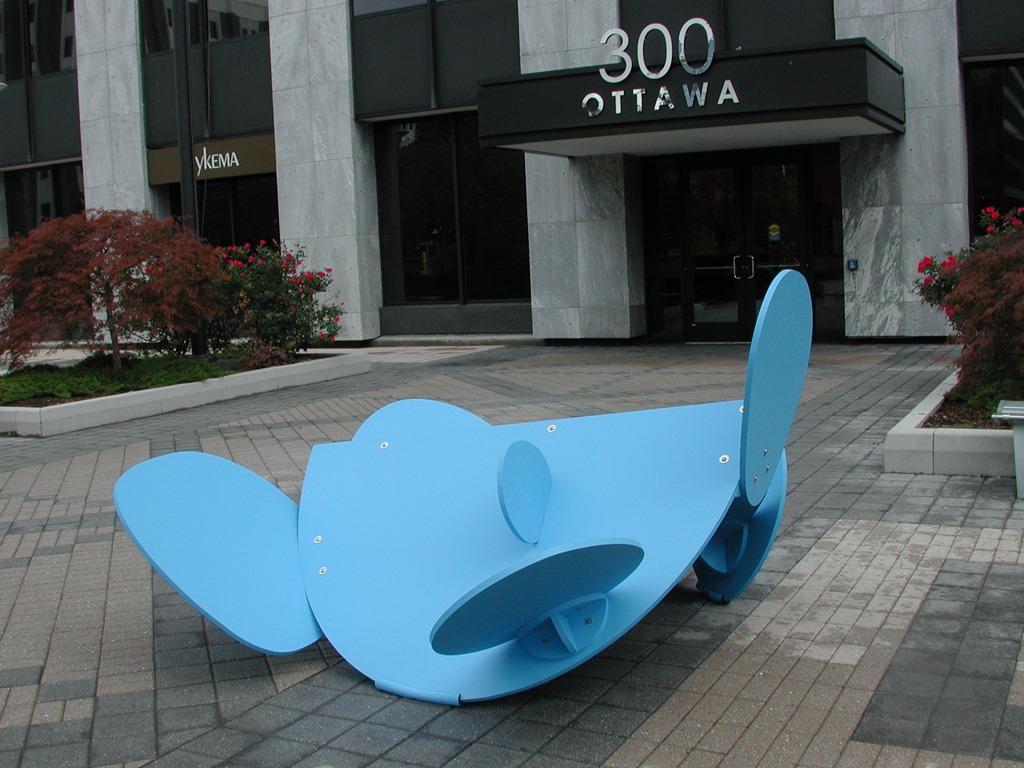
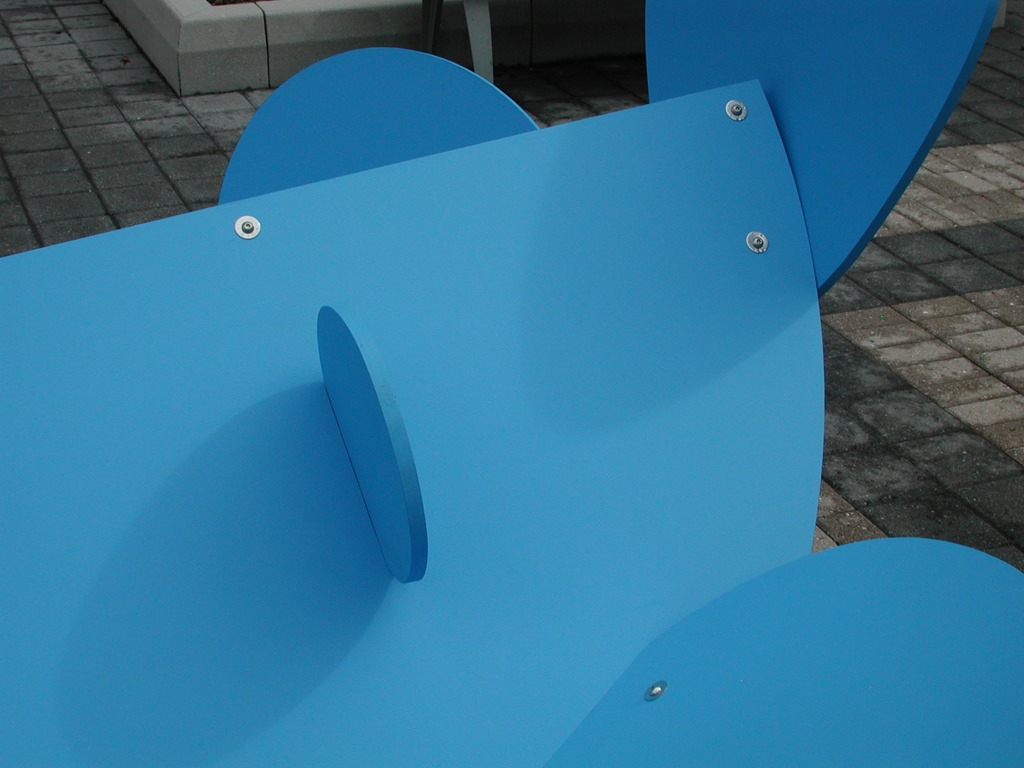
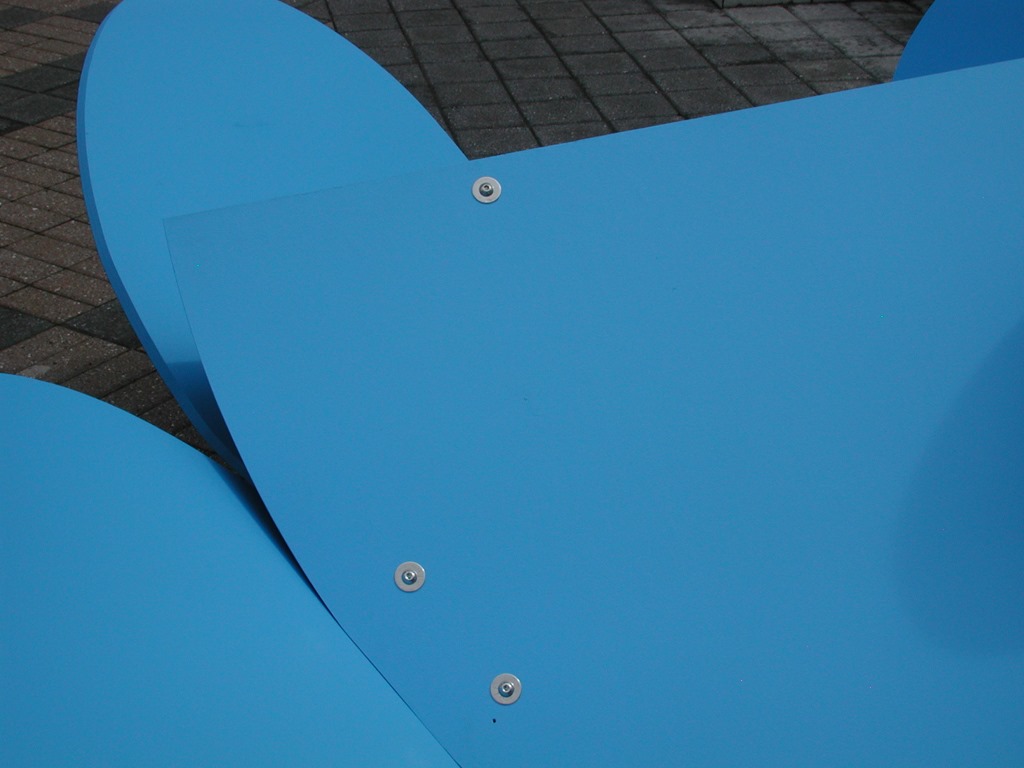
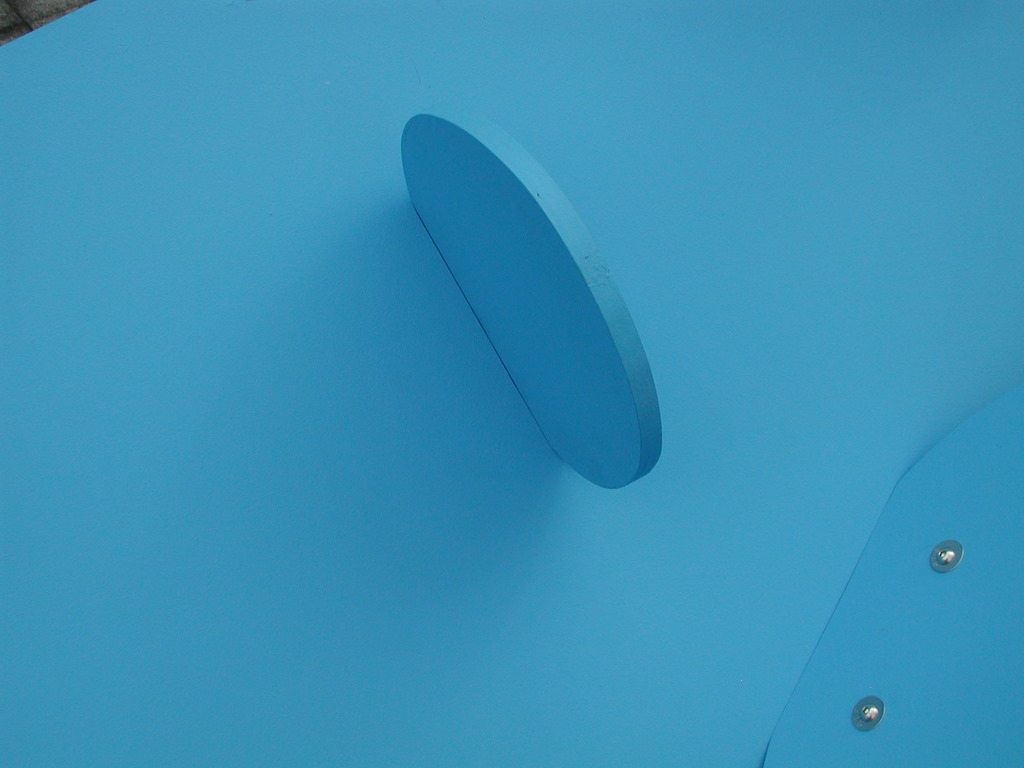
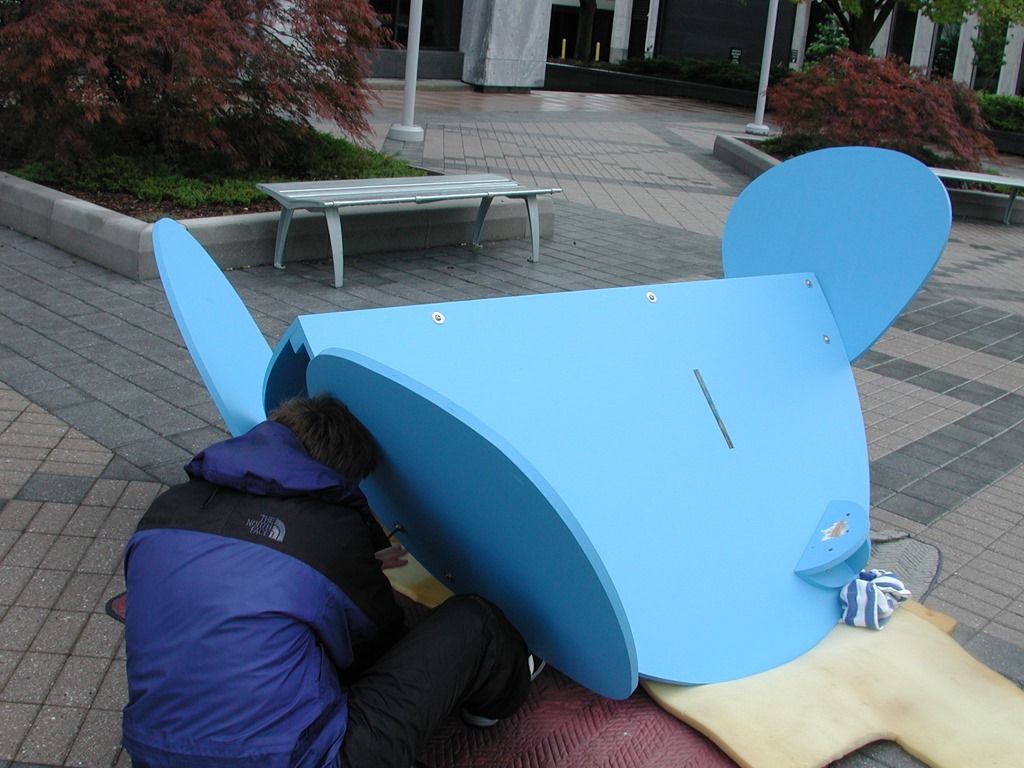
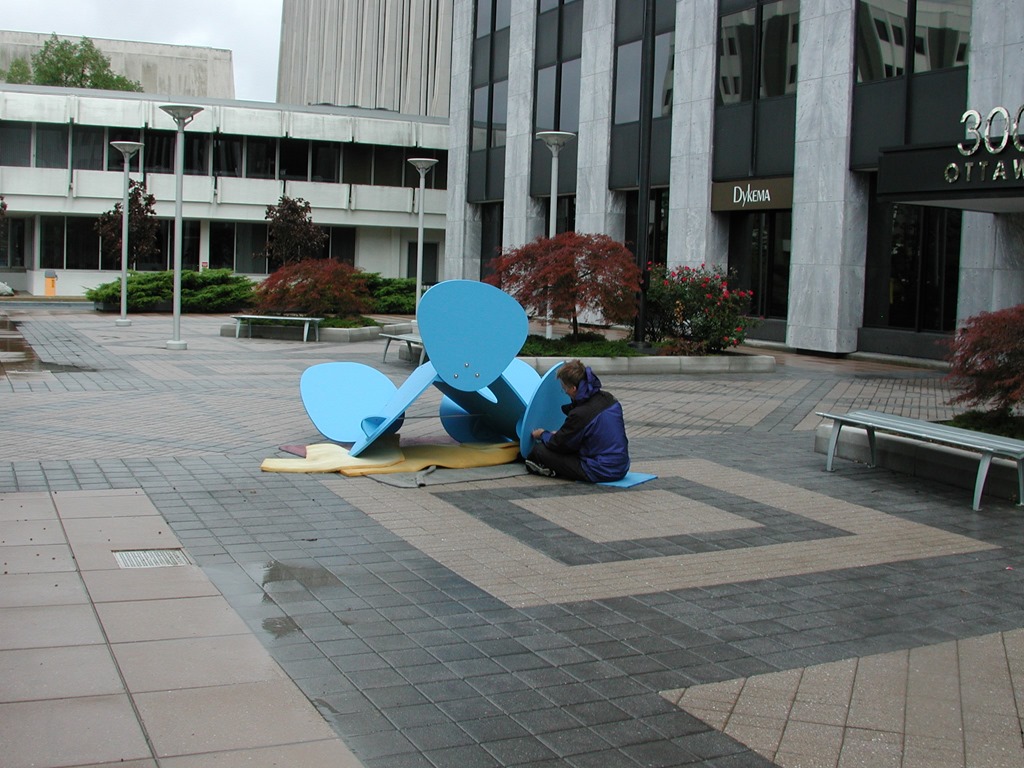
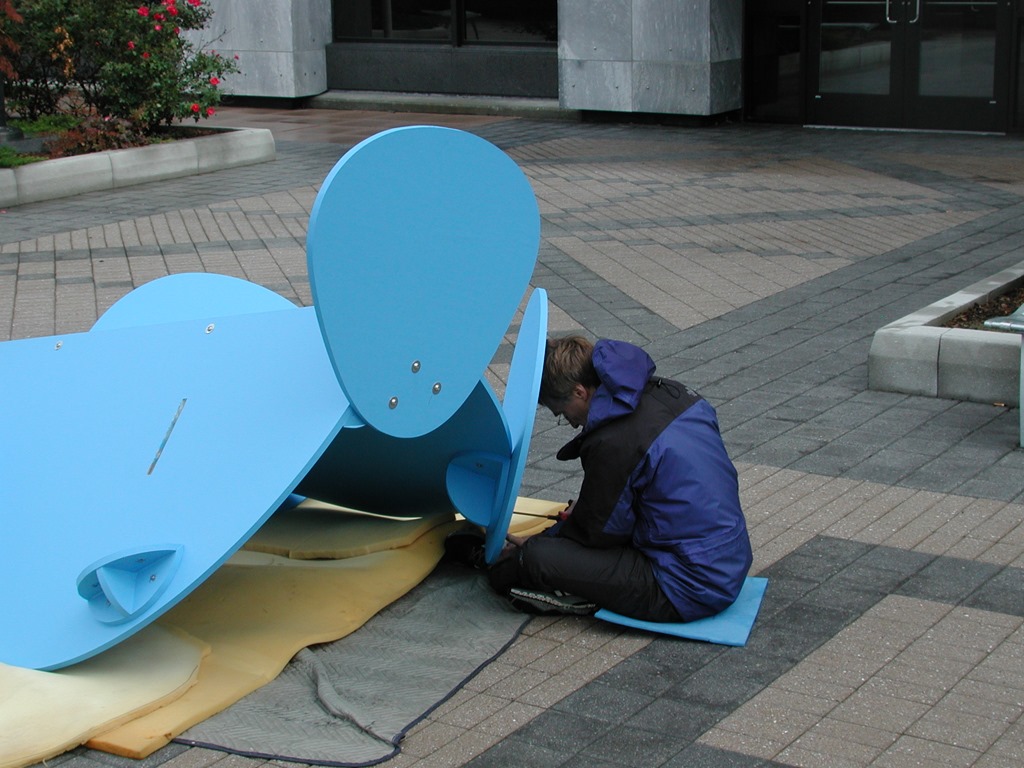
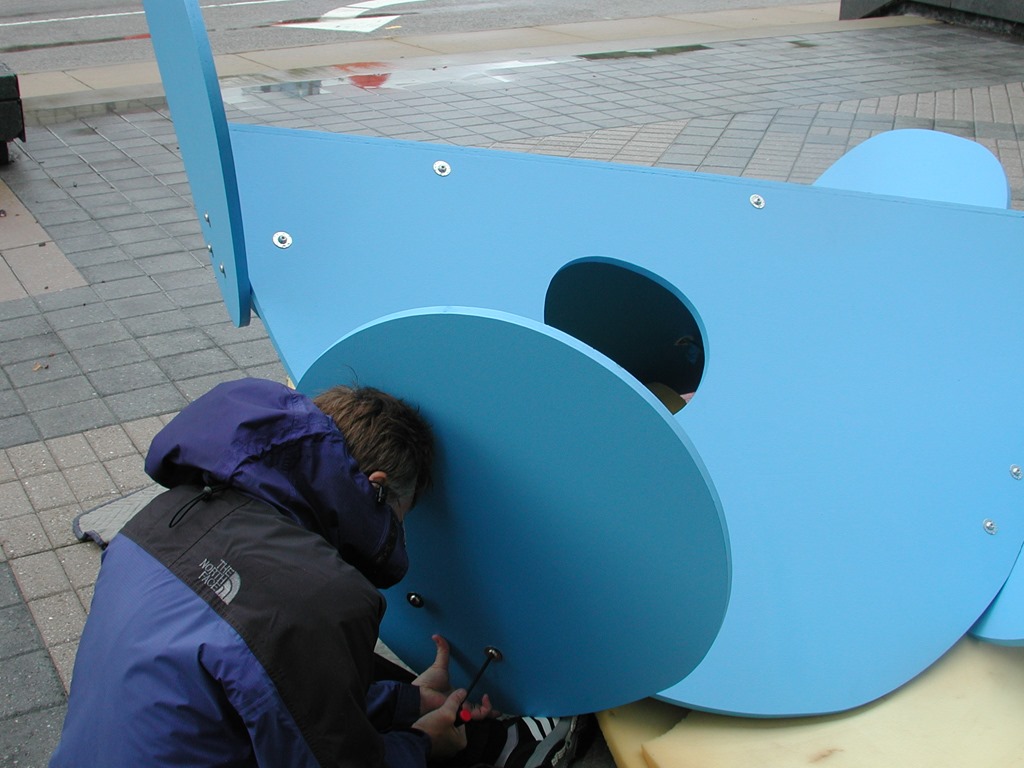
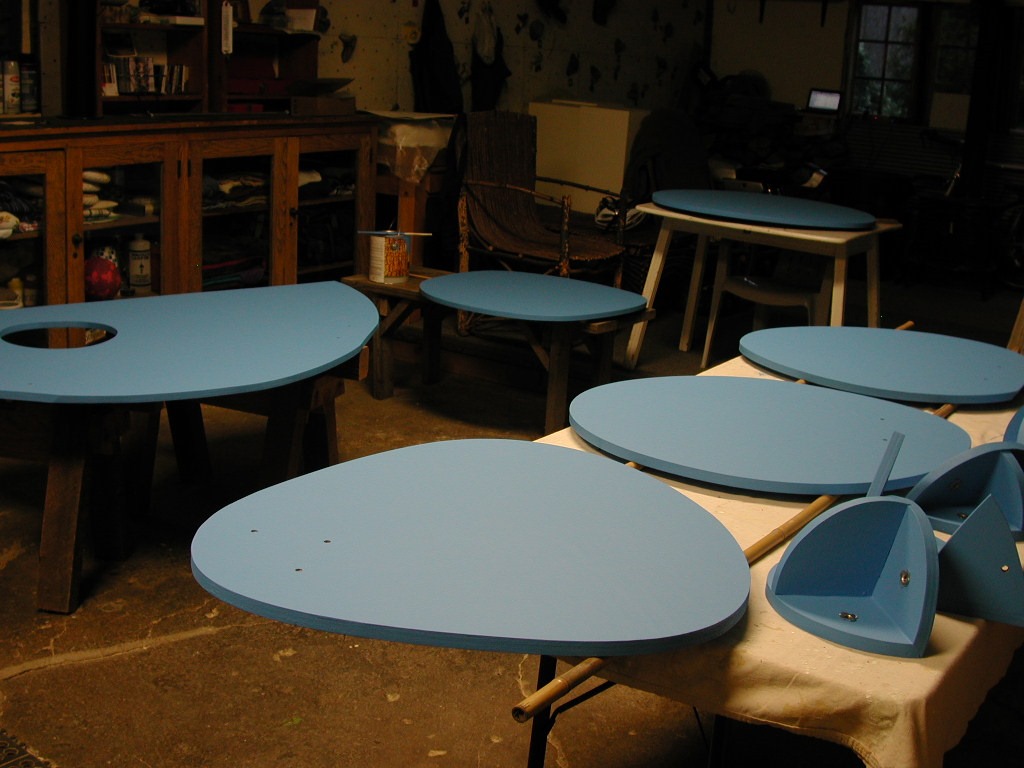
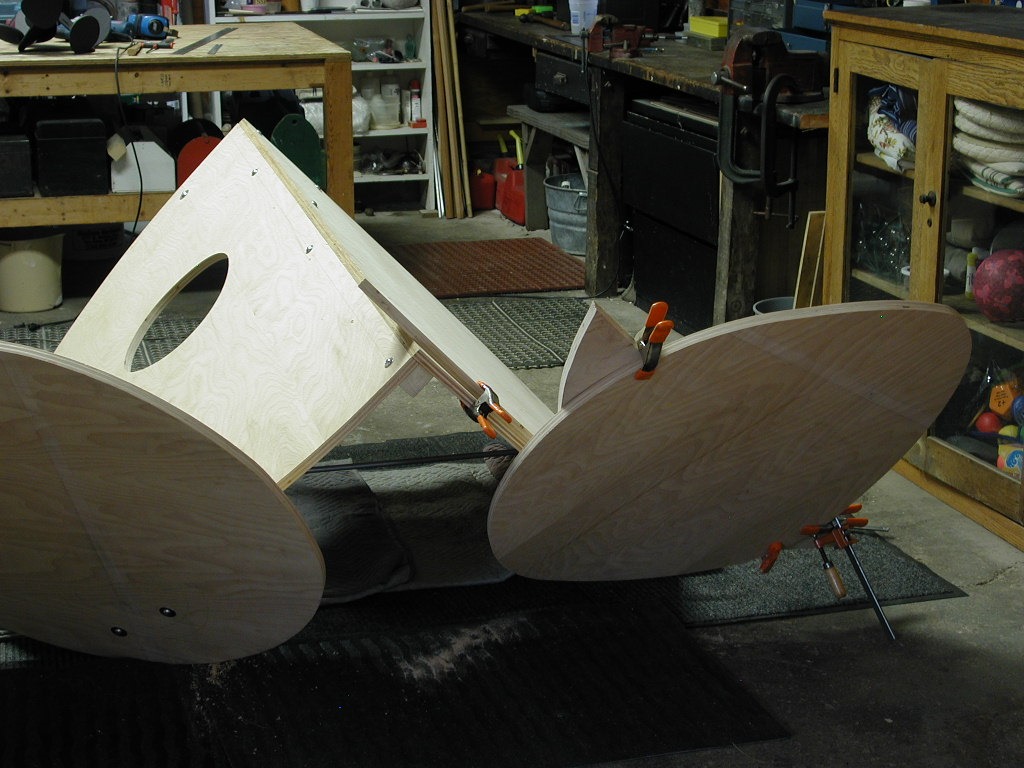
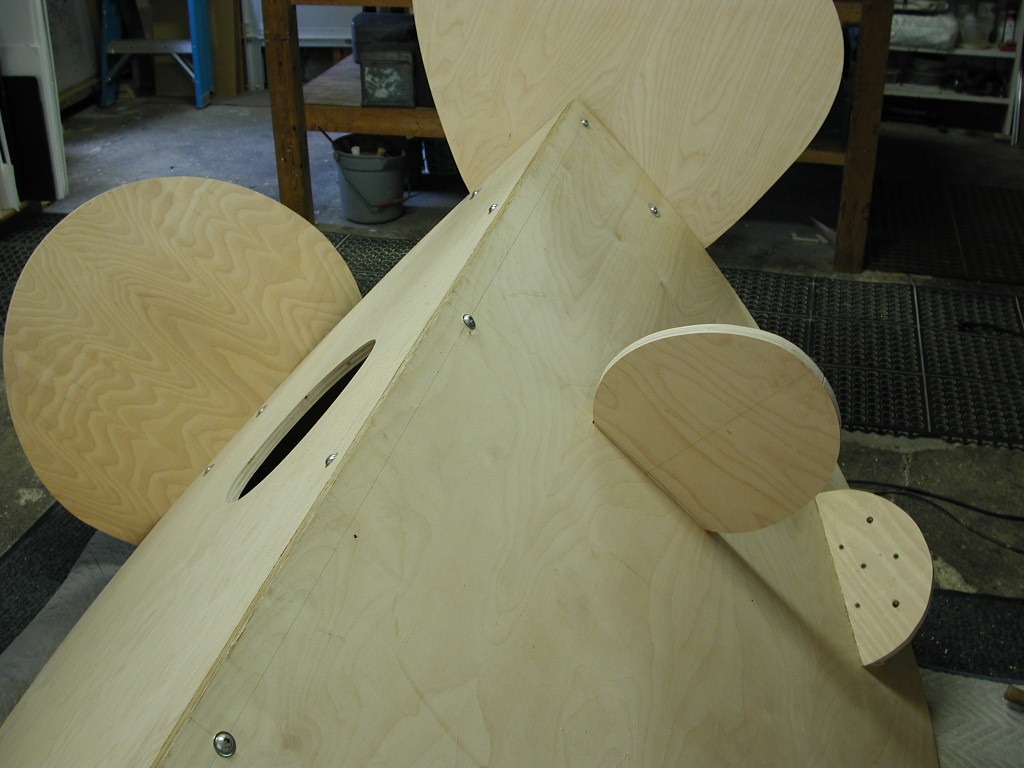
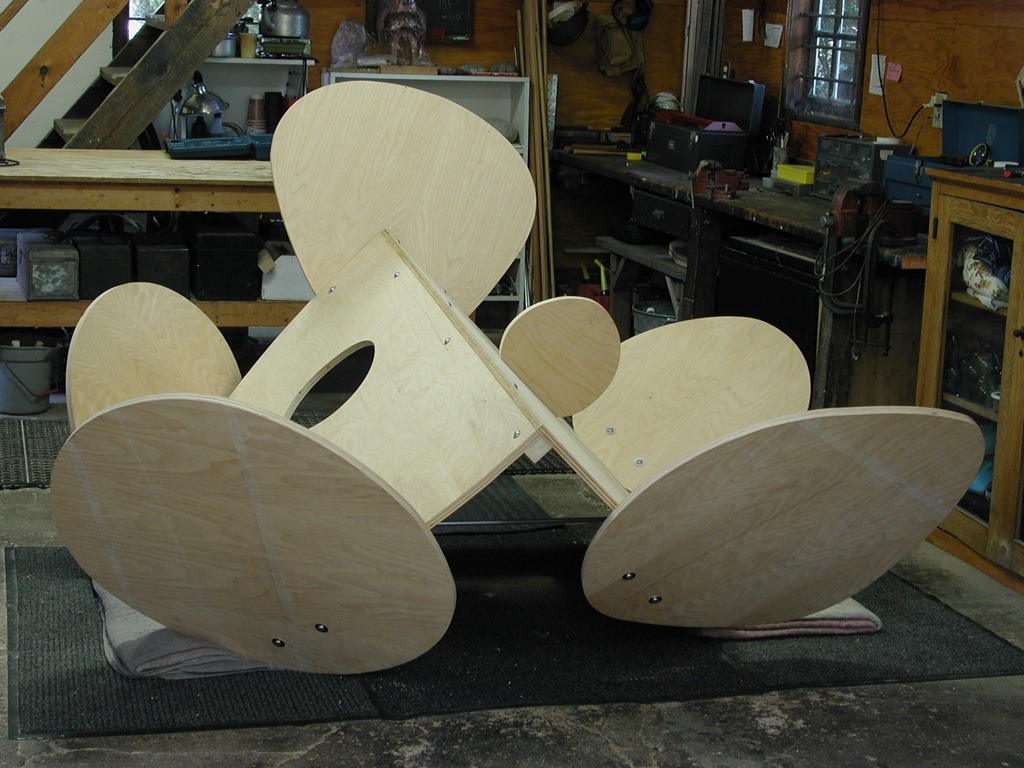
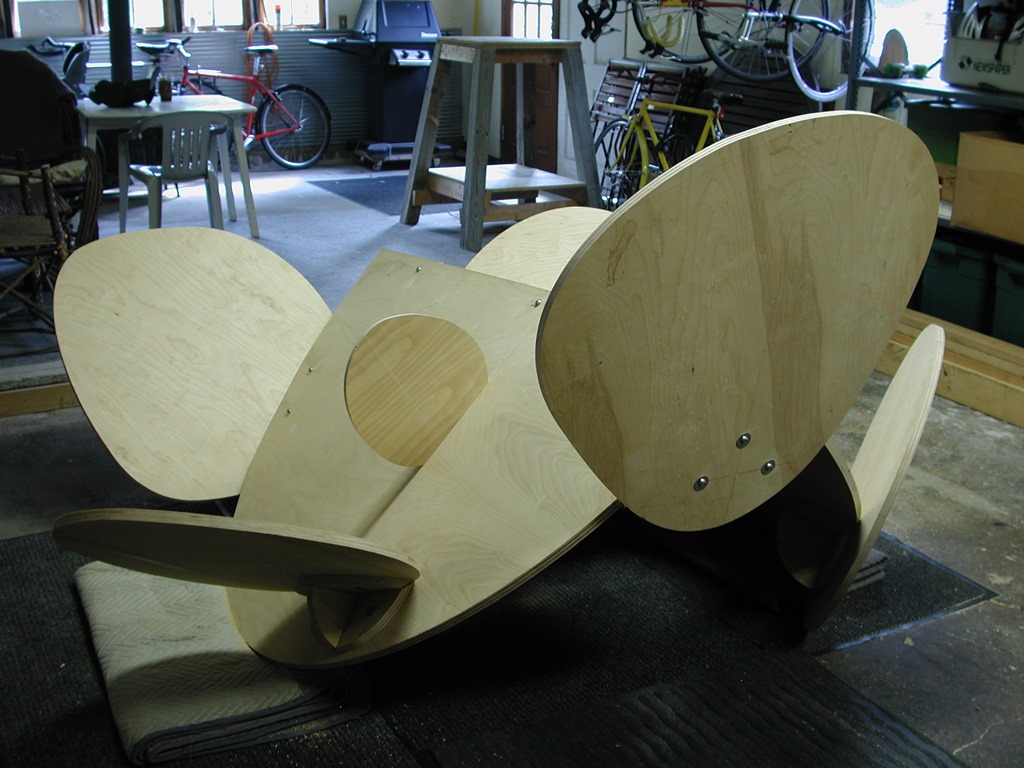
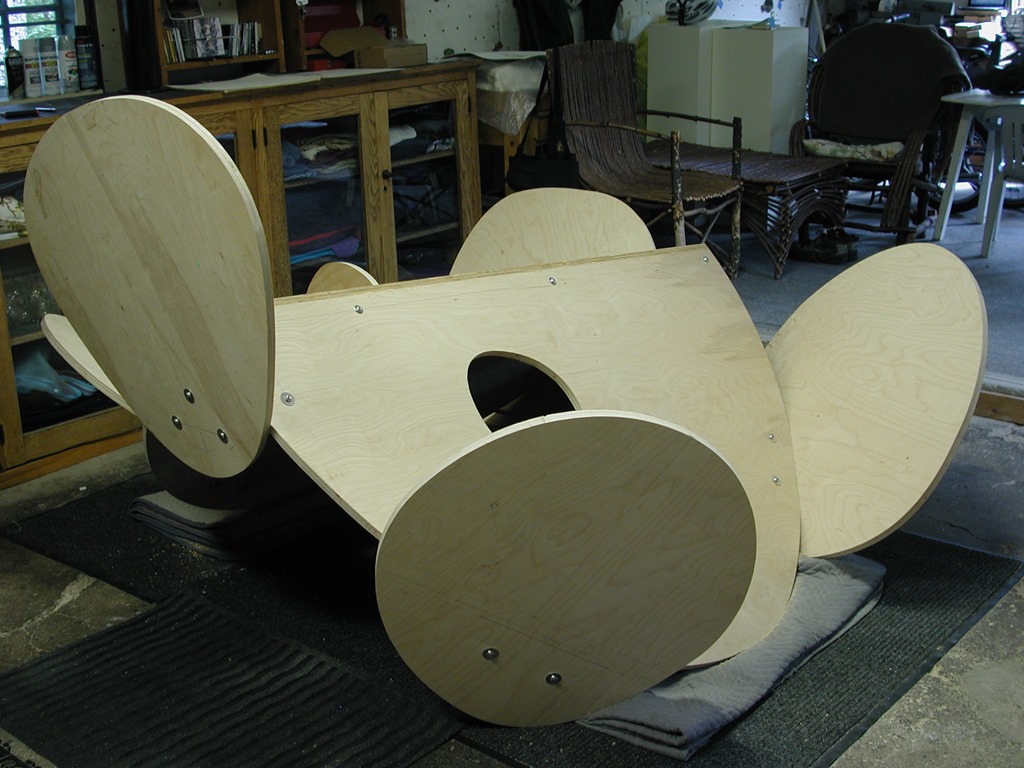
Surface-finish work begins. Patching with papier-mâché clay, sand, and then paint with appropriate primer for plastic foam (polystyrene). Then, overcoat with a high quality acrylic paint. All this helps strengthens the surface a bit, so it’s not so fragile to dents and nicks as the bare foam is. Getting somewhere like people think of real sculpture.
Category Archives: Sculpting Progress
Bas ss e
Sketches and models
I make fewer measurements, and use sharper tools; Less power tools, less machine tools, less design tools. Sharper hand tools, and working by Eye, and not from plans; with less accuracy and with more details. Plans reduce precision to generalities. The eye creates detail wherever it wanders; produces variation and adornment and complexity. Is why, when you close your eyes, you see patterns and images, instead of simply darkness.
I will take a sketch and build directly to the model and then directly to the full scale. No intermediate designs, templates or tools. Free-Hand, by hand.
I’m not going to scan a sketch, scale it, grid it out in Illustrator, build a model, photograph and adjust for front-side-and-top views, enlarge to a template, print out a 1:1 pattern, cut materials, and build at full scale, No, but I have done that sometimes.
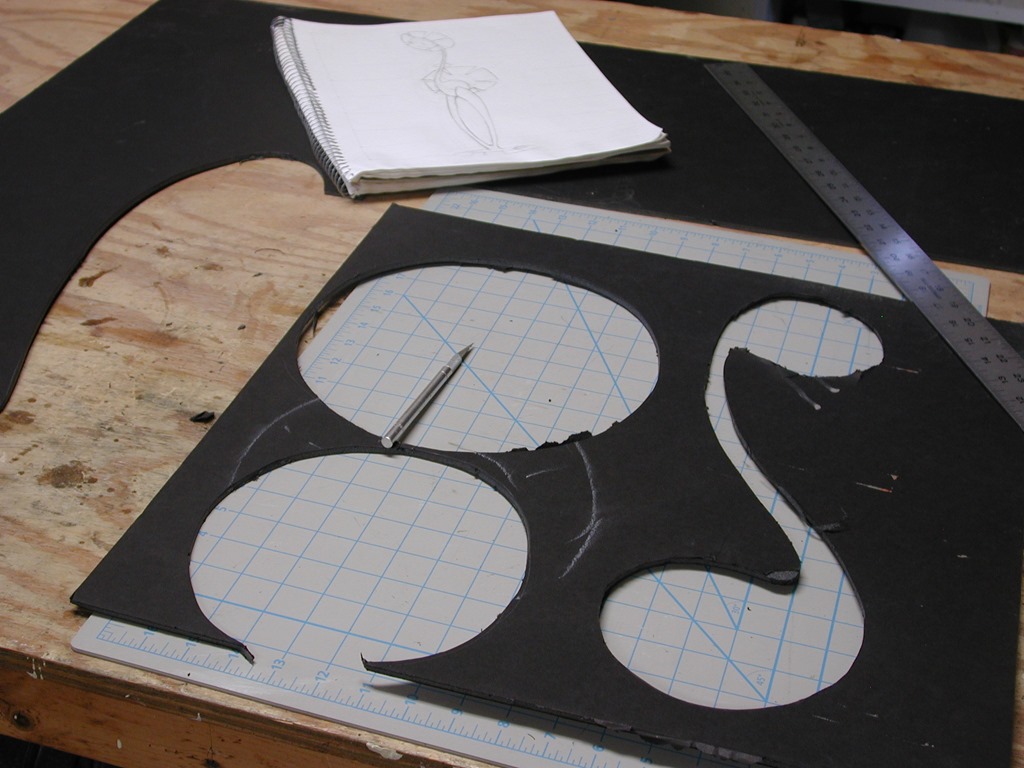
Napkin sketch, and notebook draft drawing.
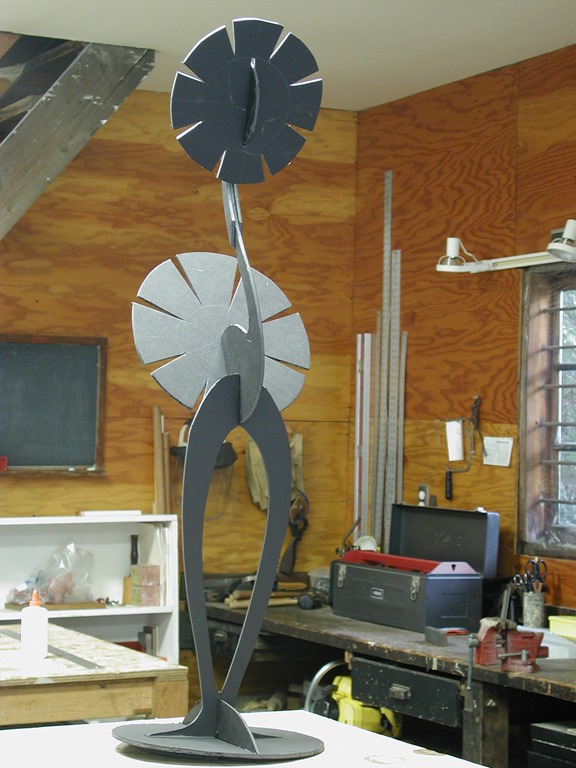
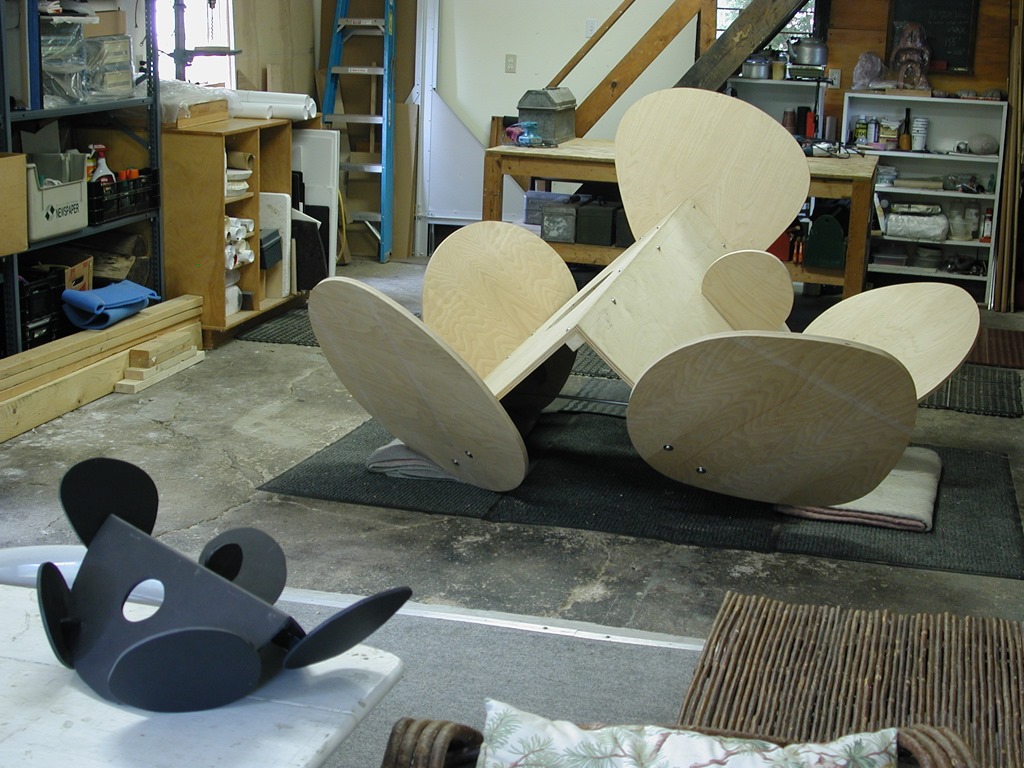
Foam-core cutouts, and flat-model hot-glued, eyeball’d from sketches, about 35”
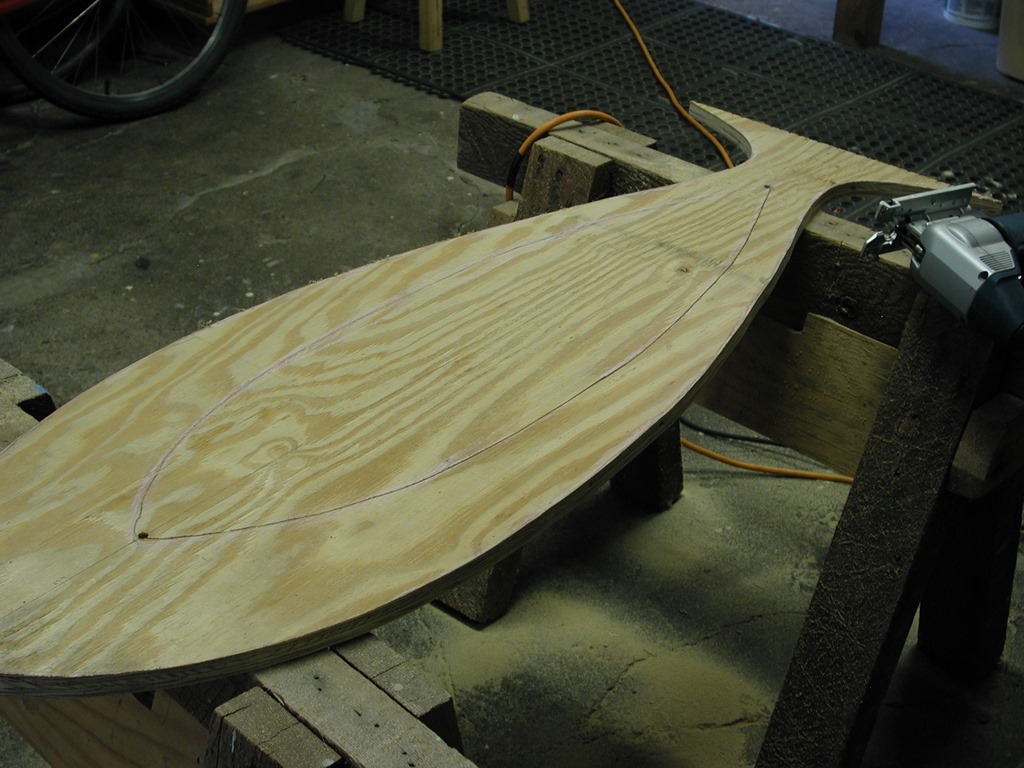
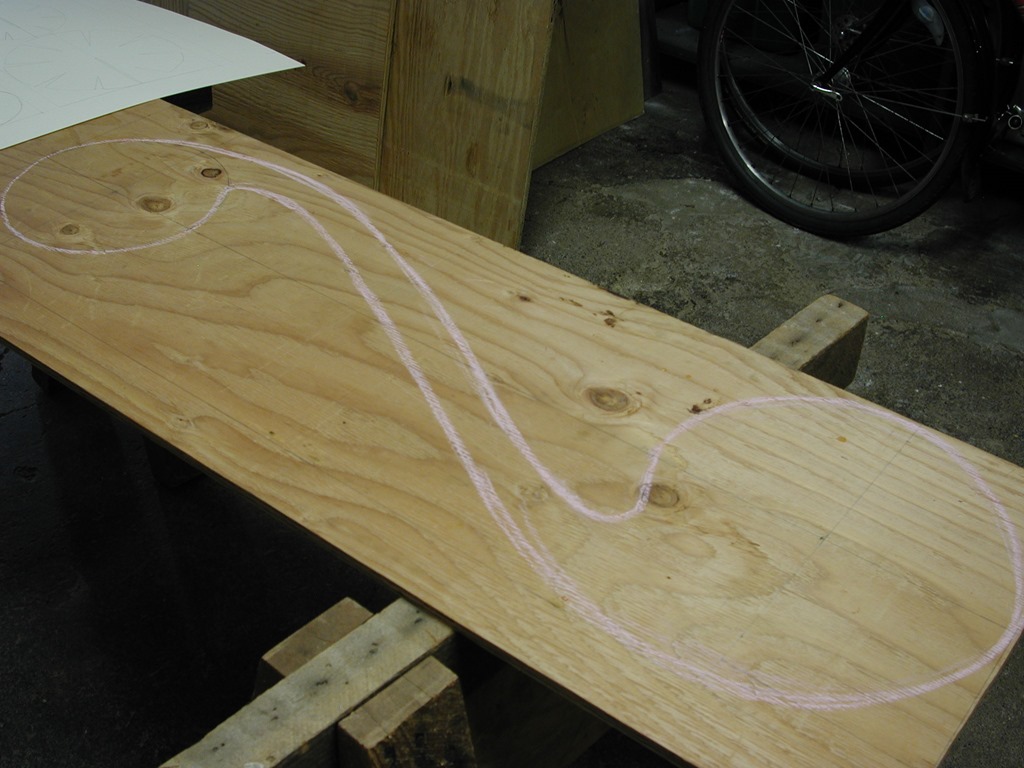
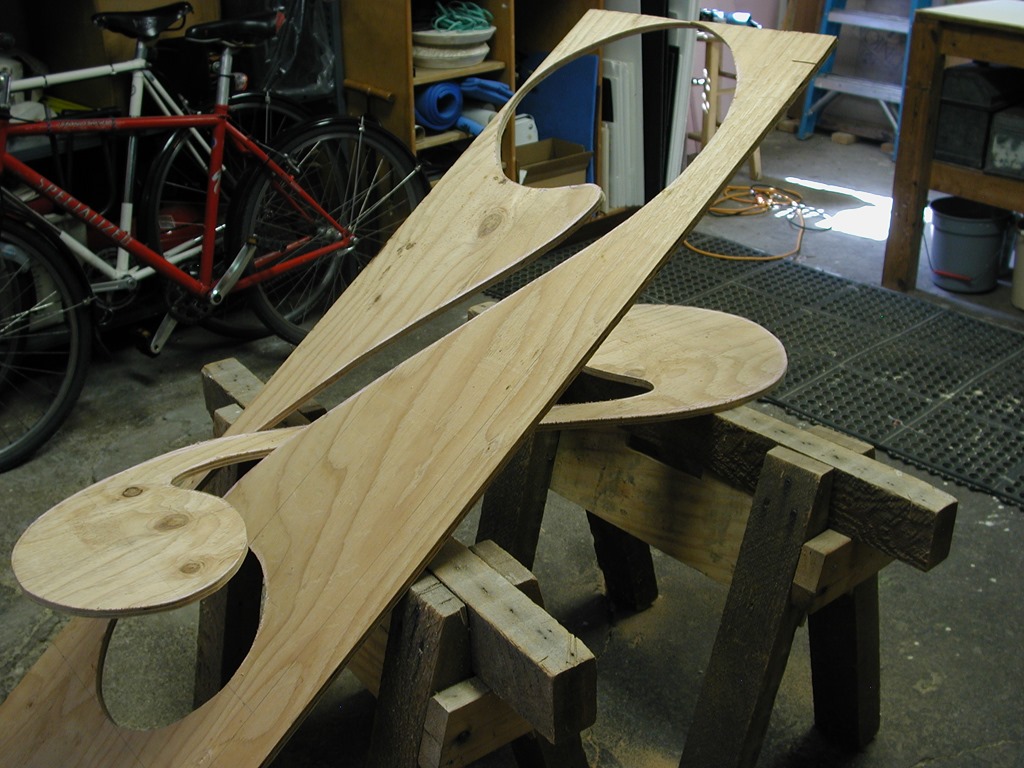
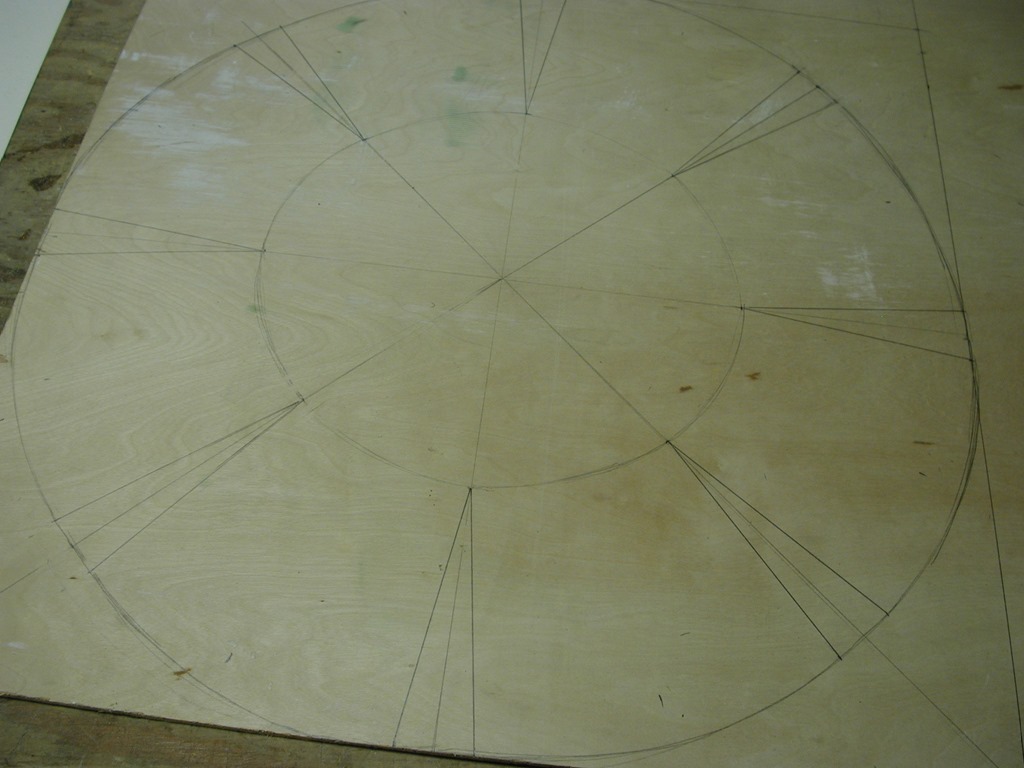
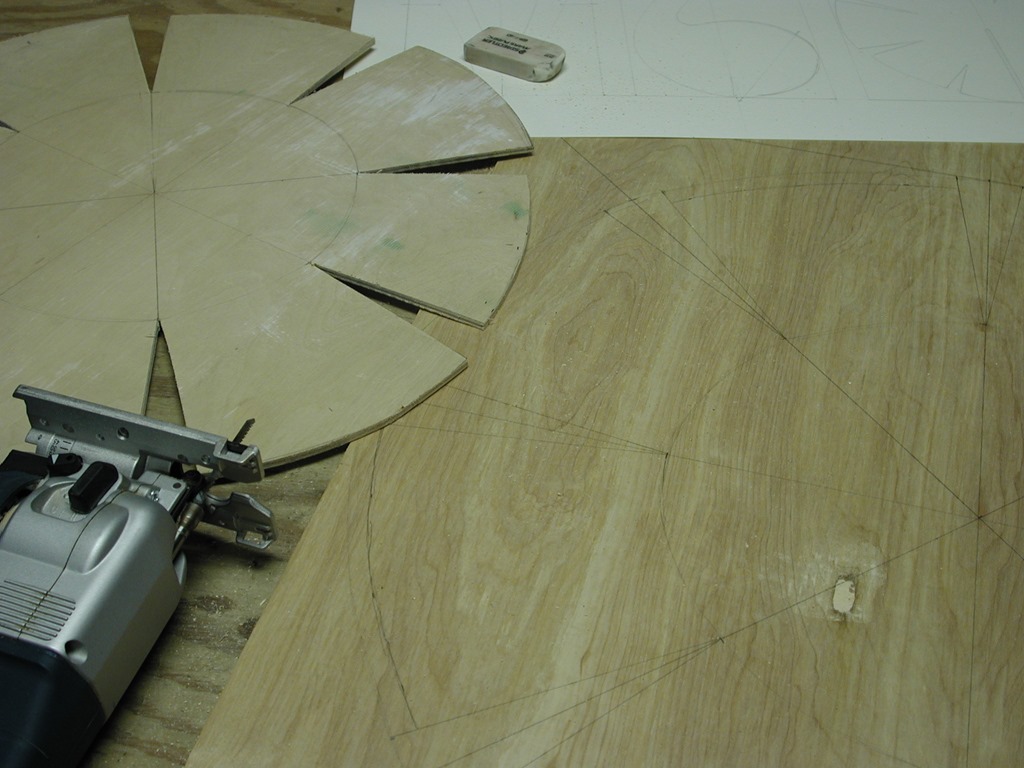
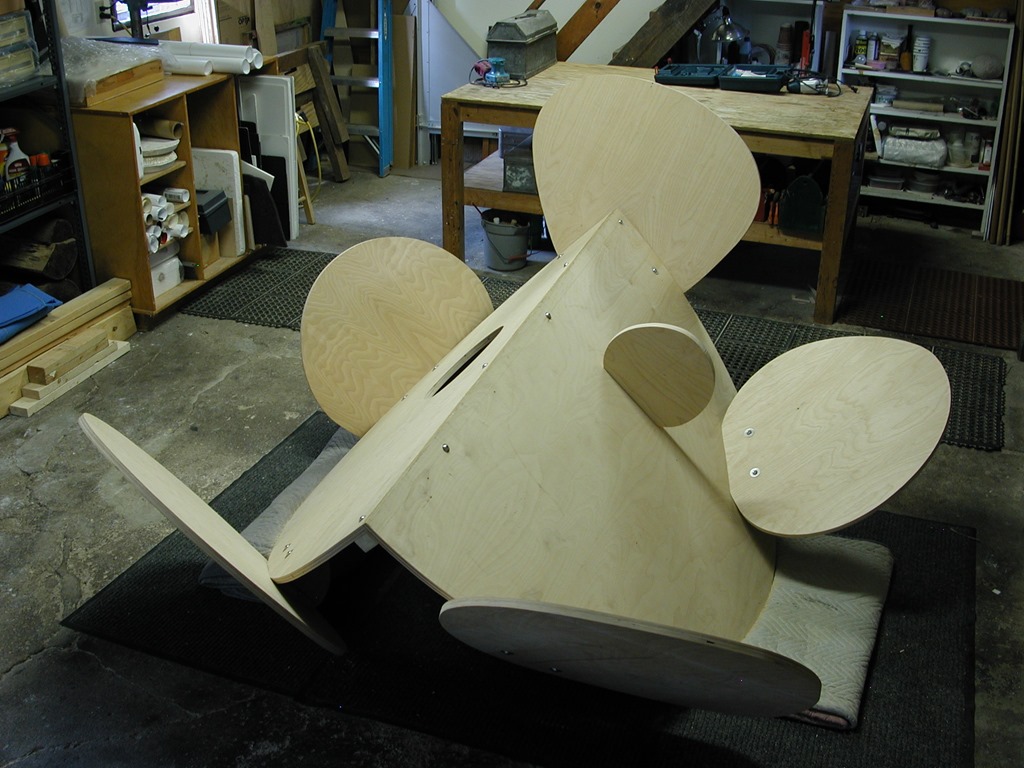
Using plywood from around the place, freehand with chalk the sized-up patterns. Trying for an 8 foot tall finished work, so, roughly multiply by 2.67 from the model.
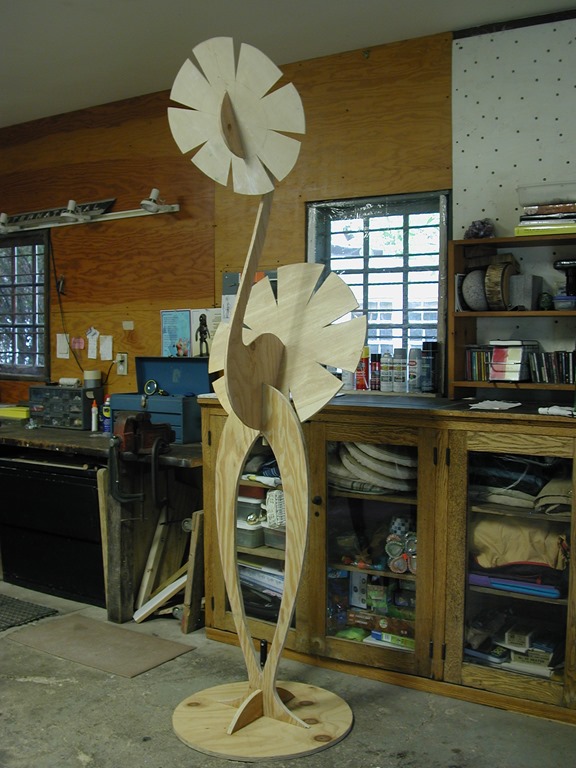
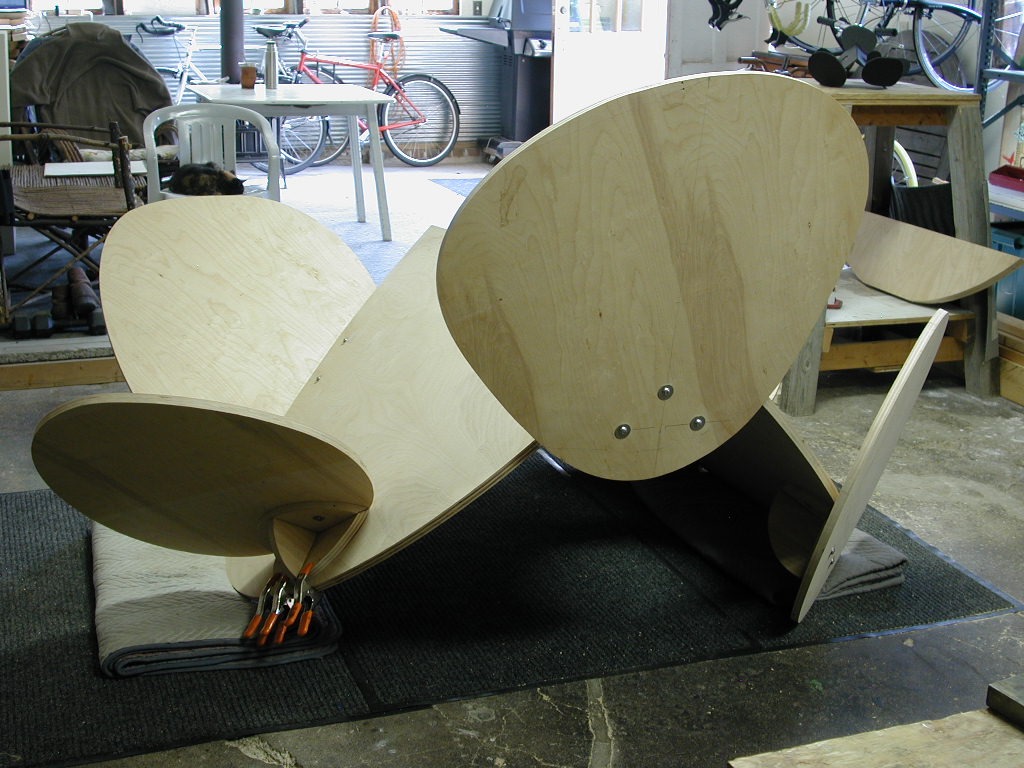
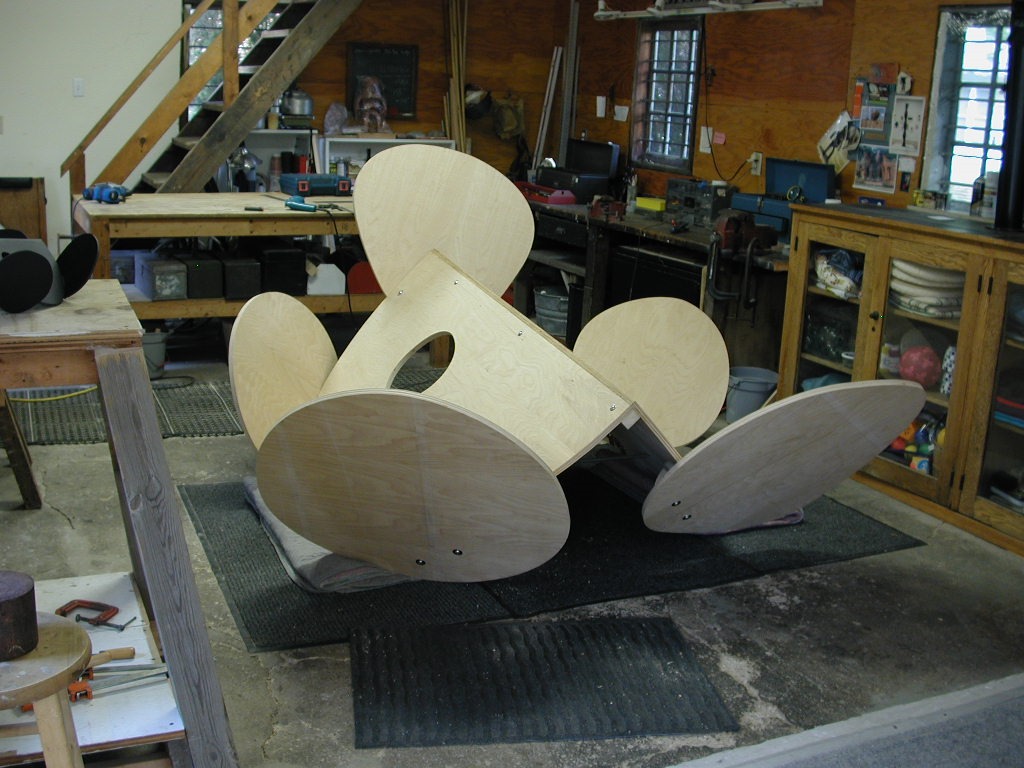
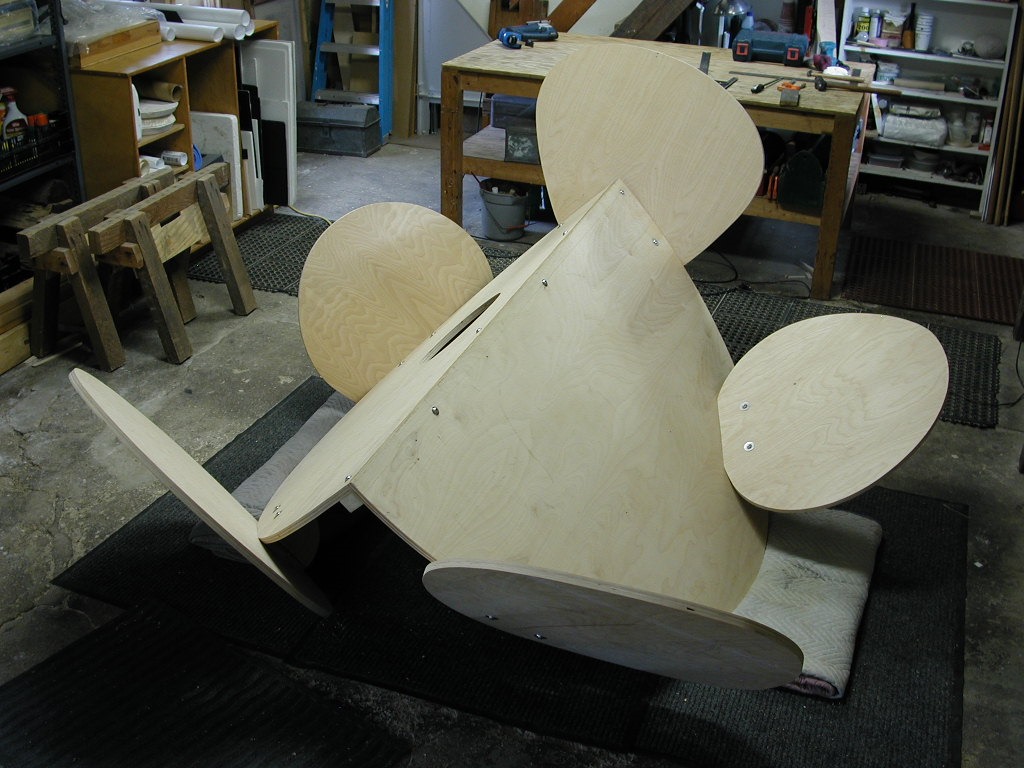
Notch-and-slot together, skipping some steps, and this is just the armature for a sculpture to be built-out upon it. Nice by itself, if it were done in steel maybe. Can still come apart for the work to come still.
Just the work of a weekend.
Mujer de las Flores
I resumed work on something from a while ago, renewed with energy from my vacation to Spain and Portugal. I knew now what I wanted to do with that iconic "Venus" construction, oh so minimal and cool. Now, I would adorn it to excess by hand-working the surface with bright colors and free shapes derived from nature. Flowers. You must know that those three things, excess, color, and natural forms, shaped my experiences in Spain and opened a way for me to relax my creative process. As a sculptor, inevitably a deal of "design" comes into play when building things; they must have integrity as real objects. But I also want the pleasure of creating with illusion and ornamentation, like when I draw in a sketchbook, creating a picture which may not need semblance to anything real in my vision. Shaping, modifying, without clearly knowing the outcome, without clearly knowing what it is desired to be. Creating with small marks and scribbles the image of something else, as a mirage or a feeling, transient in the mind and to the eye. This is the effort to do this in sculpture.
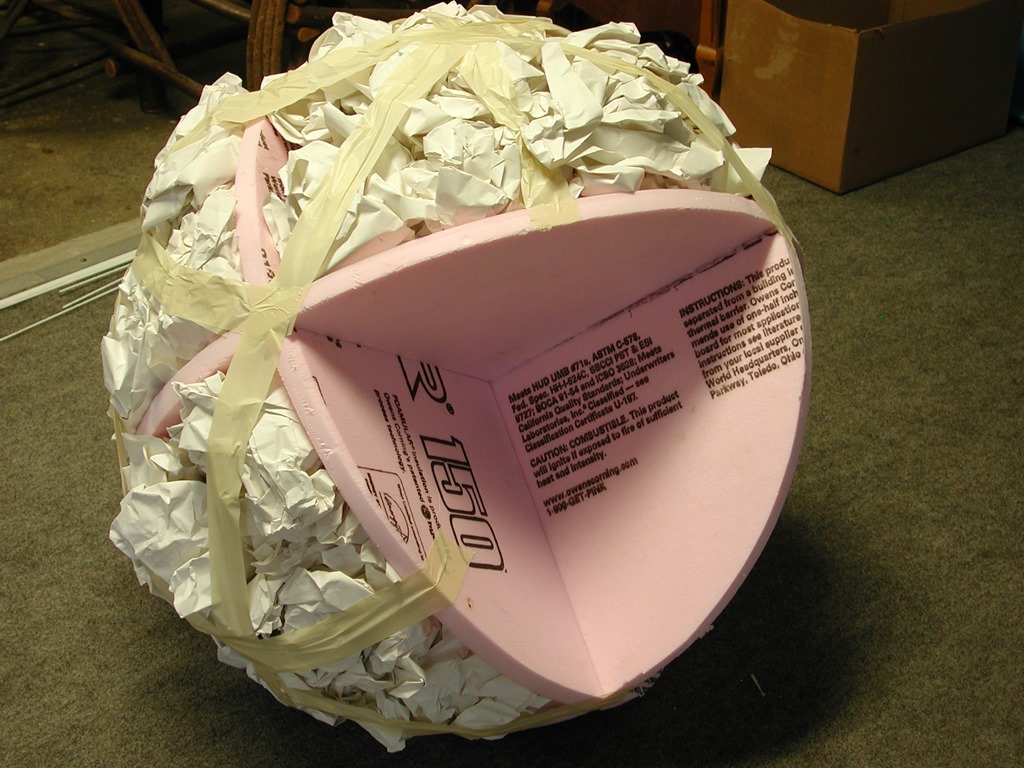
The construction is sketchy itself. The method is used for parade floats, mardi gras decorations, and the Fallas de Valencia. They’re not meant to be permanent, and they are large and need to be lightweight, cheap, and quick. Build a core armature to the shape of your sculpture of whatever light and impermanent materials you have on-hand; foam, bubble wrap, wire mesh, cardboard, wood, paper.
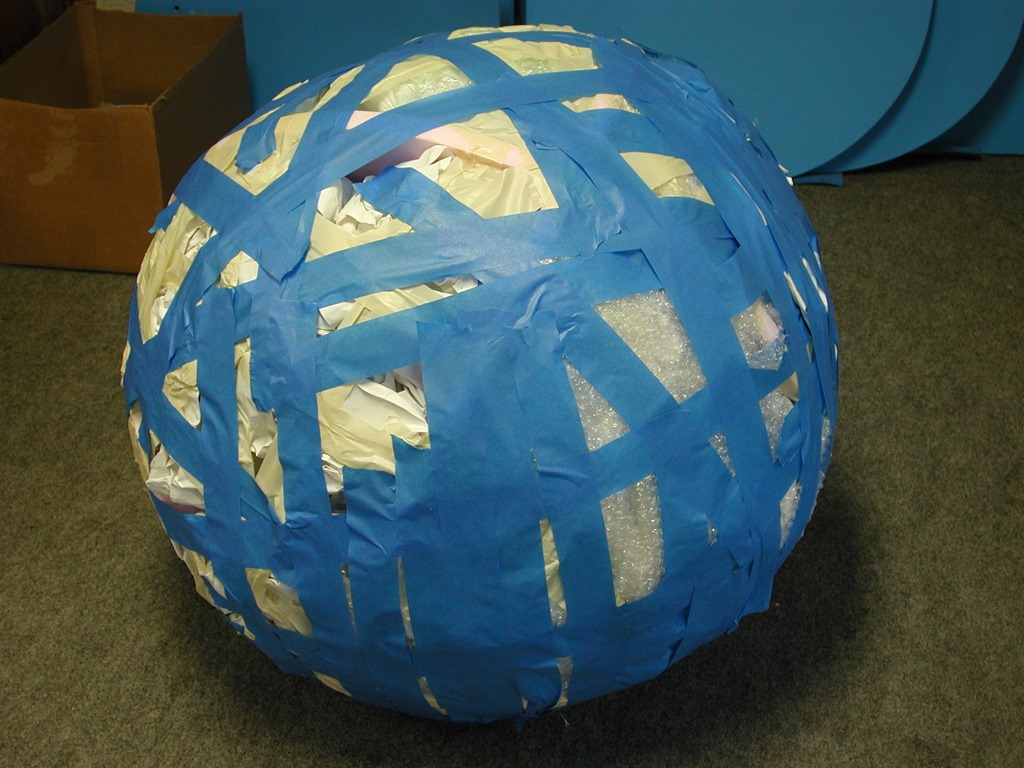
Begin to cover it with masking tape, layer upon layer, until the shape you want begins to have firmness and integrity. Something not right? Add more paper, packing peanuts, fiberglass insulation, and tape, tape, tape. Keep taping. Then add more tape. Finally, if it still doesn’t quite seem right, add more tape. And then, put a nice smooth finish layer of tape on top. This really works. Have faith. I used at least ten rolls of 60 yard masking tape. To get to this. She’s about 30"x30"x30" which is a large as will fit through a doorway.
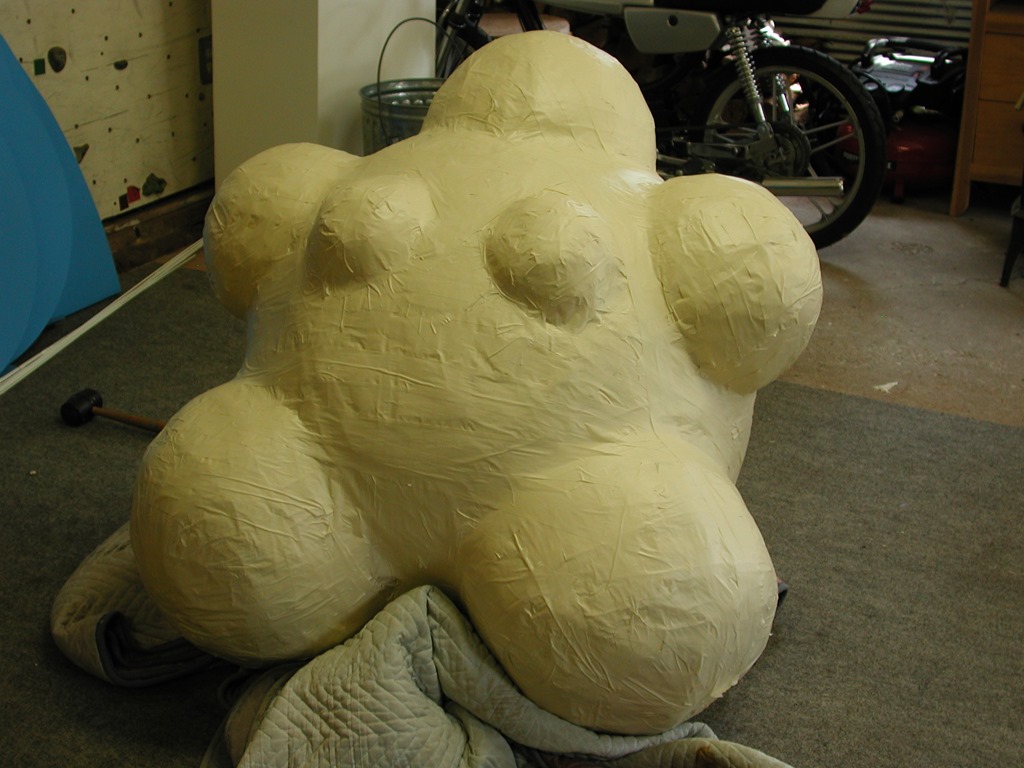
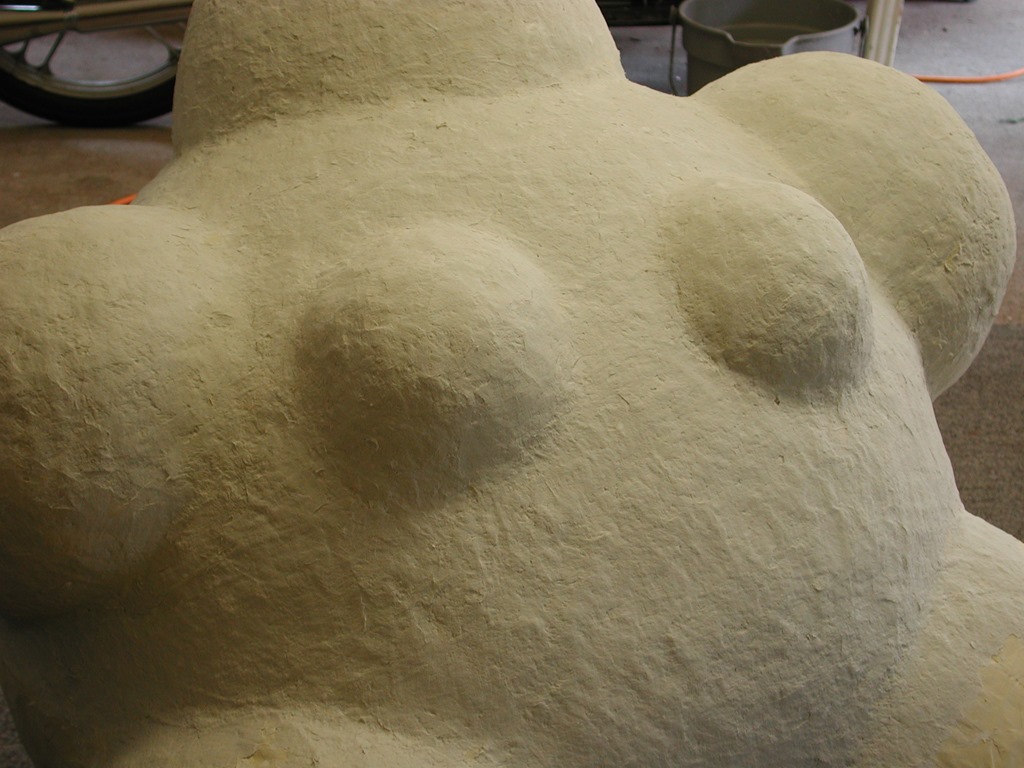
Next, prepare quantities of paper mache clay according to the popular way it is done now on the "internets". See: ultimatepapermache.com. There’s no point over thinking this; it has been figured out by very many creative "crafters" and you won’t find a better way, or at least any more well-tested way to do it. It is a strange mix of toilet paper pulp, drywall compound, Elmers glue, flour and linseed oil, and none of these things necessarily dry or cure in the same way, so I don’t know why it should work, but it does. Smear it on over your taped shape, just exactly like frosting a cake. Go in several thin layers, and dry it thoroughly between layers, by using large fans; this makes a big difference in the curing time. I used altogether 16(?) rolls of toilet paper, a gallon of drywall compound, and ¾ gallon of Elmers glue, or many small batches (16+). Take your time, play music, enjoy yourself, explore the details of troweling-on the mush; Spending time working in the studio is why you want to be an artist.
Finally, I guess I’m done. There’s no more soft spots. The material dries hard with a nice texture that looks like stone or cement. Congratulate yourself for not using some awful shit like Bondo or fiberglass like some idiots would do.
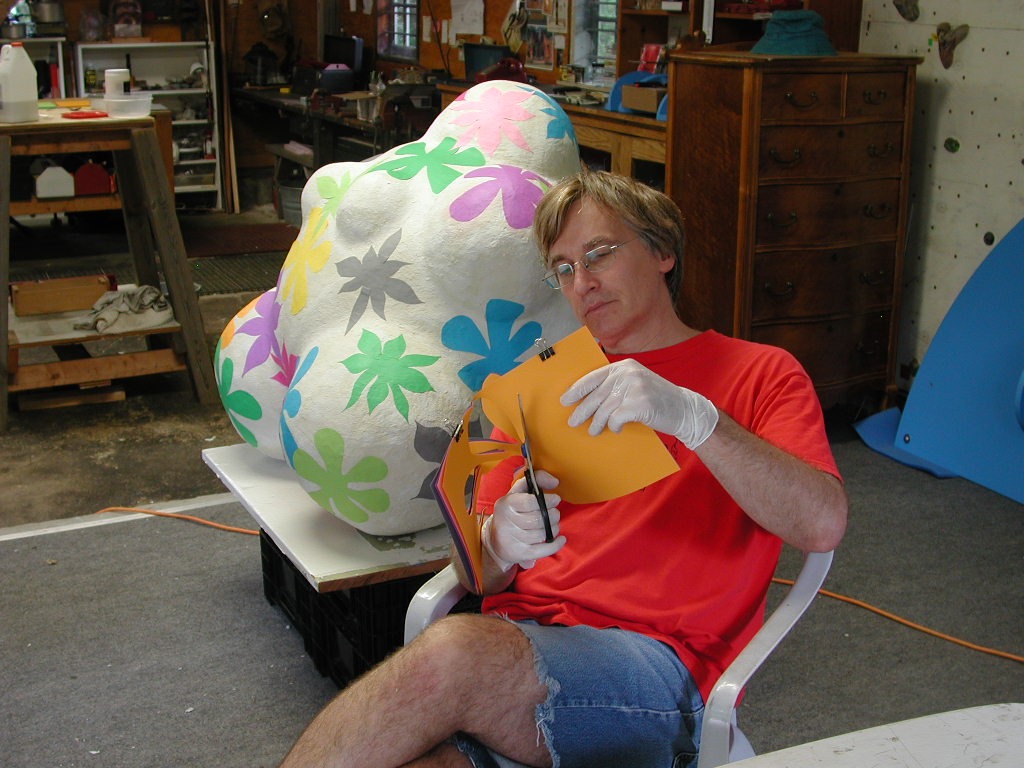
I’m ready for the adornment to begin. I had thought of all the ways I could machine cut paper flowers in great quantities until I realized what an opportunity for improvisation and play I’d be missing out on if I didn’t simply cut them out by hand with a pair of scissors, as well as free handing the drawing of the flower shapes in many varieties.
The choice of colors, was for me, as usual, a challenge. I asked my trusted color advisor about this and she, as usual, immediately suggested the right combo of colors which would work well for this idea. She is flawless, really.
..Until it finally feels right
Blue Woman completely
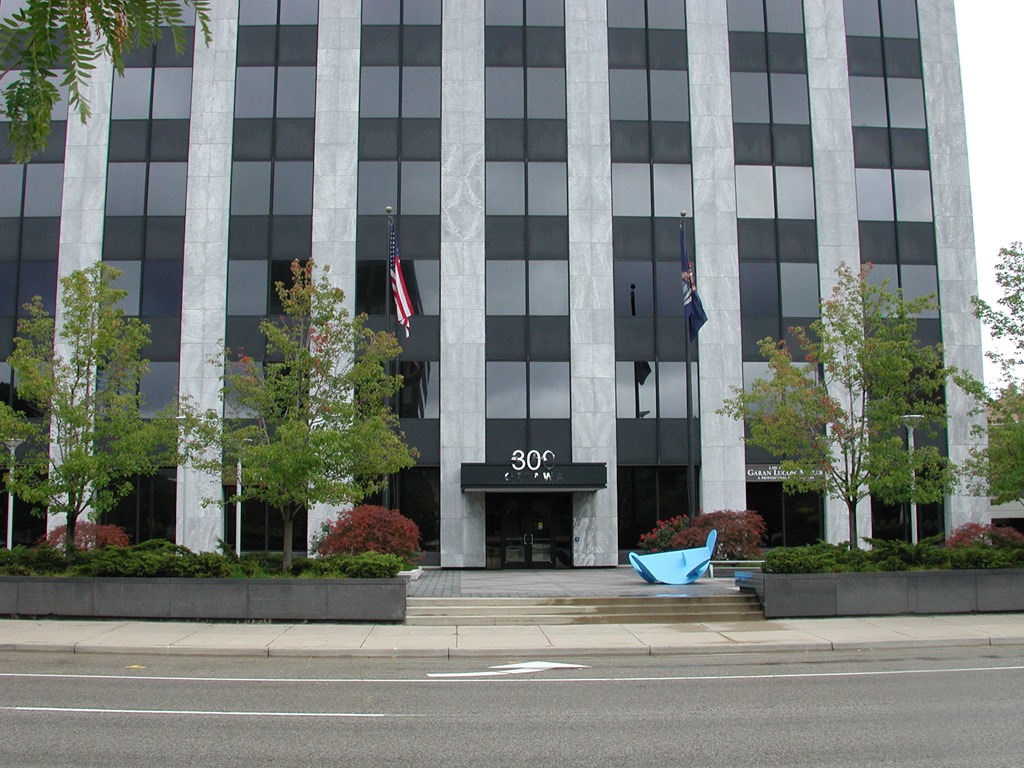
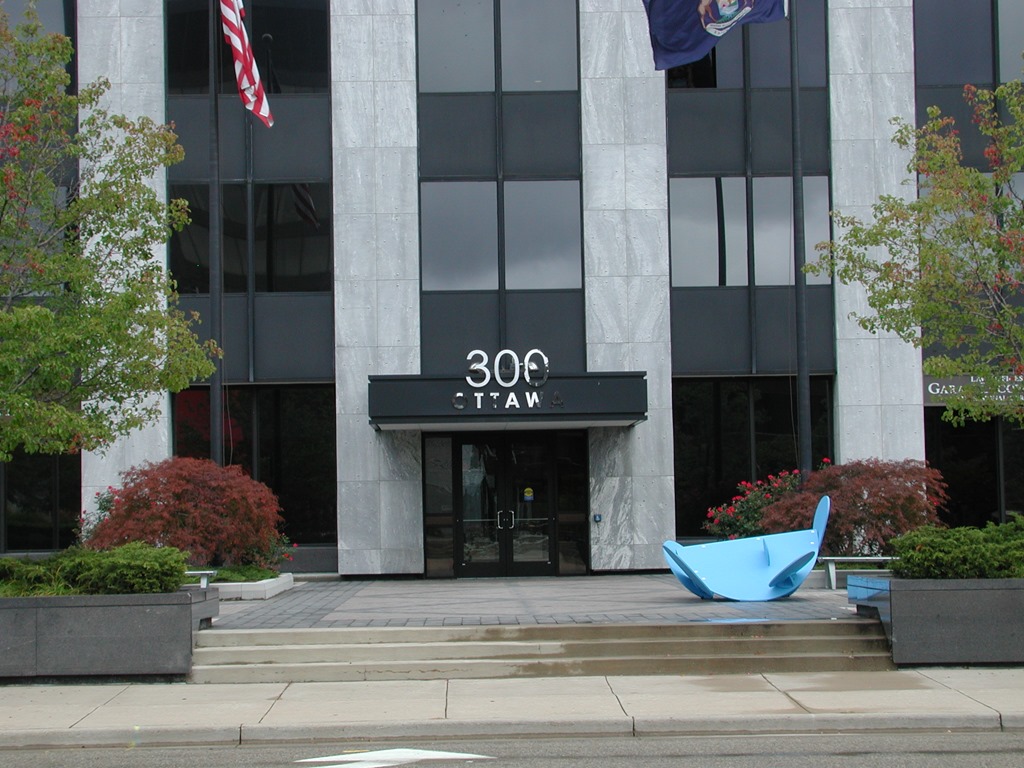
300 Ottawa
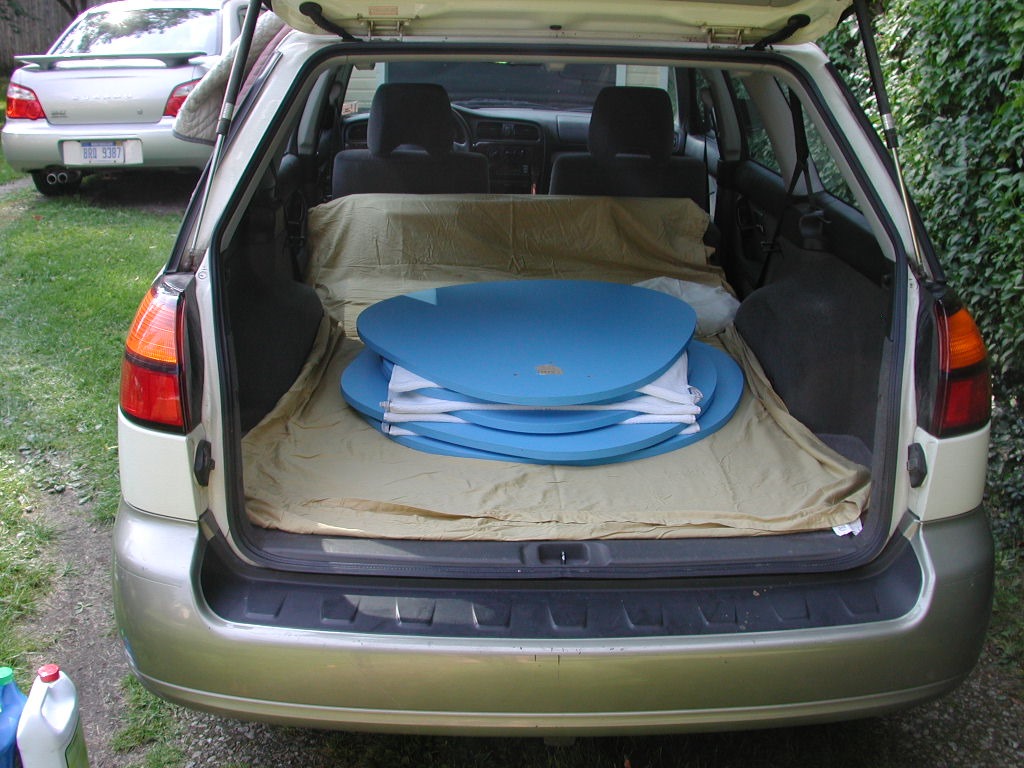
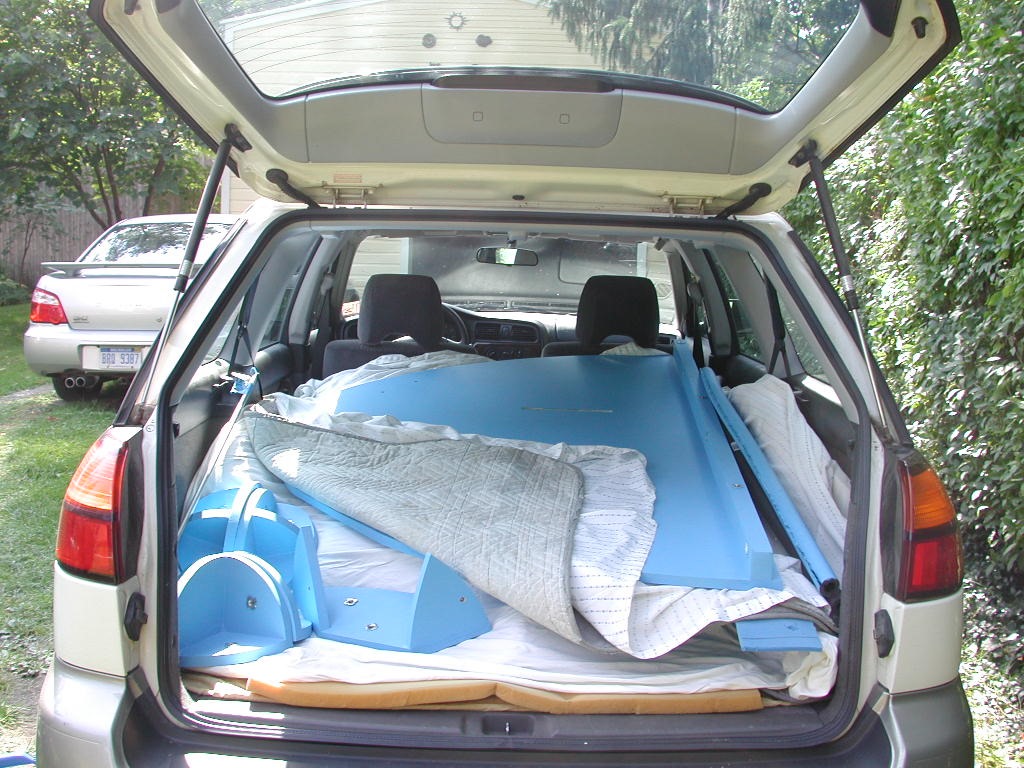
Now you know how crazy I am. The whole sculpture can flat-pack in the back of my station wagon. Delivery Day, ArtPrize.
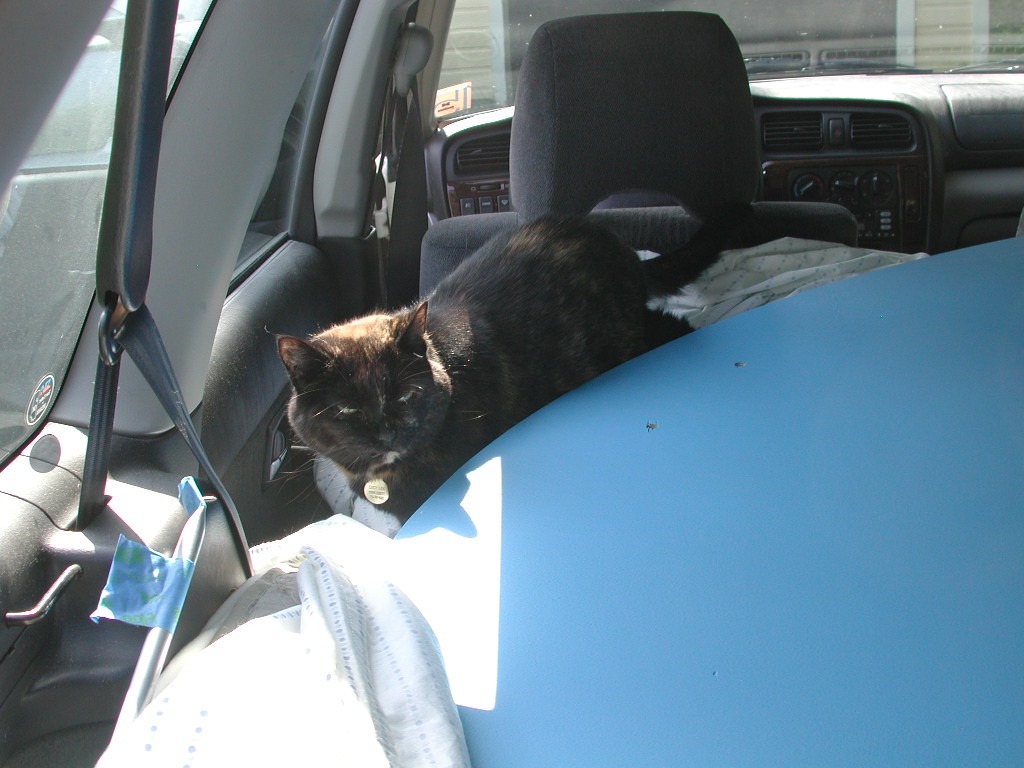
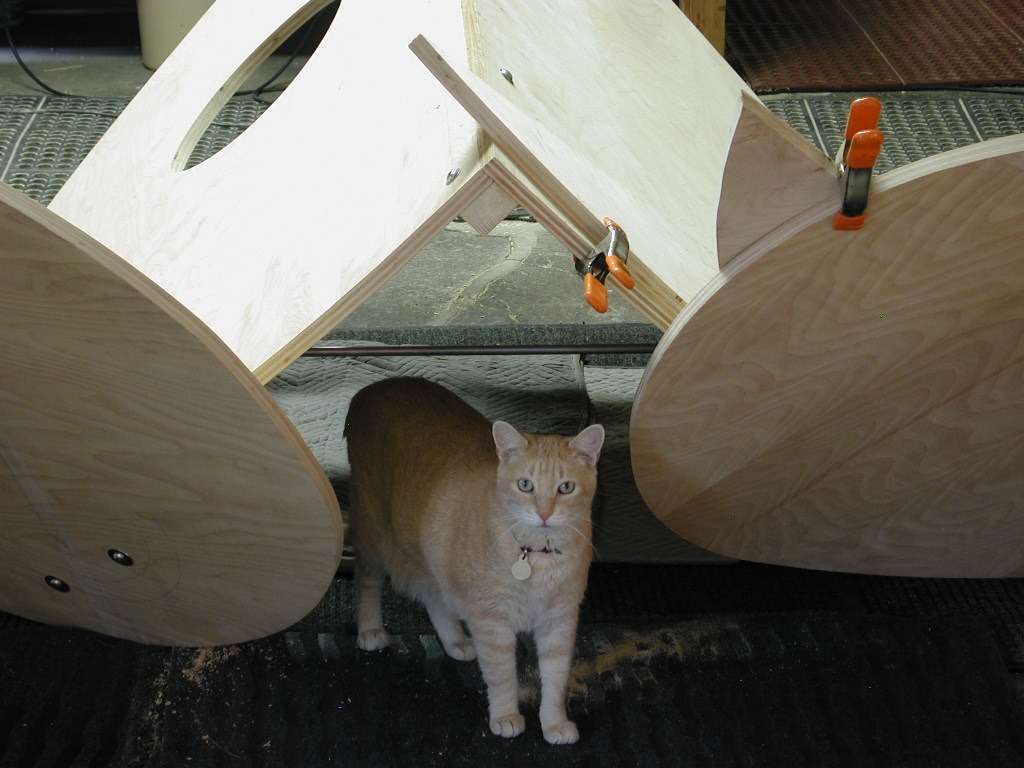
…could my helpful shop cat come along to supervise?
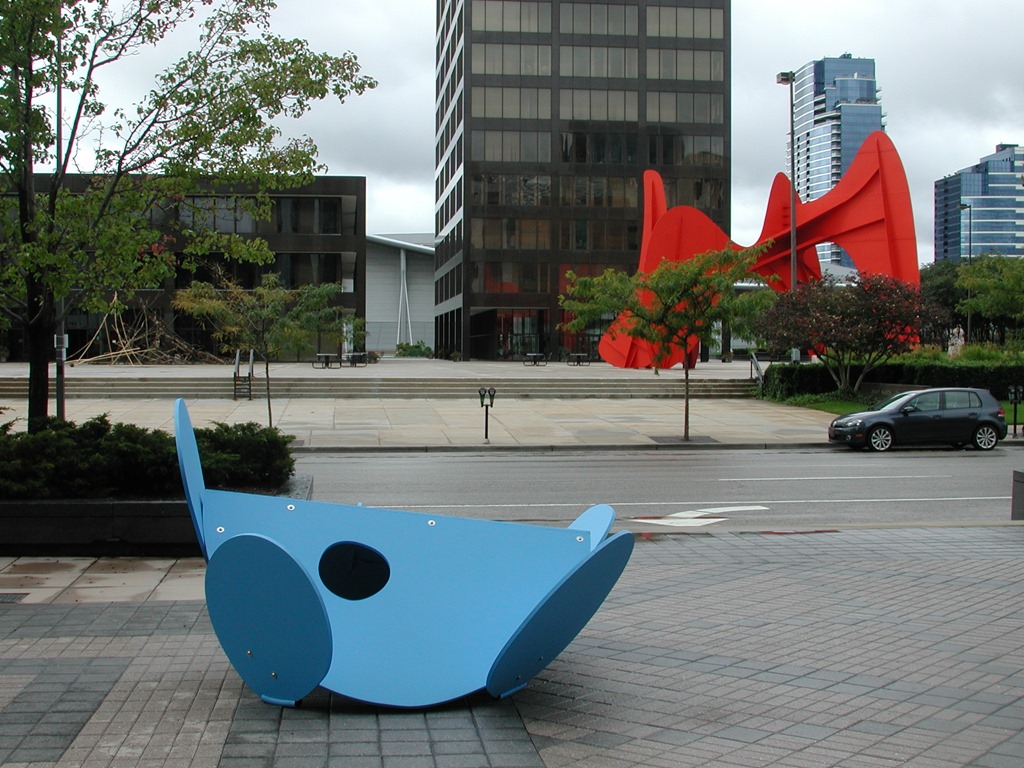
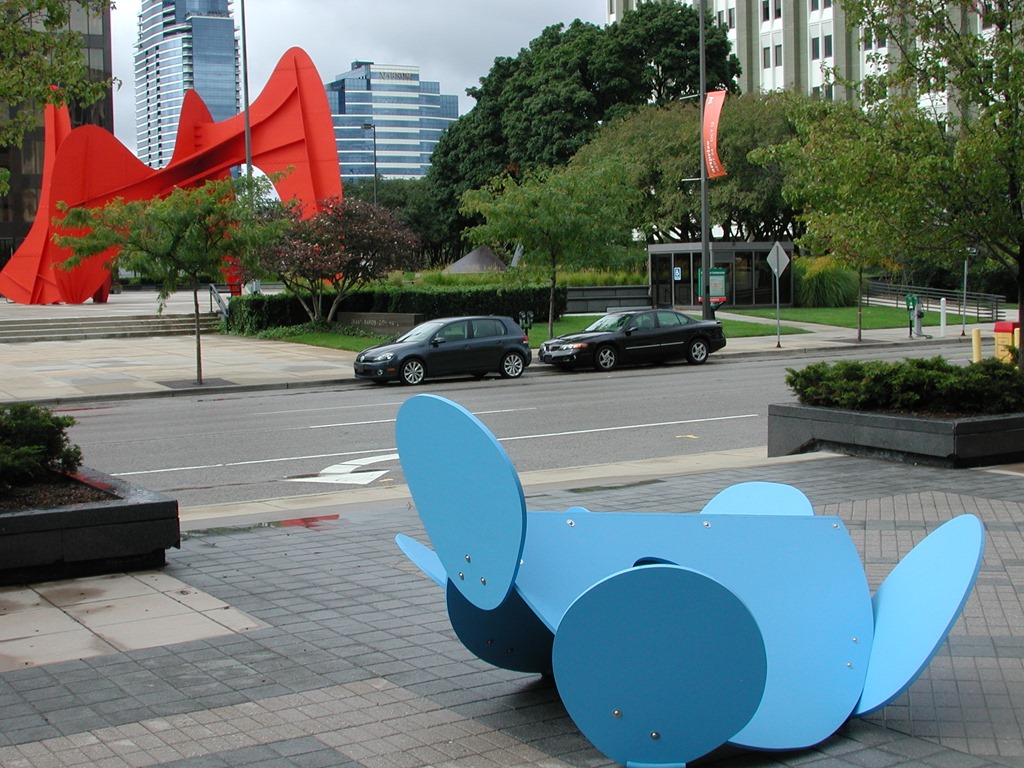
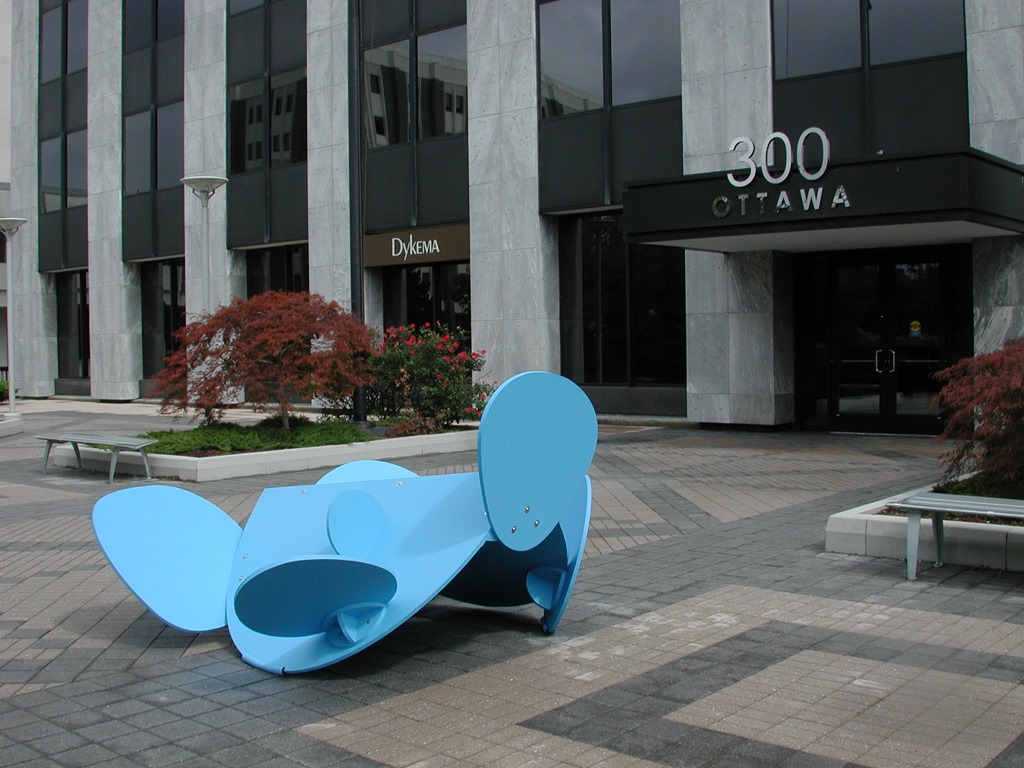
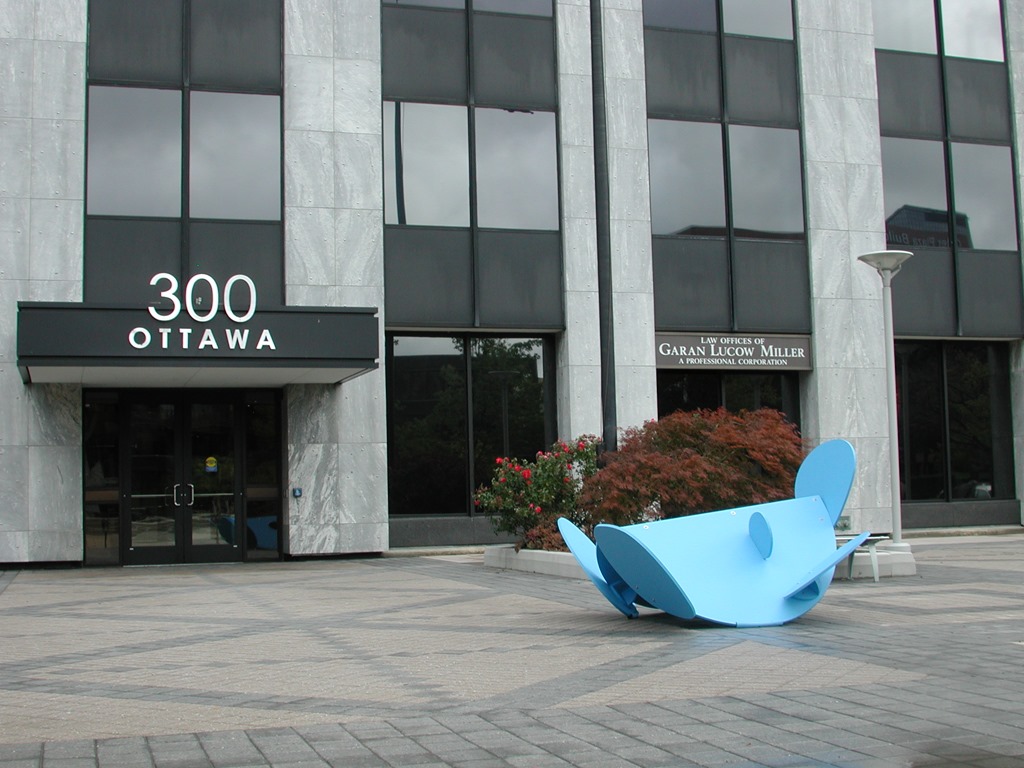
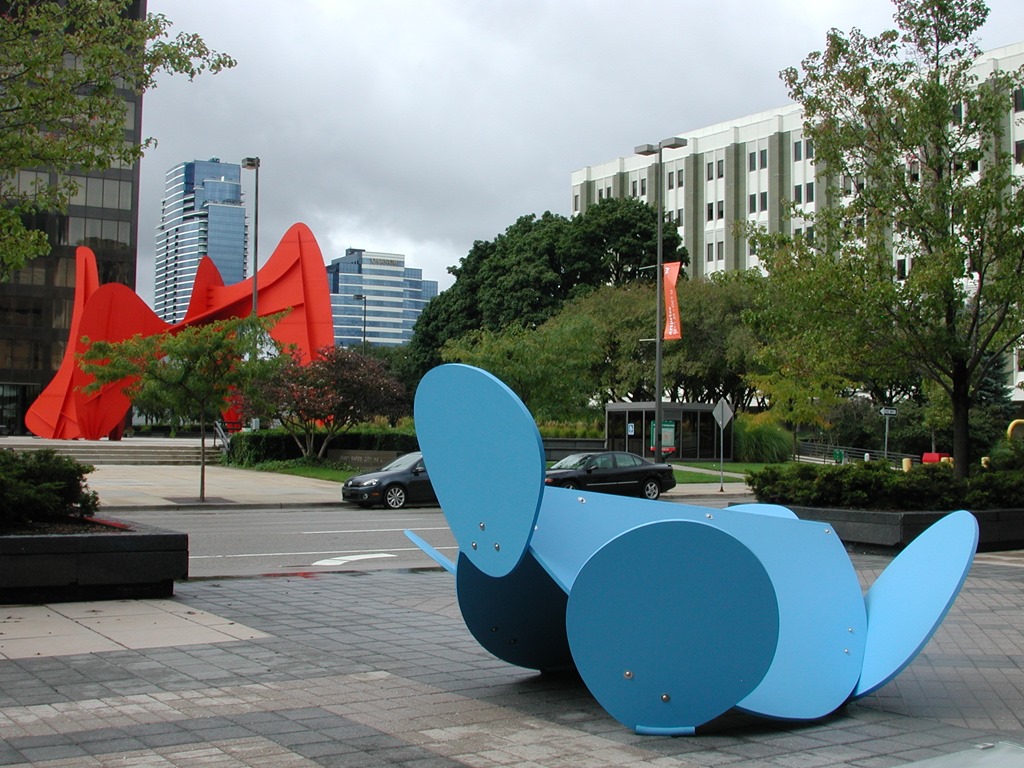
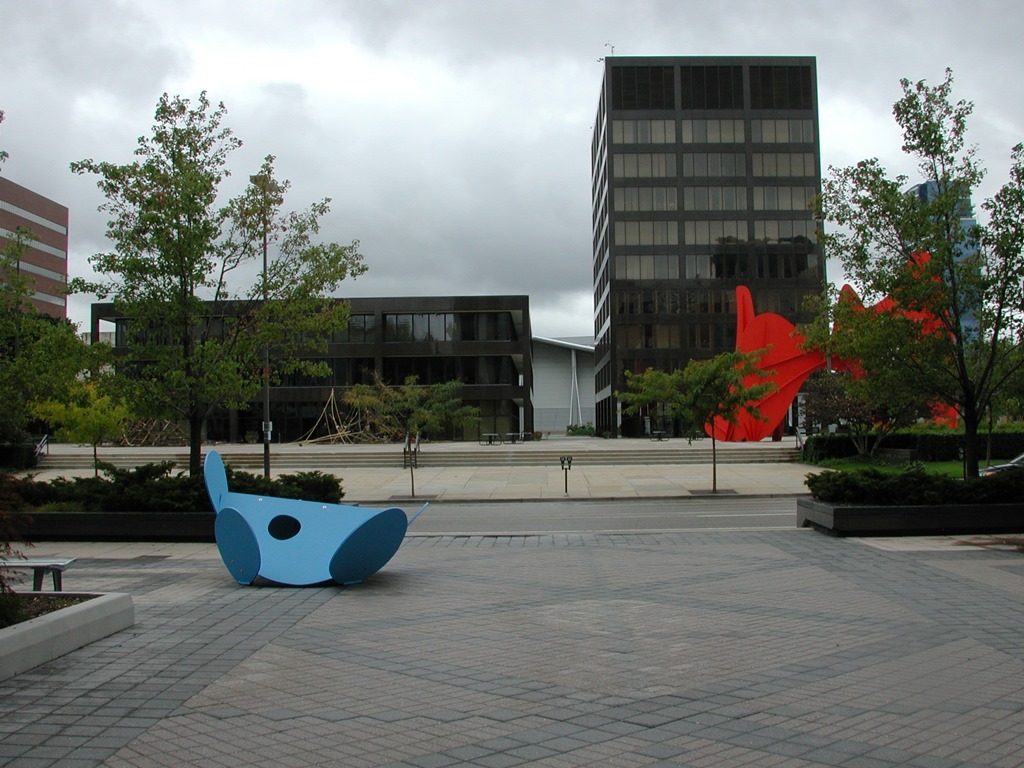
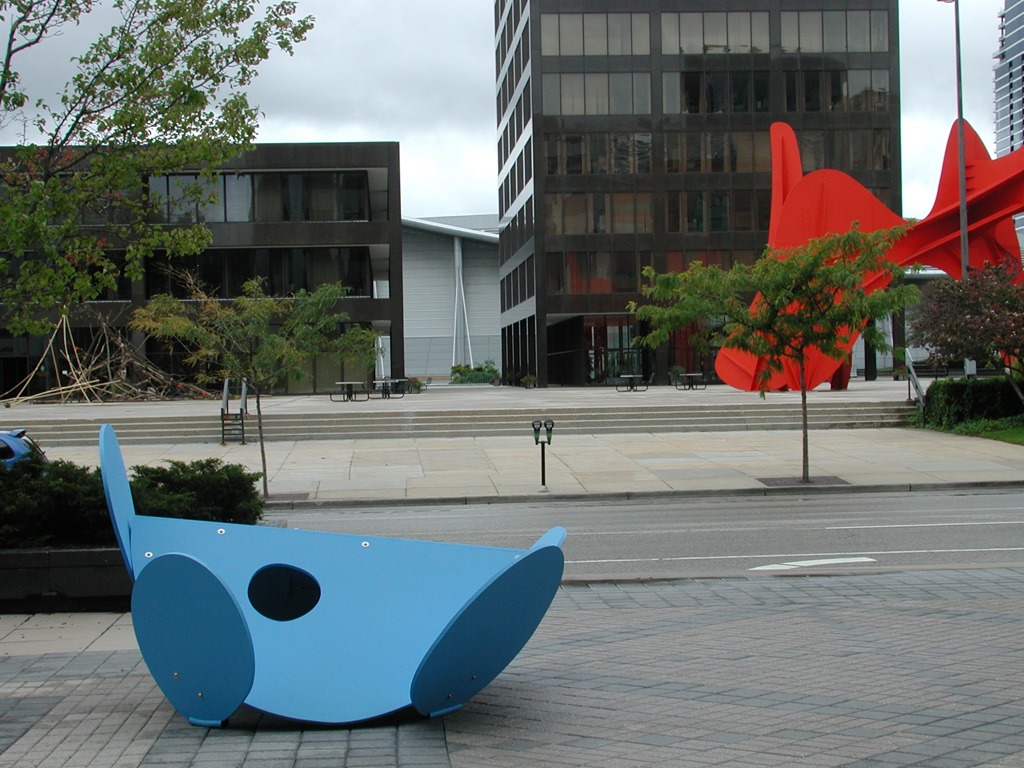
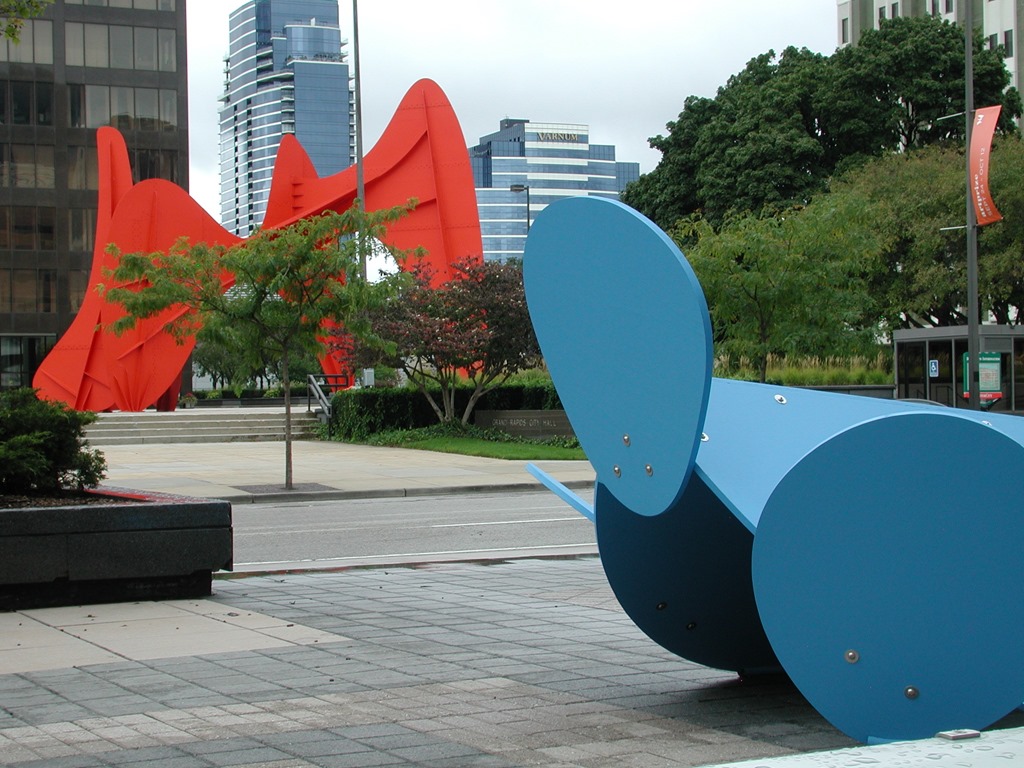
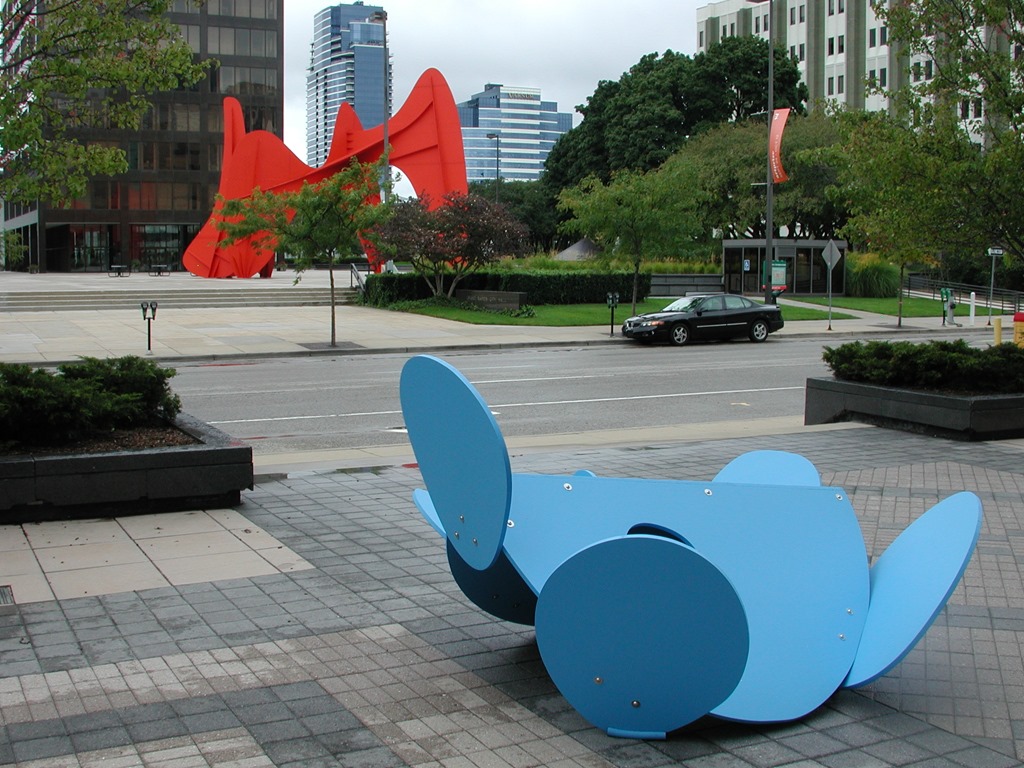
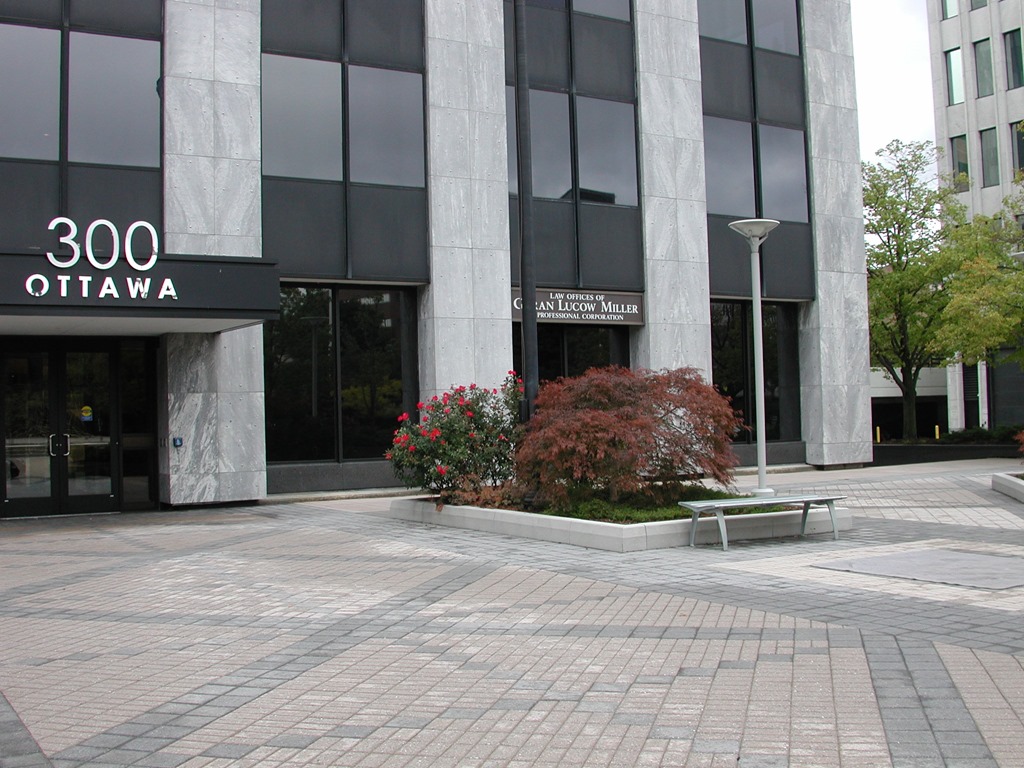
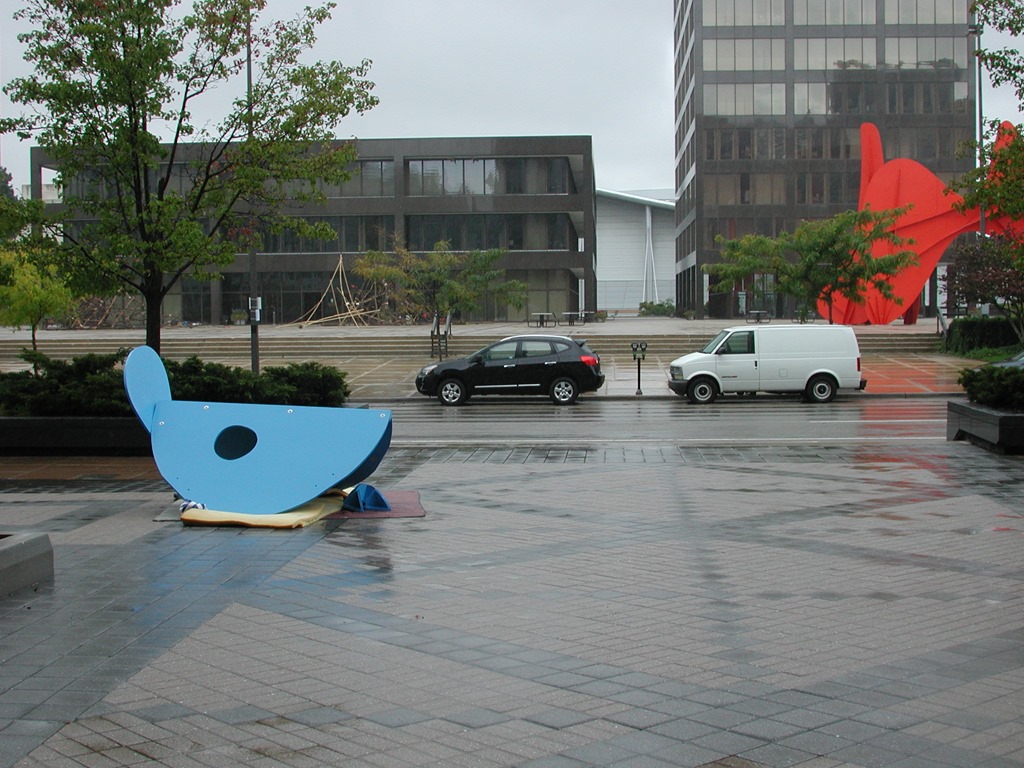
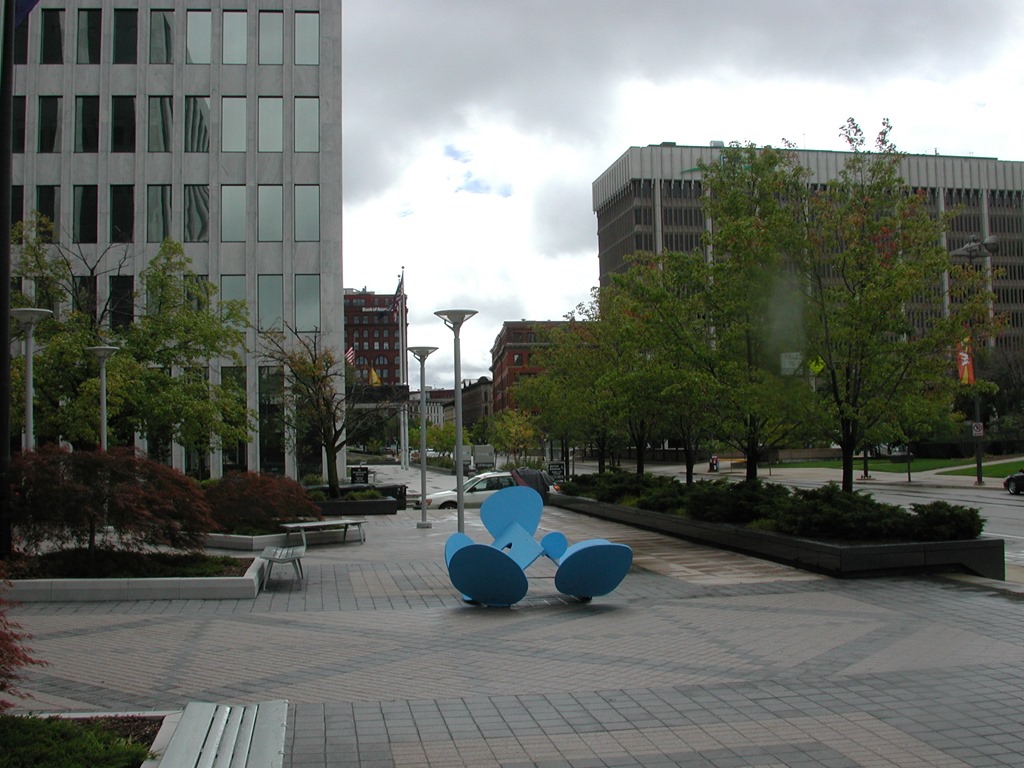
The site, 300 Ottawa. What must be the premiere Grand Rapids downtown private office building. A nice work of architecture, and the grounds courtyard plaza. The feeling is like New York or Chicago, only much much much cleaner. Your could eat off this plaza. Across the street, Alexander Calder’s La Grande Vitesse.
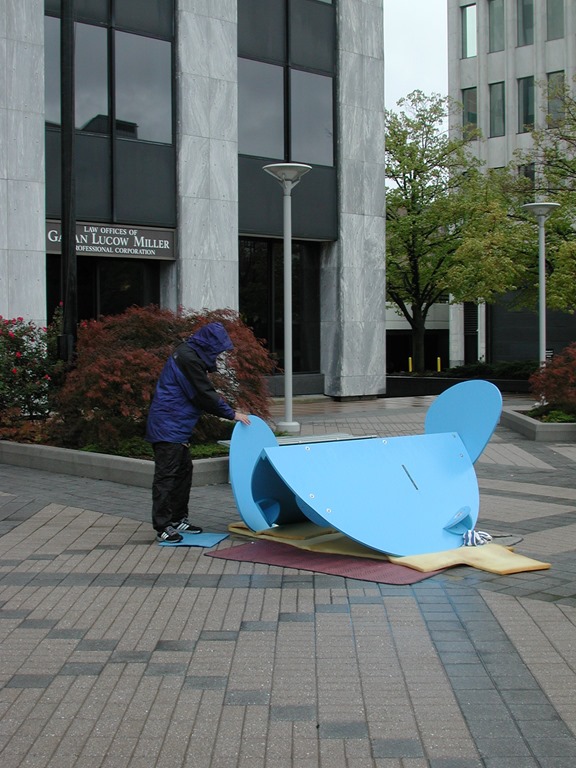
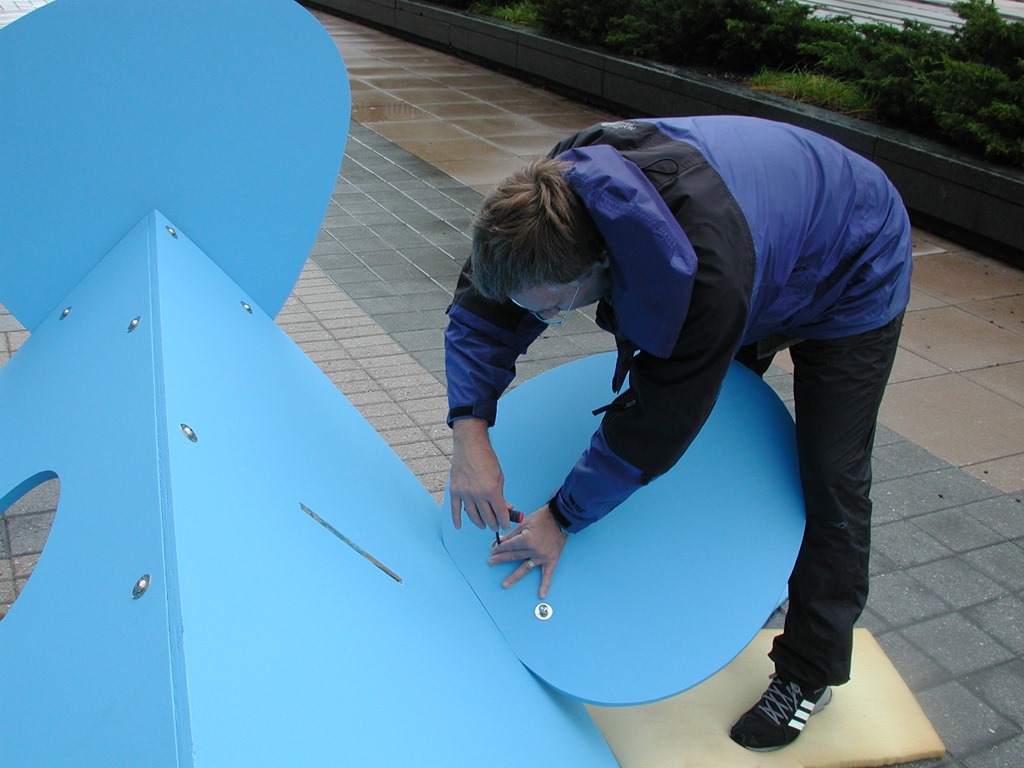
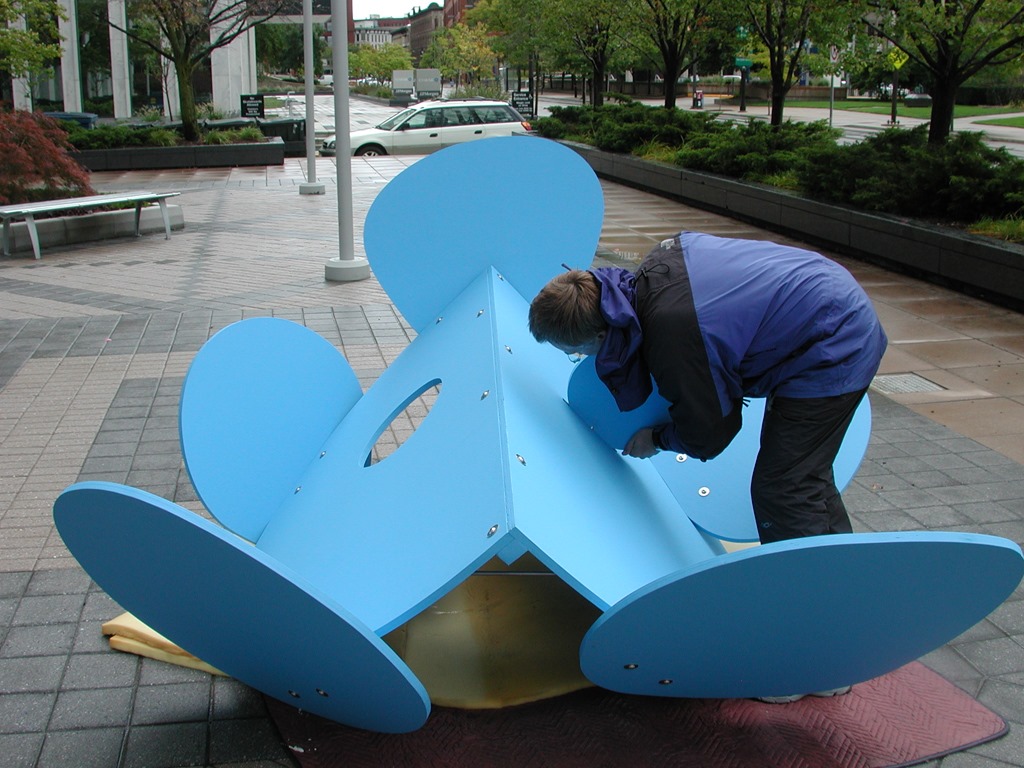
Getting to work, assemble the body halves, and get the head on, when it starts to pour down rain.
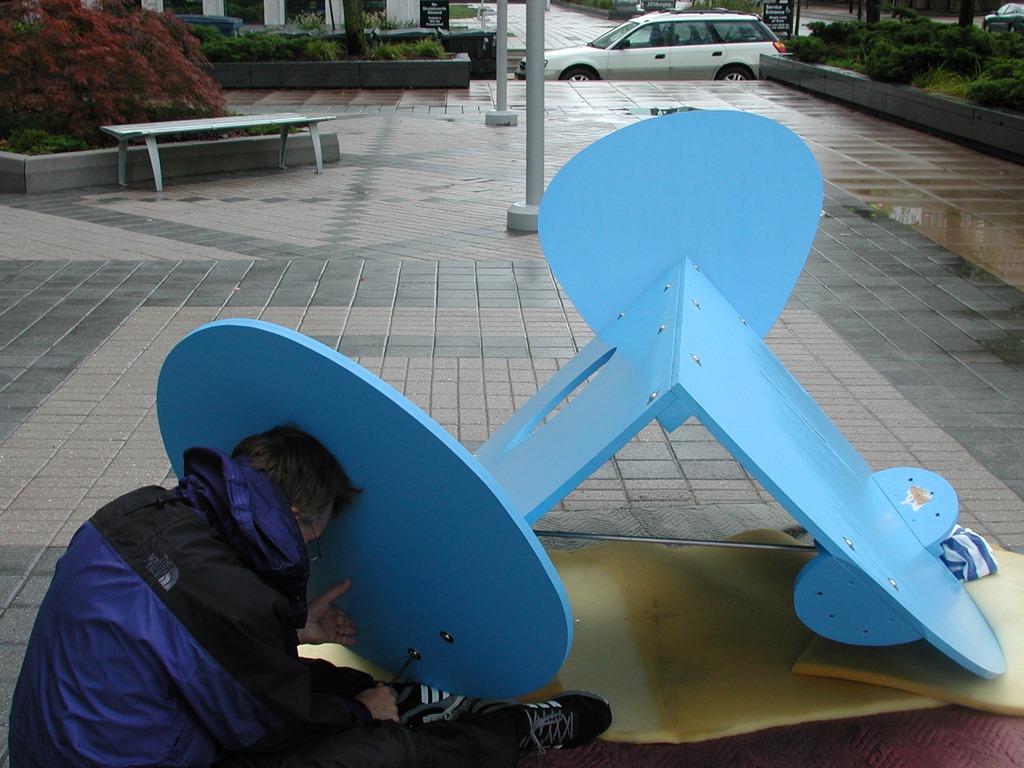
During the spells, attach all the brackets and and the right leg.
Also, the left leg,
right arm
left arm and breast.
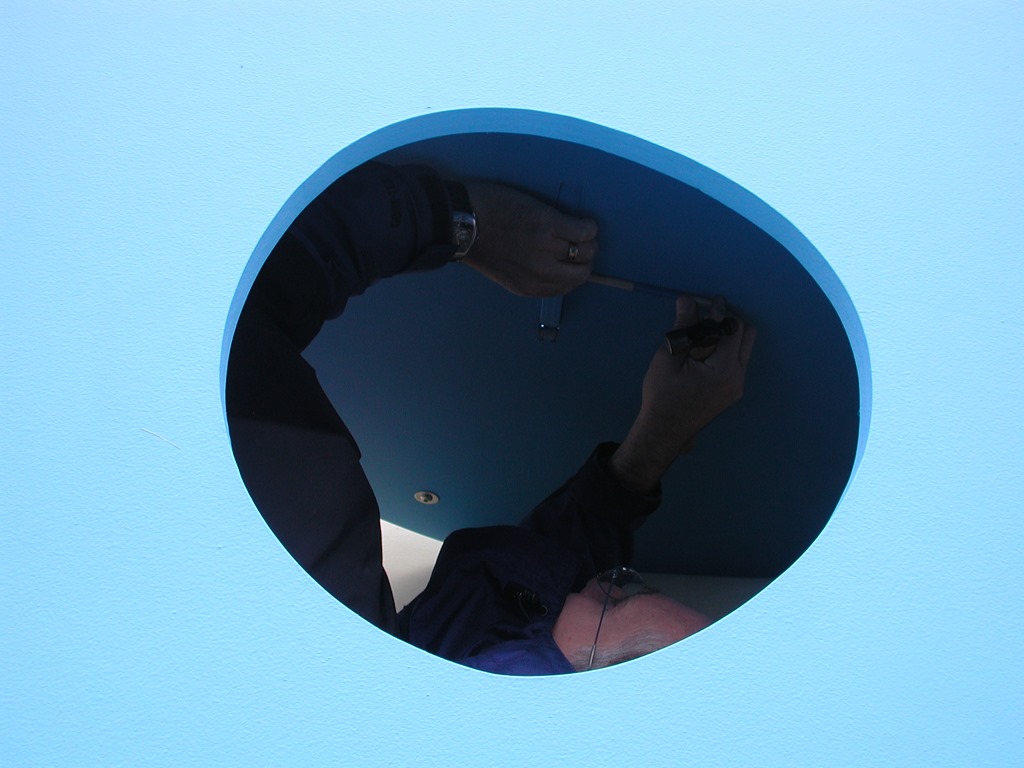
A small wooden pin holds the breast securely.
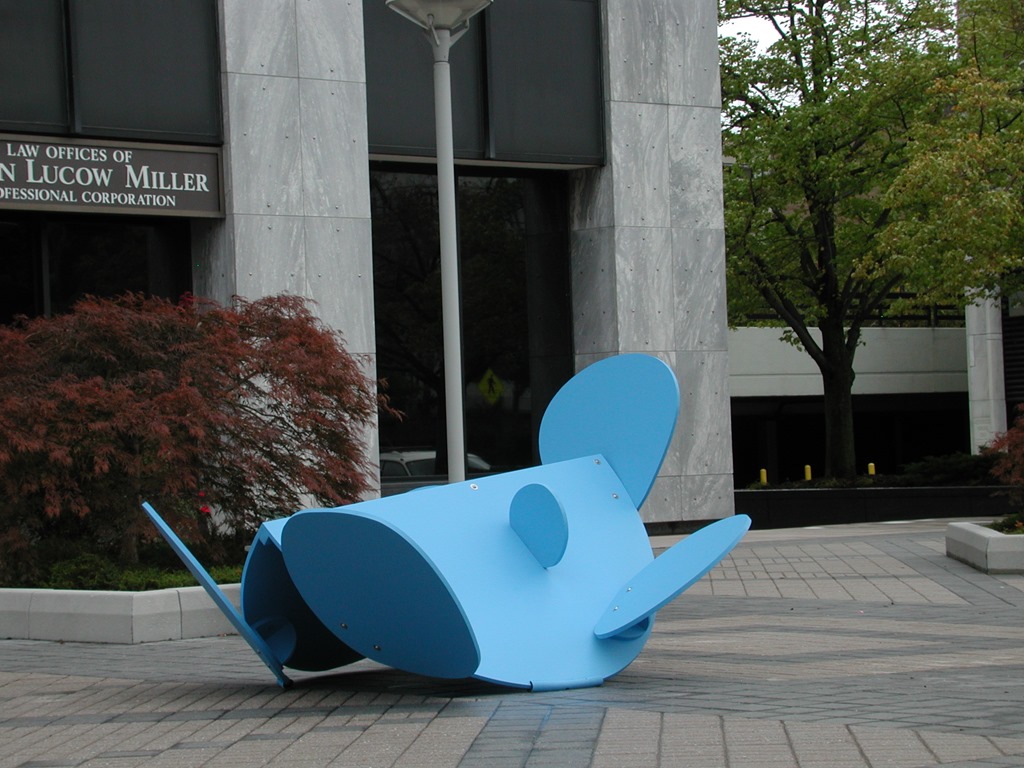
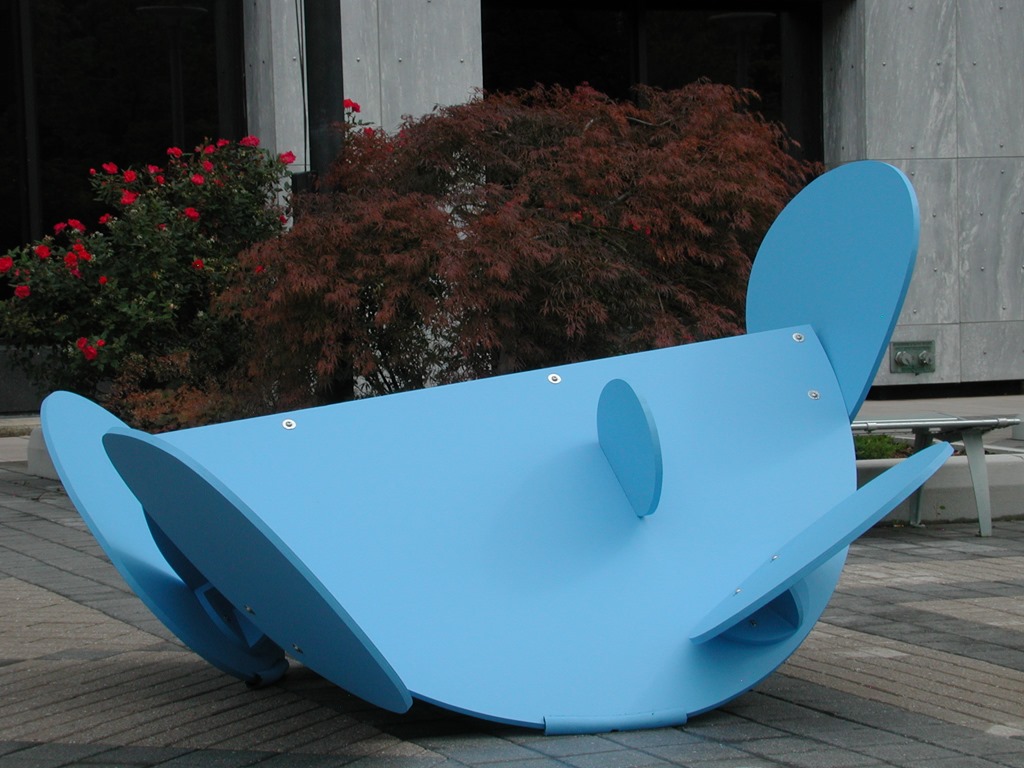
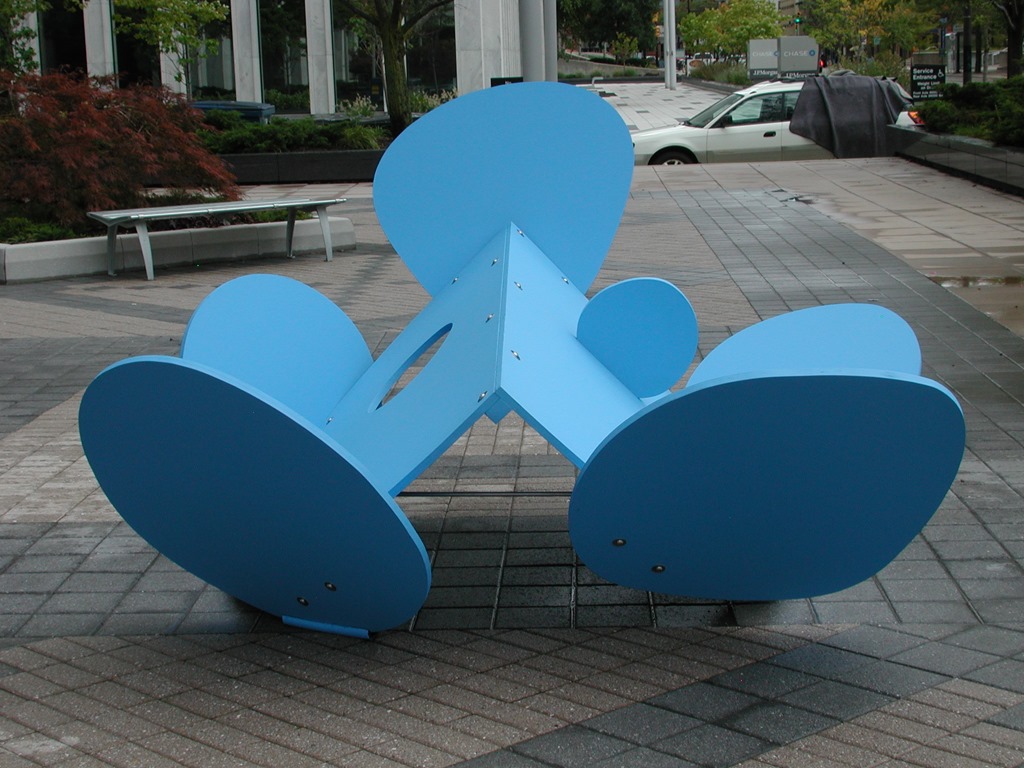
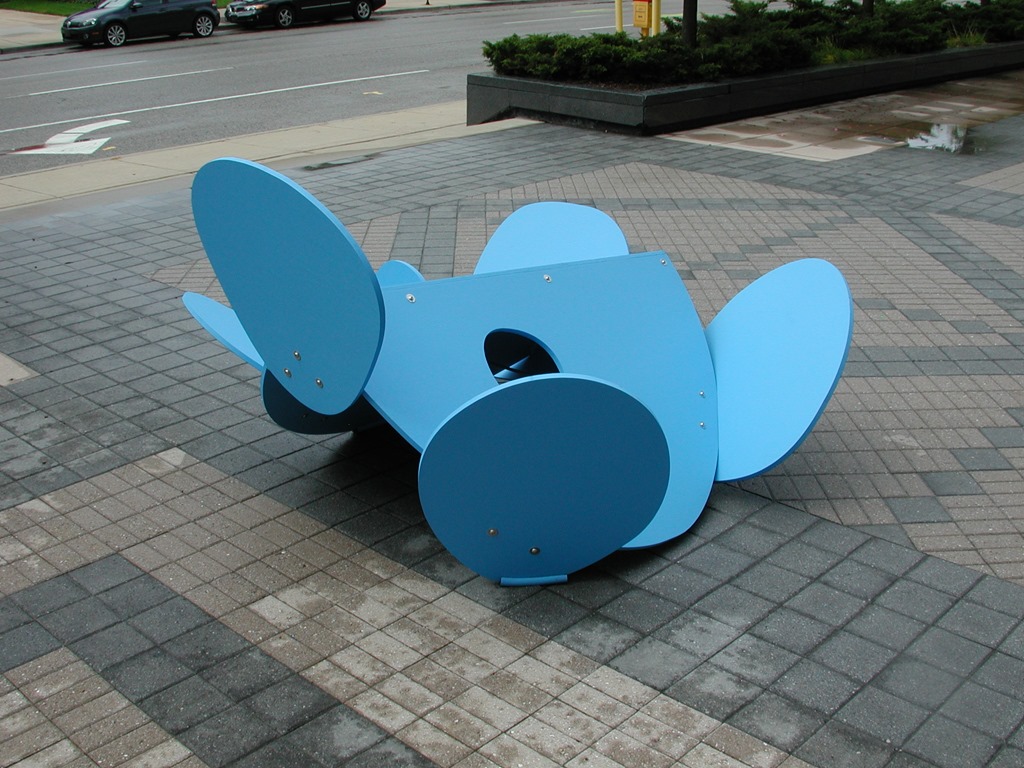
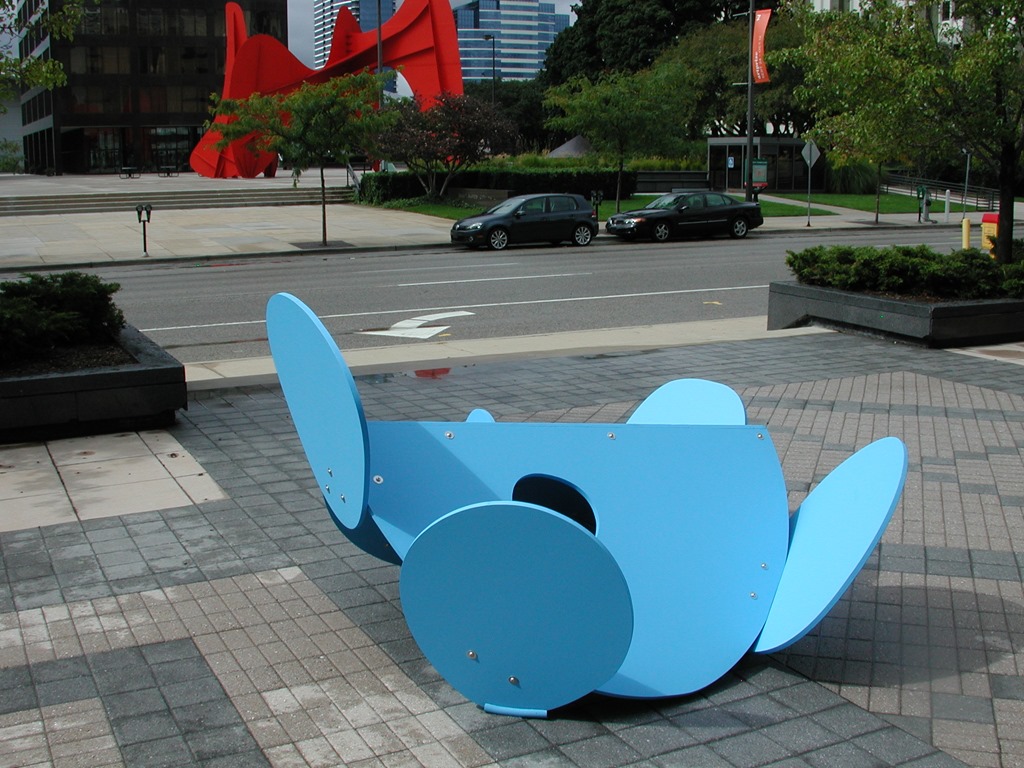
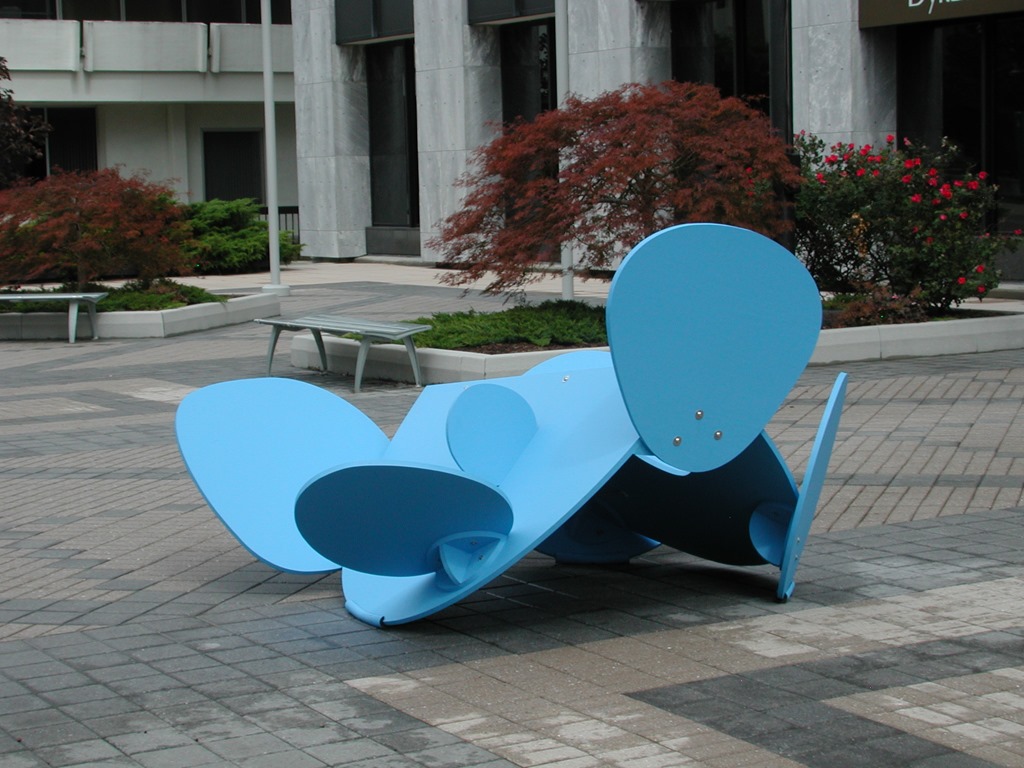
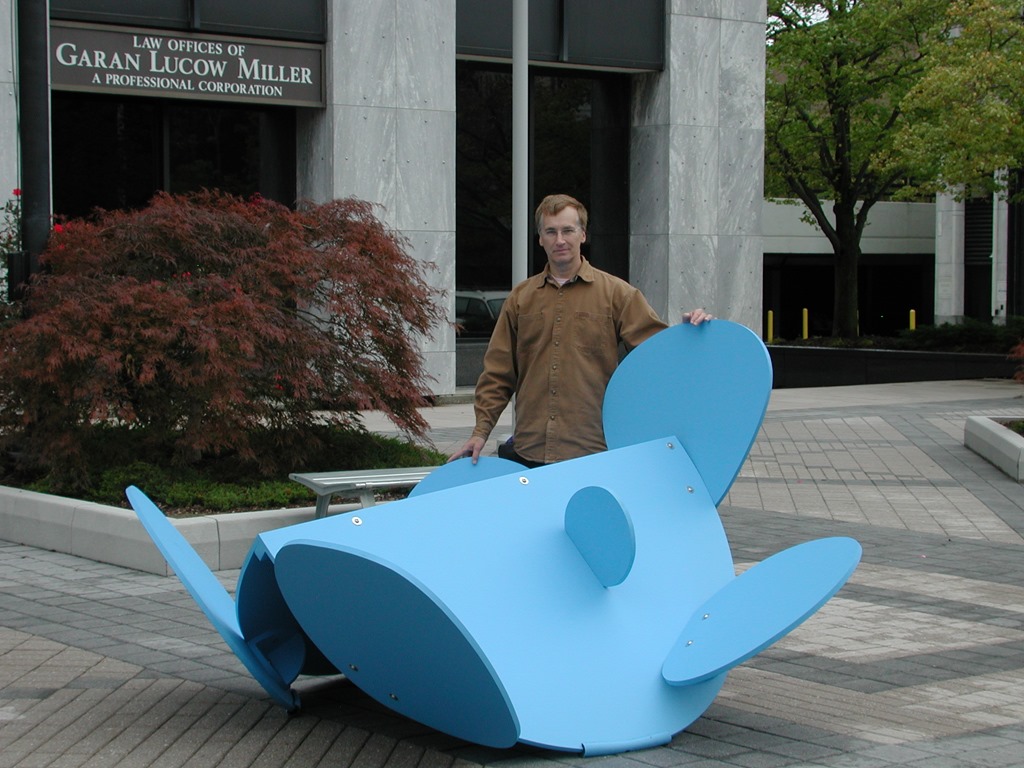
And there, under the clearing sky, blue brings forth blue. For the first time see I her assembled and painted, complete.
As in Blue
This is the color of blue. All apart for painting. I‘d love to show a pic of her put together again, I’ll try, but I spend too much time dancing Tango to put her together, take good pictures and take apart again for delivery to ArtPrize in Grand Rapids this weekend. I’ll at least put up good pictures of her when installed at the site.
Here’s my personal page on the ArtPrize site, and here’s the page for the venue where I’m hosted, 300 Ottawa. This is a great site, across the street from the famous Calder sculpture La Grande Vitesse, and the people there are super-nice.
BTW my vote code is 56214.
Whatever you have heard about ArtPrize, you should go and read about it yourself. In my opinion, it is a innovative and an expertly run event. This is the fifth year, and it continues to evolve. For instance, this year there is a public vote prize as usual, and a professional juried prize too.
Blue Woman together
All the limbs to go on now, and that’s all except for paint. It is so simple looked at this way.
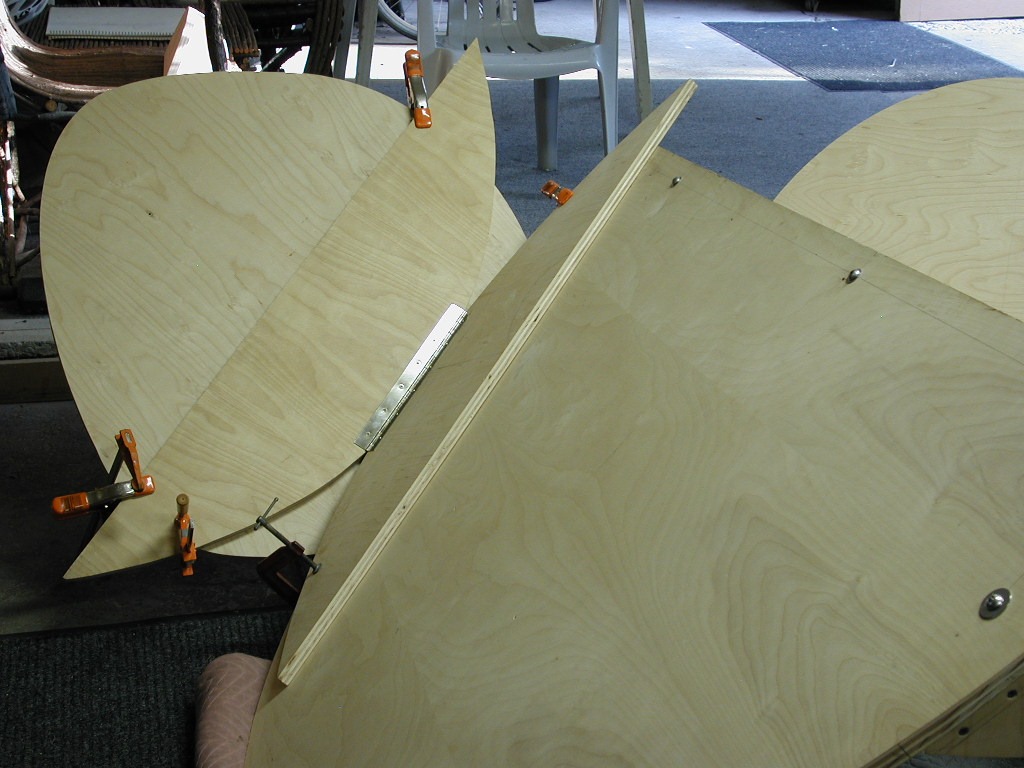
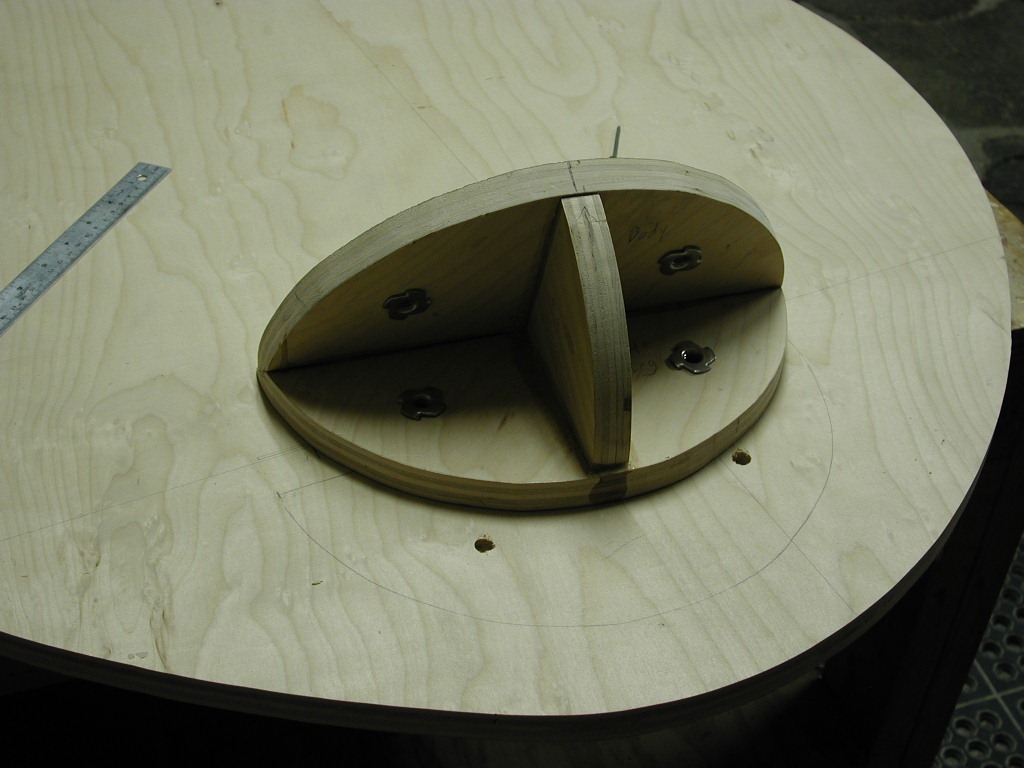
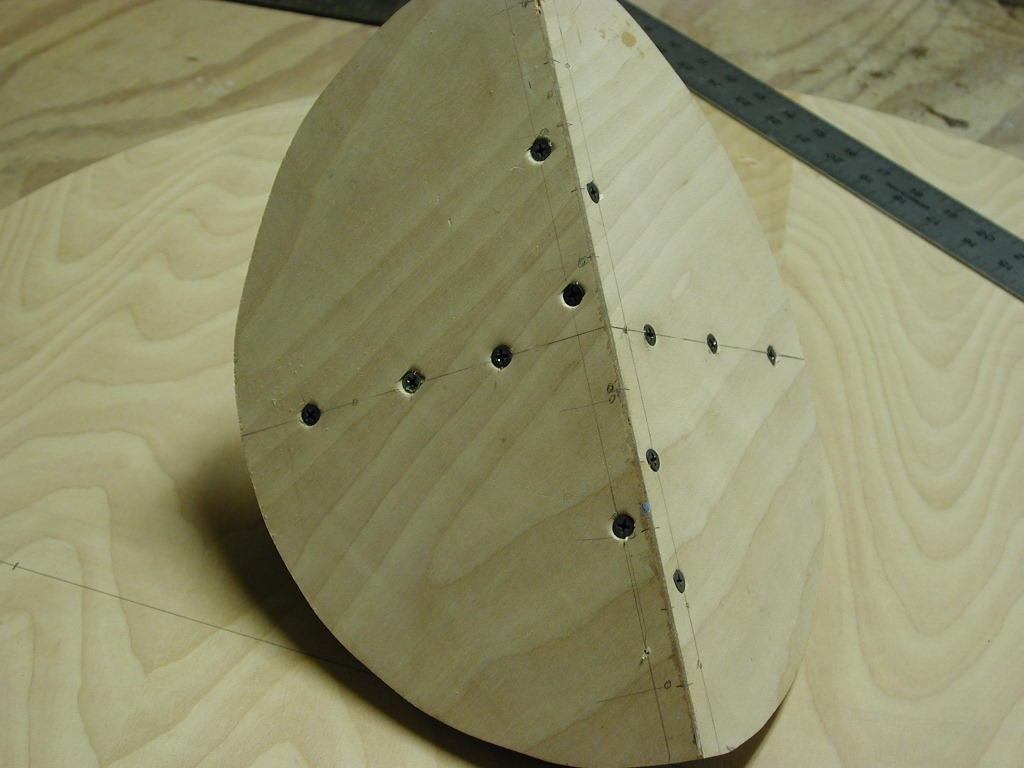
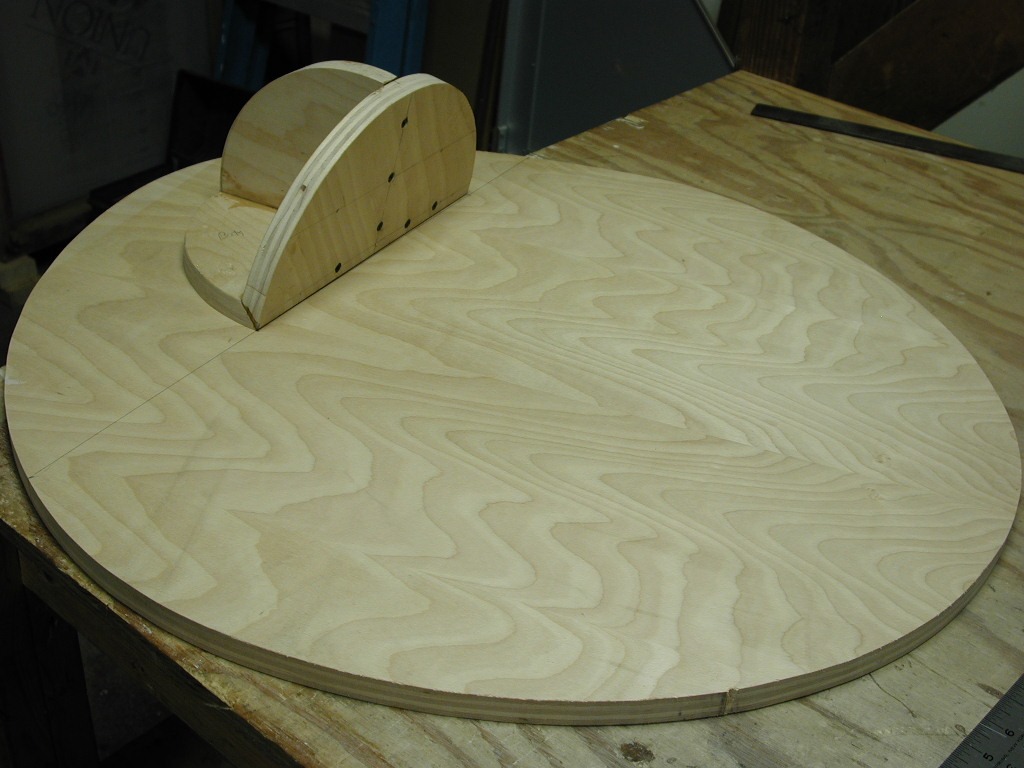
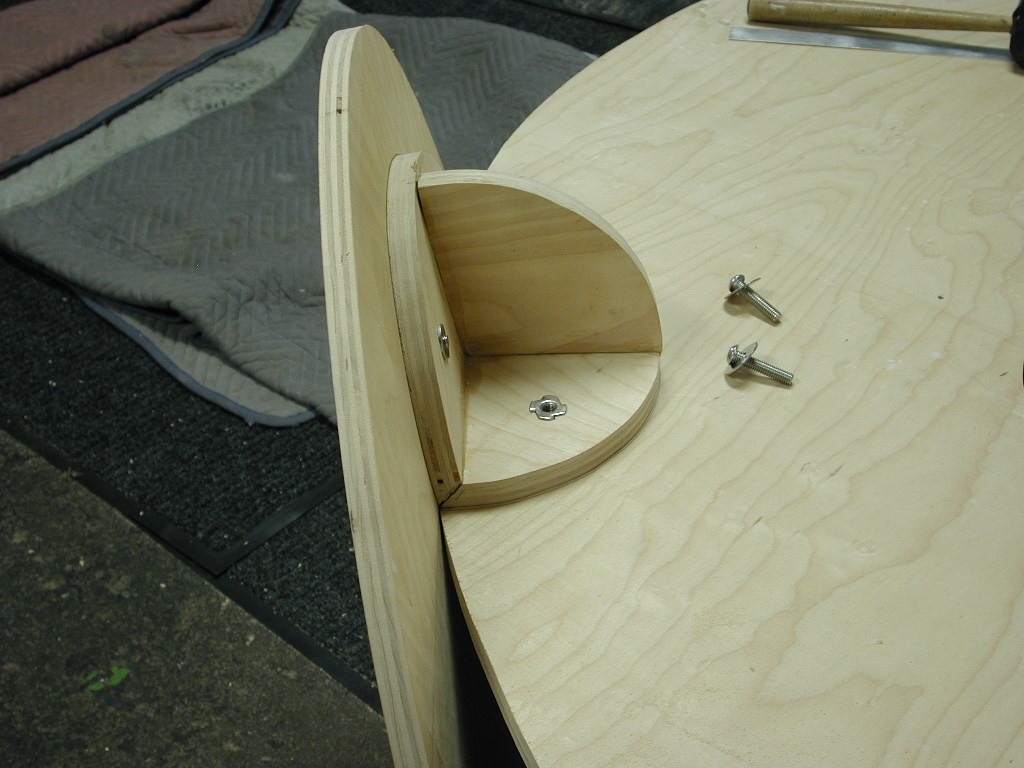
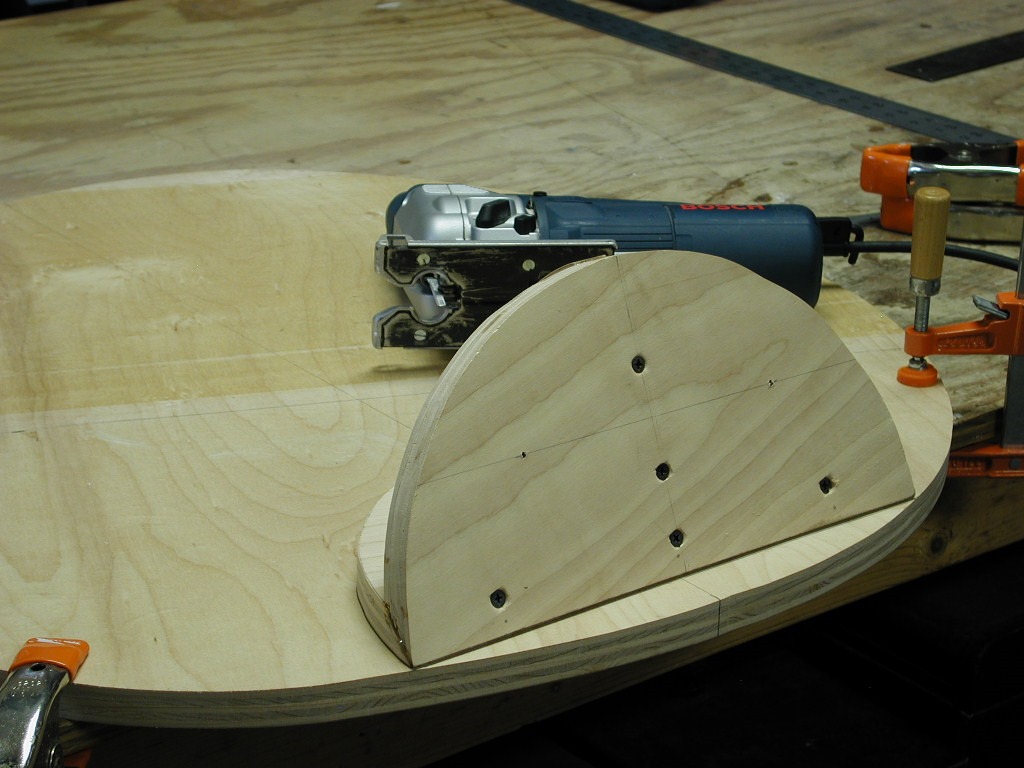
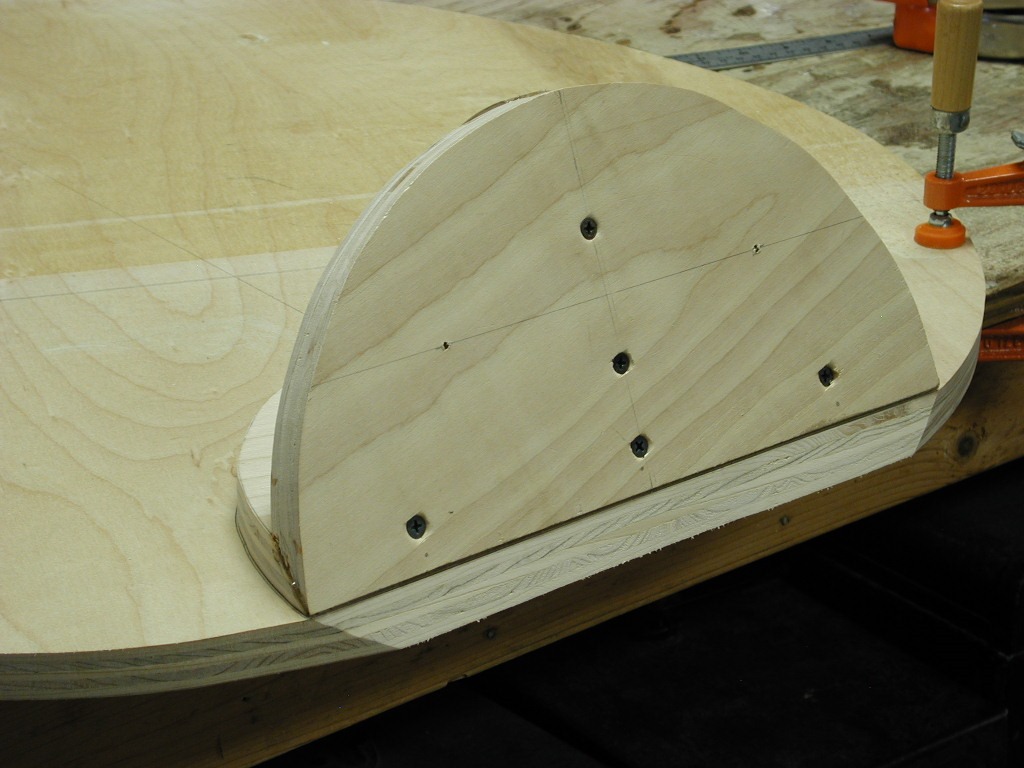
Left leg is clamped into position using the jig. The bracket is held by hand in the right position, and an outline is penciled on the leg & body pieces. Look closely and see that the bracket is already drilled with four pilot holes, one in each quadrant. Still hold the bracket in place, I tap a nail through the pilot holes to make a small mark on the surface of the leg & body.
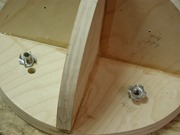
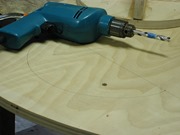
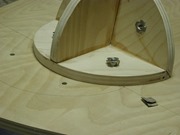
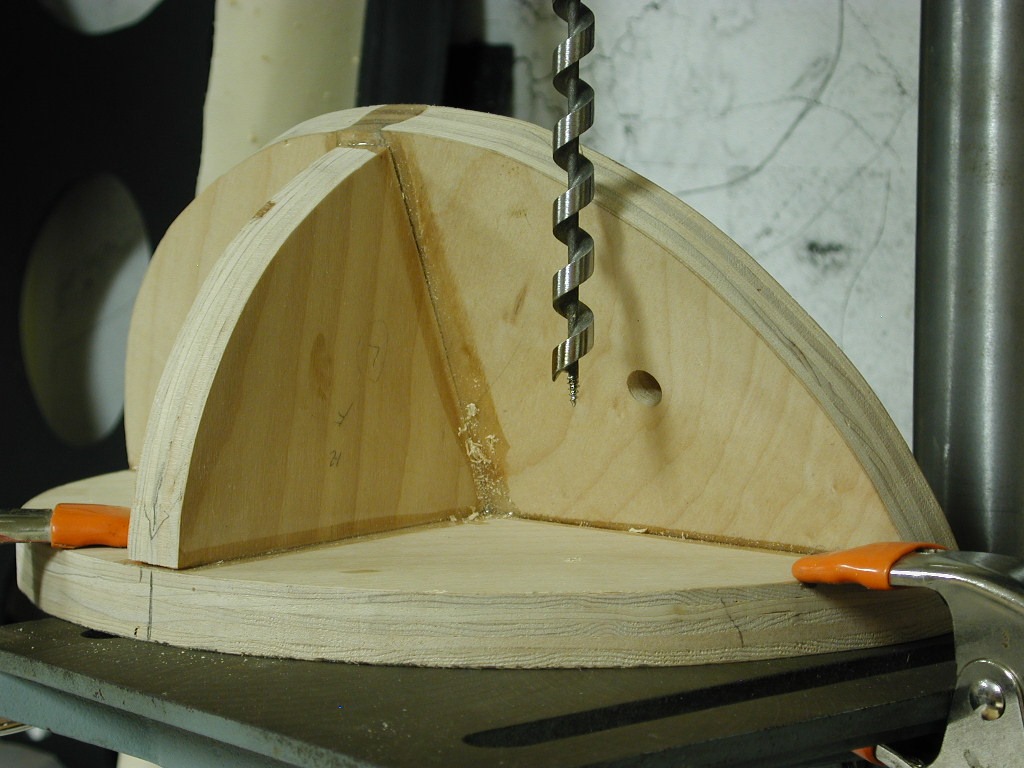
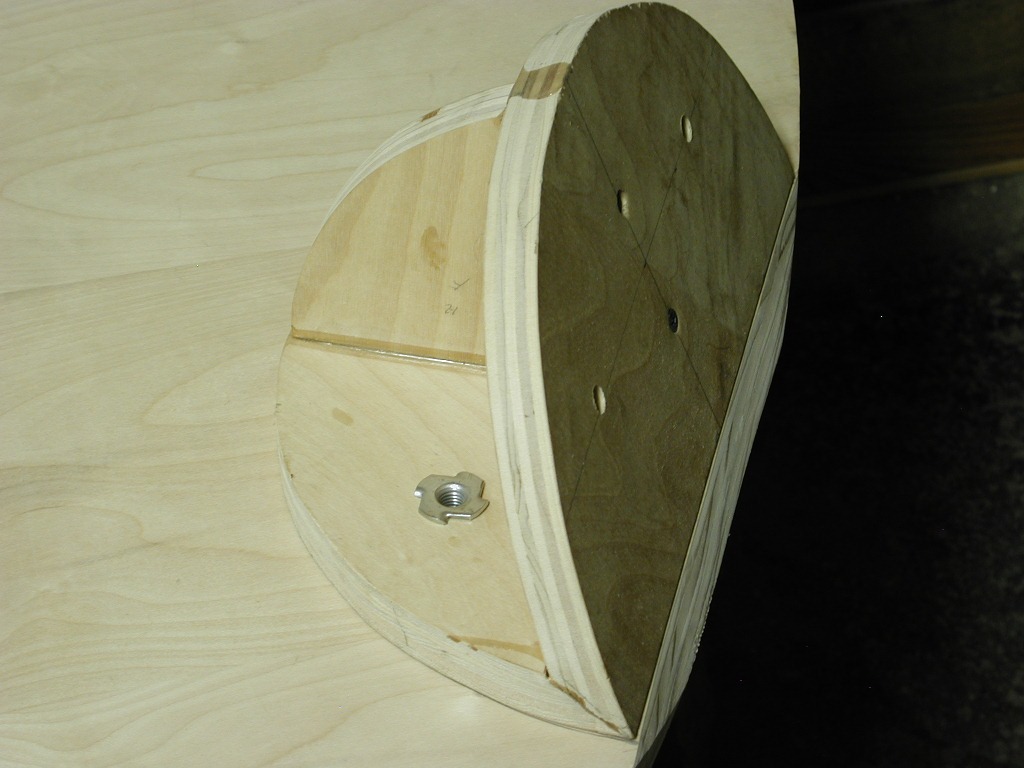
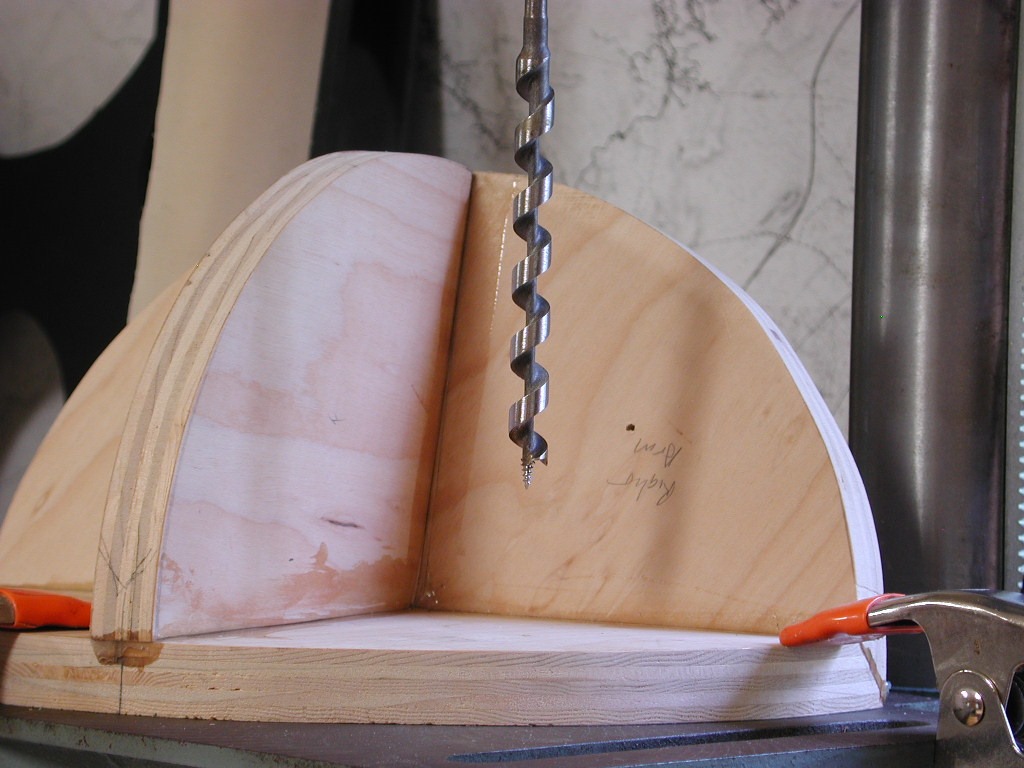
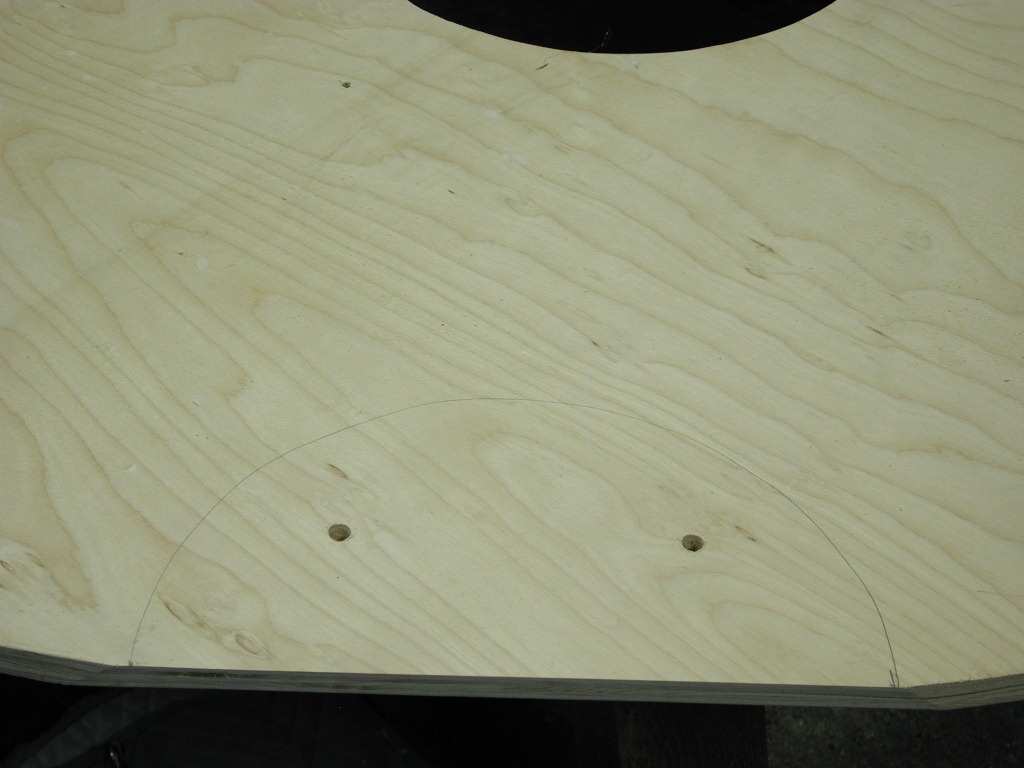
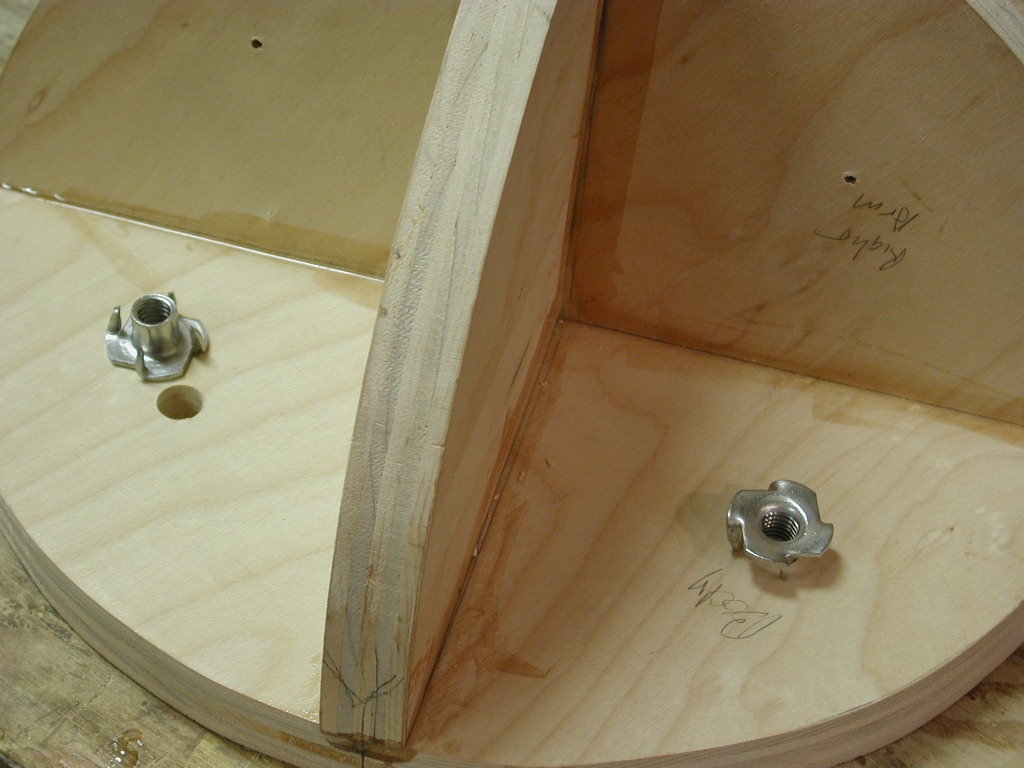
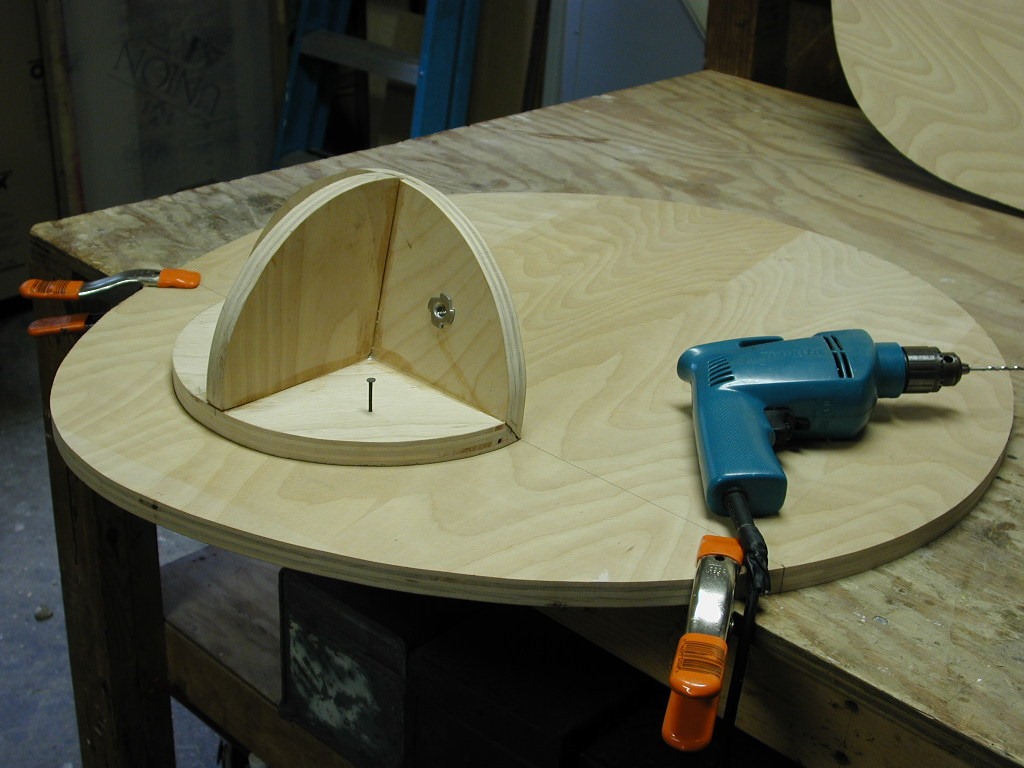
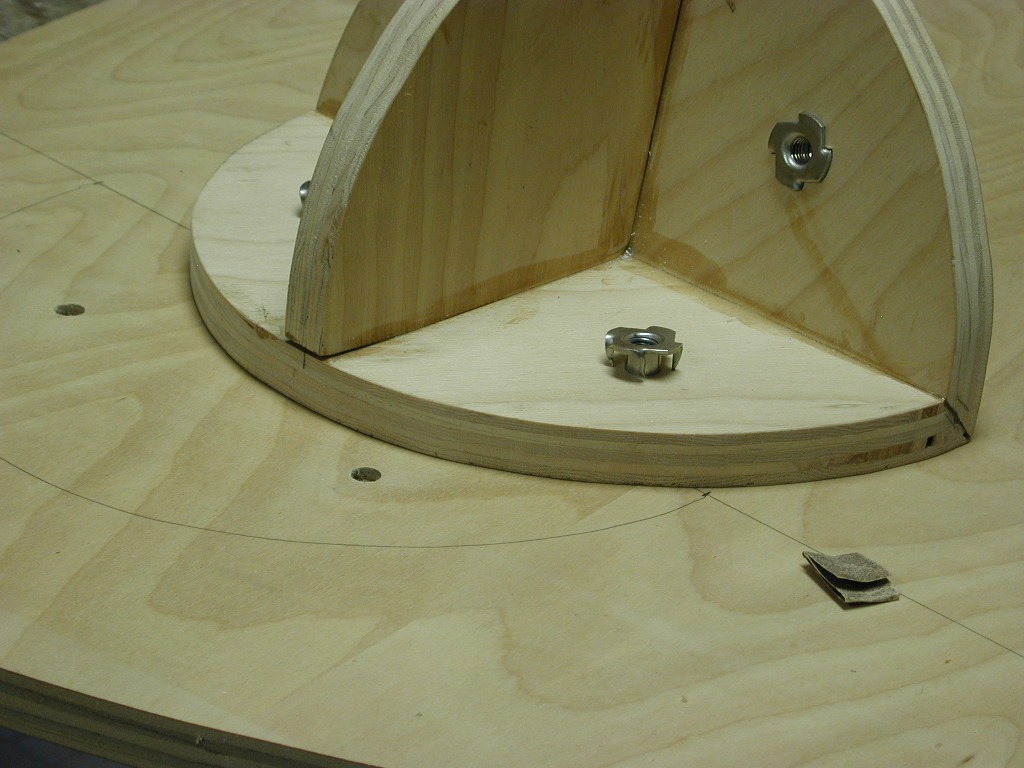
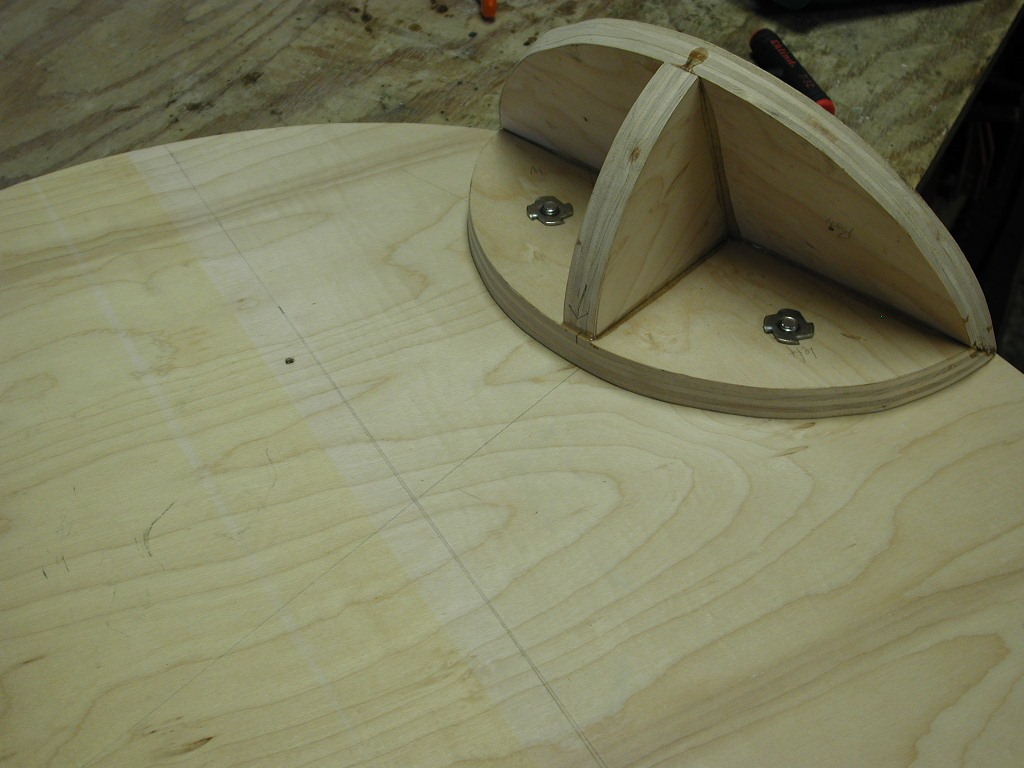
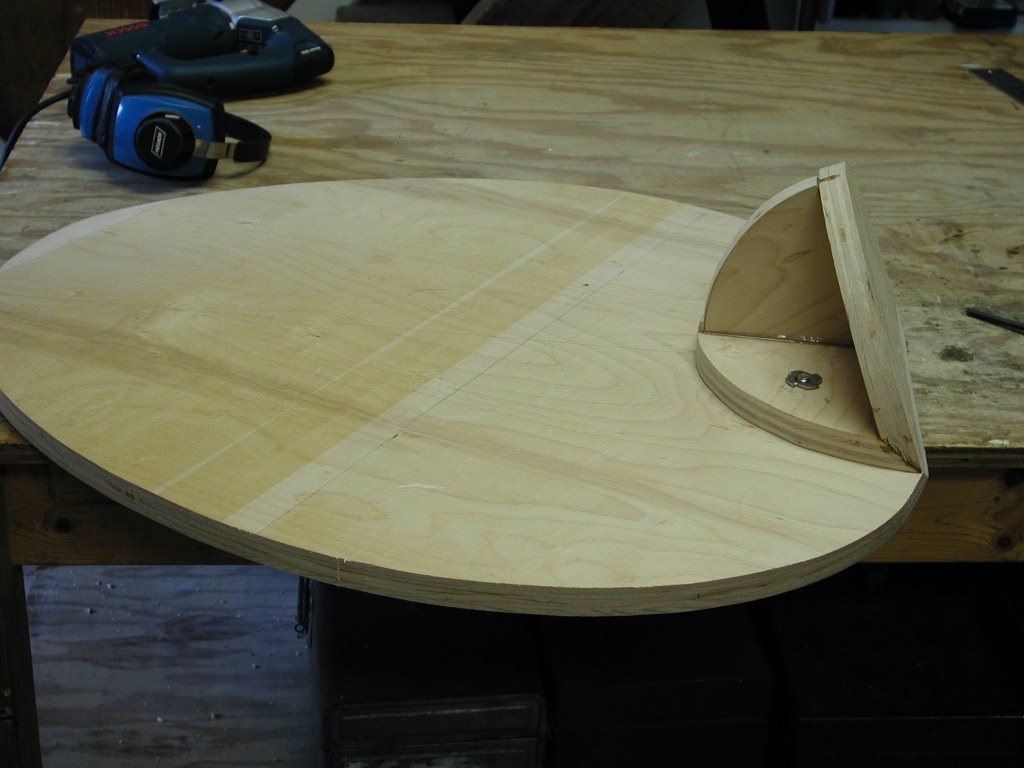
The bracket is placed in the drill press and a four holes 7/16” drilled following the pilot holes, to accept the barrel of the Tee nuts, which are then hammered into it. There’s spikes too that hold them securely into the wood. the holes in the leg piece are 3/8”, the size of the bolts, and are drilled carefully straight with a hand held drill, centered by the nail marks which were made on the surface.
Where the straight edge of the bracket meets the curved edge of the body an accommodation must be made. On the model, that line along the junction of the leg and body is just a glob of hot-glue; Here it needs to be a cut line beveled to the same angle of the bracket for it. The excellent Bosch saber saw is good for this job.
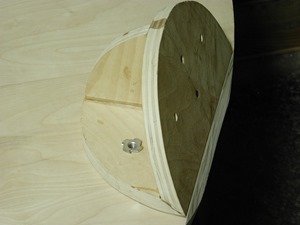
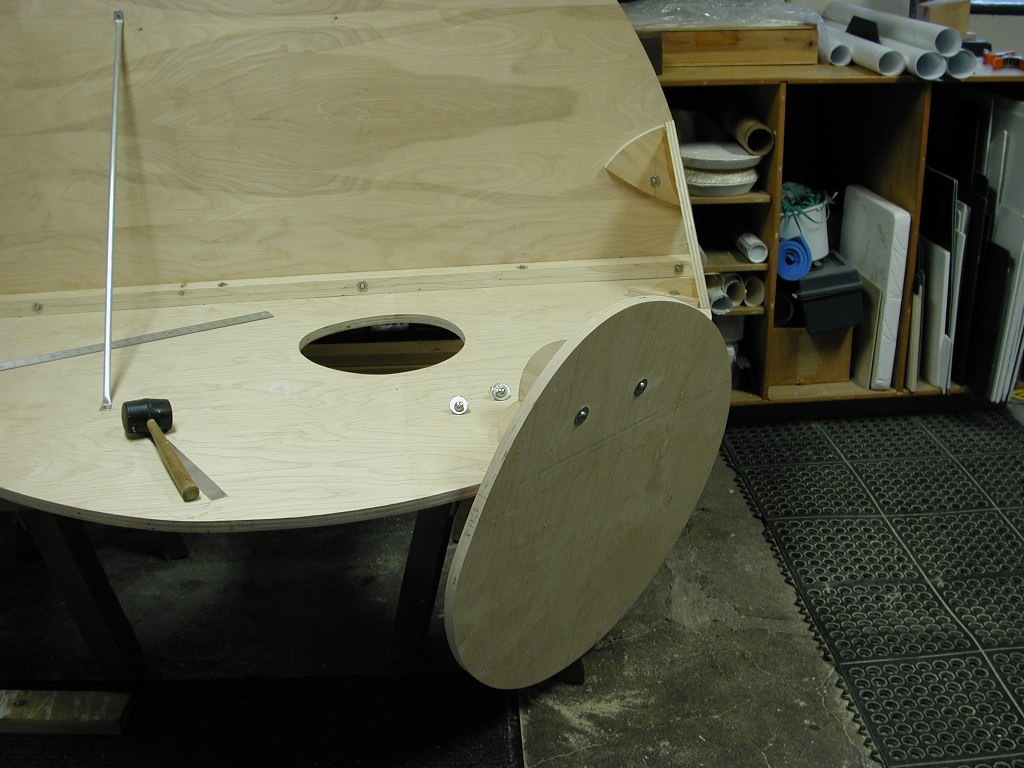
No details shown, but thread the bolts through the pieces and into the bracket’s Tee nuts, and the leg and body are attached together. There’s some jiggling to get this done. You might think a helper would help, but it can be easier to hold things into place with your own head, shoulder and feet, while you use your hands to turn the screws in.
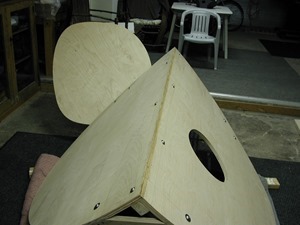
The attachment feels solid and secure to me. Pulling on or shaking the leg doesn’t feel like it could snap off or break away at all. Still, thinking, “A lot can happen” , I see it “couldn’t hurt” to reinforce these brackets with more hardware, namely screws, to add extra mechanical connections to the part.
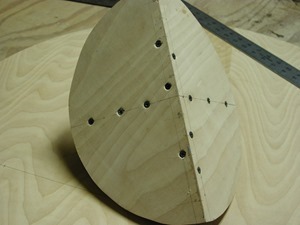
Onto the right arm. At this point it is starting to dawn on me that I can take measurements off of the model which are actuate enough to place the position of the arm & body relative to each other without the need of the jig to suspend the pieces for judgment by my eye. This is done mostly by finding the perpendicular of the junction line of the parts, and extending that to the visual apex of the roughly circular arm or leg piece.
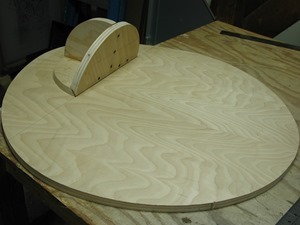
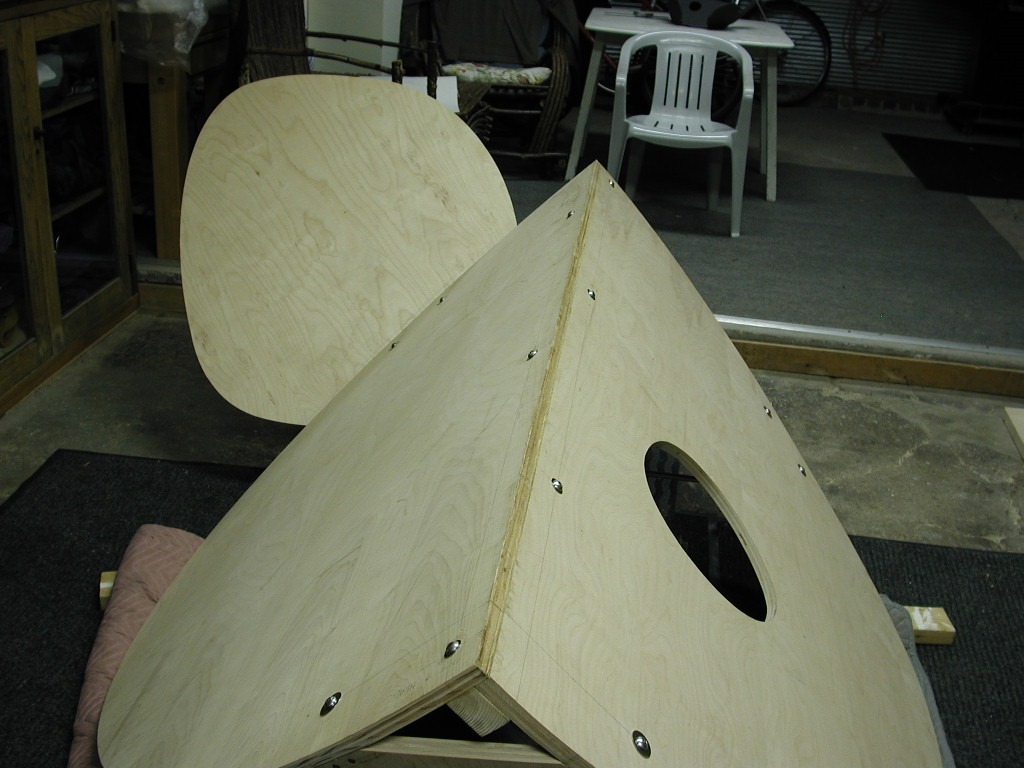
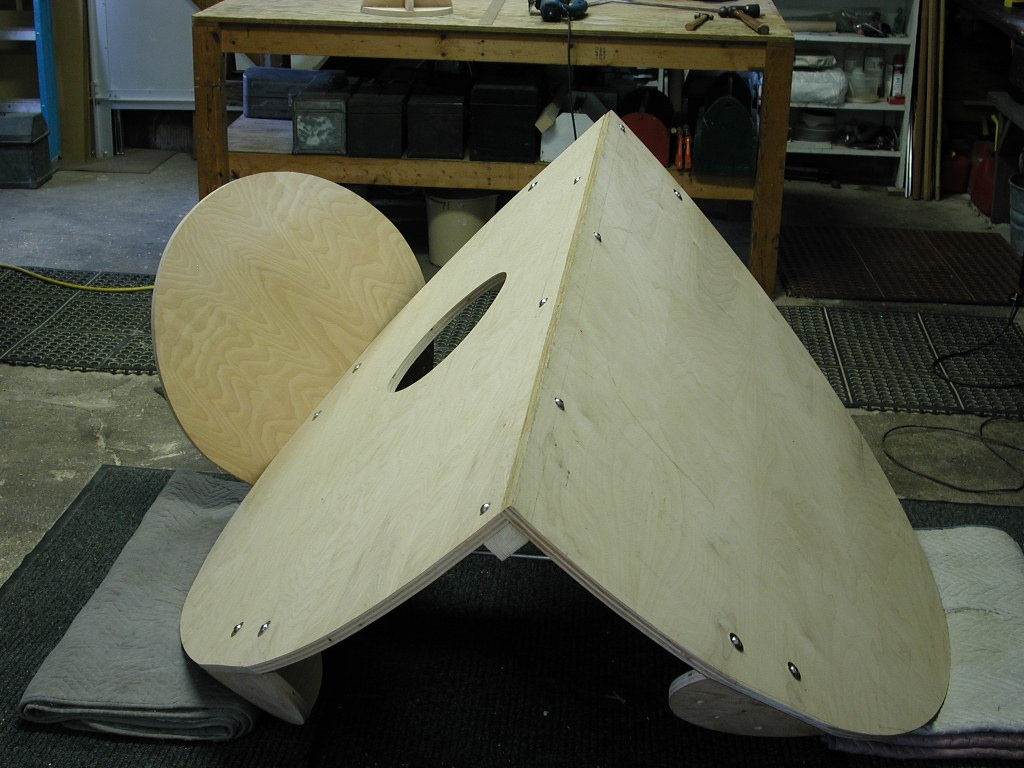
I’ve turned the whole thing over onto sawhorses this time, so I can work without crawling under. Mark and cut the straight edge matching the bracket angle. This one’s easy, it’s 90 degrees.
Clamp in place, tap in nail-marks through pre-drilled 1/8” pilot holes in bracket, and because I have better working position, I drill the 1/8”pilot hole further through the facing wood now.
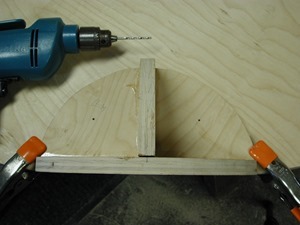
![]()
Remove and drill the bracket. Drill the 3/8” holes into the body at pilot holes. How Tee nuts go in.
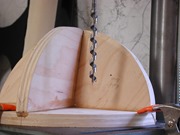
The same steps again for the arm.
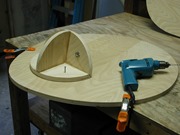
And put the screws in, and assemble together.
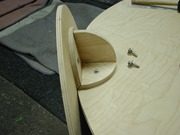
Turned back over (legs removed).
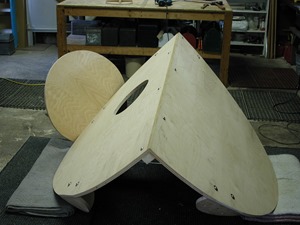
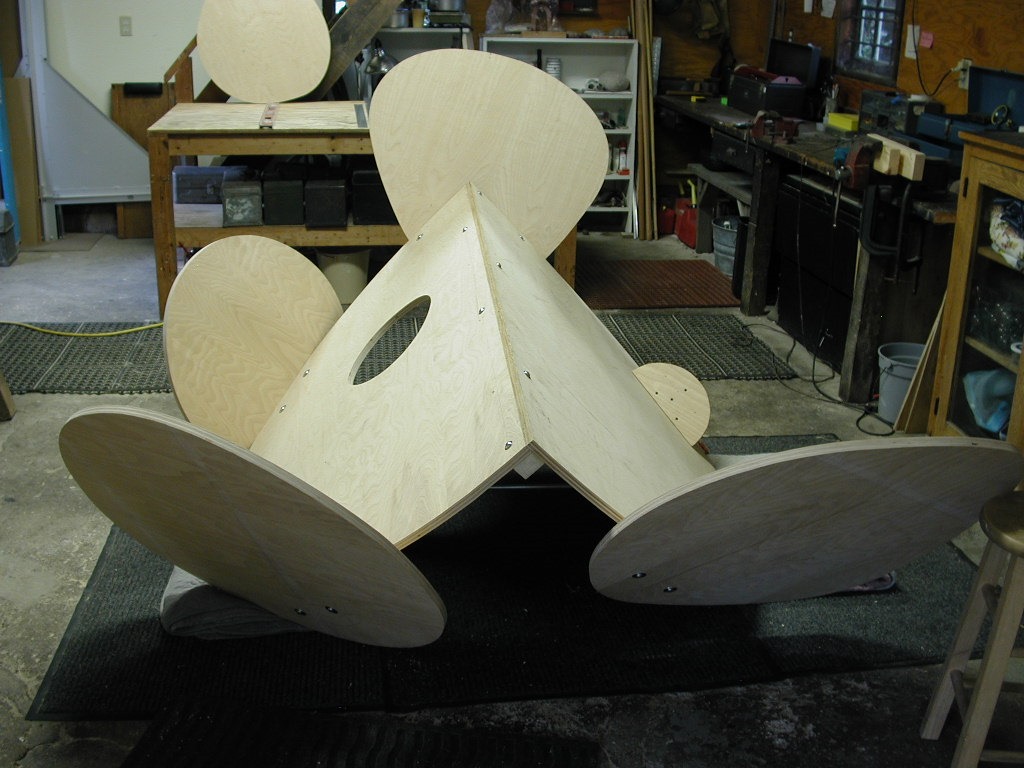
Left arm, and last one to do. This arm is uniquely placed with the bracket on the front surface of the body. I put the head legs and arms back on so I can see. I entirely measure on the bracket this time without need for the jig; I have experience at this now.
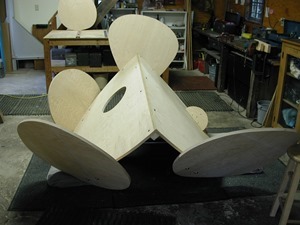
Measure for and place the bracket on the arm. This time it’s the arm which gets the straight edge cut into it’s circular perimeter.
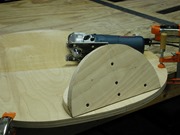
There she is mostly, but what still remains is to do her beautiful breast.
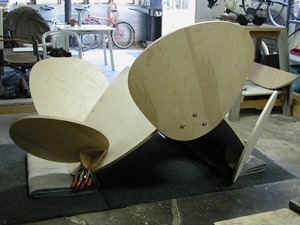
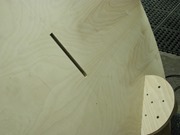
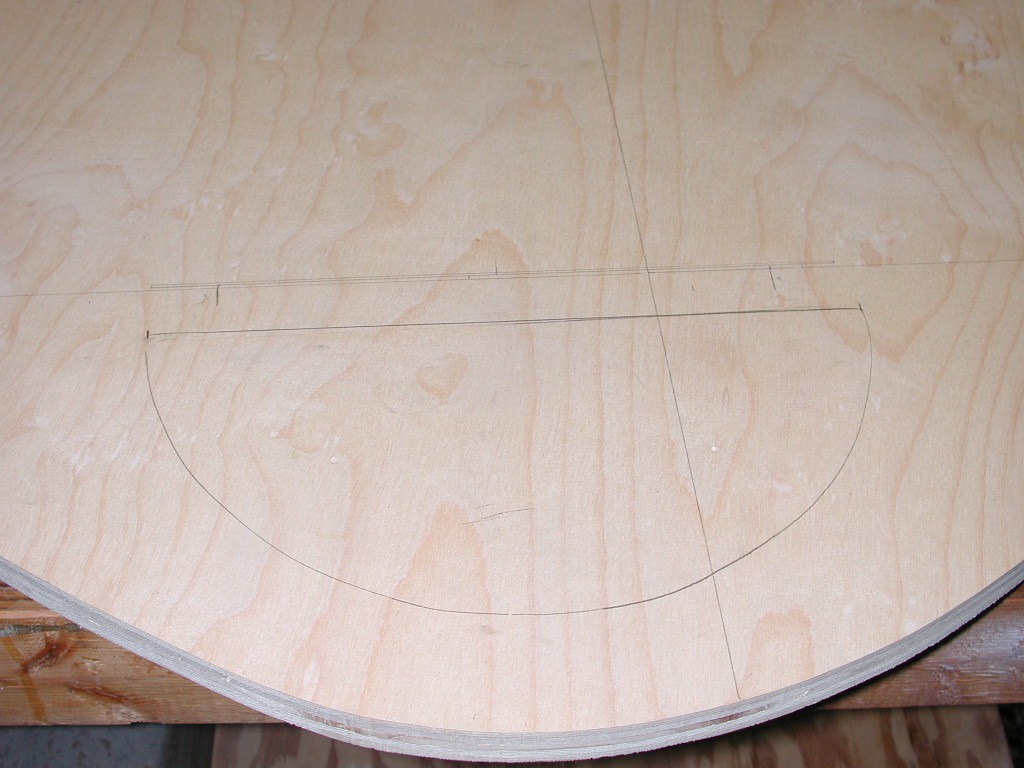
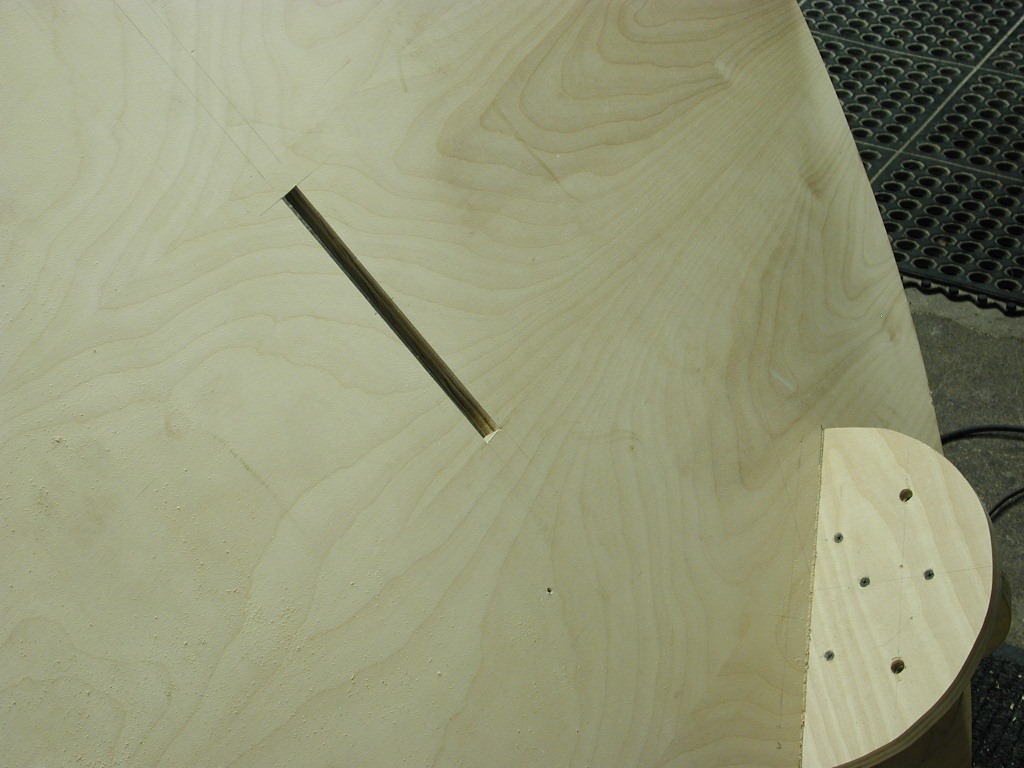
The breast attaches by fitting into a slot cut in the face of the left –side body. The slot position is measured off of the model, and adjusted in length for 1 1/2’ depth of Once again, the excellent Bosch saber saw is good for this. Use a new blade, live it up. Somewhat nerve wracking; it may look like I know what I’m doing but I’m making it up as I go along.
The Blue Woman Sculpture fully assembled together for the first time:
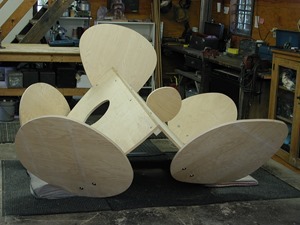
Hurray! Let’s paint BLUE.